
What to expect ahead
What follows is a compact summary of each chapter in the book, designed to help you quickly grasp the core ideas while inviting you to continue into the full original text. Even when chapter text is presented here, these summaries are meant as a gateway to understanding, so your eventual reading of the complete book feels richer, deeper, and more fully appreciated.
The Gambler
A Brief Description
The Gambler is a short yet devastatingly powerful novella by Fyodor Dostoevsky, published in 1867 under extraordinary circumstances. Dostoevsky, drowning in debt and contractually obligated to deliver the manuscript within weeks or forfeit the rights to all his future works, dictated the entire novel in just 26 days to a stenographer named Anna Snitkina—who would later become his wife. It is a book born of desperation, and it reads like one.
The story follows Alexei Ivanovich, a young tutor employed by a Russian general at a German spa resort called Roulettenburg. Alexei is hopelessly in love with Polina, the general's stepdaughter, whose feelings for him remain maddeningly ambiguous. The general himself waits desperately for news of his wealthy aunt's death so he can inherit her fortune and free himself from a calculating French mademoiselle who holds him financially captive.
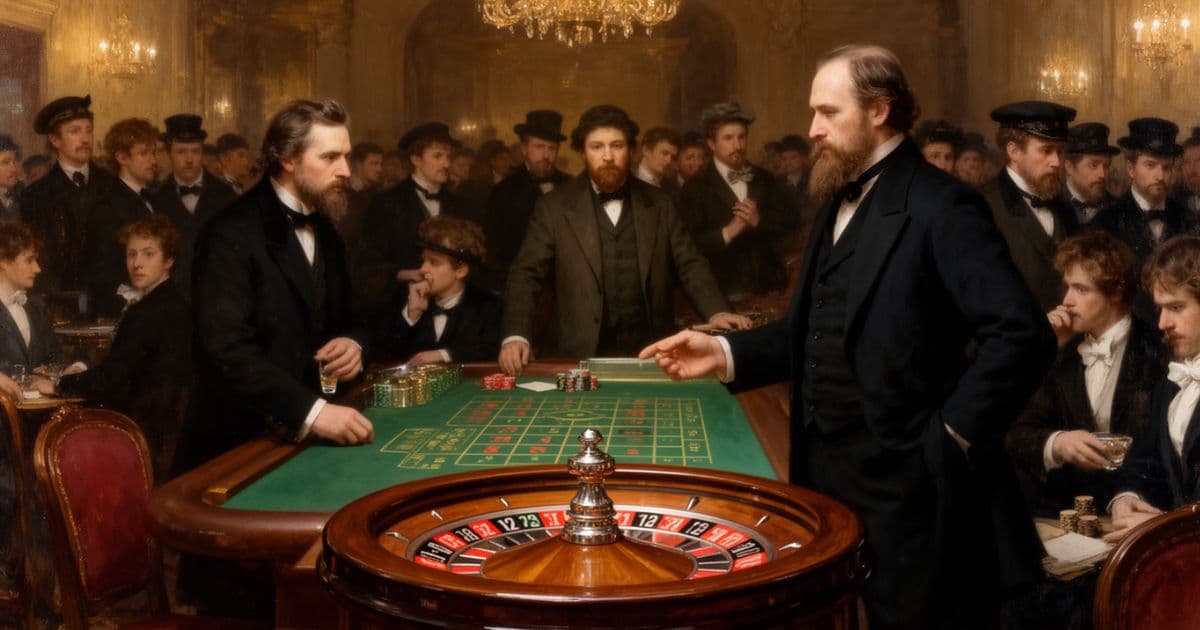
Into this tangle of love, money, and desperation comes roulette—the wheel that promises everything and delivers nothing. Alexei first plays at Polina's request, winning handsomely and tasting the intoxicating rush of beating fate. From that moment, the game takes hold of him with a grip stronger than reason, stronger than love, stronger than self-preservation.
What makes the novel remarkable is its unflinching psychological precision. Dostoevsky had been a gambling addict himself for years, losing fortunes at European casinos, pawning his belongings, begging for money in desperate letters. He did not imagine addiction—he transcribed it. The reader watches Alexei clearly understand what is happening to him, recognize every trap, and walk into each one anyway.
This is the terrifying truth at the heart of The Gambler: compulsion is not ignorance. It is the full, clear-eyed choice to keep going despite knowing better. In fewer than 200 pages, Dostoevsky delivers one of literature's most honest portraits of self-destruction—urgent, compassionate, and impossible to put down.
Essential Life Skills Deep Dive
Explore chapter-by-chapter breakdowns of the essential life skills taught in this classic novel.
The Anatomy of Addiction
How the gambling spiral works — the first win that feels like skill, the chase logic that follows every loss, and why the mechanism does not respond to willpower or rational assessment.
Humiliation as a Way of Life
The narrator's toxic relationship with Polina — built on contempt and servility — and why he stays. Dostoevsky's most psychologically precise portrait of attachment that substitutes intensity for health.
The One Big Win Illusion
The rescue fantasy — how the belief that a single spectacular outcome will solve everything gives the gambling a purpose that feels rational, and what happens when the big win actually arrives.
What Happens After
The aftermath — a year and eight months later, the narrator has full self-knowledge and complete clarity about the cost. He also knows tonight he will return to the table. The gap between knowing and changing.
Essential Skills
Life skills and patterns this book helps you develop—drawn from its themes and characters.
Recognizing Addiction
See how obsession hijacks rational choice
Understanding Compulsion
Know the psychology of 'just one more'
Breaking Free
Identify the moment before the spiral
Table of Contents
Return to Roulettenberg
Our unnamed narrator returns from a two-week absence to find his employers, the General's family, su...
First Steps into the Casino
The narrator enters the casino for the first time, playing with Polina's money rather than his own. ...
Power Games and Hidden Motives
The narrator finds himself trapped in a toxic dynamic with Polina, who treats him with contempt whil...
The Gambler's Delusion and Cultural Clash
The narrator loses everything at the roulette table while gambling with Polina's money, but his real...
The Power of Dangerous Questions
Polina reveals the family's desperate financial situation: the General has mortgaged everything to t...
The Aftermath of Defiance
The narrator reflects on his bizarre confrontation with the Baron and Baroness two days earlier, rev...
The Power Behind the Throne
The narrator receives an unexpected visit from De Griers, the French schemer who normally treats him...
The Englishman's Revelations
The narrator encounters his English acquaintance Astley on the promenade, and what begins as casual ...
The Grandmother's Explosive Arrival
The moment everyone has been dreading finally arrives: Antonida Vassilievna, the formidable 75-year-...
The Grandmother's First Taste of Victory
The Grandmother arrives at the luxurious spa hotel and immediately establishes her dominance through...
Victory's Dangerous Intoxication
The Grandmother's spectacular gambling win transforms her from family burden to dangerous wildcard. ...
The Point of No Return
The Grandmother's gambling addiction reaches its peak as she loses everything in a devastating sessi...
The Aftermath of Ruin
A month after the gambling crisis, the narrator reflects on how everything has changed. The Grandmot...
The Miracle of Desperate Luck
In a moment of pure desperation, the narrator rushes to the casino with a wild plan to win enough mo...
Money Can't Buy Love
The narrator returns to Polina with his massive gambling winnings, convinced that money will solve t...
The Gambler's Last Dance
The narrator burns through his winnings in three weeks of Parisian debauchery with Blanche, who syst...
The Final Gamble
A year and eight months later, our narrator reflects on his complete downfall. He's been a servant, ...
About Fyodor Dostoevsky
Published 1867
Dostoevsky wrote The Gambler while simultaneously writing Crime and Punishment, desperate to pay his own gambling debts. He understood addiction from the inside, making this novella uncomfortably authentic.
Why This Author Matters Today
Fyodor Dostoevsky's insights into human nature, social constraints, and the search for authenticity remain powerfully relevant. Their work helps us understand the timeless tensions between individual desire and social expectation, making them an essential guide for navigating modern life's complexities.
More by Fyodor Dostoevsky in Our Library



Amplified Classics is different.
not a sparknotes, nor a cliffnotes
This is a retelling. The story is still told—completely. You walk with the characters, feel what they feel, discover what they discover. The meaning arrives because you experienced it, not because someone explained a summary.
Read this, then read the original. The prose will illuminate—you'll notice what makes the author that author, because you're no longer fighting to follow the story.
Read the original first, then read this. Something will click. You'll want to go back.
Either way, the door opens inward.
Get the Full Book
Purchase the complete book to access all chapters and support classic literature
As an Amazon Associate, we earn a small commission from qualifying purchases at no additional cost to you.
Available in paperback, hardcover, and e-book formats
You Might Also Like

Free to read • No account required