An excerpt from the original text.(complete · 3800 words)
t length I returned from two weeks leave of absence to find that my
patrons had arrived three days ago in Roulettenberg. I received from
them a welcome quite different to that which I had expected. The
General eyed me coldly, greeted me in rather haughty fashion, and
dismissed me to pay my respects to his sister. It was clear that from
somewhere money had been acquired. I thought I could even detect a
certain shamefacedness in the General’s glance. Maria Philipovna, too,
seemed distraught, and conversed with me with an air of detachment.
Nevertheless, she took the money which I handed to her, counted it, and
listened to what I had to tell. To luncheon there were expected that
day a Monsieur Mezentsov, a French lady, and an Englishman; for,
whenever money was in hand, a banquet in Muscovite style was always
given. Polina Alexandrovna, on seeing me, inquired why I had been so
long away. Then, without waiting for an answer, she departed. Evidently
this was not mere accident, and I felt that I must throw some light
upon matters. It was high time that I did so.
I was assigned a small room on the fourth floor of the hotel (for you
must know that I belonged to the General’s suite). So far as I could
see, the party had already gained some notoriety in the place, which
had come to look upon the General as a Russian nobleman of great
wealth. Indeed, even before luncheon he charged me, among other things,
to get two thousand-franc notes changed for him at the hotel counter,
which put us in a position to be thought millionaires at all events for
a week! Later, I was about to take Mischa and Nadia for a walk when a
summons reached me from the staircase that I must attend the General.
He began by deigning to inquire of me where I was going to take the
children; and as he did so, I could see that he failed to look me in
the eyes. He wanted to do so, but each time was met by me with such a
fixed, disrespectful stare that he desisted in confusion. In pompous
language, however, which jumbled one sentence into another, and at
length grew disconnected, he gave me to understand that I was to lead
the children altogether away from the Casino, and out into the park.
Finally his anger exploded, and he added sharply:
“I suppose you would like to take them to the Casino to play roulette?
Well, excuse my speaking so plainly, but I know how addicted you are to
gambling. Though I am not your mentor, nor wish to be, at least I have
a right to require that you shall not actually compromise me.”
“I have no money for gambling,” I quietly replied.
“But you will soon be in receipt of some,” retorted the General,
reddening a little as he dived into his writing desk and applied
himself to a memorandum book. From it he saw that he had 120 roubles of
mine in his keeping.
“Let us calculate,” he went on. “We must translate these roubles into
thalers. Here—take 100 thalers, as a round sum. The rest will be safe
in my hands.”
In silence I took the money.
“You must not be offended at what I say,” he continued. “You are too
touchy about these things. What I have said I have said merely as a
warning. To do so is no more than my right.”
When returning home with the children before luncheon, I met a
cavalcade of our party riding to view some ruins. Two splendid
carriages, magnificently horsed, with Mlle. Blanche, Maria Philipovna,
and Polina Alexandrovna in one of them, and the Frenchman, the
Englishman, and the General in attendance on horseback! The passers-by
stopped to stare at them, for the effect was splendid—the General could
not have improved upon it. I calculated that, with the 4000 francs
which I had brought with me, added to what my patrons seemed already to
have acquired, the party must be in possession of at least 7000 or 8000
francs—though that would be none too much for Mlle. Blanche, who, with
her mother and the Frenchman, was also lodging in our hotel. The latter
gentleman was called by the lacqueys “Monsieur le Comte,” and Mlle.
Blanche’s mother was dubbed “Madame la Comtesse.” Perhaps in very truth
they were “Comte et Comtesse.”
I knew that “Monsieur le Comte” would take no notice of me when we met
at dinner, as also that the General would not dream of introducing us,
nor of recommending me to the “Comte.” However, the latter had lived
awhile in Russia, and knew that the person referred to as an “uchitel”
is never looked upon as a bird of fine feather. Of course, strictly
speaking, he knew me; but I was an uninvited guest at the
luncheon—the General had forgotten to arrange otherwise, or I should
have been dispatched to dine at the table d’hôte. Nevertheless, I
presented myself in such guise that the General looked at me with a
touch of approval; and, though the good Maria Philipovna was for
showing me my place, the fact of my having previously met the
Englishman, Mr. Astley, saved me, and thenceforward I figured as one of
the company.
This strange Englishman I had met first in Prussia, where we had
happened to sit vis-à-vis in a railway train in which I was
travelling to overtake our party; while, later, I had run across him in
France, and again in Switzerland—twice within the space of two weeks!
To think, therefore, that I should suddenly encounter him again here,
in Roulettenberg! Never in my life had I known a more retiring man, for
he was shy to the pitch of imbecility, yet well aware of the fact (for
he was no fool). At the same time, he was a gentle, amiable sort of an
individual, and, even on our first encounter in Prussia I had contrived
to draw him out, and he had told me that he had just been to the North
Cape, and was now anxious to visit the fair at Nizhni Novgorod. How he
had come to make the General’s acquaintance I do not know, but,
apparently, he was much struck with Polina. Also, he was delighted that
I should sit next him at table, for he appeared to look upon me as his
bosom friend.
During the meal the Frenchman was in great feather: he was discursive
and pompous to every one. In Moscow too, I remembered, he had blown a
great many bubbles. Interminably he discoursed on finance and Russian
politics, and though, at times, the General made feints to contradict
him, he did so humbly, and as though wishing not wholly to lose sight
of his own dignity.
For myself, I was in a curious frame of mind. Even before luncheon was
half finished I had asked myself the old, eternal question: “Why do I
continue to dance attendance upon the General, instead of having left
him and his family long ago?” Every now and then I would glance at
Polina Alexandrovna, but she paid me no attention; until eventually I
became so irritated that I decided to play the boor.
First of all I suddenly, and for no reason whatever, plunged loudly and
gratuitously into the general conversation. Above everything I wanted
to pick a quarrel with the Frenchman; and, with that end in view I
turned to the General, and exclaimed in an overbearing sort of
way—indeed, I think that I actually interrupted him—that that summer it
had been almost impossible for a Russian to dine anywhere at tables
d’hôte. The General bent upon me a glance of astonishment.
“If one is a man of self-respect,” I went on, “one risks abuse by so
doing, and is forced to put up with insults of every kind. Both at
Paris and on the Rhine, and even in Switzerland—there are so many
Poles, with their sympathisers, the French, at these tables d’hôte that
one cannot get a word in edgeways if one happens only to be a Russian.”
This I said in French. The General eyed me doubtfully, for he did not
know whether to be angry or merely to feel surprised that I should so
far forget myself.
“Of course, one always learns something everywhere,” said the
Frenchman in a careless, contemptuous sort of tone.
“In Paris, too, I had a dispute with a Pole,” I continued, “and then
with a French officer who supported him. After that a section of the
Frenchmen present took my part. They did so as soon as I told them the
story of how once I threatened to spit into Monsignor’s coffee.”
“To spit into it?” the General inquired with grave disapproval in his
tone, and a stare, of astonishment, while the Frenchman looked at me
unbelievingly.
“Just so,” I replied. “You must know that, on one occasion, when, for
two days, I had felt certain that at any moment I might have to depart
for Rome on business, I repaired to the Embassy of the Holy See in
Paris, to have my passport visaed. There I encountered a sacristan of
about fifty, and a man dry and cold of mien. After listening politely,
but with great reserve, to my account of myself, this sacristan asked
me to wait a little. I was in a great hurry to depart, but of course I
sat down, pulled out a copy of L’Opinion Nationale, and fell to
reading an extraordinary piece of invective against Russia which it
happened to contain. As I was thus engaged I heard some one enter an
adjoining room and ask for Monsignor; after which I saw the sacristan
make a low bow to the visitor, and then another bow as the visitor took
his leave. I ventured to remind the good man of my own business also;
whereupon, with an expression of, if anything, increased dryness, he
again asked me to wait. Soon a third visitor arrived who, like myself,
had come on business (he was an Austrian of some sort); and as soon as
ever he had stated his errand he was conducted upstairs! This made me
very angry. I rose, approached the sacristan, and told him that, since
Monsignor was receiving callers, his lordship might just as well finish
off my affair as well. Upon this the sacristan shrunk back in
astonishment. It simply passed his understanding that any insignificant
Russian should dare to compare himself with other visitors of
Monsignor’s! In a tone of the utmost effrontery, as though he were
delighted to have a chance of insulting me, he looked me up and down,
and then said: “Do you suppose that Monsignor is going to put aside his
coffee for you?” But I only cried the louder: “Let me tell you that I
am going to spit into that coffee! Yes, and if you do not get me my
passport visaed this very minute, I shall take it to Monsignor myself.”
“What? While he is engaged with a Cardinal?” screeched the sacristan,
again shrinking back in horror. Then, rushing to the door, he spread
out his arms as though he would rather die than let me enter.
Thereupon I declared that I was a heretic and a barbarian—“Je suis
hérétique et barbare,” I said, “and that these archbishops and
cardinals and monsignors, and the rest of them, meant nothing at all to
me. In a word, I showed him that I was not going to give way. He looked
at me with an air of infinite resentment. Then he snatched up my
passport, and departed with it upstairs. A minute later the passport
had been visaed! Here it is now, if you care to see it,”—and I pulled
out the document, and exhibited the Roman visa.
“But—” the General began.
“What really saved you was the fact that you proclaimed yourself a
heretic and a barbarian,” remarked the Frenchman with a smile. “Cela
n’était pas si bête.”
“But is that how Russian subjects ought to be treated? Why, when they
settle here they dare not utter even a word—they are ready even to deny
the fact that they are Russians! At all events, at my hotel in Paris I
received far more attention from the company after I had told them
about the fracas with the sacristan. A fat Polish nobleman, who had
been the most offensive of all who were present at the table d’hôte, at
once went upstairs, while some of the Frenchmen were simply disgusted
when I told them that two years ago I had encountered a man at whom, in
1812, a French ‘hero’ fired for the mere fun of discharging his musket.
That man was then a boy of ten and his family are still residing in
Moscow.”
“Impossible!” the Frenchman spluttered. “No French soldier would fire
at a child!”
“Nevertheless the incident was as I say,” I replied. “A very respected
ex-captain told me the story, and I myself could see the scar left on
his cheek.”
The Frenchman then began chattering volubly, and the General supported
him; but I recommended the former to read, for example, extracts from
the memoirs of General Perovski, who, in 1812, was a prisoner in the
hands of the French. Finally Maria Philipovna said something to
interrupt the conversation. The General was furious with me for having
started the altercation with the Frenchman. On the other hand, Mr.
Astley seemed to take great pleasure in my brush with Monsieur, and,
rising from the table, proposed that we should go and have a drink
together. The same afternoon, at four o’clock, I went to have my
customary talk with Polina Alexandrovna; and, the talk soon extended to
a stroll. We entered the Park, and approached the Casino, where Polina
seated herself upon a bench near the fountain, and sent Nadia away to a
little distance to play with some other children. Mischa also I
dispatched to play by the fountain, and in this fashion we—that is to
say, Polina and myself—contrived to find ourselves alone.
Of course, we began by talking on business matters. Polina seemed
furious when I handed her only 700 gülden, for she had thought to
receive from Paris, as the proceeds of the pledging of her diamonds, at
least 2000 gülden, or even more.
“Come what may, I must have money,” she said. “And get it somehow I
will—otherwise I shall be ruined.”
I asked her what had happened during my absence.
“Nothing; except that two pieces of news have reached us from St.
Petersburg. In the first place, my grandmother is very ill, and
unlikely to last another couple of days. We had this from Timothy
Petrovitch himself, and he is a reliable person. Every moment we are
expecting to receive news of the end.”
“All of you are on the tiptoe of expectation?” I queried.
“Of course—all of us, and every minute of the day. For a
year-and-a-half now we have been looking for this.”
“Looking for it?”
“Yes, looking for it. I am not her blood relation, you know—I am merely
the General’s step-daughter. Yet I am certain that the old lady has
remembered me in her will.”
“Yes, I believe that you will come in for a good deal,” I said with
some assurance.
“Yes, for she is fond of me. But how come you to think so?”
I answered this question with another one. “That Marquis of yours,” I
said, “—is he also familiar with your family secrets?”
“And why are you yourself so interested in them?” was her retort as she
eyed me with dry grimness.
“Never mind. If I am not mistaken, the General has succeeded in
borrowing money of the Marquis.”
“It may be so.”
“Is it likely that the Marquis would have lent the money if he had not
known something or other about your grandmother? Did you notice, too,
that three times during luncheon, when speaking of her, he called her
‘La Baboulenka’?[1]. What loving, friendly behaviour, to be sure!”
[1] Dear little Grandmother.
“Yes, that is true. As soon as ever he learnt that I was likely to
inherit something from her he began to pay me his addresses. I thought
you ought to know that.”
“Then he has only just begun his courting? Why, I thought he had been
doing so a long while!”
“You know he has not,” retorted Polina angrily. “But where on earth
did you pick up this Englishman?” She said this after a pause.
“I knew you would ask about him!” Whereupon I told her of my previous
encounters with Astley while travelling.
“He is very shy,” I said, “and susceptible. Also, he is in love with
you.”
“Yes, he is in love with me,” she replied.
“And he is ten times richer than the Frenchman. In fact, what does the
Frenchman possess? To me it seems at least doubtful that he possesses
anything at all.”
“Oh, no, there is no doubt about it. He does possess some château or
other. Last night the General told me that for certain. Now are you
satisfied?”
“Nevertheless, in your place I should marry the Englishman.”
“And why?” asked Polina.
“Because, though the Frenchman is the handsomer of the two, he is also
the baser; whereas the Englishman is not only a man of honour, but ten
times the wealthier of the pair.”
“Yes? But then the Frenchman is a marquis, and the cleverer of the
two,” remarked Polina imperturbably.
“Is that so?” I repeated.
“Yes; absolutely.”
Polina was not at all pleased at my questions; I could see that she was
doing her best to irritate me with the brusquerie of her answers. But I
took no notice of this.
“It amuses me to see you grow angry,” she continued. “However, inasmuch
as I allow you to indulge in these questions and conjectures, you ought
to pay me something for the privilege.”
“I consider that I have a perfect right to put these questions to you,”
was my calm retort; “for the reason that I am ready to pay for them,
and also care little what becomes of me.”
Polina giggled.
“Last time you told me—when on the Shlangenberg—that at a word from me
you would be ready to jump down a thousand feet into the abyss. Some
day I may remind you of that saying, in order to see if you will be as
good as your word. Yes, you may depend upon it that I shall do so. I
hate you because I have allowed you to go to such lengths, and I also
hate you and still more—because you are so necessary to me. For the
time being I want you, so I must keep you.”
Then she made a movement to rise. Her tone had sounded very angry.
Indeed, of late her talks with me had invariably ended on a note of
temper and irritation—yes, of real temper.
“May I ask you who is this Mlle. Blanche?” I inquired (since I did not
wish Polina to depart without an explanation).
“You know who she is—just Mlle. Blanche. Nothing further has
transpired. Probably she will soon be Madame General—that is to say, if
the rumours that Grandmamma is nearing her end should prove true. Mlle.
Blanche, with her mother and her cousin, the Marquis, know very well
that, as things now stand, we are ruined.”
“And is the General at last in love?”
“That has nothing to do with it. Listen to me. Take these 700 florins,
and go and play roulette with them. Win as much for me as you can, for
I am badly in need of money.”
So saying, she called Nadia back to her side, and entered the Casino,
where she joined the rest of our party. For myself, I took, in musing
astonishment, the first path to the left. Something had seemed to
strike my brain when she told me to go and play roulette. Strangely
enough, that something had also seemed to make me hesitate, and to set
me analysing my feelings with regard to her. In fact, during the two
weeks of my absence I had felt far more at my ease than I did now, on
the day of my return; although, while travelling, I had moped like an
imbecile, rushed about like a man in a fever, and actually beheld her
in my dreams. Indeed, on one occasion (this happened in Switzerland,
when I was asleep in the train) I had spoken aloud to her, and set all
my fellow-travellers laughing. Again, therefore, I put to myself the
question: “Do I, or do I not love her?” and again I could return myself
no answer or, rather, for the hundredth time I told myself that I
detested her. Yes, I detested her; there were moments (more especially
at the close of our talks together) when I would gladly have given half
my life to have strangled her! I swear that, had there, at such
moments, been a sharp knife ready to my hand, I would have seized that
knife with pleasure, and plunged it into her breast. Yet I also swear
that if, on the Shlangenberg, she had really said to me, “Leap into
that abyss,” I should have leapt into it, and with equal pleasure. Yes,
this I knew well. One way or the other, the thing must soon be ended.
She, too, knew it in some curious way; the thought that I was fully
conscious of her inaccessibility, and of the impossibility of my ever
realising my dreams, afforded her, I am certain, the keenest possible
pleasure. Otherwise, is it likely that she, the cautious and clever
woman that she was, would have indulged in this familiarity and
openness with me? Hitherto (I concluded) she had looked upon me in the
same light that the old Empress did upon her servant—the Empress who
hesitated not to unrobe herself before her slave, since she did not
account a slave a man. Yes, often Polina must have taken me for
something less than a man!”
Still, she had charged me with a commission—to win what I could at
roulette. Yet all the time I could not help wondering why it was so
necessary for her to win something, and what new schemes could have
sprung to birth in her ever-fertile brain. A host of new and unknown
factors seemed to have arisen during the last two weeks. Well, it
behoved me to divine them, and to probe them, and that as soon as
possible. Yet not now: at the present moment I must repair to the
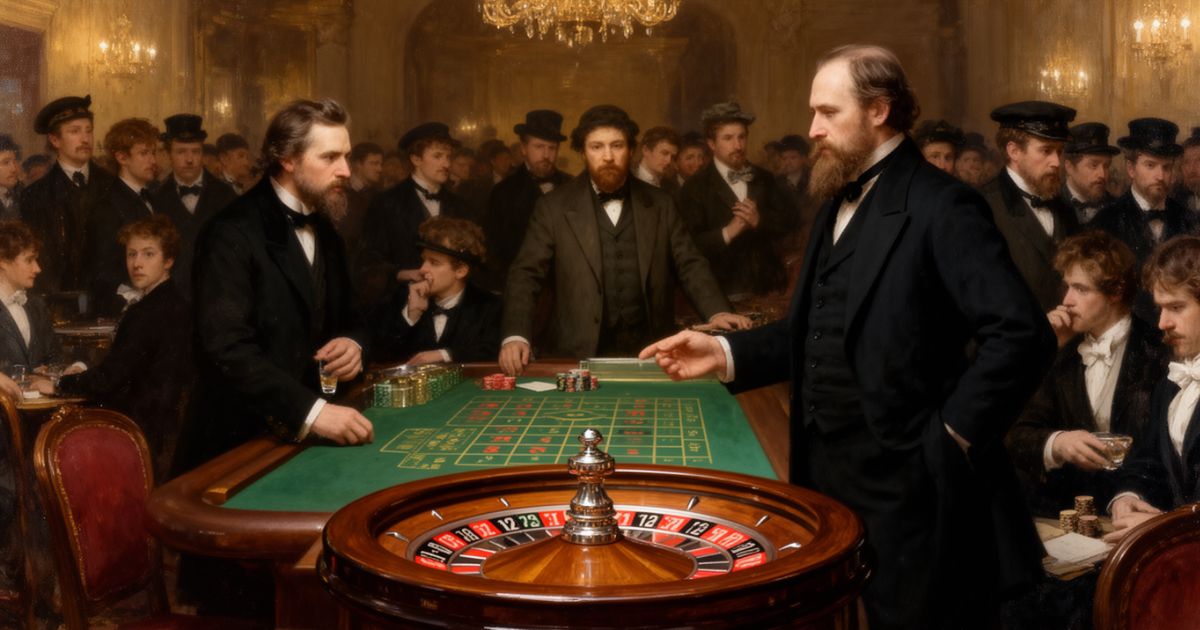
roulette-table.
Master this chapter. Complete your experience
Purchase the complete book to access all chapters and support classic literature
As an Amazon Associate, we earn a small commission from qualifying purchases at no additional cost to you.
Available in paperback, hardcover, and e-book formats
Let's Analyse the Pattern
Knowingly participating in harmful relationships or situations because we've convinced ourselves we deserve the treatment or need the connection.
Why This Matters
Connect literature to life
This chapter teaches how manipulators frame their demands as your moral obligation, making refusal seem cruel.
Practice This Today
This week, notice when someone's request comes with guilt attached—if saying no feels like betraying your values, examine whether you're being manipulated.
Now let's explore the literary elements.
Key Quotes & Analysis
"It was clear that from somewhere money had been acquired."
Context: The narrator notices the family's sudden change in fortune and behavior upon his return.
This observation sets up the central mystery and shows the narrator's sharp eye for reading situations. The vague 'somewhere' suggests the money's source is questionable, foreshadowing the moral compromises to come.
In Today's Words:
Something fishy was going on - they suddenly had cash and were acting weird about it.
"I both need you and hate you."
Context: During their private conversation, Polina admits the true nature of their relationship.
This brutal honesty reveals the toxic dynamic at the heart of the story. She's acknowledging that she uses him while resenting both his devotion and her dependence on it.
In Today's Words:
I can't live without you but I hate myself for needing you.
"Go and play roulette. Win as much as you can."
Context: Polina orders the narrator to gamble with her money at the chapter's end.
This command sends him directly toward the vice the General warned against, showing how Polina manipulates his devotion to make him do dangerous things for her benefit.
In Today's Words:
Go risk everything for me, even though we both know it's a bad idea.
Thematic Threads
Class Resentment
In This Chapter
The narrator's rage at being treated like a servant despite his education, channeled into deliberately provocative behavior
Development
Introduced here
In Your Life:
When you feel invisible at work despite your contributions, leading to passive-aggressive responses that hurt your own reputation.
Toxic Dependency
In This Chapter
Polina and the narrator's mutual admission that they need and hate each other, yet cannot break free
Development
Introduced here
In Your Life:
Staying in relationships where you know you're being used because the alternative feels worse than the familiar pain.
Performance of Status
In This Chapter
The General's sudden wealth display and the French 'Marquis' clearly performing aristocracy to access inheritance money
Development
Introduced here
In Your Life:
People who suddenly get money or promotion and immediately change how they treat others, or those who fake credentials to gain access.
Self-Sabotage
In This Chapter
The narrator accepting Polina's gambling order immediately after being warned against gambling, ensuring his own destruction
Development
Introduced here
In Your Life:
Making choices you know will hurt you as a way to prove that you're as worthless as you feel others think you are.
You now have the context. Time to form your own thoughts.
Discussion Questions
- 1
Why does the narrator stay with the General's family even though he sees how they treat him?
analysis • surface - 2
What does the narrator gain from his toxic relationship with Polina, even though he knows she's using him?
analysis • medium - 3
Where do you see people staying in situations where they're clearly being exploited or mistreated?
application • medium - 4
How would you help someone recognize they're in a justified self-destruction pattern without making them defensive?
application • deep - 5
What makes intelligent people sometimes choose relationships and situations that harm them?
reflection • deep
Critical Thinking Exercise
Map Your Own Power Dynamics
List three relationships or situations in your life where you give more than you receive. For each one, write down what you tell yourself about why you stay or continue. Then honestly assess: what are you actually getting from this dynamic, even if it's negative attention or a sense of being needed?
Consider:
- •Look for patterns in your justifications across different relationships
- •Notice if you feel angry or resentful but stay anyway
- •Consider what you might be afraid would happen if you set boundaries
Journaling Prompt
Write about a time when you knew someone was taking advantage of you but you allowed it anyway. What were you really afraid of losing if you said no?
Coming Up Next...
Chapter 2: First Steps into the Casino
Armed with Polina's money and her impossible demands, our narrator heads to the roulette table. But gambling isn't just about money here—it's about power, desperation, and the dangerous thrill of risking everything for someone who may not be worth it.