
Themes in This Book
Click a theme to find more books with similar topics
What to expect ahead
What follows is a compact summary of each chapter in the book, designed to help you quickly grasp the core ideas while inviting you to continue into the full original text. Even when chapter text is presented here, these summaries are meant as a gateway to understanding, so your eventual reading of the complete book feels richer, deeper, and more fully appreciated.
The Picture of Dorian Gray
A Brief Description
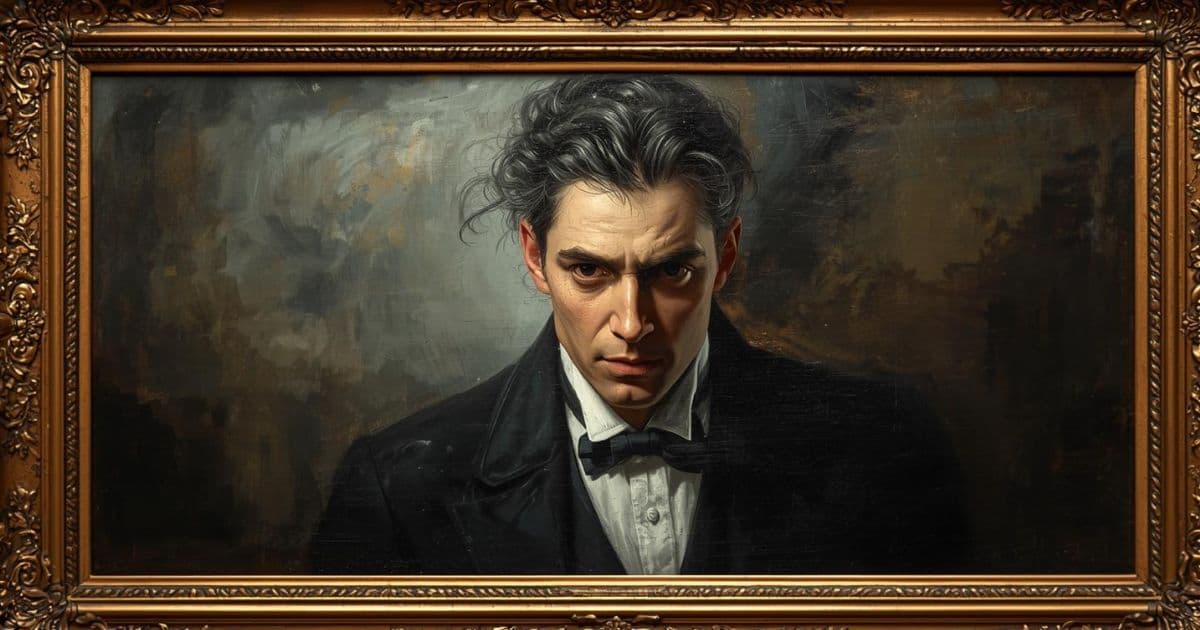
Oscar Wilde's only novel tells the story of Dorian Gray, a stunningly beautiful young man whose careless wish for eternal youth comes horrifyingly true. When painter Basil Hallward captures Dorian's extraordinary beauty in a portrait, the young man makes a Faustian bargain: he will remain forever young and beautiful, while the portrait ages and decays in his place, bearing the physical marks of every sin, cruelty, and moral compromise he commits. What begins as a fantasy becomes a nightmare as Dorian, seduced by the hedonistic philosophy of the charismatic Lord Henry Wotton, descends into a life of pleasure-seeking and corruption. He destroys lives, indulges every whim, and commits increasingly dark acts—yet his flawless face remains unchanged, allowing him to move through Victorian society as an admired figure while his portrait, locked away in his attic, becomes a grotesque record of his spiritual degradation. The novel masterfully explores how the relentless pursuit of beauty and pleasure without conscience leads to spiritual death, the toxic power of influence and mentorship, and the terrifying consequences of divorcing one's public image from one's true self. Wilde's Gothic masterpiece is both a thrilling psychological horror story and a profound meditation on vanity, art, morality, and the Victorian obsession with appearance over substance. Through Dorian's tragic descent, Wilde examines what happens when we prioritize surface beauty over inner character, when we let ourselves be shaped by toxic philosophies, and when we believe we can escape the consequences of our actions. The novel's shocking ending reminds us that the truth always surfaces, no matter how carefully we hide it, and that living without conscience inevitably destroys the soul. Published in 1890, the book scandalized Victorian society and remains startlingly relevant today in our image-obsessed culture.
Essential Life Skills Deep Dive
Explore chapter-by-chapter breakdowns of the essential life skills taught in this classic novel.
Recognizing Toxic Influence
10 chapters revealing how Lord Henry's charismatic advice destroys Dorian—and how to identify when someone's 'wisdom' is actually poison.
When Vanity Becomes Destructive
10 chapters tracking Dorian's descent from normal concern about appearance to soul-destroying obsession—and recognizing the warning signs.
The Cost of Living a Double Life
10 chapters exposing the psychological toll of maintaining perfect public image while hiding corrupted private reality—and when this becomes unsustainable.
Essential Skills
Life skills and patterns this book helps you develop—drawn from its themes and characters.
Recognizing Toxic Influence
Identify mentors and friends who corrupt rather than elevate you
Understanding the Cost of Vanity
See how obsession with image and appearance can hollow out your soul
Facing Consequences
Accept that actions have costs, even when they're not immediately visible
Distinguishing Beauty from Goodness
Recognize that surface beauty does not reflect inner character
Resisting Hedonism
Understand how the pursuit of pleasure alone leads to emptiness
Listening to Your Conscience
Learn why ignoring guilt only makes it grow more monstrous
Table of Contents
Picture this: a sun-drenched London studio filled with the scent of...
Lord Henry Wotton arrives at artist Basil Hallward's studio and imm...
Dorian Gray meets Lord Henry Wotton in Basil's garden, and this enc...
Dorian returns home from his first meeting with Lord Henry, his min...
Dorian Gray sits for his portrait with painter Basil Hallward, and ...
Dorian becomes completely obsessed with the actress Sibyl Vane afte...
Dorian attends a dinner party thrown by his uncle, Lord Kelso, wher...
Dorian wakes up the morning after Sibyl's suicide feeling surprisin...
Dorian Gray returns to London after James Vane's death, but he can'...
Dorian becomes obsessed with a mysterious yellow book that Lord Hen...
Dorian becomes obsessed with collecting beautiful objects from arou...
Dorian finally confronts the horrifying reality of his portrait aft...
Dorian wakes up the morning after murdering Basil Hallward, feeling...
Dorian Gray stands before his portrait in horror, watching as anoth...
Dorian arrives at an opium den in the East End, desperately seeking...
Dorian's world begins to crumble as his past finally catches up wit...
Dorian Gray sits alone in his country estate, consumed by paranoia ...
Dorian confronts the full horror of what he's become when he decide...
Dorian sits alone in his library, tormented by thoughts of his past...
Dorian Gray finally confronts the horror he has become
About Oscar Wilde
Published 1890
Oscar Wilde (1854-1900) was an Irish poet and playwright, one of London's most popular writers in the early 1890s. Known for his wit, flamboyant style, and brilliant conversation, Wilde's only novel scandalized Victorian society with its themes of hedonism and moral corruption. His life ended in tragedy after imprisonment for 'gross indecency,' dying in exile at 46.
Why This Author Matters Today
Oscar Wilde's insights into human nature, social constraints, and the search for authenticity remain powerfully relevant. Their work helps us understand the timeless tensions between individual desire and social expectation, making them an essential guide for navigating modern life's complexities.
Amplified Classics is different.
not a sparknotes, nor a cliffnotes
This is a retelling. The story is still told—completely. You walk with the characters, feel what they feel, discover what they discover. The meaning arrives because you experienced it, not because someone explained a summary.
Read this, then read the original. The prose will illuminate—you'll notice what makes the author that author, because you're no longer fighting to follow the story.
Read the original first, then read this. Something will click. You'll want to go back.
Either way, the door opens inward.
Get the Full Book
Purchase the complete book to access all chapters and support classic literature
As an Amazon Associate, we earn a small commission from qualifying purchases at no additional cost to you.
Available in paperback, hardcover, and e-book formats
You Might Also Like




Free to read • No account required