
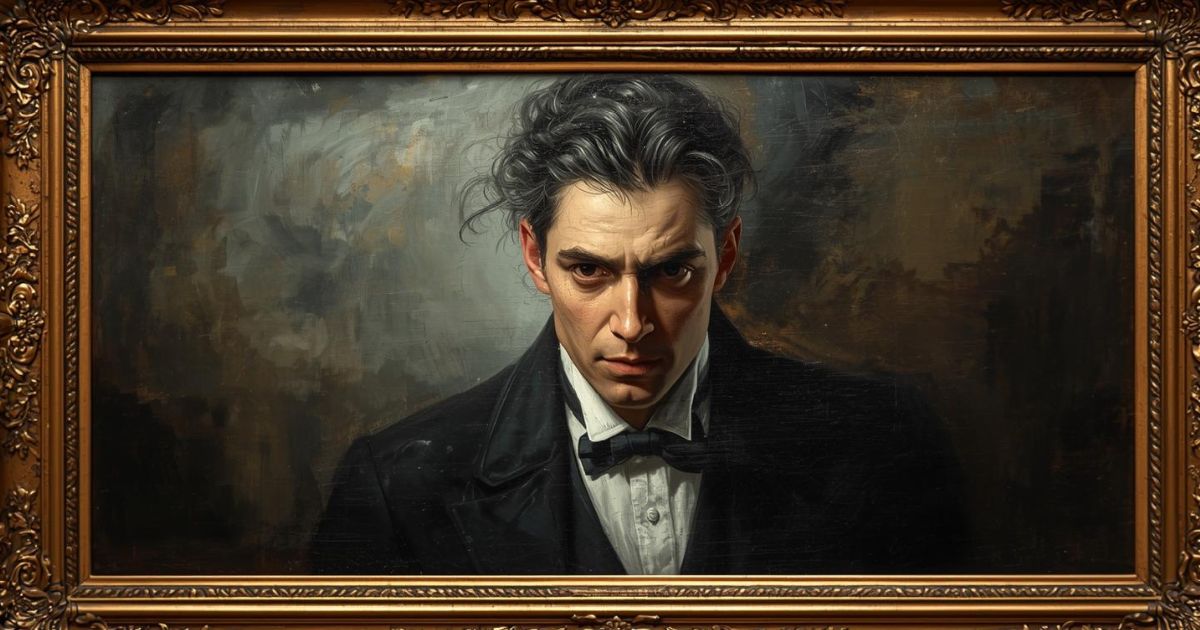
An excerpt from the original text.(complete · 3584 words)
“here is no use your telling me that you are going to be good,” cried
Lord Henry, dipping his white fingers into a red copper bowl filled
with rose-water. “You are quite perfect. Pray, don’t change.”
Dorian Gray shook his head. “No, Harry, I have done too many dreadful
things in my life. I am not going to do any more. I began my good
actions yesterday.”
“Where were you yesterday?”
“In the country, Harry. I was staying at a little inn by myself.”
“My dear boy,” said Lord Henry, smiling, “anybody can be good in the
country. There are no temptations there. That is the reason why people
who live out of town are so absolutely uncivilized. Civilization is not
by any means an easy thing to attain to. There are only two ways by
which man can reach it. One is by being cultured, the other by being
corrupt. Country people have no opportunity of being either, so they
stagnate.”
“Culture and corruption,” echoed Dorian. “I have known something of
both. It seems terrible to me now that they should ever be found
together. For I have a new ideal, Harry. I am going to alter. I think I
have altered.”
“You have not yet told me what your good action was. Or did you say you
had done more than one?” asked his companion as he spilled into his
plate a little crimson pyramid of seeded strawberries and, through a
perforated, shell-shaped spoon, snowed white sugar upon them.
“I can tell you, Harry. It is not a story I could tell to any one else.
I spared somebody. It sounds vain, but you understand what I mean. She
was quite beautiful and wonderfully like Sibyl Vane. I think it was
that which first attracted me to her. You remember Sibyl, don’t you?
How long ago that seems! Well, Hetty was not one of our own class, of
course. She was simply a girl in a village. But I really loved her. I
am quite sure that I loved her. All during this wonderful May that we
have been having, I used to run down and see her two or three times a
week. Yesterday she met me in a little orchard. The apple-blossoms kept
tumbling down on her hair, and she was laughing. We were to have gone
away together this morning at dawn. Suddenly I determined to leave her
as flowerlike as I had found her.”
“I should think the novelty of the emotion must have given you a thrill
of real pleasure, Dorian,” interrupted Lord Henry. “But I can finish
your idyll for you. You gave her good advice and broke her heart. That
was the beginning of your reformation.”
“Harry, you are horrible! You mustn’t say these dreadful things.
Hetty’s heart is not broken. Of course, she cried and all that. But
there is no disgrace upon her. She can live, like Perdita, in her
garden of mint and marigold.”
“And weep over a faithless Florizel,” said Lord Henry, laughing, as he
leaned back in his chair. “My dear Dorian, you have the most curiously
boyish moods. Do you think this girl will ever be really content now
with any one of her own rank? I suppose she will be married some day to
a rough carter or a grinning ploughman. Well, the fact of having met
you, and loved you, will teach her to despise her husband, and she will
be wretched. From a moral point of view, I cannot say that I think much
of your great renunciation. Even as a beginning, it is poor. Besides,
how do you know that Hetty isn’t floating at the present moment in some
starlit mill-pond, with lovely water-lilies round her, like Ophelia?”
“I can’t bear this, Harry! You mock at everything, and then suggest the
most serious tragedies. I am sorry I told you now. I don’t care what
you say to me. I know I was right in acting as I did. Poor Hetty! As I
rode past the farm this morning, I saw her white face at the window,
like a spray of jasmine. Don’t let us talk about it any more, and don’t
try to persuade me that the first good action I have done for years,
the first little bit of self-sacrifice I have ever known, is really a
sort of sin. I want to be better. I am going to be better. Tell me
something about yourself. What is going on in town? I have not been to
the club for days.”
“The people are still discussing poor Basil’s disappearance.”
“I should have thought they had got tired of that by this time,” said
Dorian, pouring himself out some wine and frowning slightly.
“My dear boy, they have only been talking about it for six weeks, and
the British public are really not equal to the mental strain of having
more than one topic every three months. They have been very fortunate
lately, however. They have had my own divorce-case and Alan Campbell’s
suicide. Now they have got the mysterious disappearance of an artist.
Scotland Yard still insists that the man in the grey ulster who left
for Paris by the midnight train on the ninth of November was poor
Basil, and the French police declare that Basil never arrived in Paris
at all. I suppose in about a fortnight we shall be told that he has
been seen in San Francisco. It is an odd thing, but every one who
disappears is said to be seen at San Francisco. It must be a delightful
city, and possess all the attractions of the next world.”
“What do you think has happened to Basil?” asked Dorian, holding up his
Burgundy against the light and wondering how it was that he could
discuss the matter so calmly.
“I have not the slightest idea. If Basil chooses to hide himself, it is
no business of mine. If he is dead, I don’t want to think about him.
Death is the only thing that ever terrifies me. I hate it.”
“Why?” said the younger man wearily.
“Because,” said Lord Henry, passing beneath his nostrils the gilt
trellis of an open vinaigrette box, “one can survive everything
nowadays except that. Death and vulgarity are the only two facts in the
nineteenth century that one cannot explain away. Let us have our coffee
in the music-room, Dorian. You must play Chopin to me. The man with
whom my wife ran away played Chopin exquisitely. Poor Victoria! I was
very fond of her. The house is rather lonely without her. Of course,
married life is merely a habit, a bad habit. But then one regrets the
loss even of one’s worst habits. Perhaps one regrets them the most.
They are such an essential part of one’s personality.”
Dorian said nothing, but rose from the table, and passing into the next
room, sat down to the piano and let his fingers stray across the white
and black ivory of the keys. After the coffee had been brought in, he
stopped, and looking over at Lord Henry, said, “Harry, did it ever
occur to you that Basil was murdered?”
Lord Henry yawned. “Basil was very popular, and always wore a Waterbury
watch. Why should he have been murdered? He was not clever enough to
have enemies. Of course, he had a wonderful genius for painting. But a
man can paint like Velasquez and yet be as dull as possible. Basil was
really rather dull. He only interested me once, and that was when he
told me, years ago, that he had a wild adoration for you and that you
were the dominant motive of his art.”
“I was very fond of Basil,” said Dorian with a note of sadness in his
voice. “But don’t people say that he was murdered?”
“Oh, some of the papers do. It does not seem to me to be at all
probable. I know there are dreadful places in Paris, but Basil was not
the sort of man to have gone to them. He had no curiosity. It was his
chief defect.”
“What would you say, Harry, if I told you that I had murdered Basil?”
said the younger man. He watched him intently after he had spoken.
“I would say, my dear fellow, that you were posing for a character that
doesn’t suit you. All crime is vulgar, just as all vulgarity is crime.
It is not in you, Dorian, to commit a murder. I am sorry if I hurt your
vanity by saying so, but I assure you it is true. Crime belongs
exclusively to the lower orders. I don’t blame them in the smallest
degree. I should fancy that crime was to them what art is to us, simply
a method of procuring extraordinary sensations.”
“A method of procuring sensations? Do you think, then, that a man who
has once committed a murder could possibly do the same crime again?
Don’t tell me that.”
“Oh! anything becomes a pleasure if one does it too often,” cried Lord
Henry, laughing. “That is one of the most important secrets of life. I
should fancy, however, that murder is always a mistake. One should
never do anything that one cannot talk about after dinner. But let us
pass from poor Basil. I wish I could believe that he had come to such a
really romantic end as you suggest, but I can’t. I dare say he fell
into the Seine off an omnibus and that the conductor hushed up the
scandal. Yes: I should fancy that was his end. I see him lying now on
his back under those dull-green waters, with the heavy barges floating
over him and long weeds catching in his hair. Do you know, I don’t
think he would have done much more good work. During the last ten years
his painting had gone off very much.”
Dorian heaved a sigh, and Lord Henry strolled across the room and began
to stroke the head of a curious Java parrot, a large, grey-plumaged
bird with pink crest and tail, that was balancing itself upon a bamboo
perch. As his pointed fingers touched it, it dropped the white scurf of
crinkled lids over black, glasslike eyes and began to sway backwards
and forwards.
“Yes,” he continued, turning round and taking his handkerchief out of
his pocket; “his painting had quite gone off. It seemed to me to have
lost something. It had lost an ideal. When you and he ceased to be
great friends, he ceased to be a great artist. What was it separated
you? I suppose he bored you. If so, he never forgave you. It’s a habit
bores have. By the way, what has become of that wonderful portrait he
did of you? I don’t think I have ever seen it since he finished it. Oh!
I remember your telling me years ago that you had sent it down to
Selby, and that it had got mislaid or stolen on the way. You never got
it back? What a pity! it was really a masterpiece. I remember I wanted
to buy it. I wish I had now. It belonged to Basil’s best period. Since
then, his work was that curious mixture of bad painting and good
intentions that always entitles a man to be called a representative
British artist. Did you advertise for it? You should.”
“I forget,” said Dorian. “I suppose I did. But I never really liked it.
I am sorry I sat for it. The memory of the thing is hateful to me. Why
do you talk of it? It used to remind me of those curious lines in some
play—Hamlet, I think—how do they run?—
“Like the painting of a sorrow,
A face without a heart.”
Yes: that is what it was like.”
Lord Henry laughed. “If a man treats life artistically, his brain is
his heart,” he answered, sinking into an arm-chair.
Dorian Gray shook his head and struck some soft chords on the piano.
“‘Like the painting of a sorrow,’” he repeated, “‘a face without a
heart.’”
The elder man lay back and looked at him with half-closed eyes. “By the
way, Dorian,” he said after a pause, “‘what does it profit a man if he
gain the whole world and lose—how does the quotation run?—his own
soul’?”
The music jarred, and Dorian Gray started and stared at his friend.
“Why do you ask me that, Harry?”
“My dear fellow,” said Lord Henry, elevating his eyebrows in surprise,
“I asked you because I thought you might be able to give me an answer.
That is all. I was going through the park last Sunday, and close by the
Marble Arch there stood a little crowd of shabby-looking people
listening to some vulgar street-preacher. As I passed by, I heard the
man yelling out that question to his audience. It struck me as being
rather dramatic. London is very rich in curious effects of that kind. A
wet Sunday, an uncouth Christian in a mackintosh, a ring of sickly
white faces under a broken roof of dripping umbrellas, and a wonderful
phrase flung into the air by shrill hysterical lips—it was really very
good in its way, quite a suggestion. I thought of telling the prophet
that art had a soul, but that man had not. I am afraid, however, he
would not have understood me.”
“Don’t, Harry. The soul is a terrible reality. It can be bought, and
sold, and bartered away. It can be poisoned, or made perfect. There is
a soul in each one of us. I know it.”
“Do you feel quite sure of that, Dorian?”
“Quite sure.”
“Ah! then it must be an illusion. The things one feels absolutely
certain about are never true. That is the fatality of faith, and the
lesson of romance. How grave you are! Don’t be so serious. What have
you or I to do with the superstitions of our age? No: we have given up
our belief in the soul. Play me something. Play me a nocturne, Dorian,
and, as you play, tell me, in a low voice, how you have kept your
youth. You must have some secret. I am only ten years older than you
are, and I am wrinkled, and worn, and yellow. You are really wonderful,
Dorian. You have never looked more charming than you do to-night. You
remind me of the day I saw you first. You were rather cheeky, very shy,
and absolutely extraordinary. You have changed, of course, but not in
appearance. I wish you would tell me your secret. To get back my youth
I would do anything in the world, except take exercise, get up early,
or be respectable. Youth! There is nothing like it. It’s absurd to talk
of the ignorance of youth. The only people to whose opinions I listen
now with any respect are people much younger than myself. They seem in
front of me. Life has revealed to them her latest wonder. As for the
aged, I always contradict the aged. I do it on principle. If you ask
them their opinion on something that happened yesterday, they solemnly
give you the opinions current in 1820, when people wore high stocks,
believed in everything, and knew absolutely nothing. How lovely that
thing you are playing is! I wonder, did Chopin write it at Majorca,
with the sea weeping round the villa and the salt spray dashing against
the panes? It is marvellously romantic. What a blessing it is that
there is one art left to us that is not imitative! Don’t stop. I want
music to-night. It seems to me that you are the young Apollo and that I
am Marsyas listening to you. I have sorrows, Dorian, of my own, that
even you know nothing of. The tragedy of old age is not that one is
old, but that one is young. I am amazed sometimes at my own sincerity.
Ah, Dorian, how happy you are! What an exquisite life you have had! You
have drunk deeply of everything. You have crushed the grapes against
your palate. Nothing has been hidden from you. And it has all been to
you no more than the sound of music. It has not marred you. You are
still the same.”
“I am not the same, Harry.”
“Yes, you are the same. I wonder what the rest of your life will be.
Don’t spoil it by renunciations. At present you are a perfect type.
Don’t make yourself incomplete. You are quite flawless now. You need
not shake your head: you know you are. Besides, Dorian, don’t deceive
yourself. Life is not governed by will or intention. Life is a question
of nerves, and fibres, and slowly built-up cells in which thought hides
itself and passion has its dreams. You may fancy yourself safe and
think yourself strong. But a chance tone of colour in a room or a
morning sky, a particular perfume that you had once loved and that
brings subtle memories with it, a line from a forgotten poem that you
had come across again, a cadence from a piece of music that you had
ceased to play—I tell you, Dorian, that it is on things like these that
our lives depend. Browning writes about that somewhere; but our own
senses will imagine them for us. There are moments when the odour of
lilas blanc passes suddenly across me, and I have to live the
strangest month of my life over again. I wish I could change places
with you, Dorian. The world has cried out against us both, but it has
always worshipped you. It always will worship you. You are the type of
what the age is searching for, and what it is afraid it has found. I am
so glad that you have never done anything, never carved a statue, or
painted a picture, or produced anything outside of yourself! Life has
been your art. You have set yourself to music. Your days are your
sonnets.”
Dorian rose up from the piano and passed his hand through his hair.
“Yes, life has been exquisite,” he murmured, “but I am not going to
have the same life, Harry. And you must not say these extravagant
things to me. You don’t know everything about me. I think that if you
did, even you would turn from me. You laugh. Don’t laugh.”
“Why have you stopped playing, Dorian? Go back and give me the nocturne
over again. Look at that great, honey-coloured moon that hangs in the
dusky air. She is waiting for you to charm her, and if you play she
will come closer to the earth. You won’t? Let us go to the club, then.
It has been a charming evening, and we must end it charmingly. There is
some one at White’s who wants immensely to know you—young Lord Poole,
Bournemouth’s eldest son. He has already copied your neckties, and has
begged me to introduce him to you. He is quite delightful and rather
reminds me of you.”
“I hope not,” said Dorian with a sad look in his eyes. “But I am tired
to-night, Harry. I shan’t go to the club. It is nearly eleven, and I
want to go to bed early.”
“Do stay. You have never played so well as to-night. There was
something in your touch that was wonderful. It had more expression than
I had ever heard from it before.”
“It is because I am going to be good,” he answered, smiling. “I am a
little changed already.”
“You cannot change to me, Dorian,” said Lord Henry. “You and I will
always be friends.”
“Yet you poisoned me with a book once. I should not forgive that.
Harry, promise me that you will never lend that book to any one. It
does harm.”
“My dear boy, you are really beginning to moralize. You will soon be
going about like the converted, and the revivalist, warning people
against all the sins of which you have grown tired. You are much too
delightful to do that. Besides, it is no use. You and I are what we
are, and will be what we will be. As for being poisoned by a book,
there is no such thing as that. Art has no influence upon action. It
annihilates the desire to act. It is superbly sterile. The books that
the world calls immoral are books that show the world its own shame.
That is all. But we won’t discuss literature. Come round to-morrow. I
am going to ride at eleven. We might go together, and I will take you
to lunch afterwards with Lady Branksome. She is a charming woman, and
wants to consult you about some tapestries she is thinking of buying.
Mind you come. Or shall we lunch with our little duchess? She says she
never sees you now. Perhaps you are tired of Gladys? I thought you
would be. Her clever tongue gets on one’s nerves. Well, in any case, be
here at eleven.”
“Must I really come, Harry?”
“Certainly. The park is quite lovely now. I don’t think there have been
such lilacs since the year I met you.”
“Very well. I shall be here at eleven,” said Dorian. “Good night,
Harry.” As he reached the door, he hesitated for a moment, as if he had
something more to say. Then he sighed and went out.
Master this chapter. Complete your experience
Purchase the complete book to access all chapters and support classic literature
As an Amazon Associate, we earn a small commission from qualifying purchases at no additional cost to you.
Available in paperback, hardcover, and e-book formats
Let's Analyse the Pattern
The inevitable moment when our self-justifications collapse and we see the truth about who we've become through our actions.
Why This Matters
Connect literature to life
This chapter teaches how to spot the moment when our justifications collapse and we see the truth about our behavior.
Practice This Today
This week, notice when you feel defensive about criticism - that's often where your blind spots live, and where honest self-reflection can begin.
Now let's explore the literary elements.
Key Quotes & Analysis
"It was his beauty that had ruined him, his beauty and the youth that he had prayed for."
Context: Dorian reflects on how his wish for eternal youth led to his downfall
Shows the irony that getting what he thought he wanted became his curse. His external perfection enabled him to harm others without immediate consequences, which corrupted his soul.
In Today's Words:
The thing I thought would make my life perfect actually destroyed me.
"What was that loathsome red dew that gleamed, wet and glistening, on one of the hands, as though the canvas had sweated blood?"
Context: Dorian remembers the blood on the portrait's hands after he killed Basil
The portrait literally shows the blood on his hands, making his guilt impossible to ignore. The image forces him to face the reality of his violence.
In Today's Words:
I can't unsee the evidence of what I've done - it's right there staring back at me.
"He had been an evil influence to others, and had experienced a terrible joy in being so."
Context: Dorian acknowledges how he deliberately corrupted other people
Reveals that his harm to others wasn't accidental - he actively enjoyed destroying people's innocence and lives. This makes his crimes even more damning.
In Today's Words:
I didn't just hurt people by accident - I actually got off on ruining their lives.
"But this murder - was it to dog him all his life? Was he always to be burdened by his past?"
Context: Dorian wonders if he can ever escape the consequences of killing Basil
Shows his desperate hope for escape from guilt, but also his growing realization that some actions can't be undone or forgotten.
In Today's Words:
Will this mistake follow me forever, or can I somehow move on and start fresh?
Thematic Threads
Identity
In This Chapter
Dorian finally sees himself as he truly is - not the beautiful youth he appears to be, but the monster his actions have made him
Development
Evolved from early chapters where he was discovering himself to now confronting the reality of what he's become
In Your Life:
You might recognize this when you finally admit that your behavior doesn't match the person you tell yourself you are
Consequences
In This Chapter
All of Dorian's past actions - the deaths, the corruption, the destroyed lives - finally weigh on him simultaneously
Development
Built throughout the novel as each crime piled onto the last, now reaching critical mass
In Your Life:
You might feel this when years of small compromises suddenly feel unbearably heavy all at once
Isolation
In This Chapter
Dorian realizes he's completely alone, having destroyed everyone who ever cared about him through his selfishness
Development
Progressed from social butterfly to increasingly isolated as his true nature drove people away
In Your Life:
You might experience this when you realize your behavior has pushed away the people who mattered most
Redemption
In This Chapter
Dorian questions whether it's possible to change, to become good again after everything he's done
Development
First serious consideration of redemption after chapters of escalating corruption
In Your Life:
You might face this question when you wonder if it's too late to become the person you should have been
Self-Deception
In This Chapter
The psychological defenses that allowed Dorian to justify his actions finally crumble completely
Development
Culmination of the self-justification that's protected him throughout his descent into corruption
In Your Life:
You might recognize this when you can no longer explain away your behavior to yourself
You now have the context. Time to form your own thoughts.
Discussion Questions
- 1
What finally forces Dorian to see himself clearly after years of self-deception?
analysis • surface - 2
Why do you think Dorian's psychological defenses finally crumbled at this moment rather than earlier?
analysis • medium - 3
Where do you see people today using their advantages (looks, status, money) to avoid facing the consequences of their behavior?
application • medium - 4
When someone you know is living in denial about how their actions affect others, how do you decide whether to speak up or let them figure it out themselves?
application • deep - 5
What does Dorian's moment of recognition teach us about the difference between feeling guilty and actually changing behavior?
reflection • deep
Critical Thinking Exercise
Map Your Own Recognition Moments
Think of a time when you suddenly saw yourself clearly - maybe through someone else's reaction, a consequence you couldn't ignore, or a quiet moment when your excuses stopped working. Write down what you had been telling yourself versus what was actually true. Then identify the specific moment or trigger that broke through your self-deception.
Consider:
- •Recognition moments often come when we're alone or facing consequences we can't blame on others
- •The bigger the gap between our self-image and our actions, the more painful the recognition
- •These moments are opportunities for real change, but only if we act on the insight rather than just feeling bad about it
Journaling Prompt
Write about what you did after your moment of recognition. Did you use the insight to change, or did you find new ways to avoid the truth? What would you do differently now with what you know about how self-deception works?
Coming Up Next...
Chapter 20
Driven by his newfound self-awareness and desperate for redemption, Dorian makes a final, fateful decision about the portrait that has haunted him for so long. The ultimate price of his bargain is about to be revealed.



