
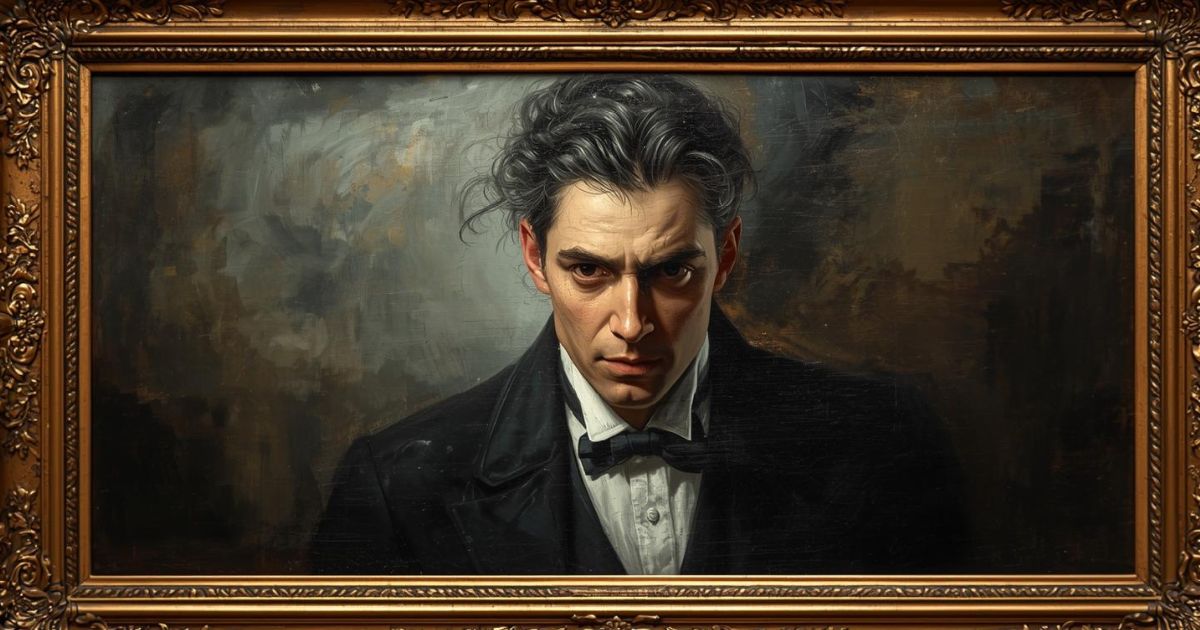
An excerpt from the original text.(complete · 1922 words)
t was a lovely night, so warm that he threw his coat over his arm and
did not even put his silk scarf round his throat. As he strolled home,
smoking his cigarette, two young men in evening dress passed him. He
heard one of them whisper to the other, “That is Dorian Gray.” He
remembered how pleased he used to be when he was pointed out, or stared
at, or talked about. He was tired of hearing his own name now. Half the
charm of the little village where he had been so often lately was that
no one knew who he was. He had often told the girl whom he had lured to
love him that he was poor, and she had believed him. He had told her
once that he was wicked, and she had laughed at him and answered that
wicked people were always very old and very ugly. What a laugh she
had!—just like a thrush singing. And how pretty she had been in her
cotton dresses and her large hats! She knew nothing, but she had
everything that he had lost.
When he reached home, he found his servant waiting up for him. He sent
him to bed, and threw himself down on the sofa in the library, and
began to think over some of the things that Lord Henry had said to him.
Was it really true that one could never change? He felt a wild longing
for the unstained purity of his boyhood—his rose-white boyhood, as Lord
Henry had once called it. He knew that he had tarnished himself, filled
his mind with corruption and given horror to his fancy; that he had
been an evil influence to others, and had experienced a terrible joy in
being so; and that of the lives that had crossed his own, it had been
the fairest and the most full of promise that he had brought to shame.
But was it all irretrievable? Was there no hope for him?
Ah! in what a monstrous moment of pride and passion he had prayed that
the portrait should bear the burden of his days, and he keep the
unsullied splendour of eternal youth! All his failure had been due to
that. Better for him that each sin of his life had brought its sure
swift penalty along with it. There was purification in punishment. Not
“Forgive us our sins” but “Smite us for our iniquities” should be the
prayer of man to a most just God.
The curiously carved mirror that Lord Henry had given to him, so many
years ago now, was standing on the table, and the white-limbed Cupids
laughed round it as of old. He took it up, as he had done on that night
of horror when he had first noted the change in the fatal picture, and
with wild, tear-dimmed eyes looked into its polished shield. Once, some
one who had terribly loved him had written to him a mad letter, ending
with these idolatrous words: “The world is changed because you are made
of ivory and gold. The curves of your lips rewrite history.” The
phrases came back to his memory, and he repeated them over and over to
himself. Then he loathed his own beauty, and flinging the mirror on the
floor, crushed it into silver splinters beneath his heel. It was his
beauty that had ruined him, his beauty and the youth that he had prayed
for. But for those two things, his life might have been free from
stain. His beauty had been to him but a mask, his youth but a mockery.
What was youth at best? A green, an unripe time, a time of shallow
moods, and sickly thoughts. Why had he worn its livery? Youth had
spoiled him.
It was better not to think of the past. Nothing could alter that. It
was of himself, and of his own future, that he had to think. James Vane
was hidden in a nameless grave in Selby churchyard. Alan Campbell had
shot himself one night in his laboratory, but had not revealed the
secret that he had been forced to know. The excitement, such as it was,
over Basil Hallward’s disappearance would soon pass away. It was
already waning. He was perfectly safe there. Nor, indeed, was it the
death of Basil Hallward that weighed most upon his mind. It was the
living death of his own soul that troubled him. Basil had painted the
portrait that had marred his life. He could not forgive him that. It
was the portrait that had done everything. Basil had said things to him
that were unbearable, and that he had yet borne with patience. The
murder had been simply the madness of a moment. As for Alan Campbell,
his suicide had been his own act. He had chosen to do it. It was
nothing to him.
A new life! That was what he wanted. That was what he was waiting for.
Surely he had begun it already. He had spared one innocent thing, at
any rate. He would never again tempt innocence. He would be good.
As he thought of Hetty Merton, he began to wonder if the portrait in
the locked room had changed. Surely it was not still so horrible as it
had been? Perhaps if his life became pure, he would be able to expel
every sign of evil passion from the face. Perhaps the signs of evil had
already gone away. He would go and look.
He took the lamp from the table and crept upstairs. As he unbarred the
door, a smile of joy flitted across his strangely young-looking face
and lingered for a moment about his lips. Yes, he would be good, and
the hideous thing that he had hidden away would no longer be a terror
to him. He felt as if the load had been lifted from him already.
He went in quietly, locking the door behind him, as was his custom, and
dragged the purple hanging from the portrait. A cry of pain and
indignation broke from him. He could see no change, save that in the
eyes there was a look of cunning and in the mouth the curved wrinkle of
the hypocrite. The thing was still loathsome—more loathsome, if
possible, than before—and the scarlet dew that spotted the hand seemed
brighter, and more like blood newly spilled. Then he trembled. Had it
been merely vanity that had made him do his one good deed? Or the
desire for a new sensation, as Lord Henry had hinted, with his mocking
laugh? Or that passion to act a part that sometimes makes us do things
finer than we are ourselves? Or, perhaps, all these? And why was the
red stain larger than it had been? It seemed to have crept like a
horrible disease over the wrinkled fingers. There was blood on the
painted feet, as though the thing had dripped—blood even on the hand
that had not held the knife. Confess? Did it mean that he was to
confess? To give himself up and be put to death? He laughed. He felt
that the idea was monstrous. Besides, even if he did confess, who would
believe him? There was no trace of the murdered man anywhere.
Everything belonging to him had been destroyed. He himself had burned
what had been below-stairs. The world would simply say that he was mad.
They would shut him up if he persisted in his story.... Yet it was his
duty to confess, to suffer public shame, and to make public atonement.
There was a God who called upon men to tell their sins to earth as well
as to heaven. Nothing that he could do would cleanse him till he had
told his own sin. His sin? He shrugged his shoulders. The death of
Basil Hallward seemed very little to him. He was thinking of Hetty
Merton. For it was an unjust mirror, this mirror of his soul that he
was looking at. Vanity? Curiosity? Hypocrisy? Had there been nothing
more in his renunciation than that? There had been something more. At
least he thought so. But who could tell? ... No. There had been nothing
more. Through vanity he had spared her. In hypocrisy he had worn the
mask of goodness. For curiosity’s sake he had tried the denial of self.
He recognized that now.
But this murder—was it to dog him all his life? Was he always to be
burdened by his past? Was he really to confess? Never. There was only
one bit of evidence left against him. The picture itself—that was
evidence. He would destroy it. Why had he kept it so long? Once it had
given him pleasure to watch it changing and growing old. Of late he had
felt no such pleasure. It had kept him awake at night. When he had been
away, he had been filled with terror lest other eyes should look upon
it. It had brought melancholy across his passions. Its mere memory had
marred many moments of joy. It had been like conscience to him. Yes, it
had been conscience. He would destroy it.
He looked round and saw the knife that had stabbed Basil Hallward. He
had cleaned it many times, till there was no stain left upon it. It was
bright, and glistened. As it had killed the painter, so it would kill
the painter’s work, and all that that meant. It would kill the past,
and when that was dead, he would be free. It would kill this monstrous
soul-life, and without its hideous warnings, he would be at peace. He
seized the thing, and stabbed the picture with it.
There was a cry heard, and a crash. The cry was so horrible in its
agony that the frightened servants woke and crept out of their rooms.
Two gentlemen, who were passing in the square below, stopped and looked
up at the great house. They walked on till they met a policeman and
brought him back. The man rang the bell several times, but there was no
answer. Except for a light in one of the top windows, the house was all
dark. After a time, he went away and stood in an adjoining portico and
watched.
“Whose house is that, Constable?” asked the elder of the two gentlemen.
“Mr. Dorian Gray’s, sir,” answered the policeman.
They looked at each other, as they walked away, and sneered. One of
them was Sir Henry Ashton’s uncle.
Inside, in the servants’ part of the house, the half-clad domestics
were talking in low whispers to each other. Old Mrs. Leaf was crying
and wringing her hands. Francis was as pale as death.
After about a quarter of an hour, he got the coachman and one of the
footmen and crept upstairs. They knocked, but there was no reply. They
called out. Everything was still. Finally, after vainly trying to force
the door, they got on the roof and dropped down on to the balcony. The
windows yielded easily—their bolts were old.
When they entered, they found hanging upon the wall a splendid portrait
of their master as they had last seen him, in all the wonder of his
exquisite youth and beauty. Lying on the floor was a dead man, in
evening dress, with a knife in his heart. He was withered, wrinkled,
and loathsome of visage. It was not till they had examined the rings
that they recognized who it was.
THE END
Master this chapter. Complete your experience
Purchase the complete book to access all chapters and support classic literature
As an Amazon Associate, we earn a small commission from qualifying purchases at no additional cost to you.
Available in paperback, hardcover, and e-book formats
Let's Analyse the Pattern
The inevitable moment when the energy required to maintain a false self becomes unsustainable and reality forces a brutal reckoning.
Why This Matters
Connect literature to life
This chapter teaches how to identify when you're spending more energy maintaining an image than living authentically.
Practice This Today
This week, notice when you feel exhausted after social interactions—that's often the cost of performing instead of being real.
Now let's explore the literary elements.
Key Quotes & Analysis
"It was his beauty that had ruined him, his beauty and the youth that he had prayed for."
Context: As Dorian realizes how his wish for eternal youth led to his moral destruction
This shows how getting what we think we want can actually destroy us. Dorian's beauty became a curse because it allowed him to avoid consequences and lose his humanity.
In Today's Words:
His good looks were actually what destroyed him - he got everything he thought he wanted and it ruined his life.
"He would destroy this monstrous soul-life, and without its hideous warnings, he would be at peace."
Context: Dorian's thoughts before stabbing the portrait
Dorian believes he can destroy his conscience and guilt by destroying the portrait, but he's really destroying himself. You can't escape who you've become by destroying the evidence.
In Today's Words:
He thought if he could just get rid of the proof of what he'd become, he could finally have peace.
"When they entered, they found hanging upon the wall a splendid portrait of their master as they had last seen him, in all the wonder of his exquisite youth and beauty."
Context: The servants discover the restored portrait after Dorian's death
The portrait returns to its original beauty while Dorian's body shows his true, corrupted age. This suggests that redemption is possible, but only through accepting consequences.
In Today's Words:
The painting was beautiful again, showing him as the innocent young man he used to be.
Thematic Threads
Identity
In This Chapter
Dorian's true self is finally revealed when the portrait's magic breaks, showing the withered reality behind his beautiful facade
Development
Culmination of the identity split established in early chapters—the final merger of appearance and reality
In Your Life:
You might recognize this when you realize you've been performing a version of yourself for so long you've forgotten who you really are.
Consequences
In This Chapter
All of Dorian's sins finally catch up to him in one devastating moment, proving that no one escapes accountability forever
Development
Resolution of the consequence-free living that defined most of the novel
In Your Life:
You see this when years of small compromises suddenly add up to a major life crisis you can no longer ignore.
Redemption
In This Chapter
The portrait returns to its original innocent beauty, suggesting that goodness can be restored even after corruption
Development
Introduced here as the novel's final statement about human potential
In Your Life:
You might find hope in this when you're wondering if it's too late to change course in your own life.
Self-Knowledge
In This Chapter
Dorian finally sees himself clearly for the first time, leading to both horror and a kind of liberation
Development
Completion of his journey from self-ignorance through willful blindness to painful clarity
In Your Life:
You experience this in moments when you stop making excuses and honestly assess your own behavior and its impact.
Authenticity
In This Chapter
The destruction of the false beautiful image reveals the importance of living as your true self, however flawed
Development
Final commentary on the novel's central theme of appearance versus reality
In Your Life:
You might recognize this when you're exhausted from pretending to be someone you're not and crave the relief of just being real.
You now have the context. Time to form your own thoughts.
Discussion Questions
- 1
What finally forces Dorian to confront the truth about himself, and what does he do about it?
analysis • surface - 2
Why does Dorian choose to destroy the portrait rather than try to change his behavior?
analysis • medium - 3
Where do you see people today maintaining a fake version of themselves that requires constant energy to keep up?
application • medium - 4
How can someone recognize when they're heading toward their own 'portrait moment' before it's too late?
application • deep - 5
What does Dorian's ending teach us about the difference between facing our problems and trying to destroy the evidence of them?
reflection • deep
Critical Thinking Exercise
Map Your Own Portrait
Think about areas in your life where there's a gap between how you appear and who you really are. Draw two columns: 'Public Me' and 'Private Truth.' List 3-4 areas where these don't match. Then identify which gap requires the most energy to maintain and consider what small step toward authenticity you could take this week.
Consider:
- •Focus on patterns, not just individual incidents
- •Consider both major life areas and small daily behaviors
- •Think about which gaps drain your energy most
Journaling Prompt
Write about a time when you had to face a truth about yourself that you'd been avoiding. What forced the confrontation, and what did you learn about the cost of self-deception?



