
An excerpt from the original text.(complete · 4376 words)
“other, Mother, I am so happy!” whispered the girl, burying her face
in the lap of the faded, tired-looking woman who, with back turned to
the shrill intrusive light, was sitting in the one arm-chair that their
dingy sitting-room contained. “I am so happy!” she repeated, “and you
must be happy, too!”
Mrs. Vane winced and put her thin, bismuth-whitened hands on her
daughter’s head. “Happy!” she echoed, “I am only happy, Sibyl, when I
see you act. You must not think of anything but your acting. Mr. Isaacs
has been very good to us, and we owe him money.”
The girl looked up and pouted. “Money, Mother?” she cried, “what does
money matter? Love is more than money.”
“Mr. Isaacs has advanced us fifty pounds to pay off our debts and to
get a proper outfit for James. You must not forget that, Sibyl. Fifty
pounds is a very large sum. Mr. Isaacs has been most considerate.”
“He is not a gentleman, Mother, and I hate the way he talks to me,”
said the girl, rising to her feet and going over to the window.
“I don’t know how we could manage without him,” answered the elder
woman querulously.
Sibyl Vane tossed her head and laughed. “We don’t want him any more,
Mother. Prince Charming rules life for us now.” Then she paused. A rose
shook in her blood and shadowed her cheeks. Quick breath parted the
petals of her lips. They trembled. Some southern wind of passion swept
over her and stirred the dainty folds of her dress. “I love him,” she
said simply.
“Foolish child! foolish child!” was the parrot-phrase flung in answer.
The waving of crooked, false-jewelled fingers gave grotesqueness to the
words.
The girl laughed again. The joy of a caged bird was in her voice. Her
eyes caught the melody and echoed it in radiance, then closed for a
moment, as though to hide their secret. When they opened, the mist of a
dream had passed across them.
Thin-lipped wisdom spoke at her from the worn chair, hinted at
prudence, quoted from that book of cowardice whose author apes the name
of common sense. She did not listen. She was free in her prison of
passion. Her prince, Prince Charming, was with her. She had called on
memory to remake him. She had sent her soul to search for him, and it
had brought him back. His kiss burned again upon her mouth. Her eyelids
were warm with his breath.
Then wisdom altered its method and spoke of espial and discovery. This
young man might be rich. If so, marriage should be thought of. Against
the shell of her ear broke the waves of worldly cunning. The arrows of
craft shot by her. She saw the thin lips moving, and smiled.
Suddenly she felt the need to speak. The wordy silence troubled her.
“Mother, Mother,” she cried, “why does he love me so much? I know why I
love him. I love him because he is like what love himself should be.
But what does he see in me? I am not worthy of him. And yet—why, I
cannot tell—though I feel so much beneath him, I don’t feel humble. I
feel proud, terribly proud. Mother, did you love my father as I love
Prince Charming?”
The elder woman grew pale beneath the coarse powder that daubed her
cheeks, and her dry lips twitched with a spasm of pain. Sybil rushed to
her, flung her arms round her neck, and kissed her. “Forgive me,
Mother. I know it pains you to talk about our father. But it only pains
you because you loved him so much. Don’t look so sad. I am as happy
to-day as you were twenty years ago. Ah! let me be happy for ever!”
“My child, you are far too young to think of falling in love. Besides,
what do you know of this young man? You don’t even know his name. The
whole thing is most inconvenient, and really, when James is going away
to Australia, and I have so much to think of, I must say that you
should have shown more consideration. However, as I said before, if he
is rich ...”
“Ah! Mother, Mother, let me be happy!”
Mrs. Vane glanced at her, and with one of those false theatrical
gestures that so often become a mode of second nature to a
stage-player, clasped her in her arms. At this moment, the door opened
and a young lad with rough brown hair came into the room. He was
thick-set of figure, and his hands and feet were large and somewhat
clumsy in movement. He was not so finely bred as his sister. One would
hardly have guessed the close relationship that existed between them.
Mrs. Vane fixed her eyes on him and intensified her smile. She mentally
elevated her son to the dignity of an audience. She felt sure that the
tableau was interesting.
“You might keep some of your kisses for me, Sibyl, I think,” said the
lad with a good-natured grumble.
“Ah! but you don’t like being kissed, Jim,” she cried. “You are a
dreadful old bear.” And she ran across the room and hugged him.
James Vane looked into his sister’s face with tenderness. “I want you
to come out with me for a walk, Sibyl. I don’t suppose I shall ever see
this horrid London again. I am sure I don’t want to.”
“My son, don’t say such dreadful things,” murmured Mrs. Vane, taking up
a tawdry theatrical dress, with a sigh, and beginning to patch it. She
felt a little disappointed that he had not joined the group. It would
have increased the theatrical picturesqueness of the situation.
“Why not, Mother? I mean it.”
“You pain me, my son. I trust you will return from Australia in a
position of affluence. I believe there is no society of any kind in the
Colonies—nothing that I would call society—so when you have made your
fortune, you must come back and assert yourself in London.”
“Society!” muttered the lad. “I don’t want to know anything about that.
I should like to make some money to take you and Sibyl off the stage. I
hate it.”
“Oh, Jim!” said Sibyl, laughing, “how unkind of you! But are you really
going for a walk with me? That will be nice! I was afraid you were
going to say good-bye to some of your friends—to Tom Hardy, who gave
you that hideous pipe, or Ned Langton, who makes fun of you for smoking
it. It is very sweet of you to let me have your last afternoon. Where
shall we go? Let us go to the park.”
“I am too shabby,” he answered, frowning. “Only swell people go to the
park.”
“Nonsense, Jim,” she whispered, stroking the sleeve of his coat.
He hesitated for a moment. “Very well,” he said at last, “but don’t be
too long dressing.” She danced out of the door. One could hear her
singing as she ran upstairs. Her little feet pattered overhead.
He walked up and down the room two or three times. Then he turned to
the still figure in the chair. “Mother, are my things ready?” he asked.
“Quite ready, James,” she answered, keeping her eyes on her work. For
some months past she had felt ill at ease when she was alone with this
rough stern son of hers. Her shallow secret nature was troubled when
their eyes met. She used to wonder if he suspected anything. The
silence, for he made no other observation, became intolerable to her.
She began to complain. Women defend themselves by attacking, just as
they attack by sudden and strange surrenders. “I hope you will be
contented, James, with your sea-faring life,” she said. “You must
remember that it is your own choice. You might have entered a
solicitor’s office. Solicitors are a very respectable class, and in the
country often dine with the best families.”
“I hate offices, and I hate clerks,” he replied. “But you are quite
right. I have chosen my own life. All I say is, watch over Sibyl. Don’t
let her come to any harm. Mother, you must watch over her.”
“James, you really talk very strangely. Of course I watch over Sibyl.”
“I hear a gentleman comes every night to the theatre and goes behind to
talk to her. Is that right? What about that?”
“You are speaking about things you don’t understand, James. In the
profession we are accustomed to receive a great deal of most gratifying
attention. I myself used to receive many bouquets at one time. That was
when acting was really understood. As for Sibyl, I do not know at
present whether her attachment is serious or not. But there is no doubt
that the young man in question is a perfect gentleman. He is always
most polite to me. Besides, he has the appearance of being rich, and
the flowers he sends are lovely.”
“You don’t know his name, though,” said the lad harshly.
“No,” answered his mother with a placid expression in her face. “He has
not yet revealed his real name. I think it is quite romantic of him. He
is probably a member of the aristocracy.”
James Vane bit his lip. “Watch over Sibyl, Mother,” he cried, “watch
over her.”
“My son, you distress me very much. Sibyl is always under my special
care. Of course, if this gentleman is wealthy, there is no reason why
she should not contract an alliance with him. I trust he is one of the
aristocracy. He has all the appearance of it, I must say. It might be a
most brilliant marriage for Sibyl. They would make a charming couple.
His good looks are really quite remarkable; everybody notices them.”
The lad muttered something to himself and drummed on the window-pane
with his coarse fingers. He had just turned round to say something when
the door opened and Sibyl ran in.
“How serious you both are!” she cried. “What is the matter?”
“Nothing,” he answered. “I suppose one must be serious sometimes.
Good-bye, Mother; I will have my dinner at five o’clock. Everything is
packed, except my shirts, so you need not trouble.”
“Good-bye, my son,” she answered with a bow of strained stateliness.
She was extremely annoyed at the tone he had adopted with her, and
there was something in his look that had made her feel afraid.
“Kiss me, Mother,” said the girl. Her flowerlike lips touched the
withered cheek and warmed its frost.
“My child! my child!” cried Mrs. Vane, looking up to the ceiling in
search of an imaginary gallery.
“Come, Sibyl,” said her brother impatiently. He hated his mother’s
affectations.
They went out into the flickering, wind-blown sunlight and strolled
down the dreary Euston Road. The passersby glanced in wonder at the
sullen heavy youth who, in coarse, ill-fitting clothes, was in the
company of such a graceful, refined-looking girl. He was like a common
gardener walking with a rose.
Jim frowned from time to time when he caught the inquisitive glance of
some stranger. He had that dislike of being stared at, which comes on
geniuses late in life and never leaves the commonplace. Sibyl, however,
was quite unconscious of the effect she was producing. Her love was
trembling in laughter on her lips. She was thinking of Prince Charming,
and, that she might think of him all the more, she did not talk of him,
but prattled on about the ship in which Jim was going to sail, about
the gold he was certain to find, about the wonderful heiress whose life
he was to save from the wicked, red-shirted bushrangers. For he was not
to remain a sailor, or a supercargo, or whatever he was going to be.
Oh, no! A sailor’s existence was dreadful. Fancy being cooped up in a
horrid ship, with the hoarse, hump-backed waves trying to get in, and a
black wind blowing the masts down and tearing the sails into long
screaming ribands! He was to leave the vessel at Melbourne, bid a
polite good-bye to the captain, and go off at once to the gold-fields.
Before a week was over he was to come across a large nugget of pure
gold, the largest nugget that had ever been discovered, and bring it
down to the coast in a waggon guarded by six mounted policemen. The
bushrangers were to attack them three times, and be defeated with
immense slaughter. Or, no. He was not to go to the gold-fields at all.
They were horrid places, where men got intoxicated, and shot each other
in bar-rooms, and used bad language. He was to be a nice sheep-farmer,
and one evening, as he was riding home, he was to see the beautiful
heiress being carried off by a robber on a black horse, and give chase,
and rescue her. Of course, she would fall in love with him, and he with
her, and they would get married, and come home, and live in an immense
house in London. Yes, there were delightful things in store for him.
But he must be very good, and not lose his temper, or spend his money
foolishly. She was only a year older than he was, but she knew so much
more of life. He must be sure, also, to write to her by every mail, and
to say his prayers each night before he went to sleep. God was very
good, and would watch over him. She would pray for him, too, and in a
few years he would come back quite rich and happy.
The lad listened sulkily to her and made no answer. He was heart-sick
at leaving home.
Yet it was not this alone that made him gloomy and morose.
Inexperienced though he was, he had still a strong sense of the danger
of Sibyl’s position. This young dandy who was making love to her could
mean her no good. He was a gentleman, and he hated him for that, hated
him through some curious race-instinct for which he could not account,
and which for that reason was all the more dominant within him. He was
conscious also of the shallowness and vanity of his mother’s nature,
and in that saw infinite peril for Sibyl and Sibyl’s happiness.
Children begin by loving their parents; as they grow older they judge
them; sometimes they forgive them.
His mother! He had something on his mind to ask of her, something that
he had brooded on for many months of silence. A chance phrase that he
had heard at the theatre, a whispered sneer that had reached his ears
one night as he waited at the stage-door, had set loose a train of
horrible thoughts. He remembered it as if it had been the lash of a
hunting-crop across his face. His brows knit together into a wedge-like
furrow, and with a twitch of pain he bit his underlip.
“You are not listening to a word I am saying, Jim,” cried Sibyl, “and I
am making the most delightful plans for your future. Do say something.”
“What do you want me to say?”
“Oh! that you will be a good boy and not forget us,” she answered,
smiling at him.
He shrugged his shoulders. “You are more likely to forget me than I am
to forget you, Sibyl.”
She flushed. “What do you mean, Jim?” she asked.
“You have a new friend, I hear. Who is he? Why have you not told me
about him? He means you no good.”
“Stop, Jim!” she exclaimed. “You must not say anything against him. I
love him.”
“Why, you don’t even know his name,” answered the lad. “Who is he? I
have a right to know.”
“He is called Prince Charming. Don’t you like the name? Oh! you silly
boy! you should never forget it. If you only saw him, you would think
him the most wonderful person in the world. Some day you will meet
him—when you come back from Australia. You will like him so much.
Everybody likes him, and I ... love him. I wish you could come to the
theatre to-night. He is going to be there, and I am to play Juliet. Oh!
how I shall play it! Fancy, Jim, to be in love and play Juliet! To have
him sitting there! To play for his delight! I am afraid I may frighten
the company, frighten or enthrall them. To be in love is to surpass
one’s self. Poor dreadful Mr. Isaacs will be shouting ‘genius’ to his
loafers at the bar. He has preached me as a dogma; to-night he will
announce me as a revelation. I feel it. And it is all his, his only,
Prince Charming, my wonderful lover, my god of graces. But I am poor
beside him. Poor? What does that matter? When poverty creeps in at the
door, love flies in through the window. Our proverbs want rewriting.
They were made in winter, and it is summer now; spring-time for me, I
think, a very dance of blossoms in blue skies.”
“He is a gentleman,” said the lad sullenly.
“A prince!” she cried musically. “What more do you want?”
“He wants to enslave you.”
“I shudder at the thought of being free.”
“I want you to beware of him.”
“To see him is to worship him; to know him is to trust him.”
“Sibyl, you are mad about him.”
She laughed and took his arm. “You dear old Jim, you talk as if you
were a hundred. Some day you will be in love yourself. Then you will
know what it is. Don’t look so sulky. Surely you should be glad to
think that, though you are going away, you leave me happier than I have
ever been before. Life has been hard for us both, terribly hard and
difficult. But it will be different now. You are going to a new world,
and I have found one. Here are two chairs; let us sit down and see the
smart people go by.”
They took their seats amidst a crowd of watchers. The tulip-beds across
the road flamed like throbbing rings of fire. A white dust—tremulous
cloud of orris-root it seemed—hung in the panting air. The brightly
coloured parasols danced and dipped like monstrous butterflies.
She made her brother talk of himself, his hopes, his prospects. He
spoke slowly and with effort. They passed words to each other as
players at a game pass counters. Sibyl felt oppressed. She could not
communicate her joy. A faint smile curving that sullen mouth was all
the echo she could win. After some time she became silent. Suddenly she
caught a glimpse of golden hair and laughing lips, and in an open
carriage with two ladies Dorian Gray drove past.
She started to her feet. “There he is!” she cried.
“Who?” said Jim Vane.
“Prince Charming,” she answered, looking after the victoria.
He jumped up and seized her roughly by the arm. “Show him to me. Which
is he? Point him out. I must see him!” he exclaimed; but at that moment
the Duke of Berwick’s four-in-hand came between, and when it had left
the space clear, the carriage had swept out of the park.
“He is gone,” murmured Sibyl sadly. “I wish you had seen him.”
“I wish I had, for as sure as there is a God in heaven, if he ever does
you any wrong, I shall kill him.”
She looked at him in horror. He repeated his words. They cut the air
like a dagger. The people round began to gape. A lady standing close to
her tittered.
“Come away, Jim; come away,” she whispered. He followed her doggedly as
she passed through the crowd. He felt glad at what he had said.
When they reached the Achilles Statue, she turned round. There was pity
in her eyes that became laughter on her lips. She shook her head at
him. “You are foolish, Jim, utterly foolish; a bad-tempered boy, that
is all. How can you say such horrible things? You don’t know what you
are talking about. You are simply jealous and unkind. Ah! I wish you
would fall in love. Love makes people good, and what you said was
wicked.”
“I am sixteen,” he answered, “and I know what I am about. Mother is no
help to you. She doesn’t understand how to look after you. I wish now
that I was not going to Australia at all. I have a great mind to chuck
the whole thing up. I would, if my articles hadn’t been signed.”
“Oh, don’t be so serious, Jim. You are like one of the heroes of those
silly melodramas Mother used to be so fond of acting in. I am not going
to quarrel with you. I have seen him, and oh! to see him is perfect
happiness. We won’t quarrel. I know you would never harm any one I
love, would you?”
“Not as long as you love him, I suppose,” was the sullen answer.
“I shall love him for ever!” she cried.
“And he?”
“For ever, too!”
“He had better.”
She shrank from him. Then she laughed and put her hand on his arm. He
was merely a boy.
At the Marble Arch they hailed an omnibus, which left them close to
their shabby home in the Euston Road. It was after five o’clock, and
Sibyl had to lie down for a couple of hours before acting. Jim insisted
that she should do so. He said that he would sooner part with her when
their mother was not present. She would be sure to make a scene, and he
detested scenes of every kind.
In Sybil’s own room they parted. There was jealousy in the lad’s heart,
and a fierce murderous hatred of the stranger who, as it seemed to him,
had come between them. Yet, when her arms were flung round his neck,
and her fingers strayed through his hair, he softened and kissed her
with real affection. There were tears in his eyes as he went
downstairs.
His mother was waiting for him below. She grumbled at his
unpunctuality, as he entered. He made no answer, but sat down to his
meagre meal. The flies buzzed round the table and crawled over the
stained cloth. Through the rumble of omnibuses, and the clatter of
street-cabs, he could hear the droning voice devouring each minute that
was left to him.
After some time, he thrust away his plate and put his head in his
hands. He felt that he had a right to know. It should have been told to
him before, if it was as he suspected. Leaden with fear, his mother
watched him. Words dropped mechanically from her lips. A tattered lace
handkerchief twitched in her fingers. When the clock struck six, he got
up and went to the door. Then he turned back and looked at her. Their
eyes met. In hers he saw a wild appeal for mercy. It enraged him.
“Mother, I have something to ask you,” he said. Her eyes wandered
vaguely about the room. She made no answer. “Tell me the truth. I have
a right to know. Were you married to my father?”
She heaved a deep sigh. It was a sigh of relief. The terrible moment,
the moment that night and day, for weeks and months, she had dreaded,
had come at last, and yet she felt no terror. Indeed, in some measure
it was a disappointment to her. The vulgar directness of the question
called for a direct answer. The situation had not been gradually led up
to. It was crude. It reminded her of a bad rehearsal.
“No,” she answered, wondering at the harsh simplicity of life.
“My father was a scoundrel then!” cried the lad, clenching his fists.
She shook her head. “I knew he was not free. We loved each other very
much. If he had lived, he would have made provision for us. Don’t speak
against him, my son. He was your father, and a gentleman. Indeed, he
was highly connected.”
An oath broke from his lips. “I don’t care for myself,” he exclaimed,
“but don’t let Sibyl.... It is a gentleman, isn’t it, who is in love
with her, or says he is? Highly connected, too, I suppose.”
For a moment a hideous sense of humiliation came over the woman. Her
head drooped. She wiped her eyes with shaking hands. “Sibyl has a
mother,” she murmured; “I had none.”
The lad was touched. He went towards her, and stooping down, he kissed
her. “I am sorry if I have pained you by asking about my father,” he
said, “but I could not help it. I must go now. Good-bye. Don’t forget
that you will have only one child now to look after, and believe me
that if this man wrongs my sister, I will find out who he is, track him
down, and kill him like a dog. I swear it.”
The exaggerated folly of the threat, the passionate gesture that
accompanied it, the mad melodramatic words, made life seem more vivid
to her. She was familiar with the atmosphere. She breathed more freely,
and for the first time for many months she really admired her son. She
would have liked to have continued the scene on the same emotional
scale, but he cut her short. Trunks had to be carried down and mufflers
looked for. The lodging-house drudge bustled in and out. There was the
bargaining with the cabman. The moment was lost in vulgar details. It
was with a renewed feeling of disappointment that she waved the
tattered lace handkerchief from the window, as her son drove away. She
was conscious that a great opportunity had been wasted. She consoled
herself by telling Sibyl how desolate she felt her life would be, now
that she had only one child to look after. She remembered the phrase.
It had pleased her. Of the threat she said nothing. It was vividly and
dramatically expressed. She felt that they would all laugh at it some
day.
Master this chapter. Complete your experience
Purchase the complete book to access all chapters and support classic literature
As an Amazon Associate, we earn a small commission from qualifying purchases at no additional cost to you.
Available in paperback, hardcover, and e-book formats
Let's Analyse the Pattern
The willingness to sacrifice integrity and truth to preserve one's image or status.
Why This Matters
Connect literature to life
This chapter teaches how to recognize when someone (including yourself) is being manipulated through vanity and fear of aging or losing status.
Practice This Today
This week, notice when advertisements, social media, or people around you try to sell you something by first making you feel insecure about how you look or appear to others.
Now let's explore the literary elements.
Key Quotes & Analysis
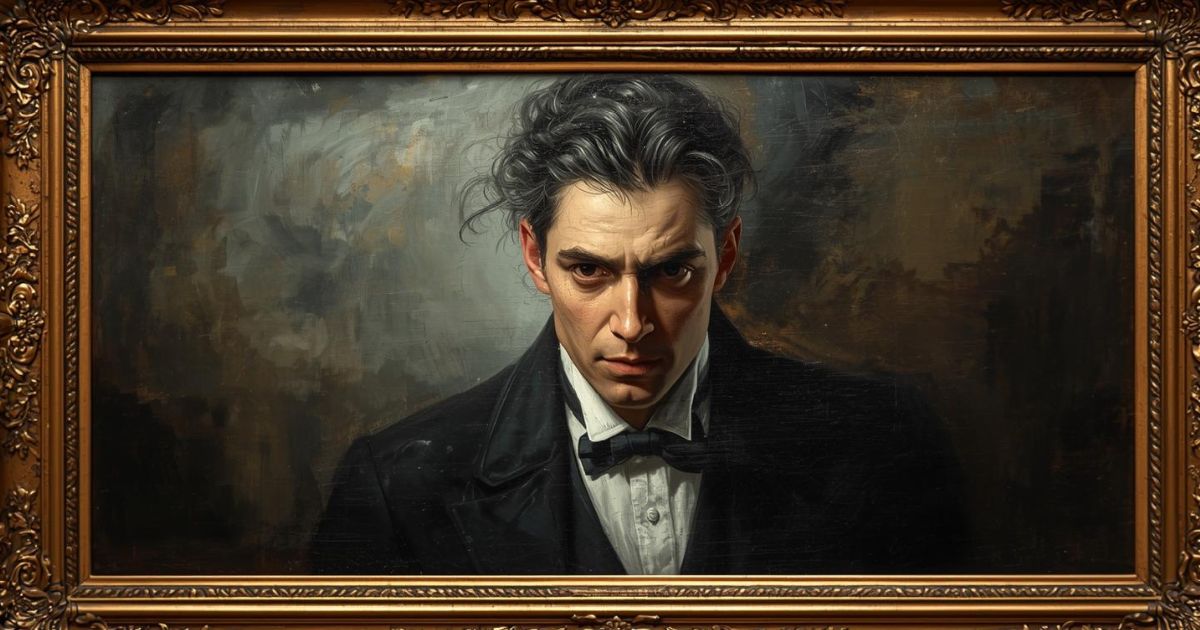
"How sad it is! I shall grow old, and horrible, and dreadful. But this picture will remain always young."
Context: When Dorian first sees his completed portrait and realizes he will age while it stays beautiful
This reveals Dorian's core fear and values - he's more terrified of losing his looks than anything else. It shows how Lord Henry's influence has warped his priorities completely.
In Today's Words:
I'm going to get old and ugly, but this photo will always show me at my best.
"If it were only the other way! If it were I who was to be always young, and the picture that was to grow old!"
Context: The moment Dorian makes his fateful wish
This is the turning point where Dorian chooses vanity over humanity. He's literally wishing away his soul for beauty, though he doesn't understand the consequences yet.
In Today's Words:
I wish I could stay young forever and let the picture get old instead of me!
"Youth is the only thing worth having."
Context: Lord Henry's philosophy that has been poisoning Dorian's mind
This toxic idea reduces human worth to physical appearance and age. It's the philosophy that drives Dorian to make his terrible bargain.
In Today's Words:
Being young is all that matters in life.
Thematic Threads
Vanity
In This Chapter
Dorian becomes obsessed with his physical beauty and makes a supernatural wish to preserve it forever
Development
Introduced here as Dorian's defining characteristic
In Your Life:
You might recognize this when you spend more time crafting your social media image than living your actual life
Influence
In This Chapter
Lord Henry's toxic philosophy about youth being everything directly shapes Dorian's desperate wish
Development
Continues from previous chapters, now showing concrete destructive results
In Your Life:
You see this when someone's constant negativity or shallow values start affecting your own decisions
Fear
In This Chapter
Dorian's terror of aging and losing his beauty drives him to make an impossible bargain
Development
Introduced here as the driving force behind his moral compromise
In Your Life:
You experience this when fear of judgment makes you hide your true self or make choices that go against your values
Art
In This Chapter
The portrait becomes a mirror that reveals Dorian's true nature and deepest fears about himself
Development
Evolves from simple artistic creation to supernatural moral barometer
In Your Life:
You might find this in how photographs or videos of yourself reveal truths you'd rather not face
Choice
In This Chapter
Dorian actively chooses appearance over character in making his wish
Development
Introduced here as the pivotal moment that will define his entire life
In Your Life:
You face this every time you must choose between doing what's right and doing what looks good
You now have the context. Time to form your own thoughts.
Discussion Questions
- 1
What specific wish does Dorian make when he sees his completed portrait, and what does this reveal about his priorities?
analysis • surface - 2
How does Lord Henry's influence contribute to Dorian's desperate reaction to seeing his own beauty captured in the painting?
analysis • medium - 3
Where do you see people today making similar 'bargains' - sacrificing something important to preserve their image or status?
application • medium - 4
When you feel pressure to maintain a certain image, what strategies could help you choose authenticity over appearance?
application • deep - 5
What does Dorian's willingness to trade his aging for the portrait's aging teach us about the relationship between vanity and moral compromise?
reflection • deep
Critical Thinking Exercise
Map Your Image Pressures
Create two columns: 'Image I Try to Maintain' and 'What I Sacrifice to Maintain It.' Be honest about the roles you play (perfect parent, successful professional, always-together friend) and what you give up to keep those images intact. Then identify which sacrifices actually serve you and which ones don't.
Consider:
- •Consider both obvious sacrifices (money, time) and subtle ones (honesty, authenticity, peace of mind)
- •Think about the difference between healthy self-care and image maintenance driven by fear
- •Notice which image pressures come from your own values versus external expectations
Journaling Prompt
Write about a time when you made a choice primarily to preserve how others saw you. What did it cost you, and what would you do differently now with the wisdom you have today?
Coming Up Next...
Chapter 6
Dorian's wish might seem like harmless vanity, but strange things are about to begin happening. As he starts living the hedonistic lifestyle Lord Henry preaches, he'll discover that some bargains come with a terrible price.



