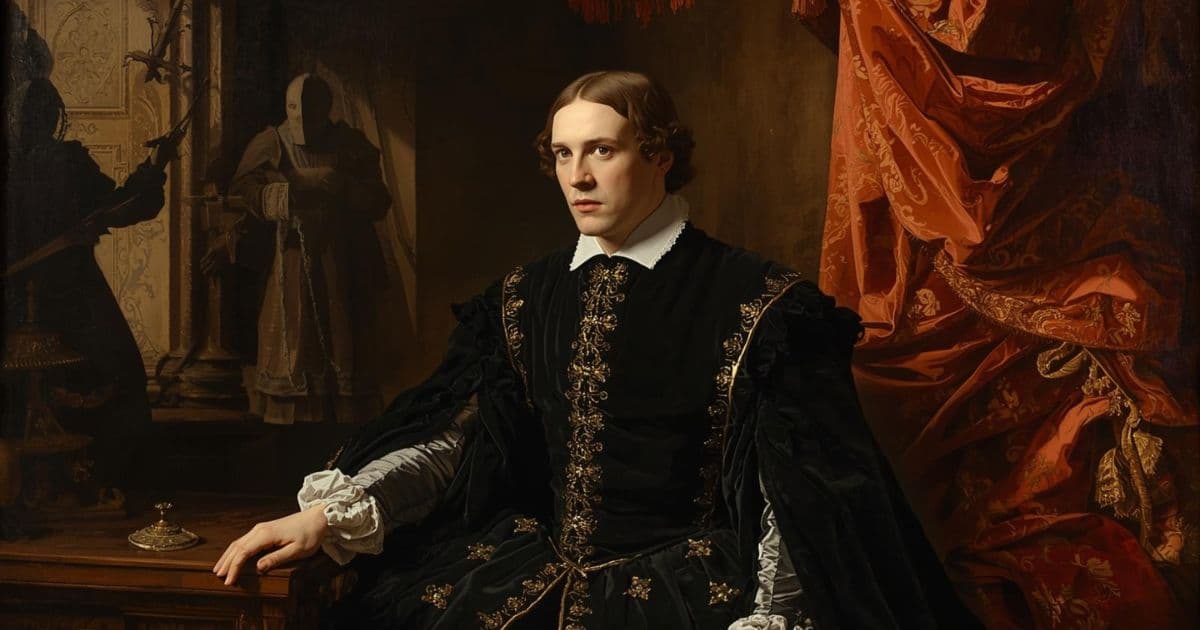
Teaching The Brothers Karamazov
by Fyodor Dostoevsky (1880)
Why Teach The Brothers Karamazov?
Dostoevsky's final masterpiece plunges into the darkest questions of human existence: Can faith survive in a world of suffering? Is morality possible without God? Can reason alone guide us to truth? Through the turbulent lives of the Karamazov family, this epic novel transforms philosophical abstractions into visceral, lived experience. At the center stands Fyodor Karamazov, a wealthy landowner whose moral bankruptcy poisons everything he touches. His three legitimate sons embody different responses to life's fundamental questions. Dmitri, the passionate eldest, lives by emotion and impulse, careening between extremes of generosity and violence. Ivan, the intellectual middle son, constructs brilliant arguments for atheism while struggling with the spiritual void his logic creates. Alyosha, the youngest, seeks refuge in Orthodox Christianity and monastic life, yet finds his faith tested by the very suffering it claims to redeem. When their father is murdered, each brother becomes a suspect—not just in the eyes of law, but in the court of moral responsibility. The investigation becomes a profound meditation on guilt, both legal and metaphysical. Who bears responsibility when a death occurs? The one who commits the act? The one who desires it? The one who could have prevented it? Embedded within this family drama is "The Grand Inquisitor," one of literature's most powerful examinations of freedom, faith, and authority. Through Ivan's parable, Dostoevsky confronts the central paradox: Christ offered humanity the burden of freedom, but do people actually want to be free? More than a murder mystery or philosophical treatise, this novel captures the full chaos of human consciousness—our contradictions, our capacity for both nobility and degradation, our desperate search for meaning in an often senseless world. It's a book that doesn't offer easy answers but instead invites us to wrestle with life's hardest questions alongside characters who feel startlingly, uncomfortably real.
This 96-chapter work explores themes of Morality & Ethics, Family Dynamics, Identity & Self, Freedom & Choice—topics that remain deeply relevant to students' lives today. Our Intelligence Amplifier™ analysis helps students connect these classic themes to modern situations they actually experience.
Major Themes to Explore
Class
Explored in chapters: 1, 2, 3, 4, 6, 9 +48 more
Identity
Explored in chapters: 1, 3, 4, 6, 9, 11 +33 more
Social Expectations
Explored in chapters: 1, 4, 6, 13, 16, 28 +12 more
Pride
Explored in chapters: 10, 13, 23, 26, 29, 30 +12 more
Human Relationships
Explored in chapters: 1, 4, 9, 16, 28, 34 +9 more
Power
Explored in chapters: 3, 10, 17, 19, 23, 46 +6 more
Personal Growth
Explored in chapters: 1, 4, 16, 28, 34, 44 +5 more
Truth
Explored in chapters: 29, 51, 58, 59, 74, 75 +5 more
Skills Students Will Develop
Detecting Weaponized Victimhood
This chapter teaches how to distinguish between genuine suffering and manipulative victim performances designed to avoid accountability.
See in Chapter 1 →Detecting Financial Manipulation
This chapter teaches how people use complex explanations and small incremental betrayals to steal while maintaining plausible deniability.
See in Chapter 2 →Detecting Manipulation
This chapter teaches how predators exploit desperation by timing their 'offers' to coincide with someone's crisis moments.
See in Chapter 3 →Recognizing Transformative Presence
This chapter teaches how certain people create safety through non-reactive acceptance, transforming hostile environments without confrontation.
See in Chapter 4 →Recognizing Authentic Commitment
This chapter teaches how to distinguish between genuine dedication and performative involvement by observing someone's willingness to sacrifice for their stated beliefs.
See in Chapter 5 →Reading Power Dynamics
This chapter teaches how to quickly assess who holds real influence in any situation, regardless of official titles or credentials.
See in Chapter 6 →Detecting Self-Sabotage Patterns
This chapter teaches how to recognize when someone (including yourself) uses performance and chaos as shields against vulnerability and genuine evaluation.
See in Chapter 7 →Therapeutic Listening
This chapter teaches how to witness pain without immediately trying to fix it, creating space for healing to begin.
See in Chapter 8 →Detecting Virtue Signaling in Yourself
This chapter teaches you to recognize when you're more invested in the image of being good than in actually doing good work.
See in Chapter 9 →Reading Power Dynamics
This chapter teaches how to recognize when people use intellectual arguments as weapons for social positioning rather than genuine problem-solving.
See in Chapter 10 →Discussion Questions (480)
1. How does Fyodor turn his wife's abandonment into something that benefits him?
2. Why do you think Adelaide married Fyodor in the first place, and what does this tell us about how people can misread each other?
3. Where have you seen someone play the victim while actually being the problem? How did they maintain that narrative?
4. If you were Adelaide's friend, what red flags would you have pointed out before she married Fyodor?
5. What does Fyodor's contradictory reaction to Adelaide's death reveal about how some people process relationships?
6. How does Fyodor react when confronted about his son's care and education, and what does this reveal about his character?
7. Why do you think both Fyodor and Miüsov use elaborate justifications for essentially abandoning Mitya rather than simply admitting they don't want the responsibility?
8. Where have you seen people today use noble-sounding language to justify abandoning their responsibilities to family, work, or community?
9. If you were in Mitya's position as an adult discovering years of financial manipulation disguised as care, how would you protect yourself while confronting the situation?
10. What does this chapter suggest about how people protect their self-image when their actions contradict their values, and why is this pattern dangerous in relationships?
11. Why did Sofya choose to marry Fyodor when she knew he was a bad man?
12. What does Fyodor's treatment of his wives and children reveal about his character and motivations?
13. Where do you see people today making desperate choices between 'bad' and 'worse' options?
14. How can someone recognize when they're making decisions from desperation rather than clear thinking?
15. What does this chapter suggest about how trauma and abandonment shape the next generation?
16. How does Alyosha's response to his toxic family environment differ from what most people would do?
17. Why do you think Alyosha's schoolmates stopped mocking him and started protecting him instead?
18. Where have you seen someone like Alyosha in your workplace or family—someone who stays calm and somehow makes everyone else better?
19. When you're in a toxic situation, what's the difference between being a doormat and being a 'circuit breaker' like Alyosha?
20. What does Alyosha's story suggest about whether good people are born that way or develop those qualities through practice?
+460 more questions available in individual chapters
Suggested Teaching Approach
1Before Class
Assign students to read the chapter AND our IA analysis. They arrive with the framework already understood, not confused about what happened.
2Discussion Starter
Instead of "What happened in this chapter?" ask "Where do you see this pattern in your own life?" Students connect text to lived experience.
3Modern Connections
Use our "Modern Adaptation" sections to show how classic patterns appear in today's workplace, relationships, and social dynamics.
4Assessment Ideas
Personal application essays, current events analysis, peer teaching. Assess application, not recall—AI can't help with lived experience.
Chapter-by-Chapter Resources
Chapter 1
Meet the Karamazov Patriarch
Chapter 2
When Parents Abandon Their Children
Chapter 3
The Second Marriage's Dark Pattern
Chapter 4
The Heart That Trusts Everyone
Chapter 5
The Power of Spiritual Authority
Chapter 6
First Impressions at the Monastery
Chapter 7
The Old Buffoon's Performance
Chapter 8
The Healing Power of Being Heard
Chapter 9
Faith, Love, and Self-Deception
Chapter 10
Church vs State Power Debate
Chapter 11
Family Scandal Erupts
Chapter 12
The Mentor's Final Blessing
Chapter 13
The Scandalous Scene
Chapter 14
The Loyal Servants and Their Burdens
Chapter 15
The Town's Holy Fool
Chapter 16
Dmitri's Passionate Confession Begins
Chapter 17
The Power of Moral Blackmail
Chapter 18
Dmitri's Desperate Confession
Chapter 19
Meeting the Mysterious Smerdyakov
Chapter 20
Faith, Logic, and Loopholes
Ready to Transform Your Classroom?
Start with one chapter. See how students respond when they arrive with the framework instead of confusion. Then expand to more chapters as you see results.