An excerpt from the original text.(complete · 3637 words)
lders
Some of my readers may imagine that my young man was a sickly,
ecstatic, poorly developed creature, a pale, consumptive dreamer. On
the contrary, Alyosha was at this time a well‐grown, red‐cheeked,
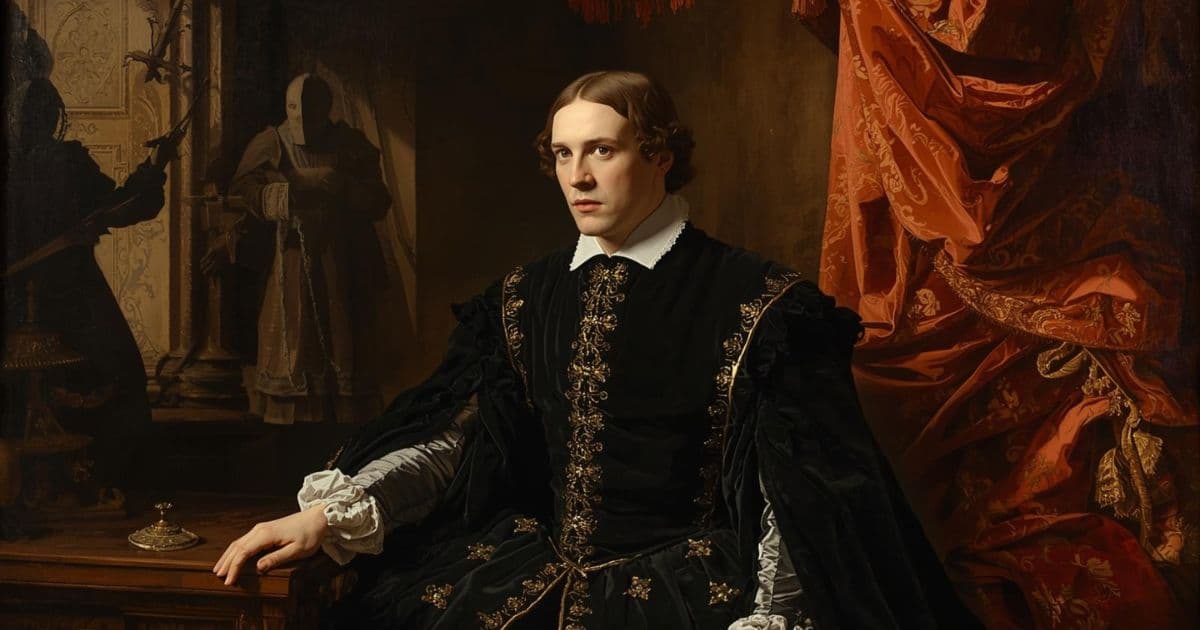
clear‐eyed lad of nineteen, radiant with health. He was very handsome,
too, graceful, moderately tall, with hair of a dark brown, with a
regular, rather long, oval‐shaped face, and wide‐set dark gray, shining
eyes; he was very thoughtful, and apparently very serene. I shall be
told, perhaps, that red cheeks are not incompatible with fanaticism and
mysticism; but I fancy that Alyosha was more of a realist than any one.
Oh! no doubt, in the monastery he fully believed in miracles, but, to
my thinking, miracles are never a stumbling‐block to the realist. It is
not miracles that dispose realists to belief. The genuine realist, if
he is an unbeliever, will always find strength and ability to
disbelieve in the miraculous, and if he is confronted with a miracle as
an irrefutable fact he would rather disbelieve his own senses than
admit the fact. Even if he admits it, he admits it as a fact of nature
till then unrecognized by him. Faith does not, in the realist, spring
from the miracle but the miracle from faith. If the realist once
believes, then he is bound by his very realism to admit the miraculous
also. The Apostle Thomas said that he would not believe till he saw,
but when he did see he said, “My Lord and my God!” Was it the miracle
forced him to believe? Most likely not, but he believed solely because
he desired to believe and possibly he fully believed in his secret
heart even when he said, “I do not believe till I see.”
I shall be told, perhaps, that Alyosha was stupid, undeveloped, had not
finished his studies, and so on. That he did not finish his studies is
true, but to say that he was stupid or dull would be a great injustice.
I’ll simply repeat what I have said above. He entered upon this path
only because, at that time, it alone struck his imagination and
presented itself to him as offering an ideal means of escape for his
soul from darkness to light. Add to that that he was to some extent a
youth of our last epoch—that is, honest in nature, desiring the truth,
seeking for it and believing in it, and seeking to serve it at once
with all the strength of his soul, seeking for immediate action, and
ready to sacrifice everything, life itself, for it. Though these young
men unhappily fail to understand that the sacrifice of life is, in many
cases, the easiest of all sacrifices, and that to sacrifice, for
instance, five or six years of their seething youth to hard and tedious
study, if only to multiply tenfold their powers of serving the truth
and the cause they have set before them as their goal—such a sacrifice
is utterly beyond the strength of many of them. The path Alyosha chose
was a path going in the opposite direction, but he chose it with the
same thirst for swift achievement. As soon as he reflected seriously he
was convinced of the existence of God and immortality, and at once he
instinctively said to himself: “I want to live for immortality, and I
will accept no compromise.” In the same way, if he had decided that God
and immortality did not exist, he would at once have become an atheist
and a socialist. For socialism is not merely the labor question, it is
before all things the atheistic question, the question of the form
taken by atheism to‐day, the question of the tower of Babel built
without God, not to mount to heaven from earth but to set up heaven on
earth. Alyosha would have found it strange and impossible to go on
living as before. It is written: “Give all that thou hast to the poor
and follow Me, if thou wouldst be perfect.”
Alyosha said to himself: “I can’t give two roubles instead of ‘all,’
and only go to mass instead of ‘following Him.’ ” Perhaps his memories
of childhood brought back our monastery, to which his mother may have
taken him to mass. Perhaps the slanting sunlight and the holy image to
which his poor “crazy” mother had held him up still acted upon his
imagination. Brooding on these things he may have come to us perhaps
only to see whether here he could sacrifice all or only “two roubles,”
and in the monastery he met this elder. I must digress to explain what
an “elder” is in Russian monasteries, and I am sorry that I do not feel
very competent to do so. I will try, however, to give a superficial
account of it in a few words. Authorities on the subject assert that
the institution of “elders” is of recent date, not more than a hundred
years old in our monasteries, though in the orthodox East, especially
in Sinai and Athos, it has existed over a thousand years. It is
maintained that it existed in ancient times in Russia also, but through
the calamities which overtook Russia—the Tartars, civil war, the
interruption of relations with the East after the destruction of
Constantinople—this institution fell into oblivion. It was revived
among us towards the end of last century by one of the great
“ascetics,” as they called him, Païssy Velitchkovsky, and his
disciples. But to this day it exists in few monasteries only, and has
sometimes been almost persecuted as an innovation in Russia. It
flourished especially in the celebrated Kozelski Optin Monastery. When
and how it was introduced into our monastery I cannot say. There had
already been three such elders and Zossima was the last of them. But he
was almost dying of weakness and disease, and they had no one to take
his place. The question for our monastery was an important one, for it
had not been distinguished by anything in particular till then: they
had neither relics of saints, nor wonder‐working ikons, nor glorious
traditions, nor historical exploits. It had flourished and been
glorious all over Russia through its elders, to see and hear whom
pilgrims had flocked for thousands of miles from all parts.
What was such an elder? An elder was one who took your soul, your will,
into his soul and his will. When you choose an elder, you renounce your
own will and yield it to him in complete submission, complete self‐
abnegation. This novitiate, this terrible school of abnegation, is
undertaken voluntarily, in the hope of self‐conquest, of self‐mastery,
in order, after a life of obedience, to attain perfect freedom, that
is, from self; to escape the lot of those who have lived their whole
life without finding their true selves in themselves. This institution
of elders is not founded on theory, but was established in the East
from the practice of a thousand years. The obligations due to an elder
are not the ordinary “obedience” which has always existed in our
Russian monasteries. The obligation involves confession to the elder by
all who have submitted themselves to him, and to the indissoluble bond
between him and them.
The story is told, for instance, that in the early days of Christianity
one such novice, failing to fulfill some command laid upon him by his
elder, left his monastery in Syria and went to Egypt. There, after
great exploits, he was found worthy at last to suffer torture and a
martyr’s death for the faith. When the Church, regarding him as a
saint, was burying him, suddenly, at the deacon’s exhortation, “Depart
all ye unbaptized,” the coffin containing the martyr’s body left its
place and was cast forth from the church, and this took place three
times. And only at last they learnt that this holy man had broken his
vow of obedience and left his elder, and, therefore, could not be
forgiven without the elder’s absolution in spite of his great deeds.
Only after this could the funeral take place. This, of course, is only
an old legend. But here is a recent instance.
A monk was suddenly commanded by his elder to quit Athos, which he
loved as a sacred place and a haven of refuge, and to go first to
Jerusalem to do homage to the Holy Places and then to go to the north
to Siberia: “There is the place for thee and not here.” The monk,
overwhelmed with sorrow, went to the Œcumenical Patriarch at
Constantinople and besought him to release him from his obedience. But
the Patriarch replied that not only was he unable to release him, but
there was not and could not be on earth a power which could release him
except the elder who had himself laid that duty upon him. In this way
the elders are endowed in certain cases with unbounded and inexplicable
authority. That is why in many of our monasteries the institution was
at first resisted almost to persecution. Meantime the elders
immediately began to be highly esteemed among the people. Masses of the
ignorant people as well as men of distinction flocked, for instance, to
the elders of our monastery to confess their doubts, their sins, and
their sufferings, and ask for counsel and admonition. Seeing this, the
opponents of the elders declared that the sacrament of confession was
being arbitrarily and frivolously degraded, though the continual
opening of the heart to the elder by the monk or the layman had nothing
of the character of the sacrament. In the end, however, the institution
of elders has been retained and is becoming established in Russian
monasteries. It is true, perhaps, that this instrument which had stood
the test of a thousand years for the moral regeneration of a man from
slavery to freedom and to moral perfectibility may be a two‐edged
weapon and it may lead some not to humility and complete self‐control
but to the most Satanic pride, that is, to bondage and not to freedom.
The elder Zossima was sixty‐five. He came of a family of landowners,
had been in the army in early youth, and served in the Caucasus as an
officer. He had, no doubt, impressed Alyosha by some peculiar quality
of his soul. Alyosha lived in the cell of the elder, who was very fond
of him and let him wait upon him. It must be noted that Alyosha was
bound by no obligation and could go where he pleased and be absent for
whole days. Though he wore the monastic dress it was voluntarily, not
to be different from others. No doubt he liked to do so. Possibly his
youthful imagination was deeply stirred by the power and fame of his
elder. It was said that so many people had for years past come to
confess their sins to Father Zossima and to entreat him for words of
advice and healing, that he had acquired the keenest intuition and
could tell from an unknown face what a new‐comer wanted, and what was
the suffering on his conscience. He sometimes astounded and almost
alarmed his visitors by his knowledge of their secrets before they had
spoken a word.
Alyosha noticed that many, almost all, went in to the elder for the
first time with apprehension and uneasiness, but came out with bright
and happy faces. Alyosha was particularly struck by the fact that
Father Zossima was not at all stern. On the contrary, he was always
almost gay. The monks used to say that he was more drawn to those who
were more sinful, and the greater the sinner the more he loved him.
There were, no doubt, up to the end of his life, among the monks some
who hated and envied him, but they were few in number and they were
silent, though among them were some of great dignity in the monastery,
one, for instance, of the older monks distinguished for his strict
keeping of fasts and vows of silence. But the majority were on Father
Zossima’s side and very many of them loved him with all their hearts,
warmly and sincerely. Some were almost fanatically devoted to him, and
declared, though not quite aloud, that he was a saint, that there could
be no doubt of it, and, seeing that his end was near, they anticipated
miracles and great glory to the monastery in the immediate future from
his relics. Alyosha had unquestioning faith in the miraculous power of
the elder, just as he had unquestioning faith in the story of the
coffin that flew out of the church. He saw many who came with sick
children or relatives and besought the elder to lay hands on them and
to pray over them, return shortly after—some the next day—and, falling
in tears at the elder’s feet, thank him for healing their sick.
Whether they had really been healed or were simply better in the
natural course of the disease was a question which did not exist for
Alyosha, for he fully believed in the spiritual power of his teacher
and rejoiced in his fame, in his glory, as though it were his own
triumph. His heart throbbed, and he beamed, as it were, all over when
the elder came out to the gates of the hermitage into the waiting crowd
of pilgrims of the humbler class who had flocked from all parts of
Russia on purpose to see the elder and obtain his blessing. They fell
down before him, wept, kissed his feet, kissed the earth on which he
stood, and wailed, while the women held up their children to him and
brought him the sick “possessed with devils.” The elder spoke to them,
read a brief prayer over them, blessed them, and dismissed them. Of
late he had become so weak through attacks of illness that he was
sometimes unable to leave his cell, and the pilgrims waited for him to
come out for several days. Alyosha did not wonder why they loved him
so, why they fell down before him and wept with emotion merely at
seeing his face. Oh! he understood that for the humble soul of the
Russian peasant, worn out by grief and toil, and still more by the
everlasting injustice and everlasting sin, his own and the world’s, it
was the greatest need and comfort to find some one or something holy to
fall down before and worship.
“Among us there is sin, injustice, and temptation, but yet, somewhere
on earth there is some one holy and exalted. He has the truth; he knows
the truth; so it is not dead upon the earth; so it will come one day to
us, too, and rule over all the earth according to the promise.”
Alyosha knew that this was just how the people felt and even reasoned.
He understood it, but that the elder Zossima was this saint and
custodian of God’s truth—of that he had no more doubt than the weeping
peasants and the sick women who held out their children to the elder.
The conviction that after his death the elder would bring extraordinary
glory to the monastery was even stronger in Alyosha than in any one
there, and, of late, a kind of deep flame of inner ecstasy burnt more
and more strongly in his heart. He was not at all troubled at this
elder’s standing as a solitary example before him.
“No matter. He is holy. He carries in his heart the secret of renewal
for all: that power which will, at last, establish truth on the earth,
and all men will be holy and love one another, and there will be no
more rich nor poor, no exalted nor humbled, but all will be as the
children of God, and the true Kingdom of Christ will come.” That was
the dream in Alyosha’s heart.
The arrival of his two brothers, whom he had not known till then,
seemed to make a great impression on Alyosha. He more quickly made
friends with his half‐brother Dmitri (though he arrived later) than
with his own brother Ivan. He was extremely interested in his brother
Ivan, but when the latter had been two months in the town, though they
had met fairly often, they were still not intimate. Alyosha was
naturally silent, and he seemed to be expecting something, ashamed
about something, while his brother Ivan, though Alyosha noticed at
first that he looked long and curiously at him, seemed soon to have
left off thinking of him. Alyosha noticed it with some embarrassment.
He ascribed his brother’s indifference at first to the disparity of
their age and education. But he also wondered whether the absence of
curiosity and sympathy in Ivan might be due to some other cause
entirely unknown to him. He kept fancying that Ivan was absorbed in
something—something inward and important—that he was striving towards
some goal, perhaps very hard to attain, and that that was why he had no
thought for him. Alyosha wondered, too, whether there was not some
contempt on the part of the learned atheist for him—a foolish novice.
He knew for certain that his brother was an atheist. He could not take
offense at this contempt, if it existed; yet, with an uneasy
embarrassment which he did not himself understand, he waited for his
brother to come nearer to him. Dmitri used to speak of Ivan with the
deepest respect and with a peculiar earnestness. From him Alyosha
learnt all the details of the important affair which had of late formed
such a close and remarkable bond between the two elder brothers.
Dmitri’s enthusiastic references to Ivan were the more striking in
Alyosha’s eyes since Dmitri was, compared with Ivan, almost uneducated,
and the two brothers were such a contrast in personality and character
that it would be difficult to find two men more unlike.
It was at this time that the meeting, or, rather gathering of the
members of this inharmonious family took place in the cell of the elder
who had such an extraordinary influence on Alyosha. The pretext for
this gathering was a false one. It was at this time that the discord
between Dmitri and his father seemed at its acutest stage and their
relations had become insufferably strained. Fyodor Pavlovitch seems to
have been the first to suggest, apparently in joke, that they should
all meet in Father Zossima’s cell, and that, without appealing to his
direct intervention, they might more decently come to an understanding
under the conciliating influence of the elder’s presence. Dmitri, who
had never seen the elder, naturally supposed that his father was trying
to intimidate him, but, as he secretly blamed himself for his outbursts
of temper with his father on several recent occasions, he accepted the
challenge. It must be noted that he was not, like Ivan, staying with
his father, but living apart at the other end of the town. It happened
that Pyotr Alexandrovitch Miüsov, who was staying in the district at
the time, caught eagerly at the idea. A Liberal of the forties and
fifties, a freethinker and atheist, he may have been led on by boredom
or the hope of frivolous diversion. He was suddenly seized with the
desire to see the monastery and the holy man. As his lawsuit with the
monastery still dragged on, he made it the pretext for seeing the
Superior, in order to attempt to settle it amicably. A visitor coming
with such laudable intentions might be received with more attention and
consideration than if he came from simple curiosity. Influences from
within the monastery were brought to bear on the elder, who of late had
scarcely left his cell, and had been forced by illness to deny even his
ordinary visitors. In the end he consented to see them, and the day was
fixed.
“Who has made me a judge over them?” was all he said, smilingly, to
Alyosha.
Alyosha was much perturbed when he heard of the proposed visit. Of all
the wrangling, quarrelsome party, Dmitri was the only one who could
regard the interview seriously. All the others would come from
frivolous motives, perhaps insulting to the elder. Alyosha was well
aware of that. Ivan and Miüsov would come from curiosity, perhaps of
the coarsest kind, while his father might be contemplating some piece
of buffoonery. Though he said nothing, Alyosha thoroughly understood
his father. The boy, I repeat, was far from being so simple as every
one thought him. He awaited the day with a heavy heart. No doubt he was
always pondering in his mind how the family discord could be ended. But
his chief anxiety concerned the elder. He trembled for him, for his
glory, and dreaded any affront to him, especially the refined,
courteous irony of Miüsov and the supercilious half‐utterances of the
highly educated Ivan. He even wanted to venture on warning the elder,
telling him something about them, but, on second thoughts, said
nothing. He only sent word the day before, through a friend, to his
brother Dmitri, that he loved him and expected him to keep his promise.
Dmitri wondered, for he could not remember what he had promised, but he
answered by letter that he would do his utmost not to let himself be
provoked “by vileness,” but that, although he had a deep respect for
the elder and for his brother Ivan, he was convinced that the meeting
was either a trap for him or an unworthy farce.
“Nevertheless I would rather bite out my tongue than be lacking in
respect to the sainted man whom you reverence so highly,” he wrote in
conclusion. Alyosha was not greatly cheered by the letter.
Book II. An Unfortunate Gathering
Master this chapter. Complete your experience
Purchase the complete book to access all chapters and support classic literature
As an Amazon Associate, we earn a small commission from qualifying purchases at no additional cost to you.
Available in paperback, hardcover, and e-book formats
Let's Analyse the Pattern
When people find something that aligns with their deepest values, they naturally pursue it with complete devotion rather than half-hearted involvement.
Why This Matters
Connect literature to life
This chapter teaches how to distinguish between genuine dedication and performative involvement by observing someone's willingness to sacrifice for their stated beliefs.
Practice This Today
This week, notice when people talk about their values—do their actions match their words, or do they find convenient excuses when commitment requires sacrifice?
Now let's explore the literary elements.
Key Quotes & Analysis
"It is not miracles that dispose realists to belief. The genuine realist, if he is an unbeliever, will always find strength and ability to disbelieve in the miraculous."
Context: Explaining why Alyosha's faith doesn't make him naive or unrealistic.
This paradox shows that belief shapes perception more than evidence does. Strong believers and strong skeptics both see what confirms their worldview. Alyosha isn't gullible - his faith is so complete it makes miracles seem logical.
In Today's Words:
People see what they want to see. True believers will find God everywhere, while skeptics will explain away anything supernatural.
"Faith does not, in the realist, spring from the miracle but the miracle from faith."
Context: Continuing the explanation of how genuine faith works in practical people.
This reverses the usual assumption that people believe because they see proof. Instead, deep faith creates the conditions where miracles become visible and meaningful. It's about the lens through which you view reality.
In Today's Words:
You don't believe because you see miracles - you see miracles because you already believe.
"He was one of those who don't want millions, but an answer to their questions."
Context: Describing why Alyosha chose monastery life over worldly success.
This captures the fundamental drive of philosophical and spiritual seekers. Some people can't be satisfied with material success if they don't understand the meaning of life. Alyosha needs answers more than achievement.
In Today's Words:
He was the type who'd rather understand life than get rich from it.
Thematic Threads
Spiritual Authority
In This Chapter
Alyosha finds in Elder Zossima the moral guidance and certainty his chaotic family lacks
Development
Introduced here as counterpoint to family dysfunction
In Your Life:
You might seek mentors or role models who provide the stability missing in your immediate environment
Identity Formation
In This Chapter
Alyosha chooses monastery life not from weakness but from the same intensity that drives others to radical politics
Development
Building on earlier hints about each brother's different path
In Your Life:
Your life choices often reflect the same core drives that could lead you in completely different directions
Class Expectations
In This Chapter
The narrator defends Alyosha against assumptions that spiritual people must be weak or impractical
Development
Continues theme of characters defying social assumptions
In Your Life:
People may misinterpret your values or commitments based on their own limited understanding
Family Shame
In This Chapter
Alyosha dreads his family embarrassing themselves in front of his revered elder
Development
Deepens the family dysfunction theme with added spiritual dimension
In Your Life:
You might feel torn between loyalty to family and respect for mentors or communities you value
Faith vs Reason
In This Chapter
Alyosha believes in miracles not from naivety but because his faith is so strong it shapes his reality
Development
Introduced here as major philosophical thread
In Your Life:
Your deepest beliefs influence what you notice and how you interpret events around you
You now have the context. Time to form your own thoughts.
Discussion Questions
- 1
What makes Alyosha different from how we might expect a 'religious' young man to be?
analysis • surface - 2
Why does Alyosha choose complete devotion to Elder Zossima rather than a more moderate approach to faith?
analysis • medium - 3
Where do you see this all-or-nothing pattern in people today - both in positive and negative ways?
application • medium - 4
How do you decide what deserves your total commitment versus what gets casual involvement?
application • deep - 5
What does Alyosha's choice reveal about the difference between weakness and strength in following your convictions?
reflection • deep
Critical Thinking Exercise
Map Your Commitment Levels
Make three columns: 'Total Commitment,' 'Moderate Involvement,' and 'Casual Interest.' List your current activities, relationships, and responsibilities in each column. Then look at your 'Total Commitment' column - do these things truly deserve that level of devotion, or are you spreading yourself too thin?
Consider:
- •Notice if your energy matches your stated priorities
- •Consider whether you're giving total commitment to things that only deserve moderate involvement
- •Ask if there's something important getting only casual attention when it needs more
Journaling Prompt
Write about a time when you committed fully to something important to you. What made that commitment feel right, and how did it change your approach to everything else?
Coming Up Next...
Chapter 6: First Impressions at the Monastery
The dysfunctional Karamazov family arrives at the monastery for their fateful meeting with Elder Zossima. What starts as an attempt at reconciliation quickly reveals the deep fractures between father and sons, setting the stage for the conflicts that will tear this family apart.