
Themes in This Book
Click a theme to find more books with similar topics
What to expect ahead
What follows is a compact summary of each chapter in the book, designed to help you quickly grasp the core ideas while inviting you to continue into the full original text. Even when chapter text is presented here, these summaries are meant as a gateway to understanding, so your eventual reading of the complete book feels richer, deeper, and more fully appreciated.
Hamlet
A Brief Description
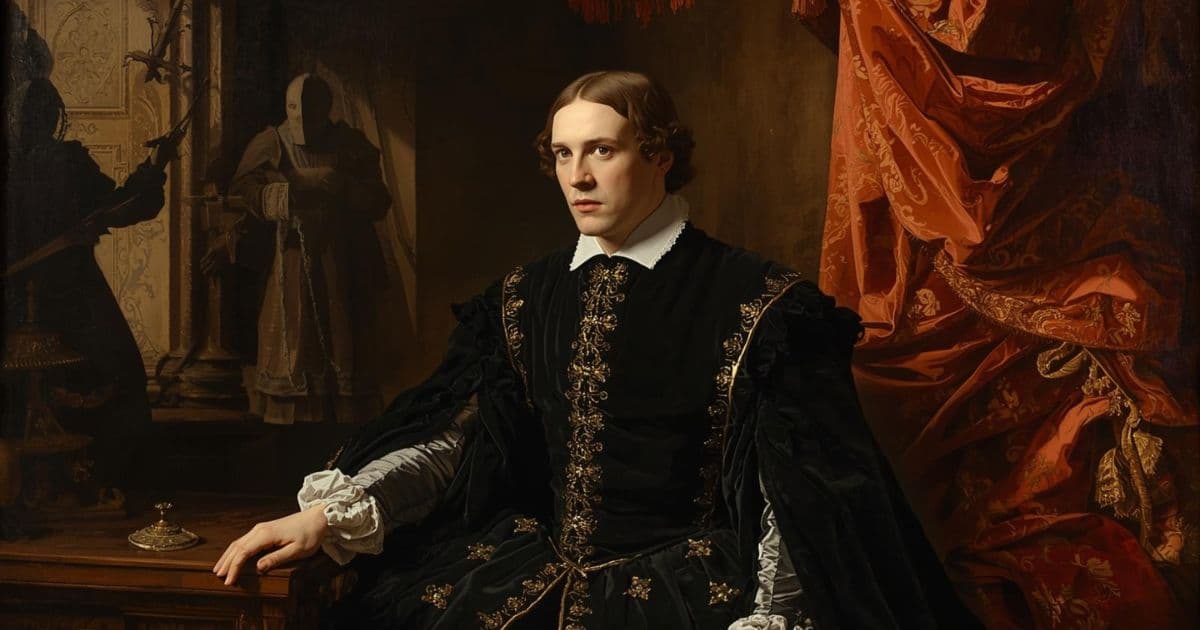
Shakespeare's Hamlet stands as the ultimate exploration of paralysis in the face of moral complexity. When Prince Hamlet returns to Denmark for his father's funeral, he discovers his mother has already married his uncle Claudius—who has seized the throne. Then his father's ghost appears with a devastating accusation: Claudius murdered him. But can Hamlet trust a ghost? And if revenge is justified, why can't he act?
What unfolds is not a simple revenge tragedy but a profound meditation on the impossibility of certainty in a corrupt world. Hamlet faces questions that feel startlingly modern: How do you know what's real when everyone around you lies? How do you act decisively when every choice leads to innocent suffering? How do you maintain moral integrity in systems designed to reward corruption?
The play's genius lies in how it transforms a political murder into an examination of consciousness itself. Hamlet thinks too much—he sees every angle, considers every consequence, imagines every outcome. This hyper-awareness, which should make him effective, instead paralyzes him completely. Meanwhile, those around him act without thinking and destroy everything they touch.
What's really going on, Hamlet reveals patterns about indecision, toxic workplaces, and family dysfunction. We see how Claudius maintains power through strategic kindness. How Polonius mistakes surveillance for wisdom. How Ophelia is destroyed by competing male authorities. How Gertrude's willful blindness enables catastrophe.
The play climaxes in a bloodbath that kills nearly everyone—not because evil triumphs, but because good people couldn't figure out how to act effectively against it. Hamlet finally achieves his revenge, but the cost is total destruction. The question Shakespeare leaves us with isn't whether revenge is justified—it's whether thinking too clearly about moral complexity makes decisive action impossible.
This isn't just Renaissance drama—it's a mirror for anyone who's ever been paralyzed by seeing too many sides of a problem to act on any of them.
Essential Life Skills Deep Dive
Explore chapter-by-chapter breakdowns of the essential life skills taught in this classic novel.
Paralysis in Decision-Making
15 chapters revealing why thinking too clearly about consequences prevents action—and how to act decisively when no choice is perfect.
Navigating Toxic Workplaces
15 chapters teaching how to recognize surveillance, manipulation, and power games in corrupt systems—and when to exit instead of trying to fix them.
Distinguishing Truth from Deception
15 chapters showing how to verify information when everyone lies, trust your judgment when gaslighting is normal, and act when certainty is impossible.
Managing Moral Ambiguity
15 chapters exploring how to act when no choice is clean, when innocent people suffer regardless, and when moral clarity is impossible but action is required.
Essential Skills
Life skills and patterns this book helps you develop—drawn from its themes and characters.
Critical Thinking Through Literature
Develop analytical skills by examining the complex themes and character motivations in Hamlet, learning to question assumptions and see multiple perspectives.
Historical Context Understanding
Learn to place events and ideas within their historical context, understanding how Hamlet reflects and responds to the issues of its time.
Empathy and Perspective-Taking
Build empathy by experiencing life through the eyes of characters from different times, backgrounds, and circumstances in Hamlet.
Recognizing Timeless Human Nature
Understand that human nature remains constant across centuries, as Hamlet reveals patterns of behavior and motivation that persist today.
Articulating Complex Ideas
Improve your ability to express nuanced thoughts and feelings by engaging with the sophisticated language and themes in Hamlet.
Moral Reasoning and Ethics
Develop your ethical reasoning by grappling with the moral dilemmas and philosophical questions raised throughout Hamlet.
Table of Contents
Meet the Players
This opening presents the cast of characters who will drive one of literature's most intense family ...
The Ghost on the Castle Wall
On the castle walls of Elsinore, guards Francisco and Barnardo are changing shifts when something ex...
The Court's Performance and Hamlet's Pain
King Claudius holds court, masterfully spinning his recent marriage to Gertrude as necessary for Den...
Family Advice and Hidden Agendas
Laertes prepares to leave for France but first warns his sister Ophelia about Hamlet's romantic inte...
The Ghost Appears
On the cold castle battlements at midnight, Hamlet waits with his friends Horatio and Marcellus for ...
The Ghost Reveals the Truth
Hamlet finally gets his answers, and they're worse than he imagined. His father's ghost reveals the ...
Spying on Your Own Family
Polonius reveals himself as the ultimate helicopter parent, instructing his servant Reynaldo to spy ...
Spies, Schemes, and Staged Performances
The royal court becomes a web of surveillance and manipulation as Claudius and Gertrude recruit Haml...
To Be or Not to Be
This chapter opens with the king and queen trying to figure out what's wrong with Hamlet by using hi...
The Play's the Thing
Hamlet orchestrates a brilliant psychological test by staging a play that mirrors his father's murde...
The Perfect Moment That Never Comes
Claudius decides Hamlet is too dangerous to keep around and sends him to England with his old friend...
The Confrontation Behind Closed Doors
This chapter delivers one of the most intense family confrontations in all of literature. Hamlet fin...
Crisis Management and Cover-Ups
The aftermath of Polonius's death forces Claudius into full crisis management mode. Gertrude reports...
The Sponge Speech
After hiding Polonius's body, Hamlet faces questioning from his former friends Rosencrantz and Guild...
Power Games and Dark Schemes
Claudius faces his biggest crisis yet. After Hamlet killed Polonius, the king knows he's in serious ...
Action vs. Analysis
Hamlet encounters young Prince Fortinbras leading an army to fight over a worthless piece of land in...
Ophelia's Madness and Laertes' Rage
This chapter shows two siblings dealing with their father's death in dramatically different ways. Op...
Hamlet's Pirate Adventure Letter
Horatio receives an extraordinary letter from Hamlet through sailors, revealing that the prince's sh...
The Perfect Trap
Claudius masterfully manipulates the grieving Laertes, first explaining why he couldn't publicly pun...
Graves, Skulls, and Final Confrontations
Hamlet stumbles upon gravediggers preparing Ophelia's burial, sparking dark comedy about class, deat...
The Final Duel and Reckoning
In this climactic final chapter, all the threads of deception and revenge come together in a deadly ...
About William Shakespeare
Published 1601
William Shakespeare (1564-1616) was an English playwright, poet, and actor, widely regarded as the greatest writer in the English language. His works explore universal themes of human nature, power, love, and mortality that remain relevant across centuries.
Why This Author Matters Today
William Shakespeare's insights into human nature, social constraints, and the search for authenticity remain powerfully relevant. Their work helps us understand the timeless tensions between individual desire and social expectation, making them an essential guide for navigating modern life's complexities.
More by William Shakespeare in Our Library

Amplified Classics is different.
not a sparknotes, nor a cliffnotes
This is a retelling. The story is still told—completely. You walk with the characters, feel what they feel, discover what they discover. The meaning arrives because you experienced it, not because someone explained a summary.
Read this, then read the original. The prose will illuminate—you'll notice what makes the author that author, because you're no longer fighting to follow the story.
Read the original first, then read this. Something will click. You'll want to go back.
Either way, the door opens inward.
Get the Full Book
Purchase the complete book to access all chapters and support classic literature
As an Amazon Associate, we earn a small commission from qualifying purchases at no additional cost to you.
Available in paperback, hardcover, and e-book formats
You Might Also Like




Free to read • No account required