
Themes in This Book
Click a theme to find more books with similar topics
What to expect ahead
What follows is a compact summary of each chapter in the book, designed to help you quickly grasp the core ideas while inviting you to continue into the full original text. Even when chapter text is presented here, these summaries are meant as a gateway to understanding, so your eventual reading of the complete book feels richer, deeper, and more fully appreciated.
Wuthering Heights
A Brief Description
Wuthering Heights is the story of love twisted into something monstrous. Catherine Earnshaw and Heathcliff grow up together on the Yorkshire moors, bound by a passion so intense it seems to exist outside normal human boundaries. "I am Heathcliff," Catherine declares. Their connection feels elemental, inevitable, eternal. But when Catherine marries the refined Edgar Linton for social advancement, betraying both Heathcliff and herself, she sets in motion a revenge that will consume two generations.
Heathcliff transforms from abused orphan to wealthy gentleman, but his ascent serves only one purpose: systematic destruction of everyone who wronged him. He doesn't just want revenge—he engineers it with terrifying precision, acquiring the Earnshaw and Linton properties, forcing marriages, manipulating inheritances, even raising the next generation to perpetuate his hatred. His love for Catherine, rather than redeeming him, drives him deeper into cruelty. "I have no pity," he declares. "The more the worms writhe, the more I yearn to crush out their entrails."
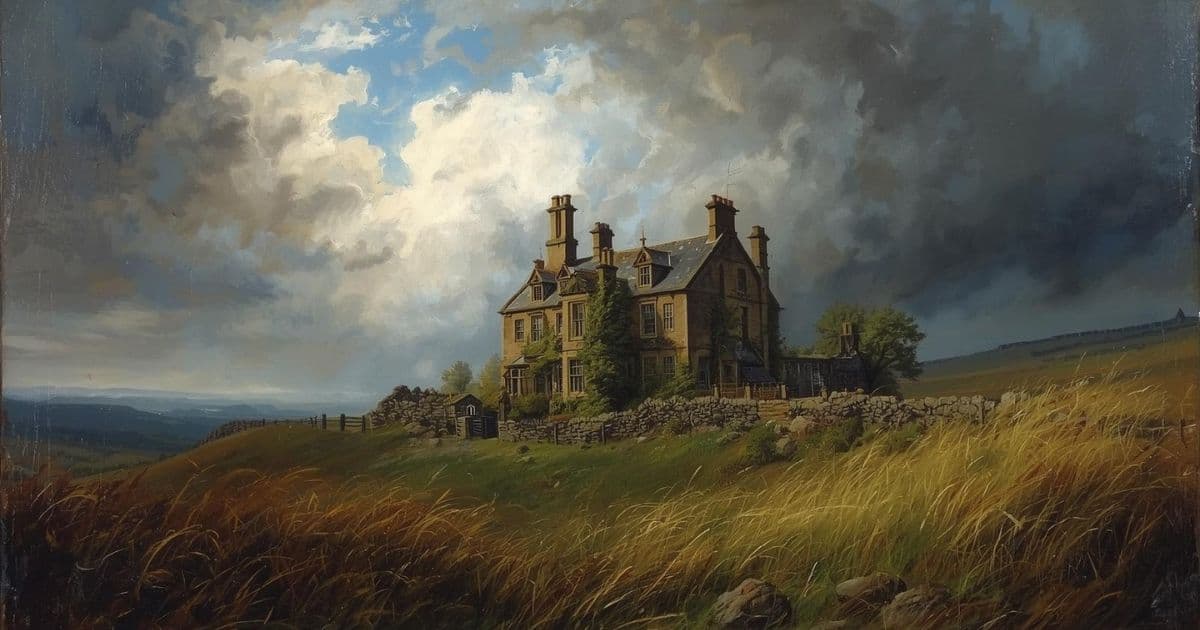
Published in 1847 under the pseudonym Ellis Bell, Emily Brontë's only novel shocked Victorian readers with its raw portrayal of obsessive passion, domestic violence, and psychological cruelty. There are no conventionally heroic characters here—even the narrator Nelly Dean enables abuse through inaction. The moors themselves become a character: wild, dangerous, beautiful, indifferent to human suffering.
What makes Wuthering Heights devastating is how it exposes the difference between genuine love and destructive obsession. Catherine and Heathcliff mistake intensity for intimacy, possession for partnership. Their passion is real—but it's also narcissistic, all-consuming, incapable of coexisting with ordinary life. Catherine's famous declaration "I am Heathcliff" sounds romantic until you realize she's describing identity collapse, not healthy love.
Through Intelligence Amplifier™ analysis, you'll recognize the warning signs of toxic relationships disguised as great romance. You'll see how childhood trauma creates destructive patterns that echo through generations unless consciously interrupted. You'll learn to distinguish between passion that enhances life and obsession that destroys it. Most crucially, you'll understand how revenge—no matter how justified it feels—ultimately destroys the avenger.
Wuthering Heights is a cautionary tale about what happens when love lacks wisdom, when pain perpetuates itself, when the desire for retribution overwhelms everything else. Heathcliff and Catherine show you what not to become. Their children—young Cathy and Hareton—show the possibility of breaking the cycle, choosing gentleness over cruelty, building rather than destroying. The question is: which generation will you be?
Essential Life Skills Deep Dive
Explore chapter-by-chapter breakdowns of the essential life skills taught in this classic novel.
Recognizing Destructive Love vs. Healthy Passion
10 chapters revealing the difference between Catherine and Heathcliff's toxic obsession and young Cathy and Hareton's healthy partnership.
Understanding How Revenge Destroys the Avenger
13 chapters tracing Heathcliff's systematic revenge and how it ultimately destroys him more than his targets.
Breaking Cycles of Intergenerational Trauma
12 chapters showing how young Cathy and Hareton refuse to perpetuate the hatred they inherited—and how you can do the same.
Essential Skills
Life skills and patterns this book helps you develop—drawn from its themes and characters.
Recognizing Destructive Love vs. Healthy Passion
Learn to distinguish between intense love that enhances both people and obsessive attachment that destroys. Catherine and Heathcliff show you what toxic passion looks like when it's disguised as romance.
Understanding How Revenge Destroys the Avenger
See how Heathcliff's justified rage transforms him into exactly what he hates. Discover why revenge—no matter how earned—ultimately poisons the person pursuing it more than their targets.
Breaking Cycles of Intergenerational Trauma
Understand how pain, abuse, and dysfunction get passed from parents to children to grandchildren—and how young Cathy and Hareton show the courage required to break that cycle.
Navigating Class Barriers and Social Mobility
Explore how Catherine's choice of Edgar over Heathcliff is driven by class anxiety, and how Heathcliff's acquisition of wealth can't heal his original wound of social rejection.
Recognizing When Passion Has Become Possession
Learn the warning signs when love shifts from 'I want your happiness' to 'I want to own you.' Catherine's 'I am Heathcliff' is identity collapse masquerading as romantic devotion.
Dealing with Unresolved Grief
See how Heathcliff's inability to process Catherine's death drives him to decades of cruelty. Understand how unmetabolized grief can poison every relationship and corrupt every choice.
Choosing Construction Over Destruction
Watch Hareton and young Cathy choose to build something new rather than perpetuate inherited hatred. Learn when and how to stop the cycle of retribution and create something better.
Understanding Emotional Manipulation and Control
Recognize the tactics characters use to control each other—guilt, threats, financial leverage, social pressure. Catherine, Heathcliff, and even 'nice' Edgar all manipulate ruthlessly.
Table of Contents
In 1801, Mr
Lockwood returns to Wuthering Heights through a snowstorm, finding ...
Zillah leads Lockwood to a mysterious chamber where he discovers Ca...
The next morning, Lockwood witnesses Heathcliff verbally abusing Ca...
Nelly continues the story: Mr
Hindley returns for his father's funeral with a mysterious wife, Fr...
Catherine returns from Thrushcross Grange completely transformed—re...
Birth and Death
Chapter 9: The Father's Rage
The Storyteller Returns
Chapter XI
For three days, Catherine locks herself in her room fasting, expect...
Catherine's Recovery
Chapter XIV
Chapter 15: The Letter and the Return
About Emily Brontë
Published 1847
Emily Brontë (1818-1848) was an English novelist and poet who lived most of her brief life in the isolated parsonage at Haworth on the Yorkshire moors. The fifth of six children, Emily was intensely private, rarely leaving home and forming few relationships outside her family. She found her truest companions in the wild moors surrounding Haworth, walking for hours in all weather, and in the imaginary world of Gondal she created with her sister Anne.
Wuthering Heights, published in 1847 under the masculine pseudonym Ellis Bell, was Emily's only novel. It was published alongside Anne's Agnes Grey, one year after their sister Charlotte's Jane Eyre. While Jane Eyre was immediately successful, Wuthering Heights baffled and horrified reviewers. They found it too violent, too strange, too morally ambiguous. Some critics assumed the "Ellis Bell" author was an inexperienced writer who didn't understand proper literary conventions or morality. They had no idea they were encountering one of literature's most original and uncompromising visions.
Emily never knew her novel would become a masterpiece. She died of tuberculosis in December 1848, just one year after Wuthering Heights was published, at only 30 years old. She refused medical help and continued her daily routine until the very end, finally collapsing while feeding her dogs. Her sister Charlotte later tried to "explain" and soften Emily's harsh novel in a preface to the 1850 edition, suggesting Emily didn't understand what she was writing about. Charlotte was wrong. Emily understood exactly what she was doing: creating a novel that refused to prettify human nature or offer easy moral comfort.
Today, Wuthering Heights is recognized as one of the greatest novels in English literature—a work of startling psychological insight, gothic power, and unflinching honesty about human capacity for both love and cruelty.
Why This Author Matters Today
Emily Brontë's insights into human nature, social constraints, and the search for authenticity remain powerfully relevant. Their work helps us understand the timeless tensions between individual desire and social expectation, making them an essential guide for navigating modern life's complexities.
Amplified Classics is different.
not a sparknotes, nor a cliffnotes
This is a retelling. The story is still told—completely. You walk with the characters, feel what they feel, discover what they discover. The meaning arrives because you experienced it, not because someone explained a summary.
Read this, then read the original. The prose will illuminate—you'll notice what makes the author that author, because you're no longer fighting to follow the story.
Read the original first, then read this. Something will click. You'll want to go back.
Either way, the door opens inward.
Get the Full Book
Purchase the complete book to access all chapters and support classic literature
As an Amazon Associate, we earn a small commission from qualifying purchases at no additional cost to you.
Available in paperback, hardcover, and e-book formats
You Might Also Like



Free to read • No account required