

Amplified ClassicsAmplified Classics
Literature MattersLife IndexEducators
Sign inSign up
Hamlet - Meet the Players

William Shakespeare

Hamlet

Meet the Players

Home›Books›Hamlet›Chapter 1
Back to Hamlet
2 min read•Hamlet•Chapter 1 of 21

What You'll Learn

How to read the power dynamics in any room by understanding who holds what position

Why knowing the relationships between people is crucial before entering any situation

How family drama and workplace politics often intertwine in complex ways

1 of 21
Next

Summary

Meet the Players

Hamlet by William Shakespeare

0:000:00

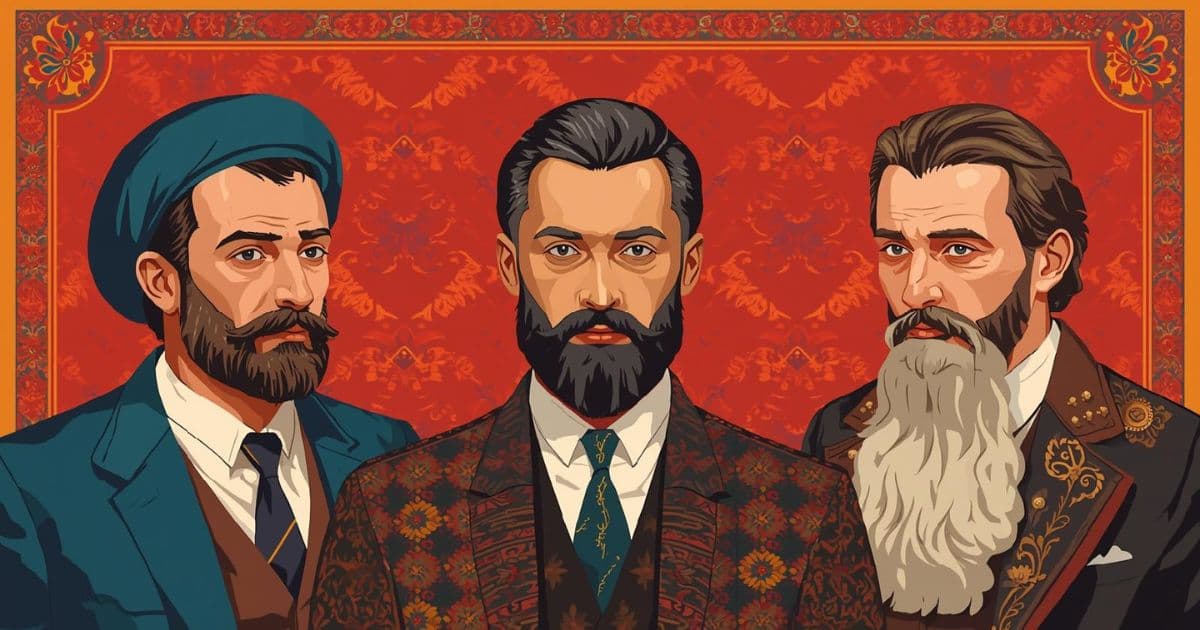
This opening presents the cast of characters who will drive one of literature's most intense family and political dramas. We meet Hamlet, a prince caught between his role as son and his duties as future king. His uncle Claudius has married Hamlet's mother Gertrude and taken the throne after Hamlet's father died. This setup immediately signals the kind of messy family dynamics many of us recognize - when death, money, power, and remarriage collide. The character list reads like a workplace org chart mixed with a family tree, showing how personal relationships and professional obligations get tangled together. We see advisors like Polonius with his children Laertes and Ophelia, loyal friends like Horatio, and various courtiers and officials who must navigate between competing loyalties. The setting is Elsinore castle in Denmark, but the dynamics could happen in any family business, political office, or tight-knit community where everyone knows everyone else's business. What makes this particularly relevant is how it shows the ripple effects when leadership changes hands unexpectedly - whether that's in a family, workplace, or community organization. The ghost of Hamlet's father suggests that the past isn't really past, and unresolved issues have a way of haunting present relationships. This character introduction sets up the central tension: what happens when personal grief meets public responsibility, and how do you navigate loyalty when the people you're supposed to trust might not have your best interests at heart?

Coming Up in Chapter 2

The story opens on a dark night with nervous guards who've been seeing something that shouldn't exist. Their fear sets the tone for everything that follows, as we discover that some secrets refuse to stay buried.

Share it with friends

Next Chapter
GO ADS FREE — JOIN US

An excerpt from the original text.(complete · 101 words)

S

cene II. A hall in the Castle

Dramatis Personæ

HAMLET, Prince of Denmark
CLAUDIUS, King of Denmark, Hamlet’s uncle
The GHOST of the late king, Hamlet’s father
GERTRUDE, the Queen, Hamlet’s mother, now wife of Claudius
POLONIUS, Lord Chamberlain
LAERTES, Son to Polonius
OPHELIA, Daughter to Polonius
HORATIO, Friend to Hamlet
FORTINBRAS, Prince of Norway
VOLTEMAND, Courtier
CORNELIUS, Courtier
ROSENCRANTZ, Courtier
GUILDENSTERN, Courtier
MARCELLUS, Officer
BARNARDO, Officer
FRANCISCO, a Soldier
OSRIC, Courtier
REYNALDO, Servant to Polonius
Players
A Gentleman, Courtier
A Priest
Two Clowns, Grave-diggers
A Captain
English Ambassadors.
Lords, Ladies, Officers, Soldiers, Sailors, Messengers, and Attendants

SCENE. Elsinore.

ACT I

Master this chapter. Complete your experience

Purchase the complete book to access all chapters and support classic literature

Read Free on GutenbergBuy at Powell'sBuy on Amazon

As an Amazon Associate, we earn a small commission from qualifying purchases at no additional cost to you.

Available in paperback, hardcover, and e-book formats

GO ADS FREE — JOIN US

Intelligence Amplifier™ Analysis

Pattern: Inherited Chaos

The Road of Inherited Chaos - When Someone Else's Mess Becomes Your Problem

Some situations are toxic before you even walk into them. Hamlet inherits a royal mess: his father is dead, his uncle married his mother within weeks, and now he's supposed to just accept this new normal. This is the pattern of inherited chaos - when you're handed a situation that's already compromised, and everyone expects you to play along like nothing happened. The mechanism works through pressure and gaslighting. The people who created the mess need you to normalize it, so they act like you're the problem if you question anything. Claudius and Gertrude treat Hamlet's grief as excessive, his questions as disloyal. They've moved on, so why can't he? This puts Hamlet in an impossible position: accept the corruption and lose his integrity, or resist and be labeled the troublemaker. This pattern shows up everywhere. You start a new job and discover the previous manager was fired for harassment, but everyone acts like it never happened. Your family pretends your alcoholic uncle is just 'going through a rough patch' and expects you to bring your kids to family dinners. Your nursing supervisor covers up medication errors and wants you to stay quiet because 'it would hurt the unit's reputation.' In each case, you're pressured to participate in a lie that protects the people who created the problem. When you recognize inherited chaos, first understand you didn't create it and you can't fix it alone. Document everything - keep records, save emails, note dates and witnesses. Set clear boundaries about what you will and won't participate in. Find allies who see the situation clearly - like Hamlet has Horatio. Most importantly, have an exit strategy. Sometimes the healthiest choice is refusing to inherit someone else's corruption, even when that means walking away from opportunities or relationships. When you can name the pattern of inherited chaos, predict how others will pressure you to normalize it, and navigate it with your integrity intact - that's amplified intelligence.

When you're handed a situation that's already compromised and pressured to normalize dysfunction you didn't create.

Why This Matters

Connect literature to life

Skill: Detecting Gaslighting in Power Transitions

This chapter teaches how to recognize when people who benefit from sudden changes pressure you to stop asking reasonable questions about those changes.

Practice This Today

This week, notice when someone tells you that your reasonable concerns are actually character flaws - being 'too sensitive,' 'living in the past,' or 'causing drama.'

Now let's explore the literary elements.

Terms to Know

Dramatis Personae

Latin term meaning 'persons of the drama' - basically the cast list that appears before a play begins. It tells you who's who and their relationships to each other before the action starts.

Modern Usage:

Like when you get an employee directory at a new job or when someone gives you the rundown on family members before a reunion.

Lord Chamberlain

A high-ranking court official who manages the royal household and advises the king. Think of them as part chief of staff, part HR director for the palace.

Modern Usage:

The person in any organization who's the boss's right hand - they control access and know all the inside information.

Courtier

Someone who hangs around the royal court, often seeking favor or advancement. They're not necessarily nobility themselves, but they work the system to gain influence.

Modern Usage:

Office politics players who network their way up, or people who always seem to know the right people at the right time.

Succession Crisis

When it's unclear who should take over leadership after someone dies or steps down. This creates power struggles and competing claims to authority.

Modern Usage:

What happens when a family business owner dies without a clear plan, or when a longtime manager retires and everyone fights over who gets promoted.

Royal Court

The king's inner circle - family, advisors, officials, and hangers-on who all live and work around the palace. It's part government office, part extended family household.

Modern Usage:

Any tight workplace or community where everyone knows everyone's business and personal drama affects professional relationships.

Elsinore

The castle setting where all the action takes place. It's both a fortress and a home, representing how power and family life get mixed together.

Modern Usage:

Like a family compound or any place where you can't escape the people you work with because you also live with them.

Characters in This Chapter

HAMLET

Protagonist

Prince of Denmark whose father has died and whose uncle has married his mother and taken the throne. He's struggling with grief, family loyalty, and his uncertain future role.

Modern Equivalent:

The heir apparent who got passed over when dad died

CLAUDIUS

Antagonist

Hamlet's uncle who married Hamlet's mother Gertrude after his brother's death and became king. His quick rise to power creates tension and suspicion.

Modern Equivalent:

The brother-in-law who swooped in after the funeral

GERTRUDE

Conflicted mother figure

Hamlet's mother who remarried quickly after her husband's death. Her choices put her between her son's needs and her new husband's expectations.

Modern Equivalent:

The mom who remarried too soon after dad died

POLONIUS

Advisor/meddler

The Lord Chamberlain who serves as chief advisor to the king while also managing his own family's interests and advancement at court.

Modern Equivalent:

The micromanaging boss who's always in everyone's business

HORATIO

Loyal friend

Hamlet's trusted friend from outside the court politics. He represents genuine loyalty without personal agenda or family complications.

Modern Equivalent:

The one friend who tells you the truth when everyone else has an angle

The GHOST

Catalyst

The spirit of Hamlet's dead father whose appearance suggests unfinished business and unresolved issues from the past that demand attention.

Modern Equivalent:

The family secret that won't stay buried

Key Quotes & Analysis

"Though yet of Hamlet our dear brother's death the memory be green"

— CLAUDIUS

Context: Claudius addressing the court about his brother's recent death and his marriage to Gertrude

Claudius acknowledges his brother's death but immediately moves to justify his actions. The phrase 'memory be green' means the grief is still fresh, making his quick marriage seem even more inappropriate.

In Today's Words:

I know my brother just died and we're all still grieving, but...

"A little more than kin, and less than kind"

— HAMLET

Context: Hamlet's aside about his relationship with Claudius, who is now both uncle and stepfather

This wordplay shows Hamlet's discomfort with how family relationships have been scrambled. Claudius is more than just an uncle now, but Hamlet doesn't feel any genuine familial warmth toward him.

In Today's Words:

He's technically family now, but I don't trust him at all

"Frailty, thy name is woman"

— HAMLET

Context: Hamlet's bitter reflection on his mother's quick remarriage

Hamlet generalizes from his mother's behavior to condemn all women as weak. This shows how personal betrayal can warp someone's view of entire groups of people.

In Today's Words:

Women are all weak and can't be trusted

Thematic Threads

Betrayal

In This Chapter

Claudius marrying Gertrude so quickly after his brother's death suggests deeper betrayal than just poor timing

Development

Introduced here

In Your Life:

When someone close to you makes choices that feel like a fundamental betrayal of shared values or relationships

Power Dynamics

In This Chapter

Claudius has taken the throne and now controls the narrative about what's normal and acceptable

Development

Introduced here

In Your Life:

When new leadership changes the rules and expects everyone to pretend the transition was smooth and legitimate

Family Loyalty

In This Chapter

Hamlet is caught between loyalty to his dead father and pressure to accept his mother's new marriage

Development

Introduced here

In Your Life:

When family members make choices that force you to choose between keeping peace and honoring your values

Moral Corruption

In This Chapter

The rapid marriage and power transfer suggests ethical corners were cut for convenience

Development

Introduced here

In Your Life:

When you enter situations where everyone has agreed to overlook ethical problems for the sake of moving forward

Indecision

In This Chapter

Hamlet is paralyzed between accepting the new reality and acting on his suspicions

Development

Introduced here

In Your Life:

When you know something is wrong but aren't sure if speaking up will make things better or just make you a target

You now have the context. Time to form your own thoughts.

Discussion Questions

  1. 1

    What's the basic family situation Hamlet is dealing with when the play opens?

    analysis • surface
  2. 2

    Why might Claudius and Gertrude be treating Hamlet's grief as a problem rather than supporting him through it?

    analysis • medium
  3. 3

    Where have you seen people pressured to 'move on' or 'get over it' when they're asking legitimate questions about something that doesn't feel right?

    application • medium
  4. 4

    If you were in Hamlet's position - inheriting a messy situation where everyone expects you to just go along - what would be your strategy for protecting yourself?

    application • deep
  5. 5

    What does this setup reveal about how power structures protect themselves when someone starts asking uncomfortable questions?

    reflection • deep

Critical Thinking Exercise

10 minutes

Map Your Own Inherited Chaos

Think of a situation you've walked into that was already compromised - a workplace, family dynamic, friend group, or organization where there were unspoken problems everyone expected you to ignore. Draw a simple map showing the key players, what the real issues were, and who benefited from keeping things quiet.

Consider:

  • •Who had the most to lose if the truth came out?
  • •What pressure tactics were used to keep people quiet?
  • •Who were your potential allies - people who also saw the problems clearly?

Journaling Prompt

Write about a time when you had to choose between going along with something that felt wrong or speaking up and facing consequences. What did you learn about yourself and others from that experience?

Coming Up Next...

Chapter 2: The Ghost on the Castle Wall

The story opens on a dark night with nervous guards who've been seeing something that shouldn't exist. Their fear sets the tone for everything that follows, as we discover that some secrets refuse to stay buried.

Continue to Chapter 2
Contents
Next
The Ghost on the Castle Wall

Continue Exploring

Hamlet Study GuideTeaching ResourcesEssential Life IndexBrowse by ThemeAll Books
Moral Dilemmas & EthicsPower & CorruptionIdentity & Self-Discovery

You Might Also Like

The Brothers Karamazov cover

The Brothers Karamazov

Fyodor Dostoevsky

Explores morality & ethics

Ecclesiastes cover

Ecclesiastes

Anonymous

Explores morality & ethics

Jane Eyre cover

Jane Eyre

Charlotte Brontë

Explores morality & ethics

Wuthering Heights cover

Wuthering Heights

Emily Brontë

Explores identity & self

Browse all 47+ books

Share This Chapter

Know someone who'd enjoy this? Spread the wisdom!

TwitterFacebookLinkedInEmail

Read ad-free with Prestige

Get rid of ads, unlock study guides and downloads, and support free access for everyone.

Subscribe to PrestigeCreate free account
Intelligence Amplifier
Intelligence Amplifier™Powering Amplified Classics

Exploring human-AI collaboration through books, essays, and philosophical dialogues. Classic literature transformed into navigational maps for modern life.

2025 Books

→ The Amplified Human Spirit→ The Alarming Rise of Stupidity Amplified→ San Francisco: The AI Capital of the World
Visit intelligenceamplifier.org
hello@amplifiedclassics.com

AC Originals

→ The Last Chapter First→ You Are Not Lost→ The Lit of Love→ The Wealth Paradox
Arvintech
arvintechAmplify your Mind
Visit at arvintech.com

Navigate

  • Home
  • Library
  • Essential Life Index
  • How It Works
  • Subscribe
  • Account
  • About
  • Contact
  • Authors
  • Suggest a Book

Made For You

  • Students
  • Educators
  • Families
  • Readers
  • Finding Purpose

Newsletter

Weekly insights from the classics.

Amplify Your Mind

Legal

  • Privacy Policy
  • Terms of Service
  • Cookie Policy
  • Accessibility

Why Public Domain?

We focus on public domain classics because these timeless works belong to everyone. No paywalls, no restrictions—just wisdom that has stood the test of centuries, freely accessible to all readers.

Public domain books have shaped humanity's understanding of love, justice, ambition, and the human condition. By amplifying these works, we help preserve and share literature that truly belongs to the world.

© 2025 Amplified Classics™. All Rights Reserved.

Intelligence Amplifier™ and Amplified Classics™ are proprietary trademarks of Arvin Lioanag.

Copyright Protection: All original content, analyses, discussion questions, pedagogical frameworks, and methodology are protected by U.S. and international copyright law. Unauthorized reproduction, distribution, web scraping, or use for AI training is strictly prohibited. See our Copyright Notice for details.

Disclaimer: The information provided on this website is for general informational and educational purposes only and does not constitute professional, legal, financial, or technical advice. While we strive to ensure accuracy and relevance, we make no warranties regarding completeness, reliability, or suitability. Any reliance on such information is at your own risk. We are not liable for any losses or damages arising from use of this site. By using this site, you agree to these terms.
