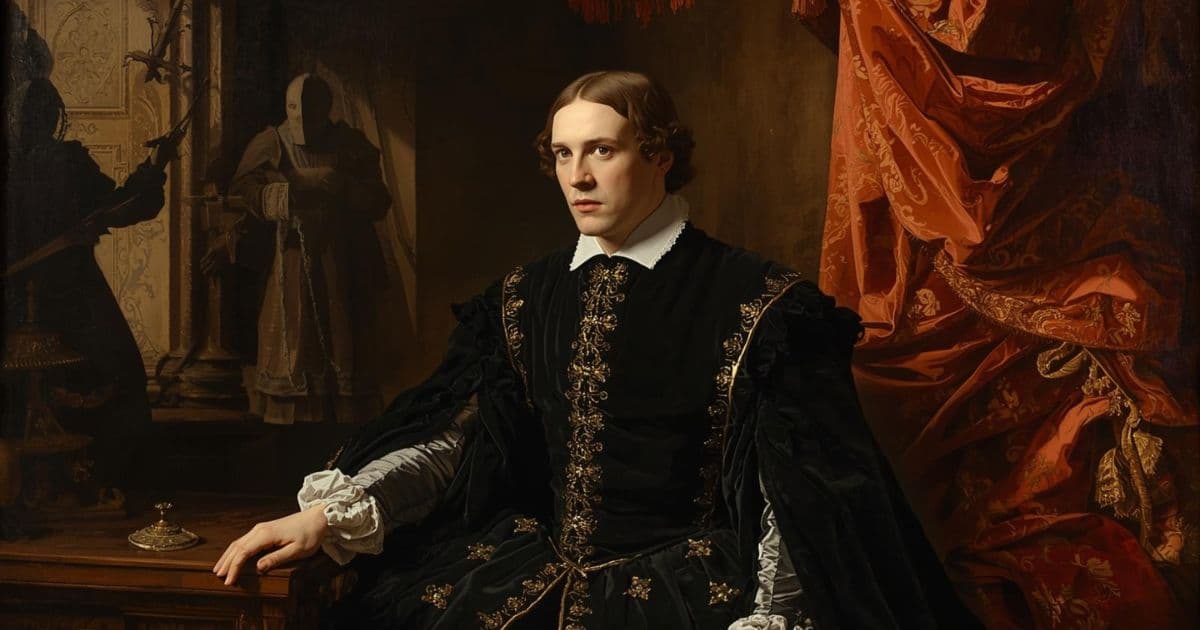
An excerpt from the original text.(complete · 1648 words)
izaveta
There was one circumstance which struck Grigory particularly, and
confirmed a very unpleasant and revolting suspicion. This Lizaveta was
a dwarfish creature, “not five foot within a wee bit,” as many of the
pious old women said pathetically about her, after her death. Her
broad, healthy, red face had a look of blank idiocy and the fixed stare
in her eyes was unpleasant, in spite of their meek expression. She
wandered about, summer and winter alike, barefooted, wearing nothing
but a hempen smock. Her coarse, almost black hair curled like lamb’s
wool, and formed a sort of huge cap on her head. It was always crusted
with mud, and had leaves, bits of stick, and shavings clinging to it,
as she always slept on the ground and in the dirt. Her father, a
homeless, sickly drunkard, called Ilya, had lost everything and lived
many years as a workman with some well‐to‐do tradespeople. Her mother
had long been dead. Spiteful and diseased, Ilya used to beat Lizaveta
inhumanly whenever she returned to him. But she rarely did so, for
every one in the town was ready to look after her as being an idiot,
and so specially dear to God. Ilya’s employers, and many others in the
town, especially of the tradespeople, tried to clothe her better, and
always rigged her out with high boots and sheepskin coat for the
winter. But, although she allowed them to dress her up without
resisting, she usually went away, preferably to the cathedral porch,
and taking off all that had been given her—kerchief, sheepskin, skirt
or boots—she left them there and walked away barefoot in her smock as
before. It happened on one occasion that a new governor of the
province, making a tour of inspection in our town, saw Lizaveta, and
was wounded in his tenderest susceptibilities. And though he was told
she was an idiot, he pronounced that for a young woman of twenty to
wander about in nothing but a smock was a breach of the proprieties,
and must not occur again. But the governor went his way, and Lizaveta
was left as she was. At last her father died, which made her even more
acceptable in the eyes of the religious persons of the town, as an
orphan. In fact, every one seemed to like her; even the boys did not
tease her, and the boys of our town, especially the schoolboys, are a
mischievous set. She would walk into strange houses, and no one drove
her away. Every one was kind to her and gave her something. If she were
given a copper, she would take it, and at once drop it in the alms‐jug
of the church or prison. If she were given a roll or bun in the market,
she would hand it to the first child she met. Sometimes she would stop
one of the richest ladies in the town and give it to her, and the lady
would be pleased to take it. She herself never tasted anything but
black bread and water. If she went into an expensive shop, where there
were costly goods or money lying about, no one kept watch on her, for
they knew that if she saw thousands of roubles overlooked by them, she
would not have touched a farthing. She scarcely ever went to church.
She slept either in the church porch or climbed over a hurdle (there
are many hurdles instead of fences to this day in our town) into a
kitchen garden. She used at least once a week to turn up “at home,”
that is at the house of her father’s former employers, and in the
winter went there every night, and slept either in the passage or the
cowhouse. People were amazed that she could stand such a life, but she
was accustomed to it, and, although she was so tiny, she was of a
robust constitution. Some of the townspeople declared that she did all
this only from pride, but that is hardly credible. She could hardly
speak, and only from time to time uttered an inarticulate grunt. How
could she have been proud?
It happened one clear, warm, moonlight night in September (many years
ago) five or six drunken revelers were returning from the club at a
very late hour, according to our provincial notions. They passed
through the “back‐ way,” which led between the back gardens of the
houses, with hurdles on either side. This way leads out on to the
bridge over the long, stinking pool which we were accustomed to call a
river. Among the nettles and burdocks under the hurdle our revelers saw
Lizaveta asleep. They stopped to look at her, laughing, and began
jesting with unbridled licentiousness. It occurred to one young
gentleman to make the whimsical inquiry whether any one could possibly
look upon such an animal as a woman, and so forth.... They all
pronounced with lofty repugnance that it was impossible. But Fyodor
Pavlovitch, who was among them, sprang forward and declared that it was
by no means impossible, and that, indeed, there was a certain piquancy
about it, and so on.... It is true that at that time he was overdoing
his part as a buffoon. He liked to put himself forward and entertain
the company, ostensibly on equal terms, of course, though in reality he
was on a servile footing with them. It was just at the time when he had
received the news of his first wife’s death in Petersburg, and, with
crape upon his hat, was drinking and behaving so shamelessly that even
the most reckless among us were shocked at the sight of him. The
revelers, of course, laughed at this unexpected opinion; and one of
them even began challenging him to act upon it. The others repelled the
idea even more emphatically, although still with the utmost hilarity,
and at last they went on their way. Later on, Fyodor Pavlovitch swore
that he had gone with them, and perhaps it was so, no one knows for
certain, and no one ever knew. But five or six months later, all the
town was talking, with intense and sincere indignation, of Lizaveta’s
condition, and trying to find out who was the miscreant who had wronged
her. Then suddenly a terrible rumor was all over the town that this
miscreant was no other than Fyodor Pavlovitch. Who set the rumor going?
Of that drunken band five had left the town and the only one still
among us was an elderly and much respected civil councilor, the father
of grown‐up daughters, who could hardly have spread the tale, even if
there had been any foundation for it. But rumor pointed straight at
Fyodor Pavlovitch, and persisted in pointing at him. Of course this was
no great grievance to him: he would not have troubled to contradict a
set of tradespeople. In those days he was proud, and did not condescend
to talk except in his own circle of the officials and nobles, whom he
entertained so well.
At the time, Grigory stood up for his master vigorously. He provoked
quarrels and altercations in defense of him and succeeded in bringing
some people round to his side. “It’s the wench’s own fault,” he
asserted, and the culprit was Karp, a dangerous convict, who had
escaped from prison and whose name was well known to us, as he had
hidden in our town. This conjecture sounded plausible, for it was
remembered that Karp had been in the neighborhood just at that time in
the autumn, and had robbed three people. But this affair and all the
talk about it did not estrange popular sympathy from the poor idiot.
She was better looked after than ever. A well‐to‐do merchant’s widow
named Kondratyev arranged to take her into her house at the end of
April, meaning not to let her go out until after the confinement. They
kept a constant watch over her, but in spite of their vigilance she
escaped on the very last day, and made her way into Fyodor Pavlovitch’s
garden. How, in her condition, she managed to climb over the high,
strong fence remained a mystery. Some maintained that she must have
been lifted over by somebody; others hinted at something more uncanny.
The most likely explanation is that it happened naturally—that
Lizaveta, accustomed to clambering over hurdles to sleep in gardens,
had somehow managed to climb this fence, in spite of her condition, and
had leapt down, injuring herself.
Grigory rushed to Marfa and sent her to Lizaveta, while he ran to fetch
an old midwife who lived close by. They saved the baby, but Lizaveta
died at dawn. Grigory took the baby, brought it home, and making his
wife sit down, put it on her lap. “A child of God—an orphan is akin to
all,” he said, “and to us above others. Our little lost one has sent us
this, who has come from the devil’s son and a holy innocent. Nurse him
and weep no more.”
So Marfa brought up the child. He was christened Pavel, to which people
were not slow in adding Fyodorovitch (son of Fyodor). Fyodor Pavlovitch
did not object to any of this, and thought it amusing, though he
persisted vigorously in denying his responsibility. The townspeople
were pleased at his adopting the foundling. Later on, Fyodor Pavlovitch
invented a surname for the child, calling him Smerdyakov, after his
mother’s nickname.
So this Smerdyakov became Fyodor Pavlovitch’s second servant, and was
living in the lodge with Grigory and Marfa at the time our story
begins. He was employed as cook. I ought to say something of this
Smerdyakov, but I am ashamed of keeping my readers’ attention so long
occupied with these common menials, and I will go back to my story,
hoping to say more of Smerdyakov in the course of it.
Master this chapter. Complete your experience
Purchase the complete book to access all chapters and support classic literature
As an Amazon Associate, we earn a small commission from qualifying purchases at no additional cost to you.
Available in paperback, hardcover, and e-book formats
Let's Analyse the Pattern
Communities create elaborate justifications to shield powerful people from consequences while victims bear all costs and blame.
Why This Matters
Connect literature to life
This chapter teaches how to recognize when organizations systematically shield harmful people while silencing victims through collective denial and convenient scapegoating.
Practice This Today
This week, notice when workplace problems get blamed on someone who's not there to defend themselves—the former employee, the contractor, the 'difficult' client who complained.
Now let's explore the literary elements.
Key Quotes & Analysis
"Every one in the town was ready to look after her as being an idiot, and so specially dear to God."
Context: Describing how the townspeople treat Lizaveta
This reveals the complex way society treats vulnerable people - with a mixture of genuine care and condescending pity. They protect her because they see her as holy, not because they see her as human.
In Today's Words:
Everyone felt sorry for her and thought taking care of her was like doing God's work.
"She usually went away, preferably to the cathedral porch or climbed over a hurdle into a kitchen garden."
Context: Explaining how Lizaveta rejects the townspeople's attempts to clothe her properly
Shows her instinct to reject charity that comes with strings attached. She prefers sleeping rough to being someone's project or obligation.
In Today's Words:
She'd rather be homeless than owe anyone anything.
"It was a wild, drunken idea of a wild, drunken moment."
Context: Describing the night Fyodor encountered Lizaveta
Dostoevsky shows how momentary impulses can have lifelong consequences. What seems like nothing to the powerful can destroy lives and create new ones shaped by shame.
In Today's Words:
It was just a drunk guy doing something stupid that he'd forget about by morning.
Thematic Threads
Class
In This Chapter
Fyodor's wealth and status protect him from consequences while Lizaveta's poverty and disability make her completely vulnerable
Development
Building on earlier themes of economic power determining social treatment
In Your Life:
Notice how your workplace handles complaints differently depending on who's accused versus who's complaining
Voicelessness
In This Chapter
Lizaveta cannot speak for herself, so others create narratives about her experience without her input
Development
Introduced here as a new dimension of powerlessness
In Your Life:
Consider whose voices get heard in your family, workplace, or community when problems arise
Institutional Protection
In This Chapter
The household and community rally to create alternative explanations that absolve Fyodor of responsibility
Development
Introduced here, showing how social systems protect their own
In Your Life:
Watch for how organizations close ranks when powerful members are accused of wrongdoing
Shame Transfer
In This Chapter
The shame of Fyodor's actions transfers to the child Smerdyakov, who will carry this burden his entire life
Development
Introduced here as a mechanism of injustice
In Your Life:
Notice how families or workplaces make victims carry the shame of what was done to them
Convenient Scapegoats
In This Chapter
The escaped convict Karp becomes a perfect alternative explanation—absent, powerless, and unable to defend himself
Development
Introduced here as a protection strategy
In Your Life:
Recognize when you're being set up as a scapegoat for someone else's failures or misconduct
You now have the context. Time to form your own thoughts.
Discussion Questions
- 1
Why does the town protect Fyodor from blame when Lizaveta becomes pregnant, even though everyone suspects him?
analysis • surface - 2
How does Grigory's suggestion that an escaped convict was responsible serve Fyodor's interests, and why does the community accept this explanation?
analysis • medium - 3
Where have you seen communities or workplaces protect powerful people while vulnerable people face consequences alone?
application • medium - 4
If you witnessed someone in power taking advantage of someone vulnerable, what specific steps would you take to help or seek justice?
application • deep - 5
What does this chapter reveal about how societies balance protecting their power structures versus protecting their most vulnerable members?
reflection • deep
Critical Thinking Exercise
Map the Protection Network
Draw a simple diagram showing who benefits from protecting Fyodor versus who suffers from this protection. Include the townspeople, Grigory, Lizaveta, and baby Smerdyakov. Then think about a situation in your own life where you've seen similar dynamics - who had power, who was vulnerable, and who stayed silent.
Consider:
- •Notice how people who depend on the powerful person have incentives to look the other way
- •Consider how victims often have no voice or advocates in these situations
- •Think about what it costs communities when they choose comfort over justice
Journaling Prompt
Write about a time when you had to choose between speaking up about something wrong or staying quiet to avoid conflict. What factors influenced your decision, and how do you feel about it now?
Coming Up Next...
Chapter 16: Dmitri's Passionate Confession Begins
The focus shifts to one of the Karamazov sons as we dive into a passionate confession that reveals the intense, contradictory nature of the Karamazov temperament. Prepare for raw emotion and philosophical wrestling with desire.