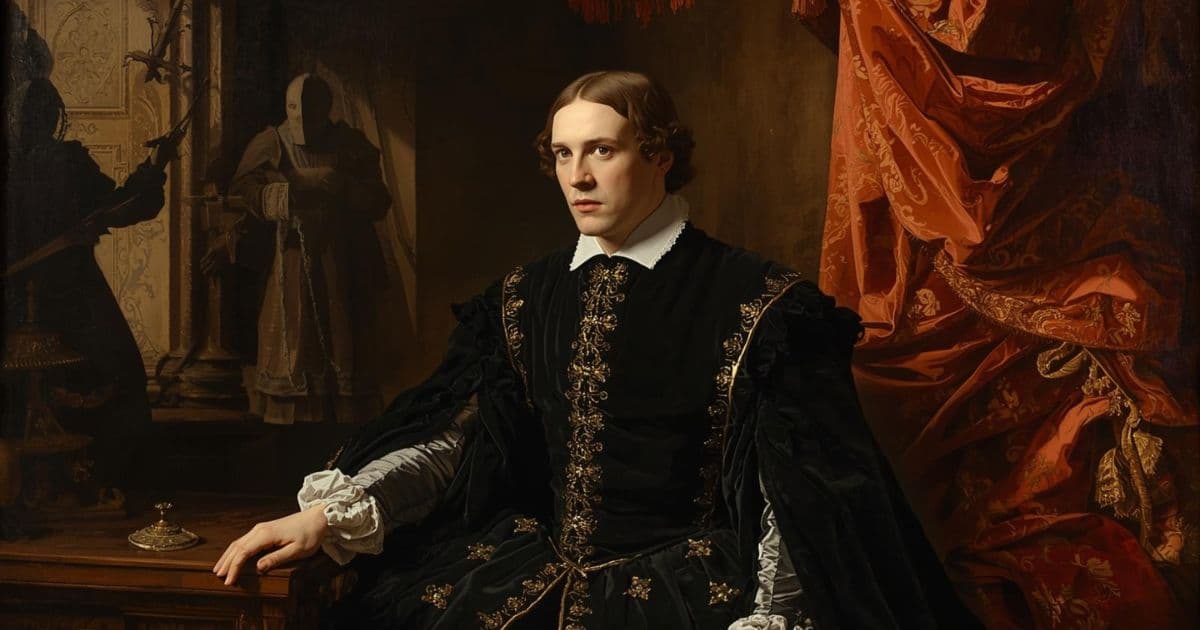
An excerpt from the original text.(complete · 4047 words)
he Prosecutor’s Speech. Sketches Of Character
Ippolit Kirillovitch began his speech, trembling with nervousness, with
cold sweat on his forehead, feeling hot and cold all over by turns. He
described this himself afterwards. He regarded this speech as his
chef‐d’œuvre, the chef‐d’œuvre of his whole life, as his swan‐song.
He died, it is true, nine months later of rapid consumption, so that he
had the right, as it turned out, to compare himself to a swan singing
his last song. He had put his whole heart and all the brain he had into
that speech. And poor Ippolit Kirillovitch unexpectedly revealed that
at least some feeling for the public welfare and “the eternal question”
lay concealed in him. Where his speech really excelled was in its
sincerity. He genuinely believed in the prisoner’s guilt; he was
accusing him not as an official duty only, and in calling for vengeance
he quivered with a genuine passion “for the security of society.” Even
the ladies in the audience, though they remained hostile to Ippolit
Kirillovitch, admitted that he made an extraordinary impression on
them. He began in a breaking voice, but it soon gained strength and
filled the court to the end of his speech. But as soon as he had
finished, he almost fainted.
“Gentlemen of the jury,” began the prosecutor, “this case has made a
stir throughout Russia. But what is there to wonder at, what is there
so peculiarly horrifying in it for us? We are so accustomed to such
crimes! That’s what’s so horrible, that such dark deeds have ceased to
horrify us. What ought to horrify us is that we are so accustomed to
it, and not this or that isolated crime. What are the causes of our
indifference, our lukewarm attitude to such deeds, to such signs of the
times, ominous of an unenviable future? Is it our cynicism, is it the
premature exhaustion of intellect and imagination in a society that is
sinking into decay, in spite of its youth? Is it that our moral
principles are shattered to their foundations, or is it, perhaps, a
complete lack of such principles among us? I cannot answer such
questions; nevertheless they are disturbing, and every citizen not only
must, but ought to be harassed by them. Our newborn and still timid
press has done good service to the public already, for without it we
should never have heard of the horrors of unbridled violence and moral
degradation which are continually made known by the press, not merely
to those who attend the new jury courts established in the present
reign, but to every one. And what do we read almost daily? Of things
beside which the present case grows pale, and seems almost commonplace.
But what is most important is that the majority of our national crimes
of violence bear witness to a widespread evil, now so general among us
that it is difficult to contend against it.
“One day we see a brilliant young officer of high society, at the very
outset of his career, in a cowardly underhand way, without a pang of
conscience, murdering an official who had once been his benefactor, and
the servant girl, to steal his own I.O.U. and what ready money he could
find on him; ‘it will come in handy for my pleasures in the fashionable
world and for my career in the future.’ After murdering them, he puts
pillows under the head of each of his victims; he goes away. Next, a
young hero ‘decorated for bravery’ kills the mother of his chief and
benefactor, like a highwayman, and to urge his companions to join him
he asserts that ‘she loves him like a son, and so will follow all his
directions and take no precautions.’ Granted that he is a monster, yet
I dare not say in these days that he is unique. Another man will not
commit the murder, but will feel and think like him, and is as
dishonorable in soul. In silence, alone with his conscience, he asks
himself perhaps, ‘What is honor, and isn’t the condemnation of
bloodshed a prejudice?’
“Perhaps people will cry out against me that I am morbid, hysterical,
that it is a monstrous slander, that I am exaggerating. Let them say
so—and heavens! I should be the first to rejoice if it were so! Oh,
don’t believe me, think of me as morbid, but remember my words; if only
a tenth, if only a twentieth part of what I say is true—even so it’s
awful! Look how our young people commit suicide, without asking
themselves Hamlet’s question what there is beyond, without a sign of
such a question, as though all that relates to the soul and to what
awaits us beyond the grave had long been erased in their minds and
buried under the sands. Look at our vice, at our profligates. Fyodor
Pavlovitch, the luckless victim in the present case, was almost an
innocent babe compared with many of them. And yet we all knew him, ‘he
lived among us!’...
“Yes, one day perhaps the leading intellects of Russia and of Europe
will study the psychology of Russian crime, for the subject is worth
it. But this study will come later, at leisure, when all the tragic
topsy‐turvydom of to‐day is farther behind us, so that it’s possible to
examine it with more insight and more impartiality than I can do. Now
we are either horrified or pretend to be horrified, though we really
gloat over the spectacle, and love strong and eccentric sensations
which tickle our cynical, pampered idleness. Or, like little children,
we brush the dreadful ghosts away and hide our heads in the pillow so
as to return to our sports and merriment as soon as they have vanished.
But we must one day begin life in sober earnest, we must look at
ourselves as a society; it’s time we tried to grasp something of our
social position, or at least to make a beginning in that direction.
“A great writer[9] of the last epoch, comparing Russia to a swift
troika galloping to an unknown goal, exclaims, ‘Oh, troika, birdlike
troika, who invented thee!’ and adds, in proud ecstasy, that all the
peoples of the world stand aside respectfully to make way for the
recklessly galloping troika to pass. That may be, they may stand aside,
respectfully or no, but in my poor opinion the great writer ended his
book in this way either in an access of childish and naïve optimism, or
simply in fear of the censorship of the day. For if the troika were
drawn by his heroes, Sobakevitch, Nozdryov, Tchitchikov, it could reach
no rational goal, whoever might be driving it. And those were the
heroes of an older generation, ours are worse specimens still....”
At this point Ippolit Kirillovitch’s speech was interrupted by
applause. The liberal significance of this simile was appreciated. The
applause was, it’s true, of brief duration, so that the President did
not think it necessary to caution the public, and only looked severely
in the direction of the offenders. But Ippolit Kirillovitch was
encouraged; he had never been applauded before! He had been all his
life unable to get a hearing, and now he suddenly had an opportunity of
securing the ear of all Russia.
“What, after all, is this Karamazov family, which has gained such an
unenviable notoriety throughout Russia?” he continued. “Perhaps I am
exaggerating, but it seems to me that certain fundamental features of
the educated class of to‐day are reflected in this family picture—only,
of course, in miniature, ‘like the sun in a drop of water.’ Think of
that unhappy, vicious, unbridled old man, who has met with such a
melancholy end, the head of a family! Beginning life of noble birth,
but in a poor dependent position, through an unexpected marriage he
came into a small fortune. A petty knave, a toady and buffoon, of
fairly good, though undeveloped, intelligence, he was, above all, a
moneylender, who grew bolder with growing prosperity. His abject and
servile characteristics disappeared, his malicious and sarcastic
cynicism was all that remained. On the spiritual side he was
undeveloped, while his vitality was excessive. He saw nothing in life
but sensual pleasure, and he brought his children up to be the same. He
had no feelings for his duties as a father. He ridiculed those duties.
He left his little children to the servants, and was glad to be rid of
them, forgot about them completely. The old man’s maxim was Après moi
le déluge. He was an example of everything that is opposed to civic
duty, of the most complete and malignant individualism. ‘The world may
burn for aught I care, so long as I am all right,’ and he was all
right; he was content, he was eager to go on living in the same way for
another twenty or thirty years. He swindled his own son and spent his
money, his maternal inheritance, on trying to get his mistress from
him. No, I don’t intend to leave the prisoner’s defense altogether to
my talented colleague from Petersburg. I will speak the truth myself, I
can well understand what resentment he had heaped up in his son’s heart
against him.
“But enough, enough of that unhappy old man; he has paid the penalty.
Let us remember, however, that he was a father, and one of the typical
fathers of to‐day. Am I unjust, indeed, in saying that he is typical of
many modern fathers? Alas! many of them only differ in not openly
professing such cynicism, for they are better educated, more cultured,
but their philosophy is essentially the same as his. Perhaps I am a
pessimist, but you have agreed to forgive me. Let us agree beforehand,
you need not believe me, but let me speak. Let me say what I have to
say, and remember something of my words.
“Now for the children of this father, this head of a family. One of
them is the prisoner before us, all the rest of my speech will deal
with him. Of the other two I will speak only cursorily.
“The elder is one of those modern young men of brilliant education and
vigorous intellect, who has lost all faith in everything. He has denied
and rejected much already, like his father. We have all heard him, he
was a welcome guest in local society. He never concealed his opinions,
quite the contrary in fact, which justifies me in speaking rather
openly of him now, of course, not as an individual, but as a member of
the Karamazov family. Another personage closely connected with the case
died here by his own hand last night. I mean an afflicted idiot,
formerly the servant, and possibly the illegitimate son, of Fyodor
Pavlovitch, Smerdyakov. At the preliminary inquiry, he told me with
hysterical tears how the young Ivan Karamazov had horrified him by his
spiritual audacity. ‘Everything in the world is lawful according to
him, and nothing must be forbidden in the future—that is what he always
taught me.’ I believe that idiot was driven out of his mind by this
theory, though, of course, the epileptic attacks from which he
suffered, and this terrible catastrophe, have helped to unhinge his
faculties. But he dropped one very interesting observation, which would
have done credit to a more intelligent observer, and that is, indeed,
why I’ve mentioned it: ‘If there is one of the sons that is like Fyodor
Pavlovitch in character, it is Ivan Fyodorovitch.’
“With that remark I conclude my sketch of his character, feeling it
indelicate to continue further. Oh, I don’t want to draw any further
conclusions and croak like a raven over the young man’s future. We’ve
seen to‐day in this court that there are still good impulses in his
young heart, that family feeling has not been destroyed in him by lack
of faith and cynicism, which have come to him rather by inheritance
than by the exercise of independent thought.
“Then the third son. Oh, he is a devout and modest youth, who does not
share his elder brother’s gloomy and destructive theory of life. He has
sought to cling to the ‘ideas of the people,’ or to what goes by that
name in some circles of our intellectual classes. He clung to the
monastery, and was within an ace of becoming a monk. He seems to me to
have betrayed unconsciously, and so early, that timid despair which
leads so many in our unhappy society, who dread cynicism and its
corrupting influences, and mistakenly attribute all the mischief to
European enlightenment, to return to their ‘native soil,’ as they say,
to the bosom, so to speak, of their mother earth, like frightened
children, yearning to fall asleep on the withered bosom of their
decrepit mother, and to sleep there for ever, only to escape the
horrors that terrify them.
“For my part I wish the excellent and gifted young man every success; I
trust that his youthful idealism and impulse towards the ideas of the
people may never degenerate, as often happens, on the moral side into
gloomy mysticism, and on the political into blind chauvinism—two
elements which are even a greater menace to Russia than the premature
decay, due to misunderstanding and gratuitous adoption of European
ideas, from which his elder brother is suffering.”
Two or three people clapped their hands at the mention of chauvinism
and mysticism. Ippolit Kirillovitch had been, indeed, carried away by
his own eloquence. All this had little to do with the case in hand, to
say nothing of the fact of its being somewhat vague, but the sickly and
consumptive man was overcome by the desire to express himself once in
his life. People said afterwards that he was actuated by unworthy
motives in his criticism of Ivan, because the latter had on one or two
occasions got the better of him in argument, and Ippolit Kirillovitch,
remembering it, tried now to take his revenge. But I don’t know whether
it was true. All this was only introductory, however, and the speech
passed to more direct consideration of the case.
“But to return to the eldest son,” Ippolit Kirillovitch went on. “He is
the prisoner before us. We have his life and his actions, too, before
us; the fatal day has come and all has been brought to the surface.
While his brothers seem to stand for ‘Europeanism’ and ‘the principles
of the people,’ he seems to represent Russia as she is. Oh, not all
Russia, not all! God preserve us, if it were! Yet, here we have her,
our mother Russia, the very scent and sound of her. Oh, he is
spontaneous, he is a marvelous mingling of good and evil, he is a lover
of culture and Schiller, yet he brawls in taverns and plucks out the
beards of his boon companions. Oh, he, too, can be good and noble, but
only when all goes well with him. What is more, he can be carried off
his feet, positively carried off his feet by noble ideals, but only if
they come of themselves, if they fall from heaven for him, if they need
not be paid for. He dislikes paying for anything, but is very fond of
receiving, and that’s so with him in everything. Oh, give him every
possible good in life (he couldn’t be content with less), and put no
obstacle in his way, and he will show that he, too, can be noble. He is
not greedy, no, but he must have money, a great deal of money, and you
will see how generously, with what scorn of filthy lucre, he will fling
it all away in the reckless dissipation of one night. But if he has not
money, he will show what he is ready to do to get it when he is in
great need of it. But all this later, let us take events in their
chronological order.
“First, we have before us a poor abandoned child, running about the
back‐ yard ‘without boots on his feet,’ as our worthy and esteemed
fellow citizen, of foreign origin, alas! expressed it just now. I
repeat it again, I yield to no one the defense of the criminal. I am
here to accuse him, but to defend him also. Yes, I, too, am human; I,
too, can weigh the influence of home and childhood on the character.
But the boy grows up and becomes an officer; for a duel and other
reckless conduct he is exiled to one of the remote frontier towns of
Russia. There he led a wild life as an officer. And, of course, he
needed money, money before all things, and so after prolonged disputes
he came to a settlement with his father, and the last six thousand was
sent him. A letter is in existence in which he practically gives up his
claim to the rest and settles his conflict with his father over the
inheritance on the payment of this six thousand.
“Then came his meeting with a young girl of lofty character and
brilliant education. Oh, I do not venture to repeat the details; you
have only just heard them. Honor, self‐sacrifice were shown there, and
I will be silent. The figure of the young officer, frivolous and
profligate, doing homage to true nobility and a lofty ideal, was shown
in a very sympathetic light before us. But the other side of the medal
was unexpectedly turned to us immediately after in this very court.
Again I will not venture to conjecture why it happened so, but there
were causes. The same lady, bathed in tears of long‐concealed
indignation, alleged that he, he of all men, had despised her for her
action, which, though incautious, reckless perhaps, was still dictated
by lofty and generous motives. He, he, the girl’s betrothed, looked at
her with that smile of mockery, which was more insufferable from him
than from any one. And knowing that he had already deceived her (he had
deceived her, believing that she was bound to endure everything from
him, even treachery), she intentionally offered him three thousand
roubles, and clearly, too clearly, let him understand that she was
offering him money to deceive her. ‘Well, will you take it or not, are
you so lost to shame?’ was the dumb question in her scrutinizing eyes.
He looked at her, saw clearly what was in her mind (he’s admitted here
before you that he understood it all), appropriated that three thousand
unconditionally, and squandered it in two days with the new object of
his affections.
“What are we to believe then? The first legend of the young officer
sacrificing his last farthing in a noble impulse of generosity and
doing reverence to virtue, or this other revolting picture? As a rule,
between two extremes one has to find the mean, but in the present case
this is not true. The probability is that in the first case he was
genuinely noble, and in the second as genuinely base. And why? Because
he was of the broad Karamazov character—that’s just what I am leading
up to—capable of combining the most incongruous contradictions, and
capable of the greatest heights and of the greatest depths. Remember
the brilliant remark made by a young observer who has seen the
Karamazov family at close quarters—Mr. Rakitin: ‘The sense of their own
degradation is as essential to those reckless, unbridled natures as the
sense of their lofty generosity.’ And that’s true, they need
continually this unnatural mixture. Two extremes at the same moment, or
they are miserable and dissatisfied and their existence is incomplete.
They are wide, wide as mother Russia; they include everything and put
up with everything.
“By the way, gentlemen of the jury, we’ve just touched upon that three
thousand roubles, and I will venture to anticipate things a little. Can
you conceive that a man like that, on receiving that sum and in such a
way, at the price of such shame, such disgrace, such utter degradation,
could have been capable that very day of setting apart half that sum,
that very day, and sewing it up in a little bag, and would have had the
firmness of character to carry it about with him for a whole month
afterwards, in spite of every temptation and his extreme need of it!
Neither in drunken debauchery in taverns, nor when he was flying into
the country, trying to get from God knows whom, the money so essential
to him to remove the object of his affections from being tempted by his
father, did he bring himself to touch that little bag! Why, if only to
avoid abandoning his mistress to the rival of whom he was so jealous,
he would have been certain to have opened that bag and to have stayed
at home to keep watch over her, and to await the moment when she would
say to him at last ‘I am yours,’ and to fly with her far from their
fatal surroundings.
“But no, he did not touch his talisman, and what is the reason he gives
for it? The chief reason, as I have just said, was that when she would
say, ‘I am yours, take me where you will,’ he might have the
wherewithal to take her. But that first reason, in the prisoner’s own
words, was of little weight beside the second. While I have that money
on me, he said, I am a scoundrel, not a thief, for I can always go to
my insulted betrothed, and, laying down half the sum I have
fraudulently appropriated, I can always say to her, ‘You see, I’ve
squandered half your money, and shown I am a weak and immoral man, and,
if you like, a scoundrel’ (I use the prisoner’s own expressions), ‘but
though I am a scoundrel, I am not a thief, for if I had been a thief, I
shouldn’t have brought you back this half of the money, but should have
taken it as I did the other half!’ A marvelous explanation! This
frantic, but weak man, who could not resist the temptation of accepting
the three thousand roubles at the price of such disgrace, this very man
suddenly develops the most stoical firmness, and carries about a
thousand roubles without daring to touch it. Does that fit in at all
with the character we have analyzed? No, and I venture to tell you how
the real Dmitri Karamazov would have behaved in such circumstances, if
he really had brought himself to put away the money.
“At the first temptation—for instance, to entertain the woman with whom
he had already squandered half the money—he would have unpicked his
little bag and have taken out some hundred roubles, for why should he
have taken back precisely half the money, that is, fifteen hundred
roubles? why not fourteen hundred? He could just as well have said then
that he was not a thief, because he brought back fourteen hundred
roubles. Then another time he would have unpicked it again and taken
out another hundred, and then a third, and then a fourth, and before
the end of the month he would have taken the last note but one, feeling
that if he took back only a hundred it would answer the purpose, for a
thief would have stolen it all. And then he would have looked at this
last note, and have said to himself, ‘It’s really not worth while to
give back one hundred; let’s spend that, too!’ That’s how the real
Dmitri Karamazov, as we know him, would have behaved. One cannot
imagine anything more incongruous with the actual fact than this legend
of the little bag. Nothing could be more inconceivable. But we shall
return to that later.”
After touching upon what had come out in the proceedings concerning the
financial relations of father and son, and arguing again and again that
it was utterly impossible, from the facts known, to determine which was
in the wrong, Ippolit Kirillovitch passed to the evidence of the
medical experts in reference to Mitya’s fixed idea about the three
thousand owing him.
Master this chapter. Complete your experience
Purchase the complete book to access all chapters and support classic literature
As an Amazon Associate, we earn a small commission from qualifying purchases at no additional cost to you.
Available in paperback, hardcover, and e-book formats
Let's Analyse the Pattern
Using moral language and noble causes to serve personal psychological needs while genuinely believing in the righteousness of your actions.
Why This Matters
Connect literature to life
This chapter teaches how to recognize when people use moral language and noble causes to serve personal psychological needs rather than pursue actual truth or justice.
Practice This Today
This week, notice when someone's passionate moral stance consistently benefits them personally—ask what they really need and what simpler explanation might exist.
Now let's explore the literary elements.
Key Quotes & Analysis
"He genuinely believed in the prisoner's guilt; he was accusing him not as an official duty only, and in calling for vengeance he quivered with a genuine passion."
Context: Describing the prosecutor's sincere conviction during his speech
This shows how dangerous true believers can be - the prosecutor isn't just doing his job, he's on a crusade. His genuine passion makes him more persuasive but also more blind to other possibilities.
In Today's Words:
He wasn't just going through the motions - he really believed this guy was guilty and was fired up about it.
"We are so accustomed to everything that we feel no horror."
Context: The prosecutor arguing that Russian society has become numb to moral corruption
The prosecutor claims people have become desensitized to evil, but this might say more about his own need to feel important than about society's real problems.
In Today's Words:
We've seen so much bad stuff that nothing shocks us anymore.
"Everything is permitted - that is not a theory, that is a fact."
Context: The prosecutor blaming Ivan's philosophy for the family's destruction
He's taking Ivan's complex philosophical idea and turning it into a simple cause-and-effect explanation for murder. This shows how people oversimplify complex ideas to fit their narratives.
In Today's Words:
Once you stop believing in rules, you'll do anything - and that's exactly what happened here.
Thematic Threads
Authority
In This Chapter
Kirillovitch uses his position as prosecutor to transform a trial into his personal platform for social commentary
Development
Continues the book's examination of how people in power use their positions for personal validation
In Your Life:
You might see this when supervisors use team meetings to showcase their expertise rather than solve actual problems
Performance
In This Chapter
The prosecutor's 'masterpiece speech' reveals his need for recognition and legacy more than pursuit of justice
Development
Builds on earlier scenes of characters performing versions of themselves for various audiences
In Your Life:
You might recognize this when you find yourself explaining your decisions in ways that make you look good rather than being honest
Narrative
In This Chapter
Kirillovitch creates a grand story about Russian society using the Karamazovs as symbols rather than examining individual guilt
Development
Extends the book's theme of how people construct meaning through storytelling, often at the expense of truth
In Your Life:
You might do this when you explain family conflicts through big theories instead of addressing specific behaviors
Conviction
In This Chapter
The prosecutor's passionate belief in his theory blinds him to alternative explanations and simpler truths
Development
Continues exploring how certainty can become a barrier to understanding rather than a path to it
In Your Life:
You might experience this when you become so invested in being right about someone's motives that you stop listening to what they actually say
Mortality
In This Chapter
Kirillovitch's terminal illness drives his desperate need to create something meaningful and lasting through this trial
Development
Adds to the book's exploration of how awareness of death shapes human behavior and priorities
In Your Life:
You might see this in yourself or others when facing major life transitions or health scares that create urgency around leaving a mark
You now have the context. Time to form your own thoughts.
Discussion Questions
- 1
What does the prosecutor really want from this trial, beyond just convicting Dmitri?
analysis • surface - 2
Why does Kirillovitch focus so much on the 3,000 rubles and Dmitri's character instead of just presenting the evidence?
analysis • medium - 3
Where have you seen someone use moral language or noble causes to serve their own needs rather than the stated purpose?
application • medium - 4
How would you distinguish between someone genuinely fighting for justice versus someone performing righteousness for personal benefit?
application • deep - 5
What does this chapter reveal about how conviction and passion can actually lead us away from truth?
reflection • deep
Critical Thinking Exercise
Decode the Hidden Agenda
Think of a recent situation where someone gave you a long explanation for their actions that felt overly complicated or noble. Write down what they said their motivation was, then write what you think they actually needed or wanted. Look for the gap between the stated reason and the likely real reason.
Consider:
- •People aren't usually lying—they often believe their own noble narratives
- •The more elaborate the moral justification, the more likely there's a simpler personal motive
- •Ask what this person gains from their stated position beyond the moral outcome
Journaling Prompt
Write about a time when you caught yourself using moral language to justify something you wanted for personal reasons. What were you really after, and how did the righteous framing help you feel better about it?
Coming Up Next...
Chapter 86: The Prosecutor's Case for Murder
The prosecutor will continue building his case with historical examples and precedents, weaving Dmitri's story into a broader narrative about crime and punishment in Russian society.