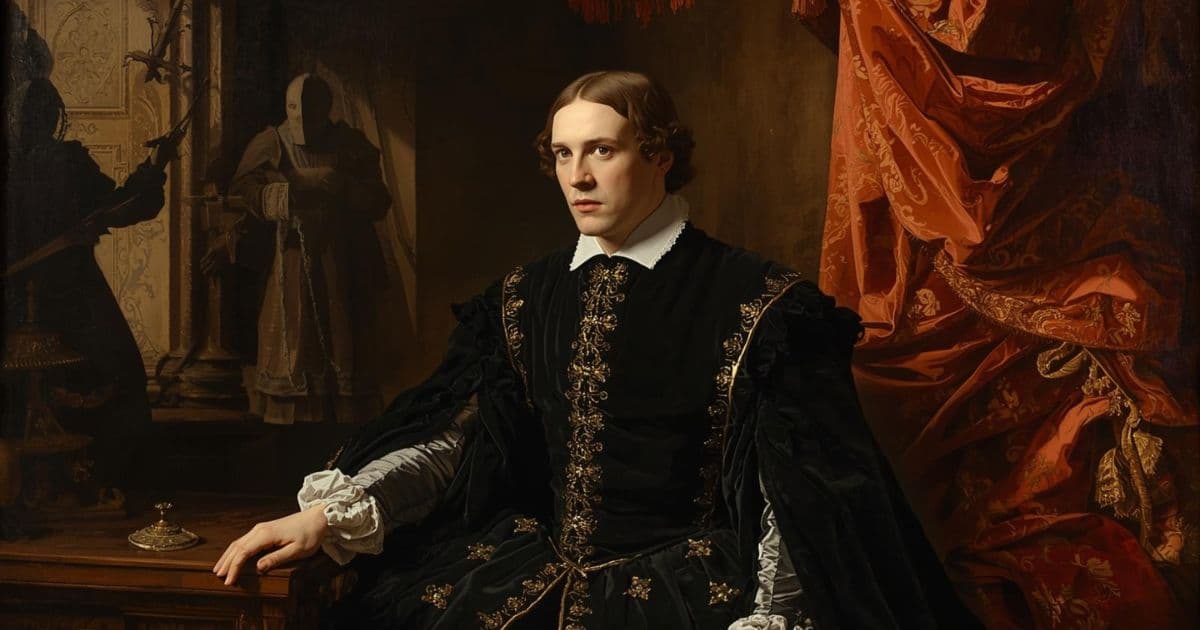
An excerpt from the original text.(complete · 3511 words)
he Third Son, Alyosha
He was only twenty, his brother Ivan was in his twenty‐fourth year at
the time, while their elder brother Dmitri was twenty‐seven. First of
all, I must explain that this young man, Alyosha, was not a fanatic,
and, in my opinion at least, was not even a mystic. I may as well give
my full opinion from the beginning. He was simply an early lover of
humanity, and that he adopted the monastic life was simply because at
that time it struck him, so to say, as the ideal escape for his soul
struggling from the darkness of worldly wickedness to the light of
love. And the reason this life struck him in this way was that he found
in it at that time, as he thought, an extraordinary being, our
celebrated elder, Zossima, to whom he became attached with all the warm
first love of his ardent heart. But I do not dispute that he was very
strange even at that time, and had been so indeed from his cradle. I
have mentioned already, by the way, that though he lost his mother in
his fourth year he remembered her all his life—her face, her caresses,
“as though she stood living before me.” Such memories may persist, as
every one knows, from an even earlier age, even from two years old, but
scarcely standing out through a whole lifetime like spots of light out
of darkness, like a corner torn out of a huge picture, which has all
faded and disappeared except that fragment. That is how it was with
him. He remembered one still summer evening, an open window, the
slanting rays of the setting sun (that he recalled most vividly of
all); in a corner of the room the holy image, before it a lighted lamp,
and on her knees before the image his mother, sobbing hysterically with
cries and moans, snatching him up in both arms, squeezing him close
till it hurt, and praying for him to the Mother of God, holding him out
in both arms to the image as though to put him under the Mother’s
protection ... and suddenly a nurse runs in and snatches him from her
in terror. That was the picture! And Alyosha remembered his mother’s
face at that minute. He used to say that it was frenzied but beautiful
as he remembered. But he rarely cared to speak of this memory to any
one. In his childhood and youth he was by no means expansive, and
talked little indeed, but not from shyness or a sullen unsociability;
quite the contrary, from something different, from a sort of inner
preoccupation entirely personal and unconcerned with other people, but
so important to him that he seemed, as it were, to forget others on
account of it. But he was fond of people: he seemed throughout his life
to put implicit trust in people: yet no one ever looked on him as a
simpleton or naïve person. There was something about him which made one
feel at once (and it was so all his life afterwards) that he did not
care to be a judge of others—that he would never take it upon himself
to criticize and would never condemn any one for anything. He seemed,
indeed, to accept everything without the least condemnation though
often grieving bitterly: and this was so much so that no one could
surprise or frighten him even in his earliest youth. Coming at twenty
to his father’s house, which was a very sink of filthy debauchery, he,
chaste and pure as he was, simply withdrew in silence when to look on
was unbearable, but without the slightest sign of contempt or
condemnation. His father, who had once been in a dependent position,
and so was sensitive and ready to take offense, met him at first with
distrust and sullenness. “He does not say much,” he used to say, “and
thinks the more.” But soon, within a fortnight indeed, he took to
embracing him and kissing him terribly often, with drunken tears, with
sottish sentimentality, yet he evidently felt a real and deep affection
for him, such as he had never been capable of feeling for any one
before.
Every one, indeed, loved this young man wherever he went, and it was so
from his earliest childhood. When he entered the household of his
patron and benefactor, Yefim Petrovitch Polenov, he gained the hearts
of all the family, so that they looked on him quite as their own child.
Yet he entered the house at such a tender age that he could not have
acted from design nor artfulness in winning affection. So that the gift
of making himself loved directly and unconsciously was inherent in him,
in his very nature, so to speak. It was the same at school, though he
seemed to be just one of those children who are distrusted, sometimes
ridiculed, and even disliked by their schoolfellows. He was dreamy, for
instance, and rather solitary. From his earliest childhood he was fond
of creeping into a corner to read, and yet he was a general favorite
all the while he was at school. He was rarely playful or merry, but any
one could see at the first glance that this was not from any
sullenness. On the contrary he was bright and good‐tempered. He never
tried to show off among his schoolfellows. Perhaps because of this, he
was never afraid of any one, yet the boys immediately understood that
he was not proud of his fearlessness and seemed to be unaware that he
was bold and courageous. He never resented an insult. It would happen
that an hour after the offense he would address the offender or answer
some question with as trustful and candid an expression as though
nothing had happened between them. And it was not that he seemed to
have forgotten or intentionally forgiven the affront, but simply that
he did not regard it as an affront, and this completely conquered and
captivated the boys. He had one characteristic which made all his
schoolfellows from the bottom class to the top want to mock at him, not
from malice but because it amused them. This characteristic was a wild
fanatical modesty and chastity. He could not bear to hear certain words
and certain conversations about women. There are “certain” words and
conversations unhappily impossible to eradicate in schools. Boys pure
in mind and heart, almost children, are fond of talking in school among
themselves, and even aloud, of things, pictures, and images of which
even soldiers would sometimes hesitate to speak. More than that, much
that soldiers have no knowledge or conception of is familiar to quite
young children of our intellectual and higher classes. There is no
moral depravity, no real corrupt inner cynicism in it, but there is the
appearance of it, and it is often looked upon among them as something
refined, subtle, daring, and worthy of imitation. Seeing that Alyosha
Karamazov put his fingers in his ears when they talked of “that,” they
used sometimes to crowd round him, pull his hands away, and shout
nastiness into both ears, while he struggled, slipped to the floor,
tried to hide himself without uttering one word of abuse, enduring
their insults in silence. But at last they left him alone and gave up
taunting him with being a “regular girl,” and what’s more they looked
upon it with compassion as a weakness. He was always one of the best in
the class but was never first.
At the time of Yefim Petrovitch’s death Alyosha had two more years to
complete at the provincial gymnasium. The inconsolable widow went
almost immediately after his death for a long visit to Italy with her
whole family, which consisted only of women and girls. Alyosha went to
live in the house of two distant relations of Yefim Petrovitch, ladies
whom he had never seen before. On what terms he lived with them he did
not know himself. It was very characteristic of him, indeed, that he
never cared at whose expense he was living. In that respect he was a
striking contrast to his elder brother Ivan, who struggled with poverty
for his first two years in the university, maintained himself by his
own efforts, and had from childhood been bitterly conscious of living
at the expense of his benefactor. But this strange trait in Alyosha’s
character must not, I think, be criticized too severely, for at the
slightest acquaintance with him any one would have perceived that
Alyosha was one of those youths, almost of the type of religious
enthusiast, who, if they were suddenly to come into possession of a
large fortune, would not hesitate to give it away for the asking,
either for good works or perhaps to a clever rogue. In general he
seemed scarcely to know the value of money, not, of course, in a
literal sense. When he was given pocket‐money, which he never asked
for, he was either terribly careless of it so that it was gone in a
moment, or he kept it for weeks together, not knowing what to do with
it.
In later years Pyotr Alexandrovitch Miüsov, a man very sensitive on the
score of money and bourgeois honesty, pronounced the following
judgment, after getting to know Alyosha:
“Here is perhaps the one man in the world whom you might leave alone
without a penny, in the center of an unknown town of a million
inhabitants, and he would not come to harm, he would not die of cold
and hunger, for he would be fed and sheltered at once; and if he were
not, he would find a shelter for himself, and it would cost him no
effort or humiliation. And to shelter him would be no burden, but, on
the contrary, would probably be looked on as a pleasure.”
He did not finish his studies at the gymnasium. A year before the end
of the course he suddenly announced to the ladies that he was going to
see his father about a plan which had occurred to him. They were sorry
and unwilling to let him go. The journey was not an expensive one, and
the ladies would not let him pawn his watch, a parting present from his
benefactor’s family. They provided him liberally with money and even
fitted him out with new clothes and linen. But he returned half the
money they gave him, saying that he intended to go third class. On his
arrival in the town he made no answer to his father’s first inquiry why
he had come before completing his studies, and seemed, so they say,
unusually thoughtful. It soon became apparent that he was looking for
his mother’s tomb. He practically acknowledged at the time that that
was the only object of his visit. But it can hardly have been the whole
reason of it. It is more probable that he himself did not understand
and could not explain what had suddenly arisen in his soul, and drawn
him irresistibly into a new, unknown, but inevitable path. Fyodor
Pavlovitch could not show him where his second wife was buried, for he
had never visited her grave since he had thrown earth upon her coffin,
and in the course of years had entirely forgotten where she was buried.
Fyodor Pavlovitch, by the way, had for some time previously not been
living in our town. Three or four years after his wife’s death he had
gone to the south of Russia and finally turned up in Odessa, where he
spent several years. He made the acquaintance at first, in his own
words, “of a lot of low Jews, Jewesses, and Jewkins,” and ended by
being received by “Jews high and low alike.” It may be presumed that at
this period he developed a peculiar faculty for making and hoarding
money. He finally returned to our town only three years before
Alyosha’s arrival. His former acquaintances found him looking terribly
aged, although he was by no means an old man. He behaved not exactly
with more dignity but with more effrontery. The former buffoon showed
an insolent propensity for making buffoons of others. His depravity
with women was not simply what it used to be, but even more revolting.
In a short time he opened a great number of new taverns in the
district. It was evident that he had perhaps a hundred thousand roubles
or not much less. Many of the inhabitants of the town and district were
soon in his debt, and, of course, had given good security. Of late,
too, he looked somehow bloated and seemed more irresponsible, more
uneven, had sunk into a sort of incoherence, used to begin one thing
and go on with another, as though he were letting himself go
altogether. He was more and more frequently drunk. And, if it had not
been for the same servant Grigory, who by that time had aged
considerably too, and used to look after him sometimes almost like a
tutor, Fyodor Pavlovitch might have got into terrible scrapes.
Alyosha’s arrival seemed to affect even his moral side, as though
something had awakened in this prematurely old man which had long been
dead in his soul.
“Do you know,” he used often to say, looking at Alyosha, “that you are
like her, ‘the crazy woman’ ”—that was what he used to call his dead
wife, Alyosha’s mother. Grigory it was who pointed out the “crazy
woman’s” grave to Alyosha. He took him to our town cemetery and showed
him in a remote corner a cast‐iron tombstone, cheap but decently kept,
on which were inscribed the name and age of the deceased and the date
of her death, and below a four‐lined verse, such as are commonly used
on old‐fashioned middle‐class tombs. To Alyosha’s amazement this tomb
turned out to be Grigory’s doing. He had put it up on the poor “crazy
woman’s” grave at his own expense, after Fyodor Pavlovitch, whom he had
often pestered about the grave, had gone to Odessa, abandoning the
grave and all his memories. Alyosha showed no particular emotion at the
sight of his mother’s grave. He only listened to Grigory’s minute and
solemn account of the erection of the tomb; he stood with bowed head
and walked away without uttering a word. It was perhaps a year before
he visited the cemetery again. But this little episode was not without
an influence upon Fyodor Pavlovitch—and a very original one. He
suddenly took a thousand roubles to our monastery to pay for requiems
for the soul of his wife; but not for the second, Alyosha’s mother, the
“crazy woman,” but for the first, Adelaïda Ivanovna, who used to thrash
him. In the evening of the same day he got drunk and abused the monks
to Alyosha. He himself was far from being religious; he had probably
never put a penny candle before the image of a saint. Strange impulses
of sudden feeling and sudden thought are common in such types.
I have mentioned already that he looked bloated. His countenance at
this time bore traces of something that testified unmistakably to the
life he had led. Besides the long fleshy bags under his little, always
insolent, suspicious, and ironical eyes; besides the multitude of deep
wrinkles in his little fat face, the Adam’s apple hung below his sharp
chin like a great, fleshy goiter, which gave him a peculiar, repulsive,
sensual appearance; add to that a long rapacious mouth with full lips,
between which could be seen little stumps of black decayed teeth. He
slobbered every time he began to speak. He was fond indeed of making
fun of his own face, though, I believe, he was well satisfied with it.
He used particularly to point to his nose, which was not very large,
but very delicate and conspicuously aquiline. “A regular Roman nose,”
he used to say, “with my goiter I’ve quite the countenance of an
ancient Roman patrician of the decadent period.” He seemed proud of it.
Not long after visiting his mother’s grave Alyosha suddenly announced
that he wanted to enter the monastery, and that the monks were willing
to receive him as a novice. He explained that this was his strong
desire, and that he was solemnly asking his consent as his father. The
old man knew that the elder Zossima, who was living in the monastery
hermitage, had made a special impression upon his “gentle boy.”
“That is the most honest monk among them, of course,” he observed,
after listening in thoughtful silence to Alyosha, and seeming scarcely
surprised at his request. “H’m!... So that’s where you want to be, my
gentle boy?”
He was half drunk, and suddenly he grinned his slow half‐drunken grin,
which was not without a certain cunning and tipsy slyness. “H’m!... I
had a presentiment that you would end in something like this. Would you
believe it? You were making straight for it. Well, to be sure you have
your own two thousand. That’s a dowry for you. And I’ll never desert
you, my angel. And I’ll pay what’s wanted for you there, if they ask
for it. But, of course, if they don’t ask, why should we worry them?
What do you say? You know, you spend money like a canary, two grains a
week. H’m!... Do you know that near one monastery there’s a place
outside the town where every baby knows there are none but ‘the monks’
wives’ living, as they are called. Thirty women, I believe. I have been
there myself. You know, it’s interesting in its own way, of course, as
a variety. The worst of it is it’s awfully Russian. There are no French
women there. Of course they could get them fast enough, they have
plenty of money. If they get to hear of it they’ll come along. Well,
there’s nothing of that sort here, no ‘monks’ wives,’ and two hundred
monks. They’re honest. They keep the fasts. I admit it.... H’m.... So
you want to be a monk? And do you know I’m sorry to lose you, Alyosha;
would you believe it, I’ve really grown fond of you? Well, it’s a good
opportunity. You’ll pray for us sinners; we have sinned too much here.
I’ve always been thinking who would pray for me, and whether there’s
any one in the world to do it. My dear boy, I’m awfully stupid about
that. You wouldn’t believe it. Awfully. You see, however stupid I am
about it, I keep thinking, I keep thinking—from time to time, of
course, not all the while. It’s impossible, I think, for the devils to
forget to drag me down to hell with their hooks when I die. Then I
wonder—hooks? Where would they get them? What of? Iron hooks? Where do
they forge them? Have they a foundry there of some sort? The monks in
the monastery probably believe that there’s a ceiling in hell, for
instance. Now I’m ready to believe in hell, but without a ceiling. It
makes it more refined, more enlightened, more Lutheran that is. And,
after all, what does it matter whether it has a ceiling or hasn’t? But,
do you know, there’s a damnable question involved in it? If there’s no
ceiling there can be no hooks, and if there are no hooks it all breaks
down, which is unlikely again, for then there would be none to drag me
down to hell, and if they don’t drag me down what justice is there in
the world? Il faudrait les inventer, those hooks, on purpose for me
alone, for, if you only knew, Alyosha, what a blackguard I am.”
“But there are no hooks there,” said Alyosha, looking gently and
seriously at his father.
“Yes, yes, only the shadows of hooks, I know, I know. That’s how a
Frenchman described hell: ‘J’ai vu l’ombre d’un cocher qui avec
l’ombre d’une brosse frottait l’ombre d’une carrosse.’ How do you know
there are no hooks, darling? When you’ve lived with the monks you’ll
sing a different tune. But go and get at the truth there, and then come
and tell me. Anyway it’s easier going to the other world if one knows
what there is there. Besides, it will be more seemly for you with the
monks than here with me, with a drunken old man and young harlots ...
though you’re like an angel, nothing touches you. And I dare say
nothing will touch you there. That’s why I let you go, because I hope
for that. You’ve got all your wits about you. You will burn and you
will burn out; you will be healed and come back again. And I will wait
for you. I feel that you’re the only creature in the world who has not
condemned me. My dear boy, I feel it, you know. I can’t help feeling
it.”
And he even began blubbering. He was sentimental. He was wicked and
sentimental.
Master this chapter. Complete your experience
Purchase the complete book to access all chapters and support classic literature
As an Amazon Associate, we earn a small commission from qualifying purchases at no additional cost to you.
Available in paperback, hardcover, and e-book formats
Let's Analyse the Pattern
When someone refuses to mirror toxic energy around them, they create space for genuine connection and positive change.
Why This Matters
Connect literature to life
This chapter teaches how certain people create safety through non-reactive acceptance, transforming hostile environments without confrontation.
Practice This Today
This week, notice when someone stays calm during conflict—watch how others respond to their energy, and try responding to one person's anger with curiosity about their underlying need.
Now let's explore the literary elements.
Key Quotes & Analysis
"He was simply an early lover of humanity, and that he adopted the monastic life was simply because at that time it struck him, so to say, as the ideal escape for his soul struggling from the darkness of worldly wickedness to the light of love."
Context: The narrator explains why Alyosha chose the monastery, distinguishing him from religious fanatics
This establishes that Alyosha's faith comes from love, not extremism. He's not running away from the world but toward a way to better serve it. His spirituality is practical and compassionate rather than judgmental or self-serving.
In Today's Words:
He just genuinely cared about people, and joining the monastery seemed like the best way to learn how to help them and find some peace in a messed-up world.
"Such memories may persist, as every one knows, from an even earlier age, even from two years old, but scarcely standing out through a whole lifetime like spots of light out of darkness."
Context: Describing how Alyosha remembers his mother despite losing her at age four
This beautiful image shows how powerful early love can be - it becomes a guiding light throughout life. Alyosha's capacity for goodness is rooted in this early experience of being truly loved, which shapes his ability to love others.
In Today's Words:
Most people forget things from when they were tiny, but some memories of love are so strong they light up your whole life like bright spots in the dark.
"Everyone loved this young man wherever he went, and it was so from his earliest childhood."
Context: Describing Alyosha's natural ability to inspire affection in others
This isn't just about being likeable - it suggests Alyosha has a rare gift for making people feel valued and understood. Even in his corrupt family and harsh world, his genuine goodness draws people to him naturally.
In Today's Words:
People just naturally liked him - there was something about him that made everyone feel better when he was around.
Thematic Threads
Identity
In This Chapter
Alyosha maintains his core identity despite growing up in a household that should have corrupted him
Development
Contrasts sharply with Ivan's intellectual rebellion and Dmitri's passionate excess established earlier
In Your Life:
You might recognize this in how you stay true to your values even when your workplace or family operates differently
Class
In This Chapter
Alyosha's gentleness transcends his father's crude tavern-keeper lifestyle and wins respect across social lines
Development
Shows how character can override class background, building on the family's social tensions
In Your Life:
You might see this when someone's genuine kindness earns respect regardless of their job title or background
Human Relationships
In This Chapter
Even the most damaged people (Fyodor) feel genuine affection for Alyosha because he doesn't judge them
Development
Establishes the redemptive power of unconditional acceptance in contrast to the family's usual manipulation
In Your Life:
You might notice how people open up to you when you listen without trying to fix or judge them
Personal Growth
In This Chapter
Alyosha chooses the monastery not as escape but as a way to develop his spiritual calling
Development
Introduced here as conscious choice toward growth rather than reaction to trauma
In Your Life:
You might recognize this when you choose environments that help you become who you want to be, not just escape who you were
Social Expectations
In This Chapter
Alyosha defies expectations by inspiring love and protection instead of mockery for his innocence
Development
Shows how authentic goodness can reshape social dynamics, contrasting with earlier family power struggles
In Your Life:
You might see this when your genuine approach to difficult people gets results that aggressive tactics never could
You now have the context. Time to form your own thoughts.
Discussion Questions
- 1
How does Alyosha's response to his toxic family environment differ from what most people would do?
analysis • surface - 2
Why do you think Alyosha's schoolmates stopped mocking him and started protecting him instead?
analysis • medium - 3
Where have you seen someone like Alyosha in your workplace or family—someone who stays calm and somehow makes everyone else better?
application • medium - 4
When you're in a toxic situation, what's the difference between being a doormat and being a 'circuit breaker' like Alyosha?
application • deep - 5
What does Alyosha's story suggest about whether good people are born that way or develop those qualities through practice?
reflection • deep
Critical Thinking Exercise
Practice Emotional Aikido
Think of a recent situation where someone was angry, complaining, or being difficult with you. Write down exactly what they said and how you responded. Now rewrite your response using Alyosha's approach—responding to their underlying need rather than their words, asking what would help instead of defending or agreeing.
Consider:
- •Focus on what the person might actually need rather than what they're demanding
- •Notice how your body language and tone would change with this different approach
- •Consider how this response might have changed the entire interaction
Journaling Prompt
Write about a time when someone's calm response to your anger or frustration completely disarmed you. What did they do differently, and how did it change how you felt about the situation?
Coming Up Next...
Chapter 5: The Power of Spiritual Authority
We're about to discover what makes the monastery so special to Alyosha, as Dostoevsky introduces us to the mysterious institution of 'elders'—spiritual guides whose wisdom attracts seekers from across Russia.