
Themes in This Book
Click a theme to find more books with similar topics
What to expect ahead
What follows is a compact summary of each chapter in the book, designed to help you quickly grasp the core ideas while inviting you to continue into the full original text. Even when chapter text is presented here, these summaries are meant as a gateway to understanding, so your eventual reading of the complete book feels richer, deeper, and more fully appreciated.
A Sicilian Romance
A Brief Description
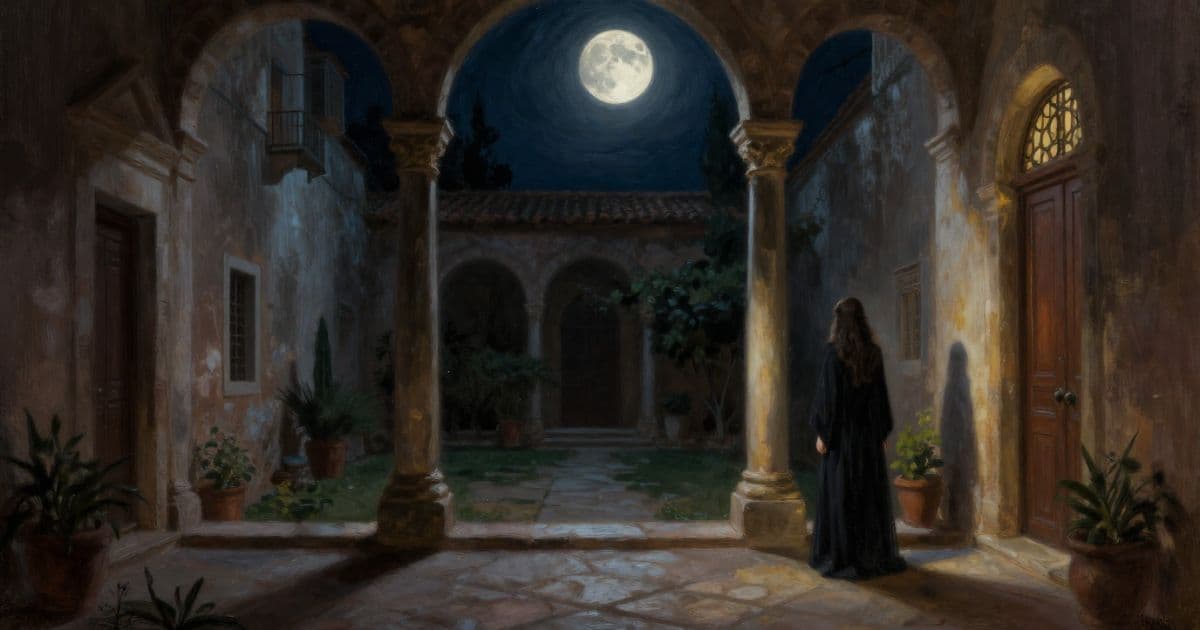
In a crumbling 16th-century Sicilian castle, two sisters discover that the most terrifying monsters aren't supernatural—they're the ones who raised them. Julia and Emilia have been abandoned by their father, the Marquis of Mazzini, after he remarried the beautiful but manipulative Maria. The castle echoes with mysterious sounds from a supposedly sealed wing. Servants whisper about ghosts. Then Julia falls in love with a man her father has forbidden, and everything unravels.
Ann Radcliffe's 1790 masterpiece practically invented Gothic romance, but this isn't just historical fiction—it's a psychological thriller about power, silence, and the courage required to expose dangerous truths. Beneath the secret passages and moonlit corridors lies something modern and urgent: a story about how families conceal crimes, how institutions protect abusers, and what happens when you discover secrets that powerful people need buried.
Julia faces an impossible choice: obey and stay safe, or pursue truth and risk everything. Her father controls her inheritance, her marriage prospects, her physical freedom. Maria manipulates through charm and strategic cruelty. The abandoned wing's mystery becomes a survival question—when you uncover what shouldn't be known, how do you stay alive long enough to expose it?
Through Intelligence Amplifier™ analysis, you'll recognize disturbingly current patterns: how gaslighting works when everyone collaborates in the lie, how young women develop survival strategies in spaces where men hold all formal power, and why breaking institutional silence requires both moral courage and tactical intelligence.
This is a manual for recognizing when any system—family, organization, community—prioritizes its own stability over individual welfare. Julia's journey from innocence to knowledge mirrors everyone's awakening to uncomfortable truths. Once you know what's hidden in the abandoned wing, can you ever pretend ignorance again?
Essential Life Skills Deep Dive
Explore chapter-by-chapter breakdowns of the essential life skills taught in this classic novel.
Reading Hidden Power Structures
Learn to recognize how families and institutions conceal abuse behind respectable facades—Julia's Gothic education in questioning authority.
Navigating Gaslighting & Collective Denial
Understand what it feels like when everyone around you insists your perceptions are wrong—trusting yourself when authority figures demand doubt.
Strategic Resistance Without Power
Learn how people without formal authority develop indirect strategies for pursuing truth and justice—working around power rather than confronting it directly.
Escaping Controlling Family Systems
Learn the practical and psychological challenges of leaving situations where your family has legal, financial, and social power over you.
Essential Skills
Life skills and patterns this book helps you develop—drawn from its themes and characters.
Reading Hidden Power Structures
Learn to recognize how families, organizations, and institutions conceal abuse behind respectable facades. Julia's journey teaches you to question official narratives when evidence suggests otherwise.
Navigating Gaslighting and Collective Denial
Understand what it feels like when everyone around you insists your perceptions are wrong. Julia faces a conspiracy of silence—her Gothic education in trusting yourself when authority figures demand you doubt your own senses.
Building Allies in Hostile Environments
Master the art of identifying who can be trusted when most people benefit from maintaining the status quo. Julia must distinguish genuine supporters from those who'll betray her to protect their own positions.
Strategic Resistance Without Direct Power
Learn how people without formal authority—like daughters with controlling fathers—develop indirect strategies for pursuing truth and justice. Sometimes survival requires working around power rather than confronting it directly.
Recognizing When Institutions Prioritize Stability Over Justice
Understand why families, churches, courts, and organizations often protect abusers rather than victims. The Mazzini family's conspiracy of silence teaches you to see this pattern before you're trapped in it.
Trusting Your Instincts Despite Social Pressure
Develop confidence in your own perceptions when everyone tells you you're imagining things. Julia hears sounds from the sealed wing that others insist don't exist—her Gothic education in reality versus denial.
Understanding How Secrets Create Power
See how the Marquis and Maria maintain control through information asymmetry. Those who know secrets have power over those kept ignorant—which is why truth-telling becomes dangerous to existing power structures.
Escaping Controlling Family Systems
Learn the practical and psychological challenges of leaving situations where your family has legal, financial, and social power over you. Julia's literal flight from the castle mirrors everyone's journey to independence from controlling family dynamics.
Table of Contents
Shadows in the Castle
We meet the Mazzini family in their Sicilian castle at the end of the 16th century. The Marquis Ferd...
The Festival of Hearts and Shadows
The long-awaited festival transforms the castle into a magical wonderland, but beneath the glitterin...
Secrets in Stone and Blood
Ferdinand's investigation into the mysterious southern wing reveals a horrifying family legacy—his g...
The Wedding That Never Was
Julia's wedding day arrives, but the bride has vanished. The Marquis discovers her empty prison cell...
False Leads and Bitter Discoveries
The Duke's relentless pursuit takes him through a night of storms to a monastery, where he discovers...
Voices from the Depths
Ferdinand remains imprisoned while mysterious moans echo through his dungeon at night, seemingly con...
An Unexpected Reunion in the Mountains
Madame de Menon stops for the night in a mountain village and takes an evening walk to clear her min...
Mistaken Identity and Sanctuary Found
Julia finishes telling Madame de Menon how she escaped her forced marriage by disguising herself and...
Sanctuary and Shared Sorrows
Julia finds refuge in the ancient monastery of St. Augustin, where Gothic architecture and sacred at...
The Abate's Pride and Julia's Peril
Julia's peaceful walks around the abbey are shattered when she spots two mysterious men watching her...
The Sacred Ultimatum
Julia's sanctuary becomes a trap when the Abate presents her with an impossible choice: take religio...
Flight Through Darkness and Storm
Julia's midnight escape from the monastery becomes a harrowing journey through multiple perils. With...
Into the Bandits' Lair
Hippolitus finally recovers from his wounds and travels to Sicily, desperate to find Julia. At the m...
Mother and Daughter Reunited
Julia finds safety in a village but refuses Hippolitus's marriage proposal, feeling it would dishono...
The Poison Cup Returns
The marquis's world collapses in a spectacular cascade of consequences. His obsession with recoverin...
Truth Revealed and Justice Restored
The final chapter brings resolution to all the mysteries that have haunted the Mazzini family. Ferdi...
About Ann Radcliffe
Published 1790
Ann Radcliffe (1764-1823) was an English novelist who defined the Gothic genre and became the most popular and highest-paid novelist of her time. Born Ann Ward in London, she married William Radcliffe, a journalist, and began writing novels in her twenties. Unlike many women writers of her era who published anonymously out of necessity or shame, Radcliffe commanded unprecedented respect and financial success—earning £500 for The Mysteries of Udolpho (1794), an enormous sum that exceeded what most male writers received.
A Sicilian Romance, published in 1790 as her second novel, established the Gothic formula: a virtuous heroine, a mysterious castle, a tyrannical father figure, supernatural seeming events that have rational explanations, and an atmosphere of psychological terror. But Radcliffe was doing more than crafting entertaining thrillers. Her novels consistently explore women's limited options in patriarchal society, the psychology of fear, and the courage required to challenge authority when you have no formal power.
Radcliffe's innovation was creating suspense through psychological tension rather than graphic violence. She perfected what critics called "terror Gothic" (as opposed to "horror Gothic")—building dread through atmosphere, suggestion, and the heroine's perception of danger. Her influence on literature was enormous: Lord Byron, the Brontë sisters, Edgar Allan Poe, and countless Gothic writers followed her template.
She stopped publishing after 1797, living quietly in London until her death in 1823. Her work was both celebrated and controversial—some critics dismissed Gothic fiction as frivolous women's entertainment, while others recognized her psychological sophistication. Today, she's recognized as a pioneer who used popular genre fiction to explore serious questions about power, gender, and justice—making her books far more subversive than they first appeared.
Why This Author Matters Today
Ann Radcliffe's insights into human nature, social constraints, and the search for authenticity remain powerfully relevant. Their work helps us understand the timeless tensions between individual desire and social expectation, making them an essential guide for navigating modern life's complexities.
More by Ann Radcliffe in Our Library

Amplified Classics is different.
not a sparknotes, nor a cliffnotes
This is a retelling. The story is still told—completely. You walk with the characters, feel what they feel, discover what they discover. The meaning arrives because you experienced it, not because someone explained a summary.
Read this, then read the original. The prose will illuminate—you'll notice what makes the author that author, because you're no longer fighting to follow the story.
Read the original first, then read this. Something will click. You'll want to go back.
Either way, the door opens inward.
Get the Full Book
Purchase the complete book to access all chapters and support classic literature
As an Amazon Associate, we earn a small commission from qualifying purchases at no additional cost to you.
Available in paperback, hardcover, and e-book formats
You Might Also Like




Free to read • No account required