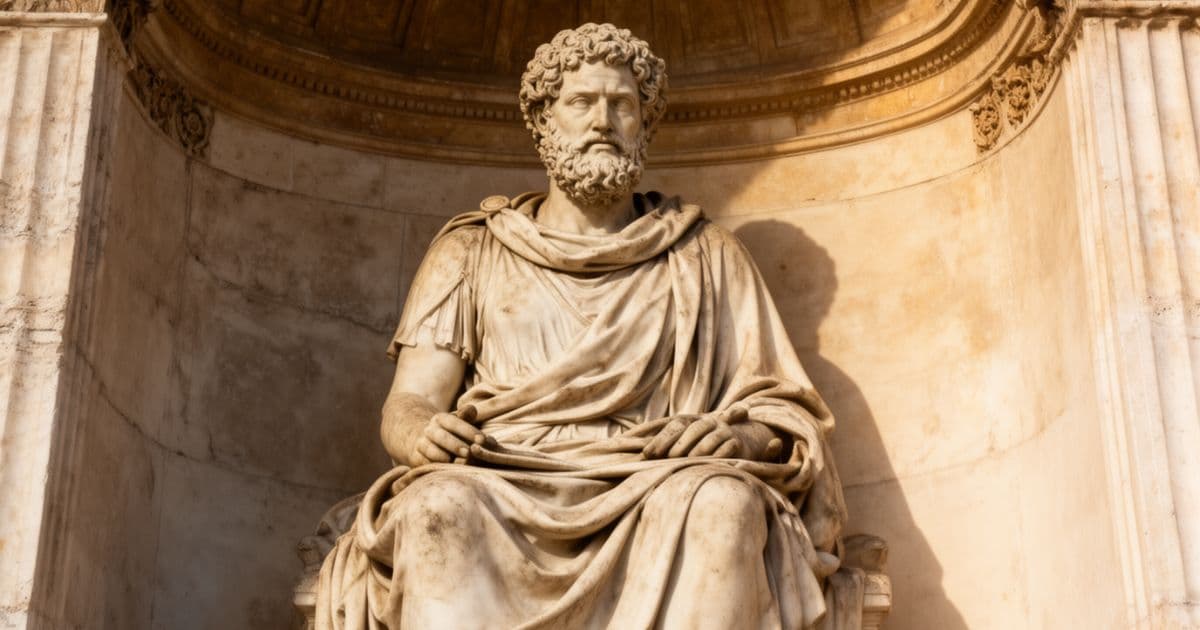
Teaching Nicomachean Ethics
by Aristotle (-350)
Why Teach Nicomachean Ethics?
Written around 350 BCE and named after Aristotle's son Nicomachus, this is the most influential work on ethics ever produced—and it still reads like it was written for today. Aristotle's central question is deceptively simple: what does it mean to live well? His answer cuts against everything modern self-help gets wrong. The good life isn't about pleasure, wealth, fame, or even moral rule-following. It's about eudaimonia—often translated as "happiness" but better understood as human flourishing. Living in a way that fully expresses what you are capable of as a human being. To get there, Aristotle argues, you need virtue. Not as a list of commandments, but as a set of stable character traits—courage, honesty, generosity, practical wisdom—that you develop through repeated action the way an athlete develops skill. You become courageous by doing courageous things. You become honest by telling the truth until honesty becomes who you are. Virtue is a habit before it is a belief. The book's most radical insight is the doctrine of the mean: every virtue sits between two vices. Courage lies between cowardice and recklessness. Generosity lies between miserliness and reckless spending. Getting it right requires practical wisdom (phronesis)—the ability to read situations clearly and respond well, which can't be reduced to any formula. Aristotle also writes with surprising depth about friendship, arguing that the highest form—friendship based on shared virtue rather than pleasure or usefulness—is essential to the good life, not optional. And he takes pleasure seriously, refusing to treat it as mere distraction. This is not a book of abstract theory. It is a handbook for becoming the kind of person whose life, looking back, was worth living.
This 10-chapter work explores themes of Morality & Ethics, Personal Growth, Decision Making—topics that remain deeply relevant to students' lives today. Our Intelligence Amplifier™ analysis helps students connect these classic themes to modern situations they actually experience.
Major Themes to Explore
Personal Growth
Explored in chapters: 1, 2, 4, 6, 7, 8 +2 more
Social Expectations
Explored in chapters: 1, 2, 3, 4, 6, 8 +2 more
Class
Explored in chapters: 1, 2, 4, 6, 8, 9 +1 more
Human Relationships
Explored in chapters: 1, 2, 4, 8, 9, 10
Identity
Explored in chapters: 2, 4, 8, 9, 10
Practical Wisdom
Explored in chapters: 3, 7
Purpose
Explored in chapters: 1
Personal Agency
Explored in chapters: 3
Skills Students Will Develop
Distinguishing Goals from Tools
This chapter teaches how to separate what you actually want from what you think will get you there.
See in Chapter 1 →Building Character Through Practice
This chapter teaches that lasting change comes from consistent daily actions, not good intentions or theoretical knowledge.
See in Chapter 2 →Distinguishing Choice from Circumstance
This chapter teaches how to identify which parts of difficult situations you actually control versus which parts are imposed by external forces.
See in Chapter 3 →Calibrating Responses
This chapter teaches how to match your response to the situation rather than your emotions or insecurities.
See in Chapter 4 →Distinguishing Fair from Equal
This chapter teaches how to recognize when identical treatment creates injustice and when different treatment restores balance.
See in Chapter 5 →Distinguishing Technical Knowledge from Practical Wisdom
This chapter teaches how to recognize when situations require rule-following versus human judgment and experience.
See in Chapter 6 →Recognizing Emotional Override
This chapter teaches how to identify when strong emotions are temporarily drowning out your better judgment.
See in Chapter 7 →Reading Relationship Categories
This chapter teaches you to identify whether relationships are built on usefulness, shared fun, or genuine care.
See in Chapter 8 →Detecting Emotional Manipulation
This chapter teaches how to distinguish between genuine need and manipulative pressure by examining the patterns of how people make requests and respond to boundaries.
See in Chapter 9 →Distinguishing Quality Satisfaction
This chapter teaches how to recognize which experiences genuinely fulfill versus those that just provide temporary relief or ego-boost.
See in Chapter 10 →Discussion Questions (50)
1. What's the difference between the goals most people chase and what Aristotle says we're really after?
2. Why does Aristotle think we keep mistaking tools (like money or status) for the actual target (happiness)?
3. Where do you see people in your life chasing the wrong targets - going after things that promise happiness but don't deliver?
4. How would you use Aristotle's framework to evaluate a major decision you're facing - asking what you're really after versus what seems immediately appealing?
5. What does this chapter reveal about why so many people work hard but still feel unsatisfied with their lives?
6. According to Aristotle, what's the difference between knowing what courage looks like and actually being courageous?
7. Why does Aristotle say that finding the 'golden mean' isn't like following a recipe with exact measurements?
8. Think about someone you know who's really good at their job. How did they get that way - through training or through years of practice?
9. If you wanted to become more patient with difficult people, what would Aristotle say you should do instead of just promising yourself to 'be more patient'?
10. What does this chapter reveal about why people often struggle to change their habits even when they know what they should do?
11. When Aristotle talks about throwing cargo overboard in a storm, what makes this action voluntary even though no captain wants to lose their goods?
12. Why does Aristotle say we can only be praised or blamed for actions that truly originate from within us? What's the difference between reacting and choosing?
13. Think about a recent conflict at work or home. Which parts of your response were genuine choices versus reactions to circumstances beyond your control?
14. Aristotle argues that we shape our character through repeated actions, like how someone becomes ill through poor lifestyle choices. How would you apply this to building better habits in your own life?
15. What does Aristotle's analysis of courage versus its counterfeits teach us about the difference between looking virtuous and actually being virtuous?
16. Aristotle describes three types of people with money: the stingy person who hoards, the wasteful person who throws money around, and the generous person who gives appropriately. What makes the generous person different from the other two?
17. Why does Aristotle think the truly proud person doesn't like receiving help from others, but is generous in giving help? What does this reveal about how they see themselves?
18. Think about your workplace or family. Where do you see people struggling with the 'recognition calibration' problem - either undervaluing or overvaluing themselves? What patterns do you notice?
19. Imagine you're trying to help a friend who constantly apologizes for everything and never speaks up in meetings. Using Aristotle's framework, how would you guide them toward better self-calibration?
20. Aristotle suggests that virtues like generosity and proper pride are skills we can develop, not just personality traits we're born with. What does this mean for how we approach personal growth and self-improvement?
+30 more questions available in individual chapters
Suggested Teaching Approach
1Before Class
Assign students to read the chapter AND our IA analysis. They arrive with the framework already understood, not confused about what happened.
2Discussion Starter
Instead of "What happened in this chapter?" ask "Where do you see this pattern in your own life?" Students connect text to lived experience.
3Modern Connections
Use our "Modern Adaptation" sections to show how classic patterns appear in today's workplace, relationships, and social dynamics.
4Assessment Ideas
Personal application essays, current events analysis, peer teaching. Assess application, not recall—AI can't help with lived experience.
Chapter-by-Chapter Resources
Chapter 1
The Search for True Happiness
Chapter 2
Building Character Through Daily Habits
Chapter 3
The Anatomy of Choice
Chapter 4
Money, Honor, and Finding Your Balance
Chapter 5
Justice as Fairness and Balance
Chapter 6
Two Types of Wisdom
Chapter 7
Self-Control and the Battle Within
Chapter 8
The Three Types of Friendship
Chapter 9
The Art of Loving Others and Yourself
Chapter 10
The Good Life and True Happiness
Ready to Transform Your Classroom?
Start with one chapter. See how students respond when they arrive with the framework instead of confusion. Then expand to more chapters as you see results.