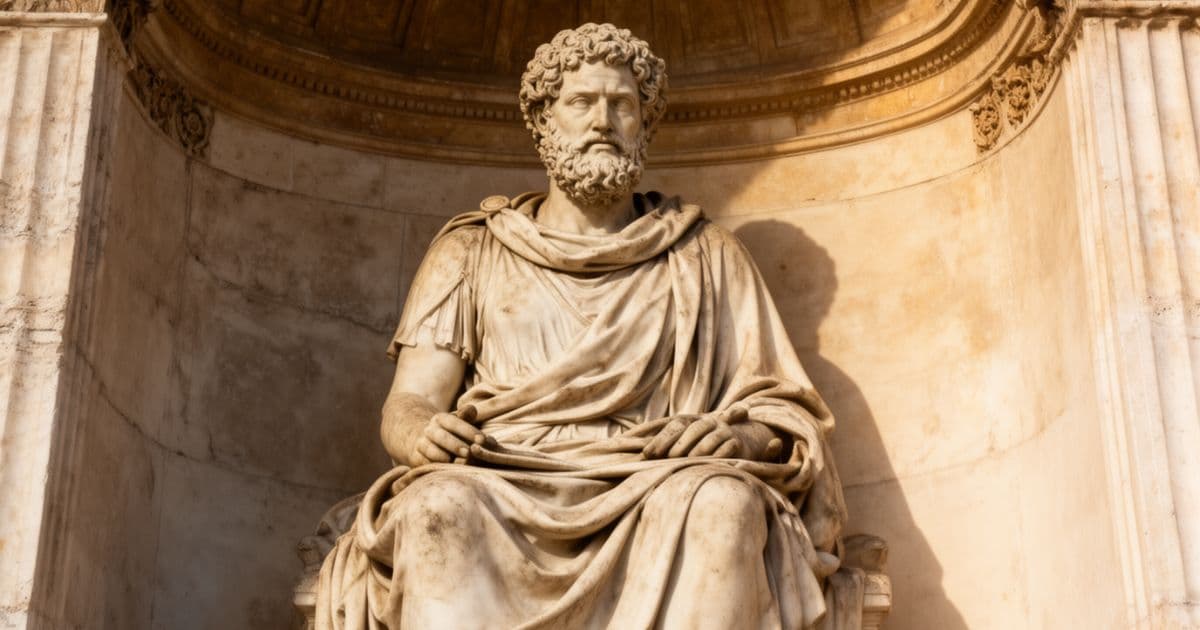
An excerpt from the original text.(complete · 6511 words)
BOOK VI
======================================================================
1
Since we have previously said that one ought to choose that which
is intermediate, not the excess nor the defect, and that the intermediate
is determined by the dictates of the right rule, let us discuss the nature
of these dictates. In all the states of character we have mentioned, as
in all other matters, there is a mark to which the man who has the rule
looks, and heightens or relaxes his activity accordingly, and there is
a standard which determines the mean states which we say are intermediate
between excess and defect, being in accordance with the right rule. But
such a statement, though true, is by no means clear; for not only here
but in all other pursuits which are objects of knowledge it is indeed true
to say that we must not exert ourselves nor relax our efforts too much
nor too little, but to an intermediate extent and as the right rule dictates;
but if a man had only this knowledge he would be none the wiser e.g. we
should not know what sort of medicines to apply to our body if some one
were to say 'all those which the medical art prescribes, and which agree
with the practice of one who possesses the art'. Hence it is necessary
with regard to the states of the soul also not only that this true statement
should be made, but also that it should be determined what is the right
rule and what is the standard that fixes it.
We divided the virtues of the soul and a said that some are virtues
of character and others of intellect. Now we have discussed in detail the
moral virtues; with regard to the others let us express our view as follows,
beginning with some remarks about the soul. We said before that there are
two parts of the soul-that which grasps a rule or rational principle, and
the irrational; let us now draw a similar distinction within the part which
grasps a rational principle. And let it be assumed that there are two parts
which grasp a rational principle-one by which we contemplate the kind of
things whose originative causes are invariable, and one by which we contemplate
variable things; for where objects differ in kind the part of the soul
answering to each of the two is different in kind, since it is in virtue
of a certain likeness and kinship with their objects that they have the
knowledge they have. Let one of these parts be called the scientific and
the other the calculative; for to deliberate and to calculate are the same
thing, but no one deliberates about the invariable. Therefore the calculative
is one part of the faculty which grasps a rational principle. We must,
then, learn what is the best state of each of these two parts; for this
is the virtue of each.
2
The virtue of a thing is relative to its proper work. Now there
are three things in the soul which control action and truth-sensation,
reason, desire.
Of these sensation originates no action; this is plain from the
fact that the lower animals have sensation but no share in
action.
What affirmation and negation are in thinking, pursuit and avoidance
are in desire; so that since moral virtue is a state of character concerned
with choice, and choice is deliberate desire, therefore both the reasoning
must be true and the desire right, if the choice is to be good, and the
latter must pursue just what the former asserts. Now this kind of intellect
and of truth is practical; of the intellect which is contemplative, not
practical nor productive, the good and the bad state are truth and falsity
respectively (for this is the work of everything intellectual); while of
the part which is practical and intellectual the good state is truth in
agreement with right desire.
The origin of action-its efficient, not its final cause-is choice,
and that of choice is desire and reasoning with a view to an end. This
is why choice cannot exist either without reason and intellect or without
a moral state; for good action and its opposite cannot exist without a
combination of intellect and character. Intellect itself, however, moves
nothing, but only the intellect which aims at an end and is practical;
for this rules the productive intellect, as well, since every one who makes
makes for an end, and that which is made is not an end in the unqualified
sense (but only an end in a particular relation, and the end of a particular
operation)-only that which is done is that; for good action is an end,
and desire aims at this. Hence choice is either desiderative reason or
ratiocinative desire, and such an origin of action is a man. (It is to
be noted that nothing that is past is an object of choice, e.g. no one
chooses to have sacked Troy; for no one deliberates about the past, but
about what is future and capable of being otherwise, while what is past
is not capable of not having taken place; hence Agathon is right in
saying
For this alone is lacking even to God,
To make undone things thathave once been done.)
The work of both the intellectual parts, then, is truth. Therefore
the states that are most strictly those in respect of which each of these
parts will reach truth are the virtues of the two parts.
3
Let us begin, then, from the beginning, and discuss these states
once more. Let it be assumed that the states by virtue of which the soul
possesses truth by way of affirmation or denial are five in number, i.e.
art, scientific knowledge, practical wisdom, philosophic wisdom, intuitive
reason; we do not include judgement and opinion because in these we may
be mistaken.
Now what scientific knowledge is, if we are to speak exactly and
not follow mere similarities, is plain from what follows. We all suppose
that what we know is not even capable of being otherwise; of things capable
of being otherwise we do not know, when they have passed outside our observation,
whether they exist or not. Therefore the object of scientific knowledge
is of necessity. Therefore it is eternal; for things that are of necessity
in the unqualified sense are all eternal; and things that are eternal are
ungenerated and imperishable. Again, every science is thought to be capable
of being taught, and its object of being learned. And all teaching starts
from what is already known, as we maintain in the Analytics also; for it
proceeds sometimes through induction and sometimes by syllogism. Now induction
is the starting-point which knowledge even of the universal presupposes,
while syllogism proceeds from universals. There are therefore starting-points
from which syllogism proceeds, which are not reached by syllogism; it is
therefore by induction that they are acquired. Scientific knowledge is,
then, a state of capacity to demonstrate, and has the other limiting characteristics
which we specify in the Analytics, for it is when a man believes in a certain
way and the starting-points are known to him that he has scientific knowledge,
since if they are not better known to him than the conclusion, he will
have his knowledge only incidentally.
Let this, then, be taken as our account of scientific
knowledge.
4
In the variable are included both things made and things done;
making and acting are different (for their nature we treat even the discussions
outside our school as reliable); so that the reasoned state of capacity
to act is different from the reasoned state of capacity to make. Hence
too they are not included one in the other; for neither is acting making
nor is making acting. Now since architecture is an art and is essentially
a reasoned state of capacity to make, and there is neither any art that
is not such a state nor any such state that is not an art, art is identical
with a state of capacity to make, involving a true course of reasoning.
All art is concerned with coming into being, i.e. with contriving and considering
how something may come into being which is capable of either being or not
being, and whose origin is in the maker and not in the thing made; for
art is concerned neither with things that are, or come into being, by necessity,
nor with things that do so in accordance with nature (since these have
their origin in themselves). Making and acting being different, art must
be a matter of making, not of acting. And in a sense chance and art are
concerned with the same objects; as Agathon says, 'art loves chance and
chance loves art'. Art, then, as has been is a state concerned with making,
involving a true course of reasoning, and lack of art on the contrary is
a state concerned with making, involving a false course of reasoning; both
are concerned with the variable.
5
Regarding practical wisdom we shall get at the truth by considering
who are the persons we credit with it. Now it is thought to be the mark
of a man of practical wisdom to be able to deliberate well about what is
good and expedient for himself, not in some particular respect, e.g. about
what sorts of thing conduce to health or to strength, but about what sorts
of thing conduce to the good life in general. This is shown by the fact
that we credit men with practical wisdom in some particular respect when
they have calculated well with a view to some good end which is one of
those that are not the object of any art. It follows that in the general
sense also the man who is capable of deliberating has practical wisdom.
Now no one deliberates about things that are invariable, nor about things
that it is impossible for him to do. Therefore, since scientific knowledge
involves demonstration, but there is no demonstration of things whose first
principles are variable (for all such things might actually be otherwise),
and since it is impossible to deliberate about things that are of necessity,
practical wisdom cannot be scientific knowledge nor art; not science because
that which can be done is capable of being otherwise, not art because action
and making are different kinds of thing. The remaining alternative, then,
is that it is a true and reasoned state of capacity to act with regard
to the things that are good or bad for man. For while making has an end
other than itself, action cannot; for good action itself is its end. It
is for this reason that we think Pericles and men like him have practical
wisdom, viz. because they can see what is good for themselves and what
is good for men in general; we consider that those can do this who are
good at managing households or states. (This is why we call temperance
(sophrosune) by this name; we imply that it preserves one's practical wisdom
(sozousa tan phronsin). Now what it preserves is a judgement of the kind
we have described. For it is not any and every judgement that pleasant
and painful objects destroy and pervert, e.g. the judgement that the triangle
has or has not its angles equal to two right angles, but only judgements
about what is to be done. For the originating causes of the things that
are done consist in the end at which they are aimed; but the man who has
been ruined by pleasure or pain forthwith fails to see any such originating
cause-to see that for the sake of this or because of this he ought to choose
and do whatever he chooses and does; for vice is destructive of the originating
cause of action.) Practical wisdom, then, must be a reasoned and true state
of capacity to act with regard to human goods. But further, while there
is such a thing as excellence in art, there is no such thing as excellence
in practical wisdom; and in art he who errs willingly is preferable, but
in practical wisdom, as in the virtues, he is the reverse. Plainly, then,
practical wisdom is a virtue and not an art. There being two parts of the
soul that can follow a course of reasoning, it must be the virtue of one
of the two, i.e. of that part which forms opinions; for opinion is about
the variable and so is practical wisdom. But yet it is not only a reasoned
state; this is shown by the fact that a state of that sort may forgotten
but practical wisdom cannot.
6
Scientific knowledge is judgement about things that are universal
and necessary, and the conclusions of demonstration, and all scientific
knowledge, follow from first principles (for scientific knowledge involves
apprehension of a rational ground). This being so, the first principle
from which what is scientifically known follows cannot be an object of
scientific knowledge, of art, or of practical wisdom; for that which can
be scientifically known can be demonstrated, and art and practical wisdom
deal with things that are variable. Nor are these first principles the
objects of philosophic wisdom, for it is a mark of the philosopher to have
demonstration about some things. If, then, the states of mind by which
we have truth and are never deceived about things invariable or even variable
are scientific knowlededge, practical wisdom, philosophic wisdom, and intuitive
reason, and it cannot be any of the three (i.e. practical wisdom, scientific
knowledge, or philosophic wisdom), the remaining alternative is that it
is intuitive reason that grasps the first principles.
7
Wisdom (1) in the arts we ascribe to their most finished exponents,
e.g. to Phidias as a sculptor and to Polyclitus as a maker of portrait-statues,
and here we mean nothing by wisdom except excellence in art; but (2) we
think that some people are wise in general, not in some particular field
or in any other limited respect, as Homer says in the
Margites,
Him did the gods make neither a digger nor yet a
ploughman
Nor wise in anything else. Therefore wisdom must plainly be the most
finished of the forms of knowledge. It follows that the wise man must not
only know what follows from the first principles, but must also possess
truth about the first principles. Therefore wisdom must be intuitive reason
combined with scientific knowledge-scientific knowledge of the highest
objects which has received as it were its proper completion.
Of the highest objects, we say; for it would be strange to think
that the art of politics, or practical wisdom, is the best knowledge, since
man is not the best thing in the world. Now if what is healthy or good
is different for men and for fishes, but what is white or straight is always
the same, any one would say that what is wise is the same but what is practically
wise is different; for it is to that which observes well the various matters
concerning itself that one ascribes practical wisdom, and it is to this
that one will entrust such matters. This is why we say that some even of
the lower animals have practical wisdom, viz. those which are found to
have a power of foresight with regard to their own life. It is evident
also that philosophic wisdom and the art of politics cannot be the same;
for if the state of mind concerned with a man's own interests is to be
called philosophic wisdom, there will be many philosophic wisdoms; there
will not be one concerned with the good of all animals (any more than there
is one art of medicine for all existing things), but a different philosophic
wisdom about the good of each species.
But if the argument be that man is the best of the animals, this
makes no difference; for there are other things much more divine in their
nature even than man, e.g., most conspicuously, the bodies of which the
heavens are framed. From what has been said it is plain, then, that philosophic
wisdom is scientific knowledge, combined with intuitive reason, of the
things that are highest by nature. This is why we say Anaxagoras, Thales,
and men like them have philosophic but not practical wisdom, when we see
them ignorant of what is to their own advantage, and why we say that they
know things that are remarkable, admirable, difficult, and divine, but
useless; viz. because it is not human goods that they
seek.
Practical wisdom on the other hand is concerned with things human
and things about which it is possible to deliberate; for we say this is
above all the work of the man of practical wisdom, to deliberate well,
but no one deliberates about things invariable, nor about things which
have not an end, and that a good that can be brought about by action. The
man who is without qualification good at deliberating is the man who is
capable of aiming in accordance with calculation at the best for man of
things attainable by action. Nor is practical wisdom concerned with universals
only-it must also recognize the particulars; for it is practical, and practice
is concerned with particulars. This is why some who do not know, and especially
those who have experience, are more practical than others who know; for
if a man knew that light meats are digestible and wholesome, but did not
know which sorts of meat are light, he would not produce health, but the
man who knows that chicken is wholesome is more likely to produce
health.
Now practical wisdom is concerned with action; therefore one should
have both forms of it, or the latter in preference to the former. But of
practical as of philosophic wisdom there must be a controlling
kind.
8
Political wisdom and practical wisdom are the same state of mind,
but their essence is not the same. Of the wisdom concerned with the city,
the practical wisdom which plays a controlling part is legislative wisdom,
while that which is related to this as particulars to their universal is
known by the general name 'political wisdom'; this has to do with action
and deliberation, for a decree is a thing to be carried out in the form
of an individual act. This is why the exponents of this art are alone said
to 'take part in politics'; for these alone 'do things' as manual labourers
'do things'.
Practical wisdom also is identified especially with that form of
it which is concerned with a man himself-with the individual; and this
is known by the general name 'practical wisdom'; of the other kinds one
is called household management, another legislation, the third politics,
and of the latter one part is called deliberative and the other judicial.
Now knowing what is good for oneself will be one kind of knowledge, but
it is very different from the other kinds; and the man who knows and concerns
himself with his own interests is thought to have practical wisdom, while
politicians are thought to be busybodies; hence the word of
Euripides,
But how could I be wise, who might at ease,
Numbered among the army's multitude,
Have had an equal share?
For those who aim too high and do too much. Those who think thus seek
their own good, and consider that one ought to do so. From this opinion,
then, has come the view that such men have practical wisdom; yet perhaps
one's own good cannot exist without household management, nor without a
form of government. Further, how one should order one's own affairs is
not clear and needs inquiry.
What has been said is confirmed by the fact that while young men
become geometricians and mathematicians and wise in matters like these,
it is thought that a young man of practical wisdom cannot be found. The
cause is that such wisdom is concerned not only with universals but with
particulars, which become familiar from experience, but a young man has
no experience, for it is length of time that gives experience; indeed one
might ask this question too, why a boy may become a mathematician, but
not a philosopher or a physicist. It is because the objects of mathematics
exist by abstraction, while the first principles of these other subjects
come from experience, and because young men have no conviction about the
latter but merely use the proper language, while the essence of mathematical
objects is plain enough to them?
Further, error in deliberation may be either about the universal
or about the particular; we may fall to know either that all water that
weighs heavy is bad, or that this particular water weighs
heavy.
That practical wisdom is not scientific knowledge is evident; for
it is, as has been said, concerned with the ultimate particular fact, since
the thing to be done is of this nature. It is opposed, then, to intuitive
reason; for intuitive reason is of the limiting premisses, for which no
reason can be given, while practical wisdom is concerned with the ultimate
particular, which is the object not of scientific knowledge but of perception-not
the perception of qualities peculiar to one sense but a perception akin
to that by which we perceive that the particular figure before us is a
triangle; for in that direction as well as in that of the major premiss
there will be a limit. But this is rather perception than practical wisdom,
though it is another kind of perception than that of the qualities peculiar
to each sense.
9
There is a difference between inquiry and deliberation; for deliberation
is inquiry into a particular kind of thing. We must grasp the nature of
excellence in deliberation as well whether it is a form of scientific knowledge,
or opinion, or skill in conjecture, or some other kind of thing. Scientific
knowledge it is not; for men do not inquire about the things they know
about, but good deliberation is a kind of deliberation, and he who deliberates
inquires and calculates. Nor is it skill in conjecture; for this both involves
no reasoning and is something that is quick in its operation, while men
deliberate a long time, and they say that one should carry out quickly
the conclusions of one's deliberation, but should deliberate slowly. Again,
readiness of mind is different from excellence in deliberation; it is a
sort of skill in conjecture. Nor again is excellence in deliberation opinion
of any sort. But since the man who deliberates badly makes a mistake, while
he who deliberates well does so correctly, excellence in deliberation is
clearly a kind of correctness, but neither of knowledge nor of opinion;
for there is no such thing as correctness of knowledge (since there is
no such thing as error of knowledge), and correctness of opinion is truth;
and at the same time everything that is an object of opinion is already
determined. But again excellence in deliberation involves reasoning. The
remaining alternative, then, is that it is correctness of thinking; for
this is not yet assertion, since, while even opinion is not inquiry but
has reached the stage of assertion, the man who is deliberating, whether
he does so well or ill, is searching for something and
calculating.
But excellence in deliberation is a certain correctness of deliberation;
hence we must first inquire what deliberation is and what it is about.
And, there being more than one kind of correctness, plainly excellence
in deliberation is not any and every kind; for (1) the incontinent man
and the bad man, if he is clever, will reach as a result of his calculation
what he sets before himself, so that he will have deliberated correctly,
but he will have got for himself a great evil. Now to have deliberated
well is thought to be a good thing; for it is this kind of correctness
of deliberation that is excellence in deliberation, viz. that which tends
to attain what is good. But (2) it is possible to attain even good by a
false syllogism, and to attain what one ought to do but not by the right
means, the middle term being false; so that this too is not yet excellence
in deliberation this state in virtue of which one attains what one ought
but not by the right means. Again (3) it is possible to attain it by long
deliberation while another man attains it quickly. Therefore in the former
case we have not yet got excellence in deliberation, which is rightness
with regard to the expedient-rightness in respect both of the end, the
manner, and the time. (4) Further it is possible to have deliberated well
either in the unqualified sense or with reference to a particular end.
Excellence in deliberation in the unqualified sense, then, is that which
succeeds with reference to what is the end in the unqualified sense, and
excellence in deliberation in a particular sense is that which succeeds
relatively to a particular end. If, then, it is characteristic of men of
practical wisdom to have deliberated well, excellence in deliberation will
be correctness with regard to what conduces to the end of which practical
wisdom is the true apprehension.
10
Understanding, also, and goodness of understanding, in virtue of
which men are said to be men of understanding or of good understanding,
are neither entirely the same as opinion or scientific knowledge (for at
that rate all men would have been men of understanding), nor are they one
of the particular sciences, such as medicine, the science of things connected
with health, or geometry, the science of spatial magnitudes. For understanding
is neither about things that are always and are unchangeable, nor about
any and every one of the things that come into being, but about things
which may become subjects of questioning and deliberation. Hence it is
about the same objects as practical wisdom; but understanding and practical
wisdom are not the same. For practical wisdom issues commands, since its
end is what ought to be done or not to be done; but understanding only
judges. (Understanding is identical with goodness of understanding, men
of understanding with men of good understanding.) Now understanding is
neither the having nor the acquiring of practical wisdom; but as learning
is called understanding when it means the exercise of the faculty of knowledge,
so 'understanding' is applicable to the exercise of the faculty of opinion
for the purpose of judging of what some one else says about matters with
which practical wisdom is concerned-and of judging soundly; for 'well'
and 'soundly' are the same thing. And from this has come the use of the
name 'understanding' in virtue of which men are said to be 'of good understanding',
viz. from the application of the word to the grasping of scientific truth;
for we often call such grasping understanding.
11
What is called judgement, in virtue of which men are said to 'be
sympathetic judges' and to 'have judgement', is the right discrimination
of the equitable. This is shown by the fact that we say the equitable man
is above all others a man of sympathetic judgement, and identify equity
with sympathetic judgement about certain facts. And sympathetic judgement
is judgement which discriminates what is equitable and does so correctly;
and correct judgement is that which judges what is true.
Now all the states we have considered converge, as might be expected,
to the same point; for when we speak of judgement and understanding and
practical wisdom and intuitive reason we credit the same people with possessing
judgement and having reached years of reason and with having practical
wisdom and understanding. For all these faculties deal with ultimates,
i.e. with particulars; and being a man of understanding and of good or
sympathetic judgement consists in being able judge about the things with
which practical wisdom is concerned; for the equities are common to all
good men in relation to other men. Now all things which have to be done
are included among particulars or ultimates; for not only must the man
of practical wisdom know particular facts, but understanding and judgement
are also concerned with things to be done, and these are ultimates. And
intuitive reason is concerned with the ultimates in both directions; for
both the first terms and the last are objects of intuitive reason and not
of argument, and the intuitive reason which is presupposed by demonstrations
grasps the unchangeable and first terms, while the intuitive reason involved
in practical reasonings grasps the last and variable fact, i.e. the minor
premiss. For these variable facts are the starting-points for the apprehension
of the end, since the universals are reached from the particulars; of these
therefore we must have perception, and this perception is intuitive
reason.
This is why these states are thought to be natural endowments-why,
while no one is thought to be a philosopher by nature, people are thought
to have by nature judgement, understanding, and intuitive reason. This
is shown by the fact that we think our powers correspond to our time of
life, and that a particular age brings with it intuitive reason and judgement;
this implies that nature is the cause. (Hence intuitive reason is both
beginning and end; for demonstrations are from these and about these.)
Therefore we ought to attend to the undemonstrated sayings and opinions
of experienced and older people or of people of practical wisdom not less
than to demonstrations; for because experience has given them an eye they
see aright.
We have stated, then, what practical and philosophic wisdom are,
and with what each of them is concerned, and we have said that each is
the virtue of a different part of the soul.
12
Difficulties might be raised as to the utility of these qualities
of mind. For (1) philosophic wisdom will contemplate none of the things
that will make a man happy (for it is not concerned with any coming into
being), and though practical wisdom has this merit, for what purpose do
we need it? Practical wisdom is the quality of mind concerned with things
just and noble and good for man, but these are the things which it is the
mark of a good man to do, and we are none the more able to act for knowing
them if the virtues are states of character, just as we are none the better
able to act for knowing the things that are healthy and sound, in the sense
not of producing but of issuing from the state of health; for we are none
the more able to act for having the art of medicine or of gymnastics. But
(2) if we are to say that a man should have practical wisdom not for the
sake of knowing moral truths but for the sake of becoming good, practical
wisdom will be of no use to those who are good; again it is of no use to
those who have not virtue; for it will make no difference whether they
have practical wisdom themselves or obey others who have it, and it would
be enough for us to do what we do in the case of health; though we wish
to become healthy, yet we do not learn the art of medicine. (3) Besides
this, it would be thought strange if practical wisdom, being inferior to
philosophic wisdom, is to be put in authority over it, as seems to be implied
by the fact that the art which produces anything rules and issues commands
about that thing.
These, then, are the questions we must discuss; so far we have
only stated the difficulties.
(1) Now first let us say that in themselves these states must be
worthy of choice because they are the virtues of the two parts of the soul
respectively, even if neither of them produce anything.
(2) Secondly, they do produce something, not as the art of medicine
produces health, however, but as health produces health; so does philosophic
wisdom produce happiness; for, being a part of virtue entire, by being
possessed and by actualizing itself it makes a man happy.
(3) Again, the work of man is achieved only in accordance with
practical wisdom as well as with moral virtue; for virtue makes us aim
at the right mark, and practical wisdom makes us take the right means.
(Of the fourth part of the soul-the nutritive-there is no such virtue;
for there is nothing which it is in its power to do or not to
do.)
(4) With regard to our being none the more able to do because of
our practical wisdom what is noble and just, let us begin a little further
back, starting with the following principle. As we say that some people
who do just acts are not necessarily just, i.e. those who do the acts ordained
by the laws either unwillingly or owing to ignorance or for some other
reason and not for the sake of the acts themselves (though, to be sure,
they do what they should and all the things that the good man ought), so
is it, it seems, that in order to be good one must be in a certain state
when one does the several acts, i.e. one must do them as a result of choice
and for the sake of the acts themselves. Now virtue makes the choice right,
but the question of the things which should naturally be done to carry
out our choice belongs not to virtue but to another faculty. We must devote
our attention to these matters and give a clearer statement about them.
There is a faculty which is called cleverness; and this is such as to be
able to do the things that tend towards the mark we have set before ourselves,
and to hit it. Now if the mark be noble, the cleverness is laudable, but
if the mark be bad, the cleverness is mere smartness; hence we call even
men of practical wisdom clever or smart. Practical wisdom is not the faculty,
but it does not exist without this faculty. And this eye of the soul acquires
its formed state not without the aid of virtue, as has been said and is
plain; for the syllogisms which deal with acts to be done are things which
involve a starting-point, viz. 'since the end, i.e. what is best, is of
such and such a nature', whatever it may be (let it for the sake of argument
be what we please); and this is not evident except to the good man; for
wickedness perverts us and causes us to be deceived about the starting-points
of action. Therefore it is evident that it is impossible to be practically
wise without being good.
13
We must therefore consider virtue also once more; for virtue too
is similarly related; as practical wisdom is to cleverness-not the same,
but like it-so is natural virtue to virtue in the strict sense. For all
men think that each type of character belongs to its possessors in some
sense by nature; for from the very moment of birth we are just or fitted
for selfcontrol or brave or have the other moral qualities; but yet we
seek something else as that which is good in the strict sense-we seek for
the presence of such qualities in another way. For both children and brutes
have the natural dispositions to these qualities, but without reason these
are evidently hurtful. Only we seem to see this much, that, while one may
be led astray by them, as a strong body which moves without sight may stumble
badly because of its lack of sight, still, if a man once acquires reason,
that makes a difference in action; and his state, while still like what
it was, will then be virtue in the strict sense. Therefore, as in the part
of us which forms opinions there are two types, cleverness and practical
wisdom, so too in the moral part there are two types, natural virtue and
virtue in the strict sense, and of these the latter involves practical
wisdom. This is why some say that all the virtues are forms of practical
wisdom, and why Socrates in one respect was on the right track while in
another he went astray; in thinking that all the virtues were forms of
practical wisdom he was wrong, but in saying they implied practical wisdom
he was right. This is confirmed by the fact that even now all men, when
they define virtue, after naming the state of character and its objects
add 'that (state) which is in accordance with the right rule'; now the
right rule is that which is in accordance with practical wisdom. All men,
then, seem somehow to divine that this kind of state is virtue, viz. that
which is in accordance with practical wisdom. But we must go a little further.
For it is not merely the state in accordance with the right rule, but the
state that implies the presence of the right rule, that is virtue; and
practical wisdom is a right rule about such matters. Socrates, then, thought
the virtues were rules or rational principles (for he thought they were,
all of them, forms of scientific knowledge), while we think they involve
a rational principle.
It is clear, then, from what has been said, that it is not possible
to be good in the strict sense without practical wisdom, nor practically
wise without moral virtue. But in this way we may also refute the dialectical
argument whereby it might be contended that the virtues exist in separation
from each other; the same man, it might be said, is not best equipped by
nature for all the virtues, so that he will have already acquired one when
he has not yet acquired another. This is possible in respect of the natural
virtues, but not in respect of those in respect of which a man is called
without qualification good; for with the presence of the one quality, practical
wisdom, will be given all the virtues. And it is plain that, even if it
were of no practical value, we should have needed it because it is the
virtue of the part of us in question; plain too that the choice will not
be right without practical wisdom any more than without virtue; for the
one deter, mines the end and the other makes us do the things that lead
to the end.
But again it is not supreme over philosophic wisdom, i.e. over
the superior part of us, any more than the art of medicine is over health;
for it does not use it but provides for its coming into being; it issues
orders, then, for its sake, but not to it. Further, to maintain its supremacy
would be like saying that the art of politics rules the gods because it
issues orders about all the affairs of the state.
Master this chapter. Complete your experience
Purchase the complete book to access all chapters and support classic literature
As an Amazon Associate, we earn a small commission from qualifying purchases at no additional cost to you.
Available in paperback, hardcover, and e-book formats
Let's Analyse the Pattern
Book knowledge and life wisdom are completely different skills that develop through different methods and solve different problems.
Why This Matters
Connect literature to life
This chapter teaches how to recognize when situations require rule-following versus human judgment and experience.
Practice This Today
This week, notice when your technical skills solve problems easily versus when you need to read people, timing, and context to navigate successfully.
Now let's explore the literary elements.
Key Quotes & Analysis
"If a man had only this knowledge he would be none the wiser - we should not know what sort of medicines to apply to our body if someone were to say 'all those which the medical art prescribes'"
Context: Explaining why general principles aren't enough without specific knowledge
Aristotle is pointing out that knowing the rule 'follow the right path' is useless without knowing what that path actually looks like in real situations. It's like being told to 'do your best' without any guidance on what that means.
In Today's Words:
Telling someone to 'be professional' doesn't help if they don't know what professional behavior actually looks like in their workplace.
"Young people can become mathematicians and geometers and wise in matters like these, but it is thought that they cannot become practically wise"
Context: Explaining why practical wisdom requires life experience
This shows why book learning and life wisdom are totally different. A 20-year-old can master calculus but probably shouldn't be giving marriage advice. Practical wisdom needs time and experience to develop.
In Today's Words:
A kid might be great at video games but that doesn't mean they know how to handle a difficult boss or navigate family drama.
"It is not possible to be good in the strict sense without practical wisdom, nor practically wise without moral virtue"
Context: Explaining how wisdom and goodness develop together
Aristotle argues that being truly good and being wise go hand in hand - you can't have one without the other. They reinforce each other as you grow and learn from experience.
In Today's Words:
You can't be a genuinely good person without learning how to make smart decisions, and you can't make consistently smart decisions without caring about doing the right thing.
Thematic Threads
Class
In This Chapter
Aristotle distinguishes between theoretical knowledge (often associated with privilege/education) and practical wisdom (developed through lived experience)
Development
Builds on earlier themes by showing how different types of intelligence are valued differently by different classes
In Your Life:
Your work experience might give you practical insights that college-educated managers lack but don't recognize.
Experience
In This Chapter
Practical wisdom can only be gained through time and real-world consequences, not from books or lectures
Development
Introduced here as a core requirement for true wisdom
In Your Life:
The difficult situations you've navigated have built judgment skills that can't be taught in classrooms.
Personal Growth
In This Chapter
Aristotle argues that moral character and practical wisdom develop together - you can't have one without the other
Development
Deepens earlier discussions of virtue by showing how wisdom and goodness are interconnected
In Your Life:
Making good decisions repeatedly builds both your character and your ability to see situations clearly.
Social Expectations
In This Chapter
Society often values abstract knowledge over practical wisdom, despite practical wisdom being more useful for daily life
Development
Introduced here as tension between what's prestigious and what's actually valuable
In Your Life:
You might undervalue your own practical skills because they're not formally recognized or credentialed.
You now have the context. Time to form your own thoughts.
Discussion Questions
- 1
What's the difference between book smarts and practical wisdom according to Aristotle?
analysis • surface - 2
Why does Aristotle say young people can master math but rarely have practical wisdom?
analysis • medium - 3
Think about someone at your workplace who's technically skilled but struggles with people. What does this tell you about different types of intelligence?
application • medium - 4
When have you seen someone use practical wisdom to handle a situation that couldn't be solved by following rules or procedures?
application • deep - 5
If practical wisdom only comes from experience, how should this change how we think about learning and decision-making?
reflection • deep
Critical Thinking Exercise
Intelligence Audit: Map Your Two Minds
Make two columns: 'Book Knowledge' and 'Life Wisdom.' In the first column, list skills you learned from training, school, or manuals. In the second, list insights you gained from experience, mistakes, or watching others. Look for gaps where you have one type but not the other in important areas of your life.
Consider:
- •Notice which column feels more valuable for your daily challenges
- •Identify areas where you might be trying to use book knowledge to solve people problems
- •Consider which type of intelligence you naturally trust more and why
Journaling Prompt
Write about a recent decision where you had all the facts but still struggled to know what to do. What kind of wisdom were you missing, and how might you develop it?
Coming Up Next...
Chapter 7: Self-Control and the Battle Within
Having established what wisdom looks like, Aristotle turns to examine human weakness—why do people act against their better judgment? The next book explores the puzzle of moral failure and self-control.