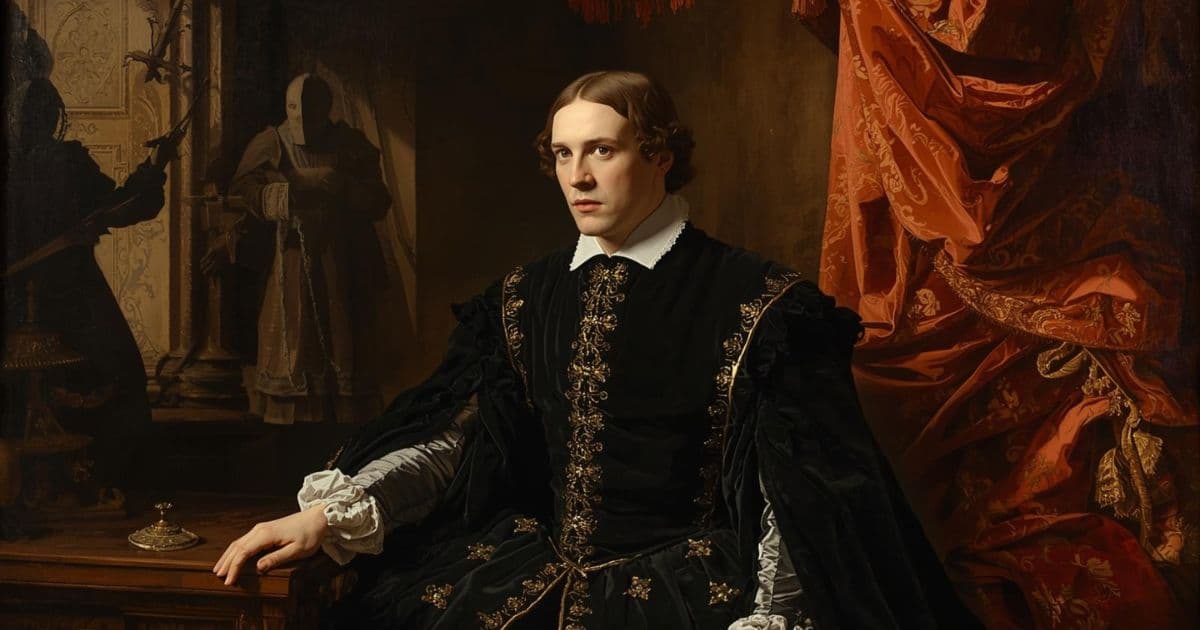
An excerpt from the original text.(complete · 4106 words)
Treatise On Smerdyakov
“To begin with, what was the source of this suspicion?” (Ippolit
Kirillovitch began.) “The first person who cried out that Smerdyakov
had committed the murder was the prisoner himself at the moment of his
arrest, yet from that time to this he had not brought forward a single
fact to confirm the charge, nor the faintest suggestion of a fact. The
charge is confirmed by three persons only—the two brothers of the
prisoner and Madame Svyetlov. The elder of these brothers expressed his
suspicions only to‐day, when he was undoubtedly suffering from brain
fever. But we know that for the last two months he has completely
shared our conviction of his brother’s guilt and did not attempt to
combat that idea. But of that later. The younger brother has admitted
that he has not the slightest fact to support his notion of
Smerdyakov’s guilt, and has only been led to that conclusion from the
prisoner’s own words and the expression of his face. Yes, that
astounding piece of evidence has been brought forward twice to‐ day by
him. Madame Svyetlov was even more astounding. ‘What the prisoner tells
you, you must believe; he is not a man to tell a lie.’ That is all the
evidence against Smerdyakov produced by these three persons, who are
all deeply concerned in the prisoner’s fate. And yet the theory of
Smerdyakov’s guilt has been noised about, has been and is still
maintained. Is it credible? Is it conceivable?”
Here Ippolit Kirillovitch thought it necessary to describe the
personality of Smerdyakov, “who had cut short his life in a fit of
insanity.” He depicted him as a man of weak intellect, with a
smattering of education, who had been thrown off his balance by
philosophical ideas above his level and certain modern theories of
duty, which he learnt in practice from the reckless life of his master,
who was also perhaps his father—Fyodor Pavlovitch; and, theoretically,
from various strange philosophical conversations with his master’s
elder son, Ivan Fyodorovitch, who readily indulged in this diversion,
probably feeling dull or wishing to amuse himself at the valet’s
expense. “He spoke to me himself of his spiritual condition during the
last few days at his father’s house,” Ippolit Kirillovitch explained;
“but others too have borne witness to it—the prisoner himself, his
brother, and the servant Grigory—that is, all who knew him well.
“Moreover, Smerdyakov, whose health was shaken by his attacks of
epilepsy, had not the courage of a chicken. ‘He fell at my feet and
kissed them,’ the prisoner himself has told us, before he realized how
damaging such a statement was to himself. ‘He is an epileptic chicken,’
he declared about him in his characteristic language. And the prisoner
chose him for his confidant (we have his own word for it) and he
frightened him into consenting at last to act as a spy for him. In that
capacity he deceived his master, revealing to the prisoner the
existence of the envelope with the notes in it and the signals by means
of which he could get into the house. How could he help telling him,
indeed? ‘He would have killed me, I could see that he would have killed
me,’ he said at the inquiry, trembling and shaking even before us,
though his tormentor was by that time arrested and could do him no
harm. ‘He suspected me at every instant. In fear and trembling I
hastened to tell him every secret to pacify him, that he might see that
I had not deceived him and let me off alive.’ Those are his own words.
I wrote them down and I remember them. ‘When he began shouting at me, I
would fall on my knees.’
“He was naturally very honest and enjoyed the complete confidence of
his master, ever since he had restored him some money he had lost. So
it may be supposed that the poor fellow suffered pangs of remorse at
having deceived his master, whom he loved as his benefactor. Persons
severely afflicted with epilepsy are, so the most skillful doctors tell
us, always prone to continual and morbid self‐reproach. They worry over
their ‘wickedness,’ they are tormented by pangs of conscience, often
entirely without cause; they exaggerate and often invent all sorts of
faults and crimes. And here we have a man of that type who had really
been driven to wrong‐doing by terror and intimidation.
“He had, besides, a strong presentiment that something terrible would
be the outcome of the situation that was developing before his eyes.
When Ivan Fyodorovitch was leaving for Moscow, just before the
catastrophe, Smerdyakov besought him to remain, though he was too timid
to tell him plainly what he feared. He confined himself to hints, but
his hints were not understood.
“It must be observed that he looked on Ivan Fyodorovitch as a
protector, whose presence in the house was a guarantee that no harm
would come to pass. Remember the phrase in Dmitri Karamazov’s drunken
letter, ‘I shall kill the old man, if only Ivan goes away.’ So Ivan
Fyodorovitch’s presence seemed to every one a guarantee of peace and
order in the house.
“But he went away, and within an hour of his young master’s departure
Smerdyakov was taken with an epileptic fit. But that’s perfectly
intelligible. Here I must mention that Smerdyakov, oppressed by terror
and despair of a sort, had felt during those last few days that one of
the fits from which he had suffered before at moments of strain, might
be coming upon him again. The day and hour of such an attack cannot, of
course, be foreseen, but every epileptic can feel beforehand that he is
likely to have one. So the doctors tell us. And so, as soon as Ivan
Fyodorovitch had driven out of the yard, Smerdyakov, depressed by his
lonely and unprotected position, went to the cellar. He went down the
stairs wondering if he would have a fit or not, and what if it were to
come upon him at once. And that very apprehension, that very wonder,
brought on the spasm in his throat that always precedes such attacks,
and he fell unconscious into the cellar. And in this perfectly natural
occurrence people try to detect a suspicion, a hint that he was
shamming an attack on purpose. But, if it were on purpose, the
question arises at once, what was his motive? What was he reckoning on?
What was he aiming at? I say nothing about medicine: science, I am
told, may go astray: the doctors were not able to discriminate between
the counterfeit and the real. That may be so, but answer me one
question: what motive had he for such a counterfeit? Could he, had he
been plotting the murder, have desired to attract the attention of the
household by having a fit just before?
“You see, gentlemen of the jury, on the night of the murder, there were
five persons in Fyodor Pavlovitch’s—Fyodor Pavlovitch himself (but he
did not kill himself, that’s evident); then his servant, Grigory, but
he was almost killed himself; the third person was Grigory’s wife,
Marfa Ignatyevna, but it would be simply shameful to imagine her
murdering her master. Two persons are left—the prisoner and Smerdyakov.
But, if we are to believe the prisoner’s statement that he is not the
murderer, then Smerdyakov must have been, for there is no other
alternative, no one else can be found. That is what accounts for the
artful, astounding accusation against the unhappy idiot who committed
suicide yesterday. Had a shadow of suspicion rested on any one else,
had there been any sixth person, I am persuaded that even the prisoner
would have been ashamed to accuse Smerdyakov, and would have accused
that sixth person, for to charge Smerdyakov with that murder is
perfectly absurd.
“Gentlemen, let us lay aside psychology, let us lay aside medicine, let
us even lay aside logic, let us turn only to the facts and see what the
facts tell us. If Smerdyakov killed him, how did he do it? Alone or
with the assistance of the prisoner? Let us consider the first
alternative—that he did it alone. If he had killed him it must have
been with some object, for some advantage to himself. But not having a
shadow of the motive that the prisoner had for the murder—hatred,
jealousy, and so on—Smerdyakov could only have murdered him for the
sake of gain, in order to appropriate the three thousand roubles he had
seen his master put in the envelope. And yet he tells another
person—and a person most closely interested, that is, the
prisoner—everything about the money and the signals, where the envelope
lay, what was written on it, what it was tied up with, and, above all,
told him of those signals by which he could enter the house. Did he do
this simply to betray himself, or to invite to the same enterprise one
who would be anxious to get that envelope for himself? ‘Yes,’ I shall
be told, ‘but he betrayed it from fear.’ But how do you explain this? A
man who could conceive such an audacious, savage act, and carry it out,
tells facts which are known to no one else in the world, and which, if
he held his tongue, no one would ever have guessed!
“No, however cowardly he might be, if he had plotted such a crime,
nothing would have induced him to tell any one about the envelope and
the signals, for that was as good as betraying himself beforehand. He
would have invented something, he would have told some lie if he had
been forced to give information, but he would have been silent about
that. For, on the other hand, if he had said nothing about the money,
but had committed the murder and stolen the money, no one in the world
could have charged him with murder for the sake of robbery, since no
one but he had seen the money, no one but he knew of its existence in
the house. Even if he had been accused of the murder, it could only
have been thought that he had committed it from some other motive. But
since no one had observed any such motive in him beforehand, and every
one saw, on the contrary, that his master was fond of him and honored
him with his confidence, he would, of course, have been the last to be
suspected. People would have suspected first the man who had a motive,
a man who had himself declared he had such motives, who had made no
secret of it; they would, in fact, have suspected the son of the
murdered man, Dmitri Fyodorovitch. Had Smerdyakov killed and robbed
him, and the son been accused of it, that would, of course, have suited
Smerdyakov. Yet are we to believe that, though plotting the murder, he
told that son, Dmitri, about the money, the envelope, and the signals?
Is that logical? Is that clear?
“When the day of the murder planned by Smerdyakov came, we have him
falling downstairs in a feigned fit—with what object? In the first
place that Grigory, who had been intending to take his medicine, might
put it off and remain on guard, seeing there was no one to look after
the house, and, in the second place, I suppose, that his master seeing
that there was no one to guard him, and in terror of a visit from his
son, might redouble his vigilance and precaution. And, most of all, I
suppose that he, Smerdyakov, disabled by the fit, might be carried from
the kitchen, where he always slept, apart from all the rest, and where
he could go in and out as he liked, to Grigory’s room at the other end
of the lodge, where he was always put, shut off by a screen three paces
from their own bed. This was the immemorial custom established by his
master and the kind‐hearted Marfa Ignatyevna, whenever he had a fit.
There, lying behind the screen, he would most likely, to keep up the
sham, have begun groaning, and so keeping them awake all night (as
Grigory and his wife testified). And all this, we are to believe, that
he might more conveniently get up and murder his master!
“But I shall be told that he shammed illness on purpose that he might
not be suspected and that he told the prisoner of the money and the
signals to tempt him to commit the murder, and when he had murdered him
and had gone away with the money, making a noise, most likely, and
waking people, Smerdyakov got up, am I to believe, and went in—what
for? To murder his master a second time and carry off the money that
had already been stolen? Gentlemen, are you laughing? I am ashamed to
put forward such suggestions, but, incredible as it seems, that’s just
what the prisoner alleges. When he had left the house, had knocked
Grigory down and raised an alarm, he tells us Smerdyakov got up, went
in and murdered his master and stole the money! I won’t press the point
that Smerdyakov could hardly have reckoned on this beforehand, and have
foreseen that the furious and exasperated son would simply come to peep
in respectfully, though he knew the signals, and beat a retreat,
leaving Smerdyakov his booty. Gentlemen of the jury, I put this
question to you in earnest; when was the moment when Smerdyakov could
have committed his crime? Name that moment, or you can’t accuse him.
“But, perhaps, the fit was a real one, the sick man suddenly recovered,
heard a shout, and went out. Well—what then? He looked about him and
said, ‘Why not go and kill the master?’ And how did he know what had
happened, since he had been lying unconscious till that moment? But
there’s a limit to these flights of fancy.
“ ‘Quite so,’ some astute people will tell me, ‘but what if they were
in agreement? What if they murdered him together and shared the
money—what then?’ A weighty question, truly! And the facts to confirm
it are astounding. One commits the murder and takes all the trouble
while his accomplice lies on one side shamming a fit, apparently to
arouse suspicion in every one, alarm in his master and alarm in
Grigory. It would be interesting to know what motives could have
induced the two accomplices to form such an insane plan.
“But perhaps it was not a case of active complicity on Smerdyakov’s
part, but only of passive acquiescence; perhaps Smerdyakov was
intimidated and agreed not to prevent the murder, and foreseeing that
he would be blamed for letting his master be murdered, without
screaming for help or resisting, he may have obtained permission from
Dmitri Karamazov to get out of the way by shamming a fit—‘you may
murder him as you like; it’s nothing to me.’ But as this attack of
Smerdyakov’s was bound to throw the household into confusion, Dmitri
Karamazov could never have agreed to such a plan. I will waive that
point however. Supposing that he did agree, it would still follow that
Dmitri Karamazov is the murderer and the instigator, and Smerdyakov is
only a passive accomplice, and not even an accomplice, but merely
acquiesced against his will through terror.
“But what do we see? As soon as he is arrested the prisoner instantly
throws all the blame on Smerdyakov, not accusing him of being his
accomplice, but of being himself the murderer. ‘He did it alone,’ he
says. ‘He murdered and robbed him. It was the work of his hands.’
Strange sort of accomplices who begin to accuse one another at once!
And think of the risk for Karamazov. After committing the murder while
his accomplice lay in bed, he throws the blame on the invalid, who
might well have resented it and in self‐preservation might well have
confessed the truth. For he might well have seen that the court would
at once judge how far he was responsible, and so he might well have
reckoned that if he were punished, it would be far less severely than
the real murderer. But in that case he would have been certain to make
a confession, yet he has not done so. Smerdyakov never hinted at their
complicity, though the actual murderer persisted in accusing him and
declaring that he had committed the crime alone.
“What’s more, Smerdyakov at the inquiry volunteered the statement that
it was he who had told the prisoner of the envelope of notes and of
the signals, and that, but for him, he would have known nothing about
them. If he had really been a guilty accomplice, would he so readily
have made this statement at the inquiry? On the contrary, he would have
tried to conceal it, to distort the facts or minimize them. But he was
far from distorting or minimizing them. No one but an innocent man, who
had no fear of being charged with complicity, could have acted as he
did. And in a fit of melancholy arising from his disease and this
catastrophe he hanged himself yesterday. He left a note written in his
peculiar language, ‘I destroy myself of my own will and inclination so
as to throw no blame on any one.’ What would it have cost him to add:
‘I am the murderer, not Karamazov’? But that he did not add. Did his
conscience lead him to suicide and not to avowing his guilt?
“And what followed? Notes for three thousand roubles were brought into
the court just now, and we were told that they were the same that lay
in the envelope now on the table before us, and that the witness had
received them from Smerdyakov the day before. But I need not recall the
painful scene, though I will make one or two comments, selecting such
trivial ones as might not be obvious at first sight to every one, and
so may be overlooked. In the first place, Smerdyakov must have given
back the money and hanged himself yesterday from remorse. And only
yesterday he confessed his guilt to Ivan Karamazov, as the latter
informs us. If it were not so, indeed, why should Ivan Fyodorovitch
have kept silence till now? And so, if he has confessed, then why, I
ask again, did he not avow the whole truth in the last letter he left
behind, knowing that the innocent prisoner had to face this terrible
ordeal the next day?
“The money alone is no proof. A week ago, quite by chance, the fact
came to the knowledge of myself and two other persons in this court
that Ivan Fyodorovitch had sent two five per cent. coupons of five
thousand each—that is, ten thousand in all—to the chief town of the
province to be changed. I only mention this to point out that any one
may have money, and that it can’t be proved that these notes are the
same as were in Fyodor Pavlovitch’s envelope.
“Ivan Karamazov, after receiving yesterday a communication of such
importance from the real murderer, did not stir. Why didn’t he report
it at once? Why did he put it all off till morning? I think I have a
right to conjecture why. His health had been giving way for a week
past: he had admitted to a doctor and to his most intimate friends that
he was suffering from hallucinations and seeing phantoms of the dead:
he was on the eve of the attack of brain fever by which he has been
stricken down to‐day. In this condition he suddenly heard of
Smerdyakov’s death, and at once reflected, ‘The man is dead, I can
throw the blame on him and save my brother. I have money. I will take a
roll of notes and say that Smerdyakov gave them me before his death.’
You will say that was dishonorable: it’s dishonorable to slander even
the dead, and even to save a brother. True, but what if he slandered
him unconsciously? What if, finally unhinged by the sudden news of the
valet’s death, he imagined it really was so? You saw the recent scene:
you have seen the witness’s condition. He was standing up and was
speaking, but where was his mind?
“Then followed the document, the prisoner’s letter written two days
before the crime, and containing a complete program of the murder. Why,
then, are we looking for any other program? The crime was committed
precisely according to this program, and by no other than the writer of
it. Yes, gentlemen of the jury, it went off without a hitch! He did not
run respectfully and timidly away from his father’s window, though he
was firmly convinced that the object of his affections was with him.
No, that is absurd and unlikely! He went in and murdered him. Most
likely he killed him in anger, burning with resentment, as soon as he
looked on his hated rival. But having killed him, probably with one
blow of the brass pestle, and having convinced himself, after careful
search, that she was not there, he did not, however, forget to put his
hand under the pillow and take out the envelope, the torn cover of
which lies now on the table before us.
“I mention this fact that you may note one, to my thinking, very
characteristic circumstance. Had he been an experienced murderer and
had he committed the murder for the sake of gain only, would he have
left the torn envelope on the floor as it was found, beside the corpse?
Had it been Smerdyakov, for instance, murdering his master to rob him,
he would have simply carried away the envelope with him, without
troubling himself to open it over his victim’s corpse, for he would
have known for certain that the notes were in the envelope—they had
been put in and sealed up in his presence—and had he taken the envelope
with him, no one would ever have known of the robbery. I ask you,
gentlemen, would Smerdyakov have behaved in that way? Would he have
left the envelope on the floor?
“No, this was the action of a frantic murderer, a murderer who was not
a thief and had never stolen before that day, who snatched the notes
from under the pillow, not like a thief stealing them, but as though
seizing his own property from the thief who had stolen it. For that was
the idea which had become almost an insane obsession in Dmitri
Karamazov in regard to that money. And pouncing upon the envelope,
which he had never seen before, he tore it open to make sure whether
the money was in it, and ran away with the money in his pocket, even
forgetting to consider that he had left an astounding piece of evidence
against himself in that torn envelope on the floor. All because it was
Karamazov, not Smerdyakov, he didn’t think, he didn’t reflect, and how
should he? He ran away; he heard behind him the servant cry out; the
old man caught him, stopped him and was felled to the ground by the
brass pestle.
“The prisoner, moved by pity, leapt down to look at him. Would you
believe it, he tells us that he leapt down out of pity, out of
compassion, to see whether he could do anything for him. Was that a
moment to show compassion? No; he jumped down simply to make certain
whether the only witness of his crime were dead or alive. Any other
feeling, any other motive would be unnatural. Note that he took trouble
over Grigory, wiped his head with his handkerchief and, convincing
himself he was dead, he ran to the house of his mistress, dazed and
covered with blood. How was it he never thought that he was covered
with blood and would be at once detected? But the prisoner himself
assures us that he did not even notice that he was covered with blood.
That may be believed, that is very possible, that always happens at
such moments with criminals. On one point they will show diabolical
cunning, while another will escape them altogether. But he was thinking
at that moment of one thing only—where was she? He wanted to find out
at once where she was, so he ran to her lodging and learnt an
unexpected and astounding piece of news—she had gone off to Mokroe to
meet her first lover.”
Master this chapter. Complete your experience
Purchase the complete book to access all chapters and support classic literature
As an Amazon Associate, we earn a small commission from qualifying purchases at no additional cost to you.
Available in paperback, hardcover, and e-book formats
Let's Analyse the Pattern
Using intelligence and eloquence to build convincing cases for conclusions we've already decided to reach, rather than following evidence wherever it leads.
Why This Matters
Connect literature to life
This chapter teaches how to spot when someone starts with their conclusion and works backward to justify it, rather than following evidence to its natural end.
Practice This Today
This week, notice when experts or authority figures dismiss alternatives too quickly—ask yourself what they might gain from their preferred explanation being true.
Now let's explore the literary elements.
Key Quotes & Analysis
"The first person who cried out that Smerdyakov had committed the murder was the prisoner himself at the moment of his arrest, yet from that time to this he had not brought forward a single fact to confirm the charge"
Context: Opening his argument against the Smerdyakov theory
The prosecutor immediately frames the alternative theory as desperate finger-pointing without evidence. He's establishing that accusations without proof are worthless in court.
In Today's Words:
The first thing he did when caught was blame someone else, but he's never provided any actual proof to back it up.
"What the prisoner tells you, you must believe; he is not a man to tell a lie"
Context: Mocking the emotional rather than factual basis of support for Dmitri
The prosecutor highlights how the defense relies on character testimony rather than evidence. He's showing the jury that feelings aren't facts in a murder case.
In Today's Words:
Trust him because he's a good guy - that's literally all the evidence they have.
"Is it credible? Is it conceivable?"
Context: Questioning whether the Smerdyakov theory makes logical sense
These rhetorical questions invite the jury to use common sense rather than emotion. The prosecutor is appealing to logic over sympathy.
In Today's Words:
Does this story actually make sense when you really think about it?
Thematic Threads
Authority
In This Chapter
The prosecutor uses his position and rhetorical skills to make his preferred conclusion sound inevitable and scientifically proven
Development
Evolved from earlier themes about how institutional power shapes truth—now showing how authority figures construct reality through selective reasoning
In Your Life:
You might see this when doctors, managers, or experts use their credentials to shut down questions rather than address them honestly.
Certainty
In This Chapter
The prosecutor's absolute confidence in his theory makes it seem more credible, even though his reasoning is circular and selective
Development
Building on earlier explorations of doubt versus faith—here showing how false certainty can be more dangerous than honest uncertainty
In Your Life:
You might notice this in yourself when you feel most sure you're right, especially in arguments with family or coworkers.
Narrative Control
In This Chapter
The prosecutor decides which evidence matters and which theories deserve consideration, controlling the story rather than discovering it
Development
Developed from themes about truth versus perception—now showing how those with platforms shape reality by choosing what gets discussed
In Your Life:
You might experience this when someone in authority decides what information you get to see or what options you get to consider.
Class
In This Chapter
The prosecutor's educated eloquence gives his arguments weight regardless of their merit—intelligence as social currency
Development
Continuing the class theme by showing how educational privilege translates into power to define reality for others
In Your Life:
You might feel this when dealing with professionals who use complex language to make you doubt your own common sense.
Justice
In This Chapter
The legal system's need for resolution creates pressure to make any reasonable theory sound certain and complete
Development
Introduced here as a new thread—showing how institutional needs can corrupt the search for truth
In Your Life:
You might see this in workplace investigations or family disputes where someone needs to be blamed, regardless of what actually happened.
You now have the context. Time to form your own thoughts.
Discussion Questions
- 1
What specific arguments does the prosecutor use to prove Smerdyakov couldn't have committed the murder?
analysis • surface - 2
Why does the prosecutor focus so heavily on dismantling the Smerdyakov theory rather than just presenting evidence against Dmitri?
analysis • medium - 3
Where have you seen someone use their intelligence and confidence to make a wrong conclusion sound absolutely convincing?
application • medium - 4
How can you tell the difference between someone following evidence to a conclusion versus someone gathering evidence to support a predetermined belief?
application • deep - 5
What does this chapter reveal about how smart people can be their own worst enemies when it comes to finding truth?
reflection • deep
Critical Thinking Exercise
Build the Counter-Case
Think of a strong opinion you hold about a situation in your life - a workplace conflict, family disagreement, or personal decision. Write down your three strongest arguments for your position. Now force yourself to build the best possible case for the opposite view, using the same confident tone the prosecutor uses here. What evidence would someone use against your position?
Consider:
- •Notice how hard it is to argue against yourself with the same energy you use to defend your position
- •Pay attention to which pieces of evidence you naturally want to dismiss or downplay
- •Consider whether your original arguments still feel as solid after building the counter-case
Journaling Prompt
Write about a time when you were absolutely certain you were right about something important, only to discover later you were wrong. What warning signs did you ignore? How did your confidence work against you?
Coming Up Next...
Chapter 88: The Prosecutor's Final Strike
The prosecutor prepares to deliver his final, crushing blow—connecting all the evidence to paint Dmitri as a man whose fate was sealed by his own passionate nature. His closing argument will attempt to seal the case once and for all.