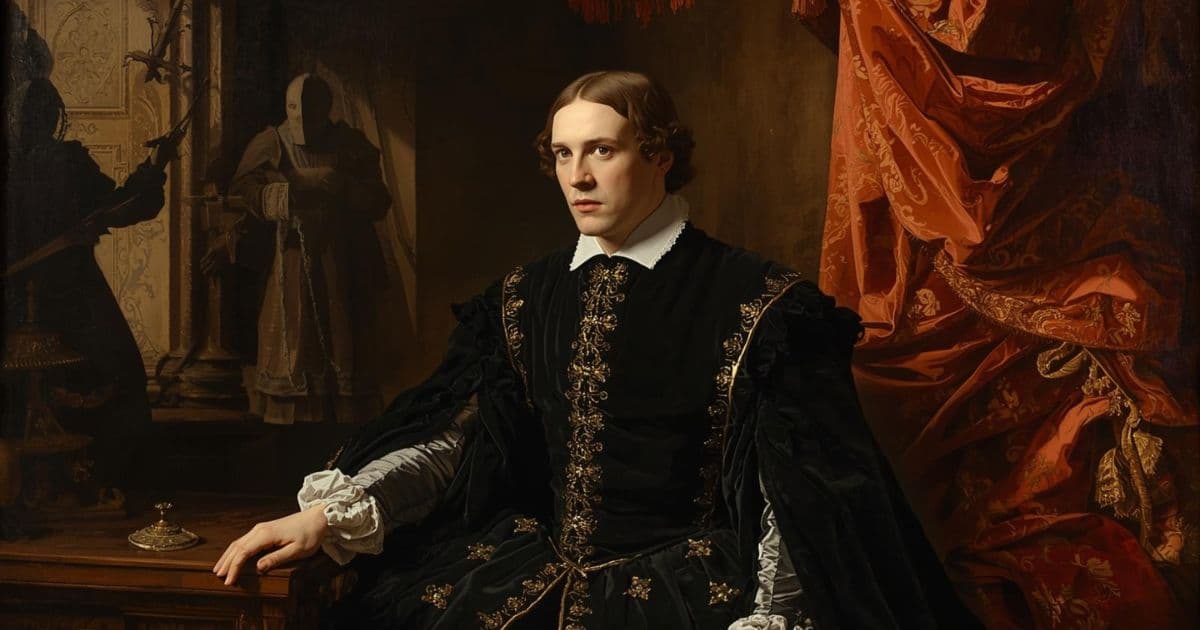
An excerpt from the original text.(complete · 2252 words)
olya Krassotkin
It was the beginning of November. There had been a hard frost, eleven
degrees Réaumur, without snow, but a little dry snow had fallen on the
frozen ground during the night, and a keen dry wind was lifting and
blowing it along the dreary streets of our town, especially about the
market‐place. It was a dull morning, but the snow had ceased.
Not far from the market‐place, close to Plotnikov’s shop, there stood a
small house, very clean both without and within. It belonged to Madame
Krassotkin, the widow of a former provincial secretary, who had been
dead for fourteen years. His widow, still a nice‐looking woman of
thirty‐two, was living in her neat little house on her private means.
She lived in respectable seclusion; she was of a soft but fairly
cheerful disposition. She was about eighteen at the time of her
husband’s death; she had been married only a year and had just borne
him a son. From the day of his death she had devoted herself heart and
soul to the bringing up of her precious treasure, her boy Kolya. Though
she had loved him passionately those fourteen years, he had caused her
far more suffering than happiness. She had been trembling and fainting
with terror almost every day, afraid he would fall ill, would catch
cold, do something naughty, climb on a chair and fall off it, and so on
and so on. When Kolya began going to school, the mother devoted herself
to studying all the sciences with him so as to help him, and go through
his lessons with him. She hastened to make the acquaintance of the
teachers and their wives, even made up to Kolya’s schoolfellows, and
fawned upon them in the hope of thus saving Kolya from being teased,
laughed at, or beaten by them. She went so far that the boys actually
began to mock at him on her account and taunt him with being a
“mother’s darling.”
But the boy could take his own part. He was a resolute boy,
“tremendously strong,” as was rumored in his class, and soon proved to
be the fact; he was agile, strong‐willed, and of an audacious and
enterprising temper. He was good at lessons, and there was a rumor in
the school that he could beat the teacher, Dardanelov, at arithmetic
and universal history. Though he looked down upon every one, he was a
good comrade and not supercilious. He accepted his schoolfellows’
respect as his due, but was friendly with them. Above all, he knew
where to draw the line. He could restrain himself on occasion, and in
his relations with the teachers he never overstepped that last mystic
limit beyond which a prank becomes an unpardonable breach of
discipline. But he was as fond of mischief on every possible occasion
as the smallest boy in the school, and not so much for the sake of
mischief as for creating a sensation, inventing something, something
effective and conspicuous. He was extremely vain. He knew how to make
even his mother give way to him; he was almost despotic in his control
of her. She gave way to him, oh, she had given way to him for years.
The one thought unendurable to her was that her boy had no great love
for her. She was always fancying that Kolya was “unfeeling” to her, and
at times, dissolving into hysterical tears, she used to reproach him
with his coldness. The boy disliked this, and the more demonstrations
of feeling were demanded of him the more he seemed intentionally to
avoid them. Yet it was not intentional on his part but instinctive—it
was his character. His mother was mistaken; he was very fond of her. He
only disliked “sheepish sentimentality,” as he expressed it in his
schoolboy language.
There was a bookcase in the house containing a few books that had been
his father’s. Kolya was fond of reading, and had read several of them
by himself. His mother did not mind that and only wondered sometimes at
seeing the boy stand for hours by the bookcase poring over a book
instead of going to play. And in that way Kolya read some things
unsuitable for his age.
Though the boy, as a rule, knew where to draw the line in his mischief,
he had of late begun to play pranks that caused his mother serious
alarm. It is true there was nothing vicious in what he did, but a wild
mad recklessness.
It happened that July, during the summer holidays, that the mother and
son went to another district, forty‐five miles away, to spend a week
with a distant relation, whose husband was an official at the railway
station (the very station, the nearest one to our town, from which a
month later Ivan Fyodorovitch Karamazov set off for Moscow). There
Kolya began by carefully investigating every detail connected with the
railways, knowing that he could impress his schoolfellows when he got
home with his newly acquired knowledge. But there happened to be some
other boys in the place with whom he soon made friends. Some of them
were living at the station, others in the neighborhood; there were six
or seven of them, all between twelve and fifteen, and two of them came
from our town. The boys played together, and on the fourth or fifth day
of Kolya’s stay at the station, a mad bet was made by the foolish boys.
Kolya, who was almost the youngest of the party and rather looked down
upon by the others in consequence, was moved by vanity or by reckless
bravado to bet them two roubles that he would lie down between the
rails at night when the eleven o’clock train was due, and would lie
there without moving while the train rolled over him at full speed. It
is true they made a preliminary investigation, from which it appeared
that it was possible to lie so flat between the rails that the train
could pass over without touching, but to lie there was no joke! Kolya
maintained stoutly that he would. At first they laughed at him, called
him a little liar, a braggart, but that only egged him on. What piqued
him most was that these boys of fifteen turned up their noses at him
too superciliously, and were at first disposed to treat him as “a small
boy,” not fit to associate with them, and that was an unendurable
insult.
And so it was resolved to go in the evening, half a mile from the
station, so that the train might have time to get up full speed after
leaving the station. The boys assembled. It was a pitch‐dark night
without a moon. At the time fixed, Kolya lay down between the rails.
The five others who had taken the bet waited among the bushes below the
embankment, their hearts beating with suspense, which was followed by
alarm and remorse. At last they heard in the distance the rumble of the
train leaving the station. Two red lights gleamed out of the darkness;
the monster roared as it approached.
“Run, run away from the rails,” the boys cried to Kolya from the
bushes, breathless with terror. But it was too late: the train darted
up and flew past. The boys rushed to Kolya. He lay without moving. They
began pulling at him, lifting him up. He suddenly got up and walked
away without a word. Then he explained that he had lain there as though
he were insensible to frighten them, but the fact was that he really
had lost consciousness, as he confessed long after to his mother. In
this way his reputation as “a desperate character,” was established for
ever. He returned home to the station as white as a sheet. Next day he
had a slight attack of nervous fever, but he was in high spirits and
well pleased with himself. The incident did not become known at once,
but when they came back to the town it penetrated to the school and
even reached the ears of the masters. But then Kolya’s mother hastened
to entreat the masters on her boy’s behalf, and in the end Dardanelov,
a respected and influential teacher, exerted himself in his favor, and
the affair was ignored.
Dardanelov was a middle‐aged bachelor, who had been passionately in
love with Madame Krassotkin for many years past, and had once already,
about a year previously, ventured, trembling with fear and the delicacy
of his sentiments, to offer her most respectfully his hand in marriage.
But she refused him resolutely, feeling that to accept him would be an
act of treachery to her son, though Dardanelov had, to judge from
certain mysterious symptoms, reason for believing that he was not an
object of aversion to the charming but too chaste and tender‐hearted
widow. Kolya’s mad prank seemed to have broken the ice, and Dardanelov
was rewarded for his intercession by a suggestion of hope. The
suggestion, it is true, was a faint one, but then Dardanelov was such a
paragon of purity and delicacy that it was enough for the time being to
make him perfectly happy. He was fond of the boy, though he would have
felt it beneath him to try and win him over, and was severe and strict
with him in class. Kolya, too, kept him at a respectful distance. He
learned his lessons perfectly; he was second in his class, was reserved
with Dardanelov, and the whole class firmly believed that Kolya was so
good at universal history that he could “beat” even Dardanelov. Kolya
did indeed ask him the question, “Who founded Troy?” to which
Dardanelov had made a very vague reply, referring to the movements and
migrations of races, to the remoteness of the period, to the mythical
legends. But the question, “Who had founded Troy?” that is, what
individuals, he could not answer, and even for some reason regarded the
question as idle and frivolous. But the boys remained convinced that
Dardanelov did not know who founded Troy. Kolya had read of the
founders of Troy in Smaragdov, whose history was among the books in his
father’s bookcase. In the end all the boys became interested in the
question, who it was that had founded Troy, but Krassotkin would not
tell his secret, and his reputation for knowledge remained unshaken.
After the incident on the railway a certain change came over Kolya’s
attitude to his mother. When Anna Fyodorovna (Madame Krassotkin) heard
of her son’s exploit, she almost went out of her mind with horror. She
had such terrible attacks of hysterics, lasting with intervals for
several days, that Kolya, seriously alarmed at last, promised on his
honor that such pranks should never be repeated. He swore on his knees
before the holy image, and swore by the memory of his father, at Madame
Krassotkin’s instance, and the “manly” Kolya burst into tears like a
boy of six. And all that day the mother and son were constantly rushing
into each other’s arms sobbing. Next day Kolya woke up as “unfeeling”
as before, but he had become more silent, more modest, sterner, and
more thoughtful.
Six weeks later, it is true, he got into another scrape, which even
brought his name to the ears of our Justice of the Peace, but it was a
scrape of quite another kind, amusing, foolish, and he did not, as it
turned out, take the leading part in it, but was only implicated in it.
But of this later. His mother still fretted and trembled, but the more
uneasy she became, the greater were the hopes of Dardanelov. It must be
noted that Kolya understood and divined what was in Dardanelov’s heart
and, of course, despised him profoundly for his “feelings”; he had in
the past been so tactless as to show this contempt before his mother,
hinting vaguely that he knew what Dardanelov was after. But from the
time of the railway incident his behavior in this respect also was
changed; he did not allow himself the remotest allusion to the subject
and began to speak more respectfully of Dardanelov before his mother,
which the sensitive woman at once appreciated with boundless gratitude.
But at the slightest mention of Dardanelov by a visitor in Kolya’s
presence, she would flush as pink as a rose. At such moments Kolya
would either stare out of the window scowling, or would investigate the
state of his boots, or would shout angrily for “Perezvon,” the big,
shaggy, mangy dog, which he had picked up a month before, brought home,
and kept for some reason secretly indoors, not showing him to any of
his schoolfellows. He bullied him frightfully, teaching him all sorts
of tricks, so that the poor dog howled for him whenever he was absent
at school, and when he came in, whined with delight, rushed about as if
he were crazy, begged, lay down on the ground pretending to be dead,
and so on; in fact, showed all the tricks he had taught him, not at the
word of command, but simply from the zeal of his excited and grateful
heart.
I have forgotten, by the way, to mention that Kolya Krassotkin was the
boy stabbed with a penknife by the boy already known to the reader as
the son of Captain Snegiryov. Ilusha had been defending his father when
the schoolboys jeered at him, shouting the nickname “wisp of tow.”
Master this chapter. Complete your experience
Purchase the complete book to access all chapters and support classic literature
As an Amazon Associate, we earn a small commission from qualifying purchases at no additional cost to you.
Available in paperback, hardcover, and e-book formats
Let's Analyse the Pattern
When excessive protection makes someone feel powerless, they're driven to prove their strength through increasingly risky behavior.
Why This Matters
Connect literature to life
This chapter teaches how excessive protection creates the very risks it aims to prevent.
Practice This Today
This week, notice when someone's worry about you makes you want to prove them wrong—pause and ask if you're acting from genuine need or from feeling diminished.
Now let's explore the literary elements.
Key Quotes & Analysis
"Though she had loved him passionately those fourteen years, he had caused her far more suffering than happiness."
Context: Describing Madame Krassotkin's relationship with her son
This captures the painful irony of overprotective love - the very intensity of her caring creates the problems that cause her suffering. Her fear becomes a self-fulfilling prophecy.
In Today's Words:
She loved him so much it made both their lives miserable.
"She had been trembling and fainting with terror almost every day, afraid he would fall ill, would catch cold, do something naughty, climb on a chair and fall off it."
Context: Explaining the mother's constant anxiety about normal childhood activities
Shows how anxiety can make normal childhood development feel catastrophic. Her fear of ordinary risks pushes Kolya toward extraordinary ones.
In Today's Words:
She was so scared of every little thing that she made herself sick with worry.
"The train thundered by and passed over him without touching him, as he had calculated."
Context: Describing Kolya's dangerous railway stunt to prove his courage
This moment shows how a smothered child will seek the ultimate risk to prove independence. The clinical tone 'as he had calculated' shows his intelligence made the stunt more dangerous, not safer.
In Today's Words:
He almost got himself killed just to prove he wasn't a mama's boy.
Thematic Threads
Identity
In This Chapter
Kolya struggles to define himself as strong and independent while trapped by his mother's anxious love and others' expectations
Development
Building on earlier themes of self-definition, showing how external pressures can distort identity formation
In Your Life:
You might recognize this when you find yourself acting out of character just to prove a point about who you are.
Class
In This Chapter
Kolya feels compelled to prove himself to older, presumably higher-status boys through dangerous stunts
Development
Continues the book's exploration of how social hierarchies drive destructive behavior
In Your Life:
You might see this when you take unnecessary risks to gain respect from people you perceive as above your station.
Personal Growth
In This Chapter
Kolya's reckless phase represents a distorted attempt at independence and self-discovery
Development
Shows how growth can be derailed when healthy risk-taking becomes dangerous proving
In Your Life:
You might notice this when your attempts to grow feel more about proving others wrong than becoming who you want to be.
Human Relationships
In This Chapter
The toxic dynamic between Kolya's mother's anxiety and his rebellious response damages their bond
Development
Deepens the book's examination of how fear-based love can destroy what it seeks to protect
In Your Life:
You might experience this in any relationship where someone's worry about you makes you want to hide your struggles from them.
Social Expectations
In This Chapter
Kolya feels pressure to live up to impossible standards—brilliant student, tough kid, perfect son
Development
Introduced here as a new dimension of how external expectations can create internal conflict
In Your Life:
You might feel this when you're trying to be everything to everyone and the pressure makes you want to rebel against all of it.
You now have the context. Time to form your own thoughts.
Discussion Questions
- 1
What drove Kolya to lie under the speeding train, and how did his mother react when she found out?
analysis • surface - 2
Why does Kolya's mother's anxious love actually push him toward more dangerous behavior instead of keeping him safe?
analysis • medium - 3
Where have you seen this pattern today - someone's worried protection actually creating the risks they're trying to prevent?
application • medium - 4
If you were Kolya's mother, how would you show love and concern without pushing him toward dangerous proving behaviors?
application • deep - 5
What does Kolya's story reveal about the difference between protection that builds strength and protection that creates rebellion?
reflection • deep
Critical Thinking Exercise
Map the Anxiety-Rebellion Cycle
Think of a relationship where someone worries excessively about you, or where you worry about someone else. Draw or describe the cycle: How does the worry get expressed? How does the other person respond? Where does it escalate? What would breaking this cycle look like?
Consider:
- •Notice whether the worry comes from love or from a need to control
- •Consider how the 'protected' person might feel diminished or infantilized
- •Think about what the worrier is really afraid of losing
Journaling Prompt
Write about a time when someone's excessive concern for you made you want to prove them wrong. What were you really trying to prove, and what would have felt more supportive?
Coming Up Next...
Chapter 64: Kolya's Burden of Responsibility
Now that we know Kolya's background, we'll see how this complex, brilliant boy interacts with other children and what role he might play in the unfolding drama surrounding the Snegiryov family.