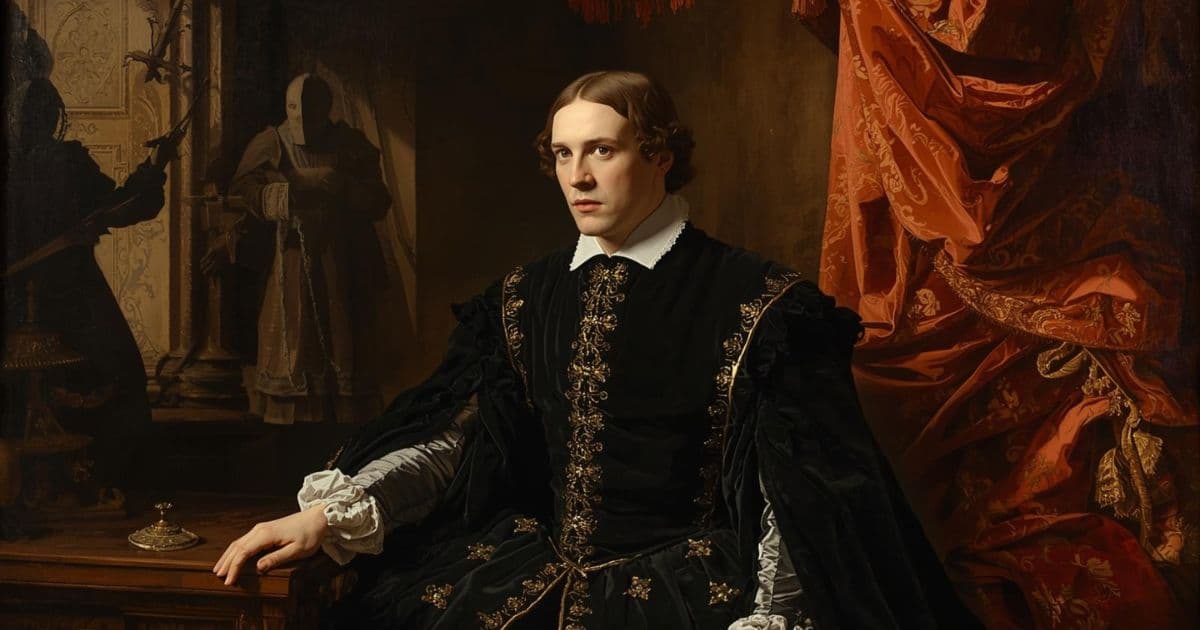
An excerpt from the original text.(complete · 3928 words)
he Evidence Of The Witnesses. The Babe
The examination of the witnesses began. But we will not continue our
story in such detail as before. And so we will not dwell on how Nikolay
Parfenovitch impressed on every witness called that he must give his
evidence in accordance with truth and conscience, and that he would
afterwards have to repeat his evidence on oath, how every witness was
called upon to sign the protocol of his evidence, and so on. We will
only note that the point principally insisted upon in the examination
was the question of the three thousand roubles, that is, was the sum
spent here, at Mokroe, by Mitya on the first occasion, a month before,
three thousand or fifteen hundred? And again had he spent three
thousand or fifteen hundred yesterday? Alas, all the evidence given by
every one turned out to be against Mitya. There was not one in his
favor, and some witnesses introduced new, almost crushing facts, in
contradiction of his, Mitya’s, story.
The first witness examined was Trifon Borissovitch. He was not in the
least abashed as he stood before the lawyers. He had, on the contrary,
an air of stern and severe indignation with the accused, which gave him
an appearance of truthfulness and personal dignity. He spoke little,
and with reserve, waited to be questioned, answered precisely and
deliberately. Firmly and unhesitatingly he bore witness that the sum
spent a month before could not have been less than three thousand, that
all the peasants about here would testify that they had heard the sum
of three thousand mentioned by Dmitri Fyodorovitch himself. “What a lot
of money he flung away on the gypsy girls alone! He wasted a thousand,
I daresay, on them alone.”
“I don’t believe I gave them five hundred,” was Mitya’s gloomy comment
on this. “It’s a pity I didn’t count the money at the time, but I was
drunk....”
Mitya was sitting sideways with his back to the curtains. He listened
gloomily, with a melancholy and exhausted air, as though he would say:
“Oh, say what you like. It makes no difference now.”
“More than a thousand went on them, Dmitri Fyodorovitch,” retorted
Trifon Borissovitch firmly. “You flung it about at random and they
picked it up. They were a rascally, thievish lot, horse‐stealers,
they’ve been driven away from here, or maybe they’d bear witness
themselves how much they got from you. I saw the sum in your hands,
myself—count it I didn’t, you didn’t let me, that’s true enough—but by
the look of it I should say it was far more than fifteen hundred ...
fifteen hundred, indeed! We’ve seen money too. We can judge of
amounts....”
As for the sum spent yesterday he asserted that Dmitri Fyodorovitch had
told him, as soon as he arrived, that he had brought three thousand
with him.
“Come now, is that so, Trifon Borissovitch?” replied Mitya. “Surely I
didn’t declare so positively that I’d brought three thousand?”
“You did say so, Dmitri Fyodorovitch. You said it before Andrey. Andrey
himself is still here. Send for him. And in the hall, when you were
treating the chorus, you shouted straight out that you would leave your
sixth thousand here—that is with what you spent before, we must
understand. Stepan and Semyon heard it, and Pyotr Fomitch Kalganov,
too, was standing beside you at the time. Maybe he’d remember it....”
The evidence as to the “sixth” thousand made an extraordinary
impression on the two lawyers. They were delighted with this new mode
of reckoning; three and three made six, three thousand then and three
now made six, that was clear.
They questioned all the peasants suggested by Trifon Borissovitch,
Stepan and Semyon, the driver Andrey, and Kalganov. The peasants and
the driver unhesitatingly confirmed Trifon Borissovitch’s evidence.
They noted down, with particular care, Andrey’s account of the
conversation he had had with Mitya on the road: “ ‘Where,’ says he, ‘am
I, Dmitri Fyodorovitch, going, to heaven or to hell, and shall I be
forgiven in the next world or not?’ ”
The psychological Ippolit Kirillovitch heard this with a subtle smile,
and ended by recommending that these remarks as to where Dmitri
Fyodorovitch would go should be “included in the case.”
Kalganov, when called, came in reluctantly, frowning and ill‐humored,
and he spoke to the lawyers as though he had never met them before in
his life, though they were acquaintances whom he had been meeting every
day for a long time past. He began by saying that “he knew nothing
about it and didn’t want to.” But it appeared that he had heard of the
“sixth” thousand, and he admitted that he had been standing close by at
the moment. As far as he could see he “didn’t know” how much money
Mitya had in his hands. He affirmed that the Poles had cheated at
cards. In reply to reiterated questions he stated that, after the Poles
had been turned out, Mitya’s position with Agrafena Alexandrovna had
certainly improved, and that she had said that she loved him. He spoke
of Agrafena Alexandrovna with reserve and respect, as though she had
been a lady of the best society, and did not once allow himself to call
her Grushenka. In spite of the young man’s obvious repugnance at giving
evidence, Ippolit Kirillovitch examined him at great length, and only
from him learnt all the details of what made up Mitya’s “romance,” so
to say, on that night. Mitya did not once pull Kalganov up. At last
they let the young man go, and he left the room with unconcealed
indignation.
The Poles, too, were examined. Though they had gone to bed in their
room, they had not slept all night, and on the arrival of the police
officers they hastily dressed and got ready, realizing that they would
certainly be sent for. They gave their evidence with dignity, though
not without some uneasiness. The little Pole turned out to be a retired
official of the twelfth class, who had served in Siberia as a
veterinary surgeon. His name was Mussyalovitch. Pan Vrublevsky turned
out to be an uncertificated dentist. Although Nikolay Parfenovitch
asked them questions on entering the room they both addressed their
answers to Mihail Makarovitch, who was standing on one side, taking him
in their ignorance for the most important person and in command, and
addressed him at every word as “Pan Colonel.” Only after several
reproofs from Mihail Makarovitch himself, they grasped that they had to
address their answers to Nikolay Parfenovitch only. It turned out that
they could speak Russian quite correctly except for their accent in
some words. Of his relations with Grushenka, past and present, Pan
Mussyalovitch spoke proudly and warmly, so that Mitya was roused at
once and declared that he would not allow the “scoundrel” to speak like
that in his presence! Pan Mussyalovitch at once called attention to the
word “scoundrel” and begged that it should be put down in the protocol.
Mitya fumed with rage.
“He’s a scoundrel! A scoundrel! You can put that down. And put down,
too, that, in spite of the protocol I still declare that he’s a
scoundrel!” he cried.
Though Nikolay Parfenovitch did insert this in the protocol, he showed
the most praiseworthy tact and management. After sternly reprimanding
Mitya, he cut short all further inquiry into the romantic aspect of the
case, and hastened to pass to what was essential. One piece of evidence
given by the Poles roused special interest in the lawyers: that was
how, in that very room, Mitya had tried to buy off Pan Mussyalovitch,
and had offered him three thousand roubles to resign his claims, seven
hundred roubles down, and the remaining two thousand three hundred “to
be paid next day in the town.” He had sworn at the time that he had not
the whole sum with him at Mokroe, but that his money was in the town.
Mitya observed hotly that he had not said that he would be sure to pay
him the remainder next day in the town. But Pan Vrublevsky confirmed
the statement, and Mitya, after thinking for a moment admitted,
frowning, that it must have been as the Poles stated, that he had been
excited at the time, and might indeed have said so.
The prosecutor positively pounced on this piece of evidence. It seemed
to establish for the prosecution (and they did, in fact, base this
deduction on it) that half, or a part of, the three thousand that had
come into Mitya’s hands might really have been left somewhere hidden in
the town, or even, perhaps, somewhere here, in Mokroe. This would
explain the circumstance, so baffling for the prosecution, that only
eight hundred roubles were to be found in Mitya’s hands. This
circumstance had been the one piece of evidence which, insignificant as
it was, had hitherto told, to some extent, in Mitya’s favor. Now this
one piece of evidence in his favor had broken down. In answer to the
prosecutor’s inquiry, where he would have got the remaining two
thousand three hundred roubles, since he himself had denied having more
than fifteen hundred, Mitya confidently replied that he had meant to
offer the “little chap,” not money, but a formal deed of conveyance of
his rights to the village of Tchermashnya, those rights which he had
already offered to Samsonov and Madame Hohlakov. The prosecutor
positively smiled at the “innocence of this subterfuge.”
“And you imagine he would have accepted such a deed as a substitute for
two thousand three hundred roubles in cash?”
“He certainly would have accepted it,” Mitya declared warmly. “Why,
look here, he might have grabbed not two thousand, but four or six, for
it. He would have put his lawyers, Poles and Jews, on to the job, and
might have got, not three thousand, but the whole property out of the
old man.”
The evidence of Pan Mussyalovitch was, of course, entered in the
protocol in the fullest detail. Then they let the Poles go. The
incident of the cheating at cards was hardly touched upon. Nikolay
Parfenovitch was too well pleased with them, as it was, and did not
want to worry them with trifles, moreover, it was nothing but a
foolish, drunken quarrel over cards. There had been drinking and
disorder enough, that night.... So the two hundred roubles remained in
the pockets of the Poles.
Then old Maximov was summoned. He came in timidly, approached with
little steps, looking very disheveled and depressed. He had, all this
time, taken refuge below with Grushenka, sitting dumbly beside her, and
“now and then he’d begin blubbering over her and wiping his eyes with a
blue check handkerchief,” as Mihail Makarovitch described afterwards.
So that she herself began trying to pacify and comfort him. The old man
at once confessed that he had done wrong, that he had borrowed “ten
roubles in my poverty,” from Dmitri Fyodorovitch, and that he was ready
to pay it back. To Nikolay Parfenovitch’s direct question, had he
noticed how much money Dmitri Fyodorovitch held in his hand, as he must
have been able to see the sum better than any one when he took the note
from him, Maximov, in the most positive manner, declared that there was
twenty thousand.
“Have you ever seen so much as twenty thousand before, then?” inquired
Nikolay Parfenovitch, with a smile.
“To be sure I have, not twenty, but seven, when my wife mortgaged my
little property. She’d only let me look at it from a distance, boasting
of it to me. It was a very thick bundle, all rainbow‐colored notes. And
Dmitri Fyodorovitch’s were all rainbow‐colored....”
He was not kept long. At last it was Grushenka’s turn. Nikolay
Parfenovitch was obviously apprehensive of the effect her appearance
might have on Mitya, and he muttered a few words of admonition to him,
but Mitya bowed his head in silence, giving him to understand “that he
would not make a scene.” Mihail Makarovitch himself led Grushenka in.
She entered with a stern and gloomy face, that looked almost composed
and sat down quietly on the chair offered her by Nikolay Parfenovitch.
She was very pale, she seemed to be cold, and wrapped herself closely
in her magnificent black shawl. She was suffering from a slight
feverish chill—the first symptom of the long illness which followed
that night. Her grave air, her direct earnest look and quiet manner
made a very favorable impression on every one. Nikolay Parfenovitch was
even a little bit “fascinated.” He admitted himself, when talking about
it afterwards, that only then had he seen “how handsome the woman was,”
for, though he had seen her several times before, he had always looked
upon her as something of a “provincial hetaira.” “She has the manners
of the best society,” he said enthusiastically, gossiping about her in
a circle of ladies. But this was received with positive indignation by
the ladies, who immediately called him a “naughty man,” to his great
satisfaction.
As she entered the room, Grushenka only glanced for an instant at
Mitya, who looked at her uneasily. But her face reassured him at once.
After the first inevitable inquiries and warnings, Nikolay Parfenovitch
asked her, hesitating a little, but preserving the most courteous
manner, on what terms she was with the retired lieutenant, Dmitri
Fyodorovitch Karamazov. To this Grushenka firmly and quietly replied:
“He was an acquaintance. He came to see me as an acquaintance during
the last month.” To further inquisitive questions she answered plainly
and with complete frankness, that, though “at times” she had thought
him attractive, she had not loved him, but had won his heart as well as
his old father’s “in my nasty spite,” that she had seen that Mitya was
very jealous of Fyodor Pavlovitch and every one else; but that had only
amused her. She had never meant to go to Fyodor Pavlovitch, she had
simply been laughing at him. “I had no thoughts for either of them all
this last month. I was expecting another man who had wronged me. But I
think,” she said in conclusion, “that there’s no need for you to
inquire about that, nor for me to answer you, for that’s my own
affair.”
Nikolay Parfenovitch immediately acted upon this hint. He again
dismissed the “romantic” aspect of the case and passed to the serious
one, that is, to the question of most importance, concerning the three
thousand roubles. Grushenka confirmed the statement that three thousand
roubles had certainly been spent on the first carousal at Mokroe, and,
though she had not counted the money herself, she had heard that it was
three thousand from Dmitri Fyodorovitch’s own lips.
“Did he tell you that alone, or before some one else, or did you only
hear him speak of it to others in your presence?” the prosecutor
inquired immediately.
To which Grushenka replied that she had heard him say so before other
people, and had heard him say so when they were alone.
“Did he say it to you alone once, or several times?” inquired the
prosecutor, and learned that he had told Grushenka so several times.
Ippolit Kirillovitch was very well satisfied with this piece of
evidence. Further examination elicited that Grushenka knew, too, where
that money had come from, and that Dmitri Fyodorovitch had got it from
Katerina Ivanovna.
“And did you never, once, hear that the money spent a month ago was not
three thousand, but less, and that Dmitri Fyodorovitch had saved half
that sum for his own use?”
“No, I never heard that,” answered Grushenka.
It was explained further that Mitya had, on the contrary, often told
her that he hadn’t a farthing.
“He was always expecting to get some from his father,” said Grushenka
in conclusion.
“Did he never say before you ... casually, or in a moment of
irritation,” Nikolay Parfenovitch put in suddenly, “that he intended to
make an attempt on his father’s life?”
“Ach, he did say so,” sighed Grushenka.
“Once or several times?”
“He mentioned it several times, always in anger.”
“And did you believe he would do it?”
“No, I never believed it,” she answered firmly. “I had faith in his
noble heart.”
“Gentlemen, allow me,” cried Mitya suddenly, “allow me to say one word
to Agrafena Alexandrovna, in your presence.”
“You can speak,” Nikolay Parfenovitch assented.
“Agrafena Alexandrovna!” Mitya got up from his chair, “have faith in
God and in me. I am not guilty of my father’s murder!”
Having uttered these words Mitya sat down again on his chair. Grushenka
stood up and crossed herself devoutly before the ikon. “Thanks be to
Thee, O Lord,” she said, in a voice thrilled with emotion, and still
standing, she turned to Nikolay Parfenovitch and added:
“As he has spoken now, believe it! I know him. He’ll say anything as a
joke or from obstinacy, but he’ll never deceive you against his
conscience. He’s telling the whole truth, you may believe it.”
“Thanks, Agrafena Alexandrovna, you’ve given me fresh courage,” Mitya
responded in a quivering voice.
As to the money spent the previous day, she declared that she did not
know what sum it was, but had heard him tell several people that he had
three thousand with him. And to the question where he got the money,
she said that he had told her that he had “stolen” it from Katerina
Ivanovna, and that she had replied to that that he hadn’t stolen it,
and that he must pay the money back next day. On the prosecutor’s
asking her emphatically whether the money he said he had stolen from
Katerina Ivanovna was what he had spent yesterday, or what he had
squandered here a month ago, she declared that he meant the money spent
a month ago, and that that was how she understood him.
Grushenka was at last released, and Nikolay Parfenovitch informed her
impulsively that she might at once return to the town and that if he
could be of any assistance to her, with horses for example, or if she
would care for an escort, he ... would be—
“I thank you sincerely,” said Grushenka, bowing to him, “I’m going with
this old gentleman, I am driving him back to town with me, and
meanwhile, if you’ll allow me, I’ll wait below to hear what you decide
about Dmitri Fyodorovitch.”
She went out. Mitya was calm, and even looked more cheerful, but only
for a moment. He felt more and more oppressed by a strange physical
weakness. His eyes were closing with fatigue. The examination of the
witnesses was, at last, over. They proceeded to a final revision of the
protocol. Mitya got up, moved from his chair to the corner by the
curtain, lay down on a large chest covered with a rug, and instantly
fell asleep.
He had a strange dream, utterly out of keeping with the place and the
time.
He was driving somewhere in the steppes, where he had been stationed
long ago, and a peasant was driving him in a cart with a pair of
horses, through snow and sleet. He was cold, it was early in November,
and the snow was falling in big wet flakes, melting as soon as it
touched the earth. And the peasant drove him smartly, he had a fair,
long beard. He was not an old man, somewhere about fifty, and he had on
a gray peasant’s smock. Not far off was a village, he could see the
black huts, and half the huts were burnt down, there were only the
charred beams sticking up. And as they drove in, there were peasant
women drawn up along the road, a lot of women, a whole row, all thin
and wan, with their faces a sort of brownish color, especially one at
the edge, a tall, bony woman, who looked forty, but might have been
only twenty, with a long thin face. And in her arms was a little baby
crying. And her breasts seemed so dried up that there was not a drop of
milk in them. And the child cried and cried, and held out its little
bare arms, with its little fists blue from cold.
“Why are they crying? Why are they crying?” Mitya asked, as they dashed
gayly by.
“It’s the babe,” answered the driver, “the babe weeping.”
And Mitya was struck by his saying, in his peasant way, “the babe,” and
he liked the peasant’s calling it a “babe.” There seemed more pity in
it.
“But why is it weeping?” Mitya persisted stupidly, “why are its little
arms bare? Why don’t they wrap it up?”
“The babe’s cold, its little clothes are frozen and don’t warm it.”
“But why is it? Why?” foolish Mitya still persisted.
“Why, they’re poor people, burnt out. They’ve no bread. They’re begging
because they’ve been burnt out.”
“No, no,” Mitya, as it were, still did not understand. “Tell me why it
is those poor mothers stand there? Why are people poor? Why is the babe
poor? Why is the steppe barren? Why don’t they hug each other and kiss?
Why don’t they sing songs of joy? Why are they so dark from black
misery? Why don’t they feed the babe?”
And he felt that, though his questions were unreasonable and senseless,
yet he wanted to ask just that, and he had to ask it just in that way.
And he felt that a passion of pity, such as he had never known before,
was rising in his heart, that he wanted to cry, that he wanted to do
something for them all, so that the babe should weep no more, so that
the dark‐ faced, dried‐up mother should not weep, that no one should
shed tears again from that moment, and he wanted to do it at once, at
once, regardless of all obstacles, with all the recklessness of the
Karamazovs.
“And I’m coming with you. I won’t leave you now for the rest of my
life, I’m coming with you,” he heard close beside him Grushenka’s
tender voice, thrilling with emotion. And his heart glowed, and he
struggled forward towards the light, and he longed to live, to live, to
go on and on, towards the new, beckoning light, and to hasten, hasten,
now, at once!
“What! Where?” he exclaimed opening his eyes, and sitting up on the
chest, as though he had revived from a swoon, smiling brightly. Nikolay
Parfenovitch was standing over him, suggesting that he should hear the
protocol read aloud and sign it. Mitya guessed that he had been asleep
an hour or more, but he did not hear Nikolay Parfenovitch. He was
suddenly struck by the fact that there was a pillow under his head,
which hadn’t been there when he had leant back, exhausted, on the
chest.
“Who put that pillow under my head? Who was so kind?” he cried, with a
sort of ecstatic gratitude, and tears in his voice, as though some
great kindness had been shown him.
He never found out who this kind man was; perhaps one of the peasant
witnesses, or Nikolay Parfenovitch’s little secretary, had
compassionately thought to put a pillow under his head; but his whole
soul was quivering with tears. He went to the table and said that he
would sign whatever they liked.
“I’ve had a good dream, gentlemen,” he said in a strange voice, with a
new light, as of joy, in his face.
Master this chapter. Complete your experience
Purchase the complete book to access all chapters and support classic literature
As an Amazon Associate, we earn a small commission from qualifying purchases at no additional cost to you.
Available in paperback, hardcover, and e-book formats
Let's Analyse the Pattern
Once institutional momentum builds against someone, all subsequent evidence gets interpreted to support the predetermined narrative, regardless of actual truth.
Why This Matters
Connect literature to life
This chapter teaches how to recognize when systems build cases rather than seek truth.
Practice This Today
Next time you hear workplace gossip building against someone, notice how each new 'fact' gets interpreted to support the existing narrative rather than questioned.
Now let's explore the literary elements.
Key Quotes & Analysis
"Alas, all the evidence given by every one turned out to be against Mitya. There was not one in his favor."
Context: Describing how witness after witness testifies against Mitya about the money
This shows how isolated and hopeless Mitya's situation has become. Even when people don't mean to hurt him, their honest testimony makes him look guilty.
In Today's Words:
Everyone who took the stand basically made him look worse - nobody had anything good to say that would help his case.
"I believe in his noble heart, I will prove his innocence!"
Context: Her passionate declaration of faith in Mitya during her testimony
This moment of loyalty and love gives Mitya strength when everything else is falling apart. It shows how human connection can sustain us through legal nightmares.
In Today's Words:
I know he's a good person and I'm going to prove everyone wrong about him!
"Why is the babe so poor? Why don't they hug each other and kiss? Why don't they sing songs of joy?"
Context: Speaking in his dream about the starving peasant children he sees
Mitya's dream reveals his awakening social conscience and genuine compassion for suffering. Even facing his own destruction, he's moved by others' pain.
In Today's Words:
Why do kids have to go hungry? Why can't everyone just be happy and take care of each other?
Thematic Threads
Institutional Power
In This Chapter
The court system shapes witness testimony to fit its narrative, regardless of truth
Development
Evolved from earlier class tensions to show how formal institutions crush individuals
In Your Life:
You might see this when HR, management, or any bureaucracy decides you're the problem before investigating fairly.
Truth vs Narrative
In This Chapter
Facts become malleable when filtered through people's need to conform to expected stories
Development
Builds on earlier themes of self-deception to show how collective deception works
In Your Life:
You experience this when family members rewrite history during conflicts, or when workplace gossip becomes 'fact.'
Human Connection
In This Chapter
Grushenka's loyal testimony and the pillow under Mitya's head show compassion surviving institutional coldness
Development
Continues the theme that authentic relationships matter more than social position
In Your Life:
You see this when someone stands by you during your worst moments, or when small acts of kindness sustain you through crises.
Compassion
In This Chapter
Mitya's dream of suffering mothers reveals his capacity for empathy despite his own desperate situation
Development
Shows how suffering can either embitter or deepen our humanity
In Your Life:
You might find that your own struggles make you more sensitive to others' pain, not less.
Class Dynamics
In This Chapter
Working-class witnesses feel pressure to tell authorities what they want to hear
Development
Continues showing how economic vulnerability affects people's ability to tell truth to power
In Your Life:
You experience this when you can't afford to contradict your boss, landlord, or anyone who controls your livelihood.
You now have the context. Time to form your own thoughts.
Discussion Questions
- 1
Why does witness after witness seem to support the prosecution's version of events, even when some details don't add up?
analysis • surface - 2
What makes Grushenka's testimony different from all the other witnesses, and why does it give Mitya hope despite not helping his legal case?
analysis • medium - 3
Where have you seen this pattern of 'institutional momentum' building against someone - at work, school, or in your community?
application • medium - 4
If you were facing a situation where everyone seemed to be turning against you, what would you do differently based on what happens to Mitya?
application • deep - 5
What does Mitya's dream about the suffering mothers reveal about how crisis can either harden us or open our hearts to others?
reflection • deep
Critical Thinking Exercise
Document Your Truth Before You Need To
Think of a current situation in your life where you might need to defend your actions or character later - a workplace conflict, family tension, or community issue. Write down the facts as they actually happened, including dates, witnesses, and your motivations. Then identify who in your life would vouch for your character if things went sideways.
Consider:
- •People's memories change to fit whatever story becomes popular later
- •Your allies today might feel pressured to stay neutral if conflict escalates
- •Documentation created in real-time is more credible than explanations after the fact
Journaling Prompt
Write about a time when you felt like everyone was against you. What would have helped you get through it? How did you maintain your sense of who you really were when others saw you differently?
Coming Up Next...
Chapter 62: The Moment of Reckoning
With the investigation complete, Mitya faces the next phase of his ordeal. The authorities must decide his immediate fate as the weight of the evidence presses down on him.