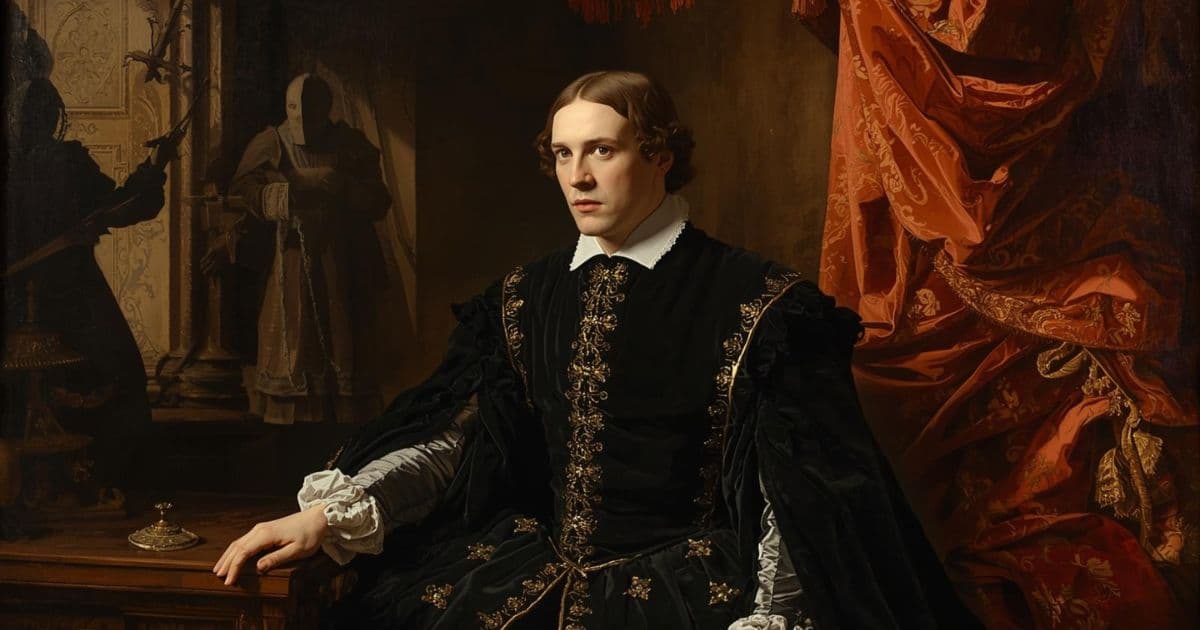
An excerpt from the original text.(complete · 2970 words)
yagavy
So he must drive at full speed, and he had not the money for horses. He
had forty kopecks, and that was all, all that was left after so many
years of prosperity! But he had at home an old silver watch which had
long ceased to go. He snatched it up and carried it to a Jewish
watchmaker who had a shop in the market‐place. The Jew gave him six
roubles for it.
“And I didn’t expect that,” cried Mitya, ecstatically. (He was still in
a state of ecstasy.) He seized his six roubles and ran home. At home he
borrowed three roubles from the people of the house, who loved him so
much that they were pleased to give it him, though it was all they had.
Mitya in his excitement told them on the spot that his fate would be
decided that day, and he described, in desperate haste, the whole
scheme he had put before Samsonov, the latter’s decision, his own hopes
for the future, and so on. These people had been told many of their
lodger’s secrets before, and so looked upon him as a gentleman who was
not at all proud, and almost one of themselves. Having thus collected
nine roubles Mitya sent for posting‐horses to take him to the Volovya
station. This was how the fact came to be remembered and established
that “at midday, on the day before the event, Mitya had not a farthing,
and that he had sold his watch to get money and had borrowed three
roubles from his landlord, all in the presence of witnesses.”
I note this fact, later on it will be apparent why I do so.
Though he was radiant with the joyful anticipation that he would at
last solve all his difficulties, yet, as he drew near Volovya station,
he trembled at the thought of what Grushenka might be doing in his
absence. What if she made up her mind to‐day to go to Fyodor
Pavlovitch? This was why he had gone off without telling her and why he
left orders with his landlady not to let out where he had gone, if any
one came to inquire for him.
“I must, I must get back to‐night,” he repeated, as he was jolted along
in the cart, “and I dare say I shall have to bring this Lyagavy back
here ... to draw up the deed.” So mused Mitya, with a throbbing heart,
but alas! his dreams were not fated to be carried out.
To begin with, he was late, taking a short cut from Volovya station
which turned out to be eighteen versts instead of twelve. Secondly, he
did not find the priest at home at Ilyinskoe; he had gone off to a
neighboring village. While Mitya, setting off there with the same
exhausted horses, was looking for him, it was almost dark.
The priest, a shy and amiable looking little man, informed him at once
that though Lyagavy had been staying with him at first, he was now at
Suhoy Possyolok, that he was staying the night in the forester’s
cottage, as he was buying timber there too. At Mitya’s urgent request
that he would take him to Lyagavy at once, and by so doing “save him,
so to speak,” the priest agreed, after some demur, to conduct him to
Suhoy Possyolok; his curiosity was obviously aroused. But, unluckily,
he advised their going on foot, as it would not be “much over” a verst.
Mitya, of course, agreed, and marched off with his yard‐long strides,
so that the poor priest almost ran after him. He was a very cautious
man, though not old.
Mitya at once began talking to him, too, of his plans, nervously and
excitedly asking advice in regard to Lyagavy, and talking all the way.
The priest listened attentively, but gave little advice. He turned off
Mitya’s questions with: “I don’t know. Ah, I can’t say. How can I
tell?” and so on. When Mitya began to speak of his quarrel with his
father over his inheritance, the priest was positively alarmed, as he
was in some way dependent on Fyodor Pavlovitch. He inquired, however,
with surprise, why he called the peasant‐trader Gorstkin, Lyagavy, and
obligingly explained to Mitya that, though the man’s name really was
Lyagavy, he was never called so, as he would be grievously offended at
the name, and that he must be sure to call him Gorstkin, “or you’ll do
nothing with him; he won’t even listen to you,” said the priest in
conclusion.
Mitya was somewhat surprised for a moment, and explained that that was
what Samsonov had called him. On hearing this fact, the priest dropped
the subject, though he would have done well to put into words his doubt
whether, if Samsonov had sent him to that peasant, calling him Lyagavy,
there was not something wrong about it and he was turning him into
ridicule. But Mitya had no time to pause over such trifles. He hurried,
striding along, and only when he reached Suhoy Possyolok did he realize
that they had come not one verst, nor one and a half, but at least
three. This annoyed him, but he controlled himself.
They went into the hut. The forester lived in one half of the hut, and
Gorstkin was lodging in the other, the better room the other side of
the passage. They went into that room and lighted a tallow candle. The
hut was extremely overheated. On the table there was a samovar that had
gone out, a tray with cups, an empty rum bottle, a bottle of vodka
partly full, and some half‐eaten crusts of wheaten bread. The visitor
himself lay stretched at full length on the bench, with his coat
crushed up under his head for a pillow, snoring heavily. Mitya stood in
perplexity.
“Of course I must wake him. My business is too important. I’ve come in
such haste. I’m in a hurry to get back to‐day,” he said in great
agitation. But the priest and the forester stood in silence, not giving
their opinion. Mitya went up and began trying to wake him himself; he
tried vigorously, but the sleeper did not wake.
“He’s drunk,” Mitya decided. “Good Lord! What am I to do? What am I to
do?” And, terribly impatient, he began pulling him by the arms, by the
legs, shaking his head, lifting him up and making him sit on the bench.
Yet, after prolonged exertions, he could only succeed in getting the
drunken man to utter absurd grunts, and violent, but inarticulate
oaths.
“No, you’d better wait a little,” the priest pronounced at last, “for
he’s obviously not in a fit state.”
“He’s been drinking the whole day,” the forester chimed in.
“Good heavens!” cried Mitya. “If only you knew how important it is to
me and how desperate I am!”
“No, you’d better wait till morning,” the priest repeated.
“Till morning? Mercy! that’s impossible!”
And in his despair he was on the point of attacking the sleeping man
again, but stopped short at once, realizing the uselessness of his
efforts. The priest said nothing, the sleepy forester looked gloomy.
“What terrible tragedies real life contrives for people,” said Mitya,
in complete despair. The perspiration was streaming down his face. The
priest seized the moment to put before him, very reasonably, that, even
if he succeeded in wakening the man, he would still be drunk and
incapable of conversation. “And your business is important,” he said,
“so you’d certainly better put it off till morning.” With a gesture of
despair Mitya agreed.
“Father, I will stay here with a light, and seize the favorable moment.
As soon as he wakes I’ll begin. I’ll pay you for the light,” he said to
the forester, “for the night’s lodging, too; you’ll remember Dmitri
Karamazov. Only, Father, I don’t know what we’re to do with you. Where
will you sleep?”
“No, I’m going home. I’ll take his horse and get home,” he said,
indicating the forester. “And now I’ll say good‐by. I wish you all
success.”
So it was settled. The priest rode off on the forester’s horse,
delighted to escape, though he shook his head uneasily, wondering
whether he ought not next day to inform his benefactor Fyodor
Pavlovitch of this curious incident, “or he may in an unlucky hour hear
of it, be angry, and withdraw his favor.”
The forester, scratching himself, went back to his room without a word,
and Mitya sat on the bench to “catch the favorable moment,” as he
expressed it. Profound dejection clung about his soul like a heavy
mist. A profound, intense dejection! He sat thinking, but could reach
no conclusion. The candle burnt dimly, a cricket chirped; it became
insufferably close in the overheated room. He suddenly pictured the
garden, the path behind the garden, the door of his father’s house
mysteriously opening and Grushenka running in. He leapt up from the
bench.
“It’s a tragedy!” he said, grinding his teeth. Mechanically he went up
to the sleeping man and looked in his face. He was a lean, middle‐aged
peasant, with a very long face, flaxen curls, and a long, thin, reddish
beard, wearing a blue cotton shirt and a black waistcoat, from the
pocket of which peeped the chain of a silver watch. Mitya looked at his
face with intense hatred, and for some unknown reason his curly hair
particularly irritated him.
What was insufferably humiliating was, that after leaving things of
such importance and making such sacrifices, he, Mitya, utterly worn
out, should with business of such urgency be standing over this dolt on
whom his whole fate depended, while he snored as though there were
nothing the matter, as though he’d dropped from another planet.
“Oh, the irony of fate!” cried Mitya, and, quite losing his head, he
fell again to rousing the tipsy peasant. He roused him with a sort of
ferocity, pulled at him, pushed him, even beat him; but after five
minutes of vain exertions, he returned to his bench in helpless
despair, and sat down.
“Stupid! Stupid!” cried Mitya. “And how dishonorable it all is!”
something made him add. His head began to ache horribly. “Should he
fling it up and go away altogether?” he wondered. “No, wait till
to‐morrow now. I’ll stay on purpose. What else did I come for? Besides,
I’ve no means of going. How am I to get away from here now? Oh, the
idiocy of it!”
But his head ached more and more. He sat without moving, and
unconsciously dozed off and fell asleep as he sat. He seemed to have
slept for two hours or more. He was waked up by his head aching so
unbearably that he could have screamed. There was a hammering in his
temples, and the top of his head ached. It was a long time before he
could wake up fully and understand what had happened to him.
At last he realized that the room was full of charcoal fumes from the
stove, and that he might die of suffocation. And the drunken peasant
still lay snoring. The candle guttered and was about to go out. Mitya
cried out, and ran staggering across the passage into the forester’s
room. The forester waked up at once, but hearing that the other room
was full of fumes, to Mitya’s surprise and annoyance, accepted the fact
with strange unconcern, though he did go to see to it.
“But he’s dead, he’s dead! and ... what am I to do then?” cried Mitya
frantically.
They threw open the doors, opened a window and the chimney. Mitya
brought a pail of water from the passage. First he wetted his own head,
then, finding a rag of some sort, dipped it into the water, and put it
on Lyagavy’s head. The forester still treated the matter
contemptuously, and when he opened the window said grumpily:
“It’ll be all right, now.”
He went back to sleep, leaving Mitya a lighted lantern. Mitya fussed
about the drunken peasant for half an hour, wetting his head, and
gravely resolved not to sleep all night. But he was so worn out that
when he sat down for a moment to take breath, he closed his eyes,
unconsciously stretched himself full length on the bench and slept like
the dead.
It was dreadfully late when he waked. It was somewhere about nine
o’clock. The sun was shining brightly in the two little windows of the
hut. The curly‐headed peasant was sitting on the bench and had his coat
on. He had another samovar and another bottle in front of him.
Yesterday’s bottle had already been finished, and the new one was more
than half empty. Mitya jumped up and saw at once that the cursed
peasant was drunk again, hopelessly and incurably. He stared at him for
a moment with wide opened eyes. The peasant was silently and slyly
watching him, with insulting composure, and even a sort of contemptuous
condescension, so Mitya fancied. He rushed up to him.
“Excuse me, you see ... I ... you’ve most likely heard from the
forester here in the hut. I’m Lieutenant Dmitri Karamazov, the son of
the old Karamazov whose copse you are buying.”
“That’s a lie!” said the peasant, calmly and confidently.
“A lie? You know Fyodor Pavlovitch?”
“I don’t know any of your Fyodor Pavlovitches,” said the peasant,
speaking thickly.
“You’re bargaining with him for the copse, for the copse. Do wake up,
and collect yourself. Father Pavel of Ilyinskoe brought me here. You
wrote to Samsonov, and he has sent me to you,” Mitya gasped
breathlessly.
“You’re l‐lying!” Lyagavy blurted out again. Mitya’s legs went cold.
“For mercy’s sake! It isn’t a joke! You’re drunk, perhaps. Yet you can
speak and understand ... or else ... I understand nothing!”
“You’re a painter!”
“For mercy’s sake! I’m Karamazov, Dmitri Karamazov. I have an offer to
make you, an advantageous offer ... very advantageous offer, concerning
the copse!”
The peasant stroked his beard importantly.
“No, you’ve contracted for the job and turned out a scamp. You’re a
scoundrel!”
“I assure you you’re mistaken,” cried Mitya, wringing his hands in
despair. The peasant still stroked his beard, and suddenly screwed up
his eyes cunningly.
“No, you show me this: you tell me the law that allows roguery. D’you
hear? You’re a scoundrel! Do you understand that?”
Mitya stepped back gloomily, and suddenly “something seemed to hit him
on the head,” as he said afterwards. In an instant a light seemed to
dawn in his mind, “a light was kindled and I grasped it all.” He stood,
stupefied, wondering how he, after all a man of intelligence, could
have yielded to such folly, have been led into such an adventure, and
have kept it up for almost twenty‐four hours, fussing round this
Lyagavy, wetting his head.
“Why, the man’s drunk, dead drunk, and he’ll go on drinking now for a
week; what’s the use of waiting here? And what if Samsonov sent me here
on purpose? What if she—? Oh, God, what have I done?”
The peasant sat watching him and grinning. Another time Mitya might
have killed the fool in a fury, but now he felt as weak as a child. He
went quietly to the bench, took up his overcoat, put it on without a
word, and went out of the hut. He did not find the forester in the next
room; there was no one there. He took fifty kopecks in small change out
of his pocket and put them on the table for his night’s lodging, the
candle, and the trouble he had given. Coming out of the hut he saw
nothing but forest all round. He walked at hazard, not knowing which
way to turn out of the hut, to the right or to the left. Hurrying there
the evening before with the priest, he had not noticed the road. He had
no revengeful feeling for anybody, even for Samsonov, in his heart. He
strode along a narrow forest path, aimless, dazed, without heeding
where he was going. A child could have knocked him down, so weak was he
in body and soul. He got out of the forest somehow, however, and a
vista of fields, bare after the harvest, stretched as far as the eye
could see.
“What despair! What death all round!” he repeated, striding on and on.
He was saved by meeting an old merchant who was being driven across
country in a hired trap. When he overtook him, Mitya asked the way, and
it turned out that the old merchant, too, was going to Volovya. After
some discussion Mitya got into the trap. Three hours later they
arrived. At Volovya, Mitya at once ordered posting‐horses to drive to
the town, and suddenly realized that he was appallingly hungry. While
the horses were being harnessed, an omelette was prepared for him. He
ate it all in an instant, ate a huge hunk of bread, ate a sausage, and
swallowed three glasses of vodka. After eating, his spirits and his
heart grew lighter. He flew towards the town, urged on the driver, and
suddenly made a new and “unalterable” plan to procure that “accursed
money” before evening. “And to think, only to think that a man’s life
should be ruined for the sake of that paltry three thousand!” he cried,
contemptuously. “I’ll settle it to‐ day.” And if it had not been for
the thought of Grushenka and of what might have happened to her, which
never left him, he would perhaps have become quite cheerful again....
But the thought of her was stabbing him to the heart every moment, like
a sharp knife.
At last they arrived, and Mitya at once ran to Grushenka.
Master this chapter. Complete your experience
Purchase the complete book to access all chapters and support classic literature
As an Amazon Associate, we earn a small commission from qualifying purchases at no additional cost to you.
Available in paperback, hardcover, and e-book formats
Let's Analyse the Pattern
When urgent need clouds judgment, making us vulnerable to false promises and manipulation by those who exploit our desperation.
Why This Matters
Connect literature to life
This chapter teaches how manipulators exploit desperation by sending victims away from real solutions toward false ones.
Practice This Today
This week, notice when someone offers you a 'great opportunity' that requires you to go somewhere else or do something immediately—ask yourself who benefits from your absence or urgency.
Now let's explore the literary elements.
Key Quotes & Analysis
"And I didn't expect that!"
Context: When the watchmaker gives him six roubles for his broken watch
Shows Mitya's desperate gratitude for small mercies. He's so broke that getting anything for his worthless watch feels like a miracle, revealing how low his expectations have fallen.
In Today's Words:
I can't believe I actually got something for this piece of junk!
"his fate would be decided that day"
Context: Describing how Mitya tells his landlords about his urgent mission
Mitya believes this one deal will solve everything, showing how desperation creates false urgency. He's putting all his hope in what turns out to be nothing.
In Today's Words:
This is it - today changes everything
"at midday, on the day before the event, Mitya had not a farthing"
Context: Establishing the timeline and Mitya's poverty for later legal proceedings
This detail will matter for Mitya's trial, showing he had no money before the alleged crime. The careful documentation suggests how desperate actions create evidence trails.
In Today's Words:
The day before everything went wrong, he was completely broke
Thematic Threads
Class
In This Chapter
Samsonov's cruel joke sending Mitya on a fool's errand reveals how the wealthy toy with the desperate for entertainment
Development
Building from earlier class tensions, now showing active cruelty across class lines
In Your Life:
You might see this when wealthy employers make unrealistic promises to desperate job seekers
Deception
In This Chapter
The entire Lyagavy scheme is an elaborate lie designed to waste Mitya's time and energy
Development
Escalating from family lies to calculated manipulation by outsiders
In Your Life:
You might encounter this in scam calls that prey on financial desperation
Desperation
In This Chapter
Mitya's frantic energy and willingness to believe impossible solutions drives his poor judgment
Development
Introduced here as a driving force that overrides rational thinking
In Your Life:
You might feel this when facing eviction or medical bills, making risky financial decisions
Exploitation
In This Chapter
Those in power deliberately mislead those in need, finding entertainment in their suffering
Development
New theme showing how vulnerability becomes a target for cruelty
In Your Life:
You might see this in predatory lending or insurance companies denying legitimate claims
Reality
In This Chapter
The gap between Mitya's desperate hopes and the actual drunk peasant who knows nothing
Development
Continuing theme of characters living in fantasy rather than facing facts
In Your Life:
You might experience this when chasing get-rich-quick schemes instead of steady work
You now have the context. Time to form your own thoughts.
Discussion Questions
- 1
Why does Mitya ignore all the warning signs that this business deal might be fake?
analysis • surface - 2
How does Samsonov benefit from sending Mitya on this wild goose chase?
analysis • medium - 3
Where do you see desperate people being taken advantage of in today's world?
application • medium - 4
What red flags should someone watch for when they're desperate for a solution?
application • deep - 5
Why do we become easier targets for manipulation when we're under pressure?
reflection • deep
Critical Thinking Exercise
Red Flag Detector
Think of a time when you or someone you know was desperate for a solution - maybe a job, money, relationship, or health issue. List three warning signs that should have raised red flags about any 'help' being offered. Then write what questions you would ask before accepting help in a similar situation.
Consider:
- •Who benefits most from you saying yes quickly?
- •What would happen if you waited 24 hours before deciding?
- •What would you tell a friend in your exact situation?
Journaling Prompt
Write about a time when desperation made you ignore your better judgment. What did you learn about protecting yourself when you're vulnerable?
Coming Up Next...
Chapter 48: Chasing Fool's Gold
Returning to town empty-handed and humiliated, Mitya faces the crushing reality that his last hope for easy money was a mirage. But desperation breeds new schemes, and he's about to hatch an even more dangerous plan involving gold mines.