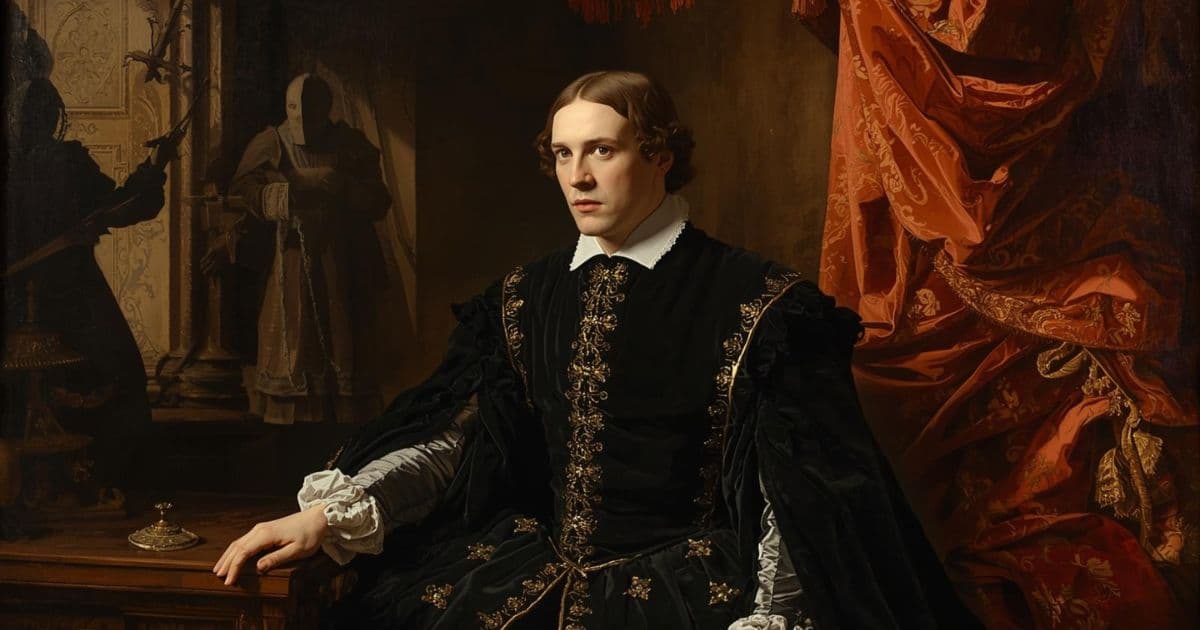
An excerpt from the original text.(complete · 1955 words)
t His Father’s
First of all, Alyosha went to his father. On the way he remembered that
his father had insisted the day before that he should come without his
brother Ivan seeing him. “Why so?” Alyosha wondered suddenly. “Even if
my father has something to say to me alone, why should I go in unseen?
Most likely in his excitement yesterday he meant to say something
different,” he decided. Yet he was very glad when Marfa Ignatyevna, who
opened the garden gate to him (Grigory, it appeared, was ill in bed in
the lodge), told him in answer to his question that Ivan Fyodorovitch
had gone out two hours ago.
“And my father?”
“He is up, taking his coffee,” Marfa answered somewhat dryly.
Alyosha went in. The old man was sitting alone at the table wearing
slippers and a little old overcoat. He was amusing himself by looking
through some accounts, rather inattentively however. He was quite alone
in the house, for Smerdyakov too had gone out marketing. Though he had
got up early and was trying to put a bold face on it, he looked tired
and weak. His forehead, upon which huge purple bruises had come out
during the night, was bandaged with a red handkerchief; his nose too
had swollen terribly in the night, and some smaller bruises covered it
in patches, giving his whole face a peculiarly spiteful and irritable
look. The old man was aware of this, and turned a hostile glance on
Alyosha as he came in.
“The coffee is cold,” he cried harshly; “I won’t offer you any. I’ve
ordered nothing but a Lenten fish soup to‐day, and I don’t invite any
one to share it. Why have you come?”
“To find out how you are,” said Alyosha.
“Yes. Besides, I told you to come yesterday. It’s all of no
consequence. You need not have troubled. But I knew you’d come poking
in directly.”
He said this with almost hostile feeling. At the same time he got up
and looked anxiously in the looking‐glass (perhaps for the fortieth
time that morning) at his nose. He began, too, binding his red
handkerchief more becomingly on his forehead.
“Red’s better. It’s just like the hospital in a white one,” he observed
sententiously. “Well, how are things over there? How is your elder?”
“He is very bad; he may die to‐day,” answered Alyosha. But his father
had not listened, and had forgotten his own question at once.
“Ivan’s gone out,” he said suddenly. “He is doing his utmost to carry
off Mitya’s betrothed. That’s what he is staying here for,” he added
maliciously, and, twisting his mouth, looked at Alyosha.
“Surely he did not tell you so?” asked Alyosha.
“Yes, he did, long ago. Would you believe it, he told me three weeks
ago? You don’t suppose he too came to murder me, do you? He must have
had some object in coming.”
“What do you mean? Why do you say such things?” said Alyosha, troubled.
“He doesn’t ask for money, it’s true, but yet he won’t get a farthing
from me. I intend living as long as possible, you may as well know, my
dear Alexey Fyodorovitch, and so I need every farthing, and the longer
I live, the more I shall need it,” he continued, pacing from one corner
of the room to the other, keeping his hands in the pockets of his loose
greasy overcoat made of yellow cotton material. “I can still pass for a
man at five and fifty, but I want to pass for one for another twenty
years. As I get older, you know, I shan’t be a pretty object. The
wenches won’t come to me of their own accord, so I shall want my money.
So I am saving up more and more, simply for myself, my dear son Alexey
Fyodorovitch. You may as well know. For I mean to go on in my sins to
the end, let me tell you. For sin is sweet; all abuse it, but all men
live in it, only others do it on the sly, and I openly. And so all the
other sinners fall upon me for being so simple. And your paradise,
Alexey Fyodorovitch, is not to my taste, let me tell you that; and it’s
not the proper place for a gentleman, your paradise, even if it exists.
I believe that I fall asleep and don’t wake up again, and that’s all.
You can pray for my soul if you like. And if you don’t want to, don’t,
damn you! That’s my philosophy. Ivan talked well here yesterday, though
we were all drunk. Ivan is a conceited coxcomb, but he has no
particular learning ... nor education either. He sits silent and smiles
at one without speaking—that’s what pulls him through.”
Alyosha listened to him in silence.
“Why won’t he talk to me? If he does speak, he gives himself airs. Your
Ivan is a scoundrel! And I’ll marry Grushenka in a minute if I want to.
For if you’ve money, Alexey Fyodorovitch, you have only to want a thing
and you can have it. That’s what Ivan is afraid of, he is on the watch
to prevent me getting married and that’s why he is egging on Mitya to
marry Grushenka himself. He hopes to keep me from Grushenka by that (as
though I should leave him my money if I don’t marry her!). Besides if
Mitya marries Grushenka, Ivan will carry off his rich betrothed, that’s
what he’s reckoning on! He is a scoundrel, your Ivan!”
“How cross you are! It’s because of yesterday; you had better lie
down,” said Alyosha.
“There! you say that,” the old man observed suddenly, as though it had
struck him for the first time, “and I am not angry with you. But if
Ivan said it, I should be angry with him. It is only with you I have
good moments, else you know I am an ill‐natured man.”
“You are not ill‐natured, but distorted,” said Alyosha with a smile.
“Listen. I meant this morning to get that ruffian Mitya locked up and I
don’t know now what I shall decide about it. Of course in these
fashionable days fathers and mothers are looked upon as a prejudice,
but even now the law does not allow you to drag your old father about
by the hair, to kick him in the face in his own house, and brag of
murdering him outright—all in the presence of witnesses. If I liked, I
could crush him and could have him locked up at once for what he did
yesterday.”
“Then you don’t mean to take proceedings?”
“Ivan has dissuaded me. I shouldn’t care about Ivan, but there’s
another thing.”
And bending down to Alyosha, he went on in a confidential half‐whisper.
“If I send the ruffian to prison, she’ll hear of it and run to see him
at once. But if she hears that he has beaten me, a weak old man, within
an inch of my life, she may give him up and come to me.... For that’s
her way, everything by contraries. I know her through and through!
Won’t you have a drop of brandy? Take some cold coffee and I’ll pour a
quarter of a glass of brandy into it, it’s delicious, my boy.”
“No, thank you. I’ll take that roll with me if I may,” said Alyosha,
and taking a halfpenny French roll he put it in the pocket of his
cassock. “And you’d better not have brandy, either,” he suggested
apprehensively, looking into the old man’s face.
“You are quite right, it irritates my nerves instead of soothing them.
Only one little glass. I’ll get it out of the cupboard.”
He unlocked the cupboard, poured out a glass, drank it, then locked the
cupboard and put the key back in his pocket.
“That’s enough. One glass won’t kill me.”
“You see you are in a better humor now,” said Alyosha, smiling.
“Um! I love you even without the brandy, but with scoundrels I am a
scoundrel. Ivan is not going to Tchermashnya—why is that? He wants to
spy how much I give Grushenka if she comes. They are all scoundrels!
But I don’t recognize Ivan, I don’t know him at all. Where does he come
from? He is not one of us in soul. As though I’d leave him anything! I
shan’t leave a will at all, you may as well know. And I’ll crush Mitya
like a beetle. I squash black‐beetles at night with my slipper; they
squelch when you tread on them. And your Mitya will squelch too. Your
Mitya, for you love him. Yes, you love him and I am not afraid of your
loving him. But if Ivan loved him I should be afraid for myself at his
loving him. But Ivan loves nobody. Ivan is not one of us. People like
Ivan are not our sort, my boy. They are like a cloud of dust. When the
wind blows, the dust will be gone.... I had a silly idea in my head
when I told you to come to‐day; I wanted to find out from you about
Mitya. If I were to hand him over a thousand or maybe two now, would
the beggarly wretch agree to take himself off altogether for five years
or, better still, thirty‐five, and without Grushenka, and give her up
once for all, eh?”
“I—I’ll ask him,” muttered Alyosha. “If you would give him three
thousand, perhaps he—”
“That’s nonsense! You needn’t ask him now, no need! I’ve changed my
mind. It was a nonsensical idea of mine. I won’t give him anything, not
a penny, I want my money myself,” cried the old man, waving his hand.
“I’ll crush him like a beetle without it. Don’t say anything to him or
else he will begin hoping. There’s nothing for you to do here, you
needn’t stay. Is that betrothed of his, Katerina Ivanovna, whom he has
kept so carefully hidden from me all this time, going to marry him or
not? You went to see her yesterday, I believe?”
“Nothing will induce her to abandon him.”
“There you see how dearly these fine young ladies love a rake and a
scoundrel. They are poor creatures I tell you, those pale young ladies,
very different from—Ah, if I had his youth and the looks I had then
(for I was better‐looking than he at eight and twenty) I’d have been a
conquering hero just as he is. He is a low cad! But he shan’t have
Grushenka, anyway, he shan’t! I’ll crush him!”
His anger had returned with the last words.
“You can go. There’s nothing for you to do here to‐day,” he snapped
harshly.
Alyosha went up to say good‐by to him, and kissed him on the shoulder.
“What’s that for?” The old man was a little surprised. “We shall see
each other again, or do you think we shan’t?”
“Not at all, I didn’t mean anything.”
“Nor did I, I did not mean anything,” said the old man, looking at him.
“Listen, listen,” he shouted after him, “make haste and come again and
I’ll have a fish soup for you, a fine one, not like to‐day. Be sure to
come! Come to‐morrow, do you hear, to‐morrow!”
And as soon as Alyosha had gone out of the door, he went to the
cupboard again and poured out another half‐glass.
“I won’t have more!” he muttered, clearing his throat, and again he
locked the cupboard and put the key in his pocket. Then he went into
his bedroom, lay down on the bed, exhausted, and in one minute he was
asleep.
Master this chapter. Complete your experience
Purchase the complete book to access all chapters and support classic literature
As an Amazon Associate, we earn a small commission from qualifying purchases at no additional cost to you.
Available in paperback, hardcover, and e-book formats
Let's Analyse the Pattern
When pain to our ego causes us to intensify the very behaviors that created our problems in the first place.
Why This Matters
Connect literature to life
This chapter teaches how wounded pride creates convincing but harmful internal narratives that keep us stuck.
Practice This Today
This week, notice when you're creating elaborate explanations for why someone else is wrong instead of asking what you could do differently.
Now let's explore the literary elements.
Key Quotes & Analysis
"He looked tired and weak. His forehead, upon which huge purple bruises had come out during the night, was bandaged with a red handkerchief."
Context: Describing Fyodor's physical condition after Dmitri's attack
The physical wounds mirror the emotional damage to his pride. The detailed description shows how violence leaves lasting marks that go beyond just bruises - it changes how someone moves through the world.
In Today's Words:
He was beat up bad and looked like hell, but the real damage was to his ego.
"Why should I go to law against him? I could send him to Siberia when I liked, couldn't I? But I won't, I won't."
Context: Explaining to Alyosha why he won't press charges against Dmitri
This reveals his twisted logic - he thinks showing mercy will make Grushenka pity him and choose him over Dmitri. He's using forgiveness as a manipulation tactic rather than genuine healing.
In Today's Words:
I could totally ruin him if I wanted to, but I'm not going to because I think it'll make me look like the good guy.
"Ivan is a tomb! I hate Ivan more than Mitya. You're the only one I don't hate."
Context: Confessing his feelings about his sons to Alyosha
This shows the depth of family dysfunction - he openly admits to hating two of his three sons. His honesty with Alyosha reveals both his need for connection and his inability to take responsibility for why his relationships are so damaged.
In Today's Words:
Your brother Ivan is dead to me, and I can't stand Dmitri either. You're the only kid I actually like.
"Come, kiss me, sit down, and tell me, will you do what I ask you, what I need of you, or won't you?"
Context: Desperately seeking affection and compliance from Alyosha
This captures the needy, manipulative side of his personality. He wants unconditional love but immediately follows it with demands, showing he can't separate genuine affection from control.
In Today's Words:
Give me a hug and promise you'll do whatever I ask, okay?
Thematic Threads
Pride
In This Chapter
Fyodor's bruised ego prevents him from seeing how his own actions led to the beating
Development
Evolved from earlier displays of vanity to now showing how pride becomes a barrier to healing
In Your Life:
You might recognize this when you double down on failing strategies rather than admit you were wrong.
Isolation
In This Chapter
Despite craving connection, Fyodor pushes away Alyosha with hostility and neediness
Development
Building on established pattern of the old man's loneliness driving destructive behavior
In Your Life:
You might see this when you're hurting but find yourself snapping at the people trying to help.
Self-medication
In This Chapter
Fyodor drinks brandy to numb his pain while Alyosha gently protests
Development
Continues theme of characters using substances and behaviors to avoid facing reality
In Your Life:
You might recognize this in your own habits of reaching for comfort that actually makes problems worse.
Manipulation
In This Chapter
Fyodor convinces himself his victimhood is actually a strategic advantage with Grushenka
Development
Shows how earlier manipulative tendencies now extend to self-deception
In Your Life:
You might catch yourself turning your mistakes into elaborate stories about why they were actually smart moves.
Family dynamics
In This Chapter
The father simultaneously dismisses and needs his sons, creating toxic push-pull relationships
Development
Deepens exploration of how family roles become traps for everyone involved
In Your Life:
You might see this pattern in how family members can't break out of old roles even when everyone's hurting.
You now have the context. Time to form your own thoughts.
Discussion Questions
- 1
Why does Fyodor refuse to press charges against Dmitri, and what does this reveal about his mindset?
analysis • surface - 2
How does Fyodor use alcohol and elaborate justifications to avoid facing his role in the family crisis?
analysis • medium - 3
Where have you seen people double down on destructive behavior after getting hurt, rather than changing course?
application • medium - 4
When someone is in this cycle of wounded pride and self-justification, what's the most effective way to help them without making things worse?
application • deep - 5
What does Fyodor's immediate return to drinking after Alyosha leaves teach us about the relationship between loneliness and self-destructive habits?
reflection • deep
Critical Thinking Exercise
Map Your Own Pride Cycle
Think of a time when you were criticized or hurt and your first instinct was to defend or justify rather than reflect. Write down what happened, what story you told yourself to protect your ego, and what you might have done differently if pride wasn't involved. Then identify one current situation where you might be doubling down instead of stepping back.
Consider:
- •Notice the difference between explaining and justifying - one seeks understanding, the other protects ego
- •Consider how wounded pride often makes us do more of what isn't working rather than less
- •Think about whether your defensive response actually solved the original problem
Journaling Prompt
Write about a relationship in your life where pride might be preventing you from making a necessary change. What would courage look like in that situation?
Coming Up Next...
Chapter 27: When Children Throw Stones
Alyosha's day continues as he encounters a group of schoolboys in what promises to be an unexpected and revealing interaction. The meeting will shed light on how conflict and loyalty play out even among children.