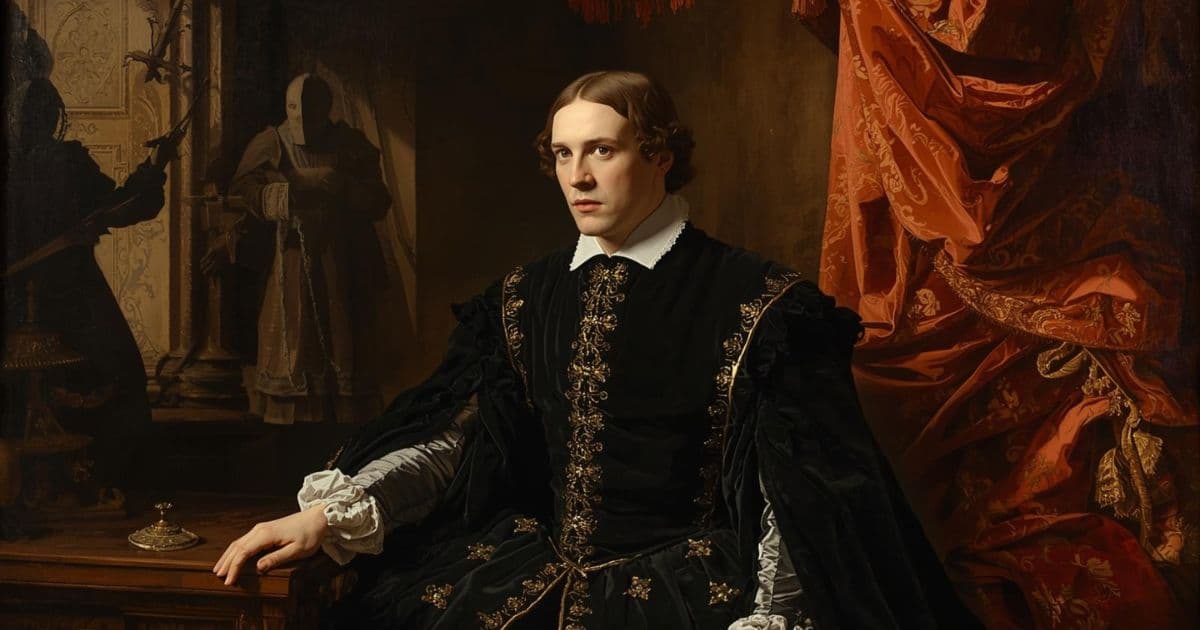
An excerpt from the original text.(complete · 4122 words)
ather Ferapont
Alyosha was roused early, before daybreak. Father Zossima woke up
feeling very weak, though he wanted to get out of bed and sit up in a
chair. His mind was quite clear; his face looked very tired, yet bright
and almost joyful. It wore an expression of gayety, kindness and
cordiality. “Maybe I shall not live through the coming day,” he said to
Alyosha. Then he desired to confess and take the sacrament at once. He
always confessed to Father Païssy. After taking the communion, the
service of extreme unction followed. The monks assembled and the cell
was gradually filled up by the inmates of the hermitage. Meantime it
was daylight. People began coming from the monastery. After the service
was over the elder desired to kiss and take leave of every one. As the
cell was so small the earlier visitors withdrew to make room for
others. Alyosha stood beside the elder, who was seated again in his
arm‐chair. He talked as much as he could. Though his voice was weak, it
was fairly steady.
“I’ve been teaching you so many years, and therefore I’ve been talking
aloud so many years, that I’ve got into the habit of talking, and so
much so that it’s almost more difficult for me to hold my tongue than
to talk, even now, in spite of my weakness, dear Fathers and brothers,”
he jested, looking with emotion at the group round him.
Alyosha remembered afterwards something of what he said to them. But
though he spoke out distinctly and his voice was fairly steady, his
speech was somewhat disconnected. He spoke of many things, he seemed
anxious before the moment of death to say everything he had not said in
his life, and not simply for the sake of instructing them, but as
though thirsting to share with all men and all creation his joy and
ecstasy, and once more in his life to open his whole heart.
“Love one another, Fathers,” said Father Zossima, as far as Alyosha
could remember afterwards. “Love God’s people. Because we have come
here and shut ourselves within these walls, we are no holier than those
that are outside, but on the contrary, from the very fact of coming
here, each of us has confessed to himself that he is worse than others,
than all men on earth.... And the longer the monk lives in his
seclusion, the more keenly he must recognize that. Else he would have
had no reason to come here. When he realizes that he is not only worse
than others, but that he is responsible to all men for all and
everything, for all human sins, national and individual, only then the
aim of our seclusion is attained. For know, dear ones, that every one
of us is undoubtedly responsible for all men and everything on earth,
not merely through the general sinfulness of creation, but each one
personally for all mankind and every individual man. This knowledge is
the crown of life for the monk and for every man. For monks are not a
special sort of men, but only what all men ought to be. Only through
that knowledge, our heart grows soft with infinite, universal,
inexhaustible love. Then every one of you will have the power to win
over the whole world by love and to wash away the sins of the world
with your tears.... Each of you keep watch over your heart and confess
your sins to yourself unceasingly. Be not afraid of your sins, even
when perceiving them, if only there be penitence, but make no
conditions with God. Again I say, Be not proud. Be proud neither to the
little nor to the great. Hate not those who reject you, who insult you,
who abuse and slander you. Hate not the atheists, the teachers of evil,
the materialists—and I mean not only the good ones—for there are many
good ones among them, especially in our day—hate not even the wicked
ones. Remember them in your prayers thus: Save, O Lord, all those who
have none to pray for them, save too all those who will not pray. And
add: it is not in pride that I make this prayer, O Lord, for I am lower
than all men.... Love God’s people, let not strangers draw away the
flock, for if you slumber in your slothfulness and disdainful pride, or
worse still, in covetousness, they will come from all sides and draw
away your flock. Expound the Gospel to the people unceasingly ... be
not extortionate.... Do not love gold and silver, do not hoard them....
Have faith. Cling to the banner and raise it on high.”
But the elder spoke more disconnectedly than Alyosha reported his words
afterwards. Sometimes he broke off altogether, as though to take
breath, and recover his strength, but he was in a sort of ecstasy. They
heard him with emotion, though many wondered at his words and found
them obscure.... Afterwards all remembered those words.
When Alyosha happened for a moment to leave the cell, he was struck by
the general excitement and suspense in the monks who were crowding
about it. This anticipation showed itself in some by anxiety, in others
by devout solemnity. All were expecting that some marvel would happen
immediately after the elder’s death. Their suspense was, from one point
of view, almost frivolous, but even the most austere of the monks were
affected by it. Father Païssy’s face looked the gravest of all.
Alyosha was mysteriously summoned by a monk to see Rakitin, who had
arrived from town with a singular letter for him from Madame Hohlakov.
In it she informed Alyosha of a strange and very opportune incident. It
appeared that among the women who had come on the previous day to
receive Father Zossima’s blessing, there had been an old woman from the
town, a sergeant’s widow, called Prohorovna. She had inquired whether
she might pray for the rest of the soul of her son, Vassenka, who had
gone to Irkutsk, and had sent her no news for over a year. To which
Father Zossima had answered sternly, forbidding her to do so, and
saying that to pray for the living as though they were dead was a kind
of sorcery. He afterwards forgave her on account of her ignorance, and
added, “as though reading the book of the future” (this was Madame
Hohlakov’s expression), words of comfort: “that her son Vassya was
certainly alive and he would either come himself very shortly or send a
letter, and that she was to go home and expect him.” And “Would you
believe it?” exclaimed Madame Hohlakov enthusiastically, “the prophecy
has been fulfilled literally indeed, and more than that.” Scarcely had
the old woman reached home when they gave her a letter from Siberia
which had been awaiting her. But that was not all; in the letter
written on the road from Ekaterinenburg, Vassya informed his mother
that he was returning to Russia with an official, and that three weeks
after her receiving the letter he hoped “to embrace his mother.”
Madame Hohlakov warmly entreated Alyosha to report this new “miracle of
prediction” to the Superior and all the brotherhood. “All, all, ought
to know of it!” she concluded. The letter had been written in haste,
the excitement of the writer was apparent in every line of it. But
Alyosha had no need to tell the monks, for all knew of it already.
Rakitin had commissioned the monk who brought his message “to inform
most respectfully his reverence Father Païssy, that he, Rakitin, has a
matter to speak of with him, of such gravity that he dare not defer it
for a moment, and humbly begs forgiveness for his presumption.” As the
monk had given the message to Father Païssy before that to Alyosha, the
latter found after reading the letter, there was nothing left for him
to do but to hand it to Father Païssy in confirmation of the story.
And even that austere and cautious man, though he frowned as he read
the news of the “miracle,” could not completely restrain some inner
emotion. His eyes gleamed, and a grave and solemn smile came into his
lips.
“We shall see greater things!” broke from him.
“We shall see greater things, greater things yet!” the monks around
repeated.
But Father Païssy, frowning again, begged all of them, at least for a
time, not to speak of the matter “till it be more fully confirmed,
seeing there is so much credulity among those of this world, and indeed
this might well have chanced naturally,” he added, prudently, as it
were to satisfy his conscience, though scarcely believing his own
disavowal, a fact his listeners very clearly perceived.
Within the hour the “miracle” was of course known to the whole
monastery, and many visitors who had come for the mass. No one seemed
more impressed by it than the monk who had come the day before from St.
Sylvester, from the little monastery of Obdorsk in the far North. It
was he who had been standing near Madame Hohlakov the previous day and
had asked Father Zossima earnestly, referring to the “healing” of the
lady’s daughter, “How can you presume to do such things?”
He was now somewhat puzzled and did not know whom to believe. The
evening before he had visited Father Ferapont in his cell apart, behind
the apiary, and had been greatly impressed and overawed by the visit.
This Father Ferapont was that aged monk so devout in fasting and
observing silence who has been mentioned already, as antagonistic to
Father Zossima and the whole institution of “elders,” which he regarded
as a pernicious and frivolous innovation. He was a very formidable
opponent, although from his practice of silence he scarcely spoke a
word to any one. What made him formidable was that a number of monks
fully shared his feeling, and many of the visitors looked upon him as a
great saint and ascetic, although they had no doubt that he was crazy.
But it was just his craziness attracted them.
Father Ferapont never went to see the elder. Though he lived in the
hermitage they did not worry him to keep its regulations, and this too
because he behaved as though he were crazy. He was seventy‐five or
more, and he lived in a corner beyond the apiary in an old decaying
wooden cell which had been built long ago for another great ascetic,
Father Iona, who had lived to be a hundred and five, and of whose
saintly doings many curious stories were still extant in the monastery
and the neighborhood.
Father Ferapont had succeeded in getting himself installed in this same
solitary cell seven years previously. It was simply a peasant’s hut,
though it looked like a chapel, for it contained an extraordinary
number of ikons with lamps perpetually burning before them—which men
brought to the monastery as offerings to God. Father Ferapont had been
appointed to look after them and keep the lamps burning. It was said
(and indeed it was true) that he ate only two pounds of bread in three
days. The beekeeper, who lived close by the apiary, used to bring him
the bread every three days, and even to this man who waited upon him,
Father Ferapont rarely uttered a word. The four pounds of bread,
together with the sacrament bread, regularly sent him on Sundays after
the late mass by the Father Superior, made up his weekly rations. The
water in his jug was changed every day. He rarely appeared at mass.
Visitors who came to do him homage saw him sometimes kneeling all day
long at prayer without looking round. If he addressed them, he was
brief, abrupt, strange, and almost always rude. On very rare occasions,
however, he would talk to visitors, but for the most part he would
utter some one strange saying which was a complete riddle, and no
entreaties would induce him to pronounce a word in explanation. He was
not a priest, but a simple monk. There was a strange belief, chiefly
however among the most ignorant, that Father Ferapont had communication
with heavenly spirits and would only converse with them, and so was
silent with men.
The monk from Obdorsk, having been directed to the apiary by the
beekeeper, who was also a very silent and surly monk, went to the
corner where Father Ferapont’s cell stood. “Maybe he will speak as you
are a stranger and maybe you’ll get nothing out of him,” the beekeeper
had warned him. The monk, as he related afterwards, approached in the
utmost apprehension. It was rather late in the evening. Father Ferapont
was sitting at the door of his cell on a low bench. A huge old elm was
lightly rustling overhead. There was an evening freshness in the air.
The monk from Obdorsk bowed down before the saint and asked his
blessing.
“Do you want me to bow down to you, monk?” said Father Ferapont. “Get
up!”
The monk got up.
“Blessing, be blessed! Sit beside me. Where have you come from?”
What most struck the poor monk was the fact that in spite of his strict
fasting and great age, Father Ferapont still looked a vigorous old man.
He was tall, held himself erect, and had a thin, but fresh and healthy
face. There was no doubt he still had considerable strength. He was of
athletic build. In spite of his great age he was not even quite gray,
and still had very thick hair and a full beard, both of which had once
been black. His eyes were gray, large and luminous, but strikingly
prominent. He spoke with a broad accent. He was dressed in a peasant’s
long reddish coat of coarse convict cloth (as it used to be called) and
had a stout rope round his waist. His throat and chest were bare.
Beneath his coat, his shirt of the coarsest linen showed almost black
with dirt, not having been changed for months. They said that he wore
irons weighing thirty pounds under his coat. His stockingless feet were
thrust in old slippers almost dropping to pieces.
“From the little Obdorsk monastery, from St. Sylvester,” the monk
answered humbly, whilst his keen and inquisitive, but rather frightened
little eyes kept watch on the hermit.
“I have been at your Sylvester’s. I used to stay there. Is Sylvester
well?”
The monk hesitated.
“You are a senseless lot! How do you keep the fasts?”
“Our dietary is according to the ancient conventual rules. During Lent
there are no meals provided for Monday, Wednesday, and Friday. For
Tuesday and Thursday we have white bread, stewed fruit with honey, wild
berries, or salt cabbage and wholemeal stirabout. On Saturday white
cabbage soup, noodles with peas, kasha, all with hemp oil. On weekdays
we have dried fish and kasha with the cabbage soup. From Monday till
Saturday evening, six whole days in Holy Week, nothing is cooked, and
we have only bread and water, and that sparingly; if possible not
taking food every day, just the same as is ordered for first week in
Lent. On Good Friday nothing is eaten. In the same way on the Saturday
we have to fast till three o’clock, and then take a little bread and
water and drink a single cup of wine. On Holy Thursday we drink wine
and have something cooked without oil or not cooked at all, inasmuch as
the Laodicean council lays down for Holy Thursday: ‘It is unseemly by
remitting the fast on the Holy Thursday to dishonor the whole of Lent!’
This is how we keep the fast. But what is that compared with you, holy
Father,” added the monk, growing more confident, “for all the year
round, even at Easter, you take nothing but bread and water, and what
we should eat in two days lasts you full seven. It’s truly
marvelous—your great abstinence.”
“And mushrooms?” asked Father Ferapont, suddenly.
“Mushrooms?” repeated the surprised monk.
“Yes. I can give up their bread, not needing it at all, and go away
into the forest and live there on the mushrooms or the berries, but
they can’t give up their bread here, wherefore they are in bondage to
the devil. Nowadays the unclean deny that there is need of such
fasting. Haughty and unclean is their judgment.”
“Och, true,” sighed the monk.
“And have you seen devils among them?” asked Ferapont.
“Among them? Among whom?” asked the monk, timidly.
“I went to the Father Superior on Trinity Sunday last year, I haven’t
been since. I saw a devil sitting on one man’s chest hiding under his
cassock, only his horns poked out; another had one peeping out of his
pocket with such sharp eyes, he was afraid of me; another settled in
the unclean belly of one, another was hanging round a man’s neck, and
so he was carrying him about without seeing him.”
“You—can see spirits?” the monk inquired.
“I tell you I can see, I can see through them. When I was coming out
from the Superior’s I saw one hiding from me behind the door, and a big
one, a yard and a half or more high, with a thick long gray tail, and
the tip of his tail was in the crack of the door and I was quick and
slammed the door, pinching his tail in it. He squealed and began to
struggle, and I made the sign of the cross over him three times. And he
died on the spot like a crushed spider. He must have rotted there in
the corner and be stinking, but they don’t see, they don’t smell it.
It’s a year since I have been there. I reveal it to you, as you are a
stranger.”
“Your words are terrible! But, holy and blessed Father,” said the monk,
growing bolder and bolder, “is it true, as they noise abroad even to
distant lands about you, that you are in continual communication with
the Holy Ghost?”
“He does fly down at times.”
“How does he fly down? In what form?”
“As a bird.”
“The Holy Ghost in the form of a dove?”
“There’s the Holy Ghost and there’s the Holy Spirit. The Holy Spirit
can appear as other birds—sometimes as a swallow, sometimes a goldfinch
and sometimes as a blue‐tit.”
“How do you know him from an ordinary tit?”
“He speaks.”
“How does he speak, in what language?”
“Human language.”
“And what does he tell you?”
“Why, to‐day he told me that a fool would visit me and would ask me
unseemly questions. You want to know too much, monk.”
“Terrible are your words, most holy and blessed Father,” the monk shook
his head. But there was a doubtful look in his frightened little eyes.
“Do you see this tree?” asked Father Ferapont, after a pause.
“I do, blessed Father.”
“You think it’s an elm, but for me it has another shape.”
“What sort of shape?” inquired the monk, after a pause of vain
expectation.
“It happens at night. You see those two branches? In the night it is
Christ holding out His arms to me and seeking me with those arms, I see
it clearly and tremble. It’s terrible, terrible!”
“What is there terrible if it’s Christ Himself?”
“Why, He’ll snatch me up and carry me away.”
“Alive?”
“In the spirit and glory of Elijah, haven’t you heard? He will take me
in His arms and bear me away.”
Though the monk returned to the cell he was sharing with one of the
brothers, in considerable perplexity of mind, he still cherished at
heart a greater reverence for Father Ferapont than for Father Zossima.
He was strongly in favor of fasting, and it was not strange that one
who kept so rigid a fast as Father Ferapont should “see marvels.” His
words seemed certainly queer, but God only could tell what was hidden
in those words, and were not worse words and acts commonly seen in
those who have sacrificed their intellects for the glory of God? The
pinching of the devil’s tail he was ready and eager to believe, and not
only in the figurative sense. Besides he had, before visiting the
monastery, a strong prejudice against the institution of “elders,”
which he only knew of by hearsay and believed to be a pernicious
innovation. Before he had been long at the monastery, he had detected
the secret murmurings of some shallow brothers who disliked the
institution. He was, besides, a meddlesome, inquisitive man, who poked
his nose into everything. This was why the news of the fresh “miracle”
performed by Father Zossima reduced him to extreme perplexity. Alyosha
remembered afterwards how their inquisitive guest from Obdorsk had been
continually flitting to and fro from one group to another, listening
and asking questions among the monks that were crowding within and
without the elder’s cell. But he did not pay much attention to him at
the time, and only recollected it afterwards.
He had no thought to spare for it indeed, for when Father Zossima,
feeling tired again, had gone back to bed, he thought of Alyosha as he
was closing his eyes, and sent for him. Alyosha ran at once. There was
no one else in the cell but Father Païssy, Father Iosif, and the novice
Porfiry. The elder, opening his weary eyes and looking intently at
Alyosha, asked him suddenly:
“Are your people expecting you, my son?”
Alyosha hesitated.
“Haven’t they need of you? Didn’t you promise some one yesterday to see
them to‐day?”
“I did promise—to my father—my brothers—others too.”
“You see, you must go. Don’t grieve. Be sure I shall not die without
your being by to hear my last word. To you I will say that word, my
son, it will be my last gift to you. To you, dear son, because you love
me. But now go to keep your promise.”
Alyosha immediately obeyed, though it was hard to go. But the promise
that he should hear his last word on earth, that it should be the last
gift to him, Alyosha, sent a thrill of rapture through his soul. He
made haste that he might finish what he had to do in the town and
return quickly. Father Païssy, too, uttered some words of exhortation
which moved and surprised him greatly. He spoke as they left the cell
together.
“Remember, young man, unceasingly,” Father Païssy began, without
preface, “that the science of this world, which has become a great
power, has, especially in the last century, analyzed everything divine
handed down to us in the holy books. After this cruel analysis the
learned of this world have nothing left of all that was sacred of old.
But they have only analyzed the parts and overlooked the whole, and
indeed their blindness is marvelous. Yet the whole still stands
steadfast before their eyes, and the gates of hell shall not prevail
against it. Has it not lasted nineteen centuries, is it not still a
living, a moving power in the individual soul and in the masses of
people? It is still as strong and living even in the souls of atheists,
who have destroyed everything! For even those who have renounced
Christianity and attack it, in their inmost being still follow the
Christian ideal, for hitherto neither their subtlety nor the ardor of
their hearts has been able to create a higher ideal of man and of
virtue than the ideal given by Christ of old. When it has been
attempted, the result has been only grotesque. Remember this
especially, young man, since you are being sent into the world by your
departing elder. Maybe, remembering this great day, you will not forget
my words, uttered from the heart for your guidance, seeing you are
young, and the temptations of the world are great and beyond your
strength to endure. Well, now go, my orphan.”
With these words Father Païssy blessed him. As Alyosha left the
monastery and thought them over, he suddenly realized that he had met a
new and unexpected friend, a warmly loving teacher, in this austere
monk who had hitherto treated him sternly. It was as though Father
Zossima had bequeathed him to him at his death, and “perhaps that’s
just what had passed between them,” Alyosha thought suddenly. The
philosophic reflections he had just heard so unexpectedly testified to
the warmth of Father Païssy’s heart. He was in haste to arm the boy’s
mind for conflict with temptation and to guard the young soul left in
his charge with the strongest defense he could imagine.
Master this chapter. Complete your experience
Purchase the complete book to access all chapters and support classic literature
As an Amazon Associate, we earn a small commission from qualifying purchases at no additional cost to you.
Available in paperback, hardcover, and e-book formats
Let's Analyse the Pattern
When people with shared values compete over whose version is more authentic or extreme, losing sight of their common goals.
Why This Matters
Connect literature to life
This chapter teaches how to recognize when people turn shared values into contests over who's more authentic or committed.
Practice This Today
This week, notice when conversations shift from 'how do we achieve this goal' to 'who's really committed to this goal' - that's your cue to step back from the competition.
Now let's explore the literary elements.
Key Quotes & Analysis
"I've been teaching you so many years, and therefore I've been talking aloud so many years, that I've got into the habit of talking, and so much so that it's almost more difficult for me to hold my tongue than to talk, even now, in spite of my weakness."
Context: Zossima speaks to the gathered monks as he lies dying, explaining why he continues teaching even in his final moments.
This reveals Zossima's genuine nature - he teaches because it's become part of who he is, not for show. Even facing death, his instinct is to share wisdom and connect with others. It shows authentic leadership that can't help but guide others.
In Today's Words:
I've been helping people for so long that I can't stop myself from giving advice, even when I'm exhausted.
"Maybe I shall not live through the coming day."
Context: Zossima speaks calmly to Alyosha early in the morning, acknowledging his approaching death.
His matter-of-fact acceptance of death shows spiritual maturity and lack of fear. He's not dramatic or self-pitying, just realistic about his condition. This peaceful approach to mortality reflects his genuine faith and wisdom.
In Today's Words:
I probably won't make it through today.
"We must not believe everything, but neither must we condemn everything."
Context: Païssy advises caution when the monks get excited about Zossima's apparent miracle.
This represents balanced wisdom that avoids both naive acceptance and cynical rejection. Païssy understands that truth often lies between extremes and that rushing to judgment in either direction can be dangerous. It's practical spiritual guidance.
In Today's Words:
Don't believe everything you hear, but don't automatically dismiss everything either.
Thematic Threads
Identity
In This Chapter
Father Ferapont defines himself through extreme asceticism and opposition to gentler approaches to faith
Development
Building on Alyosha's identity struggles - now showing how religious identity can become competitive performance
In Your Life:
You might catch yourself defining who you are by what you're against rather than what you're for
Authority
In This Chapter
Different sources of religious authority compete - Zossima's wisdom versus Ferapont's dramatic mysticism
Development
Continuing the theme of questioning traditional authority structures from earlier chapters
In Your Life:
You face competing authorities at work, in family, in healthcare - learning to evaluate whose guidance actually serves you
Performance
In This Chapter
Ferapont's theatrical displays of holiness contrast with Zossima's quiet teaching moments
Development
Introduced here as a new angle on authenticity versus show
In Your Life:
You might recognize when you're performing virtue or expertise rather than simply being helpful
Community
In This Chapter
The monastery splits between different approaches to faith, creating factions within the same institution
Development
Expanding on family dysfunction themes - showing how groups with shared values can still fracture
In Your Life:
You see this in any workplace or community where people who should be allies end up competing instead
Wisdom
In This Chapter
Father Païssy's advice to Alyosha about maintaining faith while engaging the analytical world
Development
Building on earlier themes about balancing different ways of understanding life
In Your Life:
You face the challenge of staying true to your values while navigating people who dismiss or analyze them away
You now have the context. Time to form your own thoughts.
Discussion Questions
- 1
What are the main differences between Father Zossima's approach to faith and Father Ferapont's approach?
analysis • surface - 2
Why do you think the visiting monk feels torn between these two very different holy men?
analysis • medium - 3
Where have you seen people who share the same basic goals or values end up competing over who's doing it 'right'?
application • medium - 4
When you're caught between two people who both claim to know the 'right' way to do something, how do you decide who to listen to?
application • deep - 5
What does this chapter reveal about how people use extreme behavior to prove their commitment or authenticity?
reflection • deep
Critical Thinking Exercise
Map Your Own Purity Competition
Think of a situation where you've felt pressure to prove you're the 'right' kind of person in your group - at work, with family, in your community, or online. Write down what the original shared goal was, then list the different ways people compete to show they're more committed or authentic than others.
Consider:
- •Notice how the competition often moves away from the actual goal
- •Pay attention to who benefits when people are busy proving their purity
- •Consider whether the extreme versions actually work better than moderate approaches
Journaling Prompt
Write about a time when you got pulled into proving you were more dedicated, hardworking, or committed than someone else. What did you learn from that experience, and how would you handle it differently now?
Coming Up Next...
Chapter 26: A Father's Wounded Pride and Schemes
Alyosha returns to his father's house, where family tensions have been simmering in his absence. The contrast between the monastery's spiritual concerns and his family's earthly dramas will test everything he's just learned about love and responsibility.