
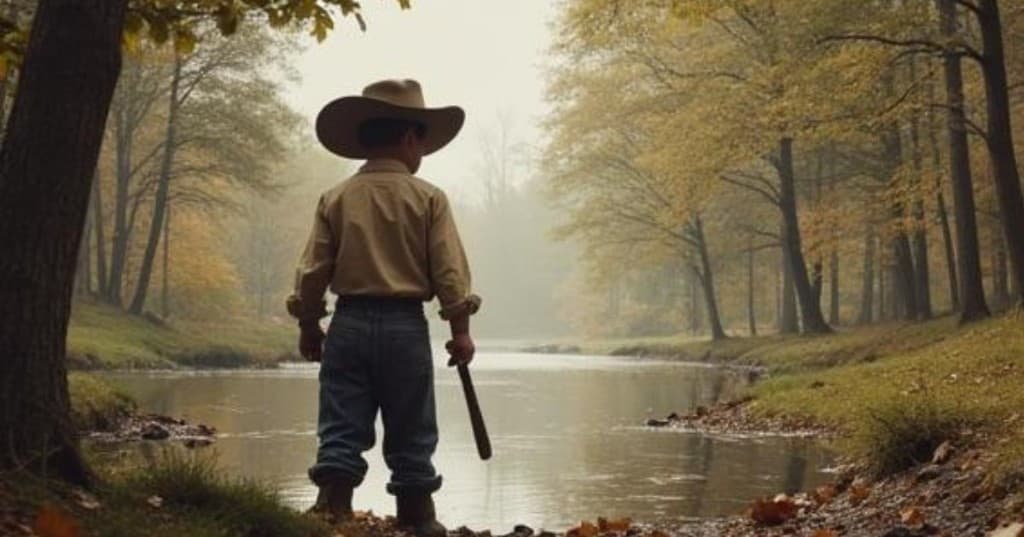
Play Is the Training; The Cave Is the Test
Adults tend to see Tom's elaborate games, pirate adventures, and treasure hunts as evidence of a boy who has not yet grown up. Twain sees them as preparation. Every game Tom plays is developing something: the tick game develops creative response to constraint. The pirate island develops logistical thinking and leadership. The treasure hunt develops systematic search. The cave reveals what all of it was for.
Lost in McDougal's Cave with Becky, Tom doesn't panic. He rations the candles. He explores systematically. He manages Becky's fear before his own. He finds the exit. This is not luck or instinct — it is the application of precisely the capabilities that his "idle" play was building. Twain's argument is direct: dismiss imagination and play as childish, and you dismiss the primary training ground for the skills that survival actually requires.
The book also shows imagination's honest limits: it cannot substitute for connection, cannot produce knowledge it was never given, and cannot transform real danger into pretend danger just because you prefer the latter. But within its limits, it is one of the most powerful tools a person can develop — for coping, for problem-solving, for holding another person together when your own composure is entirely constructed.
Chapter-by-Chapter Analysis
The Tick Game: Creativity Under Constraint
Trapped in school with nothing to do, Tom invents an elaborate game using a captive tick and a pin — a full sport with its own rules, played in silence, with complete absorption. He and Joe Harper lose themselves in it entirely, oblivious to the classroom around them. The game is invented from almost nothing.
“Tom's mind was made up. During that hour he did not take one single glance at the tick.”
Key Insight
Tom's tick game is a demonstration of what the creative mind does with constraint: not surrender to it, but transform it into the raw material of something new. Boredom is not the absence of stimulation — it is a creative challenge that the imaginative mind meets by generating its own. The students around Tom are also bored. Tom is the only one who does anything about it. The skill is the same whether the constraint is a classroom or an office or a hospital bed.
Running Away in Your Mind Before Your Body
Rejected by Becky, Tom retreats to the woods alone and builds an elaborate interior world — he will become a pirate, a soldier, an Indian chief. He rehearses each identity with complete commitment, trying them on like costumes, evaluating which one would make Becky suffer most effectively. The grief is real; the imaginative response is also real.
Key Insight
Tom's retreat to the woods is the imaginative equivalent of flight — a genuine coping response to emotional pain. He doesn't deny the heartbreak or distract from it. He transforms it: grief becomes fuel for elaborate fantasy, and the fantasy provides enough distance from the pain to make it survivable. This is what imagination does at its most functional: not escape, but transformation. The feeling is still there; its form has changed.
The Pirate Plan: Imagination as Social Organizing
Feeling misunderstood and unloved, Tom recruits Joe Harper and Huck Finn into a pirate adventure on Jackson's Island. The plan is imaginary in its premise — there is no pirate life awaiting them — but entirely real in its execution: they gather supplies, cross the river, set up camp, and live there for days. The fantasy becomes a physical reality.
“He was gloomy and desperate. He was a forsaken, friendless boy, he said; nobody loved him... Very well, then — let it be so.”
Key Insight
Tom's genius is his ability to make the imaginary executable. He doesn't just dream of being a pirate — he builds the conditions under which the dream can be inhabited. This is the creative skill at its most practical: not just conceiving of alternatives to the present situation, but taking the steps to make those alternatives real. Every entrepreneur, artist, and organizer who has ever built something starts from exactly this: the willingness to act on what isn't there yet as if it already is.
Morning on the Island: Inhabiting the Present
Tom wakes on Jackson's Island to a perfect morning — birds, river sounds, sunlight filtering through leaves. For a brief time, before homesickness and guilt arrive, he and the boys are completely present in the adventure they imagined. The island is exactly what Tom said it would be. The imagination was accurate.
“It's just the life for me. You don't have to get up early morning, and there's fishing, and swimming...”
Key Insight
The island chapter is important because the fantasy delivers. Tom imagined this — the freedom, the wildness, the beauty — and the reality matches. What Twain is showing is that imagination is not only wish-fulfillment or compensation for reality's limitations. It can be accurate preview: a way of knowing what you want before you can articulate it, and a guide toward experiences that will actually satisfy. The skill is developing enough trust in your imagination to follow it to the thing it is previewing.
When the Adventure Loses Its Shine
Homesickness sets in on the island. Joe Harper wants to go home. Even Tom's elaborate pirate universe cannot override the pull of the familiar. He works to keep the fantasy alive — new games, new rules, new excitement — but the gravity of real life is pulling harder than the invented world can push.
Key Insight
Imagination cannot permanently substitute for connection. Tom discovers on Jackson's Island that the fantasy has a load limit: it can carry boredom, heartbreak, and frustration, but it cannot indefinitely carry genuine longing for the people you love. This is the honest limit of escapism. The imaginative resources that serve Tom so well in smaller crises reveal their ceiling when the missing thing is not stimulation but belonging. Knowing this limit is as important as knowing the skill.
The Treasure Hunt: Imagination Meets Reality
Tom's obsession shifts to buried treasure — there is a real treasure somewhere, and he is going to find it using the correct methods (digging under a dead limb at midnight, haunted houses on Fridays). The methods come entirely from books and folklore. The conviction is absolute. The search is real.
Key Insight
Tom's treasure hunt is a study in the difference between imagined frameworks and actual evidence. He is completely certain about how to find treasure because he has read about it — the dead limb, the midnight hour, the haunted house are all confirmed by his sources. But the sources are fictional, and the confidence they produce is not earned by reality-testing. The lesson: imagination fueled by story can generate enormous conviction and energy. It can also send you digging in entirely the wrong place.
When Imagination Meets Actual Danger
Tom is torn between staying for Becky's picnic and watching for Huck's signal about Injun Joe. He chooses the picnic. Inside McDougal's Cave, the adventure Tom has always imagined — exploring the unknown, carrying a torch into darkness — is finally real and finally frightening. There is no adult nearby. The danger is not invented.
Key Insight
The cave episode is where Tom's imaginary adventuring meets the version that is actually dangerous, and the comparison is instructive. The games and fantasies have been rehearsal — training the mind to stay calm under pressure, to navigate uncertainty, to think rather than panic. In the cave, Tom draws on all of it. The imagination that seemed like idle play turns out to have been preparation. This is the deepest argument for play: it is not wasted time. It is the work of getting ready.
The Cave: Imagination Under Actual Stakes
Lost in McDougal's Cave for days, Tom stops playing adventurer and becomes one. He rations the candles, explores methodically, keeps Becky calm with invented optimism, and follows a kite-string of logic through the labyrinth. The imagination that constructed pirate worlds now constructs survival.
“Tom comforted Becky as best he could, and she said she would try to have hope.”
Key Insight
The cave is where we find out what Tom's imagination is actually made of. Without an audience, without a script, without the ability to quit and go home, the skills developed across years of play reveal their true purpose: the capacity to hold a vision of escape when reality is fully dark, to keep moving when there is no guarantee of direction, and to keep another person calm when your own calm is entirely performed. Play was the training. The cave is the test.
Applying This to Your Life
Boredom Is a Creative Invitation
Tom never accepts boredom as a final state. Every classroom, every church service, every dull situation is raw material. The adults around him manage boredom by waiting for it to end. Tom manages it by transforming the environment he's in. The skill is trainable: instead of reaching for distraction, ask what can be made from what is already here.
The Imaginary and the Real Are Not Separate Channels
Tom's pirate island becomes a real island. His imaginary treasure hunt finds a real treasure. His rehearsal for adventure in every game he plays becomes the actual capability that saves his life in the cave. The imaginative and the real are not opposed modes — imagination is how the real gets prepared for. The person who practices a scenario in their mind before it happens is not a dreamer. They are someone who will be ready.
Know the Load Limit of Escape
Imagination can transform boredom, process grief, and carry fear. It cannot substitute for the people you love. Jackson's Island is perfect in every way except that it is not home, and eventually that gap is insurmountable. Knowing the difference between imagination as tool (useful, powerful, trainable) and imagination as substitute (temporary at best, avoidance at worst) is what separates Tom's best uses of it from his worst.
The Central Lesson
Twain ends Tom Sawyer with Tom and Huck rich, famous, and pointed toward adult life. But the book's real argument is for what they built in the years before: the imagination that turned chores into theater, heartbreak into adventure, and a cave lost in darkness into a problem to be solved. The cave is not a metaphor. It is a test. And Tom passes it because every foolish, elaborate, extravagant game he ever played was, in fact, practice.
Related Themes in Tom Sawyer
Lessons Hidden in Play
What Tom's adventures actually teach about risk, consequence, and growing up
Courage That Costs You
The moments when Tom acts right despite the real personal price
Mastering Persuasion
Tom's social genius — from the fence con to his most calculated charms
The Weight of Secrets
The Muff Potter arc and what happens when you know the truth and stay silent