
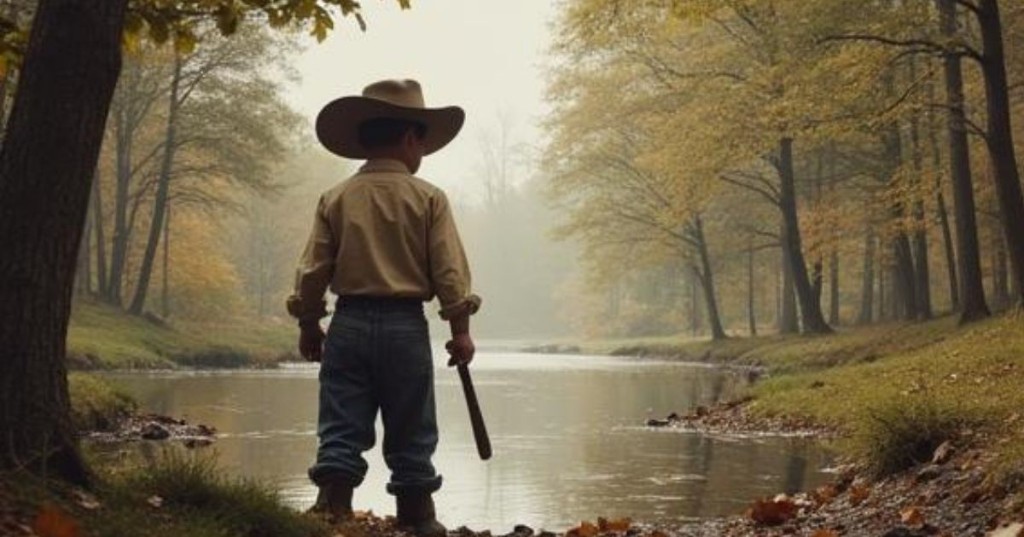
An excerpt from the original text.(complete · 2539 words)
he first thing Tom heard on Friday morning was a glad piece of
news—Judge Thatcher’s family had come back to town the night before.
Both Injun Joe and the treasure sunk into secondary importance for a
moment, and Becky took the chief place in the boy’s interest. He saw her
and they had an exhausting good time playing “hispy” and “gully-keeper”
with a crowd of their schoolmates. The day was completed and crowned in
a peculiarly satisfactory way: Becky teased her mother to appoint
the next day for the long-promised and long-delayed picnic, and she
consented. The child’s delight was boundless; and Tom’s not more
moderate. The invitations were sent out before sunset, and straightway
the young folks of the village were thrown into a fever of preparation
and pleasurable anticipation. Tom’s excitement enabled him to keep
awake until a pretty late hour, and he had good hopes of hearing Huck’s
“maow,” and of having his treasure to astonish Becky and the picnickers
with, next day; but he was disappointed. No signal came that night.
Morning came, eventually, and by ten or eleven o’clock a giddy and
rollicking company were gathered at Judge Thatcher’s, and everything was
ready for a start. It was not the custom for elderly people to mar the
picnics with their presence. The children were considered safe enough
under the wings of a few young ladies of eighteen and a few young
gentlemen of twenty-three or thereabouts. The old steam ferry-boat was
chartered for the occasion; presently the gay throng filed up the main
street laden with provision-baskets. Sid was sick and had to miss
the fun; Mary remained at home to entertain him. The last thing Mrs.
Thatcher said to Becky, was:
“You’ll not get back till late. Perhaps you’d better stay all night with
some of the girls that live near the ferry-landing, child.”
“Then I’ll stay with Susy Harper, mamma.”
“Very well. And mind and behave yourself and don’t be any trouble.”
Presently, as they tripped along, Tom said to Becky:
“Say—I’ll tell you what we’ll do. ’Stead of going to Joe Harper’s we’ll
climb right up the hill and stop at the Widow Douglas’. She’ll have
ice-cream! She has it most every day—dead loads of it. And she’ll be
awful glad to have us.”
“Oh, that will be fun!”
Then Becky reflected a moment and said:
“But what will mamma say?”
“How’ll she ever know?”
The girl turned the idea over in her mind, and said reluctantly:
“I reckon it’s wrong—but—”
“But shucks! Your mother won’t know, and so what’s the harm? All she
wants is that you’ll be safe; and I bet you she’d ’a’ said go there if
she’d ’a’ thought of it. I know she would!”
The Widow Douglas’ splendid hospitality was a tempting bait. It and
Tom’s persuasions presently carried the day. So it was decided to say
nothing to anybody about the night’s programme. Presently it occurred to
Tom that maybe Huck might come this very night and give the signal. The
thought took a deal of the spirit out of his anticipations. Still he
could not bear to give up the fun at Widow Douglas’. And why should he
give it up, he reasoned—the signal did not come the night before, so
why should it be any more likely to come tonight? The sure fun of the
evening outweighed the uncertain treasure; and, boy-like, he determined
to yield to the stronger inclination and not allow himself to think of
the box of money another time that day.
Three miles below town the ferryboat stopped at the mouth of a woody
hollow and tied up. The crowd swarmed ashore and soon the forest
distances and craggy heights echoed far and near with shoutings and
laughter. All the different ways of getting hot and tired were gone
through with, and by-and-by the rovers straggled back to camp fortified
with responsible appetites, and then the destruction of the good things
began. After the feast there was a refreshing season of rest and chat in
the shade of spreading oaks. By-and-by somebody shouted:
“Who’s ready for the cave?”
Everybody was. Bundles of candles were procured, and straightway there
was a general scamper up the hill. The mouth of the cave was up the
hillside—an opening shaped like a letter A. Its massive oaken door stood
unbarred. Within was a small chamber, chilly as an icehouse, and walled
by Nature with solid limestone that was dewy with a cold sweat. It was
romantic and mysterious to stand here in the deep gloom and look out
upon the green valley shining in the sun. But the impressiveness of the
situation quickly wore off, and the romping began again. The moment
a candle was lighted there was a general rush upon the owner of it; a
struggle and a gallant defence followed, but the candle was soon knocked
down or blown out, and then there was a glad clamor of laughter and a
new chase. But all things have an end. By-and-by the procession went
filing down the steep descent of the main avenue, the flickering rank of
lights dimly revealing the lofty walls of rock almost to their point of
junction sixty feet overhead. This main avenue was not more than
eight or ten feet wide. Every few steps other lofty and still narrower
crevices branched from it on either hand—for McDougal’s cave was but a
vast labyrinth of crooked aisles that ran into each other and out again
and led nowhere. It was said that one might wander days and nights
together through its intricate tangle of rifts and chasms, and never
find the end of the cave; and that he might go down, and down, and
still down, into the earth, and it was just the same—labyrinth under
labyrinth, and no end to any of them. No man “knew” the cave. That was
an impossible thing. Most of the young men knew a portion of it, and it
was not customary to venture much beyond this known portion. Tom Sawyer
knew as much of the cave as any one.
The procession moved along the main avenue some three-quarters of
a mile, and then groups and couples began to slip aside into branch
avenues, fly along the dismal corridors, and take each other by surprise
at points where the corridors joined again. Parties were able to elude
each other for the space of half an hour without going beyond the
“known” ground.
By-and-by, one group after another came straggling back to the mouth
of the cave, panting, hilarious, smeared from head to foot with tallow
drippings, daubed with clay, and entirely delighted with the success of
the day. Then they were astonished to find that they had been taking
no note of time and that night was about at hand. The clanging bell had
been calling for half an hour. However, this sort of close to the day’s
adventures was romantic and therefore satisfactory. When the ferryboat
with her wild freight pushed into the stream, nobody cared sixpence for
the wasted time but the captain of the craft.
Huck was already upon his watch when the ferryboat’s lights went
glinting past the wharf. He heard no noise on board, for the young
people were as subdued and still as people usually are who are nearly
tired to death. He wondered what boat it was, and why she did not
stop at the wharf—and then he dropped her out of his mind and put his
attention upon his business. The night was growing cloudy and dark. Ten
o’clock came, and the noise of vehicles ceased, scattered lights began
to wink out, all straggling foot-passengers disappeared, the village
betook itself to its slumbers and left the small watcher alone with the
silence and the ghosts. Eleven o’clock came, and the tavern lights were
put out; darkness everywhere, now. Huck waited what seemed a weary long
time, but nothing happened. His faith was weakening. Was there any use?
Was there really any use? Why not give it up and turn in?
A noise fell upon his ear. He was all attention in an instant. The alley
door closed softly. He sprang to the corner of the brick store. The next
moment two men brushed by him, and one seemed to have something under
his arm. It must be that box! So they were going to remove the treasure.
Why call Tom now? It would be absurd—the men would get away with the box
and never be found again. No, he would stick to their wake and follow
them; he would trust to the darkness for security from discovery. So
communing with himself, Huck stepped out and glided along behind the
men, cat-like, with bare feet, allowing them to keep just far enough
ahead not to be invisible.
They moved up the river street three blocks, then turned to the left up
a crossstreet. They went straight ahead, then, until they came to the
path that led up Cardiff Hill; this they took. They passed by the old
Welshman’s house, halfway up the hill, without hesitating, and still
climbed upward. Good, thought Huck, they will bury it in the old quarry.
But they never stopped at the quarry. They passed on, up the summit.
They plunged into the narrow path between the tall sumach bushes, and
were at once hidden in the gloom. Huck closed up and shortened his
distance, now, for they would never be able to see him. He trotted along
awhile; then slackened his pace, fearing he was gaining too fast; moved
on a piece, then stopped altogether; listened; no sound; none, save that
he seemed to hear the beating of his own heart. The hooting of an
owl came over the hill—ominous sound! But no footsteps. Heavens, was
everything lost! He was about to spring with winged feet, when a man
cleared his throat not four feet from him! Huck’s heart shot into his
throat, but he swallowed it again; and then he stood there shaking as
if a dozen agues had taken charge of him at once, and so weak that he
thought he must surely fall to the ground. He knew where he was. He
knew he was within five steps of the stile leading into Widow Douglas’
grounds. Very well, he thought, let them bury it there; it won’t be hard
to find.
Now there was a voice—a very low voice—Injun Joe’s:
“Damn her, maybe she’s got company—there’s lights, late as it is.”
“I can’t see any.”
This was that stranger’s voice—the stranger of the haunted house. A
deadly chill went to Huck’s heart—this, then, was the “revenge” job! His
thought was, to fly. Then he remembered that the Widow Douglas had been
kind to him more than once, and maybe these men were going to murder
her. He wished he dared venture to warn her; but he knew he didn’t
dare—they might come and catch him. He thought all this and more in
the moment that elapsed between the stranger’s remark and Injun Joe’s
next—which was—
“Because the bush is in your way. Now—this way—now you see, don’t you?”
“Yes. Well, there is company there, I reckon. Better give it up.”
“Give it up, and I just leaving this country forever! Give it up and
maybe never have another chance. I tell you again, as I’ve told you
before, I don’t care for her swag—you may have it. But her husband was
rough on me—many times he was rough on me—and mainly he was the justice
of the peace that jugged me for a vagrant. And that ain’t all. It ain’t
a millionth part of it! He had me horsewhipped!—horsewhipped in
front of the jail, like a nigger!—with all the town looking on!
Horsewhipped!—do you understand? He took advantage of me and died. But
I’ll take it out of her.”
“Oh, don’t kill her! Don’t do that!”
“Kill? Who said anything about killing? I would kill him if he was
here; but not her. When you want to get revenge on a woman you don’t
kill her—bosh! you go for her looks. You slit her nostrils—you notch her
ears like a sow!”
“By God, that’s—”
“Keep your opinion to yourself! It will be safest for you. I’ll tie her
to the bed. If she bleeds to death, is that my fault? I’ll not cry, if
she does. My friend, you’ll help me in this thing—for my sake—that’s
why you’re here—I mightn’t be able alone. If you flinch, I’ll kill you.
Do you understand that? And if I have to kill you, I’ll kill her—and
then I reckon nobody’ll ever know much about who done this business.”
“Well, if it’s got to be done, let’s get at it. The quicker the
better—I’m all in a shiver.”
“Do it now? And company there? Look here—I’ll get suspicious of you,
first thing you know. No—we’ll wait till the lights are out—there’s no
hurry.”
Huck felt that a silence was going to ensue—a thing still more awful
than any amount of murderous talk; so he held his breath and stepped
gingerly back; planted his foot carefully and firmly, after balancing,
one-legged, in a precarious way and almost toppling over, first on one
side and then on the other. He took another step back, with the same
elaboration and the same risks; then another and another, and—a twig
snapped under his foot! His breath stopped and he listened. There was no
sound—the stillness was perfect. His gratitude was measureless. Now he
turned in his tracks, between the walls of sumach bushes—turned
himself as carefully as if he were a ship—and then stepped quickly but
cautiously along. When he emerged at the quarry he felt secure, and
so he picked up his nimble heels and flew. Down, down he sped, till he
reached the Welshman’s. He banged at the door, and presently the heads
of the old man and his two stalwart sons were thrust from windows.
“What’s the row there? Who’s banging? What do you want?”
“Let me in—quick! I’ll tell everything.”
“Why, who are you?”
“Huckleberry Finn—quick, let me in!”
“Huckleberry Finn, indeed! It ain’t a name to open many doors, I judge!
But let him in, lads, and let’s see what’s the trouble.”
“Please don’t ever tell I told you,” were Huck’s first words when he got
in. “Please don’t—I’d be killed, sure—but the widow’s been good friends
to me sometimes, and I want to tell—I will tell if you’ll promise you
won’t ever say it was me.”
“By George, he has got something to tell, or he wouldn’t act so!”
exclaimed the old man; “out with it and nobody here’ll ever tell, lad.”
Three minutes later the old man and his sons, well armed, were up the
hill, and just entering the sumach path on tiptoe, their weapons in
their hands. Huck accompanied them no further. He hid behind a great
bowlder and fell to listening. There was a lagging, anxious silence, and
then all of a sudden there was an explosion of firearms and a cry.
Huck waited for no particulars. He sprang away and sped down the hill as
fast as his legs could carry him.
Master this chapter. Complete your experience
Purchase the complete book to access all chapters and support classic literature
As an Amazon Associate, we earn a small commission from qualifying purchases at no additional cost to you.
Available in paperback, hardcover, and e-book formats
Let's Analyse the Pattern
When different commitments demand incompatible actions, forcing you to choose which relationship or principle to honor.
Why This Matters
Connect literature to life
This chapter teaches how to identify when multiple people or principles demand your attention simultaneously, forcing difficult choices.
Practice This Today
This week, notice when you feel pulled between different commitments—write down what each loyalty is based on and which one was earned through genuine care rather than convenience.
Now let's explore the literary elements.
Key Quotes & Analysis
"The first thing Tom heard on Friday morning was a glad piece of news—Judge Thatcher's family had come back to town the night before."
Context: Opening the chapter as Tom learns Becky has returned
This immediately establishes the conflict between Tom's treasure hunt with Huck and his desire to be with Becky. The word 'glad' shows how quickly his priorities shift when romance enters the picture, revealing the power of immediate emotional rewards over uncertain future gains.
In Today's Words:
The best news Tom could get was that his crush was back in town.
"Both Injun Joe and the treasure sunk into secondary importance for a moment, and Becky took the chief place in the boy's interest."
Context: Describing how Tom's priorities instantly change
This perfectly captures how young people can completely shift focus when something emotionally compelling appears. It also shows Tom's pattern of living in the moment rather than thinking strategically about long-term consequences or commitments to friends.
In Today's Words:
Suddenly nothing mattered except spending time with the girl he liked.
"I ain't going to tell, and I ain't going back there anyways—they'd kill me for knowing it."
Context: Huck explaining to the Welshman why he can't reveal how he knows about the danger
This shows Huck's realistic understanding of the deadly consequences he faces for getting involved. Yet despite this fear, he still chose to warn about the danger, proving that true courage means acting despite terror, not acting without fear.
In Today's Words:
I can't tell you how I know this because they'll kill me if they find out I snitched.
Thematic Threads
Class
In This Chapter
Huck's outsider status makes him witness to criminal plans that respectable society doesn't see
Development
Evolved from earlier chapters where class determined social access—now it determines moral responsibility
In Your Life:
Your position outside certain social circles might give you perspective others miss
Courage
In This Chapter
Huck transforms from fearful observer to active hero by warning the Welshman despite mortal danger
Development
Introduced here as genuine moral courage versus Tom's earlier performative bravery
In Your Life:
Real courage happens when you act despite fear to protect someone who can't protect themselves
Identity
In This Chapter
Tom chooses his identity as Becky's boyfriend over treasure hunter; Huck chooses protector over survivor
Development
Continues theme of boys defining themselves through their choices and relationships
In Your Life:
The moments when your values conflict reveal who you really choose to be
Consequences
In This Chapter
McDougal's Cave represents how one wrong turn leads to being lost forever
Development
Evolved from earlier mischief with minor consequences to life-or-death stakes
In Your Life:
Some decisions create situations where there's no easy way back to safety
Human Decency
In This Chapter
Widow Douglas's simple kindness to Huck creates loyalty strong enough to risk his life
Development
Introduced here as the power of treating outcasts with basic respect
In Your Life:
Small acts of kindness to people society overlooks can create profound gratitude and loyalty
You now have the context. Time to form your own thoughts.
Discussion Questions
- 1
Tom chooses the picnic over treasure hunting when both opportunities arise at once. What does his choice reveal about how he weighs certain fun against uncertain rewards?
analysis • surface - 2
Huck risks his life to warn the Welshman about the threat to Widow Douglas, even though she's not family or close friend. What drives him to choose danger over his own safety?
analysis • medium - 3
Think about a time when you had competing loyalties - maybe between work and family, or between two friends who needed you at the same time. How did you decide which commitment to honor?
application • medium - 4
Huck's decision-making process shows him weighing the widow's past kindness against his current fear. When you face competing loyalties, what framework could you use to decide which one deserves priority?
application • deep - 5
Both boys face moments where they must choose between self-interest and helping others. What does their different responses teach us about how people develop moral courage?
reflection • deep
Critical Thinking Exercise
Map Your Competing Loyalties
Draw three circles representing your main loyalties (family, work, friends, community, etc.). Write situations where these loyalties have conflicted in the past month. For each conflict, identify which loyalty you chose and why. Look for patterns in your decision-making - do you always choose the same type of loyalty, or does something else guide your choices?
Consider:
- •Notice if you tend to choose immediate needs over long-term relationships, or vice versa
- •Consider whether fear or guilt drives your choices more than genuine values
- •Look for loyalties that were earned through kindness versus those you feel obligated to honor
Journaling Prompt
Write about a time when honoring one loyalty meant disappointing another. What did that experience teach you about your own values and priorities?
Coming Up Next...
Chapter 30: When Truth Slips Out
Dawn breaks with Huck returning to the Welshman's house, desperate to learn if his warning saved Widow Douglas. But the night's violence has set other wheels in motion, and the consequences of everyone's choices are about to unfold.



