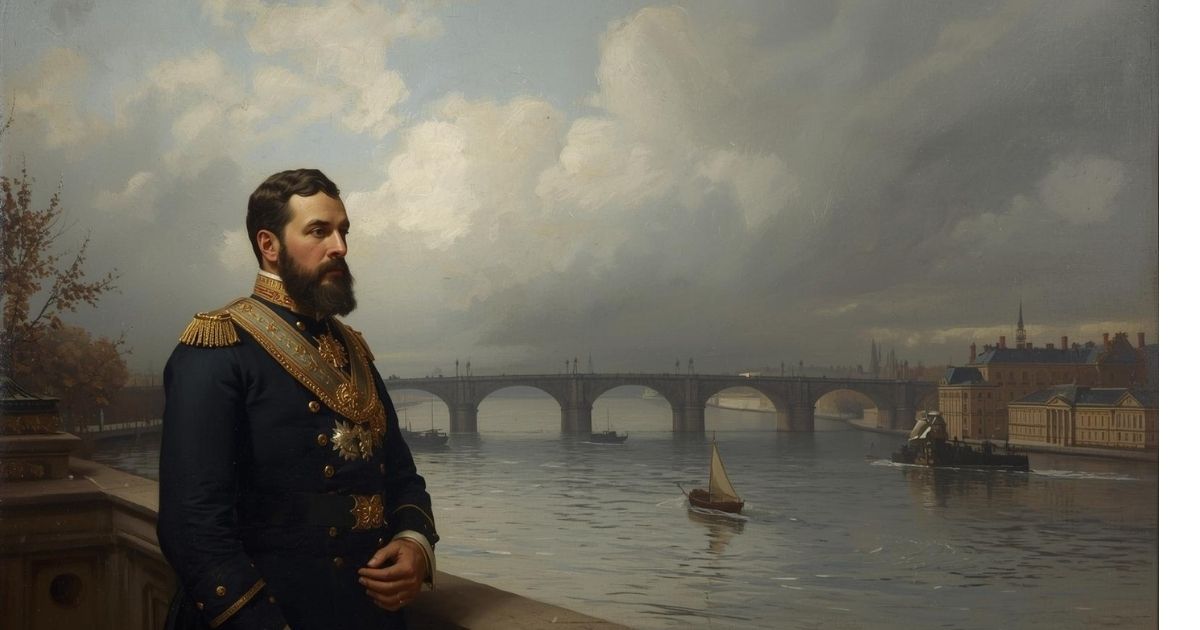
An excerpt from the original text.(complete · 7626 words)
his same morning dawned for the prince pregnant with no less painful
presentiments,—which fact his physical state was, of course, quite
enough to account for; but he was so indefinably melancholy,—his
sadness could not attach itself to anything in particular, and this
tormented him more than anything else. Of course certain facts stood
before him, clear and painful, but his sadness went beyond all that he
could remember or imagine; he realized that he was powerless to console
himself unaided. Little by little he began to develop the expectation
that this day something important, something decisive, was to happen to
him.
His attack of yesterday had been a slight one. Excepting some little
heaviness in the head and pain in the limbs, he did not feel any
particular effects. His brain worked all right, though his soul was
heavy within him.
He rose late, and immediately upon waking remembered all about the
previous evening; he also remembered, though not quite so clearly, how,
half an hour after his fit, he had been carried home.
He soon heard that a messenger from the Epanchins’ had already been to
inquire after him. At half-past eleven another arrived; and this
pleased him.
Vera Lebedeff was one of the first to come to see him and offer her
services. No sooner did she catch sight of him than she burst into
tears; but when he tried to soothe her she began to laugh. He was quite
struck by the girl’s deep sympathy for him; he seized her hand and
kissed it. Vera flushed crimson.
“Oh, don’t, don’t!” she exclaimed in alarm, snatching her hand away.
She went hastily out of the room in a state of strange confusion.
Lebedeff also came to see the prince, in a great hurry to get away to
the “deceased,” as he called General Ivolgin, who was alive still, but
very ill. Colia also turned up, and begged the prince for pity’s sake
to tell him all he knew about his father which had been concealed from
him till now. He said he had found out nearly everything since
yesterday; the poor boy was in a state of deep affliction. With all the
sympathy which he could bring into play, the prince told Colia the
whole story without reserve, detailing the facts as clearly as he
could. The tale struck Colia like a thunderbolt. He could not speak. He
listened silently, and cried softly to himself the while. The prince
perceived that this was an impression which would last for the whole of
the boy’s life. He made haste to explain his view of the matter, and
pointed out that the old man’s approaching death was probably brought
on by horror at the thought of his action; and that it was not everyone
who was capable of such a feeling.
Colia’s eyes flashed as he listened.
“Gania and Varia and Ptitsin are a worthless lot! I shall not quarrel
with them; but from this moment our feet shall not travel the same
road. Oh, prince, I have felt much that is quite new to me since
yesterday! It is a lesson for me. I shall now consider my mother as
entirely my responsibility; though she may be safe enough with Varia.
Still, meat and drink is not everything.”
He jumped up and hurried off, remembering suddenly that he was wanted
at his father’s bedside; but before he went out of the room he inquired
hastily after the prince’s health, and receiving the latter’s reply,
added:
“Isn’t there something else, prince? I heard yesterday, but I have no
right to talk about this... If you ever want a true friend and
servant—neither you nor I are so very happy, are we?—come to me. I
won’t ask you questions, though.”
He ran off and left the prince more dejected than ever.
Everyone seemed to be speaking prophetically, hinting at some
misfortune or sorrow to come; they had all looked at him as though they
knew something which he did not know. Lebedeff had asked questions,
Colia had hinted, and Vera had shed tears. What was it?
At last, with a sigh of annoyance, he said to himself that it was
nothing but his own cursed sickly suspicion. His face lighted up with
joy when, at about two o’clock, he espied the Epanchins coming along to
pay him a short visit, “just for a minute.” They really had only come
for a minute.
Lizabetha Prokofievna had announced, directly after lunch, that they
would all take a walk together. The information was given in the form
of a command, without explanation, drily and abruptly. All had issued
forth in obedience to the mandate; that is, the girls, mamma, and
Prince S. Lizabetha Prokofievna went off in a direction exactly
contrary to the usual one, and all understood very well what she was
driving at, but held their peace, fearing to irritate the good lady.
She, as though anxious to avoid any conversation, walked ahead, silent
and alone. At last Adelaida remarked that it was no use racing along at
such a pace, and that she could not keep up with her mother.
“Look here,” said Lizabetha Prokofievna, turning round suddenly; “we
are passing his house. Whatever Aglaya may think, and in spite of
anything that may happen, he is not a stranger to us; besides which, he
is ill and in misfortune. I, for one, shall call in and see him. Let
anyone follow me who cares to.”
Of course every one of them followed her.
The prince hastened to apologize, very properly, for yesterday’s mishap
with the vase, and for the scene generally.
“Oh, that’s nothing,” replied Lizabetha; “I’m not sorry for the vase,
I’m sorry for you. H’m! so you can see that there was a ‘scene,’ can
you? Well, it doesn’t matter much, for everyone must realize now that
it is impossible to be hard on you. Well, au revoir. I advise you to
have a walk, and then go to sleep again if you can. Come in as usual,
if you feel inclined; and be assured, once for all, whatever happens,
and whatever may have happened, you shall always remain the friend of
the family—mine, at all events. I can answer for myself.”
In response to this challenge all the others chimed in and re-echoed
mamma’s sentiments.
And so they took their departure; but in this hasty and kindly designed
visit there was hidden a fund of cruelty which Lizabetha Prokofievna
never dreamed of. In the words “as usual,” and again in her added,
“mine, at all events,” there seemed an ominous knell of some evil to
come.
The prince began to think of Aglaya. She had certainly given him a
wonderful smile, both at coming and again at leave-taking, but had not
said a word, not even when the others all professed their friendship
for him. She had looked very intently at him, but that was all. Her
face had been paler than usual; she looked as though she had slept
badly.
The prince made up his mind that he would make a point of going there
“as usual,” tonight, and looked feverishly at his watch.
Vera came in three minutes after the Epanchins had left. “Lef
Nicolaievitch,” she said, “Aglaya Ivanovna has just given me a message
for you.”
The prince trembled.
“Is it a note?”
“No, a verbal message; she had hardly time even for that. She begs you
earnestly not to go out of the house for a single moment all to-day,
until seven o’clock in the evening. It may have been nine; I didn’t
quite hear.”
“But—but, why is this? What does it mean?”
“I don’t know at all; but she said I was to tell you particularly.”
“Did she say that?”
“Not those very words. She only just had time to whisper as she went
by; but by the way she looked at me I knew it was important. She looked
at me in a way that made my heart stop beating.”
The prince asked a few more questions, and though he learned nothing
else, he became more and more agitated.
Left alone, he lay down on the sofa, and began to think.
“Perhaps,” he thought, “someone is to be with them until nine tonight
and she is afraid that I may come and make a fool of myself again, in
public.” So he spent his time longing for the evening and looking at
his watch. But the clearing-up of the mystery came long before the
evening, and came in the form of a new and agonizing riddle.
Half an hour after the Epanchins had gone, Hippolyte arrived, so tired
that, almost unconscious, he sank into a chair, and broke into such a
fit of coughing that he could not stop. He coughed till the blood came.
His eyes glittered, and two red spots on his cheeks grew brighter and
brighter. The prince murmured something to him, but Hippolyte only
signed that he must be left alone for a while, and sat silent. At last
he came to himself.
“I am off,” he said, hoarsely, and with difficulty.
“Shall I see you home?” asked the prince, rising from his seat, but
suddenly stopping short as he remembered Aglaya’s prohibition against
leaving the house. Hippolyte laughed.
“I don’t mean that I am going to leave your house,” he continued, still
gasping and coughing. “On the contrary, I thought it absolutely
necessary to come and see you; otherwise I should not have troubled
you. I am off there, you know, and this time I believe, seriously, that
I am off! It’s all over. I did not come here for sympathy, believe me.
I lay down this morning at ten o’clock with the intention of not rising
again before that time; but I thought it over and rose just once more
in order to come here; from which you may deduce that I had some reason
for wishing to come.”
“It grieves me to see you so, Hippolyte. Why didn’t you send me a
message? I would have come up and saved you this trouble.”
“Well, well! Enough! You’ve pitied me, and that’s all that good manners
exact. I forgot, how are you?”
“I’m all right; yesterday I was a little—”
“I know, I heard; the china vase caught it! I’m sorry I wasn’t there.
I’ve come about something important. In the first place I had, the
pleasure of seeing Gavrila Ardalionovitch and Aglaya Ivanovna enjoying
a rendezvous on the green bench in the park. I was astonished to see
what a fool a man can look. I remarked upon the fact to Aglaya Ivanovna
when he had gone. I don’t think anything ever surprises you, prince!”
added Hippolyte, gazing incredulously at the prince’s calm demeanour.
“To be astonished by nothing is a sign, they say, of a great intellect.
In my opinion it would serve equally well as a sign of great
foolishness. I am not hinting about you; pardon me! I am very
unfortunate today in my expressions.”
“I knew yesterday that Gavrila Ardalionovitch—” began the prince, and
paused in evident confusion, though Hippolyte had shown annoyance at
his betraying no surprise.
“You knew it? Come, that’s news! But no—perhaps better not tell me. And
were you a witness of the meeting?”
“If you were there yourself you must have known that I was not
there!”
“Oh! but you may have been sitting behind the bushes somewhere.
However, I am very glad, on your account, of course. I was beginning to
be afraid that Mr. Gania—might have the preference!”
“May I ask you, Hippolyte, not to talk of this subject? And not to use
such expressions?”
“Especially as you know all, eh?”
“You are wrong. I know scarcely anything, and Aglaya Ivanovna is aware
that I know nothing. I knew nothing whatever about this meeting. You
say there was a meeting. Very well; let’s leave it so—”
“Why, what do you mean? You said you knew, and now suddenly you know
nothing! You say ‘very well; let’s leave it so.’ But I say, don’t be so
confiding, especially as you know nothing. You are confiding simply
because you know nothing. But do you know what these good people have
in their minds’ eye—Gania and his sister? Perhaps you are suspicious?
Well, well, I’ll drop the subject!” he added, hastily, observing the
prince’s impatient gesture. “But I’ve come to you on my own business; I
wish to make you a clear explanation. What a nuisance it is that one
cannot die without explanations! I have made such a quantity of them
already. Do you wish to hear what I have to say?”
“Speak away, I am listening.”
“Very well, but I’ll change my mind, and begin about Gania. Just fancy
to begin with, if you can, that I, too, was given an appointment at the
green bench today! However, I won’t deceive you; I asked for the
appointment. I said I had a secret to disclose. I don’t know whether I
came there too early, I think I must have; but scarcely had I sat down
beside Aglaya Ivanovna than I saw Gavrila Ardalionovitch and his sister
Varia coming along, arm in arm, just as though they were enjoying a
morning walk together. Both of them seemed very much astonished, not to
say disturbed, at seeing me; they evidently had not expected the
pleasure. Aglaya Ivanovna blushed up, and was actually a little
confused. I don’t know whether it was merely because I was there, or
whether Gania’s beauty was too much for her! But anyway, she turned
crimson, and then finished up the business in a very funny manner. She
jumped up from her seat, bowed back to Gania, smiled to Varia, and
suddenly observed: ‘I only came here to express my gratitude for all
your kind wishes on my behalf, and to say that if I find I need your
services, believe me—’ Here she bowed them away, as it were, and they
both marched off again, looking very foolish. Gania evidently could not
make head nor tail of the matter, and turned as red as a lobster; but
Varia understood at once that they must get away as quickly as they
could, so she dragged Gania away; she is a great deal cleverer than he
is. As for myself, I went there to arrange a meeting to be held between
Aglaya Ivanovna and Nastasia Philipovna.”
“Nastasia Philipovna!” cried the prince.
“Aha! I think you are growing less cool, my friend, and are beginning
to be a trifle surprised, aren’t you? I’m glad that you are not above
ordinary human feelings, for once. I’ll console you a little now, after
your consternation. See what I get for serving a young and high-souled
maiden! This morning I received a slap in the face from the lady!”
“A—a moral one?” asked the prince, involuntarily.
“Yes—not a physical one! I don’t suppose anyone—even a woman—would
raise a hand against me now. Even Gania would hesitate! I did think at
one time yesterday, that he would fly at me, though. I bet anything
that I know what you are thinking of now! You are thinking: ‘Of course
one can’t strike the little wretch, but one could suffocate him with a
pillow, or a wet towel, when he is asleep! One ought to get rid of
him somehow.’ I can see in your face that you are thinking that at this
very second.”
“I never thought of such a thing for a moment,” said the prince, with
disgust.
“I don’t know—I dreamed last night that I was being suffocated with a
wet cloth by—somebody. I’ll tell you who it was—Rogojin! What do you
think, can a man be suffocated with a wet cloth?”
“I don’t know.”
“I’ve heard so. Well, we’ll leave that question just now. Why am I a
scandal-monger? Why did she call me a scandal-monger? And mind, after
she had heard every word I had to tell her, and had asked all sorts of
questions besides—but such is the way of women. For her sake I
entered into relations with Rogojin—an interesting man! At her
request I arranged a personal interview between herself and Nastasia
Philipovna. Could she have been angry because I hinted that she was
enjoying Nastasia Philipovna’s ‘leavings’? Why, I have been impressing
it upon her all this while for her own good. Two letters have I written
her in that strain, and I began straight off today about its being
humiliating for her. Besides, the word ‘leavings’ is not my invention.
At all events, they all used it at Gania’s, and she used it herself. So
why am I a scandal-monger? I see—I see you are tremendously amused, at
this moment! Probably you are laughing at me and fitting those silly
lines to my case—
“‘Maybe sad Love upon his setting smiles, And with vain hopes his
farewell hour beguiles.’
“Ha, ha, ha!”
Hippolyte suddenly burst into a fit of hysterical laughter, which
turned into a choking cough.
“Observe,” he gasped, through his coughing, “what a fellow Gania is! He
talks about Nastasia’s ‘leavings,’ but what does he want to take
himself?”
The prince sat silent for a long while. His mind was filled with dread
and horror.
“You spoke of a meeting with Nastasia Philipovna,” he said at last, in
a low voice.
“Oh—come! Surely you must know that there is to be a meeting today
between Nastasia and Aglaya Ivanovna, and that Nastasia has been sent
for on purpose, through Rogojin, from St. Petersburg? It has been
brought about by invitation of Aglaya Ivanovna and my own efforts, and
Nastasia is at this moment with Rogojin, not far from here—at Dana
Alexeyevna’s—that curious friend of hers; and to this questionable
house Aglaya Ivanovna is to proceed for a friendly chat with Nastasia
Philipovna, and for the settlement of several problems. They are going
to play at arithmetic—didn’t you know about it? Word of honour?”
“It’s a most improbable story.”
“Oh, very well! if it’s improbable—it is—that’s all! And yet—where
should you have heard it? Though I must say, if a fly crosses the room
it’s known all over the place here. However, I’ve warned you, and you
may be grateful to me. Well—au revoir—probably in the next world! One
more thing—don’t think that I am telling you all this for your sake.
Oh, dear, no! Do you know that I dedicated my confession to Aglaya
Ivanovna? I did though, and how she took it, ha, ha! Oh, no! I am not
acting from any high, exalted motives. But though I may have behaved
like a cad to you, I have not done her any harm. I don’t apologize
for my words about ‘leavings’ and all that. I am atoning for that, you
see, by telling you the place and time of the meeting. Goodbye! You had
better take your measures, if you are worthy the name of a man! The
meeting is fixed for this evening—that’s certain.”
Hippolyte walked towards the door, but the prince called him back and
he stopped.
“Then you think Aglaya Ivanovna herself intends to go to Nastasia
Philipovna’s tonight?” he asked, and bright hectic spots came out on
his cheeks and forehead.
“I don’t know absolutely for certain; but in all probability it is so,”
replied Hippolyte, looking round. “Nastasia would hardly go to her; and
they can’t meet at Gania’s, with a man nearly dead in the house.”
“It’s impossible, for that very reason,” said the prince. “How would
she get out if she wished to? You don’t know the habits of that
house—she could not get away alone to Nastasia Philipovna’s! It’s all
nonsense!”
“Look here, my dear prince, no one jumps out of the window if they can
help it; but when there’s a fire, the dandiest gentleman or the finest
lady in the world will skip out! When the moment comes, and there’s
nothing else to be done—our young lady will go to Nastasia
Philipovna’s! Don’t they let the young ladies out of the house alone,
then?”
“I didn’t mean that exactly.”
“If you didn’t mean that, then she has only to go down the steps and
walk off, and she need never come back unless she chooses: Ships are
burned behind one sometimes, and one doesn’t care to return whence one
came. Life need not consist only of lunches, and dinners, and Prince
S’s. It strikes me you take Aglaya Ivanovna for some conventional
boarding-school girl. I said so to her, and she quite agreed with me.
Wait till seven or eight o’clock. In your place I would send someone
there to keep watch, so as to seize the exact moment when she steps out
of the house. Send Colia. He’ll play the spy with pleasure—for you at
least. Ha, ha, ha!”
Hippolyte went out.
There was no reason for the prince to set anyone to watch, even if he
had been capable of such a thing. Aglaya’s command that he should stay
at home all day seemed almost explained now. Perhaps she meant to call
for him, herself, or it might be, of course, that she was anxious to
make sure of his not coming there, and therefore bade him remain at
home. His head whirled; the whole room seemed to be turning round. He
lay down on the sofa, and closed his eyes.
One way or the other the question was to be decided at last—finally.
Oh, no, he did not think of Aglaya as a boarding-school miss, or a
young lady of the conventional type! He had long since feared that she
might take some such step as this. But why did she wish to see
Nastasia?
He shivered all over as he lay; he was in high fever again.
No! he did not account her a child. Certain of her looks, certain of
her words, of late, had filled him with apprehension. At times it had
struck him that she was putting too great a restraint upon herself, and
he remembered that he had been alarmed to observe this. He had tried,
all these days, to drive away the heavy thoughts that oppressed him;
but what was the hidden mystery of that soul? The question had long
tormented him, although he implicitly trusted that soul. And now it was
all to be cleared up. It was a dreadful thought. And “that woman”
again! Why did he always feel as though “that woman” were fated to
appear at each critical moment of his life, and tear the thread of his
destiny like a bit of rotten string? That he always had felt this he
was ready to swear, although he was half delirious at the moment. If he
had tried to forget her, all this time, it was simply because he was
afraid of her. Did he love the woman or hate her? This question he did
not once ask himself today; his heart was quite pure. He knew whom he
loved. He was not so much afraid of this meeting, nor of its
strangeness, nor of any reasons there might be for it, unknown to
himself; he was afraid of the woman herself, Nastasia Philipovna. He
remembered, some days afterwards, how during all those fevered hours he
had seen but her eyes, her look, had heard her voice, strange
words of hers; he remembered that this was so, although he could not
recollect the details of his thoughts.
He could remember that Vera brought him some dinner, and that he took
it; but whether he slept after dinner, or no, he could not recollect.
He only knew that he began to distinguish things clearly from the
moment when Aglaya suddenly appeared, and he jumped up from the sofa
and went to meet her. It was just a quarter past seven then.
Aglaya was quite alone, and dressed, apparently hastily, in a light
mantle. Her face was pale, as it had been in the morning, and her eyes
were ablaze with bright but subdued fire. He had never seen that
expression in her eyes before.
She gazed attentively at him.
“You are quite ready, I observe,” she said, with absolute composure,
“dressed, and your hat in your hand. I see somebody has thought fit to
warn you, and I know who. Hippolyte?”
“Yes, he told me,” said the prince, feeling only half alive.
“Come then. You know, I suppose, that you must escort me there? You are
well enough to go out, aren’t you?”
“I am well enough; but is it really possible?—”
He broke off abruptly, and could not add another word. This was his one
attempt to stop the mad child, and, after he had made it, he followed
her as though he had no will of his own. Confused as his thoughts were,
he was, nevertheless, capable of realizing the fact that if he did not
go with her, she would go alone, and so he must go with her at all
hazards. He guessed the strength of her determination; it was beyond
him to check it.
They walked silently, and said scarcely a word all the way. He only
noticed that she seemed to know the road very well; and once, when he
thought it better to go by a certain lane, and remarked to her that it
would be quieter and less public, she only said, “it’s all the same,”
and went on.
When they were almost arrived at Daria Alexeyevna’s house (it was a
large wooden structure of ancient date), a gorgeously-dressed lady and
a young girl came out of it. Both these ladies took their seats in a
carriage, which was waiting at the door, talking and laughing loudly
the while, and drove away without appearing to notice the approaching
couple.
No sooner had the carriage driven off than the door opened once more;
and Rogojin, who had apparently been awaiting them, let them in and
closed it after them.
“There is not another soul in the house now excepting our four selves,”
he said aloud, looking at the prince in a strange way.
Nastasia Philipovna was waiting for them in the first room they went
into. She was dressed very simply, in black.
She rose at their entrance, but did not smile or give her hand, even to
the prince. Her anxious eyes were fixed upon Aglaya. Both sat down, at
a little distance from one another—Aglaya on the sofa, in the corner of
the room, Nastasia by the window. The prince and Rogojin remained
standing, and were not invited to sit.
Muishkin glanced at Rogojin in perplexity, but the latter only smiled
disagreeably, and said nothing. The silence continued for some few
moments.
An ominous expression passed over Nastasia Philipovna’s face, of a
sudden. It became obstinate-looking, hard, and full of hatred; but she
did not take her eyes off her visitors for a moment.
Aglaya was clearly confused, but not frightened. On entering she had
merely glanced momentarily at her rival, and then had sat still, with
her eyes on the ground, apparently in thought. Once or twice she
glanced casually round the room. A shade of disgust was visible in her
expression; she looked as though she were afraid of contamination in
this place.
She mechanically arranged her dress, and fidgeted uncomfortably,
eventually changing her seat to the other end of the sofa. Probably she
was unconscious of her own movements; but this very unconsciousness
added to the offensiveness of their suggested meaning.
At length she looked straight into Nastasia’s eyes, and instantly read
all there was to read in her rival’s expression. Woman understood
woman! Aglaya shuddered.
“You know of course why I requested this meeting?” she said at last,
quietly, and pausing twice in the delivery of this very short sentence.
“No—I know nothing about it,” said Nastasia, drily and abruptly.
Aglaya blushed. Perhaps it struck her as very strange and impossible
that she should really be sitting here and waiting for “that woman’s”
reply to her question.
At the first sound of Nastasia’s voice a shudder ran through her frame.
Of course “that woman” observed and took in all this.
“You know quite well, but you are pretending to be ignorant,” said
Aglaya, very low, with her eyes on the ground.
“Why should I?” asked Nastasia Philipovna, smiling slightly.
“You want to take advantage of my position, now that I am in your
house,” continued Aglaya, awkwardly.
“For that position you are to blame and not I,” said Nastasia,
flaring up suddenly. “I did not invite you, but you me; and to this
moment I am quite ignorant as to why I am thus honoured.”
Aglaya raised her head haughtily.
“Restrain your tongue!” she said. “I did not come here to fight you
with your own weapons.
“Oh! then you did come ‘to fight,’ I may conclude? Dear me!—and I
thought you were cleverer—”
They looked at one another with undisguised malice. One of these women
had written to the other, so lately, such letters as we have seen; and
it all was dispersed at their first meeting. Yet it appeared that not
one of the four persons in the room considered this in any degree
strange.
The prince who, up to yesterday, would not have believed that he could
even dream of such an impossible scene as this, stood and listened and
looked on, and felt as though he had long foreseen it all. The most
fantastic dream seemed suddenly to have been metamorphosed into the
most vivid reality.
One of these women so despised the other, and so longed to express her
contempt for her (perhaps she had only come for that very purpose, as
Rogojin said next day), that howsoever fantastical was the other woman,
howsoever afflicted her spirit and disturbed her understanding, no
preconceived idea of hers could possibly stand up against that deadly
feminine contempt of her rival. The prince felt sure that Nastasia
would say nothing about the letters herself; but he could judge by her
flashing eyes and the expression of her face what the thought of those
letters must be costing her at this moment. He would have given half
his life to prevent Aglaya from speaking of them. But Aglaya suddenly
braced herself up, and seemed to master herself fully, all in an
instant.
“You have not quite understood,” she said. “I did not come to quarrel
with you, though I do not like you. I came to speak to you as... as one
human being to another. I came with my mind made up as to what I had to
say to you, and I shall not change my intention, although you may
misunderstand me. So much the worse for you, not for myself! I wished
to reply to all you have written to me and to reply personally, because
I think that is the more convenient way. Listen to my reply to all your
letters. I began to be sorry for Prince Lef Nicolaievitch on the very
day I made his acquaintance, and when I heard—afterwards—of all that
took place at your house in the evening, I was sorry for him because he
was such a simple-minded man, and because he, in the simplicity of his
soul, believed that he could be happy with a woman of your character.
What I feared actually took place; you could not love him, you tortured
him, and threw him over. You could not love him because you are too
proud—no, not proud, that is an error; because you are too vain—no, not
quite that either; too self-loving; you are self-loving to madness.
Your letters to me are a proof of it. You could not love so simple a
soul as his, and perhaps in your heart you despised him and laughed at
him. All you could love was your shame and the perpetual thought that
you were disgraced and insulted. If you were less shameful, or had no
cause at all for shame, you would be still more unhappy than you are
now.”
Aglaya brought out these thronging words with great satisfaction. They
came from her lips hurriedly and impetuously, and had been prepared and
thought out long ago, even before she had ever dreamed of the present
meeting. She watched with eagerness the effect of her speech as shown
in Nastasia’s face, which was distorted with agitation.
“You remember,” she continued, “he wrote me a letter at that time; he
says you know all about that letter and that you even read it. I
understand all by means of this letter, and understand it correctly. He
has since confirmed it all to me—what I now say to you, word for word.
After receiving his letter I waited; I guessed that you would soon come
back here, because you could never do without Petersburg; you are still
too young and lovely for the provinces. However, this is not my own
idea,” she added, blushing dreadfully; and from this moment the colour
never left her cheeks to the end of her speech. “When I next saw the
prince I began to feel terribly pained and hurt on his account. Do not
laugh; if you laugh you are unworthy of understanding what I say.”
“Surely you see that I am not laughing,” said Nastasia, sadly and
sternly.
“However, it’s all the same to me; laugh or not, just as you please.
When I asked him about you, he told me that he had long since ceased to
love you, that the very recollection of you was a torture to him, but
that he was sorry for you; and that when he thought of you his heart
was pierced. I ought to tell you that I never in my life met a man
anything like him for noble simplicity of mind and for boundless
trustfulness. I guessed that anyone who liked could deceive him, and
that he would immediately forgive anyone who did deceive him; and it
was for this that I grew to love him—”
Aglaya paused for a moment, as though suddenly brought up in
astonishment that she could have said these words, but at the same time
a great pride shone in her eyes, like a defiant assertion that it would
not matter to her if “this woman” laughed in her face for the admission
just made.
“I have told you all now, and of course you understand what I wish of
you.”
“Perhaps I do; but tell me yourself,” said Nastasia Philipovna,
quietly.
Aglaya flushed up angrily.
“I wished to find out from you,” she said, firmly, “by what right you
dare to meddle with his feelings for me? By what right you dared send
me those letters? By what right do you continually remind both me and
him that you love him, after you yourself threw him over and ran away
from him in so insulting and shameful a way?”
“I never told either him or you that I loved him!” replied Nastasia
Philipovna, with an effort. “And—and I did run away from him—you are
right there,” she added, scarcely audibly.
“Never told either him or me?” cried Aglaya. “How about your letters?
Who asked you to try to persuade me to marry him? Was not that a
declaration from you? Why do you force yourself upon us in this way? I
confess I thought at first that you were anxious to arouse an aversion
for him in my heart by your meddling, in order that I might give him
up; and it was only afterwards that I guessed the truth. You imagined
that you were doing an heroic action! How could you spare any love for
him, when you love your own vanity to such an extent? Why could you not
simply go away from here, instead of writing me those absurd letters?
Why do you not now marry that generous man who loves you, and has
done you the honour of offering you his hand? It is plain enough why;
if you marry Rogojin you lose your grievance; you will have nothing
more to complain of. You will be receiving too much honour. Evgenie
Pavlovitch was saying the other day that you had read too many poems
and are too well educated for—your position; and that you live in
idleness. Add to this your vanity, and, there you have reason enough—”
“And do you not live in idleness?”
Things had come to this unexpected point too quickly. Unexpected
because Nastasia Philipovna, on her way to Pavlofsk, had thought and
considered a good deal, and had expected something different, though
perhaps not altogether good, from this interview; but Aglaya had been
carried away by her own outburst, just as a rolling stone gathers
impetus as it careers downhill, and could not restrain herself in the
satisfaction of revenge.
It was strange, Nastasia Philipovna felt, to see Aglaya like this. She
gazed at her, and could hardly believe her eyes and ears for a moment
or two.
Whether she were a woman who had read too many poems, as Evgenie
Pavlovitch supposed, or whether she were mad, as the prince had assured
Aglaya, at all events, this was a woman who, in spite of her
occasionally cynical and audacious manner, was far more refined and
trustful and sensitive than appeared. There was a certain amount of
romantic dreaminess and caprice in her, but with the fantastic was
mingled much that was strong and deep.
The prince realized this, and great suffering expressed itself in his
face.
Aglaya observed it, and trembled with anger.
“How dare you speak so to me?” she said, with a haughtiness which was
quite indescribable, replying to Nastasia’s last remark.
“You must have misunderstood what I said,” said Nastasia, in some
surprise.
“If you wished to preserve your good name, why did you not give up
your—your ‘guardian,’ Totski, without all that theatrical posturing?”
said Aglaya, suddenly a propos of nothing.
“What do you know of my position, that you dare to judge me?” cried
Nastasia, quivering with rage, and growing terribly white.
“I know this much, that you did not go out to honest work, but went
away with a rich man, Rogojin, in order to pose as a fallen angel. I
don’t wonder that Totski was nearly driven to suicide by such a fallen
angel.”
“Silence!” cried Nastasia Philipovna. “You are about as fit to
understand me as the housemaid here, who bore witness against her lover
in court the other day. She would understand me better than you do.”
“Probably an honest girl living by her own toil. Why do you speak of a
housemaid so contemptuously?”
“I do not despise toil; I despise you when you speak of toil.”
“If you had cared to be an honest woman, you would have gone out as a
laundress.”
Both had risen, and were gazing at one another with pallid faces.
“Aglaya, don’t! This is unfair,” cried the prince, deeply distressed.
Rogojin was not smiling now; he sat and listened with folded arms, and
lips tight compressed.
“There, look at her,” cried Nastasia, trembling with passion. “Look at
this young lady! And I imagined her an angel! Did you come to me
without your governess, Aglaya Ivanovna? Oh, fie, now shall I just tell
you why you came here today? Shall I tell you without any
embellishments? You came because you were afraid of me!”
“Afraid of you?” asked Aglaya, beside herself with naive amazement
that the other should dare talk to her like this.
“Yes, me, of course! Of course you were afraid of me, or you would not
have decided to come. You cannot despise one you fear. And to think
that I have actually esteemed you up to this very moment! Do you know
why you are afraid of me, and what is your object now? You wished to
satisfy yourself with your own eyes as to which he loves best, myself
or you, because you are fearfully jealous.”
“He has told me already that he hates you,” murmured Aglaya, scarcely
audibly.
“Perhaps, perhaps! I am not worthy of him, I know. But I think you are
lying, all the same. He cannot hate me, and he cannot have said so. I
am ready to forgive you, in consideration of your position; but I
confess I thought better of you. I thought you were wiser, and more
beautiful, too; I did, indeed! Well, take your treasure! See, he is
gazing at you, he can’t recollect himself. Take him, but on one
condition; go away at once, this instant!”
She fell back into a chair, and burst into tears. But suddenly some new
expression blazed in her eyes. She stared fixedly at Aglaya, and rose
from her seat.
“Or would you like me to bid him, bid him, do you hear, command
him, now, at once, to throw you up, and remain mine for ever? Shall I?
He will stay, and he will marry me too, and you shall trot home all
alone. Shall I?—shall I say the word?” she screamed like a madwoman,
scarcely believing herself that she could really pronounce such wild
words.
Aglaya had made for the door in terror, but she stopped at the
threshold, and listened. “Shall I turn Rogojin off? Ha! ha! you thought
I would marry him for your benefit, did you? Why, I’ll call out now,
if you like, in your presence, ‘Rogojin, get out!’ and say to the
prince, ‘Do you remember what you promised me?’ Heavens! what a fool I
have been to humiliate myself before them! Why, prince, you yourself
gave me your word that you would marry me whatever happened, and would
never abandon me. You said you loved me and would forgive me all,
and—and resp—yes, you even said that! I only ran away from you in order
to set you free, and now I don’t care to let you go again. Why does she
treat me so—so shamefully? I am not a loose woman—ask Rogojin there!
He’ll tell you. Will you go again now that she has insulted me, before
your eyes, too; turn away from me and lead her away, arm-in-arm? May
you be accursed too, for you were the only one I trusted among them
all! Go away, Rogojin, I don’t want you,” she continued, blind with
fury, and forcing the words out with dry lips and distorted features,
evidently not believing a single word of her own tirade, but, at the
same time, doing her utmost to prolong the moment of self-deception.
The outburst was so terribly violent that the prince thought it would
have killed her.
“There he is!” she shrieked again, pointing to the prince and
addressing Aglaya. “There he is! and if he does not approach me at once
and take me and throw you over, then have him for your own—I give him
up to you! I don’t want him!”
Both she and Aglaya stood and waited as though in expectation, and both
looked at the prince like madwomen.
But he, perhaps, did not understand the full force of this challenge;
in fact, it is certain he did not. All he could see was the poor
despairing face which, as he had said to Aglaya, “had pierced his heart
for ever.”
He could bear it no longer, and with a look of entreaty, mingled with
reproach, he addressed Aglaya, pointing to Nastasia the while:
“How can you?” he murmured; “she is so unhappy.”
But he had no time to say another word before Aglaya’s terrible look
bereft him of speech. In that look was embodied so dreadful a suffering
and so deadly a hatred, that he gave a cry and flew to her; but it was
too late.
She could not hold out long enough even to witness his movement in her
direction. She had hidden her face in her hands, cried once “Oh, my
God!” and rushed out of the room. Rogojin followed her to undo the
bolts of the door and let her out into the street.
The prince made a rush after her, but he was caught and held back. The
distorted, livid face of Nastasia gazed at him reproachfully, and her
blue lips whispered:
“What? Would you go to her—to her?”
She fell senseless into his arms.
He raised her, carried her into the room, placed her in an arm-chair,
and stood over her, stupefied. On the table stood a tumbler of water.
Rogojin, who now returned, took this and sprinkled a little in her
face. She opened her eyes, but for a moment she understood nothing.
Suddenly she looked around, shuddered, gave a loud cry, and threw
herself in the prince’s arms.
“Mine, mine!” she cried. “Has the proud young lady gone? Ha, ha, ha!”
she laughed hysterically. “And I had given him up to her! Why—why did
I? Mad—mad! Get away, Rogojin! Ha, ha, ha!”
Rogojin stared intently at them; then he took his hat, and without a
word, left the room.
A few moments later, the prince was seated by Nastasia on the sofa,
gazing into her eyes and stroking her face and hair, as he would a
little child’s. He laughed when she laughed, and was ready to cry when
she cried. He did not speak, but listened to her excited, disconnected
chatter, hardly understanding a word of it the while. No sooner did he
detect the slightest appearance of complaining, or weeping, or
reproaching, than he would smile at her kindly, and begin stroking her
hair and her cheeks, soothing and consoling her once more, as if she
were a child.
Master this chapter. Complete your experience
Purchase the complete book to access all chapters and support classic literature
As an Amazon Associate, we earn a small commission from qualifying purchases at no additional cost to you.
Available in paperback, hardcover, and e-book formats
Let's Analyse the Pattern
Creating artificial either-or situations that force immediate choices serving the manipulator's emotional needs rather than actual circumstances.
Why This Matters
Connect literature to life
This chapter teaches how to recognize when someone weaponizes your compassion or natural responses to force decisions that serve their agenda.
Practice This Today
Next time someone demands an immediate choice between two options, pause and ask: 'What would happen if I took more time to think about this?'
Now let's explore the literary elements.
Key Quotes & Analysis
"This day something important, something decisive, was to happen to him."
Context: The prince's premonition upon waking after his epileptic fit
Shows how people sometimes sense when their lives are about to change dramatically. The prince's intuition proves correct as this day destroys his relationship with Aglaya forever.
In Today's Words:
He had that gut feeling that today was going to be a game-changer.
"You came to see what I was like, because you were afraid of me!"
Context: Nastasia reveals the real reason Aglaya wanted this confrontation
Cuts through all pretense to expose that this meeting was driven by fear and insecurity, not courage. Sometimes the most devastating truths come from our enemies.
In Today's Words:
You only came here because you were scared of me and needed to size up the competition.
"Mine! Mine!"
Context: Her cry of triumph when the prince moves toward her instead of following Aglaya
Shows how winning can feel hollow when it comes from someone else's destruction. Her victory is also her tragedy, as she's won someone who came to her out of pity, not love.
In Today's Words:
I won! He chose me!
Thematic Threads
Control
In This Chapter
Both women attempt to control the prince through manufactured crisis and public confrontation
Development
Evolved from subtle manipulation to open warfare for dominance
In Your Life:
You see this when people create drama to force your attention and decisions on their timeline
Compassion
In This Chapter
The prince's natural empathy toward suffering becomes his downfall in this manipulative scenario
Development
His consistent trait now exploited as weakness by desperate people
In Your Life:
Your kindness can be weaponized against you by those who mistake compassion for commitment
Class
In This Chapter
Aglaya attacks Nastasia's character through social respectability standards and moral superiority
Development
Class warfare becomes personal destruction as social positions crumble
In Your Life:
You encounter this when people use social status or moral high ground to shame your choices
Identity
In This Chapter
Both women define themselves entirely through their relationship to the prince rather than independent worth
Development
Identity crisis deepens as external validation becomes sole source of self-worth
In Your Life:
You risk this when your entire sense of self depends on one relationship or role
Desperation
In This Chapter
The confrontation reveals how fear of loss drives people to destroy what they claim to want
Development
Escalated from subtle competition to mutual destruction through desperate measures
In Your Life:
You see this when fear makes people sabotage their own goals through extreme actions
You now have the context. Time to form your own thoughts.
Discussion Questions
- 1
Why do both Aglaya and Nastasia demand that the prince choose between them immediately, in front of everyone?
analysis • surface - 2
How does the prince's natural compassion get used against him in this confrontation?
analysis • medium - 3
Where have you seen people create false either-or situations to force decisions in your own life?
application • medium - 4
What could the prince have done differently when faced with this impossible choice?
application • deep - 5
What does this chapter reveal about how desperation can make people manipulative, even when they're suffering?
reflection • deep
Critical Thinking Exercise
Spot the False Binary
Think of a recent situation where someone pressured you to make an immediate choice between two options. Write down what the person said, what they claimed would happen if you didn't choose, and who really benefited from your quick decision. Then rewrite the scenario with three alternative responses that refuse the false framework.
Consider:
- •Notice the emotional pressure tactics used to rush your decision
- •Identify what the person was really afraid of or trying to control
- •Consider what information you might have been missing in the moment
Journaling Prompt
Write about a time when you successfully refused to accept someone's either-or ultimatum. How did you handle it, and what happened as a result?
Coming Up Next...
Chapter 47: The Price of Impossible Love
In the aftermath of this devastating confrontation, the prince must face the consequences of his choice. As word spreads through society about the scandal, relationships fracture and new alliances form in unexpected ways.