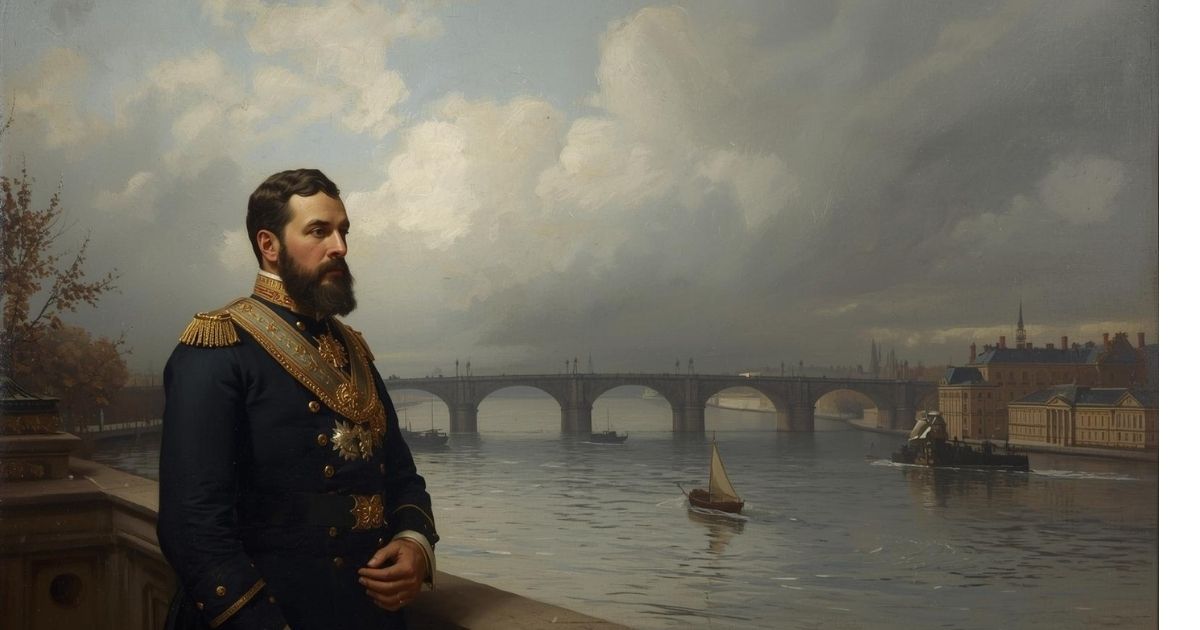
An excerpt from the original text.(complete · 4826 words)
fortnight had passed since the events recorded in the last chapter,
and the position of the actors in our story had become so changed that
it is almost impossible for us to continue the tale without some few
explanations. Yet we feel that we ought to limit ourselves to the
simple record of facts, without much attempt at explanation, for a very
patent reason: because we ourselves have the greatest possible
difficulty in accounting for the facts to be recorded. Such a statement
on our part may appear strange to the reader. How is anyone to tell a
story which he cannot understand himself? In order to keep clear of a
false position, we had perhaps better give an example of what we mean;
and probably the intelligent reader will soon understand the
difficulty. More especially are we inclined to take this course since
the example will constitute a distinct march forward of our story, and
will not hinder the progress of the events remaining to be recorded.
During the next fortnight—that is, through the early part of July—the
history of our hero was circulated in the form of strange, diverting,
most unlikely-sounding stories, which passed from mouth to mouth,
through the streets and villas adjoining those inhabited by Lebedeff,
Ptitsin, Nastasia Philipovna and the Epanchins; in fact, pretty well
through the whole town and its environs. All society—both the
inhabitants of the place and those who came down of an evening for the
music—had got hold of one and the same story, in a thousand varieties
of detail—as to how a certain young prince had raised a terrible
scandal in a most respectable household, had thrown over a daughter of
the family, to whom he was engaged, and had been captured by a woman of
shady reputation whom he was determined to marry at once—breaking off
all old ties for the satisfaction of his insane idea; and, in spite of
the public indignation roused by his action, the marriage was to take
place in Pavlofsk openly and publicly, and the prince had announced his
intention of going through with it with head erect and looking the
whole world in the face. The story was so artfully adorned with
scandalous details, and persons of so great eminence and importance
were apparently mixed up in it, while, at the same time, the evidence
was so circumstantial, that it was no wonder the matter gave food for
plenty of curiosity and gossip.
According to the reports of the most talented gossip-mongers—those who,
in every class of society, are always in haste to explain every event
to their neighbours—the young gentleman concerned was of good family—a
prince—fairly rich—weak of intellect, but a democrat and a dabbler in
the Nihilism of the period, as exposed by Mr. Turgenieff. He could
hardly talk Russian, but had fallen in love with one of the Miss
Epanchins, and his suit met with so much encouragement that he had been
received in the house as the recognized bridegroom-to-be of the young
lady. But like the Frenchman of whom the story is told that he studied
for holy orders, took all the oaths, was ordained priest, and next
morning wrote to his bishop informing him that, as he did not believe
in God and considered it wrong to deceive the people and live upon
their pockets, he begged to surrender the orders conferred upon him the
day before, and to inform his lordship that he was sending this letter
to the public press,—like this Frenchman, the prince played a false
game. It was rumoured that he had purposely waited for the solemn
occasion of a large evening party at the house of his future bride, at
which he was introduced to several eminent persons, in order publicly
to make known his ideas and opinions, and thereby insult the
“big-wigs,” and to throw over his bride as offensively as possible; and
that, resisting the servants who were told off to turn him out of the
house, he had seized and thrown down a magnificent china vase. As a
characteristic addition to the above, it was currently reported that
the young prince really loved the lady to whom he was engaged, and had
thrown her over out of purely Nihilistic motives, with the intention of
giving himself the satisfaction of marrying a fallen woman in the face
of all the world, thereby publishing his opinion that there is no
distinction between virtuous and disreputable women, but that all women
are alike, free; and a “fallen” woman, indeed, somewhat superior to a
virtuous one.
It was declared that he believed in no classes or anything else,
excepting “the woman question.”
All this looked likely enough, and was accepted as fact by most of the
inhabitants of the place, especially as it was borne out, more or less,
by daily occurrences.
Of course much was said that could not be determined absolutely. For
instance, it was reported that the poor girl had so loved her future
husband that she had followed him to the house of the other woman, the
day after she had been thrown over; others said that he had insisted on
her coming, himself, in order to shame and insult her by his taunts and
Nihilistic confessions when she reached the house. However all these
things might be, the public interest in the matter grew daily,
especially as it became clear that the scandalous wedding was
undoubtedly to take place.
So that if our readers were to ask an explanation, not of the wild
reports about the prince’s Nihilistic opinions, but simply as to how
such a marriage could possibly satisfy his real aspirations, or as to
the spiritual condition of our hero at this time, we confess that we
should have great difficulty in giving the required information.
All we know is, that the marriage really was arranged, and that the
prince had commissioned Lebedeff and Keller to look after all the
necessary business connected with it; that he had requested them to
spare no expense; that Nastasia herself was hurrying on the wedding;
that Keller was to be the prince’s best man, at his own earnest
request; and that Burdovsky was to give Nastasia away, to his great
delight. The wedding was to take place before the middle of July.
But, besides the above, we are cognizant of certain other undoubted
facts, which puzzle us a good deal because they seem flatly to
contradict the foregoing.
We suspect, for instance, that having commissioned Lebedeff and the
others, as above, the prince immediately forgot all about masters of
ceremonies and even the ceremony itself; and we feel quite certain that
in making these arrangements he did so in order that he might
absolutely escape all thought of the wedding, and even forget its
approach if he could, by detailing all business concerning it to
others.
What did he think of all this time, then? What did he wish for? There
is no doubt that he was a perfectly free agent all through, and that as
far as Nastasia was concerned, there was no force of any kind brought
to bear on him. Nastasia wished for a speedy marriage, true!—but the
prince agreed at once to her proposals; he agreed, in fact, so casually
that anyone might suppose he was but acceding to the most simple and
ordinary suggestion.
There are many strange circumstances such as this before us; but in our
opinion they do but deepen the mystery, and do not in the smallest
degree help us to understand the case.
However, let us take one more example. Thus, we know for a fact that
during the whole of this fortnight the prince spent all his days and
evenings with Nastasia; he walked with her, drove with her; he began to
be restless whenever he passed an hour without seeing her—in fact, to
all appearances, he sincerely loved her. He would listen to her for
hours at a time with a quiet smile on his face, scarcely saying a word
himself. And yet we know, equally certainly, that during this period he
several times set off, suddenly, to the Epanchins’, not concealing the
fact from Nastasia Philipovna, and driving the latter to absolute
despair. We know also that he was not received at the Epanchins’ so
long as they remained at Pavlofsk, and that he was not allowed an
interview with Aglaya;—but next day he would set off once more on the
same errand, apparently quite oblivious of the fact of yesterday’s
visit having been a failure,—and, of course, meeting with another
refusal. We know, too, that exactly an hour after Aglaya had fled from
Nastasia Philipovna’s house on that fateful evening, the prince was at
the Epanchins’,—and that his appearance there had been the cause of the
greatest consternation and dismay; for Aglaya had not been home, and
the family only discovered then, for the first time, that the two of
them had been to Nastasia’s house together.
It was said that Elizabetha Prokofievna and her daughters had there and
then denounced the prince in the strongest terms, and had refused any
further acquaintance and friendship with him; their rage and
denunciations being redoubled when Varia Ardalionovna suddenly arrived
and stated that Aglaya had been at her house in a terrible state of
mind for the last hour, and that she refused to come home.
This last item of news, which disturbed Lizabetha Prokofievna more than
anything else, was perfectly true. On leaving Nastasia’s, Aglaya had
felt that she would rather die than face her people, and had therefore
gone straight to Nina Alexandrovna’s. On receiving the news, Lizabetha
and her daughters and the general all rushed off to Aglaya, followed by
Prince Lef Nicolaievitch—undeterred by his recent dismissal; but
through Varia he was refused a sight of Aglaya here also. The end of
the episode was that when Aglaya saw her mother and sisters crying over
her and not uttering a word of reproach, she had flung herself into
their arms and gone straight home with them.
It was said that Gania managed to make a fool of himself even on this
occasion; for, finding himself alone with Aglaya for a minute or two
when Varia had gone to the Epanchins’, he had thought it a fitting
opportunity to make a declaration of his love, and on hearing this
Aglaya, in spite of her state of mind at the time, had suddenly burst
out laughing, and had put a strange question to him. She asked him
whether he would consent to hold his finger to a lighted candle in
proof of his devotion! Gania—it was said—looked so comically bewildered
that Aglaya had almost laughed herself into hysterics, and had rushed
out of the room and upstairs,—where her parents had found her.
Hippolyte told the prince this last story, sending for him on purpose.
When Muishkin heard about the candle and Gania’s finger he had laughed
so that he had quite astonished Hippolyte,—and then shuddered and burst
into tears. The prince’s condition during those days was strange and
perturbed. Hippolyte plainly declared that he thought he was out of his
mind;—this, however, was hardly to be relied upon.
Offering all these facts to our readers and refusing to explain them,
we do not for a moment desire to justify our hero’s conduct. On the
contrary, we are quite prepared to feel our share of the indignation
which his behaviour aroused in the hearts of his friends. Even Vera
Lebedeff was angry with him for a while; so was Colia; so was Keller,
until he was selected for best man; so was Lebedeff himself,—who began
to intrigue against him out of pure irritation;—but of this anon. In
fact we are in full accord with certain forcible words spoken to the
prince by Evgenie Pavlovitch, quite unceremoniously, during the course
of a friendly conversation, six or seven days after the events at
Nastasia Philipovna’s house.
We may remark here that not only the Epanchins themselves, but all who
had anything to do with them, thought it right to break with the prince
in consequence of his conduct. Prince S. even went so far as to turn
away and cut him dead in the street. But Evgenie Pavlovitch was not
afraid to compromise himself by paying the prince a visit, and did so,
in spite of the fact that he had recommenced to visit at the
Epanchins’, where he was received with redoubled hospitality and
kindness after the temporary estrangement.
Evgenie called upon the prince the day after that on which the
Epanchins left Pavlofsk. He knew of all the current rumours,—in fact,
he had probably contributed to them himself. The prince was delighted
to see him, and immediately began to speak of the Epanchins;—which
simple and straightforward opening quite took Evgenie’s fancy, so that
he melted at once, and plunged in medias res without ceremony.
The prince did not know, up to this, that the Epanchins had left the
place. He grew very pale on hearing the news; but a moment later he
nodded his head, and said thoughtfully:
“I knew it was bound to be so.” Then he added quickly:
“Where have they gone to?”
Evgenie meanwhile observed him attentively, and the rapidity of the
questions, their simplicity, the prince’s candour, and at the same
time, his evident perplexity and mental agitation, surprised him
considerably. However, he told Muishkin all he could, kindly and in
detail. The prince hardly knew anything, for this was the first
informant from the household whom he had met since the estrangement.
Evgenie reported that Aglaya had been really ill, and that for two
nights she had not slept at all, owing to high fever; that now she was
better and out of serious danger, but still in a nervous, hysterical
state.
“It’s a good thing that there is peace in the house, at all events,” he
continued. “They never utter a hint about the past, not only in
Aglaya’s presence, but even among themselves. The old people are
talking of a trip abroad in the autumn, immediately after Adelaida’s
wedding; Aglaya received the news in silence.”
Evgenie himself was very likely going abroad also; so were Prince S.
and his wife, if affairs allowed of it; the general was to stay at
home. They were all at their estate of Colmina now, about twenty miles
or so from St. Petersburg. Princess Bielokonski had not returned to
Moscow yet, and was apparently staying on for reasons of her own.
Lizabetha Prokofievna had insisted that it was quite impossible to
remain in Pavlofsk after what had happened. Evgenie had told her of all
the rumours current in town about the affair; so that there could be no
talk of their going to their house on the Yelagin as yet.
“And in point of fact, prince,” added Evgenie Pavlovitch, “you must
allow that they could hardly have stayed here, considering that they
knew of all that went on at your place, and in the face of your daily
visits to their house, visits which you insisted upon making in spite
of their refusal to see you.”
“Yes—yes, quite so; you are quite right. I wished to see Aglaya
Ivanovna, you know!” said the prince, nodding his head.
“Oh, my dear fellow,” cried Evgenie, warmly, with real sorrow in his
voice, “how could you permit all that to come about as it has? Of
course, of course, I know it was all so unexpected. I admit that you,
only naturally, lost your head, and—and could not stop the foolish
girl; that was not in your power. I quite see so much; but you really
should have understood how seriously she cared for you. She could not
bear to share you with another; and you could bring yourself to throw
away and shatter such a treasure! Oh, prince, prince!”
“Yes, yes, you are quite right again,” said the poor prince, in anguish
of mind. “I was wrong, I know. But it was only Aglaya who looked on
Nastasia Philipovna so; no one else did, you know.”
“But that’s just the worst of it all, don’t you see, that there was
absolutely nothing serious about the matter in reality!” cried Evgenie,
beside himself: “Excuse me, prince, but I have thought over all this; I
have thought a great deal over it; I know all that had happened before;
I know all that took place six months since; and I know there was
nothing serious about the matter, it was but fancy, smoke, fantasy,
distorted by agitation, and only the alarmed jealousy of an absolutely
inexperienced girl could possibly have mistaken it for serious
reality.”
Here Evgenie Pavlovitch quite let himself go, and gave the reins to his
indignation.
Clearly and reasonably, and with great psychological insight, he drew a
picture of the prince’s past relations with Nastasia Philipovna.
Evgenie Pavlovitch always had a ready tongue, but on this occasion his
eloquence, surprised himself. “From the very beginning,” he said, “you
began with a lie; what began with a lie was bound to end with a lie;
such is the law of nature. I do not agree, in fact I am angry, when I
hear you called an idiot; you are far too intelligent to deserve such
an epithet; but you are so far strange as to be unlike others; that
you must allow, yourself. Now, I have come to the conclusion that the
basis of all that has happened, has been first of all your innate
inexperience (remark the expression ‘innate,’ prince). Then follows
your unheard-of simplicity of heart; then comes your absolute want of
sense of proportion (to this want you have several times confessed);
and lastly, a mass, an accumulation, of intellectual convictions which
you, in your unexampled honesty of soul, accept unquestionably as also
innate and natural and true. Admit, prince, that in your relations with
Nastasia Philipovna there has existed, from the very first, something
democratic, and the fascination, so to speak, of the ‘woman question’?
I know all about that scandalous scene at Nastasia Philipovna’s house
when Rogojin brought the money, six months ago. I’ll show you yourself
as in a looking-glass, if you like. I know exactly all that went on, in
every detail, and why things have turned out as they have. You
thirsted, while in Switzerland, for your home-country, for Russia; you
read, doubtless, many books about Russia, excellent books, I dare say,
but hurtful to you; and you arrived here; as it were, on fire with
the longing to be of service. Then, on the very day of your arrival,
they tell you a sad story of an ill-used woman; they tell you, a
knight, pure and without reproach, this tale of a poor woman! The same
day you actually see her; you are attracted by her beauty, her
fantastic, almost demoniacal, beauty—(I admit her beauty, of course).
“Add to all this your nervous nature, your epilepsy, and your sudden
arrival in a strange town—the day of meetings and of exciting scenes,
the day of unexpected acquaintanceships, the day of sudden actions, the
day of meeting with the three lovely Epanchin girls, and among them
Aglaya—add your fatigue, your excitement; add Nastasia’ s evening
party, and the tone of that party, and—what were you to expect of
yourself at such a moment as that?”
“Yes, yes, yes!” said the prince, once more, nodding his head, and
blushing slightly. “Yes, it was so, or nearly so—I know it. And
besides, you see, I had not slept the night before, in the train, or
the night before that, either, and I was very tired.”
“Of course, of course, quite so; that’s what I am driving at!”
continued Evgenie, excitedly. “It is as clear as possible, and most
comprehensible, that you, in your enthusiasm, should plunge headlong
into the first chance that came of publicly airing your great idea that
you, a prince, and a pure-living man, did not consider a woman
disgraced if the sin were not her own, but that of a disgusting social
libertine! Oh, heavens! it’s comprehensible enough, my dear prince, but
that is not the question, unfortunately! The question is, was there any
reality and truth in your feelings? Was it nature, or nothing but
intellectual enthusiasm? What do you think yourself? We are told, of
course, that a far worse woman was forgiven, but we don’t find that
she was told that she had done well, or that she was worthy of honour
and respect! Did not your common-sense show you what was the real state
of the case, a few months later? The question is now, not whether she
is an innocent woman (I do not insist one way or the other—I do not
wish to); but can her whole career justify such intolerable pride, such
insolent, rapacious egotism as she has shown? Forgive me, I am too
violent, perhaps, but—”
“Yes—I dare say it is all as you say; I dare say you are quite right,”
muttered the prince once more. “She is very sensitive and easily put
out, of course; but still, she...”
“She is worthy of sympathy? Is that what you wished to say, my good
fellow? But then, for the mere sake of vindicating her worthiness of
sympathy, you should not have insulted and offended a noble and
generous girl in her presence! This is a terrible exaggeration of
sympathy! How can you love a girl, and yet so humiliate her as to throw
her over for the sake of another woman, before the very eyes of that
other woman, when you have already made her a formal proposal of
marriage? And you did propose to her, you know; you did so before her
parents and sisters. Can you be an honest man, prince, if you act so? I
ask you! And did you not deceive that beautiful girl when you assured
her of your love?”
“Yes, you are quite right. Oh! I feel that I am very guilty!” said
Muishkin, in deepest distress.
“But as if that is enough!” cried Evgenie, indignantly. “As if it is
enough simply to say: ‘I know I am very guilty!’ You are to blame, and
yet you persevere in evil-doing. Where was your heart, I should like to
know, your christian heart, all that time? Did she look as though she
were suffering less, at that moment? You saw her face—was she suffering
less than the other woman? How could you see her suffering and allow it
to continue? How could you?”
“But I did not allow it,” murmured the wretched prince.
“How—what do you mean you didn’t allow?”
“Upon my word, I didn’t! To this moment I don’t know how it all
happened. I—I ran after Aglaya Ivanovna, but Nastasia Philipovna fell
down in a faint; and since that day they won’t let me see Aglaya—that’s
all I know.”
“It’s all the same; you ought to have run after Aglaya though the other
was fainting.”
“Yes, yes, I ought—but I couldn’t! She would have died—she would have
killed herself. You don’t know her; and I should have told Aglaya
everything afterwards—but I see, Evgenie Pavlovitch, you don’t know
all. Tell me now, why am I not allowed to see Aglaya? I should have
cleared it all up, you know. Neither of them kept to the real point,
you see. I could never explain what I mean to you, but I think I could
to Aglaya. Oh! my God, my God! You spoke just now of Aglaya’s face at
the moment when she ran away. Oh, my God! I remember it! Come along,
come along—quick!” He pulled at Evgenie’s coat-sleeve nervously and
excitedly, and rose from his chair.
“Where to?”
“Come to Aglaya—quick, quick!”
“But I told you she is not at Pavlofsk. And what would be the use if
she were?”
“Oh, she’ll understand, she’ll understand!” cried the prince, clasping
his hands. “She would understand that all this is not the point—not a
bit the real point—it is quite foreign to the real question.”
“How can it be foreign? You are going to be married, are you not?
Very well, then you are persisting in your course. Are you going to
marry her or not?”
“Yes, I shall marry her—yes.”
“Then why is it ‘not the point’?”
“Oh, no, it is not the point, not a bit. It makes no difference, my
marrying her—it means nothing.”
“How ‘means nothing’? You are talking nonsense, my friend. You are
marrying the woman you love in order to secure her happiness, and
Aglaya sees and knows it. How can you say that it’s ‘not the point’?”
“Her happiness? Oh, no! I am only marrying her—well, because she wished
it. It means nothing—it’s all the same. She would certainly have died.
I see now that that marriage with Rogojin was an insane idea. I
understand all now that I did not understand before; and, do you know,
when those two stood opposite to one another, I could not bear Nastasia
Philipovna’s face! You must know, Evgenie Pavlovitch, I have never told
anyone before—not even Aglaya—that I cannot bear Nastasia Philipovna’s
face.” (He lowered his voice mysteriously as he said this.) “You
described that evening at Nastasia Philipovna’s (six months since) very
accurately just now; but there is one thing which you did not mention,
and of which you took no account, because you do not know. I mean her
face—I looked at her face, you see. Even in the morning when I saw
her portrait, I felt that I could not bear to look at it. Now,
there’s Vera Lebedeff, for instance, her eyes are quite different, you
know. I’m afraid of her face!” he added, with real alarm.
“You are afraid of it?”
“Yes—she’s mad!” he whispered, growing pale.
“Do you know this for certain?” asked Evgenie, with the greatest
curiosity.
“Yes, for certain—quite for certain, now! I have discovered it
absolutely for certain, these last few days.”
“What are you doing, then?” cried Evgenie, in horror. “You must be
marrying her solely out of fear, then! I can’t make head or tail of
it, prince. Perhaps you don’t even love her?”
“Oh, no; I love her with all my soul. Why, she is a child! She’s a
child now—a real child. Oh! you know nothing about it at all, I see.”
“And are you assured, at the same time, that you love Aglaya too?”
“Yes—yes—oh; yes!”
“How so? Do you want to make out that you love them both?”
“Yes—yes—both! I do!”
“Excuse me, prince, but think what you are saying! Recollect yourself!”
“Without Aglaya—I—I must see Aglaya!—I shall die in my sleep very
soon—I thought I was dying in my sleep last night. Oh! if Aglaya only
knew all—I mean really, really all! Because she must know
all—that’s the first condition towards understanding. Why cannot we
ever know all about another, especially when that other has been
guilty? But I don’t know what I’m talking about—I’m so confused. You
pained me so dreadfully. Surely—surely Aglaya has not the same
expression now as she had at the moment when she ran away? Oh, yes! I
am guilty and I know it—I know it! Probably I am in fault all round—I
don’t quite know how—but I am in fault, no doubt. There is something
else, but I cannot explain it to you, Evgenie Pavlovitch. I have no
words; but Aglaya will understand. I have always believed Aglaya will
understand—I am assured she will.”
“No, prince, she will not. Aglaya loved like a woman, like a human
being, not like an abstract spirit. Do you know what, my poor prince?
The most probable explanation of the matter is that you never loved
either the one or the other in reality.”
“I don’t know—perhaps you are right in much that you have said, Evgenie
Pavlovitch. You are very wise, Evgenie Pavlovitch—oh! how my head is
beginning to ache again! Come to her, quick—for God’s sake, come!”
“But I tell you she is not in Pavlofsk! She’s in Colmina.”
“Oh, come to Colmina, then! Come—let us go at once!”
“No—no, impossible!” said Evgenie, rising.
“Look here—I’ll write a letter—take a letter for me!”
“No—no, prince; you must forgive me, but I can’t undertake any such
commissions! I really can’t.”
And so they parted.
Evgenie Pavlovitch left the house with strange convictions. He, too,
felt that the prince must be out of his mind.
“And what did he mean by that face—a face which he so fears, and yet
so loves? And meanwhile he really may die, as he says, without seeing
Aglaya, and she will never know how devotedly he loves her! Ha, ha, ha!
How does the fellow manage to love two of them? Two different kinds of
love, I suppose! This is very interesting—poor idiot! What on earth
will become of him now?”
Master this chapter. Complete your experience
Purchase the complete book to access all chapters and support classic literature
As an Amazon Associate, we earn a small commission from qualifying purchases at no additional cost to you.
Available in paperback, hardcover, and e-book formats
Let's Analyse the Pattern
When attempts to save others through pity or obligation create more suffering than healing.
Why This Matters
Connect literature to life
This chapter teaches how to recognize when compassionate impulses become harmful by examining the difference between pity and genuine support.
Practice This Today
This week, notice when you feel compelled to 'rescue' someone - ask yourself if this serves their growth or your need to feel needed.
Now let's explore the literary elements.
Key Quotes & Analysis
"How is anyone to tell a story which he cannot understand himself?"
Context: The narrator admits difficulty in explaining the prince's contradictory behavior
This meta-commentary reveals how the prince's actions defy rational explanation. Even the storyteller struggles to make sense of choices driven by confused emotions rather than clear thinking.
In Today's Words:
Sometimes people do things that are so messed up, even I can't explain what they were thinking.
"I'm afraid of her face... I think she's mad"
Context: The prince confesses his true feelings about Nastasia to Evgenie
This brutal honesty reveals the prince's terror of the woman he's about to marry. His admission shows how pity and fear have replaced any genuine affection.
In Today's Words:
She scares me and I think she's crazy, but I feel like I have to marry her anyway.
"You don't love either of them"
Context: Evgenie's harsh judgment after hearing the prince's confused explanations
This devastating observation cuts through the prince's self-deception. True love wouldn't create such chaos and suffering for everyone involved.
In Today's Words:
You're not actually in love with anyone - you're just making everyone miserable.
Thematic Threads
Compassion
In This Chapter
Prince Myshkin's 'compassion' for Nastasia becomes a form of cruelty, trapping her in a relationship built on pity rather than love
Development
Evolved from earlier displays of genuine empathy into something destructive and self-serving
In Your Life:
You might recognize this when your attempts to help someone consistently make their situation worse.
Truth
In This Chapter
Society creates elaborate false narratives about the prince's motives while he can't even be honest with himself about his feelings
Development
Built on earlier themes of hidden motives and self-deception, now reaching crisis point
In Your Life:
You see this when gossip at work creates stories that have nothing to do with what actually happened.
Choice
In This Chapter
The prince's inability to make clear choices between love and pity, between Aglaya and Nastasia, creates suffering for everyone
Development
Escalated from earlier indecision into active harm through paralysis
In Your Life:
You experience this when avoiding difficult decisions ends up making the situation worse for everyone involved.
Identity
In This Chapter
The prince's identity as a 'good person' becomes a prison that prevents him from acting in genuinely helpful ways
Development
Deepened from earlier struggles with social roles into complete self-delusion
In Your Life:
You might see this when your need to be seen as 'the helpful one' stops you from setting necessary boundaries.
Madness
In This Chapter
The prince recognizes Nastasia's madness but can't see how his own confused thinking contributes to the chaos
Development
Expanded from individual psychological struggles to systemic dysfunction affecting multiple lives
In Your Life:
You encounter this when you can clearly see someone else's problems but remain blind to how your own behavior feeds into them.
You now have the context. Time to form your own thoughts.
Discussion Questions
- 1
What does society believe about Prince Myshkin's motivations for his engagement, and how does this differ from his actual reasons?
analysis • surface - 2
Why does the prince continue visiting the Epanchin family even after they've cut ties with him, and what does this reveal about his decision-making process?
analysis • medium - 3
Where have you seen someone try to 'rescue' another person in a way that actually made things worse for everyone involved?
application • medium - 4
How can you tell the difference between genuinely helping someone and enabling their destructive patterns?
application • deep - 5
What does this chapter suggest about the relationship between good intentions and actual outcomes in human relationships?
reflection • deep
Critical Thinking Exercise
Diagnose the Rescue Dynamic
Think of a situation where you or someone you know tried to 'help' someone else but the situation got worse instead of better. Map out what the rescuer thought they were doing versus what actually happened. Then identify what genuine support might have looked like instead of the attempted rescue.
Consider:
- •Was the 'help' based on what the helper needed to feel good about themselves?
- •Did the person being 'helped' actually ask for this type of assistance?
- •What boundaries might have prevented the situation from becoming toxic?
Journaling Prompt
Write about a time when someone tried to rescue you from a situation. How did it feel? What would have been more helpful? Or describe a time when your attempt to help someone backfired - what would you do differently now?
Coming Up Next...
Chapter 48: The Wedding That Never Was
As the wedding day approaches, the prince's mental state deteriorates further. The final confrontation between all parties draws near, promising revelations that will shatter lives and test whether redemption is possible when love becomes madness.