
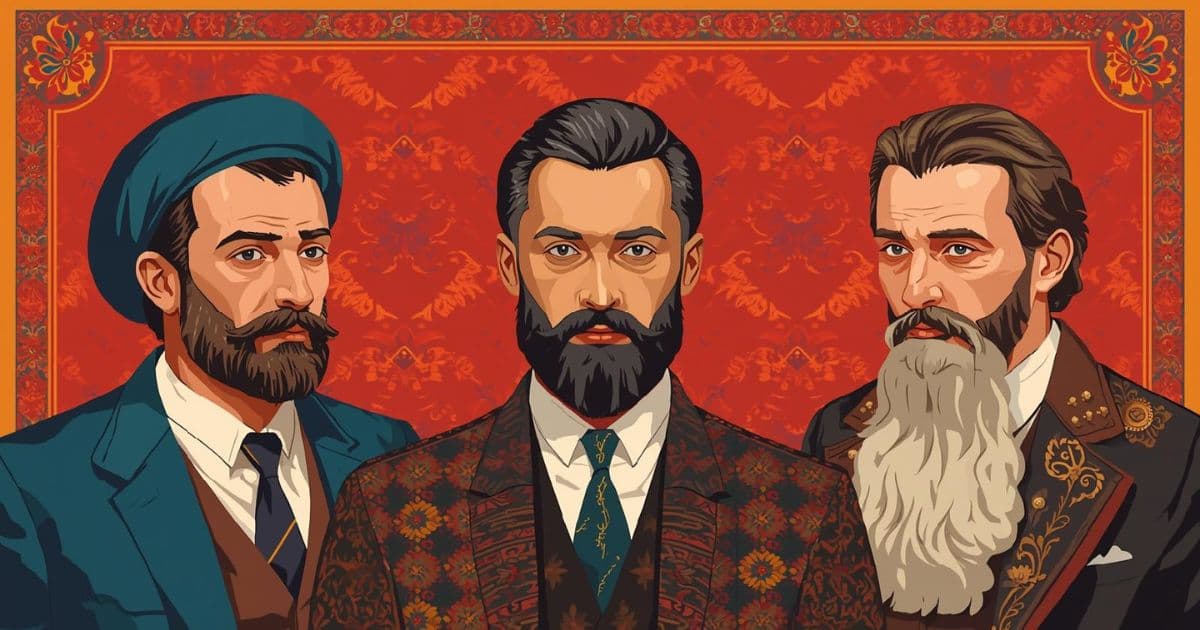
When Doubt Becomes Identity
See how intellectual rebellion can lead to moral paralysis—Ivan's ideas enable murder while his guilt destroys him from within.
These 10 scenes chart Ivan's journey from sophisticated doubt to complete psychological breakdown.
How Sophisticated Doubt Leads to Destruction
Ivan Karamazov is the intellectual—brilliant, sophisticated, able to argue any position with equal conviction. He's built his identity on doubt: he questions God, meaning, morality, certainty itself. This feels like intellectual honesty, like seeing clearly while others are trapped in comforting delusions. But his doubt becomes a trap. First, it paralyzes him—if you can argue any position equally well, how do you choose how to live? Second, it removes moral constraints—if there's no God and no ultimate meaning, why not do whatever benefits you? Third, and most devastatingly, his philosophy enables murder: Smerdyakov takes Ivan's intellectual rebellion literally and kills their father, believing Ivan's ideas justify it and that Ivan tacitly approves. Ivan didn't plan the murder, didn't order it, wasn't even present. But he wanted his father dead, provided the philosophical framework that made it seem permissible, and left town at the crucial moment. He's guilty of desire, of providing justification, of creating opportunity—but not of criminal action. This is vicarious guilt: moral responsibility without legal culpability. And it destroys him. His breakdown shows what happens when intellectual rebellion is your entire identity: when your ideas enable harm, you have no moral ground to stand on for refutation. His sophisticated doubt, which felt so intelligent, leaves him psychologically broken, trying to confess guilt that the legal system won't acknowledge, carrying responsibility he can't resolve or atone for. Dostoevsky's message: doubt without commitment, rebellion without affirmation, intelligence without wisdom—these don't lead to enlightenment. They lead to complicity, paralysis, and breakdown.
The Intellectual Trap
- • Can argue any position equally well
- • Sophisticated doubt as identity
- • Moral paralysis from perpetual ambiguity
- • Ideas without consequences (he thinks)
The Complicity
- • Wants father dead (doesn't admit it)
- • Philosophy justifies murder
- • Leaves town creating opportunity
- • Vicarious guilt: morally responsible
The Breakdown
- • Can't refute what happened
- • Tries to confess, dismissed as mad
- • Guilt with no resolution
- • Complete psychological collapse
Ivan's Journey to Breakdown
Why Is Such a Man Alive? The Seeds of Parricide
Ivan and Alyosha discuss their father Fyodor. Ivan says coldly: 'One reptile will devour the other. And serve them both right.' He's talking about Dmitri potentially killing their father in rage over Grushenka. But his words reveal more: Ivan wants his father dead. He's intellectualizing the desire, framing it as justice or natural consequences, but the wish is there. He's not planning murder—he's philosophically justifying why it wouldn't be wrong if it happened. This is the beginning of Ivan's complicity: he's creating the mental framework that will later enable actual murder.
Why Is Such a Man Alive? The Seeds of Parricide
The Brothers Karamazov - Book 2, Chapter 6
"One reptile will devour the other. And serve them both right, too."
Key Insight
This is how complicity begins: not with planning evil, but with intellectually justifying why it wouldn't be wrong. Ivan doesn't want to kill his father himself—that would be crude, passionate, Dmitri's style. But he's constructing a philosophical framework where his father's death is morally acceptable, perhaps even deserved. 'One reptile will devour the other' removes human dignity from both his father and brother, making their violence toward each other seem like natural law rather than moral choice. This intellectual distance feels safer than direct desire, but it's actually more dangerous: it creates permission without accountability.
Ivan's Position
His father is worthless, perhaps doesn't deserve to live. If Dmitri kills him, it's natural consequences, not murder requiring moral judgment.
The Consequence
This philosophical framework—that his father doesn't deserve to live—will later be adopted by Smerdyakov as justification for actual murder.
The Breakdown
Ivan will realize too late that his intellectual abstractions had real-world consequences. His 'one reptile will devour the other' became murder.
For and Against: The Intellectual's Paralysis
Ivan tells Alyosha he's been constructing arguments both for and against God, for and against meaning, and can make either case convincingly. He's proud of his intellectual sophistication—able to see all sides, unwilling to commit to certainty. But this has paralyzed him: if you can argue any position equally well, how do you choose how to live? Ivan has trained himself in perpetual doubt, and now he can't act decisively on anything. His intelligence has become a cage that prevents him from living with conviction.
For and Against: The Intellectual's Paralysis
The Brothers Karamazov - Book 5, Chapter 6
"I can make myself argue for either side with equal conviction. Perhaps that's the problem."
Key Insight
There's a type of intelligence that paralyzes rather than clarifies. Ivan can construct brilliant arguments for any position, which means he's never certain about anything. This seems sophisticated—only fools are certain, right?—but it actually prevents him from living meaningfully. You can't build a life on perpetual argument. At some point, you have to choose what you believe and act on it, even without perfect certainty. Ivan has confused intellectual sophistication with wisdom: he thinks seeing all sides means staying neutral, when actually wisdom requires choosing a side despite uncertainty and bearing the consequences of that choice.
Ivan's Position
True intelligence means seeing all perspectives, being able to argue any side. Certainty is naive; sophistication is perpetual doubt.
The Consequence
This leads to moral paralysis. When Smerdyakov acts, Ivan can't decisively say it was wrong because he's trained himself to see 'for and against' everything.
The Breakdown
His ability to argue any position will torment him when he needs moral clarity about the murder. He can argue he's guilty; he can argue he's innocent. Neither feels true.
It's Always Interesting to Talk to an Intelligent Man
Smerdyakov tells Ivan he's learned everything from him—that 'if there's no God, everything is permitted.' Ivan dismisses this as Smerdyakov being stupid, misunderstanding sophisticated philosophy. But Smerdyakov understood perfectly: he took Ivan's abstract intellectual rebellion and made it concrete. Where Ivan philosophized about the meaninglessness of moral constraints without God, Smerdyakov heard permission. Ivan is horrified but also flattered—Smerdyakov keeps saying 'it's always interesting to talk to an intelligent man,' feeding Ivan's ego while showing him the consequences of his ideas.
It's Always Interesting to Talk to an Intelligent Man
The Brothers Karamazov - Book 5, Chapter 7
"It's always interesting to talk to an intelligent man. You taught me everything."
Key Insight
You can't control how your ideas will be interpreted by people who take them literally. Ivan's philosophy was meant as intellectual exercise, rebellion against easy certainties, sophisticated doubt. Smerdyakov heard it as: if you're smart enough to see there's no God, you're free from all moral constraints. This is the danger of intellectual rebellion without wisdom: you release ideas into the world that remove moral restraints, then are shocked when someone uses them to justify actual harm. Ivan wanted to be seen as brilliant and edgy; Smerdyakov showed him that edgy ideas have edges that cut.
Ivan's Position
His philosophical rebellion is sophisticated intellectual exercise, not meant as practical guidance. Only simple people would take it literally as permission to act without moral constraint.
The Consequence
Smerdyakov takes it literally. He murders Fyodor, believing Ivan's philosophy justifies it and that Ivan tacitly approves.
The Breakdown
Ivan realizes his ideas had consequences he didn't intend but should have foreseen. He's morally responsible for releasing them without considering how they'd be used.
Not You, Not You! Smerdyakov's Confession
Smerdyakov confesses to Ivan that he killed Fyodor, and that he did it for Ivan: 'You're the real murderer. I was just your instrument.' He explains that Ivan wanted his father dead (true), that Ivan's philosophy said it wasn't wrong (true), that Ivan deliberately left town the night of the murder to give him opportunity (true), and that by doing all this, Ivan was giving tacit permission. Smerdyakov is right about everything except one thing: Ivan didn't consciously plan it. But that almost makes it worse—Ivan created all the conditions for murder without admitting to himself what he was doing.
Not You, Not You! Smerdyakov's Confession
The Brothers Karamazov - Book 11, Chapter 5
"You wanted it. You left so it could happen. And you knew, you knew! I was your instrument."
Key Insight
This is one of literature's most devastating scenes because Smerdyakov is right. Ivan didn't murder anyone, didn't order the murder, didn't plan it. But he wanted his father dead, provided the philosophical justification, and left town at the crucial moment. He's guilty of desire, of providing moral framework, of creating opportunity—but not of criminal action. This is the concept of vicarious guilt: being morally responsible for an outcome you didn't directly cause but desired, enabled, and benefited from. Legal systems struggle with this because it doesn't fit neat categories. But conscience doesn't care about legal categories.
Ivan's Position
He didn't kill anyone. His leaving town was coincidence. His philosophical discussions were abstract. He had no criminal intent.
The Consequence
All technically true, but he's still morally responsible. He wanted it, philosophically justified it, and created opportunity for it.
The Breakdown
This realization—that he's guilty without being able to point to a specific guilty act—will drive him to madness. His conscience knows he's complicit even if law can't prove it.
The First Interview with Smerdyakov: Denial
In their first conversation after the murder, Ivan tries to deny any complicity. He tells himself Smerdyakov is lying, manipulating, trying to escape blame by implicating him. Ivan intellectually parses every conversation they had before the murder, trying to find moments where he clearly said no, where he discouraged rather than encouraged. But he can't. Every conversation was ambiguous—he never explicitly told Smerdyakov to kill, but he never clearly said don't. His sophisticated ambiguity, which felt so intelligent at the time, now looks like plausible deniability.
The First Interview with Smerdyakov: Denial
The Brothers Karamazov - Book 11, Chapter 6
"I never said... I never told him... he's lying, he must be lying..."
Key Insight
When you maintain strategic ambiguity—never quite saying what you mean, keeping all options open, staying uncommitted—you can later claim innocence. But conscience sees through it. Ivan is discovering that he structured his conversations to maintain deniability while still communicating permission. This is how smart people deceive themselves: they use language precisely enough to avoid explicit guilt but ambiguously enough to enable what they desire. Then they hide behind 'I never actually said that.' But communication includes what you don't say, what you allow to be inferred, what you don't correct.
Ivan's Position
He never explicitly encouraged Smerdyakov. Everything was ambiguous. Smerdyakov is lying or misinterpreting to avoid sole responsibility.
The Consequence
The ambiguity was deliberate—maintaining deniability while tacitly communicating permission. His conscience recognizes this even if he can verbally argue his innocence.
The Breakdown
Denial is the first stage. He's trying to convince himself he's innocent, parsing language, looking for technicalities. It won't hold.
The Second Interview: Confronting the Truth
In the second meeting, Ivan can no longer deny. Smerdyakov is too calm, too logical, too right about the facts. Ivan starts to break. He oscillates between rage (How dare you implicate me!), guilt (I am responsible), and despair (Nothing matters anyway). Smerdyakov watches dispassionately and says: 'You taught me that if there's no God, everything is permitted. I simply acted on what you believe.' Ivan can't refute this without refuting his entire intellectual framework. He's trapped: admit his philosophy was wrong, or accept responsibility for its consequences.
The Second Interview: Confronting the Truth
The Brothers Karamazov - Book 11, Chapter 8
"But I didn't mean... that's not what I... you don't understand philosophy!"
Key Insight
This is the moment when intellectual rebellion meets its own implications. Ivan built his entire identity on being the smart one who sees through religious constraints and moral pretenses. Now he's face-to-face with the logical conclusion of his beliefs, enacted by someone who took him seriously. He has three options: 1) admit his philosophy was wrong (destroying his identity), 2) accept responsibility for the murder (destroying his peace), or 3) argue that his ideas shouldn't be taken seriously (admitting his intellectual life was performative). All three options break him. This is what happens when your identity is built on ideas and the ideas prove destructive.
Ivan's Position
His philosophy was abstract, not meant as practical guidance. But now he's forced to either defend it (and accept complicity) or reject it (and lose his intellectual identity).
The Consequence
Ivan can't choose any option without breaking. His doubt, which felt sophisticated, has become psychological torture.
The Breakdown
He's oscillating between rage, guilt, and despair. None of these emotions resolve anything. He's starting to fracture.
The Devil: Ivan's Shadow Self
Ivan hallucinates (or is visited by?) the devil—a shabby, sophisticated gentleman who embodies all Ivan's doubts, cynicism, and intellectual pretensions. The devil torments Ivan by agreeing with him, by being him at his worst. He mocks Ivan's rebellion, his guilt, his paralysis. He's witty, educated, cruel—everything Ivan fears he actually is beneath his intellectual sophistication. The devil represents Ivan's conscience externalized: all the parts of himself he doesn't want to acknowledge, given voice and form. And the devil won't leave until Ivan confronts what he actually believes.
The Devil: Ivan's Shadow Self
The Brothers Karamazov - Book 11, Chapter 9
"You're me, the basest, stupidest parts of me given form. I despise you because you're what I actually am."
Key Insight
The devil is a psychological masterpiece: he's Ivan's doubt personified, everything Ivan has been thinking but hasn't wanted to acknowledge. He's sophisticated, cynical, and he knows Ivan completely because he is Ivan. This is what happens when you build your identity on rebellion and doubt—eventually, you meet yourself, and it's not pretty. The devil isn't tempting Ivan toward evil; he's showing Ivan that his intellectual rebellion was itself a form of evil, hiding selfishness and cruelty behind sophistication. The horror isn't that the devil exists—it's that the devil is just Ivan without his self-deceptions.
Ivan's Position
This is hallucination caused by brain fever. None of this is real. But even as he thinks this, he knows the devil is saying things he's actually thought.
The Consequence
The devil's visit shows Ivan confronting his own shadow—all the cynicism, cruelty, and emptiness his intellectual rebellion was covering. He can't unhear it.
The Breakdown
Ivan is at war with himself. The devil is the part of him that knows he's complicit, that his philosophy justified murder, that his sophistication was performance.
It Was I Who Killed Him: The Confession
Ivan rushes to Katerina and confesses: 'It was I who killed him.' Not Dmitri, not even Smerdyakov—him. He's taken on full moral responsibility. He didn't commit the act, but he's claiming the guilt. This is either complete moral clarity (he's accepting vicarious responsibility) or complete breakdown (he's lost distinction between desire and action). Probably both. He's brain-fevered, wild-eyed, barely coherent. But he's finally speaking the truth as his conscience sees it: legally innocent, morally guilty.
It Was I Who Killed Him: The Confession
The Brothers Karamazov - Book 11, Chapter 10
"It was I who killed him! I wanted his death, I enabled it, I'm the murderer!"
Key Insight
This confession is both true and legally meaningless, which is why it's so painful. Ivan is morally responsible—he wanted his father dead, provided philosophical justification, created opportunity. But he didn't commit criminal murder. So his confession can't be legally accepted. He's trying to take responsibility, but the justice system has no category for his guilt. This is the agony of vicarious responsibility: you're guilty in a way that can't be formally acknowledged or punished. You're left carrying guilt that has no resolution, no way to make amends, no sentence to serve that would relieve it.
Ivan's Position
He's accepting full moral responsibility. 'It was I who killed him'—not as metaphor, but as moral truth. He recognizes his complicity fully.
The Consequence
But no one can accept his confession because he didn't physically commit murder. His moral guilt has no legal form, leaving him with responsibility he can't resolve.
The Breakdown
This is the beginning of complete psychological collapse. He's trying to confess, but even confession doesn't relieve him because no one will accept it as valid.
A Sudden Catastrophe: Dismissed as Mad
At Dmitri's trial, Ivan tries to testify about his role—presenting the money Smerdyakov gave him (Fyodor's stolen money), confessing his complicity, explaining the philosophical framework he provided. But no one believes him. They think brain fever has made him delusional. The court dismisses his testimony as illness-induced ravings. He's trying to take moral responsibility, and society won't let him because his guilt doesn't fit their categories. They'd rather convict innocent Dmitri than acknowledge the complex truth Ivan is presenting.
A Sudden Catastrophe: Dismissed as Mad
The Brothers Karamazov - Book 12, Chapter 5
"He's clearly in brain fever. His testimony cannot be admitted. The poor young man is not responsible for what he's saying."
Key Insight
This is devastating: Ivan finally achieves moral clarity, tries to confess his role publicly, and is dismissed as crazy. This reveals something dark about justice systems—they need simple narratives. Dmitri the violent drunk killed his father in a rage; that's a story they can process. Ivan's confession (I philosophically enabled it by removing moral constraints; Smerdyakov committed it believing he had my tacit approval; all three brothers wanted him dead so we're all complicit) is too complex for legal categories. So they call him mad and move on. Real moral truth is rejected in favor of narratives simple enough to fit legal forms.
Ivan's Position
He's achieved moral clarity and is trying to confess publicly, to take responsibility and save innocent Dmitri. He's telling the complete truth.
The Consequence
Dismissed as mad. His moral truth is too complex for the justice system, which requires simple causation. They convict Dmitri and ignore Ivan's confession.
The Breakdown
This is the final breaking: he tried to take responsibility and was rejected. There's no resolution available. His guilt can't be acknowledged, processed, or atoned for.
Ivan's Illness: When Doubt Breaks the Mind
After the trial, Ivan collapses into complete breakdown. He's in bed, feverish, oscillating between lucidity and hallucination. Alyosha sits with him, and in rare lucid moments, Ivan says things like: 'I wanted to be good. I tried to be good through thought, through seeing truly. But my thinking became a trap.' He's recognizing that his entire intellectual project—seeing all sides, maintaining sophisticated doubt, rebelling against easy certainty—led not to wisdom but to paralysis and complicity in murder. His doubt, which felt like intellectual honesty, broke him.
Ivan's Illness: When Doubt Breaks the Mind
The Brothers Karamazov - Book 12, Chapter 11
"I wanted to be good through thought, through seeing truly. But thinking became a trap that destroyed me."
Key Insight
This is Dostoevsky's final statement on Ivan: intellectual rebellion without positive vision, doubt without commitment, sophistication without wisdom—these don't lead to enlightenment. They lead to paralysis, complicity, and breakdown. Ivan wasn't wrong to doubt, to question, to rebel against suffering. But he built his entire identity on negation and had nothing positive to replace it with. When Smerdyakov enacted the logical conclusion of his philosophy, Ivan had no moral ground to stand on for refutation. His breakdown is what happens when your identity is built entirely on what you reject, not what you affirm. You become hollow, and eventually the hollowness consumes you.
Ivan's Position
He's broken. His intellectual framework has been revealed as inadequate—it led to complicity in murder and offered no resources for dealing with guilt. His doubt destroyed him.
The Consequence
Complete psychological collapse. His mind can't sustain the contradiction: legally innocent but morally guilty, wanting to confess but unable to, believing nothing matters yet destroyed by guilt.
The Breakdown
This is the endpoint. Ivan's sophisticated doubt, which seemed so intelligent, has left him broken and unable to function. Dostoevsky's warning: rebellion without affirmation is psychologically unsustainable.
How to Think Critically Without Self-Destruction
Ivan's breakdown shows the danger of building identity on doubt alone. But the solution isn't blind faith or abandoning critical thinking—it's doubt with wisdom. Here's how to think critically without destroying yourself:
1. Recognize When Doubt Becomes Identity
Ivan's problem isn't that he doubts—it's that doubt is all he has. If your entire sense of self comes from being the person who questions everything, sees through everything, refuses easy answers—you've built your identity on negation. This creates problems:
- • You can't commit to anything because commitment would threaten your identity as skeptic
- • You're invested in tearing down rather than building up
- • Other people's certainty threatens you because it challenges your superior position
- • You have no positive vision, only critique of others' visions
Ask yourself: If I couldn't be the skeptical one, who would I be? If doubt were removed as identity, what's left?
2. Ideas Have Consequences—Own Them
Ivan thought his philosophical rebellion was abstract, harmless intellectual exercise. Smerdyakov showed him otherwise. Every idea you release into the world can be taken literally by someone. You can't control interpretation, but you're still responsible for considering likely consequences:
- • Before promoting an idea, ask: If someone took this completely literally, what would they do?
- • Ideas that remove moral constraints ("nothing matters," "truth is relative") are especially dangerous
- • You can't hide behind "I meant it differently" when your ideas enable harm
- • Intellectual responsibility means considering real-world impact, not just logical consistency
Ivan's "if there's no God, everything is permitted" was meant as sophisticated atheism. Smerdyakov heard permission to murder. You're responsible for both meanings.
3. Strategic Ambiguity Is Moral Cowardice
Ivan maintained careful ambiguity with Smerdyakov—never quite saying yes, never clearly saying no. This felt sophisticated at the time but was actually moral cowardice. He wanted plausible deniability while still communicating permission. If you find yourself doing this:
- • Recognize when you're staying vague to avoid commitment while enabling outcomes you desire
- • Communication includes what you don't say, what you allow others to infer, what you don't correct
- • Conscience sees through linguistic technicalities—"I never actually said that" won't protect you from guilt
- • Courage means being clear even when clarity creates vulnerability
If you're maintaining ambiguity to preserve plausible deniability, you already know you're complicit in whatever you're not clearly opposing.
4. Don't Confuse Intelligence With Wisdom
Ivan can argue any position brilliantly. This feels like sophisticated intelligence but actually paralyzes him. Real wisdom requires choosing what you believe despite uncertainty and bearing consequences. The difference:
- • Intelligence: Can see all sides, argue any position, maintain perpetual doubt
- • Wisdom: Chooses a position despite seeing flaws, commits despite uncertainty, acts despite doubt
- • Intelligence without wisdom leads to paralysis—you're so smart you can't decide anything
- • Wisdom recognizes that life requires commitment before certainty is achieved
Stop congratulating yourself for seeing all sides. The hard part isn't seeing complexity—it's choosing how to act within it.
5. Vicarious Guilt Is Real
Ivan didn't kill anyone but feels profoundly guilty because he wanted it, enabled it philosophically, and created opportunity. This is vicarious guilt: moral responsibility without legal culpability. It's real and can't be dismissed:
- • You're responsible for outcomes you desired even if you didn't directly cause them
- • You're responsible for systems you enable even if someone else operates them
- • You're responsible for ideas you spread even if someone else enacts them
- • Legal innocence doesn't equal moral innocence—conscience knows the difference
If you benefit from injustice, provide intellectual justification for harm, or want outcomes you won't personally create—you bear moral responsibility. Own it.
6. Build on Affirmation, Not Just Negation
Ivan knows what he rejects but has nothing he affirms. This is why he breaks: when Smerdyakov enacts his philosophy, Ivan has no moral ground to stand on for refutation. To avoid this:
- • Critique is necessary but insufficient—what do you actually believe?
- • If you only know what you're against, you have no resources when challenged
- • Build positive vision alongside negative critique
- • Identity based purely on rejection is psychologically unsustainable
Before you tear something down, ask: what am I building? Destruction without construction leaves only rubble—including in your psyche.
7. When to Listen to Alyosha (Not Ivan)
Alyosha also doubts, also questions, also sees complexity. But he doesn't let doubt paralyze him. He acts with compassion even without certainty. This is the alternative to Ivan's path:
- • Hold doubt and commitment simultaneously—you can question while still choosing
- • Act on values even without metaphysical certainty about their ultimate foundation
- • Practice "active love" (Zosima's teaching) even while doubting meaning
- • Let compassion guide when logic paralyzes
Alyosha's path: doubt is honest, but letting doubt prevent compassionate action is cowardice. Act with love even in uncertainty. That's wisdom Ivan never achieved.
Dostoevsky's Warning
Ivan's breakdown is a warning about the cost of intellectual rebellion without wisdom. Doubt is necessary—blind faith is dangerous. But doubt without commitment, rebellion without affirmation, intelligence without compassion—these lead to paralysis, complicity, and psychological destruction. Ivan was brilliant but not wise. He could see all sides but couldn't choose any. He could critique everything but build nothing. When his ideas enabled murder, he had no moral ground to stand on because he'd systematically undermined all ground. Your task: think critically while also committing to values, question deeply while also acting compassionately, see complexity while also choosing direction. Don't let sophistication become paralysis. Don't build identity purely on negation. Don't release ideas into the world without considering how they'll be used. Be intelligent—but also be wise enough to act despite uncertainty. That's what Ivan never learned, and it destroyed him. Learn from his tragedy so doubt becomes tool rather than identity, critique serves construction rather than destruction, and your intelligence enhances life rather than paralyzing it.