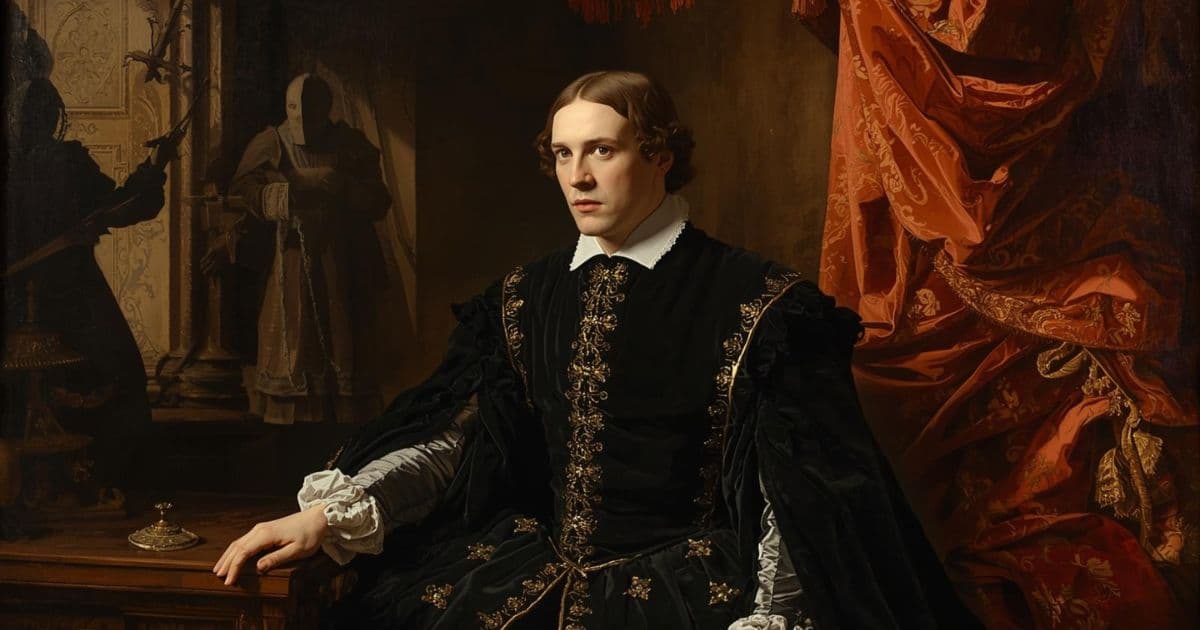
An excerpt from the original text.(complete · 2818 words)
he Fatal Day
At ten o’clock in the morning of the day following the events I have
described, the trial of Dmitri Karamazov began in our district court.
I hasten to emphasize the fact that I am far from esteeming myself
capable of reporting all that took place at the trial in full detail,
or even in the actual order of events. I imagine that to mention
everything with full explanation would fill a volume, even a very large
one. And so I trust I may not be reproached, for confining myself to
what struck me. I may have selected as of most interest what was of
secondary importance, and may have omitted the most prominent and
essential details. But I see I shall do better not to apologize. I will
do my best and the reader will see for himself that I have done all I
can.
And, to begin with, before entering the court, I will mention what
surprised me most on that day. Indeed, as it appeared later, every one
was surprised at it, too. We all knew that the affair had aroused great
interest, that every one was burning with impatience for the trial to
begin, that it had been a subject of talk, conjecture, exclamation and
surmise for the last two months in local society. Every one knew, too,
that the case had become known throughout Russia, but yet we had not
imagined that it had aroused such burning, such intense, interest in
every one, not only among ourselves, but all over Russia. This became
evident at the trial this day.
Visitors had arrived not only from the chief town of our province, but
from several other Russian towns, as well as from Moscow and
Petersburg. Among them were lawyers, ladies, and even several
distinguished personages. Every ticket of admission had been snatched
up. A special place behind the table at which the three judges sat was
set apart for the most distinguished and important of the men visitors;
a row of arm‐chairs had been placed there—something exceptional, which
had never been allowed before. A large proportion—not less than half of
the public—were ladies. There was such a large number of lawyers from
all parts that they did not know where to seat them, for every ticket
had long since been eagerly sought for and distributed. I saw at the
end of the room, behind the platform, a special partition hurriedly put
up, behind which all these lawyers were admitted, and they thought
themselves lucky to have standing room there, for all chairs had been
removed for the sake of space, and the crowd behind the partition stood
throughout the case closely packed, shoulder to shoulder.
Some of the ladies, especially those who came from a distance, made
their appearance in the gallery very smartly dressed, but the majority
of the ladies were oblivious even of dress. Their faces betrayed
hysterical, intense, almost morbid, curiosity. A peculiar
fact—established afterwards by many observations—was that almost all
the ladies, or, at least the vast majority of them, were on Mitya’s
side and in favor of his being acquitted. This was perhaps chiefly
owing to his reputation as a conqueror of female hearts. It was known
that two women rivals were to appear in the case. One of them—Katerina
Ivanovna—was an object of general interest. All sorts of extraordinary
tales were told about her, amazing anecdotes of her passion for Mitya,
in spite of his crime. Her pride and “aristocratic connections” were
particularly insisted upon (she had called upon scarcely any one in the
town). People said she intended to petition the Government for leave to
accompany the criminal to Siberia and to be married to him somewhere in
the mines. The appearance of Grushenka in court was awaited with no
less impatience. The public was looking forward with anxious curiosity
to the meeting of the two rivals—the proud aristocratic girl and “the
hetaira.” But Grushenka was a more familiar figure to the ladies of the
district than Katerina Ivanovna. They had already seen “the woman who
had ruined Fyodor Pavlovitch and his unhappy son,” and all, almost
without exception, wondered how father and son could be so in love with
“such a very common, ordinary Russian girl, who was not even pretty.”
In brief, there was a great deal of talk. I know for a fact that there
were several serious family quarrels on Mitya’s account in our town.
Many ladies quarreled violently with their husbands over differences of
opinion about the dreadful case, and it was only natural that the
husbands of these ladies, far from being favorably disposed to the
prisoner, should enter the court bitterly prejudiced against him. In
fact, one may say pretty certainly that the masculine, as distinguished
from the feminine, part of the audience were biased against the
prisoner. There were numbers of severe, frowning, even vindictive
faces. Mitya, indeed, had managed to offend many people during his stay
in the town. Some of the visitors were, of course, in excellent spirits
and quite unconcerned as to the fate of Mitya personally. But all were
interested in the trial, and the majority of the men were certainly
hoping for the conviction of the criminal, except perhaps the lawyers,
who were more interested in the legal than in the moral aspect of the
case.
Everybody was excited at the presence of the celebrated lawyer,
Fetyukovitch. His talent was well known, and this was not the first
time he had defended notorious criminal cases in the provinces. And if
he defended them, such cases became celebrated and long remembered all
over Russia. There were stories, too, about our prosecutor and about
the President of the Court. It was said that Ippolit Kirillovitch was
in a tremor at meeting Fetyukovitch, and that they had been enemies
from the beginning of their careers in Petersburg, that though our
sensitive prosecutor, who always considered that he had been aggrieved
by some one in Petersburg because his talents had not been properly
appreciated, was keenly excited over the Karamazov case, and was even
dreaming of rebuilding his flagging fortunes by means of it,
Fetyukovitch, they said, was his one anxiety. But these rumors were not
quite just. Our prosecutor was not one of those men who lose heart in
face of danger. On the contrary, his self‐confidence increased with the
increase of danger. It must be noted that our prosecutor was in general
too hasty and morbidly impressionable. He would put his whole soul into
some case and work at it as though his whole fate and his whole fortune
depended on its result. This was the subject of some ridicule in the
legal world, for just by this characteristic our prosecutor had gained
a wider notoriety than could have been expected from his modest
position. People laughed particularly at his passion for psychology. In
my opinion, they were wrong, and our prosecutor was, I believe, a
character of greater depth than was generally supposed. But with his
delicate health he had failed to make his mark at the outset of his
career and had never made up for it later.
As for the President of our Court, I can only say that he was a humane
and cultured man, who had a practical knowledge of his work and
progressive views. He was rather ambitious, but did not concern himself
greatly about his future career. The great aim of his life was to be a
man of advanced ideas. He was, too, a man of connections and property.
He felt, as we learnt afterwards, rather strongly about the Karamazov
case, but from a social, not from a personal standpoint. He was
interested in it as a social phenomenon, in its classification and its
character as a product of our social conditions, as typical of the
national character, and so on, and so on. His attitude to the personal
aspect of the case, to its tragic significance and the persons involved
in it, including the prisoner, was rather indifferent and abstract, as
was perhaps fitting, indeed.
The court was packed and overflowing long before the judges made their
appearance. Our court is the best hall in the town—spacious, lofty, and
good for sound. On the right of the judges, who were on a raised
platform, a table and two rows of chairs had been put ready for the
jury. On the left was the place for the prisoner and the counsel for
the defense. In the middle of the court, near the judges, was a table
with the “material proofs.” On it lay Fyodor Pavlovitch’s white silk
dressing‐gown, stained with blood; the fatal brass pestle with which
the supposed murder had been committed; Mitya’s shirt, with a
blood‐stained sleeve; his coat, stained with blood in patches over the
pocket in which he had put his handkerchief; the handkerchief itself,
stiff with blood and by now quite yellow; the pistol loaded by Mitya at
Perhotin’s with a view to suicide, and taken from him on the sly at
Mokroe by Trifon Borissovitch; the envelope in which the three thousand
roubles had been put ready for Grushenka, the narrow pink ribbon with
which it had been tied, and many other articles I don’t remember. In
the body of the hall, at some distance, came the seats for the public.
But in front of the balustrade a few chairs had been placed for
witnesses who remained in the court after giving their evidence.
At ten o’clock the three judges arrived—the President, one honorary
justice of the peace, and one other. The prosecutor, of course, entered
immediately after. The President was a short, stout, thick‐set man of
fifty, with a dyspeptic complexion, dark hair turning gray and cut
short, and a red ribbon, of what Order I don’t remember. The prosecutor
struck me and the others, too, as looking particularly pale, almost
green. His face seemed to have grown suddenly thinner, perhaps in a
single night, for I had seen him looking as usual only two days before.
The President began with asking the court whether all the jury were
present.
But I see I can’t go on like this, partly because some things I did not
hear, others I did not notice, and others I have forgotten, but most of
all because, as I have said before, I have literally no time or space
to mention everything that was said and done. I only know that neither
side objected to very many of the jurymen. I remember the twelve
jurymen—four were petty officials of the town, two were merchants, and
six peasants and artisans of the town. I remember, long before the
trial, questions were continually asked with some surprise, especially
by ladies: “Can such a delicate, complex and psychological case be
submitted for decision to petty officials and even peasants?” and “What
can an official, still more a peasant, understand in such an affair?”
All the four officials in the jury were, in fact, men of no consequence
and of low rank. Except one who was rather younger, they were
gray‐headed men, little known in society, who had vegetated on a
pitiful salary, and who probably had elderly, unpresentable wives and
crowds of children, perhaps even without shoes and stockings. At most,
they spent their leisure over cards and, of course, had never read a
single book. The two merchants looked respectable, but were strangely
silent and stolid. One of them was close‐shaven, and was dressed in
European style; the other had a small, gray beard, and wore a red
ribbon with some sort of a medal upon it on his neck. There is no need
to speak of the artisans and the peasants. The artisans of
Skotoprigonyevsk are almost peasants, and even work on the land. Two of
them also wore European dress, and, perhaps for that reason, were
dirtier and more uninviting‐looking than the others. So that one might
well wonder, as I did as soon as I had looked at them, “what men like
that could possibly make of such a case?” Yet their faces made a
strangely imposing, almost menacing, impression; they were stern and
frowning.
At last the President opened the case of the murder of Fyodor
Pavlovitch Karamazov. I don’t quite remember how he described him. The
court usher was told to bring in the prisoner, and Mitya made his
appearance. There was a hush through the court. One could have heard a
fly. I don’t know how it was with others, but Mitya made a most
unfavorable impression on me. He looked an awful dandy in a brand‐new
frock‐coat. I heard afterwards that he had ordered it in Moscow
expressly for the occasion from his own tailor, who had his measure. He
wore immaculate black kid gloves and exquisite linen. He walked in with
his yard‐long strides, looking stiffly straight in front of him, and
sat down in his place with a most unperturbed air.
At the same moment the counsel for defense, the celebrated
Fetyukovitch, entered, and a sort of subdued hum passed through the
court. He was a tall, spare man, with long thin legs, with extremely
long, thin, pale fingers, clean‐shaven face, demurely brushed, rather
short hair, and thin lips that were at times curved into something
between a sneer and a smile. He looked about forty. His face would have
been pleasant, if it had not been for his eyes, which, in themselves
small and inexpressive, were set remarkably close together, with only
the thin, long nose as a dividing line between them. In fact, there was
something strikingly birdlike about his face. He was in evening dress
and white tie.
I remember the President’s first questions to Mitya, about his name,
his calling, and so on. Mitya answered sharply, and his voice was so
unexpectedly loud that it made the President start and look at the
prisoner with surprise. Then followed a list of persons who were to
take part in the proceedings—that is, of the witnesses and experts. It
was a long list. Four of the witnesses were not present—Miüsov, who had
given evidence at the preliminary inquiry, but was now in Paris; Madame
Hohlakov and Maximov, who were absent through illness; and Smerdyakov,
through his sudden death, of which an official statement from the
police was presented. The news of Smerdyakov’s death produced a sudden
stir and whisper in the court. Many of the audience, of course, had not
heard of the sudden suicide. What struck people most was Mitya’s sudden
outburst. As soon as the statement of Smerdyakov’s death was made, he
cried out aloud from his place:
“He was a dog and died like a dog!”
I remember how his counsel rushed to him, and how the President
addressed him, threatening to take stern measures, if such an
irregularity were repeated. Mitya nodded and in a subdued voice
repeated several times abruptly to his counsel, with no show of regret:
“I won’t again, I won’t. It escaped me. I won’t do it again.”
And, of course, this brief episode did him no good with the jury or the
public. His character was displayed, and it spoke for itself. It was
under the influence of this incident that the opening statement was
read. It was rather short, but circumstantial. It only stated the chief
reasons why he had been arrested, why he must be tried, and so on. Yet
it made a great impression on me. The clerk read it loudly and
distinctly. The whole tragedy was suddenly unfolded before us,
concentrated, in bold relief, in a fatal and pitiless light. I remember
how, immediately after it had been read, the President asked Mitya in a
loud impressive voice:
“Prisoner, do you plead guilty?”
Mitya suddenly rose from his seat.
“I plead guilty to drunkenness and dissipation,” he exclaimed, again in
a startling, almost frenzied, voice, “to idleness and debauchery. I
meant to become an honest man for good, just at the moment when I was
struck down by fate. But I am not guilty of the death of that old man,
my enemy and my father. No, no, I am not guilty of robbing him! I could
not be. Dmitri Karamazov is a scoundrel, but not a thief.”
He sat down again, visibly trembling all over. The President again
briefly, but impressively, admonished him to answer only what was
asked, and not to go off into irrelevant exclamations. Then he ordered
the case to proceed. All the witnesses were led up to take the oath.
Then I saw them all together. The brothers of the prisoner were,
however, allowed to give evidence without taking the oath. After an
exhortation from the priest and the President, the witnesses were led
away and were made to sit as far as possible apart from one another.
Then they began calling them up one by one.
Master this chapter. Complete your experience
Purchase the complete book to access all chapters and support classic literature
As an Amazon Associate, we earn a small commission from qualifying purchases at no additional cost to you.
Available in paperback, hardcover, and e-book formats
Let's Analyse the Pattern
When being judged, people often perform behaviors that sabotage the very outcome they need.
Why This Matters
Connect literature to life
This chapter teaches how to assess audience bias and power dynamics before they derail your goals.
Practice This Today
This week, notice when you're about to defend yourself—pause and ask 'What do I actually want here?' then choose strategy over pride.
Now let's explore the literary elements.
Key Quotes & Analysis
"He was a dog and died like a dog!"
Context: Mitya's reaction when told that Smerdyakov has committed suicide
This outburst reveals Mitya's complete lack of courtroom awareness and emotional control. His crude, callous reaction to someone's death shocks the courtroom and immediately damages his case before it even begins.
In Today's Words:
Good riddance to that piece of trash!
"I am guilty of drunkenness and dissipation, but not of the murder of my old father."
Context: Mitya's plea when asked how he answers the charges
Shows Mitya's strategy of partial honesty - admitting to his obvious flaws while denying the main charge. It's both refreshingly honest and potentially damaging since he's confirming his bad character.
In Today's Words:
Yeah, I'm a mess and a drunk, but I didn't kill the old man.
"Every one knew that the case had become known throughout Russia."
Context: Describing the massive public interest in the trial
Reveals how this local family tragedy has become a national obsession, showing the power of scandal to capture public imagination and turn justice into entertainment.
In Today's Words:
This thing had gone viral across the whole country.
Thematic Threads
Class
In This Chapter
The jury of working-class people is dismissed as too simple for a complex case, while Mitya's expensive clothes signal privilege that alienates them
Development
Continues the book's exploration of how class differences create mutual misunderstanding and resentment
In Your Life:
You might face skepticism about your capabilities based on your background, or judge others the same way
Identity
In This Chapter
Mitya admits to being a scoundrel and debaucher but denies being a murderer—defining himself by what he won't do
Development
Builds on Mitya's struggle throughout the book to understand who he really is beneath his wild reputation
In Your Life:
You might find yourself accepting negative labels while drawing the line at certain accusations
Social Expectations
In This Chapter
The courtroom audience divides along gender lines with predictable biases—women romanticizing Mitya, men condemning him
Development
Extends the book's examination of how society prejudges based on stereotypes and personal interests
In Your Life:
You might notice how different groups form opinions about you based on their own experiences and biases
Pride
In This Chapter
Mitya's arrogant appearance and shocking outburst about Smerdyakov damage his case from the start
Development
Culminates Mitya's lifelong pattern of letting pride override practical judgment
In Your Life:
You might sabotage important opportunities by refusing to appear vulnerable or apologetic when it would help
Justice
In This Chapter
The trial becomes entertainment, with public opinion and personal grudges influencing perceptions before evidence is heard
Development
Introduced here as the book examines whether true justice is possible in a flawed human system
In Your Life:
You might face situations where fairness gets overshadowed by politics, popularity, or personal relationships
You now have the context. Time to form your own thoughts.
Discussion Questions
- 1
Why does Mitya make such a terrible impression in court when his life depends on looking sympathetic?
analysis • surface - 2
How do the spectators' personal feelings about Mitya affect their judgment before hearing any evidence?
analysis • medium - 3
Where have you seen people sabotage themselves by doubling down on bad behavior when they're being judged?
application • medium - 4
If you were advising Mitya, what would you tell him about managing his image during the trial?
application • deep - 5
What does this courtroom scene reveal about how we decide who deserves our sympathy or support?
reflection • deep
Critical Thinking Exercise
Rewrite Your Performance
Think of a situation where you're being evaluated or judged - a job interview, performance review, family conflict, or social media dispute. Write two versions: first, how you naturally want to respond when feeling defensive, then how you would respond if your only goal was achieving the outcome you actually want.
Consider:
- •What impression are you giving versus what impression serves your goals?
- •How might your audience's existing biases affect their interpretation?
- •What would strategic humility look like in this specific situation?
Journaling Prompt
Write about a time when your pride got in the way of getting what you actually wanted. What would you do differently now that you recognize this pattern?
Coming Up Next...
Chapter 81: Undermining the Star Witnesses
The prosecution begins calling witnesses, and the first testimonies will either support or demolish the case against Mitya. Some witnesses may prove more dangerous to the defense than expected.