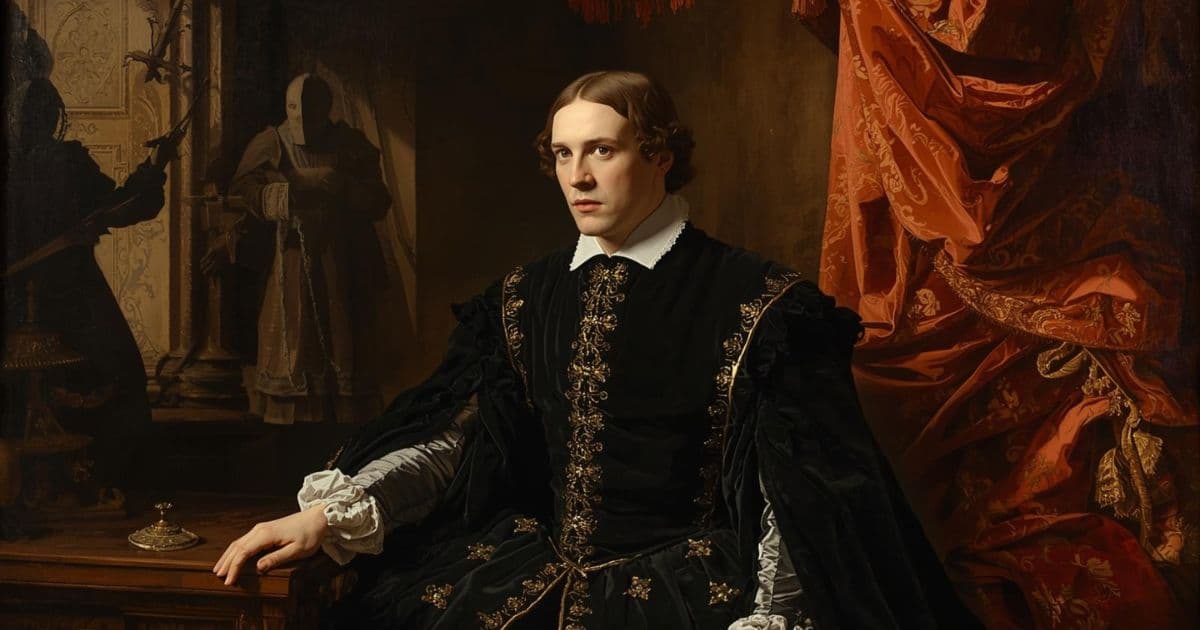
An excerpt from the original text.(complete · 3945 words)
t Grushenka’s
Alyosha went towards the cathedral square to the widow Morozov’s house
to see Grushenka, who had sent Fenya to him early in the morning with
an urgent message begging him to come. Questioning Fenya, Alyosha
learned that her mistress had been particularly distressed since the
previous day. During the two months that had passed since Mitya’s
arrest, Alyosha had called frequently at the widow Morozov’s house,
both from his own inclination and to take messages for Mitya. Three
days after Mitya’s arrest, Grushenka was taken very ill and was ill for
nearly five weeks. For one whole week she was unconscious. She was very
much changed—thinner and a little sallow, though she had for the past
fortnight been well enough to go out. But to Alyosha her face was even
more attractive than before, and he liked to meet her eyes when he went
in to her. A look of firmness and intelligent purpose had developed in
her face. There were signs of a spiritual transformation in her, and a
steadfast, fine and humble determination that nothing could shake could
be discerned in her. There was a small vertical line between her brows
which gave her charming face a look of concentrated thought, almost
austere at the first glance. There was scarcely a trace of her former
frivolity.
It seemed strange to Alyosha, too, that in spite of the calamity that
had overtaken the poor girl, betrothed to a man who had been arrested
for a terrible crime, almost at the instant of their betrothal, in
spite of her illness and the almost inevitable sentence hanging over
Mitya, Grushenka had not yet lost her youthful cheerfulness. There was
a soft light in the once proud eyes, though at times they gleamed with
the old vindictive fire when she was visited by one disturbing thought
stronger than ever in her heart. The object of that uneasiness was the
same as ever—Katerina Ivanovna, of whom Grushenka had even raved when
she lay in delirium. Alyosha knew that she was fearfully jealous of
her. Yet Katerina Ivanovna had not once visited Mitya in his prison,
though she might have done it whenever she liked. All this made a
difficult problem for Alyosha, for he was the only person to whom
Grushenka opened her heart and from whom she was continually asking
advice. Sometimes he was unable to say anything.
Full of anxiety he entered her lodging. She was at home. She had
returned from seeing Mitya half an hour before, and from the rapid
movement with which she leapt up from her chair to meet him he saw that
she had been expecting him with great impatience. A pack of cards dealt
for a game of “fools” lay on the table. A bed had been made up on the
leather sofa on the other side and Maximov lay, half‐reclining, on it.
He wore a dressing‐ gown and a cotton nightcap, and was evidently ill
and weak, though he was smiling blissfully. When the homeless old man
returned with Grushenka from Mokroe two months before, he had simply
stayed on and was still staying with her. He arrived with her in rain
and sleet, sat down on the sofa, drenched and scared, and gazed mutely
at her with a timid, appealing smile. Grushenka, who was in terrible
grief and in the first stage of fever, almost forgot his existence in
all she had to do the first half‐ hour after her arrival. Suddenly she
chanced to look at him intently: he laughed a pitiful, helpless little
laugh. She called Fenya and told her to give him something to eat. All
that day he sat in the same place, almost without stirring. When it got
dark and the shutters were closed, Fenya asked her mistress:
“Is the gentleman going to stay the night, mistress?”
“Yes; make him a bed on the sofa,” answered Grushenka.
Questioning him more in detail, Grushenka learned from him that he had
literally nowhere to go, and that “Mr. Kalganov, my benefactor, told me
straight that he wouldn’t receive me again and gave me five roubles.”
“Well, God bless you, you’d better stay, then,” Grushenka decided in
her grief, smiling compassionately at him. Her smile wrung the old
man’s heart and his lips twitched with grateful tears. And so the
destitute wanderer had stayed with her ever since. He did not leave the
house even when she was ill. Fenya and her grandmother, the cook, did
not turn him out, but went on serving him meals and making up his bed
on the sofa. Grushenka had grown used to him, and coming back from
seeing Mitya (whom she had begun to visit in prison before she was
really well) she would sit down and begin talking to “Maximushka” about
trifling matters, to keep her from thinking of her sorrow. The old man
turned out to be a good story‐teller on occasions, so that at last he
became necessary to her. Grushenka saw scarcely any one else beside
Alyosha, who did not come every day and never stayed long. Her old
merchant lay seriously ill at this time, “at his last gasp” as they
said in the town, and he did, in fact, die a week after Mitya’s trial.
Three weeks before his death, feeling the end approaching, he made his
sons, their wives and children, come upstairs to him at last and bade
them not leave him again. From that moment he gave strict orders to his
servants not to admit Grushenka and to tell her if she came, “The
master wishes you long life and happiness and tells you to forget him.”
But Grushenka sent almost every day to inquire after him.
“You’ve come at last!” she cried, flinging down the cards and joyfully
greeting Alyosha, “and Maximushka’s been scaring me that perhaps you
wouldn’t come. Ah, how I need you! Sit down to the table. What will you
have—coffee?”
“Yes, please,” said Alyosha, sitting down at the table. “I am very
hungry.”
“That’s right. Fenya, Fenya, coffee,” cried Grushenka. “It’s been made
a long time ready for you. And bring some little pies, and mind they
are hot. Do you know, we’ve had a storm over those pies to‐day. I took
them to the prison for him, and would you believe it, he threw them
back to me: he would not eat them. He flung one of them on the floor
and stamped on it. So I said to him: ‘I shall leave them with the
warder; if you don’t eat them before evening, it will be that your
venomous spite is enough for you!’ With that I went away. We quarreled
again, would you believe it? Whenever I go we quarrel.”
Grushenka said all this in one breath in her agitation. Maximov,
feeling nervous, at once smiled and looked on the floor.
“What did you quarrel about this time?” asked Alyosha.
“I didn’t expect it in the least. Only fancy, he is jealous of the
Pole. ‘Why are you keeping him?’ he said. ‘So you’ve begun keeping
him.’ He is jealous, jealous of me all the time, jealous eating and
sleeping! He even took it into his head to be jealous of Kuzma last
week.”
“But he knew about the Pole before?”
“Yes, but there it is. He has known about him from the very beginning,
but to‐day he suddenly got up and began scolding about him. I am
ashamed to repeat what he said. Silly fellow! Rakitin went in as I came
out. Perhaps Rakitin is egging him on. What do you think?” she added
carelessly.
“He loves you, that’s what it is: he loves you so much. And now he is
particularly worried.”
“I should think he might be, with the trial to‐morrow. And I went to
him to say something about to‐morrow, for I dread to think what’s going
to happen then. You say that he is worried, but how worried I am! And
he talks about the Pole! He’s too silly! He is not jealous of
Maximushka yet, anyway.”
“My wife was dreadfully jealous over me, too,” Maximov put in his word.
“Jealous of you?” Grushenka laughed in spite of herself. “Of whom could
she have been jealous?”
“Of the servant girls.”
“Hold your tongue, Maximushka, I am in no laughing mood now; I feel
angry. Don’t ogle the pies. I shan’t give you any; they are not good
for you, and I won’t give you any vodka either. I have to look after
him, too, just as though I kept an almshouse,” she laughed.
“I don’t deserve your kindness. I am a worthless creature,” said
Maximov, with tears in his voice. “You would do better to spend your
kindness on people of more use than me.”
“Ech, every one is of use, Maximushka, and how can we tell who’s of
most use? If only that Pole didn’t exist, Alyosha. He’s taken it into
his head to fall ill, too, to‐day. I’ve been to see him also. And I
shall send him some pies, too, on purpose. I hadn’t sent him any, but
Mitya accused me of it, so now I shall send some! Ah, here’s Fenya with
a letter! Yes, it’s from the Poles—begging again!”
Pan Mussyalovitch had indeed sent an extremely long and
characteristically eloquent letter in which he begged her to lend him
three roubles. In the letter was enclosed a receipt for the sum, with a
promise to repay it within three months, signed by Pan Vrublevsky as
well. Grushenka had received many such letters, accompanied by such
receipts, from her former lover during the fortnight of her
convalescence. But she knew that the two Poles had been to ask after
her health during her illness. The first letter Grushenka got from them
was a long one, written on large notepaper and with a big family crest
on the seal. It was so obscure and rhetorical that Grushenka put it
down before she had read half, unable to make head or tail of it. She
could not attend to letters then. The first letter was followed next
day by another in which Pan Mussyalovitch begged her for a loan of two
thousand roubles for a very short period. Grushenka left that letter,
too, unanswered. A whole series of letters had followed—one every
day—all as pompous and rhetorical, but the loan asked for, gradually
diminishing, dropped to a hundred roubles, then to twenty‐five, to ten,
and finally Grushenka received a letter in which both the Poles begged
her for only one rouble and included a receipt signed by both.
Then Grushenka suddenly felt sorry for them, and at dusk she went round
herself to their lodging. She found the two Poles in great poverty,
almost destitution, without food or fuel, without cigarettes, in debt
to their landlady. The two hundred roubles they had carried off from
Mitya at Mokroe had soon disappeared. But Grushenka was surprised at
their meeting her with arrogant dignity and self‐assertion, with the
greatest punctilio and pompous speeches. Grushenka simply laughed, and
gave her former admirer ten roubles. Then, laughing, she told Mitya of
it and he was not in the least jealous. But ever since, the Poles had
attached themselves to Grushenka and bombarded her daily with requests
for money and she had always sent them small sums. And now that day
Mitya had taken it into his head to be fearfully jealous.
“Like a fool, I went round to him just for a minute, on the way to see
Mitya, for he is ill, too, my Pole,” Grushenka began again with nervous
haste. “I was laughing, telling Mitya about it. ‘Fancy,’ I said, ‘my
Pole had the happy thought to sing his old songs to me to the guitar.
He thought I would be touched and marry him!’ Mitya leapt up
swearing.... So, there, I’ll send them the pies! Fenya, is it that
little girl they’ve sent? Here, give her three roubles and pack a dozen
pies up in a paper and tell her to take them. And you, Alyosha, be sure
to tell Mitya that I did send them the pies.”
“I wouldn’t tell him for anything,” said Alyosha, smiling.
“Ech! You think he is unhappy about it. Why, he’s jealous on purpose.
He doesn’t care,” said Grushenka bitterly.
“On purpose?” queried Alyosha.
“I tell you you are silly, Alyosha. You know nothing about it, with all
your cleverness. I am not offended that he is jealous of a girl like
me. I would be offended if he were not jealous. I am like that. I am
not offended at jealousy. I have a fierce heart, too. I can be jealous
myself. Only what offends me is that he doesn’t love me at all. I tell
you he is jealous now on purpose. Am I blind? Don’t I see? He began
talking to me just now of that woman, of Katerina, saying she was this
and that, how she had ordered a doctor from Moscow for him, to try and
save him; how she had ordered the best counsel, the most learned one,
too. So he loves her, if he’ll praise her to my face, more shame to
him! He’s treated me badly himself, so he attacked me, to make out I am
in fault first and to throw it all on me. ‘You were with your Pole
before me, so I can’t be blamed for Katerina,’ that’s what it amounts
to. He wants to throw the whole blame on me. He attacked me on purpose,
on purpose, I tell you, but I’ll—”
Grushenka could not finish saying what she would do. She hid her eyes
in her handkerchief and sobbed violently.
“He doesn’t love Katerina Ivanovna,” said Alyosha firmly.
“Well, whether he loves her or not, I’ll soon find out for myself,”
said Grushenka, with a menacing note in her voice, taking the
handkerchief from her eyes. Her face was distorted. Alyosha saw
sorrowfully that from being mild and serene, it had become sullen and
spiteful.
“Enough of this foolishness,” she said suddenly; “it’s not for that I
sent for you. Alyosha, darling, to‐morrow—what will happen to‐morrow?
That’s what worries me! And it’s only me it worries! I look at every
one and no one is thinking of it. No one cares about it. Are you
thinking about it even? To‐morrow he’ll be tried, you know. Tell me,
how will he be tried? You know it’s the valet, the valet killed him!
Good heavens! Can they condemn him in place of the valet and will no
one stand up for him? They haven’t troubled the valet at all, have
they?”
“He’s been severely cross‐examined,” observed Alyosha thoughtfully;
“but every one came to the conclusion it was not he. Now he is lying
very ill. He has been ill ever since that attack. Really ill,” added
Alyosha.
“Oh, dear! couldn’t you go to that counsel yourself and tell him the
whole thing by yourself? He’s been brought from Petersburg for three
thousand roubles, they say.”
“We gave these three thousand together—Ivan, Katerina Ivanovna and
I—but she paid two thousand for the doctor from Moscow herself. The
counsel Fetyukovitch would have charged more, but the case has become
known all over Russia; it’s talked of in all the papers and journals.
Fetyukovitch agreed to come more for the glory of the thing, because
the case has become so notorious. I saw him yesterday.”
“Well? Did you talk to him?” Grushenka put in eagerly.
“He listened and said nothing. He told me that he had already formed
his opinion. But he promised to give my words consideration.”
“Consideration! Ah, they are swindlers! They’ll ruin him. And why did
she send for the doctor?”
“As an expert. They want to prove that Mitya’s mad and committed the
murder when he didn’t know what he was doing”; Alyosha smiled gently;
“but Mitya won’t agree to that.”
“Yes; but that would be the truth if he had killed him!” cried
Grushenka. “He was mad then, perfectly mad, and that was my fault,
wretch that I am! But, of course, he didn’t do it, he didn’t do it! And
they are all against him, the whole town. Even Fenya’s evidence went to
prove he had done it. And the people at the shop, and that official,
and at the tavern, too, before, people had heard him say so! They are
all, all against him, all crying out against him.”
“Yes, there’s a fearful accumulation of evidence,” Alyosha observed
grimly.
“And Grigory—Grigory Vassilyevitch—sticks to his story that the door
was open, persists that he saw it—there’s no shaking him. I went and
talked to him myself. He’s rude about it, too.”
“Yes, that’s perhaps the strongest evidence against him,” said Alyosha.
“And as for Mitya’s being mad, he certainly seems like it now,”
Grushenka began with a peculiarly anxious and mysterious air. “Do you
know, Alyosha, I’ve been wanting to talk to you about it for a long
time. I go to him every day and simply wonder at him. Tell me, now,
what do you suppose he’s always talking about? He talks and talks and I
can make nothing of it. I fancied he was talking of something
intellectual that I couldn’t understand in my foolishness. Only he
suddenly began talking to me about a babe—that is, about some child.
‘Why is the babe poor?’ he said. ‘It’s for that babe I am going to
Siberia now. I am not a murderer, but I must go to Siberia!’ What that
meant, what babe, I couldn’t tell for the life of me. Only I cried when
he said it, because he said it so nicely. He cried himself, and I
cried, too. He suddenly kissed me and made the sign of the cross over
me. What did it mean, Alyosha, tell me? What is this babe?”
“It must be Rakitin, who’s been going to see him lately,” smiled
Alyosha, “though ... that’s not Rakitin’s doing. I didn’t see Mitya
yesterday. I’ll see him to‐day.”
“No, it’s not Rakitin; it’s his brother Ivan Fyodorovitch upsetting
him. It’s his going to see him, that’s what it is,” Grushenka began,
and suddenly broke off. Alyosha gazed at her in amazement.
“Ivan’s going? Has he been to see him? Mitya told me himself that Ivan
hasn’t been once.”
“There ... there! What a girl I am! Blurting things out!” exclaimed
Grushenka, confused and suddenly blushing. “Stay, Alyosha, hush! Since
I’ve said so much I’ll tell the whole truth—he’s been to see him twice,
the first directly he arrived. He galloped here from Moscow at once, of
course, before I was taken ill; and the second time was a week ago. He
told Mitya not to tell you about it, under any circumstances; and not
to tell any one, in fact. He came secretly.”
Alyosha sat plunged in thought, considering something. The news
evidently impressed him.
“Ivan doesn’t talk to me of Mitya’s case,” he said slowly. “He’s said
very little to me these last two months. And whenever I go to see him,
he seems vexed at my coming, so I’ve not been to him for the last three
weeks. H’m!... if he was there a week ago ... there certainly has been
a change in Mitya this week.”
“There has been a change,” Grushenka assented quickly. “They have a
secret, they have a secret! Mitya told me himself there was a secret,
and such a secret that Mitya can’t rest. Before then, he was
cheerful—and, indeed, he is cheerful now—but when he shakes his head
like that, you know, and strides about the room and keeps pulling at
the hair on his right temple with his right hand, I know there is
something on his mind worrying him.... I know! He was cheerful before,
though, indeed, he is cheerful to‐day.”
“But you said he was worried.”
“Yes, he is worried and yet cheerful. He keeps on being irritable for a
minute and then cheerful and then irritable again. And you know,
Alyosha, I am constantly wondering at him—with this awful thing hanging
over him, he sometimes laughs at such trifles as though he were a baby
himself.”
“And did he really tell you not to tell me about Ivan? Did he say,
‘Don’t tell him’?”
“Yes, he told me, ‘Don’t tell him.’ It’s you that Mitya’s most afraid
of. Because it’s a secret: he said himself it was a secret. Alyosha,
darling, go to him and find out what their secret is and come and tell
me,” Grushenka besought him with sudden eagerness. “Set my mind at rest
that I may know the worst that’s in store for me. That’s why I sent for
you.”
“You think it’s something to do with you? If it were, he wouldn’t have
told you there was a secret.”
“I don’t know. Perhaps he wants to tell me, but doesn’t dare to. He
warns me. There is a secret, he tells me, but he won’t tell me what it
is.”
“What do you think yourself?”
“What do I think? It’s the end for me, that’s what I think. They all
three have been plotting my end, for Katerina’s in it. It’s all
Katerina, it all comes from her. She is this and that, and that means
that I am not. He tells me that beforehand—warns me. He is planning to
throw me over, that’s the whole secret. They’ve planned it together,
the three of them—Mitya, Katerina, and Ivan Fyodorovitch. Alyosha, I’ve
been wanting to ask you a long time. A week ago he suddenly told me
that Ivan was in love with Katerina, because he often goes to see her.
Did he tell me the truth or not? Tell me, on your conscience, tell me
the worst.”
“I won’t tell you a lie. Ivan is not in love with Katerina Ivanovna, I
think.”
“Oh, that’s what I thought! He is lying to me, shameless deceiver,
that’s what it is! And he was jealous of me just now, so as to put the
blame on me afterwards. He is stupid, he can’t disguise what he is
doing; he is so open, you know.... But I’ll give it to him, I’ll give
it to him! ‘You believe I did it,’ he said. He said that to me, to me.
He reproached me with that! God forgive him! You wait, I’ll make it hot
for Katerina at the trial! I’ll just say a word then ... I’ll tell
everything then!”
And again she cried bitterly.
“This I can tell you for certain, Grushenka,” Alyosha said, getting up.
“First, that he loves you, loves you more than any one in the world,
and you only, believe me. I know. I do know. The second thing is that I
don’t want to worm his secret out of him, but if he’ll tell me of
himself to‐ day, I shall tell him straight out that I have promised to
tell you. Then I’ll come to you to‐day, and tell you. Only ... I fancy
... Katerina Ivanovna has nothing to do with it, and that the secret is
about something else. That’s certain. It isn’t likely it’s about
Katerina Ivanovna, it seems to me. Good‐by for now.”
Alyosha shook hands with her. Grushenka was still crying. He saw that
she put little faith in his consolation, but she was better for having
had her sorrow out, for having spoken of it. He was sorry to leave her
in such a state of mind, but he was in haste. He had a great many
things to do still.
Master this chapter. Complete your experience
Purchase the complete book to access all chapters and support classic literature
As an Amazon Associate, we earn a small commission from qualifying purchases at no additional cost to you.
Available in paperback, hardcover, and e-book formats
Let's Analyse the Pattern
Acting out of fear of loss in ways that guarantee the very loss we're trying to prevent.
Why This Matters
Connect literature to life
This chapter teaches how fear of loss can create behaviors that guarantee loss.
Practice This Today
This week, notice when anxiety makes you act in ways that push people away - then name the fear directly instead of acting it out through behavior.
Now let's explore the literary elements.
Key Quotes & Analysis
"There were signs of a spiritual transformation in her, and a steadfast, fine and humble determination that nothing could shake could be discerned in her."
Context: Describing how Grushenka has changed since Mitya's arrest
This shows how trauma can actually strengthen someone's character. Grushenka has gone from shallow to deep, from weak to determined. Crisis revealed her true strength.
In Today's Words:
She'd been through hell but came out tougher and more real than before.
"There was scarcely a trace of her former frivolity."
Context: Comparing Grushenka's current serious demeanor to her past lighthearted nature
Sometimes life forces us to grow up fast. Grushenka can't afford to be carefree anymore - she has real responsibilities and real fears to deal with.
In Today's Words:
The party was definitely over - she had real problems now.
"A small vertical line between her brows which gave her charming face a look of concentrated thought, almost austere at the first glance."
Context: Describing the physical changes in Grushenka's appearance due to constant worry
Worry literally changes how we look. That line between her eyebrows is the physical mark of all her stress and thinking. Beauty takes on a different quality when it's marked by real experience.
In Today's Words:
She had that permanent worry line that comes from too much stress and not enough sleep.
Thematic Threads
Fear
In This Chapter
Grushenka's terror of abandonment drives her to sabotage her relationship with Mitya through constant jealousy and accusations
Development
Evolved from earlier themes of fear into active self-destruction
In Your Life:
You might recognize this when your anxiety about losing something makes you act in ways that push it away.
Class
In This Chapter
Grushenka feels inferior to the educated, aristocratic Katerina and believes this makes her disposable
Development
Continuing exploration of how class differences create insecurity in relationships
In Your Life:
You might feel this insecurity when dating or working with people from different educational or economic backgrounds.
Transformation
In This Chapter
Grushenka has evolved from frivolous to thoughtful but this growth brings new forms of suffering
Development
Shows that personal growth doesn't eliminate pain, just changes its nature
In Your Life:
You might find that becoming more aware and thoughtful actually makes some situations more painful, not less.
Secrets
In This Chapter
Grushenka suspects Ivan, Mitya, and Katerina are plotting against her in secret meetings
Development
Building on earlier themes about hidden knowledge and exclusion
In Your Life:
You might feel paranoid when people in your life have conversations or relationships you're not part of.
Control
In This Chapter
Grushenka tries to control Mitya's feelings and actions through jealousy and emotional manipulation
Development
Shows how powerlessness in one area leads to controlling behavior in others
In Your Life:
You might try to control your partner's behavior when you feel insecure about the relationship's future.
You now have the context. Time to form your own thoughts.
Discussion Questions
- 1
What specific behaviors does Grushenka display during her visits with Mitya, and how does she explain them to Alyosha?
analysis • surface - 2
Why does Grushenka's fear of losing Mitya cause her to act in ways that might actually push him away?
analysis • medium - 3
Where do you see this pattern today - people acting out of fear in ways that create the very outcome they're trying to avoid?
application • medium - 4
If you were Alyosha, how would you help Grushenka break this destructive cycle without dismissing her legitimate fears?
application • deep - 5
What does Grushenka's transformation from frivolous to deeply worried reveal about how crisis changes people's priorities and behaviors?
reflection • deep
Critical Thinking Exercise
Fear Audit: Map Your Self-Sabotage Patterns
Think of a relationship or situation where you've felt insecure or afraid of loss. Write down the specific behaviors you used to try to protect yourself or test the other person's commitment. Then honestly assess: did these behaviors make you feel more secure or did they create more problems? Map the cycle from fear to action to outcome.
Consider:
- •Focus on your actions, not the other person's responses
- •Look for patterns across different relationships or situations
- •Consider both obvious behaviors (accusations, checking up) and subtle ones (withdrawing, picking fights)
Journaling Prompt
Write about a time when your fear of losing something or someone caused you to act in ways that made the loss more likely. What would you do differently now, knowing what you know about this pattern?
Coming Up Next...
Chapter 71: The Injured Foot
Alyosha's investigation into the brothers' secret takes an unexpected turn when he encounters someone with a mysterious injury. The truth he uncovers will shake his understanding of everything he thought he knew about the case.