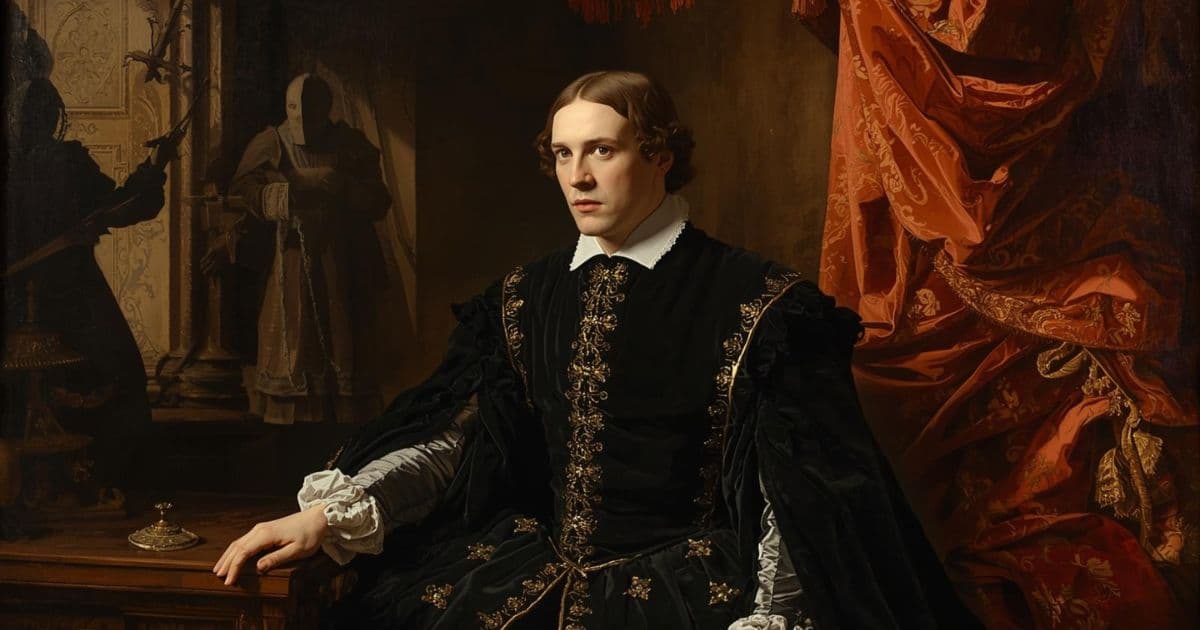
An excerpt from the original text.(complete · 2639 words)
recocity
“What do you think the doctor will say to him?” Kolya asked quickly.
“What a repulsive mug, though, hasn’t he? I can’t endure medicine!”
“Ilusha is dying. I think that’s certain,” answered Alyosha,
mournfully.
“They are rogues! Medicine’s a fraud! I am glad to have made your
acquaintance, though, Karamazov. I wanted to know you for a long time.
I am only sorry we meet in such sad circumstances.”
Kolya had a great inclination to say something even warmer and more
demonstrative, but he felt ill at ease. Alyosha noticed this, smiled,
and pressed his hand.
“I’ve long learned to respect you as a rare person,” Kolya muttered
again, faltering and uncertain. “I have heard you are a mystic and have
been in the monastery. I know you are a mystic, but ... that hasn’t put
me off. Contact with real life will cure you.... It’s always so with
characters like yours.”
“What do you mean by mystic? Cure me of what?” Alyosha was rather
astonished.
“Oh, God and all the rest of it.”
“What, don’t you believe in God?”
“Oh, I’ve nothing against God. Of course, God is only a hypothesis, but
... I admit that He is needed ... for the order of the universe and all
that ... and that if there were no God He would have to be invented,”
added Kolya, beginning to blush. He suddenly fancied that Alyosha might
think he was trying to show off his knowledge and to prove that he was
“grown up.” “I haven’t the slightest desire to show off my knowledge to
him,” Kolya thought indignantly. And all of a sudden he felt horribly
annoyed.
“I must confess I can’t endure entering on such discussions,” he said
with a final air. “It’s possible for one who doesn’t believe in God to
love mankind, don’t you think so? Voltaire didn’t believe in God and
loved mankind?” (“I am at it again,” he thought to himself.)
“Voltaire believed in God, though not very much, I think, and I don’t
think he loved mankind very much either,” said Alyosha quietly, gently,
and quite naturally, as though he were talking to some one of his own
age, or even older. Kolya was particularly struck by Alyosha’s apparent
diffidence about his opinion of Voltaire. He seemed to be leaving the
question for him, little Kolya, to settle.
“Have you read Voltaire?” Alyosha finished.
“No, not to say read.... But I’ve read Candide in the Russian
translation ... in an absurd, grotesque, old translation ... (At it
again! again!)”
“And did you understand it?”
“Oh, yes, everything.... That is ... Why do you suppose I shouldn’t
understand it? There’s a lot of nastiness in it, of course.... Of
course I can understand that it’s a philosophical novel and written to
advocate an idea....” Kolya was getting mixed by now. “I am a
Socialist, Karamazov, I am an incurable Socialist,” he announced
suddenly, apropos of nothing.
“A Socialist?” laughed Alyosha. “But when have you had time to become
one? Why, I thought you were only thirteen?”
Kolya winced.
“In the first place I am not thirteen, but fourteen, fourteen in a
fortnight,” he flushed angrily, “and in the second place I am at a
complete loss to understand what my age has to do with it? The question
is what are my convictions, not what is my age, isn’t it?”
“When you are older, you’ll understand for yourself the influence of
age on convictions. I fancied, too, that you were not expressing your
own ideas,” Alyosha answered serenely and modestly, but Kolya
interrupted him hotly:
“Come, you want obedience and mysticism. You must admit that the
Christian religion, for instance, has only been of use to the rich and
the powerful to keep the lower classes in slavery. That’s so, isn’t
it?”
“Ah, I know where you read that, and I am sure some one told you so!”
cried Alyosha.
“I say, what makes you think I read it? And certainly no one told me
so. I can think for myself.... I am not opposed to Christ, if you like.
He was a most humane person, and if He were alive to‐day, He would be
found in the ranks of the revolutionists, and would perhaps play a
conspicuous part.... There’s no doubt about that.”
“Oh, where, where did you get that from? What fool have you made
friends with?” exclaimed Alyosha.
“Come, the truth will out! It has so chanced that I have often talked
to Mr. Rakitin, of course, but ... old Byelinsky said that, too, so
they say.”
“Byelinsky? I don’t remember. He hasn’t written that anywhere.”
“If he didn’t write it, they say he said it. I heard that from a ...
but never mind.”
“And have you read Byelinsky?”
“Well, no ... I haven’t read all of him, but ... I read the passage
about Tatyana, why she didn’t go off with Onyegin.”
“Didn’t go off with Onyegin? Surely you don’t ... understand that
already?”
“Why, you seem to take me for little Smurov,” said Kolya, with a grin
of irritation. “But please don’t suppose I am such a revolutionist. I
often disagree with Mr. Rakitin. Though I mention Tatyana, I am not at
all for the emancipation of women. I acknowledge that women are a
subject race and must obey. Les femmes tricottent, as Napoleon said.”
Kolya, for some reason, smiled, “And on that question at least I am
quite of one mind with that pseudo‐great man. I think, too, that to
leave one’s own country and fly to America is mean, worse than
mean—silly. Why go to America when one may be of great service to
humanity here? Now especially. There’s a perfect mass of fruitful
activity open to us. That’s what I answered.”
“What do you mean? Answered whom? Has some one suggested your going to
America already?”
“I must own, they’ve been at me to go, but I declined. That’s between
ourselves, of course, Karamazov; do you hear, not a word to any one. I
say this only to you. I am not at all anxious to fall into the clutches
of the secret police and take lessons at the Chain bridge.
Long will you remember
The house at the Chain bridge.
Do you remember? It’s splendid. Why are you laughing? You don’t suppose
I am fibbing, do you?” (“What if he should find out that I’ve only that
one number of The Bell in father’s bookcase, and haven’t read any
more of it?” Kolya thought with a shudder.)
“Oh, no, I am not laughing and don’t suppose for a moment that you are
lying. No, indeed, I can’t suppose so, for all this, alas! is perfectly
true. But tell me, have you read Pushkin—Onyegin, for instance?...
You spoke just now of Tatyana.”
“No, I haven’t read it yet, but I want to read it. I have no
prejudices, Karamazov; I want to hear both sides. What makes you ask?”
“Oh, nothing.”
“Tell me, Karamazov, have you an awful contempt for me?” Kolya rapped
out suddenly and drew himself up before Alyosha, as though he were on
drill. “Be so kind as to tell me, without beating about the bush.”
“I have a contempt for you?” Alyosha looked at him wondering. “What
for? I am only sad that a charming nature such as yours should be
perverted by all this crude nonsense before you have begun life.”
“Don’t be anxious about my nature,” Kolya interrupted, not without
complacency. “But it’s true that I am stupidly sensitive, crudely
sensitive. You smiled just now, and I fancied you seemed to—”
“Oh, my smile meant something quite different. I’ll tell you why I
smiled. Not long ago I read the criticism made by a German who had
lived in Russia, on our students and schoolboys of to‐day. ‘Show a
Russian schoolboy,’ he writes, ‘a map of the stars, which he knows
nothing about, and he will give you back the map next day with
corrections on it.’ No knowledge and unbounded conceit—that’s what the
German meant to say about the Russian schoolboy.”
“Yes, that’s perfectly right,” Kolya laughed suddenly, “exactly so!
Bravo the German! But he did not see the good side, what do you think?
Conceit may be, that comes from youth, that will be corrected if need
be, but, on the other hand, there is an independent spirit almost from
childhood, boldness of thought and conviction, and not the spirit of
these sausage makers, groveling before authority.... But the German was
right all the same. Bravo the German! But Germans want strangling all
the same. Though they are so good at science and learning they must be
strangled.”
“Strangled, what for?” smiled Alyosha.
“Well, perhaps I am talking nonsense, I agree. I am awfully childish
sometimes, and when I am pleased about anything I can’t restrain myself
and am ready to talk any stuff. But, I say, we are chattering away here
about nothing, and that doctor has been a long time in there. But
perhaps he’s examining the mamma and that poor crippled Nina. I liked
that Nina, you know. She whispered to me suddenly as I was coming away,
‘Why didn’t you come before?’ And in such a voice, so reproachfully! I
think she is awfully nice and pathetic.”
“Yes, yes! Well, you’ll be coming often, you will see what she is like.
It would do you a great deal of good to know people like that, to learn
to value a great deal which you will find out from knowing these
people,” Alyosha observed warmly. “That would have more effect on you
than anything.”
“Oh, how I regret and blame myself for not having come sooner!” Kolya
exclaimed, with bitter feeling.
“Yes, it’s a great pity. You saw for yourself how delighted the poor
child was to see you. And how he fretted for you to come!”
“Don’t tell me! You make it worse! But it serves me right. What kept me
from coming was my conceit, my egoistic vanity, and the beastly
wilfullness, which I never can get rid of, though I’ve been struggling
with it all my life. I see that now. I am a beast in lots of ways,
Karamazov!”
“No, you have a charming nature, though it’s been distorted, and I
quite understand why you have had such an influence on this generous,
morbidly sensitive boy,” Alyosha answered warmly.
“And you say that to me!” cried Kolya; “and would you believe it, I
thought—I’ve thought several times since I’ve been here—that you
despised me! If only you knew how I prize your opinion!”
“But are you really so sensitive? At your age! Would you believe it,
just now, when you were telling your story, I thought, as I watched
you, that you must be very sensitive!”
“You thought so? What an eye you’ve got, I say! I bet that was when I
was talking about the goose. That was just when I was fancying you had
a great contempt for me for being in such a hurry to show off, and for
a moment I quite hated you for it, and began talking like a fool. Then
I fancied—just now, here—when I said that if there were no God He would
have to be invented, that I was in too great a hurry to display my
knowledge, especially as I got that phrase out of a book. But I swear I
wasn’t showing off out of vanity, though I really don’t know why.
Because I was so pleased? Yes, I believe it was because I was so
pleased ... though it’s perfectly disgraceful for any one to be gushing
directly they are pleased, I know that. But I am convinced now that you
don’t despise me; it was all my imagination. Oh, Karamazov, I am
profoundly unhappy. I sometimes fancy all sorts of things, that every
one is laughing at me, the whole world, and then I feel ready to
overturn the whole order of things.”
“And you worry every one about you,” smiled Alyosha.
“Yes, I worry every one about me, especially my mother. Karamazov, tell
me, am I very ridiculous now?”
“Don’t think about that, don’t think of it at all!” cried Alyosha. “And
what does ridiculous mean? Isn’t every one constantly being or seeming
ridiculous? Besides, nearly all clever people now are fearfully afraid
of being ridiculous, and that makes them unhappy. All I am surprised at
is that you should be feeling that so early, though I’ve observed it
for some time past, and not only in you. Nowadays the very children
have begun to suffer from it. It’s almost a sort of insanity. The devil
has taken the form of that vanity and entered into the whole
generation; it’s simply the devil,” added Alyosha, without a trace of
the smile that Kolya, staring at him, expected to see. “You are like
every one else,” said Alyosha, in conclusion, “that is, like very many
others. Only you must not be like everybody else, that’s all.”
“Even if every one is like that?”
“Yes, even if every one is like that. You be the only one not like it.
You really are not like every one else, here you are not ashamed to
confess to something bad and even ridiculous. And who will admit so
much in these days? No one. And people have even ceased to feel the
impulse to self‐ criticism. Don’t be like every one else, even if you
are the only one.”
“Splendid! I was not mistaken in you. You know how to console one. Oh,
how I have longed to know you, Karamazov! I’ve long been eager for this
meeting. Can you really have thought about me, too? You said just now
that you thought of me, too?”
“Yes, I’d heard of you and had thought of you, too ... and if it’s
partly vanity that makes you ask, it doesn’t matter.”
“Do you know, Karamazov, our talk has been like a declaration of love,”
said Kolya, in a bashful and melting voice. “That’s not ridiculous, is
it?”
“Not at all ridiculous, and if it were, it wouldn’t matter, because
it’s been a good thing.” Alyosha smiled brightly.
“But do you know, Karamazov, you must admit that you are a little
ashamed yourself, now.... I see it by your eyes.” Kolya smiled with a
sort of sly happiness.
“Why ashamed?”
“Well, why are you blushing?”
“It was you made me blush,” laughed Alyosha, and he really did blush.
“Oh, well, I am a little, goodness knows why, I don’t know...” he
muttered, almost embarrassed.
“Oh, how I love you and admire you at this moment just because you are
rather ashamed! Because you are just like me,” cried Kolya, in positive
ecstasy. His cheeks glowed, his eyes beamed.
“You know, Kolya, you will be very unhappy in your life,” something
made Alyosha say suddenly.
“I know, I know. How you know it all beforehand!” Kolya agreed at once.
“But you will bless life on the whole, all the same.”
“Just so, hurrah! You are a prophet. Oh, we shall get on together,
Karamazov! Do you know, what delights me most, is that you treat me
quite like an equal. But we are not equals, no, we are not, you are
better! But we shall get on. Do you know, all this last month, I’ve
been saying to myself, ‘Either we shall be friends at once, for ever,
or we shall part enemies to the grave!’ ”
“And saying that, of course, you loved me,” Alyosha laughed gayly.
“I did. I loved you awfully. I’ve been loving and dreaming of you. And
how do you know it all beforehand? Ah, here’s the doctor. Goodness!
What will he tell us? Look at his face!”
Master this chapter. Complete your experience
Purchase the complete book to access all chapters and support classic literature
As an Amazon Associate, we earn a small commission from qualifying purchases at no additional cost to you.
Available in paperback, hardcover, and e-book formats
Let's Analyse the Pattern
When insecurity drives us to adopt impressive-sounding ideas we don't fully understand, hoping borrowed intellectual authority will earn us the respect our authentic self fears it cannot achieve.
Why This Matters
Connect literature to life
This chapter teaches you to spot when someone is using impressive-sounding ideas they don't fully understand to mask insecurity.
Practice This Today
This week, notice when you or others drop buzzwords, quote authorities, or use complex language in situations where simpler, more honest communication would work better.
Now let's explore the literary elements.
Key Quotes & Analysis
"God is only a hypothesis, but... I admit that He is needed... for the order of the universe and all that... and that if there were no God He would have to be invented"
Context: Kolya tries to sound sophisticated by quoting Voltaire's famous line about God
This shows how Kolya parrots ideas he's heard without really understanding them. He's trying to impress Alyosha with his intellectual sophistication, but the hesitation and blushing reveal his insecurity about whether he sounds smart or foolish.
In Today's Words:
I read this quote online and it sounded deep, so I'm hoping it makes me sound smart
"Contact with real life will cure you"
Context: Kolya condescendingly suggests that Alyosha's spiritual beliefs will fade with more worldly experience
The irony is that Kolya, at fourteen, has far less 'real life' experience than Alyosha. This reveals how young people often dismiss things they don't understand as naive or unrealistic.
In Today's Words:
You'll grow out of that phase once you get into the real world like me
"Don't be like everyone else, even if you're the only one different"
Context: Alyosha's advice to Kolya about staying true to himself
This cuts to the heart of Kolya's problem - he's trying so hard to be impressive that he's lost sight of who he really is. Alyosha encourages authentic individuality rather than performing intelligence.
In Today's Words:
Be yourself, even if it means standing alone
"I am only sorry we meet in such sad circumstances"
Context: Kolya acknowledges the serious situation of Ilusha's illness while trying to connect with Alyosha
This shows Kolya's genuine sensitivity beneath all his posturing. He recognizes the gravity of the situation and wants to form a real connection with Alyosha, not just impress him.
In Today's Words:
I wish we were meeting under better circumstances
Thematic Threads
Identity
In This Chapter
Kolya struggles between his authentic self and the intellectual persona he thinks will impress others
Development
Building on themes of authentic vs. performed identity seen throughout the novel
In Your Life:
You might recognize this when you catch yourself using jargon or ideas you don't fully grasp to sound more impressive.
Class
In This Chapter
Kolya adopts revolutionary and socialist rhetoric partly to align himself with what he sees as sophisticated, progressive thinking
Development
Continues the novel's exploration of how class consciousness shapes behavior and self-presentation
In Your Life:
This shows up when you modify your opinions or interests to fit in with a group you admire or want to join.
Social Expectations
In This Chapter
Kolya performs intellectualism because he believes this is what will earn him respect and acceptance from Alyosha
Development
Echoes earlier characters who shaped themselves to meet others' expectations rather than being authentic
In Your Life:
You see this when you find yourself changing your personality or interests based on who you're trying to impress.
Personal Growth
In This Chapter
Through Alyosha's patient, non-judgmental response, Kolya begins to drop his pretenses and show vulnerability
Development
Demonstrates the novel's recurring theme that growth happens through genuine human connection, not performance
In Your Life:
This appears when someone's gentle honesty helps you stop pretending and start being real about who you are.
Human Relationships
In This Chapter
The chapter shows how authentic connection requires dropping performances and allowing others to see our real selves
Development
Reinforces the book's central message about the transformative power of genuine human understanding
In Your Life:
You experience this when a relationship deepens because you both stop trying to impress and start being honest.
You now have the context. Time to form your own thoughts.
Discussion Questions
- 1
What ideas does Kolya use to try to impress Alyosha, and how does Alyosha respond to his intellectual showing-off?
analysis • surface - 2
Why does Kolya quote philosophers and political ideas he doesn't fully understand? What is he really trying to achieve?
analysis • medium - 3
Where do you see people today using borrowed ideas or impressive-sounding language to make themselves appear more knowledgeable or important?
application • medium - 4
When someone is clearly performing intellectually to impress you, how would you respond in a way that helps them feel secure enough to be authentic?
application • deep - 5
What does this chapter reveal about the relationship between insecurity and the need to appear impressive? How does genuine respect actually work?
reflection • deep
Critical Thinking Exercise
Spot Your Own Borrowed Authority
Think about a recent conversation where you referenced something you didn't fully understand—maybe a book you skimmed, a concept you heard about, or an opinion you adopted from someone else. Write down what you said and why you felt the need to say it. Then identify what you were really trying to achieve in that moment.
Consider:
- •What were you hoping the other person would think about you?
- •What insecurity or need was driving the performance?
- •How might you have expressed your authentic thoughts instead?
Journaling Prompt
Write about a time when someone saw through your intellectual performance to the real person underneath. How did it feel to be truly seen rather than impressed?
Coming Up Next...
Chapter 69: When Hope Dies
The doctor emerges from examining Ilusha, and his expression tells a story that will change everything for the gathered friends. The moment of truth about the dying boy's condition has arrived.