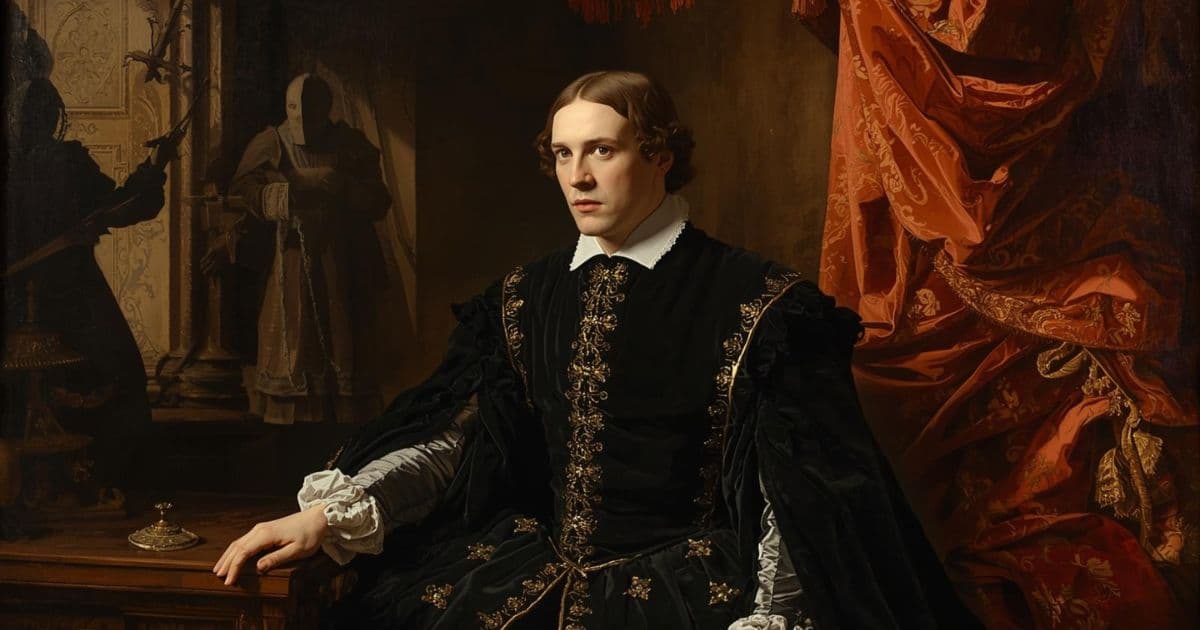
An excerpt from the original text.(complete · 3263 words)
he Lost Dog
Kolya leaned against the fence with an air of dignity, waiting for
Alyosha to appear. Yes, he had long wanted to meet him. He had heard a
great deal about him from the boys, but hitherto he had always
maintained an appearance of disdainful indifference when he was
mentioned, and he had even “criticized” what he heard about Alyosha.
But secretly he had a great longing to make his acquaintance; there was
something sympathetic and attractive in all he was told about Alyosha.
So the present moment was important: to begin with, he had to show
himself at his best, to show his independence, “Or he’ll think of me as
thirteen and take me for a boy, like the rest of them. And what are
these boys to him? I shall ask him when I get to know him. It’s a pity
I am so short, though. Tuzikov is younger than I am, yet he is half a
head taller. But I have a clever face. I am not good‐looking. I know
I’m hideous, but I’ve a clever face. I mustn’t talk too freely; if I
fall into his arms all at once, he may think—Tfoo! how horrible if he
should think—!”
Such were the thoughts that excited Kolya while he was doing his utmost
to assume the most independent air. What distressed him most was his
being so short; he did not mind so much his “hideous” face, as being so
short. On the wall in a corner at home he had the year before made a
pencil‐mark to show his height, and every two months since he anxiously
measured himself against it to see how much he had gained. But alas! he
grew very slowly, and this sometimes reduced him almost to despair. His
face was in reality by no means “hideous”; on the contrary, it was
rather attractive, with a fair, pale skin, freckled. His small, lively
gray eyes had a fearless look, and often glowed with feeling. He had
rather high cheekbones; small, very red, but not very thick, lips; his
nose was small and unmistakably turned up. “I’ve a regular pug nose, a
regular pug nose,” Kolya used to mutter to himself when he looked in
the looking‐glass, and he always left it with indignation. “But perhaps
I haven’t got a clever face?” he sometimes thought, doubtful even of
that. But it must not be supposed that his mind was preoccupied with
his face and his height. On the contrary, however bitter the moments
before the looking‐glass were to him, he quickly forgot them, and
forgot them for a long time, “abandoning himself entirely to ideas and
to real life,” as he formulated it to himself.
Alyosha came out quickly and hastened up to Kolya. Before he reached
him, Kolya could see that he looked delighted. “Can he be so glad to
see me?” Kolya wondered, feeling pleased. We may note here, in passing,
that Alyosha’s appearance had undergone a complete change since we saw
him last. He had abandoned his cassock and was wearing now a well‐cut
coat, a soft, round hat, and his hair had been cropped short. All this
was very becoming to him, and he looked quite handsome. His charming
face always had a good‐humored expression; but there was a gentleness
and serenity in his good‐humor. To Kolya’s surprise, Alyosha came out
to him just as he was, without an overcoat. He had evidently come in
haste. He held out his hand to Kolya at once.
“Here you are at last! How anxious we’ve been to see you!”
“There were reasons which you shall know directly. Anyway, I am glad to
make your acquaintance. I’ve long been hoping for an opportunity, and
have heard a great deal about you,” Kolya muttered, a little
breathless.
“We should have met anyway. I’ve heard a great deal about you, too; but
you’ve been a long time coming here.”
“Tell me, how are things going?”
“Ilusha is very ill. He is certainly dying.”
“How awful! You must admit that medicine is a fraud, Karamazov,” cried
Kolya warmly.
“Ilusha has mentioned you often, very often, even in his sleep, in
delirium, you know. One can see that you used to be very, very dear to
him ... before the incident ... with the knife.... Then there’s another
reason.... Tell me, is that your dog?”
“Yes, Perezvon.”
“Not Zhutchka?” Alyosha looked at Kolya with eyes full of pity. “Is she
lost for ever?”
“I know you would all like it to be Zhutchka. I’ve heard all about it.”
Kolya smiled mysteriously. “Listen, Karamazov, I’ll tell you all about
it. That’s what I came for; that’s what I asked you to come out here
for, to explain the whole episode to you before we go in,” he began
with animation. “You see, Karamazov, Ilusha came into the preparatory
class last spring. Well, you know what our preparatory class is—a lot
of small boys. They began teasing Ilusha at once. I am two classes
higher up, and, of course, I only look on at them from a distance. I
saw the boy was weak and small, but he wouldn’t give in to them; he
fought with them. I saw he was proud, and his eyes were full of fire. I
like children like that. And they teased him all the more. The worst of
it was he was horribly dressed at the time, his breeches were too small
for him, and there were holes in his boots. They worried him about it;
they jeered at him. That I can’t stand. I stood up for him at once, and
gave it to them hot. I beat them, but they adore me, do you know,
Karamazov?” Kolya boasted impulsively; “but I am always fond of
children. I’ve two chickens in my hands at home now—that’s what
detained me to‐day. So they left off beating Ilusha and I took him
under my protection. I saw the boy was proud. I tell you that, the boy
was proud; but in the end he became slavishly devoted to me: he did my
slightest bidding, obeyed me as though I were God, tried to copy me. In
the intervals between the classes he used to run to me at once, and I’d
go about with him. On Sundays, too. They always laugh when an older boy
makes friends with a younger one like that; but that’s a prejudice. If
it’s my fancy, that’s enough. I am teaching him, developing him. Why
shouldn’t I develop him if I like him? Here you, Karamazov, have taken
up with all these nestlings. I see you want to influence the younger
generation—to develop them, to be of use to them, and I assure you this
trait in your character, which I knew by hearsay, attracted me more
than anything. Let us get to the point, though. I noticed that there
was a sort of softness and sentimentality coming over the boy, and you
know I have a positive hatred of this sheepish sentimentality, and I
have had it from a baby. There were contradictions in him, too: he was
proud, but he was slavishly devoted to me, and yet all at once his eyes
would flash and he’d refuse to agree with me; he’d argue, fly into a
rage. I used sometimes to propound certain ideas; I could see that it
was not so much that he disagreed with the ideas, but that he was
simply rebelling against me, because I was cool in responding to his
endearments. And so, in order to train him properly, the tenderer he
was, the colder I became. I did it on purpose: that was my idea. My
object was to form his character, to lick him into shape, to make a man
of him ... and besides ... no doubt, you understand me at a word.
Suddenly I noticed for three days in succession he was downcast and
dejected, not because of my coldness, but for something else, something
more important. I wondered what the tragedy was. I have pumped him and
found out that he had somehow got to know Smerdyakov, who was footman
to your late father—it was before his death, of course—and he taught
the little fool a silly trick—that is, a brutal, nasty trick. He told
him to take a piece of bread, to stick a pin in it, and throw it to one
of those hungry dogs who snap up anything without biting it, and then
to watch and see what would happen. So they prepared a piece of bread
like that and threw it to Zhutchka, that shaggy dog there’s been such a
fuss about. The people of the house it belonged to never fed it at all,
though it barked all day. (Do you like that stupid barking, Karamazov?
I can’t stand it.) So it rushed at the bread, swallowed it, and began
to squeal; it turned round and round and ran away, squealing as it ran
out of sight. That was Ilusha’s own account of it. He confessed it to
me, and cried bitterly. He hugged me, shaking all over. He kept on
repeating ‘He ran away squealing’: the sight of that haunted him. He
was tormented by remorse, I could see that. I took it seriously. I
determined to give him a lesson for other things as well. So I must
confess I wasn’t quite straightforward, and pretended to be more
indignant perhaps than I was. ‘You’ve done a nasty thing,’ I said, ‘you
are a scoundrel. I won’t tell of it, of course, but I shall have
nothing more to do with you for a time. I’ll think it over and let you
know through Smurov’—that’s the boy who’s just come with me; he’s
always ready to do anything for me—‘whether I will have anything to do
with you in the future or whether I give you up for good as a
scoundrel.’ He was tremendously upset. I must own I felt I’d gone too
far as I spoke, but there was no help for it. I did what I thought best
at the time. A day or two after, I sent Smurov to tell him that I would
not speak to him again. That’s what we call it when two schoolfellows
refuse to have anything more to do with one another. Secretly I only
meant to send him to Coventry for a few days and then, if I saw signs
of repentance, to hold out my hand to him again. That was my intention.
But what do you think happened? He heard Smurov’s message, his eyes
flashed. ‘Tell Krassotkin from me,’ he cried, ‘that I will throw bread
with pins to all the dogs—all—all of them!’ ‘So he’s going in for a
little temper. We must smoke it out of him.’ And I began to treat him
with contempt; whenever I met him I turned away or smiled
sarcastically. And just then that affair with his father happened. You
remember? You must realize that he was fearfully worked up by what had
happened already. The boys, seeing I’d given him up, set on him and
taunted him, shouting, ‘Wisp of tow, wisp of tow!’ And he had soon
regular skirmishes with them, which I am very sorry for. They seem to
have given him one very bad beating. One day he flew at them all as
they were coming out of school. I stood a few yards off, looking on.
And, I swear, I don’t remember that I laughed; it was quite the other
way, I felt awfully sorry for him, in another minute I would have run
up to take his part. But he suddenly met my eyes. I don’t know what he
fancied; but he pulled out a penknife, rushed at me, and struck at my
thigh, here in my right leg. I didn’t move. I don’t mind owning I am
plucky sometimes, Karamazov. I simply looked at him contemptuously, as
though to say, ‘This is how you repay all my kindness! Do it again, if
you like, I’m at your service.’ But he didn’t stab me again; he broke
down, he was frightened at what he had done, he threw away the knife,
burst out crying, and ran away. I did not sneak on him, of course, and
I made them all keep quiet, so it shouldn’t come to the ears of the
masters. I didn’t even tell my mother till it had healed up. And the
wound was a mere scratch. And then I heard that the same day he’d been
throwing stones and had bitten your finger—but you understand now what
a state he was in! Well, it can’t be helped: it was stupid of me not to
come and forgive him—that is, to make it up with him—when he was taken
ill. I am sorry for it now. But I had a special reason. So now I’ve
told you all about it ... but I’m afraid it was stupid of me.”
“Oh, what a pity,” exclaimed Alyosha, with feeling, “that I didn’t know
before what terms you were on with him, or I’d have come to you long
ago to beg you to go to him with me. Would you believe it, when he was
feverish he talked about you in delirium. I didn’t know how much you
were to him! And you’ve really not succeeded in finding that dog? His
father and the boys have been hunting all over the town for it. Would
you believe it, since he’s been ill, I’ve three times heard him repeat
with tears, ‘It’s because I killed Zhutchka, father, that I am ill now.
God is punishing me for it.’ He can’t get that idea out of his head.
And if the dog were found and proved to be alive, one might almost
fancy the joy would cure him. We have all rested our hopes on you.”
“Tell me, what made you hope that I should be the one to find him?”
Kolya asked, with great curiosity. “Why did you reckon on me rather
than any one else?”
“There was a report that you were looking for the dog, and that you
would bring it when you’d found it. Smurov said something of the sort.
We’ve all been trying to persuade Ilusha that the dog is alive, that
it’s been seen. The boys brought him a live hare; he just looked at it,
with a faint smile, and asked them to set it free in the fields. And so
we did. His father has just this moment come back, bringing him a
mastiff pup, hoping to comfort him with that; but I think it only makes
it worse.”
“Tell me, Karamazov, what sort of man is the father? I know him, but
what do you make of him—a mountebank, a buffoon?”
“Oh, no; there are people of deep feeling who have been somehow
crushed. Buffoonery in them is a form of resentful irony against those
to whom they daren’t speak the truth, from having been for years
humiliated and intimidated by them. Believe me, Krassotkin, that sort
of buffoonery is sometimes tragic in the extreme. His whole life now is
centered in Ilusha, and if Ilusha dies, he will either go mad with
grief or kill himself. I feel almost certain of that when I look at him
now.”
“I understand you, Karamazov. I see you understand human nature,” Kolya
added, with feeling.
“And as soon as I saw you with a dog, I thought it was Zhutchka you
were bringing.”
“Wait a bit, Karamazov, perhaps we shall find it yet; but this is
Perezvon. I’ll let him go in now and perhaps it will amuse Ilusha more
than the mastiff pup. Wait a bit, Karamazov, you will know something in
a minute. But, I say, I am keeping you here!” Kolya cried suddenly.
“You’ve no overcoat on in this bitter cold. You see what an egoist I
am. Oh, we are all egoists, Karamazov!”
“Don’t trouble; it is cold, but I don’t often catch cold. Let us go in,
though, and, by the way, what is your name? I know you are called
Kolya, but what else?”
“Nikolay—Nikolay Ivanovitch Krassotkin, or, as they say in official
documents, ‘Krassotkin son.’ ” Kolya laughed for some reason, but added
suddenly, “Of course I hate my name Nikolay.”
“Why so?”
“It’s so trivial, so ordinary.”
“You are thirteen?” asked Alyosha.
“No, fourteen—that is, I shall be fourteen very soon, in a fortnight.
I’ll confess one weakness of mine, Karamazov, just to you, since it’s
our first meeting, so that you may understand my character at once. I
hate being asked my age, more than that ... and in fact ... there’s a
libelous story going about me, that last week I played robbers with the
preparatory boys. It’s a fact that I did play with them, but it’s a
perfect libel to say I did it for my own amusement. I have reasons for
believing that you’ve heard the story; but I wasn’t playing for my own
amusement, it was for the sake of the children, because they couldn’t
think of anything to do by themselves. But they’ve always got some
silly tale. This is an awful town for gossip, I can tell you.”
“But what if you had been playing for your own amusement, what’s the
harm?”
“Come, I say, for my own amusement! You don’t play horses, do you?”
“But you must look at it like this,” said Alyosha, smiling. “Grown‐up
people go to the theater and there the adventures of all sorts of
heroes are represented—sometimes there are robbers and battles, too—and
isn’t that just the same thing, in a different form, of course? And
young people’s games of soldiers or robbers in their playtime are also
art in its first stage. You know, they spring from the growing artistic
instincts of the young. And sometimes these games are much better than
performances in the theater, the only difference is that people go
there to look at the actors, while in these games the young people are
the actors themselves. But that’s only natural.”
“You think so? Is that your idea?” Kolya looked at him intently. “Oh,
you know, that’s rather an interesting view. When I go home, I’ll think
it over. I’ll admit I thought I might learn something from you. I’ve
come to learn of you, Karamazov,” Kolya concluded, in a voice full of
spontaneous feeling.
“And I of you,” said Alyosha, smiling and pressing his hand.
Kolya was much pleased with Alyosha. What struck him most was that he
treated him exactly like an equal and that he talked to him just as if
he were “quite grown up.”
“I’ll show you something directly, Karamazov; it’s a theatrical
performance, too,” he said, laughing nervously. “That’s why I’ve come.”
“Let us go first to the people of the house, on the left. All the boys
leave their coats in there, because the room is small and hot.”
“Oh, I’m only coming in for a minute. I’ll keep on my overcoat.
Perezvon will stay here in the passage and be dead. Ici, Perezvon,
lie down and be dead! You see how he’s dead. I’ll go in first and
explore, then I’ll whistle to him when I think fit, and you’ll see,
he’ll dash in like mad. Only Smurov must not forget to open the door at
the moment. I’ll arrange it all and you’ll see something.”
Master this chapter. Complete your experience
Purchase the complete book to access all chapters and support classic literature
As an Amazon Associate, we earn a small commission from qualifying purchases at no additional cost to you.
Available in paperback, hardcover, and e-book formats
Let's Analyse the Pattern
Using moral superiority and emotional withdrawal to mask our own insecurities while claiming to teach others lessons.
Why This Matters
Connect literature to life
This chapter teaches how to recognize when our attempts to 'educate' others are really ways of managing our own insecurities and need for control.
Practice This Today
This week, notice when you feel the urge to teach someone a lesson through withdrawal or coldness—ask yourself if you're actually protecting your own ego rather than helping them grow.
Now let's explore the literary elements.
Key Quotes & Analysis
"Or he'll think of me as thirteen and take me for a boy, like the rest of them."
Context: Kolya's internal anxiety before meeting Alyosha
Shows how desperately Kolya wants to be seen as mature and important. His whole identity is built around being superior to other children, which sets him up for the mistakes he makes with Ilusha.
In Today's Words:
I hope he doesn't see me as just some kid who doesn't matter.
"I wanted to punish him for his cruelty, but I seem to have punished myself more than him."
Context: Explaining to Alyosha why he stayed away from the dying Ilusha
The heart of Kolya's realization that his 'moral teaching' was really about his own need to feel superior. True punishment often hurts the punisher more than the punished.
In Today's Words:
I thought I was teaching him a lesson, but I just made everything worse for both of us.
"I've been hoping and hoping that he would come to me himself to beg my forgiveness."
Context: Admitting his expectations about Ilusha's response to being rejected
Reveals how Kolya's 'lesson' was really about his ego - he wanted Ilusha to grovel and acknowledge Kolya's moral superiority rather than genuinely learn compassion.
In Today's Words:
I wanted him to come crawling back and admit I was right all along.
Thematic Threads
Insecurity
In This Chapter
Kolya's deep anxiety about his height and appearance drives his need to control and teach others
Development
Introduced here as a driving force behind seemingly confident behavior
In Your Life:
You might recognize this when your harshest judgments of others coincide with your deepest self-doubts
Power
In This Chapter
Kolya uses emotional withdrawal as a weapon, withholding friendship to punish Ilusha
Development
Builds on earlier themes of how people use whatever power they have
In Your Life:
You see this when someone uses silence, coldness, or disapproval to control behavior instead of direct communication
Acceptance
In This Chapter
Alyosha treats Kolya as an equal rather than a child, immediately breaking through his defenses
Development
Continues Alyosha's pattern of meeting people where they are without judgment
In Your Life:
You experience this when someone listens to your story without trying to fix or judge you
Guilt
In This Chapter
Both boys are consumed by guilt—Ilusha over the dog, Kolya over his failed teaching method
Development
Deepens the exploration of how guilt drives destructive behavior patterns
In Your Life:
You might notice how guilt makes you either withdraw completely or overcompensate with harsh self-punishment
Redemption
In This Chapter
Kolya's hint about finding Zhutchka suggests a path toward healing both relationships and conscience
Development
Introduced here as a possibility emerging from honest acknowledgment of mistakes
In Your Life:
You see this when someone takes concrete action to repair damage rather than just apologizing with words
You now have the context. Time to form your own thoughts.
Discussion Questions
- 1
Why did Kolya decide to punish Ilusha with coldness instead of talking to him directly about the dog incident?
analysis • surface - 2
How did Kolya's own insecurities about his height and appearance influence the way he treated Ilusha?
analysis • medium - 3
Where do you see this pattern of 'tough love' punishment in workplaces, families, or relationships today?
application • medium - 4
What's the difference between Kolya's approach to correction and Alyosha's approach? Which one actually changes behavior?
analysis • deep - 5
When someone withdraws warmth to 'teach you a lesson,' what does this reveal about their own emotional state?
reflection • deep
Critical Thinking Exercise
Rewrite the Tough Love Script
Think of a time when someone used coldness or withdrawal to 'teach you a lesson,' or when you did this to someone else. Write out what actually happened, then rewrite the scene using Alyosha's approach—staying connected while addressing the problem. How would the conversation have gone differently?
Consider:
- •Focus on the difference between punishment and guidance
- •Notice how insecurity drives the need to 'toughen up' others
- •Consider how acceptance creates space for genuine change
Journaling Prompt
Write about a relationship where you've been either the cold teacher or the rejected student. What was really driving that dynamic? How could warmth and honesty have changed the outcome?
Coming Up Next...
Chapter 67: The Return of Zhutchka
Kolya prepares to enter Ilusha's sickroom with Perezvon, planning a dramatic reveal that could either bring joy or heartbreak. Will his theatrical gesture help heal the wounds between the boys, or will it be too little, too late?