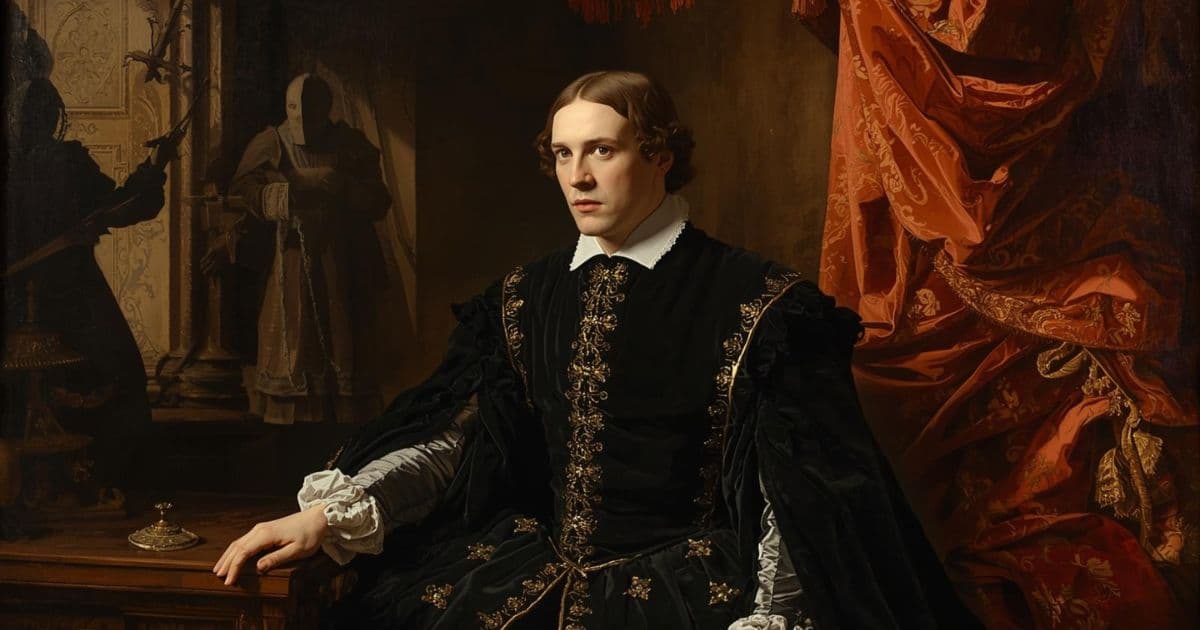
An excerpt from the original text.(complete · 4407 words)
he Third Ordeal
Though Mitya spoke sullenly, it was evident that he was trying more
than ever not to forget or miss a single detail of his story. He told
them how he had leapt over the fence into his father’s garden; how he
had gone up to the window; told them all that had passed under the
window. Clearly, precisely, distinctly, he described the feelings that
troubled him during those moments in the garden when he longed so
terribly to know whether Grushenka was with his father or not. But,
strange to say, both the lawyers listened now with a sort of awful
reserve, looked coldly at him, asked few questions. Mitya could gather
nothing from their faces.
“They’re angry and offended,” he thought. “Well, bother them!”
When he described how he made up his mind at last to make the “signal”
to his father that Grushenka had come, so that he should open the
window, the lawyers paid no attention to the word “signal,” as though
they entirely failed to grasp the meaning of the word in this
connection: so much so, that Mitya noticed it. Coming at last to the
moment when, seeing his father peering out of the window, his hatred
flared up and he pulled the pestle out of his pocket, he suddenly, as
though of design, stopped short. He sat gazing at the wall and was
aware that their eyes were fixed upon him.
“Well?” said the investigating lawyer. “You pulled out the weapon and
... and what happened then?”
“Then? Why, then I murdered him ... hit him on the head and cracked his
skull.... I suppose that’s your story. That’s it!”
His eyes suddenly flashed. All his smothered wrath suddenly flamed up
with extraordinary violence in his soul.
“Our story?” repeated Nikolay Parfenovitch. “Well—and yours?”
Mitya dropped his eyes and was a long time silent.
“My story, gentlemen? Well, it was like this,” he began softly.
“Whether it was some one’s tears, or my mother prayed to God, or a good
angel kissed me at that instant, I don’t know. But the devil was
conquered. I rushed from the window and ran to the fence. My father was
alarmed and, for the first time, he saw me then, cried out, and sprang
back from the window. I remember that very well. I ran across the
garden to the fence ... and there Grigory caught me, when I was sitting
on the fence.”
At that point he raised his eyes at last and looked at his listeners.
They seemed to be staring at him with perfectly unruffled attention. A
sort of paroxysm of indignation seized on Mitya’s soul.
“Why, you’re laughing at me at this moment, gentlemen!” he broke off
suddenly.
“What makes you think that?” observed Nikolay Parfenovitch.
“You don’t believe one word—that’s why! I understand, of course, that I
have come to the vital point. The old man’s lying there now with his
skull broken, while I—after dramatically describing how I wanted to
kill him, and how I snatched up the pestle—I suddenly run away from the
window. A romance! Poetry! As though one could believe a fellow on his
word. Ha ha! You are scoffers, gentlemen!”
And he swung round on his chair so that it creaked.
“And did you notice,” asked the prosecutor suddenly, as though not
observing Mitya’s excitement, “did you notice when you ran away from
the window, whether the door into the garden was open?”
“No, it was not open.”
“It was not?”
“It was shut. And who could open it? Bah! the door. Wait a bit!” he
seemed suddenly to bethink himself, and almost with a start:
“Why, did you find the door open?”
“Yes, it was open.”
“Why, who could have opened it if you did not open it yourselves?”
cried Mitya, greatly astonished.
“The door stood open, and your father’s murderer undoubtedly went in at
that door, and, having accomplished the crime, went out again by the
same door,” the prosecutor pronounced deliberately, as though chiseling
out each word separately. “That is perfectly clear. The murder was
committed in the room and not through the window; that is absolutely
certain from the examination that has been made, from the position of
the body and everything. There can be no doubt of that circumstance.”
Mitya was absolutely dumbfounded.
“But that’s utterly impossible!” he cried, completely at a loss. “I ...
I didn’t go in.... I tell you positively, definitely, the door was shut
the whole time I was in the garden, and when I ran out of the garden. I
only stood at the window and saw him through the window. That’s all,
that’s all.... I remember to the last minute. And if I didn’t remember,
it would be just the same. I know it, for no one knew the signals
except Smerdyakov, and me, and the dead man. And he wouldn’t have
opened the door to any one in the world without the signals.”
“Signals? What signals?” asked the prosecutor, with greedy, almost
hysterical, curiosity. He instantly lost all trace of his reserve and
dignity. He asked the question with a sort of cringing timidity. He
scented an important fact of which he had known nothing, and was
already filled with dread that Mitya might be unwilling to disclose it.
“So you didn’t know!” Mitya winked at him with a malicious and mocking
smile. “What if I won’t tell you? From whom could you find out? No one
knew about the signals except my father, Smerdyakov, and me: that was
all. Heaven knew, too, but it won’t tell you. But it’s an interesting
fact. There’s no knowing what you might build on it. Ha ha! Take
comfort, gentlemen, I’ll reveal it. You’ve some foolish idea in your
hearts. You don’t know the man you have to deal with! You have to do
with a prisoner who gives evidence against himself, to his own damage!
Yes, for I’m a man of honor and you—are not.”
The prosecutor swallowed this without a murmur. He was trembling with
impatience to hear the new fact. Minutely and diffusely Mitya told them
everything about the signals invented by Fyodor Pavlovitch for
Smerdyakov. He told them exactly what every tap on the window meant,
tapped the signals on the table, and when Nikolay Parfenovitch said
that he supposed he, Mitya, had tapped the signal “Grushenka has come,”
when he tapped to his father, he answered precisely that he had tapped
that signal, that “Grushenka had come.”
“So now you can build up your tower,” Mitya broke off, and again turned
away from them contemptuously.
“So no one knew of the signals but your dead father, you, and the valet
Smerdyakov? And no one else?” Nikolay Parfenovitch inquired once more.
“Yes. The valet Smerdyakov, and Heaven. Write down about Heaven. That
may be of use. Besides, you will need God yourselves.”
And they had already, of course, begun writing it down. But while they
wrote, the prosecutor said suddenly, as though pitching on a new idea:
“But if Smerdyakov also knew of these signals and you absolutely deny
all responsibility for the death of your father, was it not he,
perhaps, who knocked the signal agreed upon, induced your father to
open to him, and then ... committed the crime?”
Mitya turned upon him a look of profound irony and intense hatred. His
silent stare lasted so long that it made the prosecutor blink.
“You’ve caught the fox again,” commented Mitya at last; “you’ve got the
beast by the tail. Ha ha! I see through you, Mr. Prosecutor. You
thought, of course, that I should jump at that, catch at your
prompting, and shout with all my might, ‘Aie! it’s Smerdyakov; he’s the
murderer.’ Confess that’s what you thought. Confess, and I’ll go on.”
But the prosecutor did not confess. He held his tongue and waited.
“You’re mistaken. I’m not going to shout ‘It’s Smerdyakov,’ ” said
Mitya.
“And you don’t even suspect him?”
“Why, do you suspect him?”
“He is suspected, too.”
Mitya fixed his eyes on the floor.
“Joking apart,” he brought out gloomily. “Listen. From the very
beginning, almost from the moment when I ran out to you from behind the
curtain, I’ve had the thought of Smerdyakov in my mind. I’ve been
sitting here, shouting that I’m innocent and thinking all the time
‘Smerdyakov!’ I can’t get Smerdyakov out of my head. In fact, I, too,
thought of Smerdyakov just now; but only for a second. Almost at once I
thought, ‘No, it’s not Smerdyakov.’ It’s not his doing, gentlemen.”
“In that case is there anybody else you suspect?” Nikolay Parfenovitch
inquired cautiously.
“I don’t know any one it could be, whether it’s the hand of Heaven or
Satan, but ... not Smerdyakov,” Mitya jerked out with decision.
“But what makes you affirm so confidently and emphatically that it’s
not he?”
“From my conviction—my impression. Because Smerdyakov is a man of the
most abject character and a coward. He’s not a coward, he’s the epitome
of all the cowardice in the world walking on two legs. He has the heart
of a chicken. When he talked to me, he was always trembling for fear I
should kill him, though I never raised my hand against him. He fell at
my feet and blubbered; he has kissed these very boots, literally,
beseeching me ‘not to frighten him.’ Do you hear? ‘Not to frighten
him.’ What a thing to say! Why, I offered him money. He’s a puling
chicken—sickly, epileptic, weak‐minded—a child of eight could thrash
him. He has no character worth talking about. It’s not Smerdyakov,
gentlemen. He doesn’t care for money; he wouldn’t take my presents.
Besides, what motive had he for murdering the old man? Why, he’s very
likely his son, you know—his natural son. Do you know that?”
“We have heard that legend. But you are your father’s son, too, you
know; yet you yourself told every one you meant to murder him.”
“That’s a thrust! And a nasty, mean one, too! I’m not afraid! Oh,
gentlemen, isn’t it too base of you to say that to my face? It’s base,
because I told you that myself. I not only wanted to murder him, but I
might have done it. And, what’s more, I went out of my way to tell you
of my own accord that I nearly murdered him. But, you see, I didn’t
murder him; you see, my guardian angel saved me—that’s what you’ve not
taken into account. And that’s why it’s so base of you. For I didn’t
kill him, I didn’t kill him! Do you hear, I did not kill him.”
He was almost choking. He had not been so moved before during the whole
interrogation.
“And what has he told you, gentlemen—Smerdyakov, I mean?” he added
suddenly, after a pause. “May I ask that question?”
“You may ask any question,” the prosecutor replied with frigid
severity, “any question relating to the facts of the case, and we are,
I repeat, bound to answer every inquiry you make. We found the servant
Smerdyakov, concerning whom you inquire, lying unconscious in his bed,
in an epileptic fit of extreme severity, that had recurred, possibly,
ten times. The doctor who was with us told us, after seeing him, that
he may possibly not outlive the night.”
“Well, if that’s so, the devil must have killed him,” broke suddenly
from Mitya, as though until that moment he had been asking himself:
“Was it Smerdyakov or not?”
“We will come back to this later,” Nikolay Parfenovitch decided. “Now,
wouldn’t you like to continue your statement?”
Mitya asked for a rest. His request was courteously granted. After
resting, he went on with his story. But he was evidently depressed. He
was exhausted, mortified and morally shaken. To make things worse the
prosecutor exasperated him, as though intentionally, by vexatious
interruptions about “trifling points.” Scarcely had Mitya described
how, sitting on the wall, he had struck Grigory on the head with the
pestle, while the old man had hold of his left leg, and how he had then
jumped down to look at him, when the prosecutor stopped him to ask him
to describe exactly how he was sitting on the wall. Mitya was
surprised.
“Oh, I was sitting like this, astride, one leg on one side of the wall
and one on the other.”
“And the pestle?”
“The pestle was in my hand.”
“Not in your pocket? Do you remember that precisely? Was it a violent
blow you gave him?”
“It must have been a violent one. But why do you ask?”
“Would you mind sitting on the chair just as you sat on the wall then
and showing us just how you moved your arm, and in what direction?”
“You’re making fun of me, aren’t you?” asked Mitya, looking haughtily
at the speaker; but the latter did not flinch.
Mitya turned abruptly, sat astride on his chair, and swung his arm.
“This was how I struck him! That’s how I knocked him down! What more do
you want?”
“Thank you. May I trouble you now to explain why you jumped down, with
what object, and what you had in view?”
“Oh, hang it!... I jumped down to look at the man I’d hurt ... I don’t
know what for!”
“Though you were so excited and were running away?”
“Yes, though I was excited and running away.”
“You wanted to help him?”
“Help!... Yes, perhaps I did want to help him.... I don’t remember.”
“You don’t remember? Then you didn’t quite know what you were doing?”
“Not at all. I remember everything—every detail. I jumped down to look
at him, and wiped his face with my handkerchief.”
“We have seen your handkerchief. Did you hope to restore him to
consciousness?”
“I don’t know whether I hoped it. I simply wanted to make sure whether
he was alive or not.”
“Ah! You wanted to be sure? Well, what then?”
“I’m not a doctor. I couldn’t decide. I ran away thinking I’d killed
him. And now he’s recovered.”
“Excellent,” commented the prosecutor. “Thank you. That’s all I wanted.
Kindly proceed.”
Alas! it never entered Mitya’s head to tell them, though he remembered
it, that he had jumped back from pity, and standing over the prostrate
figure had even uttered some words of regret: “You’ve come to grief,
old man—there’s no help for it. Well, there you must lie.”
The prosecutor could only draw one conclusion: that the man had jumped
back “at such a moment and in such excitement simply with the object of
ascertaining whether the only witness of his crime were dead; that he
must therefore have been a man of great strength, coolness, decision
and foresight even at such a moment,” ... and so on. The prosecutor was
satisfied: “I’ve provoked the nervous fellow by ‘trifles’ and he has
said more than he meant to.”
With painful effort Mitya went on. But this time he was pulled up
immediately by Nikolay Parfenovitch.
“How came you to run to the servant, Fedosya Markovna, with your hands
so covered with blood, and, as it appears, your face, too?”
“Why, I didn’t notice the blood at all at the time,” answered Mitya.
“That’s quite likely. It does happen sometimes.” The prosecutor
exchanged glances with Nikolay Parfenovitch.
“I simply didn’t notice. You’re quite right there, prosecutor,” Mitya
assented suddenly.
Next came the account of Mitya’s sudden determination to “step aside”
and make way for their happiness. But he could not make up his mind to
open his heart to them as before, and tell them about “the queen of his
soul.” He disliked speaking of her before these chilly persons “who
were fastening on him like bugs.” And so in response to their
reiterated questions he answered briefly and abruptly:
“Well, I made up my mind to kill myself. What had I left to live for?
That question stared me in the face. Her first rightful lover had come
back, the man who wronged her but who’d hurried back to offer his love,
after five years, and atone for the wrong with marriage.... So I knew
it was all over for me.... And behind me disgrace, and that
blood—Grigory’s.... What had I to live for? So I went to redeem the
pistols I had pledged, to load them and put a bullet in my brain
to‐morrow.”
“And a grand feast the night before?”
“Yes, a grand feast the night before. Damn it all, gentlemen! Do make
haste and finish it. I meant to shoot myself not far from here, beyond
the village, and I’d planned to do it at five o’clock in the morning.
And I had a note in my pocket already. I wrote it at Perhotin’s when I
loaded my pistols. Here’s the letter. Read it! It’s not for you I tell
it,” he added contemptuously. He took it from his waistcoat pocket and
flung it on the table. The lawyers read it with curiosity, and, as is
usual, added it to the papers connected with the case.
“And you didn’t even think of washing your hands at Perhotin’s? You
were not afraid then of arousing suspicion?”
“What suspicion? Suspicion or not, I should have galloped here just the
same, and shot myself at five o’clock, and you wouldn’t have been in
time to do anything. If it hadn’t been for what’s happened to my
father, you would have known nothing about it, and wouldn’t have come
here. Oh, it’s the devil’s doing. It was the devil murdered father, it
was through the devil that you found it out so soon. How did you manage
to get here so quick? It’s marvelous, a dream!”
“Mr. Perhotin informed us that when you came to him, you held in your
hands ... your blood‐stained hands ... your money ... a lot of money
... a bundle of hundred‐rouble notes, and that his servant‐boy saw it
too.”
“That’s true, gentlemen. I remember it was so.”
“Now, there’s one little point presents itself. Can you inform us,”
Nikolay Parfenovitch began, with extreme gentleness, “where did you get
so much money all of a sudden, when it appears from the facts, from the
reckoning of time, that you had not been home?”
The prosecutor’s brows contracted at the question being asked so
plainly, but he did not interrupt Nikolay Parfenovitch.
“No, I didn’t go home,” answered Mitya, apparently perfectly composed,
but looking at the floor.
“Allow me then to repeat my question,” Nikolay Parfenovitch went on as
though creeping up to the subject. “Where were you able to procure such
a sum all at once, when by your own confession, at five o’clock the
same day you—”
“I was in want of ten roubles and pledged my pistols with Perhotin, and
then went to Madame Hohlakov to borrow three thousand which she
wouldn’t give me, and so on, and all the rest of it,” Mitya interrupted
sharply. “Yes, gentlemen, I was in want of it, and suddenly thousands
turned up, eh? Do you know, gentlemen, you’re both afraid now ‘what if
he won’t tell us where he got it?’ That’s just how it is. I’m not going
to tell you, gentlemen. You’ve guessed right. You’ll never know,” said
Mitya, chipping out each word with extraordinary determination. The
lawyers were silent for a moment.
“You must understand, Mr. Karamazov, that it is of vital importance for
us to know,” said Nikolay Parfenovitch, softly and suavely.
“I understand; but still I won’t tell you.”
The prosecutor, too, intervened, and again reminded the prisoner that
he was at liberty to refuse to answer questions, if he thought it to
his interest, and so on. But in view of the damage he might do himself
by his silence, especially in a case of such importance as—
“And so on, gentlemen, and so on. Enough! I’ve heard that rigmarole
before,” Mitya interrupted again. “I can see for myself how important
it is, and that this is the vital point, and still I won’t say.”
“What is it to us? It’s not our business, but yours. You are doing
yourself harm,” observed Nikolay Parfenovitch nervously.
“You see, gentlemen, joking apart”—Mitya lifted his eyes and looked
firmly at them both—“I had an inkling from the first that we should
come to loggerheads at this point. But at first when I began to give my
evidence, it was all still far away and misty; it was all floating, and
I was so simple that I began with the supposition of mutual confidence
existing between us. Now I can see for myself that such confidence is
out of the question, for in any case we were bound to come to this
cursed stumbling‐ block. And now we’ve come to it! It’s impossible and
there’s an end of it! But I don’t blame you. You can’t believe it all
simply on my word. I understand that, of course.”
He relapsed into gloomy silence.
“Couldn’t you, without abandoning your resolution to be silent about
the chief point, could you not, at the same time, give us some slight
hint as to the nature of the motives which are strong enough to induce
you to refuse to answer, at a crisis so full of danger to you?”
Mitya smiled mournfully, almost dreamily.
“I’m much more good‐natured than you think, gentlemen. I’ll tell you
the reason why and give you that hint, though you don’t deserve it. I
won’t speak of that, gentlemen, because it would be a stain on my
honor. The answer to the question where I got the money would expose me
to far greater disgrace than the murder and robbing of my father, if I
had murdered and robbed him. That’s why I can’t tell you. I can’t for
fear of disgrace. What, gentlemen, are you going to write that down?”
“Yes, we’ll write it down,” lisped Nikolay Parfenovitch.
“You ought not to write that down about ‘disgrace.’ I only told you
that in the goodness of my heart. I needn’t have told you. I made you a
present of it, so to speak, and you pounce upon it at once. Oh, well,
write—write what you like,” he concluded, with scornful disgust. “I’m
not afraid of you and I can still hold up my head before you.”
“And can’t you tell us the nature of that disgrace?” Nikolay
Parfenovitch hazarded.
The prosecutor frowned darkly.
“No, no, c’est fini, don’t trouble yourselves. It’s not worth while
soiling one’s hands. I have soiled myself enough through you as it is.
You’re not worth it—no one is ... Enough, gentlemen. I’m not going on.”
This was said too peremptorily. Nikolay Parfenovitch did not insist
further, but from Ippolit Kirillovitch’s eyes he saw that he had not
given up hope.
“Can you not, at least, tell us what sum you had in your hands when you
went into Mr. Perhotin’s—how many roubles exactly?”
“I can’t tell you that.”
“You spoke to Mr. Perhotin, I believe, of having received three
thousand from Madame Hohlakov.”
“Perhaps I did. Enough, gentlemen. I won’t say how much I had.”
“Will you be so good then as to tell us how you came here and what you
have done since you arrived?”
“Oh! you might ask the people here about that. But I’ll tell you if you
like.”
He proceeded to do so, but we won’t repeat his story. He told it dryly
and curtly. Of the raptures of his love he said nothing, but told them
that he abandoned his determination to shoot himself, owing to “new
factors in the case.” He told the story without going into motives or
details. And this time the lawyers did not worry him much. It was
obvious that there was no essential point of interest to them here.
“We shall verify all that. We will come back to it during the
examination of the witnesses, which will, of course, take place in your
presence,” said Nikolay Parfenovitch in conclusion. “And now allow me
to request you to lay on the table everything in your possession,
especially all the money you still have about you.”
“My money, gentlemen? Certainly. I understand that that is necessary.
I’m surprised, indeed, that you haven’t inquired about it before. It’s
true I couldn’t get away anywhere. I’m sitting here where I can be
seen. But here’s my money—count it—take it. That’s all, I think.”
He turned it all out of his pockets; even the small change—two pieces
of twenty copecks—he pulled out of his waistcoat pocket. They counted
the money, which amounted to eight hundred and thirty‐six roubles, and
forty copecks.
“And is that all?” asked the investigating lawyer.
“Yes.”
“You stated just now in your evidence that you spent three hundred
roubles at Plotnikovs’. You gave Perhotin ten, your driver twenty, here
you lost two hundred, then....”
Nikolay Parfenovitch reckoned it all up. Mitya helped him readily. They
recollected every farthing and included it in the reckoning. Nikolay
Parfenovitch hurriedly added up the total.
“With this eight hundred you must have had about fifteen hundred at
first?”
“I suppose so,” snapped Mitya.
“How is it they all assert there was much more?”
“Let them assert it.”
“But you asserted it yourself.”
“Yes, I did, too.”
“We will compare all this with the evidence of other persons not yet
examined. Don’t be anxious about your money. It will be properly taken
care of and be at your disposal at the conclusion of ... what is
beginning ... if it appears, or, so to speak, is proved that you have
undisputed right to it. Well, and now....”
Nikolay Parfenovitch suddenly got up, and informed Mitya firmly that it
was his duty and obligation to conduct a minute and thorough search “of
your clothes and everything else....”
“By all means, gentlemen. I’ll turn out all my pockets, if you like.”
And he did, in fact, begin turning out his pockets.
“It will be necessary to take off your clothes, too.”
“What! Undress? Ugh! Damn it! Won’t you search me as I am! Can’t you?”
“It’s utterly impossible, Dmitri Fyodorovitch. You must take off your
clothes.”
“As you like,” Mitya submitted gloomily; “only, please, not here, but
behind the curtains. Who will search them?”
“Behind the curtains, of course.”
Nikolay Parfenovitch bent his head in assent. His small face wore an
expression of peculiar solemnity.
Master this chapter. Complete your experience
Purchase the complete book to access all chapters and support classic literature
As an Amazon Associate, we earn a small commission from qualifying purchases at no additional cost to you.
Available in paperback, hardcover, and e-book formats
Let's Analyse the Pattern
The tendency to protect personal dignity or self-image even when it leads to practical destruction.
Why This Matters
Connect literature to life
This chapter teaches how to separate internal shame from external reality when making crucial decisions.
Practice This Today
This week, notice when you'd rather suffer consequences than admit something embarrassing—then ask if the shame is worth the cost.
Now let's explore the literary elements.
Key Quotes & Analysis
"They're angry and offended. Well, bother them!"
Context: When he notices the lawyers' cold, reserved attitude during his testimony
Shows Mitya's defensive pride and his inability to read the room. He interprets their professional skepticism as personal offense, revealing his emotional immaturity even in this life-or-death situation.
In Today's Words:
They're mad at me? Whatever, screw them!
"You pulled out..."
Context: When Mitya stops mid-sentence while describing pulling out the pestle
The lawyer's strategic use of silence and incomplete prompting. He knows that letting people fill awkward pauses often gets them to reveal more than direct questions would.
In Today's Words:
Go on, finish what you were saying...
"Some secrets are worth protecting even at the cost of one's life"
Context: When refusing to explain where he got the money despite knowing it could save him
Reveals the tragic flaw in Mitya's character - his honor code values shame avoidance over survival. He'd literally rather die than admit to certain humiliations, showing how pride can be self-destructive.
In Today's Words:
I'd rather go down than let everyone know what I really did
Thematic Threads
Pride
In This Chapter
Mitya's refusal to explain the money's source despite it being crucial to his defense
Development
Evolved from earlier displays of family pride to now becoming literally life-threatening
In Your Life:
You might recognize this when you'd rather suffer consequences than admit you made a mistake.
Class
In This Chapter
The investigation reveals the complex servant-master dynamics through the signal system
Development
Continues exploring how class boundaries create opportunities for deception and manipulation
In Your Life:
You see this in workplace hierarchies where information flows differently up and down the chain.
Truth
In This Chapter
Mitya tells some truths readily but absolutely refuses to reveal others
Development
Deepens the theme that truth is selective and strategic, not absolute
In Your Life:
You experience this when deciding what to share with family, employers, or friends.
Power
In This Chapter
The prosecutors gain leverage through Mitya's silence, using his honor against him
Development
Shows how those in authority exploit personal weaknesses to maintain control
In Your Life:
You might notice this when supervisors or officials use your principles to manipulate your choices.
Identity
In This Chapter
Mitya's sense of self is so tied to not being a thief that he'll die rather than appear to be one
Development
Culminates the exploration of how self-image can become more important than self-preservation
In Your Life:
You see this when protecting your reputation becomes more important than protecting your wellbeing.
You now have the context. Time to form your own thoughts.
Discussion Questions
- 1
Why does Mitya refuse to explain where he got the money, even though it could save his life?
analysis • surface - 2
What does Mitya's choice reveal about how he ranks different types of shame or dishonor?
analysis • medium - 3
Where do you see people today protecting their reputation or pride even when it hurts them practically?
application • medium - 4
How do you decide when keeping a secret is worth the cost it might bring?
application • deep - 5
What does this chapter teach us about the difference between being honorable and being wise?
reflection • deep
Critical Thinking Exercise
Map Your Honor Code
Think of a situation where you kept quiet about something important because revealing it felt too shameful or risky. Write down what you were protecting (reputation, relationship, self-image) and what you were risking by staying silent. Then consider: was the thing you were protecting actually more valuable than what you were risking?
Consider:
- •Sometimes what feels like the 'honorable' choice is actually fear in disguise
- •The people who truly matter often care more about your wellbeing than your perfect image
- •There's usually one trusted person who could handle the whole truth
Journaling Prompt
Write about a time when you had to choose between protecting your pride and protecting your practical interests. What did you learn about yourself from that choice?
Coming Up Next...
Chapter 59: The Humiliation of the Search
The physical search begins, and the prosecutors prepare to confront Mitya with evidence that could either vindicate or condemn him. What they find on his person and clothing may finally provide the concrete proof they need.