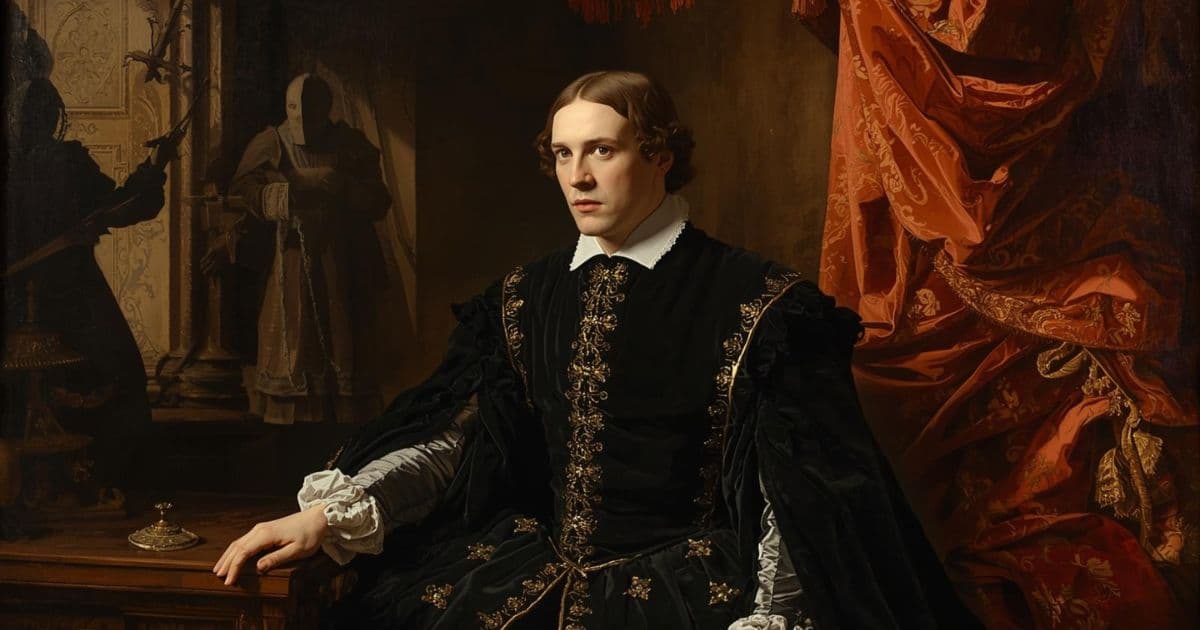
An excerpt from the original text.(complete · 7820 words)
n Onion
Grushenka lived in the busiest part of the town, near the cathedral
square, in a small wooden lodge in the courtyard belonging to the house
of the widow Morozov. The house was a large stone building of two
stories, old and very ugly. The widow led a secluded life with her two
unmarried nieces, who were also elderly women. She had no need to let
her lodge, but every one knew that she had taken in Grushenka as a
lodger, four years before, solely to please her kinsman, the merchant
Samsonov, who was known to be the girl’s protector. It was said that
the jealous old man’s object in placing his “favorite” with the widow
Morozov was that the old woman should keep a sharp eye on her new
lodger’s conduct. But this sharp eye soon proved to be unnecessary, and
in the end the widow Morozov seldom met Grushenka and did not worry her
by looking after her in any way. It is true that four years had passed
since the old man had brought the slim, delicate, shy, timid, dreamy,
and sad girl of eighteen from the chief town of the province, and much
had happened since then. Little was known of the girl’s history in the
town and that little was vague. Nothing more had been learnt during the
last four years, even after many persons had become interested in the
beautiful young woman into whom Agrafena Alexandrovna had meanwhile
developed. There were rumors that she had been at seventeen betrayed by
some one, some sort of officer, and immediately afterwards abandoned by
him. The officer had gone away and afterwards married, while Grushenka
had been left in poverty and disgrace. It was said, however, that
though Grushenka had been raised from destitution by the old man,
Samsonov, she came of a respectable family belonging to the clerical
class, that she was the daughter of a deacon or something of the sort.
And now after four years the sensitive, injured and pathetic little
orphan had become a plump, rosy beauty of the Russian type, a woman of
bold and determined character, proud and insolent. She had a good head
for business, was acquisitive, saving and careful, and by fair means or
foul had succeeded, it was said, in amassing a little fortune. There
was only one point on which all were agreed. Grushenka was not easily
to be approached and except her aged protector there had not been one
man who could boast of her favors during those four years. It was a
positive fact, for there had been a good many, especially during the
last two years, who had attempted to obtain those favors. But all their
efforts had been in vain and some of these suitors had been forced to
beat an undignified and even comic retreat, owing to the firm and
ironical resistance they met from the strong‐willed young person. It
was known, too, that the young person had, especially of late, been
given to what is called “speculation,” and that she had shown marked
abilities in that direction, so that many people began to say that she
was no better than a Jew. It was not that she lent money on interest,
but it was known, for instance, that she had for some time past, in
partnership with old Karamazov, actually invested in the purchase of
bad debts for a trifle, a tenth of their nominal value, and afterwards
had made out of them ten times their value.
The old widower Samsonov, a man of large fortune, was stingy and
merciless. He tyrannized over his grown‐up sons, but, for the last year
during which he had been ill and lost the use of his swollen legs, he
had fallen greatly under the influence of his protégée, whom he had at
first kept strictly and in humble surroundings, “on Lenten fare,” as
the wits said at the time. But Grushenka had succeeded in emancipating
herself, while she established in him a boundless belief in her
fidelity. The old man, now long since dead, had had a large business in
his day and was also a noteworthy character, miserly and hard as flint.
Though Grushenka’s hold upon him was so strong that he could not live
without her (it had been so especially for the last two years), he did
not settle any considerable fortune on her and would not have been
moved to do so, if she had threatened to leave him. But he had
presented her with a small sum, and even that was a surprise to every
one when it became known.
“You are a wench with brains,” he said to her, when he gave her eight
thousand roubles, “and you must look after yourself, but let me tell
you that except your yearly allowance as before, you’ll get nothing
more from me to the day of my death, and I’ll leave you nothing in my
will either.”
And he kept his word; he died and left everything to his sons, whom,
with their wives and children, he had treated all his life as servants.
Grushenka was not even mentioned in his will. All this became known
afterwards. He helped Grushenka with his advice to increase her capital
and put business in her way.
When Fyodor Pavlovitch, who first came into contact with Grushenka over
a piece of speculation, ended to his own surprise by falling madly in
love with her, old Samsonov, gravely ill as he was, was immensely
amused. It is remarkable that throughout their whole acquaintance
Grushenka was absolutely and spontaneously open with the old man, and
he seems to have been the only person in the world with whom she was
so. Of late, when Dmitri too had come on the scene with his love, the
old man left off laughing. On the contrary, he once gave Grushenka a
stern and earnest piece of advice.
“If you have to choose between the two, father or son, you’d better
choose the old man, if only you make sure the old scoundrel will marry
you and settle some fortune on you beforehand. But don’t keep on with
the captain, you’ll get no good out of that.”
These were the very words of the old profligate, who felt already that
his death was not far off and who actually died five months later.
I will note, too, in passing, that although many in our town knew of
the grotesque and monstrous rivalry of the Karamazovs, father and son,
the object of which was Grushenka, scarcely any one understood what
really underlay her attitude to both of them. Even Grushenka’s two
servants (after the catastrophe of which we will speak later) testified
in court that she received Dmitri Fyodorovitch simply from fear because
“he threatened to murder her.” These servants were an old cook,
invalidish and almost deaf, who came from Grushenka’s old home, and her
granddaughter, a smart young girl of twenty, who performed the duties
of a maid. Grushenka lived very economically and her surroundings were
anything but luxurious. Her lodge consisted of three rooms furnished
with mahogany furniture in the fashion of 1820, belonging to her
landlady.
It was quite dark when Rakitin and Alyosha entered her rooms, yet they
were not lighted up. Grushenka was lying down in her drawing‐room on
the big, hard, clumsy sofa, with a mahogany back. The sofa was covered
with shabby and ragged leather. Under her head she had two white down
pillows taken from her bed. She was lying stretched out motionless on
her back with her hands behind her head. She was dressed as though
expecting some one, in a black silk dress, with a dainty lace fichu on
her head, which was very becoming. Over her shoulders was thrown a lace
shawl pinned with a massive gold brooch. She certainly was expecting
some one. She lay as though impatient and weary, her face rather pale
and her lips and eyes hot, restlessly tapping the arm of the sofa with
the tip of her right foot. The appearance of Rakitin and Alyosha caused
a slight excitement. From the hall they could hear Grushenka leap up
from the sofa and cry out in a frightened voice, “Who’s there?” But the
maid met the visitors and at once called back to her mistress.
“It’s not he, it’s nothing, only other visitors.”
“What can be the matter?” muttered Rakitin, leading Alyosha into the
drawing‐room.
Grushenka was standing by the sofa as though still alarmed. A thick
coil of her dark brown hair escaped from its lace covering and fell on
her right shoulder, but she did not notice it and did not put it back
till she had gazed at her visitors and recognized them.
“Ah, it’s you, Rakitin? You quite frightened me. Whom have you brought?
Who is this with you? Good heavens, you have brought him!” she
exclaimed, recognizing Alyosha.
“Do send for candles!” said Rakitin, with the free‐and‐easy air of a
most intimate friend, who is privileged to give orders in the house.
“Candles ... of course, candles.... Fenya, fetch him a candle.... Well,
you have chosen a moment to bring him!” she exclaimed again, nodding
towards Alyosha, and turning to the looking‐glass she began quickly
fastening up her hair with both hands. She seemed displeased.
“Haven’t I managed to please you?” asked Rakitin, instantly almost
offended.
“You frightened me, Rakitin, that’s what it is.” Grushenka turned with
a smile to Alyosha. “Don’t be afraid of me, my dear Alyosha, you cannot
think how glad I am to see you, my unexpected visitor. But you
frightened me, Rakitin, I thought it was Mitya breaking in. You see, I
deceived him just now, I made him promise to believe me and I told him
a lie. I told him that I was going to spend the evening with my old
man, Kuzma Kuzmitch, and should be there till late counting up his
money. I always spend one whole evening a week with him making up his
accounts. We lock ourselves in and he counts on the reckoning beads
while I sit and put things down in the book. I am the only person he
trusts. Mitya believes that I am there, but I came back and have been
sitting locked in here, expecting some news. How was it Fenya let you
in? Fenya, Fenya, run out to the gate, open it and look about whether
the captain is to be seen! Perhaps he is hiding and spying, I am
dreadfully frightened.”
“There’s no one there, Agrafena Alexandrovna, I’ve just looked out, I
keep running to peep through the crack, I am in fear and trembling
myself.”
“Are the shutters fastened, Fenya? And we must draw the curtains—that’s
better!” She drew the heavy curtains herself. “He’d rush in at once if
he saw a light. I am afraid of your brother Mitya to‐day, Alyosha.”
Grushenka spoke aloud, and, though she was alarmed, she seemed very
happy about something.
“Why are you so afraid of Mitya to‐day?” inquired Rakitin. “I should
have thought you were not timid with him, you’d twist him round your
little finger.”
“I tell you, I am expecting news, priceless news, so I don’t want Mitya
at all. And he didn’t believe, I feel he didn’t, that I should stay at
Kuzma Kuzmitch’s. He must be in his ambush now, behind Fyodor
Pavlovitch’s, in the garden, watching for me. And if he’s there, he
won’t come here, so much the better! But I really have been to Kuzma
Kuzmitch’s, Mitya escorted me there. I told him I should stay there
till midnight, and I asked him to be sure to come at midnight to fetch
me home. He went away and I sat ten minutes with Kuzma Kuzmitch and
came back here again. Ugh, I was afraid, I ran for fear of meeting
him.”
“And why are you so dressed up? What a curious cap you’ve got on!”
“How curious you are yourself, Rakitin! I tell you, I am expecting a
message. If the message comes, I shall fly, I shall gallop away and you
will see no more of me. That’s why I am dressed up, so as to be ready.”
“And where are you flying to?”
“If you know too much, you’ll get old too soon.”
“Upon my word! You are highly delighted ... I’ve never seen you like
this before. You are dressed up as if you were going to a ball.”
Rakitin looked her up and down.
“Much you know about balls.”
“And do you know much about them?”
“I have seen a ball. The year before last, Kuzma Kuzmitch’s son was
married and I looked on from the gallery. Do you suppose I want to be
talking to you, Rakitin, while a prince like this is standing here.
Such a visitor! Alyosha, my dear boy, I gaze at you and can’t believe
my eyes. Good heavens, can you have come here to see me! To tell you
the truth, I never had a thought of seeing you and I didn’t think that
you would ever come and see me. Though this is not the moment now, I am
awfully glad to see you. Sit down on the sofa, here, that’s right, my
bright young moon. I really can’t take it in even now.... Eh, Rakitin,
if only you had brought him yesterday or the day before! But I am glad
as it is! Perhaps it’s better he has come now, at such a moment, and
not the day before yesterday.”
She gayly sat down beside Alyosha on the sofa, looking at him with
positive delight. And she really was glad, she was not lying when she
said so. Her eyes glowed, her lips laughed, but it was a good‐hearted
merry laugh. Alyosha had not expected to see such a kind expression in
her face.... He had hardly met her till the day before, he had formed
an alarming idea of her, and had been horribly distressed the day
before by the spiteful and treacherous trick she had played on Katerina
Ivanovna. He was greatly surprised to find her now altogether different
from what he had expected. And, crushed as he was by his own sorrow,
his eyes involuntarily rested on her with attention. Her whole manner
seemed changed for the better since yesterday, there was scarcely any
trace of that mawkish sweetness in her speech, of that voluptuous
softness in her movements. Everything was simple and good‐natured, her
gestures were rapid, direct, confiding, but she was greatly excited.
“Dear me, how everything comes together to‐day!” she chattered on
again. “And why I am so glad to see you, Alyosha, I couldn’t say
myself! If you ask me, I couldn’t tell you.”
“Come, don’t you know why you’re glad?” said Rakitin, grinning. “You
used to be always pestering me to bring him, you’d some object, I
suppose.”
“I had a different object once, but now that’s over, this is not the
moment. I say, I want you to have something nice. I am so good‐natured
now. You sit down, too, Rakitin; why are you standing? You’ve sat down
already? There’s no fear of Rakitin’s forgetting to look after himself.
Look, Alyosha, he’s sitting there opposite us, so offended that I
didn’t ask him to sit down before you. Ugh, Rakitin is such a one to
take offense!” laughed Grushenka. “Don’t be angry, Rakitin, I’m kind
to‐day. Why are you so depressed, Alyosha? Are you afraid of me?” She
peeped into his eyes with merry mockery”
“He’s sad. The promotion has not been given,” boomed Rakitin.
“What promotion?”
“His elder stinks.”
“What? You are talking some nonsense, you want to say something nasty.
Be quiet, you stupid! Let me sit on your knee, Alyosha, like this.” She
suddenly skipped forward and jumped, laughing, on his knee, like a
nestling kitten, with her right arm about his neck. “I’ll cheer you up,
my pious boy. Yes, really, will you let me sit on your knee? You won’t
be angry? If you tell me, I’ll get off?”
Alyosha did not speak. He sat afraid to move, he heard her words, “If
you tell me, I’ll get off,” but he did not answer. But there was
nothing in his heart such as Rakitin, for instance, watching him
malignantly from his corner, might have expected or fancied. The great
grief in his heart swallowed up every sensation that might have been
aroused, and, if only he could have thought clearly at that moment, he
would have realized that he had now the strongest armor to protect him
from every lust and temptation. Yet in spite of the vague
irresponsiveness of his spiritual condition and the sorrow that
overwhelmed him, he could not help wondering at a new and strange
sensation in his heart. This woman, this “dreadful” woman, had no
terror for him now, none of that terror that had stirred in his soul at
any passing thought of woman. On the contrary, this woman, dreaded
above all women, sitting now on his knee, holding him in her arms,
aroused in him now a quite different, unexpected, peculiar feeling, a
feeling of the intensest and purest interest without a trace of fear,
of his former terror. That was what instinctively surprised him.
“You’ve talked nonsense enough,” cried Rakitin, “you’d much better give
us some champagne. You owe it me, you know you do!”
“Yes, I really do. Do you know, Alyosha, I promised him champagne on
the top of everything, if he’d bring you? I’ll have some too! Fenya,
Fenya, bring us the bottle Mitya left! Look sharp! Though I am so
stingy, I’ll stand a bottle, not for you, Rakitin, you’re a toadstool,
but he is a falcon! And though my heart is full of something very
different, so be it, I’ll drink with you. I long for some dissipation.”
“But what is the matter with you? And what is this message, may I ask,
or is it a secret?” Rakitin put in inquisitively, doing his best to
pretend not to notice the snubs that were being continually aimed at
him.
“Ech, it’s not a secret, and you know it, too,” Grushenka said, in a
voice suddenly anxious, turning her head towards Rakitin, and drawing a
little away from Alyosha, though she still sat on his knee with her arm
round his neck. “My officer is coming, Rakitin, my officer is coming.”
“I heard he was coming, but is he so near?”
“He is at Mokroe now; he’ll send a messenger from there, so he wrote; I
got a letter from him to‐day. I am expecting the messenger every
minute.”
“You don’t say so! Why at Mokroe?”
“That’s a long story, I’ve told you enough.”
“Mitya’ll be up to something now—I say! Does he know or doesn’t he?”
“He know! Of course he doesn’t. If he knew, there would be murder. But
I am not afraid of that now, I am not afraid of his knife. Be quiet,
Rakitin, don’t remind me of Dmitri Fyodorovitch, he has bruised my
heart. And I don’t want to think of that at this moment. I can think of
Alyosha here, I can look at Alyosha ... smile at me, dear, cheer up,
smile at my foolishness, at my pleasure.... Ah, he’s smiling, he’s
smiling! How kindly he looks at me! And you know, Alyosha, I’ve been
thinking all this time you were angry with me, because of the day
before yesterday, because of that young lady. I was a cur, that’s the
truth.... But it’s a good thing it happened so. It was a horrid thing,
but a good thing too.” Grushenka smiled dreamily and a little cruel
line showed in her smile. “Mitya told me that she screamed out that I
‘ought to be flogged.’ I did insult her dreadfully. She sent for me,
she wanted to make a conquest of me, to win me over with her
chocolate.... No, it’s a good thing it did end like that.” She smiled
again. “But I am still afraid of your being angry.”
“Yes, that’s really true,” Rakitin put in suddenly with genuine
surprise. “Alyosha, she is really afraid of a chicken like you.”
“He is a chicken to you, Rakitin ... because you’ve no conscience,
that’s what it is! You see, I love him with all my soul, that’s how it
is! Alyosha, do you believe I love you with all my soul?”
“Ah, you shameless woman! She is making you a declaration, Alexey!”
“Well, what of it, I love him!”
“And what about your officer? And the priceless message from Mokroe?”
“That is quite different.”
“That’s a woman’s way of looking at it!”
“Don’t you make me angry, Rakitin.” Grushenka caught him up hotly.
“This is quite different. I love Alyosha in a different way. It’s true,
Alyosha, I had sly designs on you before. For I am a horrid, violent
creature. But at other times I’ve looked upon you, Alyosha, as my
conscience. I’ve kept thinking ‘how any one like that must despise a
nasty thing like me.’ I thought that the day before yesterday, as I ran
home from the young lady’s. I have thought of you a long time in that
way, Alyosha, and Mitya knows, I’ve talked to him about it. Mitya
understands. Would you believe it, I sometimes look at you and feel
ashamed, utterly ashamed of myself.... And how, and since when, I began
to think about you like that, I can’t say, I don’t remember....”
Fenya came in and put a tray with an uncorked bottle and three glasses
of champagne on the table.
“Here’s the champagne!” cried Rakitin. “You’re excited, Agrafena
Alexandrovna, and not yourself. When you’ve had a glass of champagne,
you’ll be ready to dance. Eh, they can’t even do that properly,” he
added, looking at the bottle. “The old woman’s poured it out in the
kitchen and the bottle’s been brought in warm and without a cork. Well,
let me have some, anyway.”
He went up to the table, took a glass, emptied it at one gulp and
poured himself out another.
“One doesn’t often stumble upon champagne,” he said, licking his lips.
“Now, Alyosha, take a glass, show what you can do! What shall we drink
to? The gates of paradise? Take a glass, Grushenka, you drink to the
gates of paradise, too.”
“What gates of paradise?”
She took a glass, Alyosha took his, tasted it and put it back.
“No, I’d better not,” he smiled gently.
“And you bragged!” cried Rakitin.
“Well, if so, I won’t either,” chimed in Grushenka, “I really don’t
want any. You can drink the whole bottle alone, Rakitin. If Alyosha has
some, I will.”
“What touching sentimentality!” said Rakitin tauntingly; “and she’s
sitting on his knee, too! He’s got something to grieve over, but what’s
the matter with you? He is rebelling against his God and ready to eat
sausage....”
“How so?”
“His elder died to‐day, Father Zossima, the saint.”
“So Father Zossima is dead,” cried Grushenka. “Good God, I did not
know!” She crossed herself devoutly. “Goodness, what have I been doing,
sitting on his knee like this at such a moment!” She started up as
though in dismay, instantly slipped off his knee and sat down on the
sofa.
Alyosha bent a long wondering look upon her and a light seemed to dawn
in his face.
“Rakitin,” he said suddenly, in a firm and loud voice; “don’t taunt me
with having rebelled against God. I don’t want to feel angry with you,
so you must be kinder, too, I’ve lost a treasure such as you have never
had, and you cannot judge me now. You had much better look at her—do
you see how she has pity on me? I came here to find a wicked soul—I
felt drawn to evil because I was base and evil myself, and I’ve found a
true sister, I have found a treasure—a loving heart. She had pity on me
just now.... Agrafena Alexandrovna, I am speaking of you. You’ve raised
my soul from the depths.”
Alyosha’s lips were quivering and he caught his breath.
“She has saved you, it seems,” laughed Rakitin spitefully. “And she
meant to get you in her clutches, do you realize that?”
“Stay, Rakitin.” Grushenka jumped up. “Hush, both of you. Now I’ll tell
you all about it. Hush, Alyosha, your words make me ashamed, for I am
bad and not good—that’s what I am. And you hush, Rakitin, because you
are telling lies. I had the low idea of trying to get him in my
clutches, but now you are lying, now it’s all different. And don’t let
me hear anything more from you, Rakitin.”
All this Grushenka said with extreme emotion.
“They are both crazy,” said Rakitin, looking at them with amazement. “I
feel as though I were in a madhouse. They’re both getting so feeble
they’ll begin crying in a minute.”
“I shall begin to cry, I shall,” repeated Grushenka. “He called me his
sister and I shall never forget that. Only let me tell you, Rakitin,
though I am bad, I did give away an onion.”
“An onion? Hang it all, you really are crazy.”
Rakitin wondered at their enthusiasm. He was aggrieved and annoyed,
though he might have reflected that each of them was just passing
through a spiritual crisis such as does not come often in a lifetime.
But though Rakitin was very sensitive about everything that concerned
himself, he was very obtuse as regards the feelings and sensations of
others—partly from his youth and inexperience, partly from his intense
egoism.
“You see, Alyosha,” Grushenka turned to him with a nervous laugh. “I
was boasting when I told Rakitin I had given away an onion, but it’s
not to boast I tell you about it. It’s only a story, but it’s a nice
story. I used to hear it when I was a child from Matryona, my cook, who
is still with me. It’s like this. Once upon a time there was a peasant
woman and a very wicked woman she was. And she died and did not leave a
single good deed behind. The devils caught her and plunged her into the
lake of fire. So her guardian angel stood and wondered what good deed
of hers he could remember to tell to God; ‘She once pulled up an onion
in her garden,’ said he, ‘and gave it to a beggar woman.’ And God
answered: ‘You take that onion then, hold it out to her in the lake,
and let her take hold and be pulled out. And if you can pull her out of
the lake, let her come to Paradise, but if the onion breaks, then the
woman must stay where she is.’ The angel ran to the woman and held out
the onion to her. ‘Come,’ said he, ‘catch hold and I’ll pull you out.’
And he began cautiously pulling her out. He had just pulled her right
out, when the other sinners in the lake, seeing how she was being drawn
out, began catching hold of her so as to be pulled out with her. But
she was a very wicked woman and she began kicking them. ‘I’m to be
pulled out, not you. It’s my onion, not yours.’ As soon as she said
that, the onion broke. And the woman fell into the lake and she is
burning there to this day. So the angel wept and went away. So that’s
the story, Alyosha; I know it by heart, for I am that wicked woman
myself. I boasted to Rakitin that I had given away an onion, but to you
I’ll say: ‘I’ve done nothing but give away one onion all my life,
that’s the only good deed I’ve done.’ So don’t praise me, Alyosha,
don’t think me good, I am bad, I am a wicked woman and you make me
ashamed if you praise me. Eh, I must confess everything. Listen,
Alyosha. I was so anxious to get hold of you that I promised Rakitin
twenty‐five roubles if he would bring you to me. Stay, Rakitin, wait!”
She went with rapid steps to the table, opened a drawer, pulled out a
purse and took from it a twenty‐five rouble note.
“What nonsense! What nonsense!” cried Rakitin, disconcerted.
“Take it. Rakitin, I owe it you, there’s no fear of your refusing it,
you asked for it yourself.” And she threw the note to him.
“Likely I should refuse it,” boomed Rakitin, obviously abashed, but
carrying off his confusion with a swagger. “That will come in very
handy; fools are made for wise men’s profit.”
“And now hold your tongue, Rakitin, what I am going to say now is not
for your ears. Sit down in that corner and keep quiet. You don’t like
us, so hold your tongue.”
“What should I like you for?” Rakitin snarled, not concealing his ill‐
humor. He put the twenty‐five rouble note in his pocket and he felt
ashamed at Alyosha’s seeing it. He had reckoned on receiving his
payment later, without Alyosha’s knowing of it, and now, feeling
ashamed, he lost his temper. Till that moment he had thought it
discreet not to contradict Grushenka too flatly in spite of her
snubbing, since he had something to get out of her. But now he, too,
was angry:
“One loves people for some reason, but what have either of you done for
me?”
“You should love people without a reason, as Alyosha does.”
“How does he love you? How has he shown it, that you make such a fuss
about it?”
Grushenka was standing in the middle of the room; she spoke with heat
and there were hysterical notes in her voice.
“Hush, Rakitin, you know nothing about us! And don’t dare to speak to
me like that again. How dare you be so familiar! Sit in that corner and
be quiet, as though you were my footman! And now, Alyosha, I’ll tell
you the whole truth, that you may see what a wretch I am! I am not
talking to Rakitin, but to you. I wanted to ruin you, Alyosha, that’s
the holy truth; I quite meant to. I wanted to so much, that I bribed
Rakitin to bring you. And why did I want to do such a thing? You knew
nothing about it, Alyosha, you turned away from me; if you passed me,
you dropped your eyes. And I’ve looked at you a hundred times before
to‐day; I began asking every one about you. Your face haunted my heart.
‘He despises me,’ I thought; ‘he won’t even look at me.’ And I felt it
so much at last that I wondered at myself for being so frightened of a
boy. I’ll get him in my clutches and laugh at him. I was full of spite
and anger. Would you believe it, nobody here dares talk or think of
coming to Agrafena Alexandrovna with any evil purpose. Old Kuzma is the
only man I have anything to do with here; I was bound and sold to him;
Satan brought us together, but there has been no one else. But looking
at you, I thought, I’ll get him in my clutches and laugh at him. You
see what a spiteful cur I am, and you called me your sister! And now
that man who wronged me has come; I sit here waiting for a message from
him. And do you know what that man has been to me? Five years ago, when
Kuzma brought me here, I used to shut myself up, that no one might have
sight or sound of me. I was a silly slip of a girl; I used to sit here
sobbing; I used to lie awake all night, thinking: ‘Where is he now, the
man who wronged me? He is laughing at me with another woman, most
likely. If only I could see him, if I could meet him again, I’d pay him
out, I’d pay him out!’ At night I used to lie sobbing into my pillow in
the dark, and I used to brood over it; I used to tear my heart on
purpose and gloat over my anger. ‘I’ll pay him out, I’ll pay him out!’
That’s what I used to cry out in the dark. And when I suddenly thought
that I should really do nothing to him, and that he was laughing at me
then, or perhaps had utterly forgotten me, I would fling myself on the
floor, melt into helpless tears, and lie there shaking till dawn. In
the morning I would get up more spiteful than a dog, ready to tear the
whole world to pieces. And then what do you think? I began saving
money, I became hard‐hearted, grew stout—grew wiser, would you say? No,
no one in the whole world sees it, no one knows it, but when night
comes on, I sometimes lie as I did five years ago, when I was a silly
girl, clenching my teeth and crying all night, thinking, ‘I’ll pay him
out, I’ll pay him out!’ Do you hear? Well then, now you understand me.
A month ago a letter came to me—he was coming, he was a widower, he
wanted to see me. It took my breath away; then I suddenly thought: ‘If
he comes and whistles to call me, I shall creep back to him like a
beaten dog.’ I couldn’t believe myself. Am I so abject? Shall I run to
him or not? And I’ve been in such a rage with myself all this month
that I am worse than I was five years ago. Do you see now, Alyosha,
what a violent, vindictive creature I am? I have shown you the whole
truth! I played with Mitya to keep me from running to that other. Hush,
Rakitin, it’s not for you to judge me, I am not speaking to you. Before
you came in, I was lying here waiting, brooding, deciding my whole
future life, and you can never know what was in my heart. Yes, Alyosha,
tell your young lady not to be angry with me for what happened the day
before yesterday.... Nobody in the whole world knows what I am going
through now, and no one ever can know.... For perhaps I shall take a
knife with me to‐day, I can’t make up my mind ...”
And at this “tragic” phrase Grushenka broke down, hid her face in her
hands, flung herself on the sofa pillows, and sobbed like a little
child.
Alyosha got up and went to Rakitin.
“Misha,” he said, “don’t be angry. She wounded you, but don’t be angry.
You heard what she said just now? You mustn’t ask too much of human
endurance, one must be merciful.”
Alyosha said this at the instinctive prompting of his heart. He felt
obliged to speak and he turned to Rakitin. If Rakitin had not been
there, he would have spoken to the air. But Rakitin looked at him
ironically and Alyosha stopped short.
“You were so primed up with your elder’s teaching last night that now
you have to let it off on me, Alexey, man of God!” said Rakitin, with a
smile of hatred.
“Don’t laugh, Rakitin, don’t smile, don’t talk of the dead—he was
better than any one in the world!” cried Alyosha, with tears in his
voice. “I didn’t speak to you as a judge but as the lowest of the
judged. What am I beside her? I came here seeking my ruin, and said to
myself, ‘What does it matter?’ in my cowardliness, but she, after five
years in torment, as soon as any one says a word from the heart to
her—it makes her forget everything, forgive everything, in her tears!
The man who has wronged her has come back, he sends for her and she
forgives him everything, and hastens joyfully to meet him and she won’t
take a knife with her. She won’t! No, I am not like that. I don’t know
whether you are, Misha, but I am not like that. It’s a lesson to me....
She is more loving than we.... Have you heard her speak before of what
she has just told us? No, you haven’t; if you had, you’d have
understood her long ago ... and the person insulted the day before
yesterday must forgive her, too! She will, when she knows ... and she
shall know.... This soul is not yet at peace with itself, one must be
tender with it ... there may be a treasure in that soul....”
Alyosha stopped, because he caught his breath. In spite of his
ill‐humor Rakitin looked at him with astonishment. He had never
expected such a tirade from the gentle Alyosha.
“She’s found some one to plead her cause! Why, are you in love with
her? Agrafena Alexandrovna, our monk’s really in love with you, you’ve
made a conquest!” he cried, with a coarse laugh.
Grushenka lifted her head from the pillow and looked at Alyosha with a
tender smile shining on her tear‐stained face.
“Let him alone, Alyosha, my cherub; you see what he is, he is not a
person for you to speak to. Mihail Osipovitch,” she turned to Rakitin,
“I meant to beg your pardon for being rude to you, but now I don’t want
to. Alyosha, come to me, sit down here.” She beckoned to him with a
happy smile. “That’s right, sit here. Tell me,” she shook him by the
hand and peeped into his face, smiling, “tell me, do I love that man or
not? the man who wronged me, do I love him or not? Before you came, I
lay here in the dark, asking my heart whether I loved him. Decide for
me, Alyosha, the time has come, it shall be as you say. Am I to forgive
him or not?”
“But you have forgiven him already,” said Alyosha, smiling.
“Yes, I really have forgiven him,” Grushenka murmured thoughtfully.
“What an abject heart! To my abject heart!” She snatched up a glass
from the table, emptied it at a gulp, lifted it in the air and flung it
on the floor. The glass broke with a crash. A little cruel line came
into her smile.
“Perhaps I haven’t forgiven him, though,” she said, with a sort of
menace in her voice, and she dropped her eyes to the ground as though
she were talking to herself. “Perhaps my heart is only getting ready to
forgive. I shall struggle with my heart. You see, Alyosha, I’ve grown
to love my tears in these five years.... Perhaps I only love my
resentment, not him ...”
“Well, I shouldn’t care to be in his shoes,” hissed Rakitin.
“Well, you won’t be, Rakitin, you’ll never be in his shoes. You shall
black my shoes, Rakitin, that’s the place you are fit for. You’ll never
get a woman like me ... and he won’t either, perhaps ...”
“Won’t he? Then why are you dressed up like that?” said Rakitin, with a
venomous sneer.
“Don’t taunt me with dressing up, Rakitin, you don’t know all that is
in my heart! If I choose to tear off my finery, I’ll tear it off at
once, this minute,” she cried in a resonant voice. “You don’t know what
that finery is for, Rakitin! Perhaps I shall see him and say: ‘Have you
ever seen me look like this before?’ He left me a thin, consumptive
cry‐baby of seventeen. I’ll sit by him, fascinate him and work him up.
‘Do you see what I am like now?’ I’ll say to him; ‘well, and that’s
enough for you, my dear sir, there’s many a slip twixt the cup and the
lip!’ That may be what the finery is for, Rakitin.” Grushenka finished
with a malicious laugh. “I’m violent and resentful, Alyosha, I’ll tear
off my finery, I’ll destroy my beauty, I’ll scorch my face, slash it
with a knife, and turn beggar. If I choose, I won’t go anywhere now to
see any one. If I choose, I’ll send Kuzma back all he has ever given
me, to‐morrow, and all his money and I’ll go out charing for the rest
of my life. You think I wouldn’t do it, Rakitin, that I would not dare
to do it? I would, I would, I could do it directly, only don’t
exasperate me ... and I’ll send him about his business, I’ll snap my
fingers in his face, he shall never see me again!”
She uttered the last words in an hysterical scream, but broke down
again, hid her face in her hands, buried it in the pillow and shook
with sobs.
Rakitin got up.
“It’s time we were off,” he said, “it’s late, we shall be shut out of
the monastery.”
Grushenka leapt up from her place.
“Surely you don’t want to go, Alyosha!” she cried, in mournful
surprise. “What are you doing to me? You’ve stirred up my feeling,
tortured me, and now you’ll leave me to face this night alone!”
“He can hardly spend the night with you! Though if he wants to, let
him! I’ll go alone,” Rakitin scoffed jeeringly.
“Hush, evil tongue!” Grushenka cried angrily at him; “you never said
such words to me as he has come to say.”
“What has he said to you so special?” asked Rakitin irritably.
“I can’t say, I don’t know. I don’t know what he said to me, it went
straight to my heart; he has wrung my heart.... He is the first, the
only one who has pitied me, that’s what it is. Why did you not come
before, you angel?” She fell on her knees before him as though in a
sudden frenzy. “I’ve been waiting all my life for some one like you, I
knew that some one like you would come and forgive me. I believed that,
nasty as I am, some one would really love me, not only with a shameful
love!”
“What have I done to you?” answered Alyosha, bending over her with a
tender smile, and gently taking her by the hands; “I only gave you an
onion, nothing but a tiny little onion, that was all!”
He was moved to tears himself as he said it. At that moment there was a
sudden noise in the passage, some one came into the hall. Grushenka
jumped up, seeming greatly alarmed. Fenya ran noisily into the room,
crying out:
“Mistress, mistress darling, a messenger has galloped up,” she cried,
breathless and joyful. “A carriage from Mokroe for you, Timofey the
driver, with three horses, they are just putting in fresh horses.... A
letter, here’s the letter, mistress.”
A letter was in her hand and she waved it in the air all the while she
talked. Grushenka snatched the letter from her and carried it to the
candle. It was only a note, a few lines. She read it in one instant.
“He has sent for me,” she cried, her face white and distorted, with a
wan smile; “he whistles! Crawl back, little dog!”
But only for one instant she stood as though hesitating; suddenly the
blood rushed to her head and sent a glow to her cheeks.
“I will go,” she cried; “five years of my life! Good‐by! Good‐by,
Alyosha, my fate is sealed. Go, go, leave me all of you, don’t let me
see you again! Grushenka is flying to a new life.... Don’t you remember
evil against me either, Rakitin. I may be going to my death! Ugh! I
feel as though I were drunk!”
She suddenly left them and ran into her bedroom.
“Well, she has no thoughts for us now!” grumbled Rakitin. “Let’s go, or
we may hear that feminine shriek again. I am sick of all these tears
and cries.”
Alyosha mechanically let himself be led out. In the yard stood a
covered cart. Horses were being taken out of the shafts, men were
running to and fro with a lantern. Three fresh horses were being led in
at the open gate. But when Alyosha and Rakitin reached the bottom of
the steps, Grushenka’s bedroom window was suddenly opened and she
called in a ringing voice after Alyosha:
“Alyosha, give my greetings to your brother Mitya and tell him not to
remember evil against me, though I have brought him misery. And tell
him, too, in my words: ‘Grushenka has fallen to a scoundrel, and not to
you, noble heart.’ And add, too, that Grushenka loved him only one
hour, only one short hour she loved him—so let him remember that hour
all his life—say, ‘Grushenka tells you to!’ ”
She ended in a voice full of sobs. The window was shut with a slam.
“H’m, h’m!” growled Rakitin, laughing, “she murders your brother Mitya
and then tells him to remember it all his life! What ferocity!”
Alyosha made no reply, he seemed not to have heard. He walked fast
beside Rakitin as though in a terrible hurry. He was lost in thought
and moved mechanically. Rakitin felt a sudden twinge as though he had
been touched on an open wound. He had expected something quite
different by bringing Grushenka and Alyosha together. Something very
different from what he had hoped for had happened.
“He is a Pole, that officer of hers,” he began again, restraining
himself; “and indeed he is not an officer at all now. He served in the
customs in Siberia, somewhere on the Chinese frontier, some puny little
beggar of a Pole, I expect. Lost his job, they say. He’s heard now that
Grushenka’s saved a little money, so he’s turned up again—that’s the
explanation of the mystery.”
Again Alyosha seemed not to hear. Rakitin could not control himself.
“Well, so you’ve saved the sinner?” he laughed spitefully. “Have you
turned the Magdalene into the true path? Driven out the seven devils,
eh? So you see the miracles you were looking out for just now have come
to pass!”
“Hush, Rakitin,” Alyosha answered with an aching heart.
“So you despise me now for those twenty‐five roubles? I’ve sold my
friend, you think. But you are not Christ, you know, and I am not
Judas.”
“Oh, Rakitin, I assure you I’d forgotten about it,” cried Alyosha, “you
remind me of it yourself....”
But this was the last straw for Rakitin.
“Damnation take you all and each of you!” he cried suddenly, “why the
devil did I take you up? I don’t want to know you from this time
forward. Go alone, there’s your road!”
And he turned abruptly into another street, leaving Alyosha alone in
the dark. Alyosha came out of the town and walked across the fields to
the monastery.
Master this chapter. Complete your experience
Purchase the complete book to access all chapters and support classic literature
As an Amazon Associate, we earn a small commission from qualifying purchases at no additional cost to you.
Available in paperback, hardcover, and e-book formats
Let's Analyse the Pattern
Genuine understanding can instantly dissolve years of defensive behavior when someone expects judgment but receives acceptance instead.
Why This Matters
Connect literature to life
This chapter teaches how to recognize when someone's hostility is actually self-protection from past wounds.
Practice This Today
This week, notice when someone seems unreasonably angry or cold—ask yourself what pain might be driving that behavior before you react to it.
Now let's explore the literary elements.
Key Quotes & Analysis
"I've been waiting for someone like you all my life, I knew that someone like you would come and forgive me."
Context: She says this to Alyosha after he shows her genuine compassion without judgment
This reveals how desperately she's needed acceptance and forgiveness, and how Alyosha's non-judgmental presence gives her something she's never experienced. It shows the power of unconditional compassion.
In Today's Words:
I've been waiting my whole life for someone who wouldn't judge me and would just accept me as I am.
"You have raised my soul from the depths."
Context: He tells Grushenka this after witnessing her vulnerability and capacity for love
Alyosha recognizes that helping others actually heals the helper too. Their connection transforms both of them, showing how genuine human connection works both ways.
In Today's Words:
Being with you and seeing your heart has lifted me up when I was down.
"But I've only given one little onion, only one, one little onion, that's all!"
Context: She's crying while telling the folk tale about the woman whose one good deed almost saved her
She sees herself as fundamentally bad with only one small act of kindness to her name. This reveals her damaged self-worth and how she's internalized others' judgment of her.
In Today's Words:
I've only done one good thing in my whole life, just one small thing!
"I came here to find a wicked soul, but I have found a true sister."
Context: He says this after seeing past Grushenka's reputation to her true heart
This shows how Alyosha looks beyond surface appearances and social labels to see people's essential humanity. His words give Grushenka a new identity based on love rather than shame.
In Today's Words:
I expected to meet someone terrible, but instead I found someone I truly care about.
Thematic Threads
Redemption
In This Chapter
Grushenka's instant transformation from seductress to vulnerable truth-teller when met with compassion
Development
Introduced here as counterpoint to Ivan's intellectual despair
In Your Life:
You might discover that the person you've written off as difficult just needs someone to see their pain.
Class
In This Chapter
Grushenka's story of being abandoned reveals how class differences enable exploitation of vulnerable young women
Development
Continues exploration of how social position affects moral choices
In Your Life:
You might recognize how financial desperation can trap people in cycles of behavior they hate.
Identity
In This Chapter
Grushenka defines herself through the onion story—one good deed in a life she sees as wicked
Development
Builds on theme of how we construct self-image from limited evidence
In Your Life:
You might catch yourself defining your worth by your worst moments instead of your capacity for growth.
Human Connection
In This Chapter
Alyosha and Grushenka become 'true siblings' through shared vulnerability, not blood or circumstance
Development
Deepens exploration of chosen family versus biological family
In Your Life:
You might find that the deepest connections come from being truly seen, not from shared history.
Personal Growth
In This Chapter
Both characters are transformed by the encounter—Alyosha's soul rises from depths, Grushenka glimpses redemption
Development
Shows growth happens through relationship, not isolation
In Your Life:
You might realize that healing happens in connection with others, not just through self-reflection.
You now have the context. Time to form your own thoughts.
Discussion Questions
- 1
What changed Grushenka's attitude toward Alyosha during their conversation, and how did she go from planning to mock him to opening up about her deepest pain?
analysis • surface - 2
Why does Grushenka tell the folk tale about the onion, and what does this story reveal about how she sees herself and her capacity for goodness?
analysis • medium - 3
Think about someone in your life who seems difficult or defensive. Based on Grushenka's story, what pain or past hurt might be driving their behavior?
application • medium - 4
When someone expects judgment from you but receives compassion instead, how might this change the entire dynamic of your relationship with them?
application • deep - 5
What does this chapter teach us about the difference between someone's protective behavior and their true character, and why is this distinction crucial for understanding people?
reflection • deep
Critical Thinking Exercise
Map the Armor
Think of someone whose behavior frustrates or confuses you—a coworker, family member, or acquaintance. Write their name at the center of a page, then around it map out: their defensive behaviors, possible wounds that created those defenses, and what genuine compassion (not fixing or lecturing) might look like in response. Consider how their 'difficult' behavior might actually be protection against expected judgment.
Consider:
- •Focus on understanding, not excusing harmful behavior
- •Look for patterns between their past experiences and current reactions
- •Consider how your own expectations might influence their defensive responses
Journaling Prompt
Write about a time when someone showed you unexpected compassion when you were being difficult or defensive. How did their response change how you saw yourself and them?
Coming Up Next...
Chapter 45: Vision at the Wedding Feast
As Alyosha walks alone through the dark fields back to the monastery, his encounter with Grushenka has fundamentally changed him. What awaits him at the monastery will complete his spiritual transformation in ways he never expected.