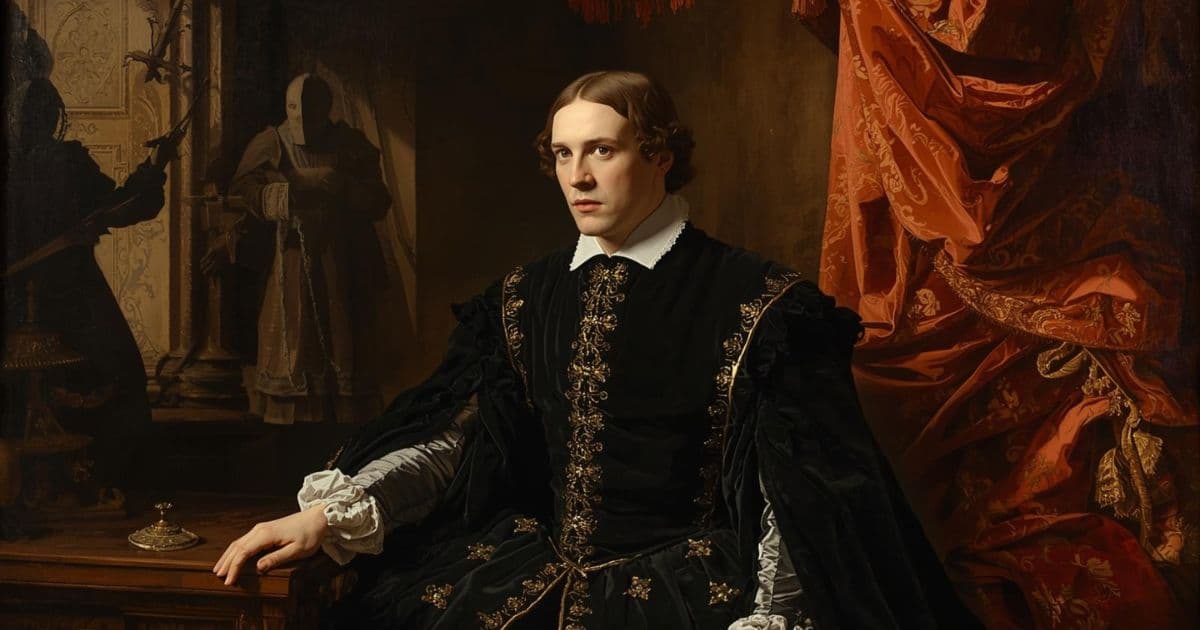
An excerpt from the original text.(complete · 2318 words)
t The Hohlakovs’
Alyosha soon reached Madame Hohlakov’s house, a handsome stone house of
two stories, one of the finest in our town. Though Madame Hohlakov
spent most of her time in another province where she had an estate, or
in Moscow, where she had a house of her own, yet she had a house in our
town too, inherited from her forefathers. The estate in our district
was the largest of her three estates, yet she had been very little in
our province before this time. She ran out to Alyosha in the hall.
“Did you get my letter about the new miracle?” She spoke rapidly and
nervously.
“Yes.”
“Did you show it to every one? He restored the son to his mother!”
“He is dying to‐day,” said Alyosha.
“I have heard, I know, oh, how I long to talk to you, to you or some
one, about all this. No, to you, to you! And how sorry I am I can’t see
him! The whole town is in excitement, they are all suspense. But now—do
you know Katerina Ivanovna is here now?”
“Ah, that’s lucky,” cried Alyosha. “Then I shall see her here. She told
me yesterday to be sure to come and see her to‐day.”
“I know, I know all. I’ve heard exactly what happened yesterday—and the
atrocious behavior of that—creature. C’est tragique, and if I’d been
in her place I don’t know what I should have done. And your brother
Dmitri Fyodorovitch, what do you think of him?—my goodness! Alexey
Fyodorovitch, I am forgetting, only fancy; your brother is in there
with her, not that dreadful brother who was so shocking yesterday, but
the other, Ivan Fyodorovitch, he is sitting with her talking; they are
having a serious conversation. If you could only imagine what’s passing
between them now—it’s awful, I tell you it’s lacerating, it’s like some
incredible tale of horror. They are ruining their lives for no reason
any one can see. They both recognize it and revel in it. I’ve been
watching for you! I’ve been thirsting for you! It’s too much for me,
that’s the worst of it. I’ll tell you all about it presently, but now I
must speak of something else, the most important thing—I had quite
forgotten what’s most important. Tell me, why has Lise been in
hysterics? As soon as she heard you were here, she began to be
hysterical!”
“Maman, it’s you who are hysterical now, not I,” Lise’s voice caroled
through a tiny crack of the door at the side. Her voice sounded as
though she wanted to laugh, but was doing her utmost to control it.
Alyosha at once noticed the crack, and no doubt Lise was peeping
through it, but that he could not see.
“And no wonder, Lise, no wonder ... your caprices will make me
hysterical too. But she is so ill, Alexey Fyodorovitch, she has been so
ill all night, feverish and moaning! I could hardly wait for the
morning and for Herzenstube to come. He says that he can make nothing
of it, that we must wait. Herzenstube always comes and says that he can
make nothing of it. As soon as you approached the house, she screamed,
fell into hysterics, and insisted on being wheeled back into this room
here.”
“Mamma, I didn’t know he had come. It wasn’t on his account I wanted to
be wheeled into this room.”
“That’s not true, Lise, Yulia ran to tell you that Alexey Fyodorovitch
was coming. She was on the look‐out for you.”
“My darling mamma, it’s not at all clever of you. But if you want to
make up for it and say something very clever, dear mamma, you’d better
tell our honored visitor, Alexey Fyodorovitch, that he has shown his
want of wit by venturing to us after what happened yesterday and
although every one is laughing at him.”
“Lise, you go too far. I declare I shall have to be severe. Who laughs
at him? I am so glad he has come, I need him, I can’t do without him.
Oh, Alexey Fyodorovitch, I am exceedingly unhappy!”
“But what’s the matter with you, mamma, darling?”
“Ah, your caprices, Lise, your fidgetiness, your illness, that awful
night of fever, that awful everlasting Herzenstube, everlasting,
everlasting, that’s the worst of it! Everything, in fact,
everything.... Even that miracle, too! Oh, how it has upset me, how it
has shattered me, that miracle, dear Alexey Fyodorovitch! And that
tragedy in the drawing‐room, it’s more than I can bear, I warn you. I
can’t bear it. A comedy, perhaps, not a tragedy. Tell me, will Father
Zossima live till to‐morrow, will he? Oh, my God! What is happening to
me? Every minute I close my eyes and see that it’s all nonsense, all
nonsense.”
“I should be very grateful,” Alyosha interrupted suddenly, “if you
could give me a clean rag to bind up my finger with. I have hurt it,
and it’s very painful.”
Alyosha unbound his bitten finger. The handkerchief was soaked with
blood. Madame Hohlakov screamed and shut her eyes.
“Good heavens, what a wound, how awful!”
But as soon as Lise saw Alyosha’s finger through the crack, she flung
the door wide open.
“Come, come here,” she cried, imperiously. “No nonsense now! Good
heavens, why did you stand there saying nothing about it all this time?
He might have bled to death, mamma! How did you do it? Water, water!
You must wash it first of all, simply hold it in cold water to stop the
pain, and keep it there, keep it there.... Make haste, mamma, some
water in a slop‐basin. But do make haste,” she finished nervously. She
was quite frightened at the sight of Alyosha’s wound.
“Shouldn’t we send for Herzenstube?” cried Madame Hohlakov.
“Mamma, you’ll be the death of me. Your Herzenstube will come and say
that he can make nothing of it! Water, water! Mamma, for goodness’ sake
go yourself and hurry Yulia, she is such a slowcoach and never can come
quickly! Make haste, mamma, or I shall die.”
“Why, it’s nothing much,” cried Alyosha, frightened at this alarm.
Yulia ran in with water and Alyosha put his finger in it.
“Some lint, mamma, for mercy’s sake, bring some lint and that muddy
caustic lotion for wounds, what’s it called? We’ve got some. You know
where the bottle is, mamma; it’s in your bedroom in the right‐hand
cupboard, there’s a big bottle of it there with the lint.”
“I’ll bring everything in a minute, Lise, only don’t scream and don’t
fuss. You see how bravely Alexey Fyodorovitch bears it. Where did you
get such a dreadful wound, Alexey Fyodorovitch?”
Madame Hohlakov hastened away. This was all Lise was waiting for.
“First of all, answer the question, where did you get hurt like this?”
she asked Alyosha, quickly. “And then I’ll talk to you about something
quite different. Well?”
Instinctively feeling that the time of her mother’s absence was
precious for her, Alyosha hastened to tell her of his enigmatic meeting
with the schoolboys in the fewest words possible. Lise clasped her
hands at his story.
“How can you, and in that dress too, associate with schoolboys?” she
cried angrily, as though she had a right to control him. “You are
nothing but a boy yourself if you can do that, a perfect boy! But you
must find out for me about that horrid boy and tell me all about it,
for there’s some mystery in it. Now for the second thing, but first a
question: does the pain prevent you talking about utterly unimportant
things, but talking sensibly?”
“Of course not, and I don’t feel much pain now.”
“That’s because your finger is in the water. It must be changed
directly, for it will get warm in a minute. Yulia, bring some ice from
the cellar and another basin of water. Now she is gone, I can speak;
will you give me the letter I sent you yesterday, dear Alexey
Fyodorovitch—be quick, for mamma will be back in a minute and I don’t
want—”
“I haven’t got the letter.”
“That’s not true, you have. I knew you would say that. You’ve got it in
that pocket. I’ve been regretting that joke all night. Give me back the
letter at once, give it me.”
“I’ve left it at home.”
“But you can’t consider me as a child, a little girl, after that silly
joke! I beg your pardon for that silliness, but you must bring me the
letter, if you really haven’t got it—bring it to‐day, you must, you
must.”
“To‐day I can’t possibly, for I am going back to the monastery and I
shan’t come and see you for the next two days—three or four perhaps—for
Father Zossima—”
“Four days, what nonsense! Listen. Did you laugh at me very much?”
“I didn’t laugh at all.”
“Why not?”
“Because I believed all you said.”
“You are insulting me!”
“Not at all. As soon as I read it, I thought that all that would come
to pass, for as soon as Father Zossima dies, I am to leave the
monastery. Then I shall go back and finish my studies, and when you
reach the legal age we will be married. I shall love you. Though I
haven’t had time to think about it, I believe I couldn’t find a better
wife than you, and Father Zossima tells me I must marry.”
“But I am a cripple, wheeled about in a chair,” laughed Lise, flushing
crimson.
“I’ll wheel you about myself, but I’m sure you’ll get well by then.”
“But you are mad,” said Lise, nervously, “to make all this nonsense out
of a joke! Here’s mamma, very à propos, perhaps. Mamma, how slow you
always are, how can you be so long! And here’s Yulia with the ice!”
“Oh, Lise, don’t scream, above all things don’t scream. That scream
drives me ... How can I help it when you put the lint in another place?
I’ve been hunting and hunting—I do believe you did it on purpose.”
“But I couldn’t tell that he would come with a bad finger, or else
perhaps I might have done it on purpose. My darling mamma, you begin to
say really witty things.”
“Never mind my being witty, but I must say you show nice feeling for
Alexey Fyodorovitch’s sufferings! Oh, my dear Alexey Fyodorovitch,
what’s killing me is no one thing in particular, not Herzenstube, but
everything together, that’s what is too much for me.”
“That’s enough, mamma, enough about Herzenstube,” Lise laughed gayly.
“Make haste with the lint and the lotion, mamma. That’s simply
Goulard’s water, Alexey Fyodorovitch, I remember the name now, but it’s
a splendid lotion. Would you believe it, mamma, on the way here he had
a fight with the boys in the street, and it was a boy bit his finger,
isn’t he a child, a child himself? Is he fit to be married after that?
For only fancy, he wants to be married, mamma. Just think of him
married, wouldn’t it be funny, wouldn’t it be awful?”
And Lise kept laughing her thin hysterical giggle, looking slyly at
Alyosha.
“But why married, Lise? What makes you talk of such a thing? It’s quite
out of place—and perhaps the boy was rabid.”
“Why, mamma! As though there were rabid boys!”
“Why not, Lise, as though I had said something stupid! Your boy might
have been bitten by a mad dog and he would become mad and bite any one
near him. How well she has bandaged it, Alexey Fyodorovitch! I couldn’t
have done it. Do you still feel the pain?”
“It’s nothing much now.”
“You don’t feel afraid of water?” asked Lise.
“Come, that’s enough, Lise, perhaps I really was rather too quick
talking of the boy being rabid, and you pounced upon it at once
Katerina Ivanovna has only just heard that you are here, Alexey
Fyodorovitch, she simply rushed at me, she’s dying to see you, dying!”
“Ach, mamma, go to them yourself. He can’t go just now, he is in too
much pain.”
“Not at all, I can go quite well,” said Alyosha.
“What! You are going away? Is that what you say?”
“Well, when I’ve seen them, I’ll come back here and we can talk as much
as you like. But I should like to see Katerina Ivanovna at once, for I
am very anxious to be back at the monastery as soon as I can.”
“Mamma, take him away quickly. Alexey Fyodorovitch, don’t trouble to
come and see me afterwards, but go straight back to your monastery and
a good riddance. I want to sleep, I didn’t sleep all night.”
“Ah, Lise, you are only making fun, but how I wish you would sleep!”
cried Madame Hohlakov.
“I don’t know what I’ve done.... I’ll stay another three minutes, five
if you like,” muttered Alyosha.
“Even five! Do take him away quickly, mamma, he is a monster.”
“Lise, you are crazy. Let us go, Alexey Fyodorovitch, she is too
capricious to‐day. I am afraid to cross her. Oh, the trouble one has
with nervous girls! Perhaps she really will be able to sleep after
seeing you. How quickly you have made her sleepy, and how fortunate it
is!”
“Ah, mamma, how sweetly you talk! I must kiss you for it, mamma.”
“And I kiss you too, Lise. Listen, Alexey Fyodorovitch,” Madame
Hohlakov began mysteriously and importantly, speaking in a rapid
whisper. “I don’t want to suggest anything, I don’t want to lift the
veil, you will see for yourself what’s going on. It’s appalling. It’s
the most fantastic farce. She loves your brother, Ivan, and she is
doing her utmost to persuade herself she loves your brother, Dmitri.
It’s appalling! I’ll go in with you, and if they don’t turn me out,
I’ll stay to the end.”
Master this chapter. Complete your experience
Purchase the complete book to access all chapters and support classic literature
As an Amazon Associate, we earn a small commission from qualifying purchases at no additional cost to you.
Available in paperback, hardcover, and e-book formats
Let's Analyse the Pattern
Under stress, people drop their social masks and reveal their true default responses and priorities.
Why This Matters
Connect literature to life
This chapter teaches how to assess people's true nature by observing their behavior under stress rather than during calm times.
Practice This Today
This week, notice how people around you handle small emergencies—a broken machine, a difficult customer, unexpected overtime—and file away what you learn about their real character.
Now let's explore the literary elements.
Key Quotes & Analysis
"Did you get my letter about the new miracle?"
Context: Her first words to Alyosha, showing her excitement about Father Zossima's healing
This reveals how she treats serious spiritual matters like gossip. She's more interested in being part of dramatic events than understanding their deeper meaning. Her breathless delivery shows someone who feeds on excitement.
In Today's Words:
Did you see my text about that crazy thing that happened?
"He is dying today"
Context: His simple response to her excitement about the miracle
While she's caught up in the drama, Alyosha cuts through to the human reality - someone he loves is dying. His directness shows how genuine grief differs from performed emotion.
In Today's Words:
He's not going to make it.
"I took your letter seriously, and I will marry you when the time comes"
Context: His matter-of-fact response to Lise's romantic confession
This shows Alyosha's radical honesty - he doesn't play games or follow social scripts. His straightforward acceptance both validates Lise's feelings and terrifies her because now it's real.
In Today's Words:
I meant what I said, and yes, I'll marry you when we're ready.
Thematic Threads
Social Expectations
In This Chapter
Madame Hohlakov struggles to maintain her hostess role while panicking about monastery scandal and family drama
Development
Continues exploration of how social roles constrain authentic response
In Your Life:
You might recognize this when you feel pressure to act 'professional' during a personal crisis at work
Identity
In This Chapter
Lise oscillates between playing invalid and showing genuine competence, unsure which version of herself is real
Development
Deepens the theme of young people struggling to define themselves
In Your Life:
You see this in teenagers who act tough at school but are vulnerable at home, unsure which self is authentic
Human Relationships
In This Chapter
Physical care (bandaging Alyosha's finger) becomes easier to give than emotional support in crisis
Development
Explores how people connect through action when words fail
In Your Life:
You might notice this when you cook for grieving friends because you don't know what to say
Class
In This Chapter
Madame Hohlakov's upper-class anxiety about scandal contrasts with Alyosha's working-class directness about practical matters
Development
Shows how class shapes what people worry about during crisis
In Your Life:
You see this when wealthy neighbors worry about property values while you worry about paying rent
Personal Growth
In This Chapter
Alyosha's calm response to both physical injury and Lise's emotional confession shows maturity beyond his years
Development
Demonstrates how some people develop wisdom through experience rather than age
In Your Life:
You might recognize this in coworkers who handle stress better despite being younger or newer
You now have the context. Time to form your own thoughts.
Discussion Questions
- 1
How do the three characters - Madame Hohlakov, Lise, and Alyosha - each respond differently to the stress and chaos in this scene?
analysis • surface - 2
Why does Lise suddenly become competent and take charge when Alyosha's finger needs bandaging, despite claiming to be ill moments before?
analysis • medium - 3
Think about a recent stressful situation at work, home, or in your community. How did people's true personalities emerge when the pressure was on?
application • medium - 4
If you were in Alyosha's position, dealing with your own stress while three different people are having emotional crises around you, what strategies would you use to stay centered?
application • deep - 5
What does this chapter reveal about the difference between the masks we wear in normal times and who we really are when crisis hits?
reflection • deep
Critical Thinking Exercise
Crisis Response Inventory
Think of three different stressful situations you've experienced recently - maybe a work deadline, a family emergency, or even something small like being stuck in traffic. For each situation, write down how you actually responded versus how you wish you had responded. Look for patterns in your crisis behavior.
Consider:
- •Notice whether you tend to become scattered, overly focused, or shut down under pressure
- •Consider whether your stress responses help or hurt the situation
- •Think about which responses you want to practice and strengthen for future crises
Journaling Prompt
Write about a time when someone surprised you by how they handled a crisis - either positively or negatively. What did their response reveal about their character that you hadn't seen before?
Coming Up Next...
Chapter 29: When Truth Cuts Too Deep
Alyosha is about to witness the 'appalling farce' Madame Hohlakov described - Katerina Ivanovna's tortured attempt to convince herself she loves Dmitri while her heart pulls toward Ivan. The drawing room confrontation promises to reveal truths that could shatter more than one heart.