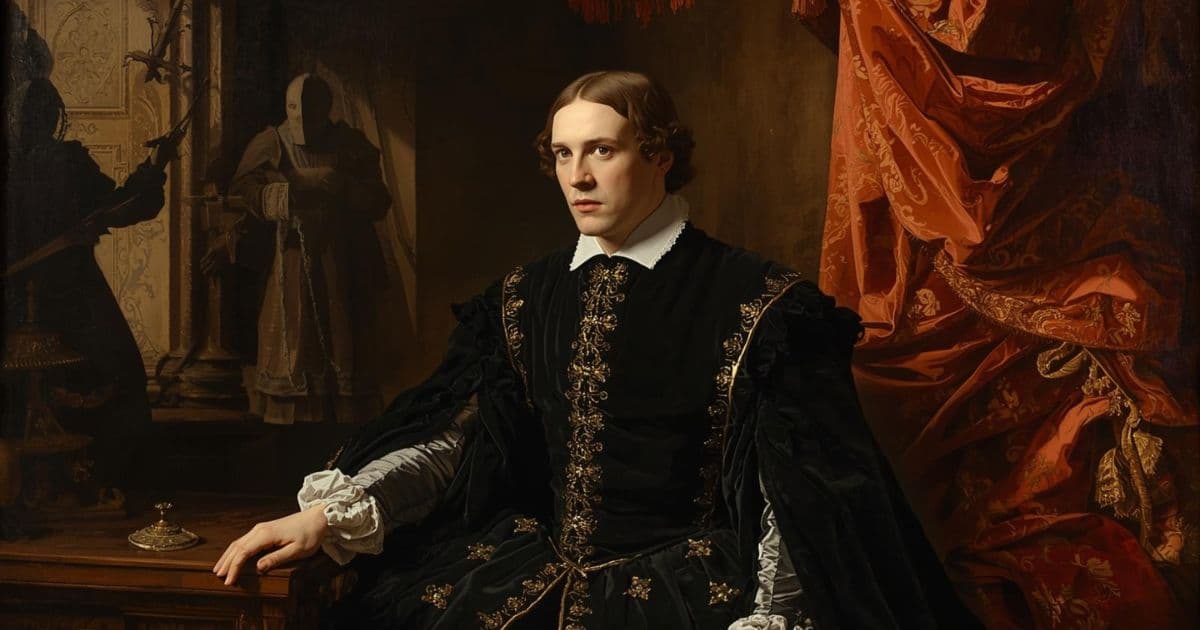
An excerpt from the original text.(complete · 2875 words)
ver The Brandy
The controversy was over. But, strange to say, Fyodor Pavlovitch, who
had been so gay, suddenly began frowning. He frowned and gulped brandy,
and it was already a glass too much.
“Get along with you, Jesuits!” he cried to the servants. “Go away,
Smerdyakov. I’ll send you the gold piece I promised you to‐day, but be
off! Don’t cry, Grigory. Go to Marfa. She’ll comfort you and put you to
bed. The rascals won’t let us sit in peace after dinner,” he snapped
peevishly, as the servants promptly withdrew at his word.
“Smerdyakov always pokes himself in now, after dinner. It’s you he’s so
interested in. What have you done to fascinate him?” he added to Ivan.
“Nothing whatever,” answered Ivan. “He’s pleased to have a high opinion
of me; he’s a lackey and a mean soul. Raw material for revolution,
however, when the time comes.”
“For revolution?”
“There will be others and better ones. But there will be some like him
as well. His kind will come first, and better ones after.”
“And when will the time come?”
“The rocket will go off and fizzle out, perhaps. The peasants are not
very fond of listening to these soup‐makers, so far.”
“Ah, brother, but a Balaam’s ass like that thinks and thinks, and the
devil knows where he gets to.”
“He’s storing up ideas,” said Ivan, smiling.
“You see, I know he can’t bear me, nor any one else, even you, though
you fancy that he has a high opinion of you. Worse still with Alyosha,
he despises Alyosha. But he doesn’t steal, that’s one thing, and he’s
not a gossip, he holds his tongue, and doesn’t wash our dirty linen in
public. He makes capital fish pasties too. But, damn him, is he worth
talking about so much?”
“Of course he isn’t.”
“And as for the ideas he may be hatching, the Russian peasant,
generally speaking, needs thrashing. That I’ve always maintained. Our
peasants are swindlers, and don’t deserve to be pitied, and it’s a good
thing they’re still flogged sometimes. Russia is rich in birches. If
they destroyed the forests, it would be the ruin of Russia. I stand up
for the clever people. We’ve left off thrashing the peasants, we’ve
grown so clever, but they go on thrashing themselves. And a good thing
too. ‘For with what measure ye mete it shall be measured to you again,’
or how does it go? Anyhow, it will be measured. But Russia’s all
swinishness. My dear, if you only knew how I hate Russia.... That is,
not Russia, but all this vice! But maybe I mean Russia. Tout cela
c’est de la cochonnerie.... Do you know what I like? I like wit.”
“You’ve had another glass. That’s enough.”
“Wait a bit. I’ll have one more, and then another, and then I’ll stop.
No, stay, you interrupted me. At Mokroe I was talking to an old man,
and he told me: ‘There’s nothing we like so much as sentencing girls to
be thrashed, and we always give the lads the job of thrashing them. And
the girl he has thrashed to‐day, the young man will ask in marriage
to‐morrow. So it quite suits the girls, too,’ he said. There’s a set of
de Sades for you! But it’s clever, anyway. Shall we go over and have a
look at it, eh? Alyosha, are you blushing? Don’t be bashful, child. I’m
sorry I didn’t stay to dinner at the Superior’s and tell the monks
about the girls at Mokroe. Alyosha, don’t be angry that I offended your
Superior this morning. I lost my temper. If there is a God, if He
exists, then, of course, I’m to blame, and I shall have to answer for
it. But if there isn’t a God at all, what do they deserve, your
fathers? It’s not enough to cut their heads off, for they keep back
progress. Would you believe it, Ivan, that that lacerates my
sentiments? No, you don’t believe it as I see from your eyes. You
believe what people say, that I’m nothing but a buffoon. Alyosha, do
you believe that I’m nothing but a buffoon?”
“No, I don’t believe it.”
“And I believe you don’t, and that you speak the truth. You look
sincere and you speak sincerely. But not Ivan. Ivan’s supercilious....
I’d make an end of your monks, though, all the same. I’d take all that
mystic stuff and suppress it, once for all, all over Russia, so as to
bring all the fools to reason. And the gold and the silver that would
flow into the mint!”
“But why suppress it?” asked Ivan.
“That Truth may prevail. That’s why.”
“Well, if Truth were to prevail, you know, you’d be the first to be
robbed and suppressed.”
“Ah! I dare say you’re right. Ah, I’m an ass!” burst out Fyodor
Pavlovitch, striking himself lightly on the forehead. “Well, your
monastery may stand then, Alyosha, if that’s how it is. And we clever
people will sit snug and enjoy our brandy. You know, Ivan, it must have
been so ordained by the Almighty Himself. Ivan, speak, is there a God
or not? Stay, speak the truth, speak seriously. Why are you laughing
again?”
“I’m laughing that you should have made a clever remark just now about
Smerdyakov’s belief in the existence of two saints who could move
mountains.”
“Why, am I like him now, then?”
“Very much.”
“Well, that shows I’m a Russian, too, and I have a Russian
characteristic. And you may be caught in the same way, though you are a
philosopher. Shall I catch you? What do you bet that I’ll catch you
to‐morrow. Speak, all the same, is there a God, or not? Only, be
serious. I want you to be serious now.”
“No, there is no God.”
“Alyosha, is there a God?”
“There is.”
“Ivan, and is there immortality of some sort, just a little, just a
tiny bit?”
“There is no immortality either.”
“None at all?”
“None at all.”
“There’s absolute nothingness then. Perhaps there is just something?
Anything is better than nothing!”
“Absolute nothingness.”
“Alyosha, is there immortality?”
“There is.”
“God and immortality?”
“God and immortality. In God is immortality.”
“H’m! It’s more likely Ivan’s right. Good Lord! to think what faith,
what force of all kinds, man has lavished for nothing, on that dream,
and for how many thousand years. Who is it laughing at man? Ivan! For
the last time, once for all, is there a God or not? I ask for the last
time!”
“And for the last time there is not.”
“Who is laughing at mankind, Ivan?”
“It must be the devil,” said Ivan, smiling.
“And the devil? Does he exist?”
“No, there’s no devil either.”
“It’s a pity. Damn it all, what wouldn’t I do to the man who first
invented God! Hanging on a bitter aspen tree would be too good for
him.”
“There would have been no civilization if they hadn’t invented God.”
“Wouldn’t there have been? Without God?”
“No. And there would have been no brandy either. But I must take your
brandy away from you, anyway.”
“Stop, stop, stop, dear boy, one more little glass. I’ve hurt Alyosha’s
feelings. You’re not angry with me, Alyosha? My dear little Alexey!”
“No, I am not angry. I know your thoughts. Your heart is better than
your head.”
“My heart better than my head, is it? Oh, Lord! And that from you.
Ivan, do you love Alyosha?”
“Yes.”
“You must love him” (Fyodor Pavlovitch was by this time very drunk).
“Listen, Alyosha, I was rude to your elder this morning. But I was
excited. But there’s wit in that elder, don’t you think, Ivan?”
“Very likely.”
“There is, there is. Il y a du Piron là‐dedans. He’s a Jesuit, a
Russian one, that is. As he’s an honorable person there’s a hidden
indignation boiling within him at having to pretend and affect
holiness.”
“But, of course, he believes in God.”
“Not a bit of it. Didn’t you know? Why, he tells every one so, himself.
That is, not every one, but all the clever people who come to him. He
said straight out to Governor Schultz not long ago: ‘Credo, but I
don’t know in what.’ ”
“Really?”
“He really did. But I respect him. There’s something of Mephistopheles
about him, or rather of ‘The hero of our time’ ... Arbenin, or what’s
his name?... You see, he’s a sensualist. He’s such a sensualist that I
should be afraid for my daughter or my wife if she went to confess to
him. You know, when he begins telling stories.... The year before last
he invited us to tea, tea with liqueur (the ladies send him liqueur),
and began telling us about old times till we nearly split our sides....
Especially how he once cured a paralyzed woman. ‘If my legs were not
bad I know a dance I could dance you,’ he said. What do you say to
that? ‘I’ve plenty of tricks in my time,’ said he. He did Dernidov, the
merchant, out of sixty thousand.”
“What, he stole it?”
“He brought him the money as a man he could trust, saying, ‘Take care
of it for me, friend, there’ll be a police search at my place
to‐morrow.’ And he kept it. ‘You have given it to the Church,’ he
declared. I said to him: ‘You’re a scoundrel,’ I said. ‘No,’ said he,
‘I’m not a scoundrel, but I’m broad‐minded.’ But that wasn’t he, that
was some one else. I’ve muddled him with some one else ... without
noticing it. Come, another glass and that’s enough. Take away the
bottle, Ivan. I’ve been telling lies. Why didn’t you stop me, Ivan, and
tell me I was lying?”
“I knew you’d stop of yourself.”
“That’s a lie. You did it from spite, from simple spite against me. You
despise me. You have come to me and despised me in my own house.”
“Well, I’m going away. You’ve had too much brandy.”
“I’ve begged you for Christ’s sake to go to Tchermashnya for a day or
two, and you don’t go.”
“I’ll go to‐morrow if you’re so set upon it.”
“You won’t go. You want to keep an eye on me. That’s what you want,
spiteful fellow. That’s why you won’t go.”
The old man persisted. He had reached that state of drunkenness when
the drunkard who has till then been inoffensive tries to pick a quarrel
and to assert himself.
“Why are you looking at me? Why do you look like that? Your eyes look
at me and say, ‘You ugly drunkard!’ Your eyes are mistrustful. They’re
contemptuous.... You’ve come here with some design. Alyosha, here,
looks at me and his eyes shine. Alyosha doesn’t despise me. Alexey, you
mustn’t love Ivan.”
“Don’t be ill‐tempered with my brother. Leave off attacking him,”
Alyosha said emphatically.
“Oh, all right. Ugh, my head aches. Take away the brandy, Ivan. It’s
the third time I’ve told you.”
He mused, and suddenly a slow, cunning grin spread over his face.
“Don’t be angry with a feeble old man, Ivan. I know you don’t love me,
but don’t be angry all the same. You’ve nothing to love me for. You go
to Tchermashnya. I’ll come to you myself and bring you a present. I’ll
show you a little wench there. I’ve had my eye on her a long time.
She’s still running about bare‐foot. Don’t be afraid of bare‐footed
wenches—don’t despise them—they’re pearls!”
And he kissed his hand with a smack.
“To my thinking,” he revived at once, seeming to grow sober the instant
he touched on his favorite topic. “To my thinking ... Ah, you boys! You
children, little sucking‐pigs, to my thinking ... I never thought a
woman ugly in my life—that’s been my rule! Can you understand that? How
could you understand it? You’ve milk in your veins, not blood. You’re
not out of your shells yet. My rule has been that you can always find
something devilishly interesting in every woman that you wouldn’t find
in any other. Only, one must know how to find it, that’s the point!
That’s a talent! To my mind there are no ugly women. The very fact that
she is a woman is half the battle ... but how could you understand
that? Even in vieilles filles, even in them you may discover
something that makes you simply wonder that men have been such fools as
to let them grow old without noticing them. Bare‐footed girls or
unattractive ones, you must take by surprise. Didn’t you know that? You
must astound them till they’re fascinated, upset, ashamed that such a
gentleman should fall in love with such a little slut. It’s a jolly
good thing that there always are and will be masters and slaves in the
world, so there always will be a little maid‐ of‐all‐work and her
master, and you know, that’s all that’s needed for happiness. Stay ...
listen, Alyosha, I always used to surprise your mother, but in a
different way. I paid no attention to her at all, but all at once, when
the minute came, I’d be all devotion to her, crawl on my knees, kiss
her feet, and I always, always—I remember it as though it were
to‐day—reduced her to that tinkling, quiet, nervous, queer little
laugh. It was peculiar to her. I knew her attacks always used to begin
like that. The next day she would begin shrieking hysterically, and
this little laugh was not a sign of delight, though it made a very good
counterfeit. That’s the great thing, to know how to take every one.
Once Belyavsky—he was a handsome fellow, and rich—used to like to come
here and hang about her—suddenly gave me a slap in the face in her
presence. And she—such a mild sheep—why, I thought she would have
knocked me down for that blow. How she set on me! ‘You’re beaten,
beaten now,’ she said. ‘You’ve taken a blow from him. You have been
trying to sell me to him,’ she said.... ‘And how dared he strike you in
my presence! Don’t dare come near me again, never, never! Run at once,
challenge him to a duel!’... I took her to the monastery then to bring
her to her senses. The holy Fathers prayed her back to reason. But I
swear, by God, Alyosha, I never insulted the poor crazy girl! Only
once, perhaps, in the first year; then she was very fond of praying.
She used to keep the feasts of Our Lady particularly and used to turn
me out of her room then. I’ll knock that mysticism out of her, thought
I! ‘Here,’ said I, ‘you see your holy image. Here it is. Here I take it
down. You believe it’s miraculous, but here, I’ll spit on it directly
and nothing will happen to me for it!’... When she saw it, good Lord! I
thought she would kill me. But she only jumped up, wrung her hands,
then suddenly hid her face in them, began trembling all over and fell
on the floor ... fell all of a heap. Alyosha, Alyosha, what’s the
matter?”
The old man jumped up in alarm. From the time he had begun speaking
about his mother, a change had gradually come over Alyosha’s face. He
flushed crimson, his eyes glowed, his lips quivered. The old sot had
gone spluttering on, noticing nothing, till the moment when something
very strange happened to Alyosha. Precisely what he was describing in
the crazy woman was suddenly repeated with Alyosha. He jumped up from
his seat exactly as his mother was said to have done, wrung his hands,
hid his face in them, and fell back in his chair, shaking all over in
an hysterical paroxysm of sudden violent, silent weeping. His
extraordinary resemblance to his mother particularly impressed the old
man.
“Ivan, Ivan! Water, quickly! It’s like her, exactly as she used to be
then, his mother. Spurt some water on him from your mouth, that’s what
I used to do to her. He’s upset about his mother, his mother,” he
muttered to Ivan.
“But she was my mother, too, I believe, his mother. Was she not?” said
Ivan, with uncontrolled anger and contempt. The old man shrank before
his flashing eyes. But something very strange had happened, though only
for a second; it seemed really to have escaped the old man’s mind that
Alyosha’s mother actually was the mother of Ivan too.
“Your mother?” he muttered, not understanding. “What do you mean? What
mother are you talking about? Was she?... Why, damn it! of course she
was yours too! Damn it! My mind has never been so darkened before.
Excuse me, why, I was thinking, Ivan.... He he he!” He stopped. A
broad, drunken, half‐senseless grin overspread his face.
At that moment a fearful noise and clamor was heard in the hall, there
were violent shouts, the door was flung open, and Dmitri burst into the
room. The old man rushed to Ivan in terror.
“He’ll kill me! He’ll kill me! Don’t let him get at me!” he screamed,
clinging to the skirt of Ivan’s coat.
Master this chapter. Complete your experience
Purchase the complete book to access all chapters and support classic literature
As an Amazon Associate, we earn a small commission from qualifying purchases at no additional cost to you.
Available in paperback, hardcover, and e-book formats
Let's Analyse the Pattern
Using intoxication as cover for deliberate emotional cruelty while maintaining plausible deniability.
Why This Matters
Connect literature to life
This chapter teaches how to recognize when someone uses their own pain or intoxication as a weapon to inflict maximum emotional damage.
Practice This Today
This week, notice when someone prefaces cruelty with 'I'm just being honest' or 'You know how I get when I drink'—these are often permission slips for targeted harm.
Now let's explore the literary elements.
Key Quotes & Analysis
"There will be others and better ones. But there will be some like him as well. His kind will come first, and better ones after."
Context: Ivan explains to his father that people like Smerdyakov become revolutionaries first, before better people join.
This reveals Ivan's cold, analytical view of human nature and social change. He sees revolution as inevitable and understands that it starts with the resentful and bitter, not the noble.
In Today's Words:
The angry, bitter people always lead the charge in any uprising - the decent folks come later.
"He's storing up ideas."
Context: Ivan describes how Smerdyakov is quietly absorbing and processing information while serving the family.
This shows Ivan recognizes that even servants and 'lower' people are thinking beings who form their own conclusions. It's both respectful and ominous.
In Today's Words:
He's taking mental notes and forming his own opinions about everything he sees.
"Get along with you, Jesuits!"
Context: The drunk father dismisses his servants, using 'Jesuits' as an insult meaning they're sneaky and manipulative.
This reveals Fyodor's paranoia and contempt for everyone around him. Even his own servants are seen as potential threats or conspirators.
In Today's Words:
Get out of here, you sneaky bastards!
Thematic Threads
Inherited Trauma
In This Chapter
Alyosha collapses exactly as his mother did when tormented by Fyodor, showing how psychological patterns repeat across generations
Development
Previously hinted at through family dynamics, now explicitly demonstrated through physical manifestation
In Your Life:
You might notice yourself reacting to stress exactly like your parents did, even when you swore you'd be different.
Philosophical Masks
In This Chapter
Ivan's cold atheism and Alyosha's faith become weapons in family warfare rather than genuine beliefs
Development
Builds on earlier religious discussions, now revealing how beliefs serve emotional rather than spiritual purposes
In Your Life:
Your strongest opinions might actually be reactions against family dysfunction rather than independently chosen values.
Power Through Vulnerability
In This Chapter
Fyodor uses his drunken state to inflict maximum damage while appearing helpless and pathetic
Development
Continues pattern of Fyodor manipulating through apparent weakness
In Your Life:
Someone in your life might use their problems or addictions as shields while they hurt you.
Class Shame
In This Chapter
Fyodor's terror of being seen as just a buffoon drives his need to prove his intellectual superiority through cruelty
Development
Deepens understanding of his earlier monastery behavior as compensation for social insecurity
In Your Life:
Your harshest judgments of others might stem from fears about how you're perceived by people you think are 'above' you.
Generational Confusion
In This Chapter
Fyodor momentarily forgets Ivan and Alyosha share the same mother, revealing how he views his sons as interchangeable objects
Development
New theme showing the dehumanizing effects of seeing family as possessions rather than individuals
In Your Life:
Family members might treat you as a role or function rather than recognizing you as a separate person with your own needs.
You now have the context. Time to form your own thoughts.
Discussion Questions
- 1
What does Fyodor reveal about himself when he gets drunk, and how does this affect his sons?
analysis • surface - 2
Why does Fyodor choose to torment Alyosha with cruel details about his mother's breakdown?
analysis • medium - 3
Where have you seen people use alcohol or other substances as an excuse to say hurtful things they claim they 'didn't mean'?
application • medium - 4
How would you protect yourself from someone who uses intoxication as a weapon while claiming they can't help themselves?
application • deep - 5
What does this scene reveal about how family trauma gets passed down through generations?
reflection • deep
Critical Thinking Exercise
Map Your Boundaries with Weaponized Intoxication
Think of someone in your life who becomes cruel or inappropriate when drinking or using substances, then claims they 'didn't mean it' when sober. Write down three specific boundaries you could set with this person, and practice what you would actually say in the moment when they cross the line.
Consider:
- •Notice how their 'drunk truth' always seems to target your most vulnerable spots
- •Remember that 'I was drunk' is an explanation, not an excuse for harmful behavior
- •Consider whether this person's pattern is worth the emotional cost to you
Journaling Prompt
Write about a time when someone used alcohol as cover to hurt you emotionally. How did you respond then, and what would you do differently now that you recognize the pattern?
Coming Up Next...
Chapter 22: Violence Erupts in the Karamazov House
Dmitri's explosive arrival threatens to turn philosophical debate into physical violence. The confrontation everyone has been dreading is finally here, and Fyodor's terror suggests this won't end with words.