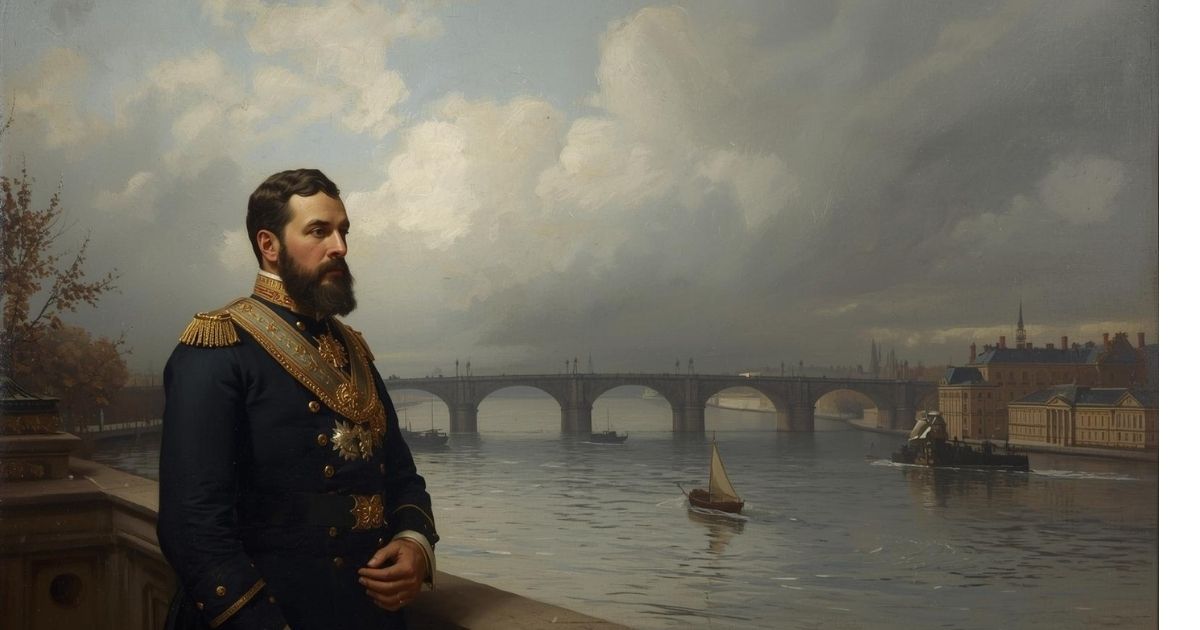
An excerpt from the original text.(complete · 6072 words)
s to the evening party at the Epanchins’ at which Princess Bielokonski
was to be present, Varia had reported with accuracy; though she had
perhaps expressed herself too strongly.
The thing was decided in a hurry and with a certain amount of quite
unnecessary excitement, doubtless because “nothing could be done in
this house like anywhere else.”
The impatience of Lizabetha Prokofievna “to get things settled”
explained a good deal, as well as the anxiety of both parents for the
happiness of their beloved daughter. Besides, Princess Bielokonski was
going away soon, and they hoped that she would take an interest in the
prince. They were anxious that he should enter society under the
auspices of this lady, whose patronage was the best of recommendations
for any young man.
Even if there seems something strange about the match, the general and
his wife said to each other, the “world” will accept Aglaya’s fiance
without any question if he is under the patronage of the princess. In
any case, the prince would have to be “shown” sooner or later; that is,
introduced into society, of which he had, so far, not the least idea.
Moreover, it was only a question of a small gathering of a few intimate
friends. Besides Princess Bielokonski, only one other lady was
expected, the wife of a high dignitary. Evgenie Pavlovitch, who was to
escort the princess, was the only young man.
Muishkin was told of the princess’s visit three days beforehand, but
nothing was said to him about the party until the night before it was
to take place.
He could not help observing the excited and agitated condition of all
members of the family, and from certain hints dropped in conversation
he gathered that they were all anxious as to the impression he should
make upon the princess. But the Epanchins, one and all, believed that
Muishkin, in his simplicity of mind, was quite incapable of realizing
that they could be feeling any anxiety on his account, and for this
reason they all looked at him with dread and uneasiness.
In point of fact, he did attach marvellously little importance to the
approaching event. He was occupied with altogether different thoughts.
Aglaya was growing hourly more capricious and gloomy, and this
distressed him. When they told him that Evgenie Pavlovitch was
expected, he evinced great delight, and said that he had long wished to
see him—and somehow these words did not please anyone.
Aglaya left the room in a fit of irritation, and it was not until late
in the evening, past eleven, when the prince was taking his departure,
that she said a word or two to him, privately, as she accompanied him
as far as the front door.
“I should like you,” she said, “not to come here tomorrow until
evening, when the guests are all assembled. You know there are to be
guests, don’t you?”
She spoke impatiently and with severity; this was the first allusion
she had made to the party of tomorrow.
She hated the idea of it, everyone saw that; and she would probably
have liked to quarrel about it with her parents, but pride and modesty
prevented her from broaching the subject.
The prince jumped to the conclusion that Aglaya, too, was nervous about
him, and the impression he would make, and that she did not like to
admit her anxiety; and this thought alarmed him.
“Yes, I am invited,” he replied.
She was evidently in difficulties as to how best to go on. “May I speak
of something serious to you, for once in my life?” she asked, angrily.
She was irritated at she knew not what, and could not restrain her
wrath.
“Of course you may; I am very glad to listen,” replied Muishkin.
Aglaya was silent a moment and then began again with evident dislike of
her subject:
“I do not wish to quarrel with them about this; in some things they
won’t be reasonable. I always did feel a loathing for the laws which
seem to guide mamma’s conduct at times. I don’t speak of father, for he
cannot be expected to be anything but what he is. Mother is a
noble-minded woman, I know; you try to suggest anything mean to her,
and you’ll see! But she is such a slave to these miserable creatures! I
don’t mean old Bielokonski alone. She is a contemptible old thing, but
she is able to twist people round her little finger, and I admire that
in her, at all events! How mean it all is, and how foolish! We were
always middle-class, thoroughly middle-class, people. Why should we
attempt to climb into the giddy heights of the fashionable world? My
sisters are all for it. It’s Prince S. they have to thank for poisoning
their minds. Why are you so glad that Evgenie Pavlovitch is coming?”
“Listen to me, Aglaya,” said the prince, “I do believe you are nervous
lest I shall make a fool of myself tomorrow at your party?”
“Nervous about you?” Aglaya blushed. “Why should I be nervous about
you? What would it matter to me if you were to make ever such a fool of
yourself? How can you say such a thing? What do you mean by ‘making a
fool of yourself’? What a vulgar expression! I suppose you intend to
talk in that sort of way tomorrow evening? Look up a few more such
expressions in your dictionary; do, you’ll make a grand effect! I’m
sorry that you seem to be able to come into a room as gracefully as you
do; where did you learn the art? Do you think you can drink a cup of
tea decently, when you know everybody is looking at you, on purpose to
see how you do it?”
“Yes, I think I can.”
“Can you? I’m sorry for it then, for I should have had a good laugh at
you otherwise. Do break something at least, in the drawing-room!
Upset the Chinese vase, won’t you? It’s a valuable one; do break it.
Mamma values it, and she’ll go out of her mind—it was a present. She’ll
cry before everyone, you’ll see! Wave your hand about, you know, as you
always do, and just smash it. Sit down near it on purpose.”
“On the contrary, I shall sit as far from it as I can. Thanks for the
hint.”
“Ha, ha! Then you are afraid you will wave your arms about! I
wouldn’t mind betting that you’ll talk about some lofty subject,
something serious and learned. How delightful, how tactful that will
be!”
“I should think it would be very foolish indeed, unless it happened to
come in appropriately.”
“Look here, once for all,” cried Aglaya, boiling over, “if I hear you
talking about capital punishment, or the economical condition of
Russia, or about Beauty redeeming the world, or anything of that sort,
I’ll—well, of course I shall laugh and seem very pleased, but I warn
you beforehand, don’t look me in the face again! I’m serious now, mind,
this time I am really serious.” She certainly did say this very
seriously, so much so, that she looked quite different from what she
usually was, and the prince could not help noticing the fact. She did
not seem to be joking in the slightest degree.
“Well, you’ve put me into such a fright that I shall certainly make a
fool of myself, and very likely break something too. I wasn’t a bit
alarmed before, but now I’m as nervous as can be.”
“Then don’t speak at all. Sit still and don’t talk.”
“Oh, I can’t do that, you know! I shall say something foolish out of
pure ‘funk,’ and break something for the same excellent reason; I know
I shall. Perhaps I shall slip and fall on the slippery floor; I’ve done
that before now, you know. I shall dream of it all night now. Why did
you say anything about it?”
Aglaya looked blackly at him.
“Do you know what, I had better not come at all tomorrow! I’ll plead
sick-list and stay away,” said the prince, with decision.
Aglaya stamped her foot, and grew quite pale with anger.
“Oh, my goodness! Just listen to that! ‘Better not come,’ when the
party is on purpose for him! Good Lord! What a delightful thing it is
to have to do with such a—such a stupid as you are!”
“Well, I’ll come, I’ll come,” interrupted the prince, hastily, “and
I’ll give you my word of honour that I will sit the whole evening and
not say a word.”
“I believe that’s the best thing you can do. You said you’d ‘plead
sick-list’ just now; where in the world do you get hold of such
expressions? Why do you talk to me like this? Are you trying to
irritate me, or what?”
“Forgive me, it’s a schoolboy expression. I won’t do it again. I know
quite well, I see it, that you are anxious on my account (now, don’t be
angry), and it makes me very happy to see it. You wouldn’t believe how
frightened I am of misbehaving somehow, and how glad I am of your
instructions. But all this panic is simply nonsense, you know, Aglaya!
I give you my word it is; I am so pleased that you are such a child,
such a dear good child. How charming you can be if you like, Aglaya.”
Aglaya wanted to be angry, of course, but suddenly some quite
unexpected feeling seized upon her heart, all in a moment.
“And you won’t reproach me for all these rude words of mine—some
day—afterwards?” she asked, of a sudden.
“What an idea! Of course not. And what are you blushing for again? And
there comes that frown once more! You’ve taken to looking too gloomy
sometimes, Aglaya, much more than you used to. I know why it is.”
“Be quiet, do be quiet!”
“No, no, I had much better speak out. I have long wished to say it, and
have said it, but that’s not enough, for you didn’t believe me.
Between us two there stands a being who—”
“Be quiet, be quiet, be quiet, be quiet!” Aglaya struck in, suddenly,
seizing his hand in hers, and gazing at him almost in terror.
At this moment she was called by someone. She broke loose from him with
an air of relief and ran away.
The prince was in a fever all night. It was strange, but he had
suffered from fever for several nights in succession. On this
particular night, while in semi-delirium, he had an idea: what if on
the morrow he were to have a fit before everybody? The thought seemed
to freeze his blood within him. All night he fancied himself in some
extraordinary society of strange persons. The worst of it was that he
was talking nonsense; he knew that he ought not to speak at all, and
yet he talked the whole time; he seemed to be trying to persuade them
all to something. Evgenie and Hippolyte were among the guests, and
appeared to be great friends.
He awoke towards nine o’clock with a headache, full of confused ideas
and strange impressions. For some reason or other he felt most anxious
to see Rogojin, to see and talk to him, but what he wished to say he
could not tell. Next, he determined to go and see Hippolyte. His mind
was in a confused state, so much so that the incidents of the morning
seemed to be imperfectly realized, though acutely felt.
One of these incidents was a visit from Lebedeff. Lebedeff came rather
early—before ten—but he was tipsy already. Though the prince was not in
an observant condition, yet he could not avoid seeing that for at least
three days—ever since General Ivolgin had left the house Lebedeff had
been behaving very badly. He looked untidy and dirty at all times of
the day, and it was said that he had begun to rage about in his own
house, and that his temper was very bad. As soon as he arrived this
morning, he began to hold forth, beating his breast and apparently
blaming himself for something.
“I’ve—I’ve had a reward for my meanness—I’ve had a slap in the face,”
he concluded, tragically.
“A slap in the face? From whom? And so early in the morning?”
“Early?” said Lebedeff, sarcastically. “Time counts for nothing, even
in physical chastisement; but my slap in the face was not physical, it
was moral.”
He suddenly took a seat, very unceremoniously, and began his story. It
was very disconnected; the prince frowned, and wished he could get
away; but suddenly a few words struck him. He sat stiff with
wonder—Lebedeff said some extraordinary things.
In the first place he began about some letter; the name of Aglaya
Ivanovna came in. Then suddenly he broke off and began to accuse the
prince of something; he was apparently offended with him. At first he
declared that the prince had trusted him with his confidences as to “a
certain person” (Nastasia Philipovna), but that of late his friendship
had been thrust back into his bosom, and his innocent question as to
“approaching family changes” had been curtly put aside, which Lebedeff
declared, with tipsy tears, he could not bear; especially as he knew so
much already both from Rogojin and Nastasia Philipovna and her friend,
and from Varvara Ardalionovna, and even from Aglaya Ivanovna, through
his daughter Vera. “And who told Lizabetha Prokofievna something in
secret, by letter? Who told her all about the movements of a certain
person called Nastasia Philipovna? Who was the anonymous person, eh?
Tell me!”
“Surely not you?” cried the prince.
“Just so,” said Lebedeff, with dignity; “and only this very morning I
have sent up a letter to the noble lady, stating that I have a matter
of great importance to communicate. She received the letter; I know she
got it; and she received me, too.”
“Have you just seen Lizabetha Prokofievna?” asked the prince, scarcely
believing his ears.
“Yes, I saw her, and got the said slap in the face as mentioned. She
chucked the letter back to me unopened, and kicked me out of the house,
morally, not physically, although not far off it.”
“What letter do you mean she returned unopened?”
“What! didn’t I tell you? Ha, ha, ha! I thought I had. Why, I received
a letter, you know, to be handed over—”
“From whom? To whom?”
But it was difficult, if not impossible, to extract anything from
Lebedeff. All the prince could gather was, that the letter had been
received very early, and had a request written on the outside that it
might be sent on to the address given.
“Just as before, sir, just as before! To a certain person, and from a
certain hand. The individual’s name who wrote the letter is to be
represented by the letter A.—”
“What? Impossible! To Nastasia Philipovna? Nonsense!” cried the prince.
“It was, I assure you, and if not to her then to Rogojin, which is the
same thing. Mr. Hippolyte has had letters, too, and all from the
individual whose name begins with an A.,” smirked Lebedeff, with a
hideous grin.
As he kept jumping from subject to subject, and forgetting what he had
begun to talk about, the prince said nothing, but waited, to give him
time.
It was all very vague. Who had taken the letters, if letters there
were? Probably Vera—and how could Lebedeff have got them? In all
probability, he had managed to steal the present letter from Vera, and
had himself gone over to Lizabetha Prokofievna with some idea in his
head. So the prince concluded at last.
“You are mad!” he cried, indignantly.
“Not quite, esteemed prince,” replied Lebedeff, with some acerbity. “I
confess I thought of doing you the service of handing the letter over
to yourself, but I decided that it would pay me better to deliver it up
to the noble lady aforesaid, as I had informed her of everything
hitherto by anonymous letters; so when I sent her up a note from
myself, with the letter, you know, in order to fix a meeting for eight
o’clock this morning, I signed it ‘your secret correspondent.’ They let
me in at once—very quickly—by the back door, and the noble lady
received me.”
“Well? Go on.”
“Oh, well, when I saw her she almost punched my head, as I say; in fact
so nearly that one might almost say she did punch my head. She threw
the letter in my face; she seemed to reflect first, as if she would
have liked to keep it, but thought better of it and threw it in my face
instead. ‘If anybody can have been such a fool as to trust a man like
you to deliver the letter,’ says she, ‘take it and deliver it!’ Hey!
she was grandly indignant. A fierce, fiery lady that, sir!”
“Where’s the letter now?”
“Oh, I’ve still got it, here!”
And he handed the prince the very letter from Aglaya to Gania, which
the latter showed with so much triumph to his sister at a later hour.
“This letter cannot be allowed to remain in your hands.”
“It’s for you—for you! I’ve brought it you on purpose!” cried Lebedeff,
excitedly. “Why, I’m yours again now, heart and hand, your slave; there
was but a momentary pause in the flow of my love and esteem for you.
Mea culpa, mea culpa! as the Pope of Rome says.”
“This letter should be sent on at once,” said the prince, disturbed.
“I’ll hand it over myself.”
“Wouldn’t it be better, esteemed prince, wouldn’t it be better—to—don’t
you know—”
Lebedeff made a strange and very expressive grimace; he twisted about
in his chair, and did something, apparently symbolical, with his hands.
“What do you mean?” said the prince.
“Why, open it, for the time being, don’t you know?” he said, most
confidentially and mysteriously.
The prince jumped up so furiously that Lebedeff ran towards the door;
having gained which strategic position, however, he stopped and looked
back to see if he might hope for pardon.
“Oh, Lebedeff, Lebedeff! Can a man really sink to such depths of
meanness?” said the prince, sadly.
Lebedeff’s face brightened.
“Oh, I’m a mean wretch—a mean wretch!” he said, approaching the prince
once more, and beating his breast, with tears in his eyes.
“It’s abominable dishonesty, you know!”
“Dishonesty—it is, it is! That’s the very word!”
“What in the world induces you to act so? You are nothing but a spy.
Why did you write anonymously to worry so noble and generous a lady?
Why should not Aglaya Ivanovna write a note to whomever she pleases?
What did you mean to complain of today? What did you expect to get by
it? What made you go at all?”
“Pure amiable curiosity,—I assure you—desire to do a service. That’s
all. Now I’m entirely yours again, your slave; hang me if you like!”
“Did you go before Lizabetha Prokofievna in your present condition?”
inquired the prince.
“No—oh no, fresher—more the correct card. I only became this like after
the humiliation I suffered there.”
“Well—that’ll do; now leave me.”
This injunction had to be repeated several times before the man could
be persuaded to move. Even then he turned back at the door, came as far
as the middle of the room, and there went through his mysterious
motions designed to convey the suggestion that the prince should open
the letter. He did not dare put his suggestion into words again.
After this performance, he smiled sweetly and left the room on tiptoe.
All this had been very painful to listen to. One fact stood out certain
and clear, and that was that poor Aglaya must be in a state of great
distress and indecision and mental torment (“from jealousy,” the prince
whispered to himself). Undoubtedly in this inexperienced, but hot and
proud little head, there were all sorts of plans forming, wild and
impossible plans, maybe; and the idea of this so frightened the prince
that he could not make up his mind what to do. Something must be done,
that was clear.
He looked at the address on the letter once more. Oh, he was not in the
least degree alarmed about Aglaya writing such a letter; he could trust
her. What he did not like about it was that he could not trust Gania.
However, he made up his mind that he would himself take the note and
deliver it. Indeed, he went so far as to leave the house and walk up
the road, but changed his mind when he had nearly reached Ptitsin’s
door. However, he there luckily met Colia, and commissioned him to
deliver the letter to his brother as if direct from Aglaya. Colia asked
no questions but simply delivered it, and Gania consequently had no
suspicion that it had passed through so many hands.
Arrived home again, the prince sent for Vera Lebedeff and told her as
much as was necessary, in order to relieve her mind, for she had been
in a dreadful state of anxiety since she had missed the letter. She
heard with horror that her father had taken it. Muishkin learned from
her that she had on several occasions performed secret missions both
for Aglaya and for Rogojin, without, however, having had the slightest
idea that in so doing she might injure the prince in any way.
The latter, with one thing and another, was now so disturbed and
confused, that when, a couple of hours or so later, a message came from
Colia that the general was ill, he could hardly take the news in.
However, when he did master the fact, it acted upon him as a tonic by
completely distracting his attention. He went at once to Nina
Alexandrovna’s, whither the general had been carried, and stayed there
until the evening. He could do no good, but there are people whom to
have near one is a blessing at such times. Colia was in an almost
hysterical state; he cried continuously, but was running about all day,
all the same; fetching doctors, of whom he collected three; going to
the chemist’s, and so on.
The general was brought round to some extent, but the doctors declared
that he could not be said to be out of danger. Varia and Nina
Alexandrovna never left the sick man’s bedside; Gania was excited and
distressed, but would not go upstairs, and seemed afraid to look at the
patient. He wrung his hands when the prince spoke to him, and said that
“such a misfortune at such a moment” was terrible.
The prince thought he knew what Gania meant by “such a moment.”
Hippolyte was not in the house. Lebedeff turned up late in the
afternoon; he had been asleep ever since his interview with the prince
in the morning. He was quite sober now, and cried with real sincerity
over the sick general—mourning for him as though he were his own
brother. He blamed himself aloud, but did not explain why. He repeated
over and over again to Nina Alexandrovna that he alone was to blame—no
one else—but that he had acted out of “pure amiable curiosity,” and
that “the deceased,” as he insisted upon calling the still living
general, had been the greatest of geniuses.
He laid much stress on the genius of the sufferer, as if this idea must
be one of immense solace in the present crisis.
Nina Alexandrovna—seeing his sincerity of feeling—said at last, and
without the faintest suspicion of reproach in her voice: “Come,
come—don’t cry! God will forgive you!”
Lebedeff was so impressed by these words, and the tone in which they
were spoken, that he could not leave Nina Alexandrovna all the
evening—in fact, for several days. Till the general’s death, indeed, he
spent almost all his time at his side.
Twice during the day a messenger came to Nina Alexandrovna from the
Epanchins to inquire after the invalid.
When—late in the evening—the prince made his appearance in Lizabetha
Prokofievna’s drawing-room, he found it full of guests. Mrs. Epanchin
questioned him very fully about the general as soon as he appeared; and
when old Princess Bielokonski wished to know “who this general was, and
who was Nina Alexandrovna,” she proceeded to explain in a manner which
pleased the prince very much.
He himself, when relating the circumstances of the general’s illness to
Lizabetha Prokofievna, “spoke beautifully,” as Aglaya’s sisters
declared afterwards—“modestly, quietly, without gestures or too many
words, and with great dignity.” He had entered the room with propriety
and grace, and he was perfectly dressed; he not only did not “fall down
on the slippery floor,” as he had expressed it, but evidently made a
very favourable impression upon the assembled guests.
As for his own impression on entering the room and taking his seat, he
instantly remarked that the company was not in the least such as
Aglaya’s words had led him to fear, and as he had dreamed of—in
nightmare form—all night.
This was the first time in his life that he had seen a little corner of
what was generally known by the terrible name of “society.” He had long
thirsted, for reasons of his own, to penetrate the mysteries of the
magic circle, and, therefore, this assemblage was of the greatest
possible interest to him.
His first impression was one of fascination. Somehow or other he felt
that all these people must have been born on purpose to be together! It
seemed to him that the Epanchins were not having a party at all; that
these people must have been here always, and that he himself was one of
them—returned among them after a long absence, but one of them,
naturally and indisputably.
It never struck him that all this refined simplicity and nobility and
wit and personal dignity might possibly be no more than an exquisite
artistic polish. The majority of the guests—who were somewhat
empty-headed, after all, in spite of their aristocratic bearing—never
guessed, in their self-satisfied composure, that much of their
superiority was mere veneer, which indeed they had adopted
unconsciously and by inheritance.
The prince would never so much as suspect such a thing in the delight
of his first impression.
He saw, for instance, that one important dignitary, old enough to be
his grandfather, broke off his own conversation in order to listen to
him—a young and inexperienced man; and not only listened, but seemed
to attach value to his opinion, and was kind and amiable, and yet they
were strangers and had never seen each other before. Perhaps what most
appealed to the prince’s impressionability was the refinement of the
old man’s courtesy towards him. Perhaps the soil of his susceptible
nature was really predisposed to receive a pleasant impression.
Meanwhile all these people—though friends of the family and of each
other to a certain extent—were very far from being such intimate
friends of the family and of each other as the prince concluded. There
were some present who never would think of considering the Epanchins
their equals. There were even some who hated one another cordially. For
instance, old Princess Bielokonski had all her life despised the wife
of the “dignitary,” while the latter was very far from loving Lizabetha
Prokofievna. The dignitary himself had been General Epanchin’s
protector from his youth up; and the general considered him so majestic
a personage that he would have felt a hearty contempt for himself if he
had even for one moment allowed himself to pose as the great man’s
equal, or to think of him—in his fear and reverence—as anything less
than an Olympic God! There were others present who had not met for
years, and who had no feeling whatever for each other, unless it were
dislike; and yet they met tonight as though they had seen each other
but yesterday in some friendly and intimate assembly of kindred
spirits.
It was not a large party, however. Besides Princess Bielokonski and the
old dignitary (who was really a great man) and his wife, there was an
old military general—a count or baron with a German name, a man reputed
to possess great knowledge and administrative ability. He was one of
those Olympian administrators who know everything except Russia,
pronounce a word of extraordinary wisdom, admired by all, about once in
five years, and, after being an eternity in the service, generally die
full of honour and riches, though they have never done anything great,
and have even been hostile to all greatness. This general was Ivan
Fedorovitch’s immediate superior in the service; and it pleased the
latter to look upon him also as a patron. On the other hand, the great
man did not at all consider himself Epanchin’s patron. He was always
very cool to him, while taking advantage of his ready services, and
would instantly have put another in his place if there had been the
slightest reason for the change.
Another guest was an elderly, important-looking gentleman, a distant
relative of Lizabetha Prokofievna’s. This gentleman was rich, held a
good position, was a great talker, and had the reputation of being “one
of the dissatisfied,” though not belonging to the dangerous sections of
that class. He had the manners, to some extent, of the English
aristocracy, and some of their tastes (especially in the matter of
under-done roast beef, harness, men-servants, etc.). He was a great
friend of the dignitary’s, and Lizabetha Prokofievna, for some reason
or other, had got hold of the idea that this worthy intended at no
distant date to offer the advantages of his hand and heart to
Alexandra.
Besides the elevated and more solid individuals enumerated, there were
present a few younger though not less elegant guests. Besides Prince S.
and Evgenie Pavlovitch, we must name the eminent and fascinating Prince
N.—once the vanquisher of female hearts all over Europe. This gentleman
was no longer in the first bloom of youth—he was forty-five, but still
very handsome. He was well off, and lived, as a rule, abroad, and was
noted as a good teller of stories. Then came a few guests belonging to
a lower stratum of society—people who, like the Epanchins themselves,
moved only occasionally in this exalted sphere. The Epanchins liked to
draft among their more elevated guests a few picked representatives of
this lower stratum, and Lizabetha Prokofievna received much praise for
this practice, which proved, her friends said, that she was a woman of
tact. The Epanchins prided themselves upon the good opinion people held
of them.
One of the representatives of the middle-class present today was a
colonel of engineers, a very serious man and a great friend of Prince
S., who had introduced him to the Epanchins. He was extremely silent in
society, and displayed on the forefinger of his right hand a large
ring, probably bestowed upon him for services of some sort. There was
also a poet, German by name, but a Russian poet; very presentable, and
even handsome—the sort of man one could bring into society with
impunity. This gentleman belonged to a German family of decidedly
bourgeois origin, but he had a knack of acquiring the patronage of
“big-wigs,” and of retaining their favour. He had translated some great
German poem into Russian verse, and claimed to have been a friend of a
famous Russian poet, since dead. (It is strange how great a multitude
of literary people there are who have had the advantages of friendship
with some great man of their own profession who is, unfortunately,
dead.) The dignitary’s wife had introduced this worthy to the
Epanchins. This lady posed as the patroness of literary people, and she
certainly had succeeded in obtaining pensions for a few of them, thanks
to her influence with those in authority on such matters. She was a
lady of weight in her own way. Her age was about forty-five, so that
she was a very young wife for such an elderly husband as the dignitary.
She had been a beauty in her day and still loved, as many ladies of
forty-five do love, to dress a little too smartly. Her intellect was
nothing to boast of, and her literary knowledge very doubtful. Literary
patronage was, however, with her as much a mania as was the love of
gorgeous clothes. Many books and translations were dedicated to her by
her proteges, and a few of these talented individuals had published
some of their own letters to her, upon very weighty subjects.
This, then, was the society that the prince accepted at once as true
coin, as pure gold without alloy.
It so happened, however, that on this particular evening all these good
people were in excellent humour and highly pleased with themselves.
Every one of them felt that they were doing the Epanchins the greatest
possible honour by their presence. But alas! the prince never suspected
any such subtleties! For instance, he had no suspicion of the fact that
the Epanchins, having in their mind so important a step as the marriage
of their daughter, would never think of presuming to take it without
having previously “shown off” the proposed husband to the dignitary—the
recognized patron of the family. The latter, too, though he would
probably have received news of a great disaster to the Epanchin family
with perfect composure, would nevertheless have considered it a
personal offence if they had dared to marry their daughter without his
advice, or we might almost say, his leave.
The amiable and undoubtedly witty Prince N. could not but feel that he
was as a sun, risen for one night only to shine upon the Epanchin
drawing-room. He accounted them immeasurably his inferiors, and it was
this feeling which caused his special amiability and delightful ease
and grace towards them. He knew very well that he must tell some story
this evening for the edification of the company, and led up to it with
the inspiration of anticipatory triumph.
The prince, when he heard the story afterwards, felt that he had never
yet come across so wonderful a humorist, or such remarkable brilliancy
as was shown by this man; and yet if he had only known it, this story
was the oldest, stalest, and most worn-out yarn, and every drawing-room
in town was sick to death of it. It was only in the innocent Epanchin
household that it passed for a new and brilliant tale—as a sudden and
striking reminiscence of a splendid and talented man.
Even the German poet, though as amiable as possible, felt that he was
doing the house the greatest of honours by his presence in it.
But the prince only looked at the bright side; he did not turn the coat
and see the shabby lining.
Aglaya had not foreseen that particular calamity. She herself looked
wonderfully beautiful this evening. All three sisters were dressed very
tastefully, and their hair was done with special care.
Aglaya sat next to Evgenie Pavlovitch, and laughed and talked to him
with an unusual display of friendliness. Evgenie himself behaved rather
more sedately than usual, probably out of respect to the dignitary.
Evgenie had been known in society for a long while. He had appeared at
the Epanchins’ today with crape on his hat, and Princess Bielokonski
had commended this action on his part. Not every society man would have
worn crape for “such an uncle.” Lizabetha Prokofievna had liked it
also, but was too preoccupied to take much notice. The prince remarked
that Aglaya looked attentively at him two or three times, and seemed to
be satisfied with his behaviour.
Little by little he became very happy indeed. All his late anxieties
and apprehensions (after his conversation with Lebedeff) now appeared
like so many bad dreams—impossible, and even laughable.
He did not speak much, only answering such questions as were put to
him, and gradually settled down into unbroken silence, listening to
what went on, and steeped in perfect satisfaction and contentment.
Little by little a sort of inspiration, however, began to stir within
him, ready to spring into life at the right moment. When he did begin
to speak, it was accidentally, in response to a question, and
apparently without any special object.
Master this chapter. Complete your experience
Purchase the complete book to access all chapters and support classic literature
As an Amazon Associate, we earn a small commission from qualifying purchases at no additional cost to you.
Available in paperback, hardcover, and e-book formats
Let's Analyse the Pattern
When other people's fears about our performance become more stressful than the actual challenge we're facing.
Why This Matters
Connect literature to life
This chapter teaches how to distinguish between your legitimate concerns and the fears others project onto your situation.
Practice This Today
This week, notice when someone else's worry about your situation makes you more anxious than you were originally—then ask yourself what you actually think about the challenge.
Now let's explore the literary elements.
Key Quotes & Analysis
"Nothing could be done in this house like anywhere else."
Context: Describing how the Epanchins turn a simple dinner party into a dramatic production
Shows how some families create unnecessary drama around normal events. The Epanchins' tendency to overcomplicate things makes everyone more anxious than they need to be.
In Today's Words:
This family can't do anything the easy way.
"The prince would have to be 'shown' sooner or later."
Context: Justifying why they need to introduce Myshkin to high society
Reveals how people are treated like products to be displayed and evaluated. The word 'shown' suggests Myshkin is being presented for inspection rather than invited as an equal.
In Today's Words:
We've got to put him out there eventually and see how he does.
"His innocence became his strength."
Context: Explaining why Myshkin charms the dinner guests despite his social inexperience
Suggests that authenticity often works better than calculated social performance. While others are playing games and calculating advantages, Myshkin's genuine nature cuts through the artifice.
In Today's Words:
Being real worked better than trying to be impressive.
Thematic Threads
Social Performance
In This Chapter
The dinner party becomes an elaborate theater where everyone plays roles while Myshkin remains genuinely himself
Development
Evolved from earlier social awkwardness—now Myshkin's authenticity is his strength rather than his weakness
In Your Life:
You might recognize this when you feel exhausted after social events where you felt pressured to be 'on' the whole time
Class Anxiety
In This Chapter
The Epanchin family's terror about Myshkin meeting aristocracy reveals their own insecurity about social position
Development
Deepened from previous chapters—class consciousness now affects entire family dynamics
In Your Life:
You see this when visiting 'fancier' neighborhoods or restaurants and feeling like you don't belong
Protective Sabotage
In This Chapter
Aglaya's contradictory advice—helpful warnings mixed with sarcastic suggestions—shows love complicated by resentment
Development
New complexity in Aglaya's character—her feelings are becoming more conflicted
In Your Life:
You experience this when trying to help someone but your own frustrations leak into your guidance
Hidden Manipulation
In This Chapter
Lebedeff intercepting letters and creating drama while pretending to help demonstrates how some people thrive on chaos
Development
Continued pattern—Lebedeff consistently creates problems while positioning himself as the solution
In Your Life:
You encounter this with people who always seem to be in the middle of drama but claim they're just trying to help
Genuine Connection
In This Chapter
Myshkin succeeds at the party because he sees people as individuals rather than social obstacles to overcome
Development
Reinforced theme—Myshkin's sincerity continues to work despite seeming naive
In Your Life:
You feel this when conversations flow naturally because you're focused on the person rather than the impression you're making
You now have the context. Time to form your own thoughts.
Discussion Questions
- 1
Why does Myshkin become more anxious about the dinner party after the Epanchin family starts worrying about how he'll perform?
analysis • surface - 2
What does Aglaya's contradictory advice to Myshkin reveal about her own internal conflict regarding their relationship?
analysis • medium - 3
Think about a time when other people's anxiety about your performance made you more nervous than you originally were. How did their worry affect your actual performance?
application • medium - 4
When facing a situation where you need to make a good impression, how can you tell the difference between your own legitimate concerns and anxiety you've absorbed from others?
application • deep - 5
Why does Myshkin's authenticity succeed where calculated performance might have failed, and what does this suggest about how people actually respond to genuineness versus artifice?
reflection • deep
Critical Thinking Exercise
Separate Your Anxiety from Borrowed Worry
Think of an upcoming situation where you need to perform or make an impression (job interview, meeting someone's family, presentation, etc.). Write down all your worries about it. Then go through each worry and mark whether it's YOUR concern or something others have made you worry about. Notice which anxieties actually belong to you versus which ones you've absorbed from well-meaning people around you.
Consider:
- •Some borrowed anxiety comes disguised as helpful advice or preparation tips
- •Your own concerns are usually more specific and actionable than borrowed ones
- •People often project their past failures or traumas onto your upcoming situations
Journaling Prompt
Write about a time when you succeeded at something precisely because you ignored everyone else's advice and just acted naturally. What made the difference between performing authentically versus trying to meet others' expectations?
Coming Up Next...
Chapter 45: The Breaking Point
As Myshkin settles into the evening feeling unexpectedly confident, his guard drops completely. But in high society, the moment you stop performing is often when the real drama begins.