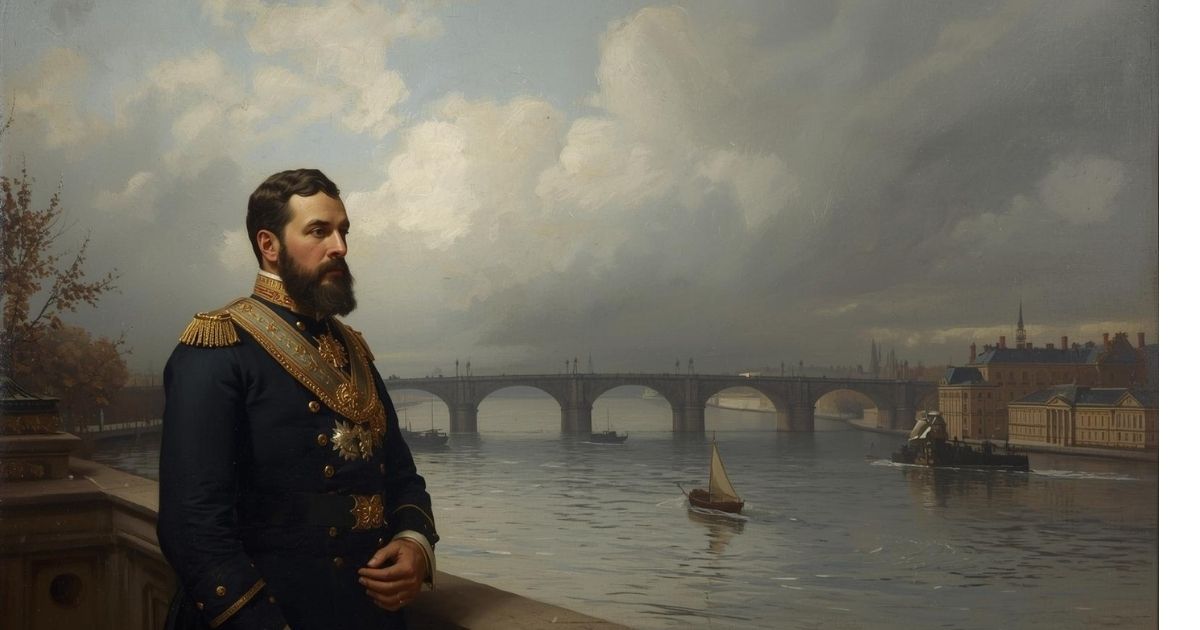
An excerpt from the original text.(complete · 7050 words)
“ will not deceive you. ‘Reality’ got me so entrapped in its meshes
now and again during the past six months, that I forgot my ‘sentence’
(or perhaps I did not wish to think of it), and actually busied myself
with affairs.
“A word as to my circumstances. When, eight months since, I became very
ill, I threw up all my old connections and dropped all my old
companions. As I was always a gloomy, morose sort of individual, my
friends easily forgot me; of course, they would have forgotten me all
the same, without that excuse. My position at home was solitary enough.
Five months ago I separated myself entirely from the family, and no one
dared enter my room except at stated times, to clean and tidy it, and
so on, and to bring me my meals. My mother dared not disobey me; she
kept the children quiet, for my sake, and beat them if they dared to
make any noise and disturb me. I so often complained of them that I
should think they must be very fond, indeed, of me by this time. I
think I must have tormented ‘my faithful Colia’ (as I called him) a
good deal too. He tormented me of late; I could see that he always bore
my tempers as though he had determined to ‘spare the poor invalid.’
This annoyed me, naturally. He seemed to have taken it into his head to
imitate the prince in Christian meekness! Surikoff, who lived above us,
annoyed me, too. He was so miserably poor, and I used to prove to him
that he had no one to blame but himself for his poverty. I used to be
so angry that I think I frightened him eventually, for he stopped
coming to see me. He was a most meek and humble fellow, was Surikoff.
(N.B.—They say that meekness is a great power. I must ask the prince
about this, for the expression is his.) But I remember one day in
March, when I went up to his lodgings to see whether it was true that
one of his children had been starved and frozen to death, I began to
hold forth to him about his poverty being his own fault, and, in the
course of my remarks, I accidentally smiled at the corpse of his child.
Well, the poor wretch’s lips began to tremble, and he caught me by the
shoulder, and pushed me to the door. ‘Go out,’ he said, in a whisper. I
went out, of course, and I declare I liked it. I liked it at the very
moment when I was turned out. But his words filled me with a strange
sort of feeling of disdainful pity for him whenever I thought of them—a
feeling which I did not in the least desire to entertain. At the very
moment of the insult (for I admit that I did insult him, though I did
not mean to), this man could not lose his temper. His lips had
trembled, but I swear it was not with rage. He had taken me by the arm,
and said, ‘Go out,’ without the least anger. There was dignity, a great
deal of dignity, about him, and it was so inconsistent with the look of
him that, I assure you, it was quite comical. But there was no anger.
Perhaps he merely began to despise me at that moment.
“Since that time he has always taken off his hat to me on the stairs,
whenever I met him, which is a thing he never did before; but he always
gets away from me as quickly as he can, as though he felt confused. If
he did despise me, he despised me ‘meekly,’ after his own fashion.
“I dare say he only took his hat off out of fear, as it were, to the
son of his creditor; for he always owed my mother money. I thought of
having an explanation with him, but I knew that if I did, he would
begin to apologize in a minute or two, so I decided to let him alone.
“Just about that time, that is, the middle of March, I suddenly felt
very much better; this continued for a couple of weeks. I used to go
out at dusk. I like the dusk, especially in March, when the night frost
begins to harden the day’s puddles, and the gas is burning.
“Well, one night in the Shestilavochnaya, a man passed me with a paper
parcel under his arm. I did not take stock of him very carefully, but
he seemed to be dressed in some shabby summer dust-coat, much too light
for the season. When he was opposite the lamp-post, some ten yards
away, I observed something fall out of his pocket. I hurried forward to
pick it up, just in time, for an old wretch in a long kaftan rushed up
too. He did not dispute the matter, but glanced at what was in my hand
and disappeared.
“It was a large old-fashioned pocket-book, stuffed full; but I guessed,
at a glance, that it had anything in the world inside it, except money.
“The owner was now some forty yards ahead of me, and was very soon lost
in the crowd. I ran after him, and began calling out; but as I knew
nothing to say excepting ‘hey!’ he did not turn round. Suddenly he
turned into the gate of a house to the left; and when I darted in after
him, the gateway was so dark that I could see nothing whatever. It was
one of those large houses built in small tenements, of which there must
have been at least a hundred.
“When I entered the yard I thought I saw a man going along on the far
side of it; but it was so dark I could not make out his figure.
“I crossed to that corner and found a dirty dark staircase. I heard a
man mounting up above me, some way higher than I was, and thinking I
should catch him before his door would be opened to him, I rushed after
him. I heard a door open and shut on the fifth storey, as I panted
along; the stairs were narrow, and the steps innumerable, but at last I
reached the door I thought the right one. Some moments passed before I
found the bell and got it to ring.
“An old peasant woman opened the door; she was busy lighting the
‘samovar’ in a tiny kitchen. She listened silently to my questions, did
not understand a word, of course, and opened another door leading into
a little bit of a room, low and scarcely furnished at all, but with a
large, wide bed in it, hung with curtains. On this bed lay one
Terentich, as the woman called him, drunk, it appeared to me. On the
table was an end of candle in an iron candlestick, and a half-bottle of
vodka, nearly finished. Terentich muttered something to me, and signed
towards the next room. The old woman had disappeared, so there was
nothing for me to do but to open the door indicated. I did so, and
entered the next room.
“This was still smaller than the other, so cramped that I could
scarcely turn round; a narrow single bed at one side took up nearly all
the room. Besides the bed there were only three common chairs, and a
wretched old kitchen-table standing before a small sofa. One could
hardly squeeze through between the table and the bed.
“On the table, as in the other room, burned a tallow candle-end in an
iron candlestick; and on the bed there whined a baby of scarcely three
weeks old. A pale-looking woman was dressing the child, probably the
mother; she looked as though she had not as yet got over the trouble of
childbirth, she seemed so weak and was so carelessly dressed. Another
child, a little girl of about three years old, lay on the sofa, covered
over with what looked like a man’s old dress-coat.
“At the table stood a man in his shirt sleeves; he had thrown off his
coat; it lay upon the bed; and he was unfolding a blue paper parcel in
which were a couple of pounds of bread, and some little sausages.
“On the table along with these things were a few old bits of black
bread, and some tea in a pot. From under the bed there protruded an
open portmanteau full of bundles of rags. In a word, the confusion and
untidiness of the room were indescribable.
“It appeared to me, at the first glance, that both the man and the
woman were respectable people, but brought to that pitch of poverty
where untidiness seems to get the better of every effort to cope with
it, till at last they take a sort of bitter satisfaction in it. When I
entered the room, the man, who had entered but a moment before me, and
was still unpacking his parcels, was saying something to his wife in an
excited manner. The news was apparently bad, as usual, for the woman
began whimpering. The man’s face seemed to me to be refined and even
pleasant. He was dark-complexioned, and about twenty-eight years of
age; he wore black whiskers, and his lip and chin were shaved. He
looked morose, but with a sort of pride of expression. A curious scene
followed.
“There are people who find satisfaction in their own touchy feelings,
especially when they have just taken the deepest offence; at such
moments they feel that they would rather be offended than not. These
easily-ignited natures, if they are wise, are always full of remorse
afterwards, when they reflect that they have been ten times as angry as
they need have been.
“The gentleman before me gazed at me for some seconds in amazement, and
his wife in terror; as though there was something alarmingly
extraordinary in the fact that anyone could come to see them. But
suddenly he fell upon me almost with fury; I had had no time to mutter
more than a couple of words; but he had doubtless observed that I was
decently dressed and, therefore, took deep offence because I had dared
enter his den so unceremoniously, and spy out the squalor and
untidiness of it.
“Of course he was delighted to get hold of someone upon whom to vent
his rage against things in general.
“For a moment I thought he would assault me; he grew so pale that he
looked like a woman about to have hysterics; his wife was dreadfully
alarmed.
“‘How dare you come in so? Be off!’ he shouted, trembling all over with
rage and scarcely able to articulate the words. Suddenly, however, he
observed his pocketbook in my hand.
“‘I think you dropped this,’ I remarked, as quietly and drily as I
could. (I thought it best to treat him so.) For some while he stood
before me in downright terror, and seemed unable to understand. He then
suddenly grabbed at his side-pocket, opened his mouth in alarm, and
beat his forehead with his hand.
“‘My God!’ he cried, ‘where did you find it? How?’ I explained in as
few words as I could, and as drily as possible, how I had seen it and
picked it up; how I had run after him, and called out to him, and how I
had followed him upstairs and groped my way to his door.
“‘Gracious Heaven!’ he cried, ‘all our papers are in it! My dear sir,
you little know what you have done for us. I should have been
lost—lost!’
“I had taken hold of the door-handle meanwhile, intending to leave the
room without reply; but I was panting with my run upstairs, and my
exhaustion came to a climax in a violent fit of coughing, so bad that I
could hardly stand.
“I saw how the man dashed about the room to find me an empty chair, how
he kicked the rags off a chair which was covered up by them, brought it
to me, and helped me to sit down; but my cough went on for another
three minutes or so. When I came to myself he was sitting by me on
another chair, which he had also cleared of the rubbish by throwing it
all over the floor, and was watching me intently.
“‘I’m afraid you are ill?’ he remarked, in the tone which doctors use
when they address a patient. ‘I am myself a medical man’ (he did not
say ‘doctor’), with which words he waved his hands towards the room and
its contents as though in protest at his present condition. ‘I see that
you—’
“‘I’m in consumption,’ I said laconically, rising from my seat.
“He jumped up, too.
“‘Perhaps you are exaggerating—if you were to take proper measures
perhaps—”
“He was terribly confused and did not seem able to collect his
scattered senses; the pocket-book was still in his left hand.
“‘Oh, don’t mind me,’ I said. ‘Dr. B—— saw me last week’ (I lugged him
in again), ‘and my hash is quite settled; pardon me—’ I took hold of
the door-handle again. I was on the point of opening the door and
leaving my grateful but confused medical friend to himself and his
shame, when my damnable cough got hold of me again.
“My doctor insisted on my sitting down again to get my breath. He now
said something to his wife who, without leaving her place, addressed a
few words of gratitude and courtesy to me. She seemed very shy over it,
and her sickly face flushed up with confusion. I remained, but with the
air of a man who knows he is intruding and is anxious to get away. The
doctor’s remorse at last seemed to need a vent, I could see.
“‘If I—’ he began, breaking off abruptly every other moment, and
starting another sentence. ‘I—I am so very grateful to you, and I am so
much to blame in your eyes, I feel sure, I—you see—’ (he pointed to the
room again) ‘at this moment I am in such a position—’
“‘Oh!’ I said, ‘there’s nothing to see; it’s quite a clear case—you’ve
lost your post and have come up to make explanations and get another,
if you can!’
“‘How do you know that?’ he asked in amazement.
“‘Oh, it was evident at the first glance,’ I said ironically, but not
intentionally so. ‘There are lots of people who come up from the
provinces full of hope, and run about town, and have to live as best
they can.’
“He began to talk at once excitedly and with trembling lips; he began
complaining and telling me his story. He interested me, I confess; I
sat there nearly an hour. His story was a very ordinary one. He had
been a provincial doctor; he had a civil appointment, and had no sooner
taken it up than intrigues began. Even his wife was dragged into these.
He was proud, and flew into a passion; there was a change of local
government which acted in favour of his opponents; his position was
undermined, complaints were made against him; he lost his post and came
up to Petersburg with his last remaining money, in order to appeal to
higher authorities. Of course nobody would listen to him for a long
time; he would come and tell his story one day and be refused promptly;
another day he would be fed on false promises; again he would be
treated harshly; then he would be told to sign some documents; then he
would sign the paper and hand it in, and they would refuse to receive
it, and tell him to file a formal petition. In a word he had been
driven about from office to office for five months and had spent every
farthing he had; his wife’s last rags had just been pawned; and
meanwhile a child had been born to them and—and today I have a final
refusal to my petition, and I have hardly a crumb of bread left—I have
nothing left; my wife has had a baby lately—and I—I—’
“He sprang up from his chair and turned away. His wife was crying in
the corner; the child had begun to moan again. I pulled out my
note-book and began writing in it. When I had finished and rose from my
chair he was standing before me with an expression of alarmed
curiosity.
“‘I have jotted down your name,’ I told him, ‘and all the rest of
it—the place you served at, the district, the date, and all. I have a
friend, Bachmatoff, whose uncle is a councillor of state and has to do
with these matters, one Peter Matveyevitch Bachmatoff.’
“‘Peter Matveyevitch Bachmatoff!’ he cried, trembling all over with
excitement. ‘Why, nearly everything depends on that very man!’
“It is very curious, this story of the medical man, and my visit, and
the happy termination to which I contributed by accident! Everything
fitted in, as in a novel. I told the poor people not to put much hope
in me, because I was but a poor schoolboy myself—(I am not really, but
I humiliated myself as much as possible in order to make them less
hopeful)—but that I would go at once to the Vassili Ostroff and see my
friend; and that as I knew for certain that his uncle adored him, and
was absolutely devoted to him as the last hope and branch of the
family, perhaps the old man might do something to oblige his nephew.
“‘If only they would allow me to explain all to his excellency! If I
could but be permitted to tell my tale to him!” he cried, trembling
with feverish agitation, and his eyes flashing with excitement. I
repeated once more that I could not hold out much hope—that it would
probably end in smoke, and if I did not turn up next morning they must
make up their minds that there was no more to be done in the matter.
“They showed me out with bows and every kind of respect; they seemed
quite beside themselves. I shall never forget the expression of their
faces!
“I took a droshky and drove over to the Vassili Ostroff at once. For
some years I had been at enmity with this young Bachmatoff, at school.
We considered him an aristocrat; at all events I called him one. He
used to dress smartly, and always drove to school in a private trap. He
was a good companion, and was always merry and jolly, sometimes even
witty, though he was not very intellectual, in spite of the fact that
he was always top of the class; I myself was never top in anything! All
his companions were very fond of him, excepting myself. He had several
times during those years come up to me and tried to make friends; but I
had always turned sulkily away and refused to have anything to do with
him. I had not seen him for a whole year now; he was at the university.
When, at nine o’clock, or so, this evening, I arrived and was shown up
to him with great ceremony, he first received me with astonishment, and
not too affably, but he soon cheered up, and suddenly gazed intently at
me and burst out laughing.
“‘Why, what on earth can have possessed you to come and see me,
Terentieff?’ he cried, with his usual pleasant, sometimes audacious,
but never offensive familiarity, which I liked in reality, but for
which I also detested him. ‘Why what’s the matter?’ he cried in alarm.
‘Are you ill?’
“That confounded cough of mine had come on again; I fell into a chair,
and with difficulty recovered my breath. ‘It’s all right, it’s only
consumption’ I said. ‘I have come to you with a petition!’
“He sat down in amazement, and I lost no time in telling him the
medical man’s history; and explained that he, with the influence which
he possessed over his uncle, might do some good to the poor fellow.
“‘I’ll do it—I’ll do it, of course!’ he said. ‘I shall attack my uncle
about it tomorrow morning, and I’m very glad you told me the story. But
how was it that you thought of coming to me about it, Terentieff?’
“‘So much depends upon your uncle,’ I said. ‘And besides we have always
been enemies, Bachmatoff; and as you are a generous sort of fellow, I
thought you would not refuse my request because I was your enemy!’ I
added with irony.
“‘Like Napoleon going to England, eh?’ cried he, laughing. ‘I’ll do it
though—of course, and at once, if I can!’ he added, seeing that I rose
seriously from my chair at this point.
“And sure enough the matter ended as satisfactorily as possible. A
month or so later my medical friend was appointed to another post. He
got his travelling expenses paid, and something to help him to start
life with once more. I think Bachmatoff must have persuaded the doctor
to accept a loan from himself. I saw Bachmatoff two or three times,
about this period, the third time being when he gave a farewell dinner
to the doctor and his wife before their departure, a champagne dinner.
“Bachmatoff saw me home after the dinner and we crossed the Nicolai
bridge. We were both a little drunk. He told me of his joy, the joyful
feeling of having done a good action; he said that it was all thanks to
myself that he could feel this satisfaction; and held forth about the
foolishness of the theory that individual charity is useless.
“I, too, was burning to have my say!
“‘In Moscow,’ I said, ‘there was an old state counsellor, a civil
general, who, all his life, had been in the habit of visiting the
prisons and speaking to criminals. Every party of convicts on its way
to Siberia knew beforehand that on the Vorobeef Hills the “old general”
would pay them a visit. He did all he undertook seriously and
devotedly. He would walk down the rows of the unfortunate prisoners,
stop before each individual and ask after his needs—he never sermonized
them; he spoke kindly to them—he gave them money; he brought them all
sorts of necessaries for the journey, and gave them devotional books,
choosing those who could read, under the firm conviction that they
would read to those who could not, as they went along.
“‘He scarcely ever talked about the particular crimes of any of them,
but listened if any volunteered information on that point. All the
convicts were equal for him, and he made no distinction. He spoke to
all as to brothers, and every one of them looked upon him as a father.
When he observed among the exiles some poor woman with a child, he
would always come forward and fondle the little one, and make it laugh.
He continued these acts of mercy up to his very death; and by that time
all the criminals, all over Russia and Siberia, knew him!
“‘A man I knew who had been to Siberia and returned, told me that he
himself had been a witness of how the very most hardened criminals
remembered the old general, though, in point of fact, he could never,
of course, have distributed more than a few pence to each member of a
party. Their recollection of him was not sentimental or particularly
devoted. Some wretch, for instance, who had been a murderer—cutting the
throat of a dozen fellow-creatures, for instance; or stabbing six
little children for his own amusement (there have been such men!)—would
perhaps, without rhyme or reason, suddenly give a sigh and say, “I
wonder whether that old general is alive still!” Although perhaps he
had not thought of mentioning him for a dozen years before! How can one
say what seed of good may have been dropped into his soul, never to
die?’
“I continued in that strain for a long while, pointing out to
Bachmatoff how impossible it is to follow up the effects of any
isolated good deed one may do, in all its influences and subtle
workings upon the heart and after-actions of others.
“‘And to think that you are to be cut off from life!’ remarked
Bachmatoff, in a tone of reproach, as though he would like to find
someone to pitch into on my account.
“We were leaning over the balustrade of the bridge, looking into the
Neva at this moment.
“‘Do you know what has suddenly come into my head?’ said I,
suddenly—leaning further and further over the rail.
“‘Surely not to throw yourself into the river?’ cried Bachmatoff in
alarm. Perhaps he read my thought in my face.
“‘No, not yet. At present nothing but the following consideration. You
see I have some two or three months left me to live—perhaps four; well,
supposing that when I have but a month or two more, I take a fancy for
some “good deed” that needs both trouble and time, like this business
of our doctor friend, for instance: why, I shall have to give up the
idea of it and take to something else—some little good deed, more
within my means, eh? Isn’t that an amusing idea!’
“Poor Bachmatoff was much impressed—painfully so. He took me all the
way home; not attempting to console me, but behaving with the greatest
delicacy. On taking leave he pressed my hand warmly and asked
permission to come and see me. I replied that if he came to me as a
‘comforter,’ so to speak (for he would be in that capacity whether he
spoke to me in a soothing manner or only kept silence, as I pointed out
to him), he would but remind me each time of my approaching death! He
shrugged his shoulders, but quite agreed with me; and we parted better
friends than I had expected.
“But that evening and that night were sown the first seeds of my ‘last
conviction.’ I seized greedily on my new idea; I thirstily drank in all
its different aspects (I did not sleep a wink that night!), and the
deeper I went into it the more my being seemed to merge itself in it,
and the more alarmed I became. A dreadful terror came over me at last,
and did not leave me all next day.
“Sometimes, thinking over this, I became quite numb with the terror of
it; and I might well have deduced from this fact, that my ‘last
conviction’ was eating into my being too fast and too seriously, and
would undoubtedly come to its climax before long. And for the climax I
needed greater determination than I yet possessed.
“However, within three weeks my determination was taken, owing to a
very strange circumstance.
“Here on my paper, I make a note of all the figures and dates that come
into my explanation. Of course, it is all the same to me, but just
now—and perhaps only at this moment—I desire that all those who are to
judge of my action should see clearly out of how logical a sequence of
deductions has at length proceeded my ‘last conviction.’
“I have said above that the determination needed by me for the
accomplishment of my final resolve, came to hand not through any
sequence of causes, but thanks to a certain strange circumstance which
had perhaps no connection whatever with the matter at issue. Ten days
ago Rogojin called upon me about certain business of his own with which
I have nothing to do at present. I had never seen Rogojin before, but
had often heard about him.
“I gave him all the information he needed, and he very soon took his
departure; so that, since he only came for the purpose of gaining the
information, the matter might have been expected to end there.
“But he interested me too much, and all that day I was under the
influence of strange thoughts connected with him, and I determined to
return his visit the next day.
“Rogojin was evidently by no means pleased to see me, and hinted,
delicately, that he saw no reason why our acquaintance should continue.
For all that, however, I spent a very interesting hour, and so, I dare
say, did he. There was so great a contrast between us that I am sure we
must both have felt it; anyhow, I felt it acutely. Here was I, with my
days numbered, and he, a man in the full vigour of life, living in the
present, without the slightest thought for ‘final convictions,’ or
numbers, or days, or, in fact, for anything but that which-which—well,
which he was mad about, if he will excuse me the expression—as a feeble
author who cannot express his ideas properly.
“In spite of his lack of amiability, I could not help seeing, in
Rogojin a man of intellect and sense; and although, perhaps, there was
little in the outside world which was of interest to him, still he was
clearly a man with eyes to see.
“I hinted nothing to him about my ‘final conviction,’ but it appeared
to me that he had guessed it from my words. He remained silent—he is a
terribly silent man. I remarked to him, as I rose to depart, that, in
spite of the contrast and the wide differences between us two, les
extremites se touchent (‘extremes meet,’ as I explained to him in
Russian); so that maybe he was not so far from my final conviction as
appeared.
“His only reply to this was a sour grimace. He rose and looked for my
cap, and placed it in my hand, and led me out of the house—that
dreadful gloomy house of his—to all appearances, of course, as though I
were leaving of my own accord, and he were simply seeing me to the door
out of politeness. His house impressed me much; it is like a
burial-ground, he seems to like it, which is, however, quite natural.
Such a full life as he leads is so overflowing with absorbing interests
that he has little need of assistance from his surroundings.
“The visit to Rogojin exhausted me terribly. Besides, I had felt ill
since the morning; and by evening I was so weak that I took to my bed,
and was in high fever at intervals, and even delirious. Colia sat with
me until eleven o’clock.
“Yet I remember all he talked about, and every word we said, though
whenever my eyes closed for a moment I could picture nothing but the
image of Surikoff just in the act of finding a million roubles. He
could not make up his mind what to do with the money, and tore his hair
over it. He trembled with fear that somebody would rob him, and at last
he decided to bury it in the ground. I persuaded him that, instead of
putting it all away uselessly underground, he had better melt it down
and make a golden coffin out of it for his starved child, and then dig
up the little one and put her into the golden coffin. Surikoff accepted
this suggestion, I thought, with tears of gratitude, and immediately
commenced to carry out my design.
“I thought I spat on the ground and left him in disgust. Colia told me,
when I quite recovered my senses, that I had not been asleep for a
moment, but that I had spoken to him about Surikoff the whole while.
“At moments I was in a state of dreadful weakness and misery, so that
Colia was greatly disturbed when he left me.
“When I arose to lock the door after him, I suddenly called to mind a
picture I had noticed at Rogojin’s in one of his gloomiest rooms, over
the door. He had pointed it out to me himself as we walked past it, and
I believe I must have stood a good five minutes in front of it. There
was nothing artistic about it, but the picture made me feel strangely
uncomfortable. It represented Christ just taken down from the cross. It
seems to me that painters as a rule represent the Saviour, both on the
cross and taken down from it, with great beauty still upon His face.
This marvellous beauty they strive to preserve even in His moments of
deepest agony and passion. But there was no such beauty in Rogojin’s
picture. This was the presentment of a poor mangled body which had
evidently suffered unbearable anguish even before its crucifixion, full
of wounds and bruises, marks of the violence of soldiers and people,
and of the bitterness of the moment when He had fallen with the
cross—all this combined with the anguish of the actual crucifixion.
“The face was depicted as though still suffering; as though the body,
only just dead, was still almost quivering with agony. The picture was
one of pure nature, for the face was not beautified by the artist, but
was left as it would naturally be, whosoever the sufferer, after such
anguish.
“I know that the earliest Christian faith taught that the Saviour
suffered actually and not figuratively, and that nature was allowed her
own way even while His body was on the cross.
“It is strange to look on this dreadful picture of the mangled corpse
of the Saviour, and to put this question to oneself: ‘Supposing that
the disciples, the future apostles, the women who had followed Him and
stood by the cross, all of whom believed in and worshipped
Him—supposing that they saw this tortured body, this face so mangled
and bleeding and bruised (and they must have so seen it)—how could
they have gazed upon the dreadful sight and yet have believed that He
would rise again?’
“The thought steps in, whether one likes it or no, that death is so
terrible and so powerful, that even He who conquered it in His miracles
during life was unable to triumph over it at the last. He who called to
Lazarus, ‘Lazarus, come forth!’ and the dead man lived—He was now
Himself a prey to nature and death. Nature appears to one, looking at
this picture, as some huge, implacable, dumb monster; or still better—a
stranger simile—some enormous mechanical engine of modern days which
has seized and crushed and swallowed up a great and invaluable Being, a
Being worth nature and all her laws, worth the whole earth, which was
perhaps created merely for the sake of the advent of that Being.
“This blind, dumb, implacable, eternal, unreasoning force is well shown
in the picture, and the absolute subordination of all men and things to
it is so well expressed that the idea unconsciously arises in the mind
of anyone who looks at it. All those faithful people who were gazing at
the cross and its mutilated occupant must have suffered agony of mind
that evening; for they must have felt that all their hopes and almost
all their faith had been shattered at a blow. They must have separated
in terror and dread that night, though each perhaps carried away with
him one great thought which was never eradicated from his mind for ever
afterwards. If this great Teacher of theirs could have seen Himself
after the Crucifixion, how could He have consented to mount the Cross
and to die as He did? This thought also comes into the mind of the man
who gazes at this picture. I thought of all this by snatches probably
between my attacks of delirium—for an hour and a half or so before
Colia’s departure.
“Can there be an appearance of that which has no form? And yet it
seemed to me, at certain moments, that I beheld in some strange and
impossible form, that dark, dumb, irresistibly powerful, eternal force.
“I thought someone led me by the hand and showed me, by the light of a
candle, a huge, loathsome insect, which he assured me was that very
force, that very almighty, dumb, irresistible Power, and laughed at the
indignation with which I received this information. In my room they
always light the little lamp before my icon for the night; it gives a
feeble flicker of light, but it is strong enough to see by dimly, and
if you sit just under it you can even read by it. I think it was about
twelve or a little past that night. I had not slept a wink, and was
lying with my eyes wide open, when suddenly the door opened, and in
came Rogojin.
“He entered, and shut the door behind him. Then he silently gazed at me
and went quickly to the corner of the room where the lamp was burning
and sat down underneath it.
“I was much surprised, and looked at him expectantly.
“Rogojin only leaned his elbow on the table and silently stared at me.
So passed two or three minutes, and I recollect that his silence hurt
and offended me very much. Why did he not speak?
“That his arrival at this time of night struck me as more or less
strange may possibly be the case; but I remember I was by no means
amazed at it. On the contrary, though I had not actually told him my
thought in the morning, yet I know he understood it; and this thought
was of such a character that it would not be anything very remarkable,
if one were to come for further talk about it at any hour of night,
however late.
“I thought he must have come for this purpose.
“In the morning we had parted not the best of friends; I remember he
looked at me with disagreeable sarcasm once or twice; and this same
look I observed in his eyes now—which was the cause of the annoyance I
felt.
“I did not for a moment suspect that I was delirious and that this
Rogojin was but the result of fever and excitement. I had not the
slightest idea of such a theory at first.
“Meanwhile he continued to sit and stare jeeringly at me.
“I angrily turned round in bed and made up my mind that I would not say
a word unless he did; so I rested silently on my pillow determined to
remain dumb, if it were to last till morning. I felt resolved that he
should speak first. Probably twenty minutes or so passed in this way.
Suddenly the idea struck me—what if this is an apparition and not
Rogojin himself?
“Neither during my illness nor at any previous time had I ever seen an
apparition;—but I had always thought, both when I was a little boy, and
even now, that if I were to see one I should die on the spot—though I
don’t believe in ghosts. And yet now, when the idea struck me that
this was a ghost and not Rogojin at all, I was not in the least
alarmed. Nay—the thought actually irritated me. Strangely enough, the
decision of the question as to whether this were a ghost or Rogojin did
not, for some reason or other, interest me nearly so much as it ought
to have done;—I think I began to muse about something altogether
different. For instance, I began to wonder why Rogojin, who had been in
dressing-gown and slippers when I saw him at home, had now put on a
dress-coat and white waistcoat and tie? I also thought to myself, I
remember—‘if this is a ghost, and I am not afraid of it, why don’t I
approach it and verify my suspicions? Perhaps I am afraid—’ And no
sooner did this last idea enter my head than an icy blast blew over me;
I felt a chill down my backbone and my knees shook.
“At this very moment, as though divining my thoughts, Rogojin raised
his head from his arm and began to part his lips as though he were
going to laugh—but he continued to stare at me as persistently as
before.
“I felt so furious with him at this moment that I longed to rush at
him; but as I had sworn that he should speak first, I continued to lie
still—and the more willingly, as I was still by no means satisfied as
to whether it really was Rogojin or not.
“I cannot remember how long this lasted; I cannot recollect, either,
whether consciousness forsook me at intervals, or not. But at last
Rogojin rose, staring at me as intently as ever, but not smiling any
longer,—and walking very softly, almost on tip-toes, to the door, he
opened it, went out, and shut it behind him.
“I did not rise from my bed, and I don’t know how long I lay with my
eyes open, thinking. I don’t know what I thought about, nor how I fell
asleep or became insensible; but I awoke next morning after nine
o’clock when they knocked at my door. My general orders are that if I
don’t open the door and call, by nine o’clock, Matreona is to come and
bring my tea. When I now opened the door to her, the thought suddenly
struck me—how could he have come in, since the door was locked? I made
inquiries and found that Rogojin himself could not possibly have come
in, because all our doors were locked for the night.
“Well, this strange circumstance—which I have described with so much
detail—was the ultimate cause which led me to taking my final
determination. So that no logic, or logical deductions, had anything to
do with my resolve;—it was simply a matter of disgust.
“It was impossible for me to go on living when life was full of such
detestable, strange, tormenting forms. This ghost had humiliated
me;—nor could I bear to be subordinate to that dark, horrible force
which was embodied in the form of the loathsome insect. It was only
towards evening, when I had quite made up my mind on this point, that I
began to feel easier.”
Master this chapter. Complete your experience
Purchase the complete book to access all chapters and support classic literature
As an Amazon Associate, we earn a small commission from qualifying purchases at no additional cost to you.
Available in paperback, hardcover, and e-book formats
Let's Analyse the Pattern
Crisis strips away social pretense, revealing both our capacity for cruelty and compassion simultaneously.
Why This Matters
Connect literature to life
This chapter teaches how to recognize that people facing major life changes often display contradictory behaviors that reveal their deepest fears and hopes simultaneously.
Practice This Today
This week, notice when someone going through a difficult time acts inconsistently—look for what both the cruel and kind behaviors reveal about what they're really afraid of losing or hoping to find.
Now let's explore the literary elements.
Key Quotes & Analysis
"Reality got me so entrapped in its meshes now and again during the past six months, that I forgot my sentence"
Context: The narrator admits that despite his terminal diagnosis, he sometimes got caught up in daily life and forgot he was dying
This reveals the human capacity to live normally even under a death sentence. It shows how the mind protects itself by allowing us to forget our mortality and engage with immediate concerns.
In Today's Words:
Even knowing I was dying, I sometimes got so busy with regular stuff that I forgot about it
"Go out"
Context: Surikoff's simple response when the narrator cruelly mocks his dead child
These two words carry more power than any angry outburst could. Surikoff's restraint shows true strength and dignity in the face of unimaginable cruelty, haunting the narrator with its quiet authority.
In Today's Words:
Leave
"Small mercies may never die in the human heart"
Context: The narrator reflects on how small acts of kindness can have lasting impact
This captures the narrator's growing obsession with the ripple effects of human kindness. Even as he faces death, he's discovering that tiny gestures can plant seeds that grow long after we're gone.
In Today's Words:
Little acts of kindness stick with people forever
Thematic Threads
Mortality
In This Chapter
The narrator's terminal diagnosis transforms his perspective on human connection and meaning
Development
Deepened from earlier philosophical musings to urgent personal reckoning
In Your Life:
You might recognize this when illness or loss suddenly makes petty concerns feel meaningless while relationships become intensely important.
Compassion
In This Chapter
Small acts of kindness—helping the doctor, the general visiting prisoners—reveal their profound ripple effects
Development
Evolved from abstract moral concepts to lived experience of connection
In Your Life:
You see this when a simple gesture of support during someone's crisis creates an unexpectedly deep bond.
Despair
In This Chapter
Rogojin's painting of Christ's corpse triggers existential crisis about whether hope can survive death's power
Development
Introduced here as counterpoint to growing compassion
In Your Life:
You might feel this when witnessing suffering so profound it challenges your basic faith in goodness or meaning.
Isolation
In This Chapter
The narrator's cruelty toward family and neighbors reflects how approaching death can separate us from normal human bonds
Development
Intensified from earlier social awkwardness to active alienation
In Your Life:
You recognize this when facing major life changes makes you push away the people who care about you most.
Recognition
In This Chapter
Surikoff's dignified response to mockery—simply saying 'Go out'—demonstrates the power of refusing to engage with cruelty
Development
Builds on earlier themes of authentic response versus social performance
In Your Life:
You see this when someone responds to your anger or criticism with calm dignity that makes you question your own behavior.
You now have the context. Time to form your own thoughts.
Discussion Questions
- 1
How does the narrator's behavior toward Surikoff and the doctor reveal two completely different sides of his personality?
analysis • surface - 2
Why does Surikoff's quiet response ('Go out') affect the narrator more powerfully than anger or retaliation would have?
analysis • medium - 3
Where have you seen people facing crisis act both cruel and kind, sometimes within the same day?
application • medium - 4
When someone you know is dealing with a major life crisis, how do you respond to their inconsistent behavior?
application • deep - 5
What does this chapter suggest about how proximity to death or major loss changes what we're willing to say and do?
reflection • deep
Critical Thinking Exercise
Map Your Crisis Contradictions
Think of a time when you faced a major crisis (job loss, illness, divorce, death in family). Write down three specific ways you acted that surprised you - both positive and negative. For each behavior, identify what fear or hope was driving it underneath the surface reaction.
Consider:
- •Crisis often reveals parts of ourselves we didn't know existed
- •The same stress that makes us cruel can also make us unexpectedly generous
- •Understanding your crisis patterns helps you choose better responses next time
Journaling Prompt
Write about a time when someone facing crisis treated you in a way that seemed contradictory or confusing. Looking back, what might have been driving their behavior beneath the surface?
Coming Up Next...
Chapter 35: The Failed Suicide and Its Aftermath
The narrator's 'final conviction' reaches its climax as he prepares to act on his philosophical crisis. His decision will force everyone around him to confront their own beliefs about life, death, and the meaning of human suffering.