An excerpt from the original text.(complete · 4134 words)
owards the end of November, during a thaw, at nine o’clock one
morning, a train on the Warsaw and Petersburg railway was approaching
the latter city at full speed. The morning was so damp and misty that
it was only with great difficulty that the day succeeded in breaking;
and it was impossible to distinguish anything more than a few yards
away from the carriage windows.
Some of the passengers by this particular train were returning from
abroad; but the third-class carriages were the best filled, chiefly
with insignificant persons of various occupations and degrees, picked
up at the different stations nearer town. All of them seemed weary, and
most of them had sleepy eyes and a shivering expression, while their
complexions generally appeared to have taken on the colour of the fog
outside.
When day dawned, two passengers in one of the third-class carriages
found themselves opposite each other. Both were young fellows, both
were rather poorly dressed, both had remarkable faces, and both were
evidently anxious to start a conversation. If they had but known why,
at this particular moment, they were both remarkable persons, they
would undoubtedly have wondered at the strange chance which had set
them down opposite to one another in a third-class carriage of the
Warsaw Railway Company.
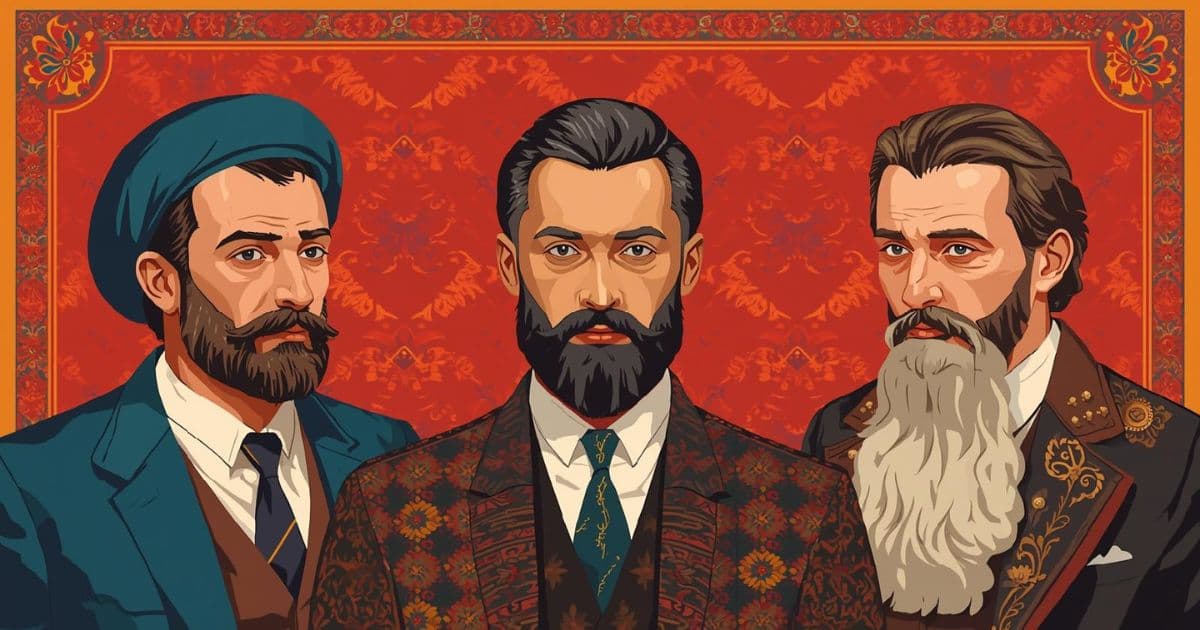
One of them was a young fellow of about twenty-seven, not tall, with
black curling hair, and small, grey, fiery eyes. His nose was broad and
flat, and he had high cheek bones; his thin lips were constantly
compressed into an impudent, ironical—it might almost be called a
malicious—smile; but his forehead was high and well formed, and atoned
for a good deal of the ugliness of the lower part of his face. A
special feature of this physiognomy was its death-like pallor, which
gave to the whole man an indescribably emaciated appearance in spite of
his hard look, and at the same time a sort of passionate and suffering
expression which did not harmonize with his impudent, sarcastic smile
and keen, self-satisfied bearing. He wore a large fur—or rather
astrachan—overcoat, which had kept him warm all night, while his
neighbour had been obliged to bear the full severity of a Russian
November night entirely unprepared. His wide sleeveless mantle with a
large cape to it—the sort of cloak one sees upon travellers during the
winter months in Switzerland or North Italy—was by no means adapted to
the long cold journey through Russia, from Eydkuhnen to St. Petersburg.
The wearer of this cloak was a young fellow, also of about twenty-six
or twenty-seven years of age, slightly above the middle height, very
fair, with a thin, pointed and very light coloured beard; his eyes were
large and blue, and had an intent look about them, yet that heavy
expression which some people affirm to be a peculiarity as well as
evidence, of an epileptic subject. His face was decidedly a pleasant
one for all that; refined, but quite colourless, except for the
circumstance that at this moment it was blue with cold. He held a
bundle made up of an old faded silk handkerchief that apparently
contained all his travelling wardrobe, and wore thick shoes and
gaiters, his whole appearance being very un-Russian.
His black-haired neighbour inspected these peculiarities, having
nothing better to do, and at length remarked, with that rude enjoyment
of the discomforts of others which the common classes so often show:
“Cold?”
“Very,” said his neighbour, readily, “and this is a thaw, too. Fancy if
it had been a hard frost! I never thought it would be so cold in the
old country. I’ve grown quite out of the way of it.”
“What, been abroad, I suppose?”
“Yes, straight from Switzerland.”
“Wheugh! my goodness!” The black-haired young fellow whistled, and then
laughed.
The conversation proceeded. The readiness of the fair-haired young man
in the cloak to answer all his opposite neighbour’s questions was
surprising. He seemed to have no suspicion of any impertinence or
inappropriateness in the fact of such questions being put to him.
Replying to them, he made known to the inquirer that he certainly had
been long absent from Russia, more than four years; that he had been
sent abroad for his health; that he had suffered from some strange
nervous malady—a kind of epilepsy, with convulsive spasms. His
interlocutor burst out laughing several times at his answers; and more
than ever, when to the question, “whether he had been cured?” the
patient replied:
“No, they did not cure me.”
“Hey! that’s it! You stumped up your money for nothing, and we believe
in those fellows, here!” remarked the black-haired individual,
sarcastically.
“Gospel truth, sir, Gospel truth!” exclaimed another passenger, a
shabbily dressed man of about forty, who looked like a clerk, and
possessed a red nose and a very blotchy face. “Gospel truth! All they
do is to get hold of our good Russian money free, gratis, and for
nothing.”
“Oh, but you’re quite wrong in my particular instance,” said the Swiss
patient, quietly. “Of course I can’t argue the matter, because I know
only my own case; but my doctor gave me money—and he had very little—to
pay my journey back, besides having kept me at his own expense, while
there, for nearly two years.”
“Why? Was there no one else to pay for you?” asked the black-haired
one.
“No—Mr. Pavlicheff, who had been supporting me there, died a couple of
years ago. I wrote to Mrs. General Epanchin at the time (she is a
distant relative of mine), but she did not answer my letter. And so
eventually I came back.”
“And where have you come to?”
“That is—where am I going to stay? I—I really don’t quite know yet, I—”
Both the listeners laughed again.
“I suppose your whole set-up is in that bundle, then?” asked the first.
“I bet anything it is!” exclaimed the red-nosed passenger, with extreme
satisfaction, “and that he has precious little in the luggage
van!—though of course poverty is no crime—we must remember that!”
It appeared that it was indeed as they had surmised. The young fellow
hastened to admit the fact with wonderful readiness.
“Your bundle has some importance, however,” continued the clerk, when
they had laughed their fill (it was observable that the subject of
their mirth joined in the laughter when he saw them laughing); “for
though I dare say it is not stuffed full of friedrichs d’or and louis
d’or—judge from your costume and gaiters—still—if you can add to your
possessions such a valuable property as a relation like Mrs. General
Epanchin, then your bundle becomes a significant object at once. That
is, of course, if you really are a relative of Mrs. Epanchin’s, and
have not made a little error through—well, absence of mind, which is
very common to human beings; or, say—through a too luxuriant fancy?”
“Oh, you are right again,” said the fair-haired traveller, “for I
really am almost wrong when I say she and I are related. She is
hardly a relation at all; so little, in fact, that I was not in the
least surprised to have no answer to my letter. I expected as much.”
“H’m! you spent your postage for nothing, then. H’m! you are candid,
however—and that is commendable. H’m! Mrs. Epanchin—oh yes! a most
eminent person. I know her. As for Mr. Pavlicheff, who supported you in
Switzerland, I know him too—at least, if it was Nicolai Andreevitch of
that name? A fine fellow he was—and had a property of four thousand
souls in his day.”
“Yes, Nicolai Andreevitch—that was his name,” and the young fellow
looked earnestly and with curiosity at the all-knowing gentleman with
the red nose.
This sort of character is met with pretty frequently in a certain
class. They are people who know everyone—that is, they know where a man
is employed, what his salary is, whom he knows, whom he married, what
money his wife had, who are his cousins, and second cousins, etc., etc.
These men generally have about a hundred pounds a year to live on, and
they spend their whole time and talents in the amassing of this style
of knowledge, which they reduce—or raise—to the standard of a science.
During the latter part of the conversation the black-haired young man
had become very impatient. He stared out of the window, and fidgeted,
and evidently longed for the end of the journey. He was very absent; he
would appear to listen—and heard nothing; and he would laugh of a
sudden, evidently with no idea of what he was laughing about.
“Excuse me,” said the red-nosed man to the young fellow with the
bundle, rather suddenly; “whom have I the honour to be talking to?”
“Prince Lef Nicolaievitch Muishkin,” replied the latter, with perfect
readiness.
“Prince Muishkin? Lef Nicolaievitch? H’m! I don’t know, I’m sure! I may
say I have never heard of such a person,” said the clerk, thoughtfully.
“At least, the name, I admit, is historical. Karamsin must mention the
family name, of course, in his history—but as an individual—one never
hears of any Prince Muishkin nowadays.”
“Of course not,” replied the prince; “there are none, except myself. I
believe I am the last and only one. As to my forefathers, they have
always been a poor lot; my own father was a sublieutenant in the army.
I don’t know how Mrs. Epanchin comes into the Muishkin family, but she
is descended from the Princess Muishkin, and she, too, is the last of
her line.”
“And did you learn science and all that, with your professor over
there?” asked the black-haired passenger.
“Oh yes—I did learn a little, but—”
“I’ve never learned anything whatever,” said the other.
“Oh, but I learned very little, you know!” added the prince, as though
excusing himself. “They could not teach me very much on account of my
illness.”
“Do you know the Rogojins?” asked his questioner, abruptly.
“No, I don’t—not at all! I hardly know anyone in Russia. Why, is that
your name?”
“Yes, I am Rogojin, Parfen Rogojin.”
“Parfen Rogojin? dear me—then don’t you belong to those very Rogojins,
perhaps—” began the clerk, with a very perceptible increase of civility
in his tone.
“Yes—those very ones,” interrupted Rogojin, impatiently, and with scant
courtesy. I may remark that he had not once taken any notice of the
blotchy-faced passenger, and had hitherto addressed all his remarks
direct to the prince.
“Dear me—is it possible?” observed the clerk, while his face assumed an
expression of great deference and servility—if not of absolute alarm:
“what, a son of that very Semen Rogojin—hereditary honourable
citizen—who died a month or so ago and left two million and a half of
roubles?”
“And how do you know that he left two million and a half of roubles?”
asked Rogojin, disdainfully, and not deigning so much as to look at the
other. “However, it’s true enough that my father died a month ago, and
that here am I returning from Pskoff, a month after, with hardly a boot
to my foot. They’ve treated me like a dog! I’ve been ill of fever at
Pskoff the whole time, and not a line, nor farthing of money, have I
received from my mother or my confounded brother!”
“And now you’ll have a million roubles, at least—goodness gracious me!”
exclaimed the clerk, rubbing his hands.
“Five weeks since, I was just like yourself,” continued Rogojin,
addressing the prince, “with nothing but a bundle and the clothes I
wore. I ran away from my father and came to Pskoff to my aunt’s house,
where I caved in at once with fever, and he went and died while I was
away. All honour to my respected father’s memory—but he uncommonly
nearly killed me, all the same. Give you my word, prince, if I hadn’t
cut and run then, when I did, he’d have murdered me like a dog.”
“I suppose you angered him somehow?” asked the prince, looking at the
millionaire with considerable curiosity. But though there may have been
something remarkable in the fact that this man was heir to millions of
roubles there was something about him which surprised and interested
the prince more than that. Rogojin, too, seemed to have taken up the
conversation with unusual alacrity it appeared that he was still in a
considerable state of excitement, if not absolutely feverish, and was
in real need of someone to talk to for the mere sake of talking, as
safety-valve to his agitation.
As for his red-nosed neighbour, the latter—since the information as to
the identity of Rogojin—hung over him, seemed to be living on the honey
of his words and in the breath of his nostrils, catching at every
syllable as though it were a pearl of great price.
“Oh, yes; I angered him—I certainly did anger him,” replied Rogojin.
“But what puts me out so is my brother. Of course my mother couldn’t do
anything—she’s too old—and whatever brother Senka says is law for her!
But why couldn’t he let me know? He sent a telegram, they say. What’s
the good of a telegram? It frightened my aunt so that she sent it back
to the office unopened, and there it’s been ever since! It’s only
thanks to Konief that I heard at all; he wrote me all about it. He says
my brother cut off the gold tassels from my father’s coffin, at night
‘because they’re worth a lot of money!’ says he. Why, I can get him
sent off to Siberia for that alone, if I like; it’s sacrilege. Here,
you—scarecrow!” he added, addressing the clerk at his side, “is it
sacrilege or not, by law?”
“Sacrilege, certainly—certainly sacrilege,” said the latter.
“And it’s Siberia for sacrilege, isn’t it?”
“Undoubtedly so; Siberia, of course!”
“They will think that I’m still ill,” continued Rogojin to the prince,
“but I sloped off quietly, seedy as I was, took the train and came
away. Aha, brother Senka, you’ll have to open your gates and let me in,
my boy! I know he told tales about me to my father—I know that well
enough but I certainly did rile my father about Nastasia Philipovna
that’s very sure, and that was my own doing.”
“Nastasia Philipovna?” said the clerk, as though trying to think out
something.
“Come, you know nothing about her,” said Rogojin, impatiently.
“And supposing I do know something?” observed the other, triumphantly.
“Bosh! there are plenty of Nastasia Philipovnas. And what an
impertinent beast you are!” he added angrily. “I thought some creature
like you would hang on to me as soon as I got hold of my money.”
“Oh, but I do know, as it happens,” said the clerk in an aggravating
manner. “Lebedeff knows all about her. You are pleased to reproach me,
your excellency, but what if I prove that I am right after all?
Nastasia Philipovna’s family name is Barashkoff—I know, you see—and she
is a very well known lady, indeed, and comes of a good family, too. She
is connected with one Totski, Afanasy Ivanovitch, a man of considerable
property, a director of companies, and so on, and a great friend of
General Epanchin, who is interested in the same matters as he is.”
“My eyes!” said Rogojin, really surprised at last. “The devil take the
fellow, how does he know that?”
“Why, he knows everything—Lebedeff knows everything! I was a month or
two with Lihachof after his father died, your excellency, and while he
was knocking about—he’s in the debtor’s prison now—I was with him, and
he couldn’t do a thing without Lebedeff; and I got to know Nastasia
Philipovna and several people at that time.”
“Nastasia Philipovna? Why, you don’t mean to say that she and
Lihachof—” cried Rogojin, turning quite pale.
“No, no, no, no, no! Nothing of the sort, I assure you!” said Lebedeff,
hastily. “Oh dear no, not for the world! Totski’s the only man with any
chance there. Oh, no! He takes her to his box at the opera at the
French theatre of an evening, and the officers and people all look at
her and say, ‘By Jove, there’s the famous Nastasia Philipovna!’ but no
one ever gets any further than that, for there is nothing more to say.”
“Yes, it’s quite true,” said Rogojin, frowning gloomily; “so Zaleshoff
told me. I was walking about the Nefsky one fine day, prince, in my
father’s old coat, when she suddenly came out of a shop and stepped
into her carriage. I swear I was all of a blaze at once. Then I met
Zaleshoff—looking like a hair-dresser’s assistant, got up as fine as I
don’t know who, while I looked like a tinker. ‘Don’t flatter yourself,
my boy,’ said he; ‘she’s not for such as you; she’s a princess, she is,
and her name is Nastasia Philipovna Barashkoff, and she lives with
Totski, who wishes to get rid of her because he’s growing rather
old—fifty-five or so—and wants to marry a certain beauty, the loveliest
woman in all Petersburg.’ And then he told me that I could see Nastasia
Philipovna at the opera-house that evening, if I liked, and described
which was her box. Well, I’d like to see my father allowing any of us
to go to the theatre; he’d sooner have killed us, any day. However, I
went for an hour or so and saw Nastasia Philipovna, and I never slept a
wink all night after. Next morning my father happened to give me two
government loan bonds to sell, worth nearly five thousand roubles each.
‘Sell them,’ said he, ‘and then take seven thousand five hundred
roubles to the office, give them to the cashier, and bring me back the
rest of the ten thousand, without looking in anywhere on the way; look
sharp, I shall be waiting for you.’ Well, I sold the bonds, but I
didn’t take the seven thousand roubles to the office; I went straight
to the English shop and chose a pair of earrings, with a diamond the
size of a nut in each. They cost four hundred roubles more than I had,
so I gave my name, and they trusted me. With the earrings I went at
once to Zaleshoff’s. ‘Come on!’ I said, ‘come on to Nastasia
Philipovna’s,’ and off we went without more ado. I tell you I hadn’t a
notion of what was about me or before me or below my feet all the way;
I saw nothing whatever. We went straight into her drawing-room, and
then she came out to us.
“I didn’t say right out who I was, but Zaleshoff said: ‘From Parfen
Rogojin, in memory of his first meeting with you yesterday; be so kind
as to accept these!’
“She opened the parcel, looked at the earrings, and laughed.
“‘Thank your friend Mr. Rogojin for his kind attention,’ says she, and
bowed and went off. Why didn’t I die there on the spot? The worst of it
all was, though, that the beast Zaleshoff got all the credit of it! I
was short and abominably dressed, and stood and stared in her face and
never said a word, because I was shy, like an ass! And there was he all
in the fashion, pomaded and dressed out, with a smart tie on, bowing
and scraping; and I bet anything she took him for me all the while!
“‘Look here now,’ I said, when we came out, ‘none of your interference
here after this—do you understand?’ He laughed: ‘And how are you going
to settle up with your father?’ says he. I thought I might as well jump
into the Neva at once without going home first; but it struck me that I
wouldn’t, after all, and I went home feeling like one of the damned.”
“My goodness!” shivered the clerk. “And his father,” he added, for the
prince’s instruction, “and his father would have given a man a ticket
to the other world for ten roubles any day—not to speak of ten
thousand!”
The prince observed Rogojin with great curiosity; he seemed paler than
ever at this moment.
“What do you know about it?” cried the latter. “Well, my father learned
the whole story at once, and Zaleshoff blabbed it all over the town
besides. So he took me upstairs and locked me up, and swore at me for
an hour. ‘This is only a foretaste,’ says he; ‘wait a bit till night
comes, and I’ll come back and talk to you again.’
“Well, what do you think? The old fellow went straight off to Nastasia
Philipovna, touched the floor with his forehead, and began blubbering
and beseeching her on his knees to give him back the diamonds. So after
awhile she brought the box and flew out at him. ‘There,’ she says,
‘take your earrings, you wretched old miser; although they are ten
times dearer than their value to me now that I know what it must have
cost Parfen to get them! Give Parfen my compliments,’ she says, ‘and
thank him very much!’ Well, I meanwhile had borrowed twenty-five
roubles from a friend, and off I went to Pskoff to my aunt’s. The old
woman there lectured me so that I left the house and went on a drinking
tour round the public-houses of the place. I was in a high fever when I
got to Pskoff, and by nightfall I was lying delirious in the streets
somewhere or other!”
“Oho! we’ll make Nastasia Philipovna sing another song now!” giggled
Lebedeff, rubbing his hands with glee. “Hey, my boy, we’ll get her some
proper earrings now! We’ll get her such earrings that—”
“Look here,” cried Rogojin, seizing him fiercely by the arm, “look
here, if you so much as name Nastasia Philipovna again, I’ll tan your
hide as sure as you sit there!”
“Aha! do—by all means! if you tan my hide you won’t turn me away from
your society. You’ll bind me to you, with your lash, for ever. Ha, ha!
here we are at the station, though.”
Sure enough, the train was just steaming in as he spoke.
Though Rogojin had declared that he left Pskoff secretly, a large
collection of friends had assembled to greet him, and did so with
profuse waving of hats and shouting.
“Why, there’s Zaleshoff here, too!” he muttered, gazing at the scene
with a sort of triumphant but unpleasant smile. Then he suddenly turned
to the prince: “Prince, I don’t know why I have taken a fancy to you;
perhaps because I met you just when I did. But no, it can’t be that,
for I met this fellow” (nodding at Lebedeff) “too, and I have not taken
a fancy to him by any means. Come to see me, prince; we’ll take off
those gaiters of yours and dress you up in a smart fur coat, the best
we can buy. You shall have a dress coat, best quality, white waistcoat,
anything you like, and your pocket shall be full of money. Come, and
you shall go with me to Nastasia Philipovna’s. Now then will you come
or no?”
“Accept, accept, Prince Lef Nicolaievitch” said Lebedef solemnly;
“don’t let it slip! Accept, quick!”
Prince Muishkin rose and stretched out his hand courteously, while he
replied with some cordiality:
“I will come with the greatest pleasure, and thank you very much for
taking a fancy to me. I dare say I may even come today if I have time,
for I tell you frankly that I like you very much too. I liked you
especially when you told us about the diamond earrings; but I liked you
before that as well, though you have such a dark-clouded sort of face.
Thanks very much for the offer of clothes and a fur coat; I certainly
shall require both clothes and coat very soon. As for money, I have
hardly a copeck about me at this moment.”
“You shall have lots of money; by the evening I shall have plenty; so
come along!”
“That’s true enough, he’ll have lots before evening!” put in Lebedeff.
“But, look here, are you a great hand with the ladies? Let’s know that
first?” asked Rogojin.
“Oh no, oh no!” said the prince; “I couldn’t, you know—my illness—I
hardly ever saw a soul.”
“H’m! well—here, you fellow—you can come along with me now if you
like!” cried Rogojin to Lebedeff, and so they all left the carriage.
Lebedeff had his desire. He went off with the noisy group of Rogojin’s
friends towards the Voznesensky, while the prince’s route lay towards
the Litaynaya. It was damp and wet. The prince asked his way of
passers-by, and finding that he was a couple of miles or so from his
destination, he determined to take a droshky.
Master this chapter. Complete your experience
Purchase the complete book to access all chapters and support classic literature
As an Amazon Associate, we earn a small commission from qualifying purchases at no additional cost to you.
Available in paperback, hardcover, and e-book formats
Let's Analyse the Pattern
Authentic admission of flaws and limitations creates stronger connections and opportunities than attempts to appear perfect.
Why This Matters
Connect literature to life
This chapter teaches how to distinguish between genuine openness that builds trust and manipulative oversharing that seeks advantage.
Practice This Today
Next time someone shares a struggle with you, notice whether they're seeking genuine connection or trying to gain sympathy, leverage, or control.
Now let's explore the literary elements.
Key Quotes & Analysis
"If they had but known why, at this particular moment, they were both remarkable persons, they would undoubtedly have wondered at the strange chance which had set them down opposite to one another"
Context: Describing the fateful meeting between Myshkin and Rogozhin on the train
This sets up the entire novel's theme about how chance encounters can change everything. The narrator hints that these seemingly ordinary men will prove extraordinary, and their meeting is no accident but destiny.
In Today's Words:
If they knew how important they'd become to each other, they'd be amazed they ended up sitting across from each other by pure chance.
"I have no money at all, hardly any; I don't know what I shall do"
Context: Myshkin honestly admitting his poverty to strangers on the train
This radical honesty is what makes Myshkin special - most people hide their vulnerabilities, but he shares them openly. This transparency creates immediate trust and connection with others.
In Today's Words:
I'm basically broke and have no idea what I'm going to do next.
"My father died five days ago and left me everything"
Context: Rogozhin explaining his sudden wealth to his new train companions
This simple statement reveals the dramatic change in Rogozhin's circumstances. His father's death has freed him financially but also emotionally - he can now pursue his obsessions without interference.
In Today's Words:
My dad just died and I inherited everything he had.
Thematic Threads
Class
In This Chapter
Myshkin's poverty and Rogozhin's wealth create an unlikely friendship based on shared outsider status rather than social position
Development
Introduced here
In Your Life:
You might find your deepest friendships cross economic lines when you connect on shared experiences rather than income levels
Identity
In This Chapter
Myshkin defines himself by his authentic experiences rather than social expectations or shame about his condition
Development
Introduced here
In Your Life:
You might discover that owning your story, including the difficult parts, gives you more power than hiding from it
Social Expectations
In This Chapter
The prince violates normal social rules by discussing his illness and poverty openly, creating deeper connection than small talk would
Development
Introduced here
In Your Life:
You might find that breaking minor social conventions leads to more meaningful conversations than following scripts
Human Relationships
In This Chapter
Two strangers form an immediate bond through honest sharing rather than gradual social positioning
Development
Introduced here
In Your Life:
You might notice that your strongest relationships often began with moments of unexpected honesty rather than careful impression management
Personal Growth
In This Chapter
Myshkin's time in Switzerland hasn't made him bitter or ashamed but has given him unusual self-acceptance
Development
Introduced here
In Your Life:
You might find that your most challenging experiences, when fully processed, become sources of strength rather than shame
You now have the context. Time to form your own thoughts.
Discussion Questions
- 1
What does Prince Myshkin reveal about himself to the strangers on the train, and how do they respond?
analysis • surface - 2
Why does Rogozhin, a wealthy heir, immediately trust and invite home a poor, sick stranger he just met?
analysis • medium - 3
Where have you seen someone's honesty about their struggles actually make them more likeable or trustworthy?
application • medium - 4
When you're meeting new people, do you tend to hide your problems or share them? What results do you get from each approach?
application • deep - 5
What does this chapter suggest about the difference between weakness and vulnerability in human relationships?
reflection • deep
Critical Thinking Exercise
Practice Strategic Vulnerability
Think about a current relationship where you feel like you're wearing a mask or trying too hard to impress. Write down one authentic thing you could share about yourself that shows you're human but not helpless. Practice how you might bring this up naturally in conversation, following Myshkin's model of honest but not overwhelming disclosure.
Consider:
- •Choose something real but not too heavy for the relationship level
- •Focus on sharing, not seeking pity or solutions
- •Notice how vulnerability might actually strengthen rather than weaken your position
Journaling Prompt
Write about a time when someone's honesty about their struggles made you trust them more. What did they share, and why did it create connection rather than distance?
Coming Up Next...
Chapter 2: The General's Household
The prince arrives at the grand Epanchin household, where his claim of distant kinship will be tested. His simple honesty is about to collide with the complex social dynamics of St. Petersburg's elite, setting the stage for revelations that will surprise everyone—including himself.