
Themes in This Book
Click a theme to find more books with similar topics
What to expect ahead
What follows is a compact summary of each chapter in the book, designed to help you quickly grasp the core ideas while inviting you to continue into the full original text. Even when chapter text is presented here, these summaries are meant as a gateway to understanding, so your eventual reading of the complete book feels richer, deeper, and more fully appreciated.
Dark Night of the Soul
A Brief Description
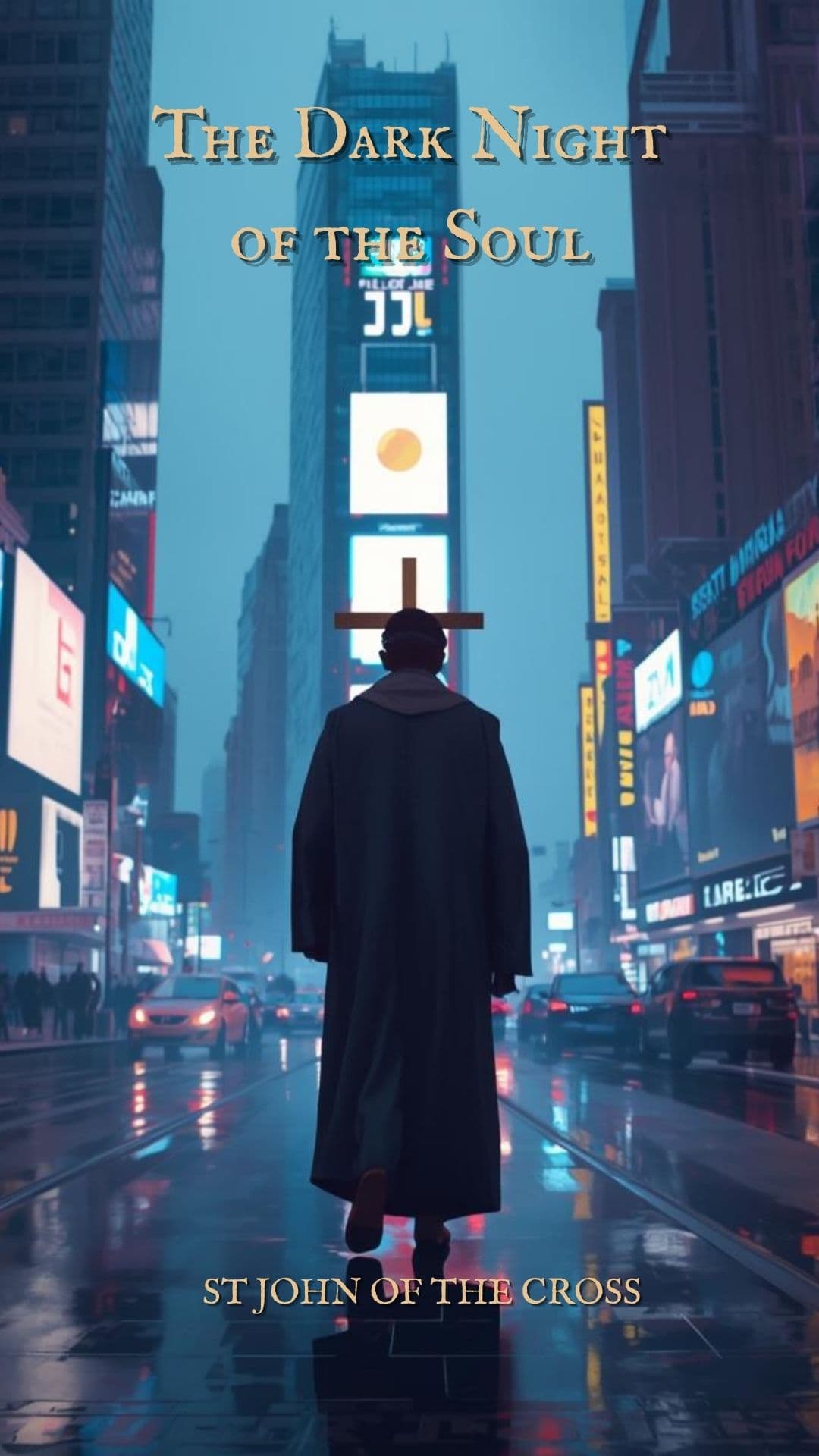
Dark Night of the Soul charts the most challenging passage in any person's inner life: that bewildering period when everything that once gave you meaning stops working, yet nothing new has arrived to replace it. Saint John of the Cross, a 16th-century Spanish mystic who experienced imprisonment and betrayal, wrote this treatise not as abstract theology but as a map for navigating profound spiritual crisis.
This isn't about religious suffering—it's about the universal experience of transformation. When your career stops fulfilling you. When relationships that defined you fall apart. When beliefs you've held since childhood suddenly feel hollow. When success leaves you empty. John identifies this darkness not as failure, but as the necessary passage between who you were and who you're becoming.
The "dark night" has two stages. First, you lose attachment to external things—status, possessions, others' approval. What once brought comfort now feels meaningless. Second, and more disorienting, you lose your conceptual understanding. The frameworks you used to make sense of life stop working. You can't think your way through this darkness.
Through Intelligence Amplifier™ analysis, you'll recognize this pattern everywhere: in career transitions, identity crises, grief, divorce, depression. You'll learn why trying to rush through darkness only prolongs it, why conventional self-help fails during these periods, and why this stripping away isn't punishment but preparation. The darkness clears space for something more authentic to emerge.
John's genius is showing that meaning isn't found—it grows. Not through more knowledge or effort, but through surrender to the transformation already underway. The night is dark because dawn is coming.
Essential Life Skills Deep Dive
Explore chapter-by-chapter breakdowns of the essential life skills taught in this classic novel.
Navigating Identity Crisis
11 chapters revealing how to recognize and move through periods when your sense of self dissolves and everything that defined you stops working.
Letting Go of Control
11 chapters teaching how to surrender the need to understand and manage everything—trusting transformation you can't direct or orchestrate.
Sitting with Darkness
11 chapters showing how to stay present during painful transitions without rushing to fix or escape—allowing darkness to transform rather than torment you.
Recognizing True Transformation
11 chapters revealing how to distinguish genuine growth from spiritual bypassing and false comfort—recognizing what's real versus performative change.
Essential Skills
Life skills and patterns this book helps you develop—drawn from its themes and characters.
Navigating Identity Crisis
Recognize and move through periods when your sense of self dissolves
Letting Go of Control
Surrender the need to understand and manage everything in your life
Sitting with Darkness
Stay present during painful transitions without rushing to fix or escape
Recognizing True Transformation
Distinguish genuine growth from spiritual bypassing or false comfort
Finding Meaning in Crisis
See how difficult periods aren't obstacles but opportunities for deeper authenticity
Releasing External Validation
Stop deriving identity from achievements, possessions, or others' opinions
Table of Contents
Beginning the Journey Inward
John of the Cross opens with a poem about a soul venturing out on a dark night, setting the stage fo...
When Good Intentions Go Bad
Here's a paradox: the moment you start making real spiritual progress, you're in danger of becoming ...
Spiritual Hoarding and Sacred Clutter
Picture someone who owns every self-help book ever written but hasn't changed a single habit. These ...
When Your Body Betrays Your Spirit
This chapter tackles an uncomfortable truth: your body doesn't always cooperate with your spiritual ...
When Spiritual Progress Stalls
Anger in spiritual people looks different than regular anger—it's wrapped in righteousness, which ma...
When Good Intentions Go Too Far
You know that feeling when you can't stop thinking about dessert while you're supposed to be meditat...
When Spiritual Progress Breeds Jealousy
Beginners often confuse busyness with devotion, filling their schedules with spiritual activities to...
Three Attachments That Block Growth
Spiritual envy is real: you see someone else's breakthrough and suddenly your own progress feels ina...
Three Signs of Spiritual Progress
After exposing all these embarrassing pitfalls that trap beginners, John finally offers the way forw...
Learning to Let Go and Wait
The dark night doesn't announce itself with trumpets—it arrives quietly, stealing away the consolati...
Breaking Free from Inner Turmoil
This is where things get interesting: God begins to wean the soul off spiritual comfort food. He exp...
The Hidden Gifts of Struggle
Everything that used to light you up spiritually now leaves you cold—and that's actually progress. H...
The Hidden Benefits of Spiritual Emptiness
The night of sense strips away your dependence on feelings, preparing you for something deeper than ...
When Love Burns Through Emptiness
Your mind rebels against the darkness because it's addicted to understanding, to having answers, to ...
When Deeper Healing Begins
Meanwhile, as your surface satisfactions fall away, something profound is happening underneath. He e...
The Stubborn Habits That Hold Us Back
The second night goes deeper than the first—this time, it's not just your attachments being purged, ...
Two Stages of Spiritual Struggle
In the spiritual part's dark night, even your concepts of God become obstacles. He explains that spi...
The Dark Journey Begins
Faith in this context isn't believing harder—it's learning to move forward without the crutch of cer...
When Growth Feels Like Dying
The soul experiences this stripping as suffering, but it's the suffering of healing, not harm. He de...
When Divine Meets Human
While the soul flails in darkness, convinced it's failing, God is actually doing the most important ...
When Growth Feels Like Dying
The darkness serves a specific purpose: it reveals what's false so the authentic can emerge. He uses...
When Everything Feels Against You
Paradoxically, the soul becomes more capable precisely when it feels most helpless. This isn't just ...
Why Darkness Leads to Light
This purification isn't punishment—it's preparation for union. Like a doctor who causes temporary pa...
The Wood and the Fire
The final stages of the night are where all that stripping away begins to make sense. Just as wood m...
The Fever of Divine Longing
In this closing movement, Saint John shows why every earlier chapter mattered: the nights of sense a...
About Saint John of the Cross
Published 1578
Saint John of the Cross (1542-1591) was a Spanish Carmelite friar, mystic poet, and Doctor of the Church whose writings on spiritual transformation are considered masterpieces of both Spanish literature and mystical theology. Born Juan de Yepes into poverty in Castile, he joined the Carmelite order and worked with Saint Teresa of Ávila to reform the order, advocating for a return to contemplative practice.
His reformist stance made him enemies. In 1577, opposing friars kidnapped and imprisoned him in a tiny cell in Toledo, where he endured months of physical abuse and psychological torture. In this darkness, he composed some of his greatest mystical poetry, including verses that would become Dark Night of the Soul. He escaped after nine months, and spent his remaining years writing and teaching.
Dark Night of the Soul, completed around 1578-1579, emerged from his direct experience of suffering, transformation, and ultimate spiritual breakthrough. Rather than offering easy comfort, John honestly describes the painful process of inner transformation—making his work profoundly relevant to anyone facing crisis, transition, or the collapse of their previous sense of self. His influence extends far beyond Christianity into psychology, philosophy, and any serious discussion of personal transformation.
Why This Author Matters Today
Saint John of the Cross's insights into human nature, social constraints, and the search for authenticity remain powerfully relevant. Their work helps us understand the timeless tensions between individual desire and social expectation, making them an essential guide for navigating modern life's complexities.
Amplified Classics is different.
not a sparknotes, nor a cliffnotes
This is a retelling. The story is still told—completely. You walk with the characters, feel what they feel, discover what they discover. The meaning arrives because you experienced it, not because someone explained a summary.
Read this, then read the original. The prose will illuminate—you'll notice what makes the author that author, because you're no longer fighting to follow the story.
Read the original first, then read this. Something will click. You'll want to go back.
Either way, the door opens inward.
Get the Full Book
Purchase the complete book to access all chapters and support classic literature
As an Amazon Associate, we earn a small commission from qualifying purchases at no additional cost to you.
Available in paperback, hardcover, and e-book formats
You Might Also Like



Free to read • No account required