
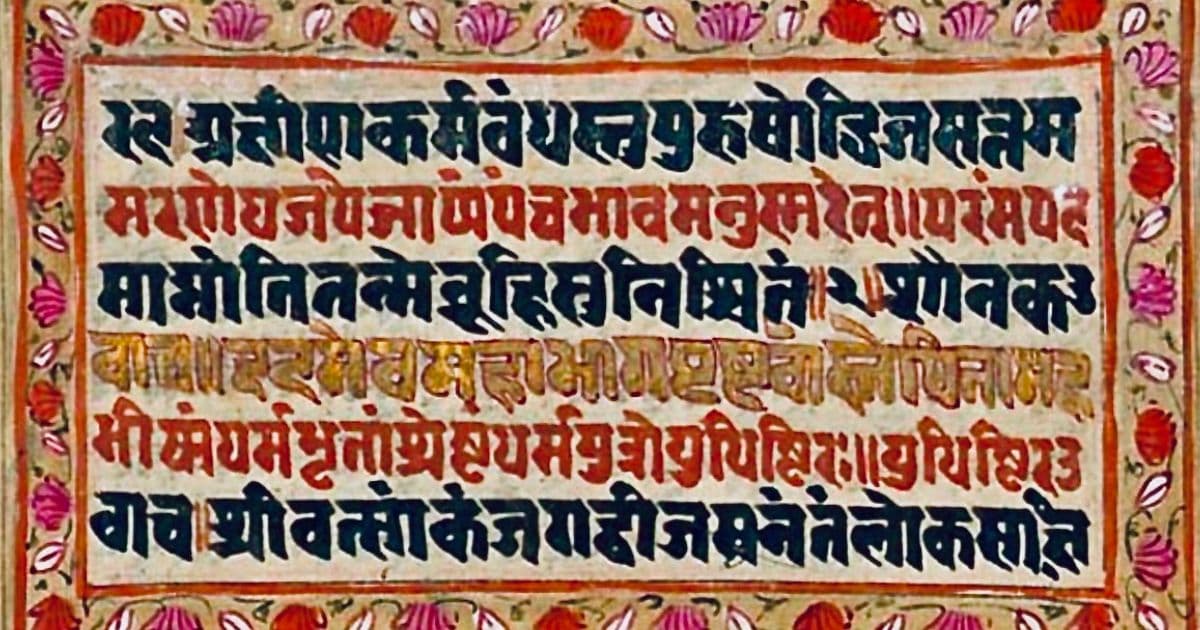
The Question Behind All Other Questions
Arjuna's breakdown at Kurukshetra is ultimately a crisis of identity: he doesn't know what he is, what his kinsmen are, what death actually means, or what is ultimately at stake. Krishna's entire teaching is an answer to that crisis — but the answer begins with the most basic question: what are you?
Explore knowing what is actually yours through the Bhagavad Gita. Life lessons from classic literature applied to modern challenges.'s answer is the field and the knower: the field is everything you can observe about yourself — body, mind, emotions, personality, circumstances. The knower is what is doing the observing. You are not the field. You are the knower. The field changes constantly. The knower does not. What you actually are cannot be destroyed, cannot be diminished, cannot be humiliated, cannot fail.
This teaching is the foundation of everything else in the book. Non-attachment to results becomes possible when you understand that your true self is not the outcome. Equanimity under pressure becomes possible when you understand that your true self is not the circumstance. The stable mind becomes possible when you identify with the observer rather than the observed. These eight chapters trace the self/non-self teaching from its first statement to its complete expression.
Chapter-by-Chapter Analysis
The Indestructible Self: First Teaching
Krishna begins with the most fundamental claim of the Gita: what Arjuna is afraid to destroy cannot be destroyed. The soul is eternal, unborn, unchanging. Bodies come and go; the self that inhabits them does not. Weapons cannot cut it, fire cannot burn it, water cannot dissolve it. Arjuna's grief is based on a case of mistaken identity — he believes what he is looking at when he sees his kinsmen is all there is to them.
The Indestructible Self: First Teaching
The Bhagavad Gita · Chapter 2
“For the soul there is neither birth nor death at any time. It has not come into being, does not come into being, and will not come into being. It is unborn, eternal, ever-existing and primeval. It is not slain when the body is slain.”
Key Insight
The first teaching on the self dissolves the philosophical basis of Arjuna's paralysis: if the self is indestructible, then what he fears destroying is the body, not the person. The practical implication goes beyond the battlefield: if you understand that what you fundamentally are is not the body, not the mind, not the personality, not the social role — then the normal fears that drive most human behavior (fear of death, loss, humiliation, failure) are based on a misidentification. They are real fears about real losses to the field. They are not threats to what you actually are.
Two Natures: Material and Spiritual
Krishna describes his two natures: the lower (earth, water, fire, air, ether, mind, intelligence, ego) and the higher (the life-force in all beings). Humanity is caught in the interplay of the lower nature — confusing itself with the material field — and does not easily perceive the higher, which is what it actually is.
Two Natures: Material and Spiritual
The Bhagavad Gita · Chapter 7
Key Insight
Chapter 7's two-nature framework makes the self/non-self distinction practical: the lower nature is everything you can observe about yourself — your body, your emotions, your intelligence, your personality. The higher nature is the observer of all that. Most people identify entirely with the lower nature because it is visible, tangible, and continuously present to awareness. The spiritual practice the Gita recommends is not the denial of the lower nature but the increasing recognition of the higher — the growing ability to identify with the witness rather than the witnessed.
What Persists: The Question of Death
Arjuna asks the ultimate questions: What is the ultimate reality? What happens when we die? How do we find meaning in the face of impermanence? Krishna's answer establishes what is permanent (the brahman, the ultimate reality, the self) and what is impermanent (the individual soul in a particular form, the material world). Whatever you think about at the moment of death shapes your next beginning.
What Persists: The Question of Death
The Bhagavad Gita · Chapter 8
“Whatever state of being one remembers when he quits his body, O son of Kunti, that state he will attain without fail.”
Key Insight
Chapter 8 applies the self/non-self distinction to death — the ultimate test of whether you understand what you actually are. If you identify entirely with the body and personality, death is total loss. If you understand what is actually yours — the eternal, witnessing consciousness — then death is a transition rather than an annihilation. Practically: your relationship to death is a function of your relationship to identity. The person who knows what is actually theirs does not fear the loss of what isn't. The path to a genuinely less fearful relationship with impermanence runs through the self/non-self distinction.
The Divine in Everything: Where to Recognize the Self
Krishna lists his divine manifestations — the Himalaya among mountains, the ocean among bodies of water, Arjuna himself among warriors. The teaching is that the divine expresses itself through whatever is most excellent in any category. The self is not just in 'spiritual' things — it is in the best of everything.
The Divine in Everything: Where to Recognize the Self
The Bhagavad Gita · Chapter 10
“I am the Self, O Gudakesha, seated in the hearts of all creatures. I am the beginning, the middle and the end of all beings.”
Key Insight
Chapter 10's catalogue of divine manifestations is the self/non-self teaching made concrete and experiential: you encounter the self in whatever has the quality of genuine excellence — the flash of brilliant insight, the overwhelming beauty of a landscape, the moment when music is truly alive. These are not just aesthetic pleasures; they are encounters with the self in its expression through forms. The practice of recognizing the self in excellence rather than only in formal spiritual practice makes the teaching available in ordinary life, in any moment.
The Universal Form: Seeing the Self in Its Totality
Arjuna is granted divine vision to see Krishna's true form — the entire universe simultaneously present in a single vision. He sees the totality of the self: all beings, all times, all outcomes contained in one form. The vision is overwhelming. He asks Krishna to take the gentle two-armed form again. The experience changes him; he has seen, directly, what he actually is participating in.
The Universal Form: Seeing the Self in Its Totality
The Bhagavad Gita · Chapter 11
Key Insight
The cosmic vision is the most extreme expression of the self/non-self teaching: the self in its full expression is the totality, not the individual. What you typically experience as 'yourself' is a particular focusing of something that is much larger. The vision does not abolish individuality — Arjuna remains Arjuna after it. But his sense of what he is has permanently expanded. Practically: the exercise of occasionally lifting your perspective from the individual experience to the larger context — not as an escape but as a reorientation — is the accessible version of the cosmic vision. You are the individual and you are participating in something much larger. Both are true simultaneously.
The Field and the Knower: The Clearest Map
The most direct teaching on what you are and what you are not. The field: body, mind, senses, emotions, circumstances — everything that can be observed about you. The knower of the field: the witnessing consciousness that observes the field without being identical to it. Knowing this distinction is, Krishna says, true knowledge.
The Field and the Knower: The Clearest Map
The Bhagavad Gita · Chapter 13
“O son of Bharata, you should understand that whatever you see in existence, both the moving and the nonmoving, is only a combination of the field of activities and the knower of the field.”
Key Insight
Chapter 13 gives the clearest practical map of the self/non-self distinction: you are the knower, not the field. Your body is in the field. Your emotions are in the field. Your thoughts are in the field. Your personality, your memories, your desires — all in the field. What is not in the field is the witness that watches all of this. That witness is what you actually are. The test is not philosophical agreement with this teaching but experiential verification: can you, right now, notice your current thoughts? If yes, there is something noticing them that is not the thoughts themselves. That noticing is the knower. That is you.
The Two Trees: Perishable and Imperishable
The banyan tree metaphor: the tree of material existence has its roots above and its branches below — roots in the eternal, manifestation in the temporal. The teaching is about two selves: the perishable self (bound by karma, moving from body to body, conditioned by the gunas) and the imperishable self (the unchanging witness, free, the ground of all experience).
The Two Trees: Perishable and Imperishable
The Bhagavad Gita · Chapter 15
“The living entities in this conditioned world are My eternal fragmental parts. Due to conditioned life, they are struggling very hard with the six senses, which include the mind.”
Key Insight
Chapter 15 names the two selves clearly: the individual soul bound by material nature and the universal self that is its ultimate ground. The practical contribution is the naming of the perishable self — the constructed, conditioned, karma-bound personality — as the source of most human suffering. Not because the perishable self is bad, but because it is mistaken for all there is. The person who identifies exclusively with the perishable self is in constant fear of its perishability. The person who recognizes the imperishable self within the perishable one holds both and fears neither.
Surrender of False Identity: The Final Recognition
Explore knowing what is actually yours through the Bhagavad Gita. Life lessons from classic literature applied to modern challenges.'s final instruction on the self: abandon all dharmas — all the constructed identities, roles, and obligations — and surrender entirely to the divine. This is not nihilism; it is the release of the false identification with the constructed self and the recognition of the true self, which is what was always there beneath the construction.
Surrender of False Identity: The Final Recognition
The Bhagavad Gita · Chapter 18
Key Insight
The final surrender of Chapter 18 is the completion of the self/non-self teaching: when you release the identification with the constructed self — the 'I' that needs this outcome, that is threatened by this criticism, that requires this recognition — what remains is the true self. The constructed self is not bad or wrong; it is necessary for operating in the world. But it is not what you fundamentally are, and mistaking it for what you are is the source of most suffering. The recognition of what you actually are — not the role, not the outcome, not the personality, but the unchanging witness underneath all of it — is the Gita's final and most important gift.
Applying This to Your Life
Locate the Observer in Your Experience Right Now
The self/non-self teaching is not a belief to be adopted — it is an experience to be noticed. Right now, you are having thoughts. Something is noticing those thoughts. That noticing is prior to the thoughts — it was there before this particular thought arrived and will be there after it leaves. That is the knower. It does not require any spiritual practice to encounter; it is already present. The practice is simply noticing it more consistently: in any moment, instead of being lost in the thought, asking “what is noticing this?” The return to the observer is available in any moment of ordinary life.
Map What You Identify With Against What Can Change
A practical exercise: list the things you currently identify with most strongly — your job, your relationships, your reputation, your physical health, your intelligence, your beliefs. Then ask: which of these can be taken from me? Which of these will change? Everything in the field can change. Everything you identify with exclusively in the field is a source of potential fear and grief. The question is not whether to care about these things — caring is appropriate. The question is whether your sense of self is entirely dependent on them. Explore knowing what is actually yours through the Bhagavad Gita. Life lessons from classic literature applied to modern challenges.'s teaching is that what you actually are cannot be taken. That recognition, however partial, reduces the grip of normal fear.
Use Death as a Clarifying Teacher
Chapter 8's teaching on death — that whatever you are identified with at the moment of death shapes your continuation — is the most concentrated version of the self/non-self teaching. Used in ordinary life: the awareness of mortality clarifies what you actually care about versus what you have been conditioned to care about. The practice of occasionally asking “if I had a year to live, would this still matter?” is not morbid — it is precisely the practice the Gita is recommending. Not as a constant preoccupation, but as a periodic clarification: this is the field, this is the knower, and the question of what you identify with is the most important question available to you.
The Central Lesson
Explore knowing what is actually yours through the Bhagavad Gita. Life lessons from classic literature applied to modern challenges. opens with Arjuna's confusion about what he is and what death means, and it closes with the complete answer: you are the knower, not the field. Everything in the field is yours to engage with fully — your body, your work, your relationships, your death. But none of it is what you are. What you are is prior to all of it: the unchanging, witnessing awareness that was present before this particular life, this particular personality, this particular fear. Knowing this — not as a belief but as a direct recognition, however partial — is the foundation of everything else the Gita teaches. It makes non-attachment possible, equanimity available, and the path walkable.
Related Themes in The Bhagavad Gita
Acting Without Attachment to Results
Non-attachment becomes possible when you know what is actually yours
The Stable Mind
Equanimity is available when you identify with the knower, not the field
The Three Forces That Drive You
The gunas act on the field — the knower observes them
Moving Through Paralysis
Arjuna's crisis is resolved when he understands what he is and what cannot be lost