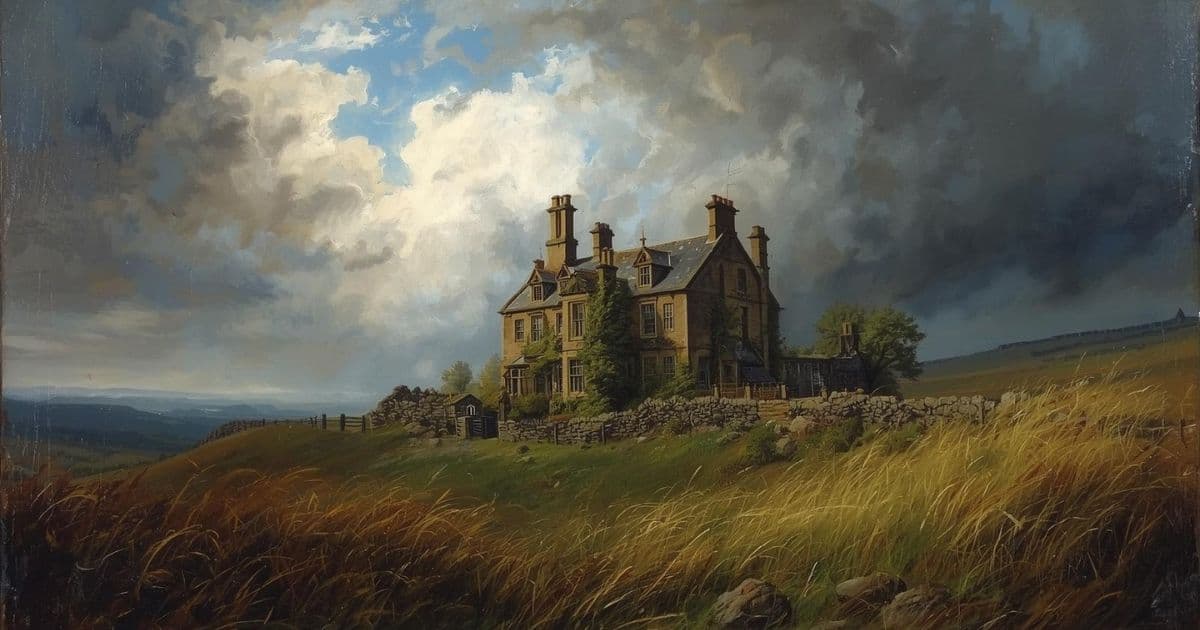
An excerpt from the original text.(complete · 1853 words)
viazhsky was the marshal of his district. He was five years older than
Levin, and had long been married. His sister-in-law, a young girl Levin
liked very much, lived in his house; and Levin knew that Sviazhsky and
his wife would have greatly liked to marry the girl to him. He knew
this with certainty, as so-called eligible young men always know it,
though he could never have brought himself to speak of it to anyone;
and he knew too that, although he wanted to get married, and although
by every token this very attractive girl would make an excellent wife,
he could no more have married her, even if he had not been in love with
Kitty Shtcherbatskaya, than he could have flown up to the sky. And this
knowledge poisoned the pleasure he had hoped to find in the visit to
Sviazhsky.
On getting Sviazhsky’s letter with the invitation for shooting, Levin
had immediately thought of this; but in spite of it he had made up his
mind that Sviazhsky’s having such views for him was simply his own
groundless supposition, and so he would go, all the same. Besides, at
the bottom of his heart he had a desire to try himself, put himself to
the test in regard to this girl. The Sviazhskys’ home-life was
exceedingly pleasant, and Sviazhsky himself, the best type of man
taking part in local affairs that Levin knew, was very interesting to
him.
Sviazhsky was one of those people, always a source of wonder to Levin,
whose convictions, very logical though never original, go one way by
themselves, while their life, exceedingly definite and firm in its
direction, goes its way quite apart and almost always in direct
contradiction to their convictions. Sviazhsky was an extremely advanced
man. He despised the nobility, and believed the mass of the nobility to
be secretly in favor of serfdom, and only concealing their views from
cowardice. He regarded Russia as a ruined country, rather after the
style of Turkey, and the government of Russia as so bad that he never
permitted himself to criticize its doings seriously, and yet he was a
functionary of that government and a model marshal of nobility, and
when he drove about he always wore the cockade of office and the cap
with the red band. He considered human life only tolerable abroad, and
went abroad to stay at every opportunity, and at the same time he
carried on a complex and improved system of agriculture in Russia, and
with extreme interest followed everything and knew everything that was
being done in Russia. He considered the Russian peasant as occupying a
stage of development intermediate between the ape and the man, and at
the same time in the local assemblies no one was readier to shake hands
with the peasants and listen to their opinion. He believed neither in
God nor the devil, but was much concerned about the question of the
improvement of the clergy and the maintenance of their revenues, and
took special trouble to keep up the church in his village.
On the woman question he was on the side of the extreme advocates of
complete liberty for women, and especially their right to labor. But he
lived with his wife on such terms that their affectionate childless
home life was the admiration of everyone, and arranged his wife’s life
so that she did nothing and could do nothing but share her husband’s
efforts that her time should pass as happily and as agreeably as
possible.
If it had not been a characteristic of Levin’s to put the most
favorable interpretation on people, Sviazhsky’s character would have
presented no doubt or difficulty to him: he would have said to himself,
“a fool or a knave,” and everything would have seemed clear. But he
could not say “a fool,” because Sviazhsky was unmistakably clever, and
moreover, a highly cultivated man, who was exceptionally modest over
his culture. There was not a subject he knew nothing of. But he did not
display his knowledge except when he was compelled to do so. Still less
could Levin say that he was a knave, as Sviazhsky was unmistakably an
honest, good-hearted, sensible man, who worked good-humoredly, keenly,
and perseveringly at his work; he was held in high honor by everyone
about him, and certainly he had never consciously done, and was indeed
incapable of doing, anything base.
Levin tried to understand him, and could not understand him, and looked
at him and his life as at a living enigma.
Levin and he were very friendly, and so Levin used to venture to sound
Sviazhsky, to try to get at the very foundation of his view of life;
but it was always in vain. Every time Levin tried to penetrate beyond
the outer chambers of Sviazhsky’s mind, which were hospitably open to
all, he noticed that Sviazhsky was slightly disconcerted; faint signs
of alarm were visible in his eyes, as though he were afraid Levin would
understand him, and he would give him a kindly, good-humored repulse.
Just now, since his disenchantment with farming, Levin was particularly
glad to stay with Sviazhsky. Apart from the fact that the sight of this
happy and affectionate couple, so pleased with themselves and everyone
else, and their well-ordered home had always a cheering effect on
Levin, he felt a longing, now that he was so dissatisfied with his own
life, to get at that secret in Sviazhsky that gave him such clearness,
definiteness, and good courage in life. Moreover, Levin knew that at
Sviazhsky’s he should meet the landowners of the neighborhood, and it
was particularly interesting for him just now to hear and take part in
those rural conversations concerning crops, laborers’ wages, and so on,
which, he was aware, are conventionally regarded as something very low,
but which seemed to him just now to constitute the one subject of
importance. “It was not, perhaps, of importance in the days of serfdom,
and it may not be of importance in England. In both cases the
conditions of agriculture are firmly established; but among us now,
when everything has been turned upside down and is only just taking
shape, the question what form these conditions will take is the one
question of importance in Russia,” thought Levin.
The shooting turned out to be worse than Levin had expected. The marsh
was dry and there were no grouse at all. He walked about the whole day
and only brought back three birds, but to make up for that—he brought
back, as he always did from shooting, an excellent appetite, excellent
spirits, and that keen, intellectual mood which with him always
accompanied violent physical exertion. And while out shooting, when he
seemed to be thinking of nothing at all, suddenly the old man and his
family kept coming back to his mind, and the impression of them seemed
to claim not merely his attention, but the solution of some question
connected with them.
In the evening at tea, two landowners who had come about some business
connected with a wardship were of the party, and the interesting
conversation Levin had been looking forward to sprang up.
Levin was sitting beside his hostess at the tea table, and was obliged
to keep up a conversation with her and her sister, who was sitting
opposite him. Madame Sviazhskaya was a round-faced, fair-haired, rather
short woman, all smiles and dimples. Levin tried through her to get a
solution of the weighty enigma her husband presented to his mind; but
he had not complete freedom of ideas, because he was in an agony of
embarrassment. This agony of embarrassment was due to the fact that the
sister-in-law was sitting opposite to him, in a dress, specially put
on, as he fancied, for his benefit, cut particularly open, in the shape
of a trapeze, on her white bosom. This quadrangular opening, in spite
of the bosom’s being very white, or just because it was very white,
deprived Levin of the full use of his faculties. He imagined, probably
mistakenly, that this low-necked bodice had been made on his account,
and felt that he had no right to look at it, and tried not to look at
it; but he felt that he was to blame for the very fact of the
low-necked bodice having been made. It seemed to Levin that he had
deceived someone, that he ought to explain something, but that to
explain it was impossible, and for that reason he was continually
blushing, was ill at ease and awkward. His awkwardness infected the
pretty sister-in-law too. But their hostess appeared not to observe
this, and kept purposely drawing her into the conversation.
“You say,” she said, pursuing the subject that had been started, “that
my husband cannot be interested in what’s Russian. It’s quite the
contrary; he is always in cheerful spirits abroad, but not as he is
here. Here, he feels in his proper place. He has so much to do, and he
has the faculty of interesting himself in everything. Oh, you’ve not
been to see our school, have you?”
“I’ve seen it.... The little house covered with ivy, isn’t it?”
“Yes; that’s Nastia’s work,” she said, indicating her sister.
“You teach in it yourself?” asked Levin, trying to look above the open
neck, but feeling that wherever he looked in that direction he should
see it.
“Yes; I used to teach in it myself, and do teach still, but we have a
first-rate schoolmistress now. And we’ve started gymnastic exercises.”
“No, thank you, I won’t have any more tea,” said Levin, and conscious
of doing a rude thing, but incapable of continuing the conversation, he
got up, blushing. “I hear a very interesting conversation,” he added,
and walked to the other end of the table, where Sviazhsky was sitting
with the two gentlemen of the neighborhood. Sviazhsky was sitting
sideways, with one elbow on the table, and a cup in one hand, while
with the other hand he gathered up his beard, held it to his nose and
let it drop again, as though he were smelling it. His brilliant black
eyes were looking straight at the excited country gentleman with gray
whiskers, and apparently he derived amusement from his remarks. The
gentleman was complaining of the peasants. It was evident to Levin that
Sviazhsky knew an answer to this gentleman’s complaints, which would at
once demolish his whole contention, but that in his position he could
not give utterance to this answer, and listened, not without pleasure,
to the landowner’s comic speeches.
The gentleman with the gray whiskers was obviously an inveterate
adherent of serfdom and a devoted agriculturist, who had lived all his
life in the country. Levin saw proofs of this in his dress, in the
old-fashioned threadbare coat, obviously not his everyday attire, in
his shrewd, deep-set eyes, in his idiomatic, fluent Russian, in the
imperious tone that had become habitual from long use, and in the
resolute gestures of his large, red, sunburnt hands, with an old
betrothal ring on the little finger.
Master this chapter. Complete your experience
Purchase the complete book to access all chapters and support classic literature
As an Amazon Associate, we earn a small commission from qualifying purchases at no additional cost to you.
Available in paperback, hardcover, and e-book formats
Let's Analyse the Pattern
Using physical work or busyness to temporarily avoid confronting overwhelming emotional or existential problems.
Why This Matters
Connect literature to life
This chapter teaches how to distinguish between productive action and emotional avoidance disguised as productivity.
Practice This Today
This week, notice when you suddenly feel compelled to reorganize, work extra hours, or take on new projects—ask yourself what feeling you might be avoiding.
Now let's explore the literary elements.
Key Quotes & Analysis
"The longer Levin went on mowing, the oftener he experienced those moments of oblivion when his arms no longer seemed to swing the scythe, but the scythe itself his whole body."
Context: As Levin loses himself in the repetitive motion of cutting hay
This describes the meditative state that comes from complete physical absorption. Levin finds temporary escape from his mental anguish when his body takes over and his mind finally quiets.
In Today's Words:
The more he worked, the more he got into the zone where his body just took over and his brain finally shut up.
"When such moments came, it was as though the scythe cut of itself through the succulent grass."
Context: Describing Levin's peak moments of physical flow
This captures that perfect state where effort becomes effortless. It's the brief peace Levin finds when his tortured thoughts stop and pure action takes over.
In Today's Words:
In those moments, the work just seemed to do itself.
"These were blessed moments."
Context: Referring to Levin's brief escapes from his inner turmoil
Such simple words for such profound relief. For someone in spiritual crisis, any moment without pain feels sacred. It shows how desperate Levin has become for peace.
In Today's Words:
Those were the good moments.
Thematic Threads
Escape
In This Chapter
Levin uses intense farm work to flee from spiritual crisis and unanswered questions about life's meaning
Development
Evolved from his earlier intellectual searching—now he seeks physical rather than mental solutions
In Your Life:
You might recognize this when you clean frantically after bad news or work overtime to avoid relationship problems
Class
In This Chapter
Levin works alongside peasants, respecting their natural faith while feeling like an outsider to their certainty
Development
Continues his ongoing struggle with class identity and belonging
In Your Life:
You might feel this disconnect when you admire others' confidence in beliefs you can't quite share
Physical Labor
In This Chapter
The rhythm of the scythe and shared work provides temporary peace and authentic connection
Development
Represents Levin's consistent belief that honest work offers truth unavailable through pure thought
In Your Life:
You might find similar grounding in gardening, cooking, or any work that engages your hands and body
Restlessness
In This Chapter
Levin can't sit still with his thoughts, needing constant motion to quiet his racing mind
Development
Intensified from earlier chapters as his spiritual crisis deepens
In Your Life:
You might recognize this when anxiety makes you pace, clean, or stay constantly busy to avoid difficult feelings
Temporary Relief
In This Chapter
Physical exhaustion provides brief moments of mental peace, but deeper questions keep returning
Development
Shows the limitations of Levin's action-based approach to spiritual problems
In Your Life:
You might notice how exercise or busy work helps temporarily but doesn't solve underlying concerns
You now have the context. Time to form your own thoughts.
Discussion Questions
- 1
What specific actions does Levin take when his spiritual crisis becomes overwhelming, and what temporary relief does he find?
analysis • surface - 2
Why does physical exhaustion provide Levin with mental quiet, and what does this reveal about the relationship between our bodies and minds?
analysis • medium - 3
Where do you see people today using busyness or physical work to avoid dealing with difficult emotions or life questions?
application • medium - 4
How could someone recognize when they're using productive escape as avoidance versus healthy coping, and what boundaries would help?
application • deep - 5
What does Levin's pattern teach us about why humans often choose motion over stillness when facing life's biggest questions?
reflection • deep
Critical Thinking Exercise
Map Your Escape Routes
Create a personal inventory of how you handle overwhelming situations. List three activities you turn to when stressed or avoiding difficult decisions. For each activity, identify whether it genuinely helps you process problems or simply postpones dealing with them. Then design one small change that could transform your most common escape into a more intentional coping strategy.
Consider:
- •Consider both healthy activities (exercise, cooking) and potentially problematic ones (endless scrolling, overworking)
- •Notice the difference between activities that energize you versus those that drain you
- •Think about whether your escape activities connect you to others or isolate you
Journaling Prompt
Write about a time when you threw yourself into work or activity to avoid facing something difficult. What were you really trying not to think about, and how did the avoidance ultimately affect the situation?
Coming Up Next...
Chapter 96
Levin's physical exhaustion leads to an unexpected encounter that will challenge everything he thinks he knows about faith and meaning. Sometimes the answers we seek find us when we're too tired to keep running from them.