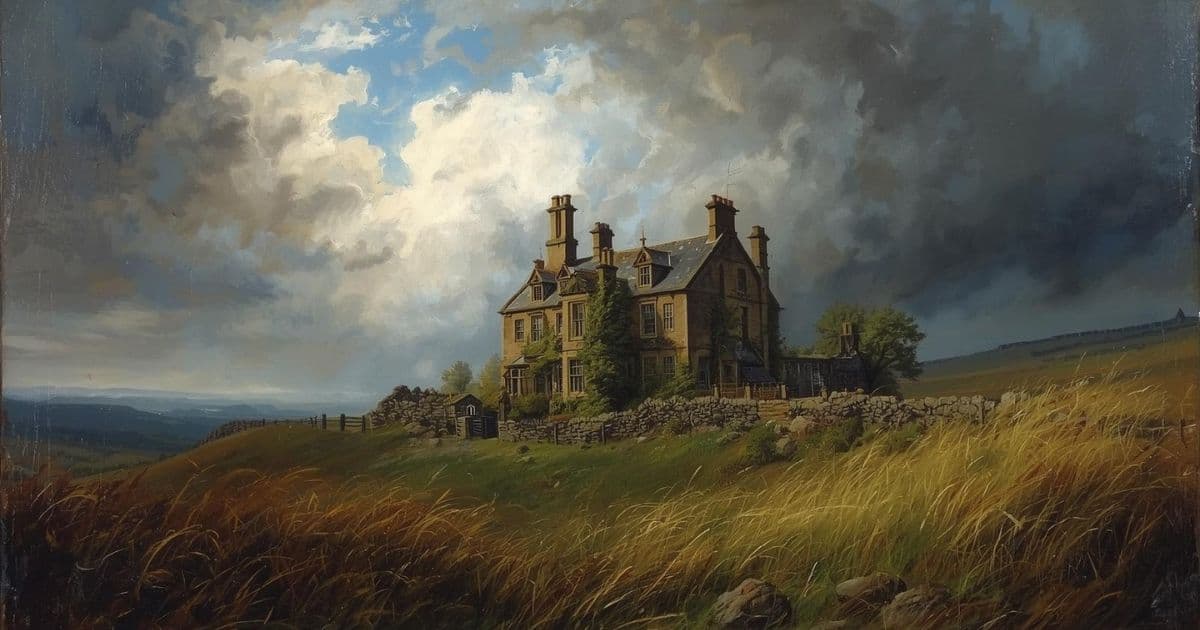
An excerpt from the original text.(complete · 1254 words)
the Surovsky district there was no railway nor service of post
horses, and Levin drove there with his own horses in his big,
old-fashioned carriage.
He stopped halfway at a well-to-do peasant’s to feed his horses. A
bald, well-preserved old man, with a broad, red beard, gray on his
cheeks, opened the gate, squeezing against the gatepost to let the
three horses pass. Directing the coachman to a place under the shed in
the big, clean, tidy yard, with charred, old-fashioned ploughs in it,
the old man asked Levin to come into the parlor. A cleanly dressed
young woman, with clogs on her bare feet, was scrubbing the floor in
the new outer room. She was frightened of the dog, that ran in after
Levin, and uttered a shriek, but began laughing at her own fright at
once when she was told the dog would not hurt her. Pointing Levin with
her bare arm to the door into the parlor, she bent down again, hiding
her handsome face, and went on scrubbing.
“Would you like the samovar?” she asked.
“Yes, please.”
The parlor was a big room, with a Dutch stove, and a screen dividing it
into two. Under the holy pictures stood a table painted in patterns, a
bench, and two chairs. Near the entrance was a dresser full of
crockery. The shutters were closed, there were few flies, and it was so
clean that Levin was anxious that Laska, who had been running along the
road and bathing in puddles, should not muddy the floor, and ordered
her to a place in the corner by the door. After looking round the
parlor, Levin went out in the back yard. The good-looking young woman
in clogs, swinging the empty pails on the yoke, ran on before him to
the well for water.
“Look sharp, my girl!” the old man shouted after her, good-humoredly,
and he went up to Levin. “Well, sir, are you going to Nikolay
Ivanovitch Sviazhsky? His honor comes to us too,” he began, chatting,
leaning his elbows on the railing of the steps. In the middle of the
old man’s account of his acquaintance with Sviazhsky, the gates creaked
again, and laborers came into the yard from the fields, with wooden
ploughs and harrows. The horses harnessed to the ploughs and harrows
were sleek and fat. The laborers were obviously of the household: two
were young men in cotton shirts and caps, the two others were hired
laborers in homespun shirts, one an old man, the other a young fellow.
Moving off from the steps, the old man went up to the horses and began
unharnessing them.
“What have they been ploughing?” asked Levin.
“Ploughing up the potatoes. We rent a bit of land too. Fedot, don’t let
out the gelding, but take it to the trough, and we’ll put the other in
harness.”
“Oh, father, the ploughshares I ordered, has he brought them along?”
asked the big, healthy-looking fellow, obviously the old man’s son.
“There ... in the outer room,” answered the old man, bundling together
the harness he had taken off, and flinging it on the ground. “You can
put them on, while they have dinner.”
The good-looking young woman came into the outer room with the full
pails dragging at her shoulders. More women came on the scene from
somewhere, young and handsome, middle-aged, old and ugly, with children
and without children.
The samovar was beginning to sing; the laborers and the family, having
disposed of the horses, came in to dinner. Levin, getting his
provisions out of his carriage, invited the old man to take tea with
him.
“Well, I have had some today already,” said the old man, obviously
accepting the invitation with pleasure. “But just a glass for company.”
Over their tea Levin heard all about the old man’s farming. Ten years
before, the old man had rented three hundred acres from the lady who
owned them, and a year ago he had bought them and rented another three
hundred from a neighboring landowner. A small part of the land—the
worst part—he let out for rent, while a hundred acres of arable land he
cultivated himself with his family and two hired laborers. The old man
complained that things were doing badly. But Levin saw that he simply
did so from a feeling of propriety, and that his farm was in a
flourishing condition. If it had been unsuccessful he would not have
bought land at thirty-five roubles the acre, he would not have married
his three sons and a nephew, he would not have rebuilt twice after
fires, and each time on a larger scale. In spite of the old man’s
complaints, it was evident that he was proud, and justly proud, of his
prosperity, proud of his sons, his nephew, his sons’ wives, his horses
and his cows, and especially of the fact that he was keeping all this
farming going. From his conversation with the old man, Levin thought he
was not averse to new methods either. He had planted a great many
potatoes, and his potatoes, as Levin had seen driving past, were
already past flowering and beginning to die down, while Levin’s were
only just coming into flower. He earthed up his potatoes with a modern
plough borrowed from a neighboring landowner. He sowed wheat. The
trifling fact that, thinning out his rye, the old man used the rye he
thinned out for his horses, specially struck Levin. How many times had
Levin seen this splendid fodder wasted, and tried to get it saved; but
always it had turned out to be impossible. The peasant got this done,
and he could not say enough in praise of it as food for the beasts.
“What have the wenches to do? They carry it out in bundles to the
roadside, and the cart brings it away.”
“Well, we landowners can’t manage well with our laborers,” said Levin,
handing him a glass of tea.
“Thank you,” said the old man, and he took the glass, but refused
sugar, pointing to a lump he had left. “They’re simple destruction,”
said he. “Look at Sviazhsky’s, for instance. We know what the land’s
like—first-rate, yet there’s not much of a crop to boast of. It’s not
looked after enough—that’s all it is!”
“But you work your land with hired laborers?”
“We’re all peasants together. We go into everything ourselves. If a
man’s no use, he can go, and we can manage by ourselves.”
“Father, Finogen wants some tar,” said the young woman in the clogs,
coming in.
“Yes, yes, that’s how it is, sir!” said the old man, getting up, and
crossing himself deliberately, he thanked Levin and went out.
When Levin went into the kitchen to call his coachman he saw the whole
family at dinner. The women were standing up waiting on them. The
young, sturdy-looking son was telling something funny with his mouth
full of pudding, and they were all laughing, the woman in the clogs,
who was pouring cabbage soup into a bowl, laughing most merrily of all.
Very probably the good-looking face of the young woman in the clogs had
a good deal to do with the impression of well-being this peasant
household made upon Levin, but the impression was so strong that Levin
could never get rid of it. And all the way from the old peasant’s to
Sviazhsky’s he kept recalling this peasant farm as though there were
something in this impression that demanded his special attention.
Master this chapter. Complete your experience
Purchase the complete book to access all chapters and support classic literature
As an Amazon Associate, we earn a small commission from qualifying purchases at no additional cost to you.
Available in paperback, hardcover, and e-book formats
Let's Analyse the Pattern
The distance between our insights about how we want to live and how we actually behave when daily pressures reassert themselves.
Why This Matters
Connect literature to life
This chapter teaches how to recognize when we use professional success to avoid dealing with personal pain or emptiness.
Practice This Today
This week, notice when you feel driven to achieve something - ask yourself if you're running toward a goal or away from a feeling.
Now let's explore the literary elements.
Key Quotes & Analysis
"But life now, every moment of life, was no longer meaningless as before, but had a positive meaning of goodness with which I had the power to invest it."
Context: Levin reflecting on how his spiritual awakening has changed his perspective on daily life
This shows Levin's realization that meaning comes from what we bring to situations, not what situations give us. He's discovered that he has agency in creating purpose through his choices and actions.
In Today's Words:
Every day matters now because I can choose to do good things with whatever comes up.
"The steward came to report that the men were refusing to work."
Context: Just as Levin is feeling spiritually elevated, practical problems demand his attention
This interruption represents how real life tests our spiritual insights. Tolstoy shows that transformation isn't about escaping ordinary problems but handling them differently.
In Today's Words:
Right when you're feeling zen, someone shows up with drama that needs your immediate attention.
"How was he to treat these men? What was he to say to them?"
Context: Levin realizes his new spiritual understanding must guide his practical decisions about difficult workers
This captures the moment when abstract beliefs must become concrete actions. Levin can't just feel different - he must act differently, even with frustrating people.
In Today's Words:
Okay, I've had this big realization about life - now what do I actually do with these people who are driving me crazy?
Thematic Threads
Personal Growth
In This Chapter
Levin struggles to integrate his spiritual revelation with the practical demands of managing his estate and workers
Development
Evolved from earlier chapters where Levin sought meaning through work and philosophy - now he must test his insights against reality
In Your Life:
You might see this when trying to apply self-help insights to actual workplace conflicts or family stress
Class
In This Chapter
Levin's position as landowner creates ongoing responsibilities and conflicts with workers that can't be resolved through spiritual insights alone
Development
Continued exploration of how class position shapes daily reality and limits the luxury of pure philosophical reflection
In Your Life:
You might see this in how your work role or family position creates obligations that conflict with your personal values
Identity
In This Chapter
Levin must reconcile his new spiritual understanding with his existing role as estate manager and employer
Development
Building on earlier identity struggles - now focused on integrating new self-knowledge with established responsibilities
In Your Life:
You might see this when personal growth creates tension with how others expect you to behave in your established roles
Social Expectations
In This Chapter
The steward and estate business pull Levin back into conventional concerns despite his recent spiritual breakthrough
Development
Ongoing theme of how social roles and expectations resist personal transformation
In Your Life:
You might see this when family or coworkers resist changes you're trying to make in how you approach relationships or work
You now have the context. Time to form your own thoughts.
Discussion Questions
- 1
What pulls Levin away from his spiritual reflection, and how does he respond to these interruptions?
analysis • surface - 2
Why does Levin struggle to maintain his newfound perspective when dealing with estate business and difficult workers?
analysis • medium - 3
Where do you see this same pattern in modern workplaces - people having insights about better ways to work or treat others, then falling back into old habits under pressure?
application • medium - 4
What practical strategies could help someone bridge the gap between their values and their daily actions when stress hits?
application • deep - 5
What does Levin's experience reveal about the difference between understanding something intellectually and actually living it?
reflection • deep
Critical Thinking Exercise
Bridge Your Own Integration Gap
Think of a recent insight you had about how you want to handle work, relationships, or personal challenges. Now identify a specific moment in the past week when you fell back into old patterns despite this insight. Map out what triggered the gap and design one small, practical step you could take next time to better align your actions with your understanding.
Consider:
- •Focus on specific situations, not general behaviors
- •Look for external triggers like time pressure, difficult people, or competing priorities
- •Design solutions that work in the heat of the moment, not just in calm reflection
Journaling Prompt
Write about a value or principle that matters deeply to you, but that you struggle to live consistently. Describe what makes it hard to practice this value when life gets complicated, and what would need to change to make living by it more automatic.
Coming Up Next...
Chapter 95
Levin must put his new understanding to the test as he faces a difficult decision about his workers that will reveal whether his spiritual transformation can guide him through real-world moral dilemmas. Meanwhile, the contrast between his inner peace and external pressures continues to create tension.