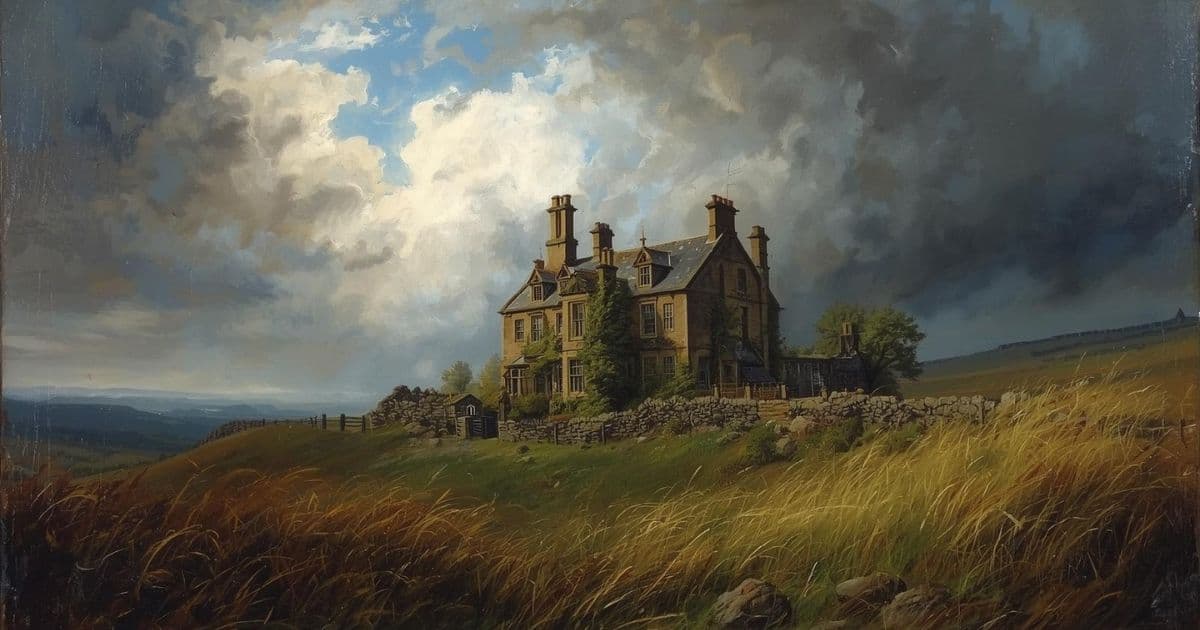
An excerpt from the original text.(complete · 1261 words)
he place fixed on for the stand-shooting was not far above a stream in
a little aspen copse. On reaching the copse, Levin got out of the trap
and led Oblonsky to a corner of a mossy, swampy glade, already quite
free from snow. He went back himself to a double birch tree on the
other side, and leaning his gun on the fork of a dead lower branch, he
took off his full overcoat, fastened his belt again, and worked his
arms to see if they were free.
Gray old Laska, who had followed them, sat down warily opposite him and
pricked up her ears. The sun was setting behind a thick forest, and in
the glow of sunset the birch trees, dotted about in the aspen copse,
stood out clearly with their hanging twigs, and their buds swollen
almost to bursting.
From the thickest parts of the copse, where the snow still remained,
came the faint sound of narrow winding threads of water running away.
Tiny birds twittered, and now and then fluttered from tree to tree.
In the pauses of complete stillness there came the rustle of last
year’s leaves, stirred by the thawing of the earth and the growth of
the grass.
“Imagine! One can hear and see the grass growing!” Levin said to
himself, noticing a wet, slate-colored aspen leaf moving beside a blade
of young grass. He stood, listened, and gazed sometimes down at the wet
mossy ground, sometimes at Laska listening all alert, sometimes at the
sea of bare tree tops that stretched on the slope below him, sometimes
at the darkening sky, covered with white streaks of cloud.
A hawk flew high over a forest far away with slow sweep of its wings;
another flew with exactly the same motion in the same direction and
vanished. The birds twittered more and more loudly and busily in the
thicket. An owl hooted not far off, and Laska, starting, stepped
cautiously a few steps forward, and putting her head on one side, began
to listen intently. Beyond the stream was heard the cuckoo. Twice she
uttered her usual cuckoo call, and then gave a hoarse, hurried call and
broke down.
“Imagine! the cuckoo already!” said Stepan Arkadyevitch, coming out
from behind a bush.
“Yes, I hear it,” answered Levin, reluctantly breaking the stillness
with his voice, which sounded disagreeable to himself. “Now it’s
coming!”
Stepan Arkadyevitch’s figure again went behind the bush, and Levin saw
nothing but the bright flash of a match, followed by the red glow and
blue smoke of a cigarette.
“Tchk! tchk!” came the snapping sound of Stepan Arkadyevitch cocking
his gun.
“What’s that cry?” asked Oblonsky, drawing Levin’s attention to a
prolonged cry, as though a colt were whinnying in a high voice, in
play.
“Oh, don’t you know it? That’s the hare. But enough talking! Listen,
it’s flying!” almost shrieked Levin, cocking his gun.
They heard a shrill whistle in the distance, and in the exact time, so
well known to the sportsman, two seconds later—another, a third, and
after the third whistle the hoarse, guttural cry could be heard.
Levin looked about him to right and to left, and there, just facing him
against the dusky blue sky above the confused mass of tender shoots of
the aspens, he saw the flying bird. It was flying straight towards him;
the guttural cry, like the even tearing of some strong stuff, sounded
close to his ear; the long beak and neck of the bird could be seen, and
at the very instant when Levin was taking aim, behind the bush where
Oblonsky stood, there was a flash of red lightning: the bird dropped
like an arrow, and darted upwards again. Again came the red flash and
the sound of a blow, and fluttering its wings as though trying to keep
up in the air, the bird halted, stopped still an instant, and fell with
a heavy splash on the slushy ground.
“Can I have missed it?” shouted Stepan Arkadyevitch, who could not see
for the smoke.
“Here it is!” said Levin, pointing to Laska, who with one ear raised,
wagging the end of her shaggy tail, came slowly back as though she
would prolong the pleasure, and as it were smiling, brought the dead
bird to her master. “Well, I’m glad you were successful,” said Levin,
who, at the same time, had a sense of envy that he had not succeeded in
shooting the snipe.
“It was a bad shot from the right barrel,” responded Stepan
Arkadyevitch, loading his gun. “Sh... it’s flying!”
The shrill whistles rapidly following one another were heard again. Two
snipe, playing and chasing one another, and only whistling, not crying,
flew straight at the very heads of the sportsmen. There was the report
of four shots, and like swallows the snipe turned swift somersaults in
the air and vanished from sight.
The stand-shooting was capital. Stepan Arkadyevitch shot two more birds
and Levin two, of which one was not found. It began to get dark. Venus,
bright and silvery, shone with her soft light low down in the west
behind the birch trees, and high up in the east twinkled the red lights
of Arcturus. Over his head Levin made out the stars of the Great Bear
and lost them again. The snipe had ceased flying; but Levin resolved to
stay a little longer, till Venus, which he saw below a branch of birch,
should be above it, and the stars of the Great Bear should be perfectly
plain. Venus had risen above the branch, and the ear of the Great Bear
with its shaft was now all plainly visible against the dark blue sky,
yet still he waited.
“Isn’t it time to go home?” said Stepan Arkadyevitch.
It was quite still now in the copse, and not a bird was stirring.
“Let’s stay a little while,” answered Levin.
“As you like.”
They were standing now about fifteen paces from one another.
“Stiva!” said Levin unexpectedly; “how is it you don’t tell me whether
your sister-in-law’s married yet, or when she’s going to be?”
Levin felt so resolute and serene that no answer, he fancied, could
affect him. But he had never dreamed of what Stepan Arkadyevitch
replied.
“She’s never thought of being married, and isn’t thinking of it; but
she’s very ill, and the doctors have sent her abroad. They’re
positively afraid she may not live.”
“What!” cried Levin. “Very ill? What is wrong with her? How has
she...?”
While they were saying this, Laska, with ears pricked up, was looking
upwards at the sky, and reproachfully at them.
“They have chosen a time to talk,” she was thinking. “It’s on the
wing.... Here it is, yes, it is. They’ll miss it,” thought Laska.
But at that very instant both suddenly heard a shrill whistle which, as
it were, smote on their ears, and both suddenly seized their guns and
two flashes gleamed, and two bangs sounded at the very same instant.
The snipe flying high above instantly folded its wings and fell into a
thicket, bending down the delicate shoots.
“Splendid! Together!” cried Levin, and he ran with Laska into the
thicket to look for the snipe.
“Oh, yes, what was it that was unpleasant?” he wondered. “Yes, Kitty’s
ill.... Well, it can’t be helped; I’m very sorry,” he thought.
“She’s found it! Isn’t she a clever thing?” he said, taking the warm
bird from Laska’s mouth and packing it into the almost full game bag.
“I’ve got it, Stiva!” he shouted.
Master this chapter. Complete your experience
Purchase the complete book to access all chapters and support classic literature
As an Amazon Associate, we earn a small commission from qualifying purchases at no additional cost to you.
Available in paperback, hardcover, and e-book formats
Let's Analyse the Pattern
Using intense physical activity or work to temporarily escape emotional suffering while rebuilding a sense of capability and control.
Why This Matters
Connect literature to life
This chapter teaches how to identify when intense activity is being used to avoid processing difficult emotions rather than genuinely addressing problems.
Practice This Today
This week, notice when you suddenly feel compelled to deep-clean, work extra hours, or tackle big projects—ask yourself what feeling you might be trying to outrun.
Now let's explore the literary elements.
Key Quotes & Analysis
"The longer Levin mowed, the oftener he experienced those moments of oblivion when his arms no longer seemed to swing the scythe, but the scythe itself his whole body, so conscious and full of life."
Context: As Levin loses himself in the rhythm of the work
This describes the almost transcendent state that comes from repetitive physical work - when conscious thought disappears and the body takes over. It's Levin's temporary escape from emotional pain through complete physical absorption.
In Today's Words:
When you're so focused on the work that you forget everything else hurting you.
"He felt as though some external force were moving him, and he experienced a joy such as he had never known."
Context: Describing Levin's state while working in the fields
Shows how physical labor can provide relief from mental anguish by connecting us to something larger than our personal problems. The work becomes almost spiritual, offering peace that social interactions couldn't provide.
In Today's Words:
Sometimes hard work is the only thing that makes you feel human again.
"The old man straightened his back slowly and, looking at Levin, smiled."
Context: An experienced peasant observing Levin's intense work pace
The older worker recognizes what Levin is doing - using work to heal. His smile suggests understanding and perhaps approval of this healthy way to process pain, showing the wisdom that comes from a life of honest labor.
In Today's Words:
When someone who's been through it recognizes you're working through something hard.
Thematic Threads
Class
In This Chapter
Levin finds authenticity working alongside peasants, away from the artificial social games that rejected him
Development
Deepening from earlier chapters - his discomfort with society now has a clear alternative
In Your Life:
You might feel most yourself in certain environments or with certain people, regardless of social expectations
Identity
In This Chapter
Physical labor reveals Levin's true character - he's most genuine when connected to honest work and the land
Development
Building on his earlier social awkwardness - we see what he's naturally suited for
In Your Life:
Pay attention to when you feel most authentic - those moments reveal your real strengths
Pain Processing
In This Chapter
Levin channels heartbreak into productive action rather than self-destructive behavior
Development
Introduced here
In Your Life:
How you handle rejection or failure reveals your character and shapes your future resilience
Social Expectations
In This Chapter
The contrast between society's artificial demands and the honest satisfaction of physical work
Development
Continuing from the ball scenes - now we see Levin's refuge from those pressures
In Your Life:
You might find peace by stepping away from environments where you feel you have to perform a role
Connection
In This Chapter
Levin connects more genuinely with working peasants than with his social peers
Development
Expanding on his social discomfort - showing where he does belong
In Your Life:
Sometimes the people who truly understand you aren't the ones society says you should connect with
You now have the context. Time to form your own thoughts.
Discussion Questions
- 1
Why does Levin throw himself into farm work after Kitty rejects his proposal?
analysis • surface - 2
What does physical exhaustion accomplish for Levin that sitting quietly at home wouldn't?
analysis • medium - 3
Where do you see people today using work or activity to cope with emotional pain?
application • medium - 4
When is throwing yourself into work a healthy response to heartbreak, and when does it become avoidance?
application • deep - 5
What does Levin's choice to work alongside peasants rather than retreat to his study reveal about how different people process pain?
reflection • deep
Critical Thinking Exercise
Design Your Productive Pain Strategy
Think of a current stress or disappointment in your life. Create a specific plan for channeling that emotional energy into something productive for one week. Choose activities that require enough physical or mental focus to quiet racing thoughts, but that also move you forward in some concrete way.
Consider:
- •Pick activities that match your energy level - high intensity if you're angry, steady rhythm if you're sad
- •Set a clear endpoint so this becomes healing rather than avoidance
- •Choose work that builds something tangible you can point to later
Journaling Prompt
Write about a time when physical work or intense activity helped you through a difficult period. What made it healing rather than just distraction?
Coming Up Next...
Chapter 50
While Levin struggles with his heartbreak in the countryside, we return to Moscow's social scene where the consequences of that fateful ball continue to ripple outward. Someone unexpected is about to make a move that will change everything.