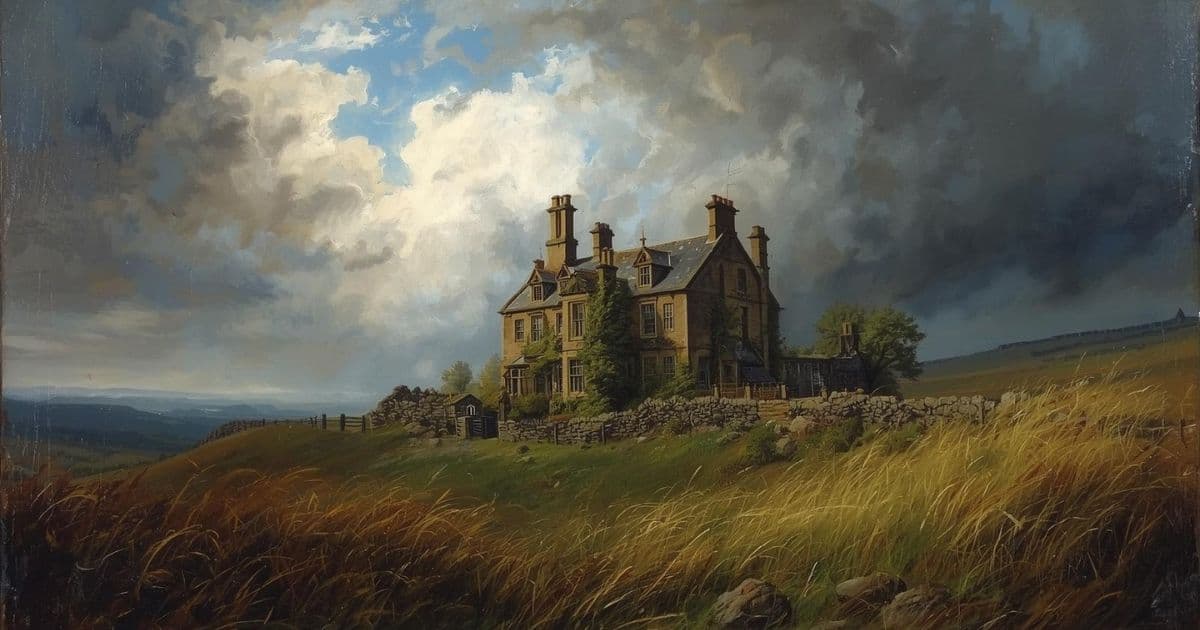
An excerpt from the original text.(complete · 2399 words)
hen Levin and Stepan Arkadyevitch reached the peasant’s hut where
Levin always used to stay, Veslovsky was already there. He was sitting
in the middle of the hut, clinging with both hands to the bench from
which he was being pulled by a soldier, the brother of the peasant’s
wife, who was helping him off with his miry boots. Veslovsky was
laughing his infectious, good-humored laugh.
“I’ve only just come. Ils ont été charmants. Just fancy, they gave me
drink, fed me! Such bread, it was exquisite! Délicieux! And the
vodka, I never tasted any better. And they would not take a penny for
anything. And they kept saying: ‘Excuse our homely ways.’”
“What should they take anything for? They were entertaining you, to be
sure. Do you suppose they keep vodka for sale?” said the soldier,
succeeding at last in pulling the soaked boot off the blackened
stocking.
In spite of the dirtiness of the hut, which was all muddied by their
boots and the filthy dogs licking themselves clean, and the smell of
marsh mud and powder that filled the room, and the absence of knives
and forks, the party drank their tea and ate their supper with a relish
only known to sportsmen. Washed and clean, they went into a hay-barn
swept ready for them, where the coachman had been making up beds for
the gentlemen.
Though it was dusk, not one of them wanted to go to sleep.
After wavering among reminiscences and anecdotes of guns, of dogs, and
of former shooting parties, the conversation rested on a topic that
interested all of them. After Vassenka had several times over expressed
his appreciation of this delightful sleeping place among the fragrant
hay, this delightful broken cart (he supposed it to be broken because
the shafts had been taken out), of the good nature of the peasants that
had treated him to vodka, of the dogs who lay at the feet of their
respective masters, Oblonsky began telling them of a delightful
shooting party at Malthus’s, where he had stayed the previous summer.
Malthus was a well-known capitalist, who had made his money by
speculation in railway shares. Stepan Arkadyevitch described what
grouse moors this Malthus had bought in the Tver province, and how they
were preserved, and of the carriages and dogcarts in which the shooting
party had been driven, and the luncheon pavilion that had been rigged
up at the marsh.
“I don’t understand you,” said Levin, sitting up in the hay; “how is it
such people don’t disgust you? I can understand a lunch with Lafitte is
all very pleasant, but don’t you dislike just that very sumptuousness?
All these people, just like our spirit monopolists in old days, get
their money in a way that gains them the contempt of everyone. They
don’t care for their contempt, and then they use their dishonest gains
to buy off the contempt they have deserved.”
“Perfectly true!” chimed in Vassenka Veslovsky. “Perfectly! Oblonsky,
of course, goes out of bonhomie, but other people say: ‘Well,
Oblonsky stays with them.’...”
“Not a bit of it.” Levin could hear that Oblonsky was smiling as he
spoke. “I simply don’t consider him more dishonest than any other
wealthy merchant or nobleman. They’ve all made their money alike—by
their work and their intelligence.”
“Oh, by what work? Do you call it work to get hold of concessions and
speculate with them?”
“Of course it’s work. Work in this sense, that if it were not for him
and others like him, there would have been no railways.”
“But that’s not work, like the work of a peasant or a learned
profession.”
“Granted, but it’s work in the sense that his activity produces a
result—the railways. But of course you think the railways useless.”
“No, that’s another question; I am prepared to admit that they’re
useful. But all profit that is out of proportion to the labor expended
is dishonest.”
“But who is to define what is proportionate?”
“Making profit by dishonest means, by trickery,” said Levin, conscious
that he could not draw a distinct line between honesty and dishonesty.
“Such as banking, for instance,” he went on. “It’s an evil—the amassing
of huge fortunes without labor, just the same thing as with the spirit
monopolies, it’s only the form that’s changed. Le roi est mort, vive
le roi. No sooner were the spirit monopolies abolished than the
railways came up, and banking companies; that, too, is profit without
work.”
“Yes, that may all be very true and clever.... Lie down, Krak!” Stepan
Arkadyevitch called to his dog, who was scratching and turning over all
the hay. He was obviously convinced of the correctness of his position,
and so talked serenely and without haste. “But you have not drawn the
line between honest and dishonest work. That I receive a bigger salary
than my chief clerk, though he knows more about the work than I
do—that’s dishonest, I suppose?”
“I can’t say.”
“Well, but I can tell you: your receiving some five thousand, let’s
say, for your work on the land, while our host, the peasant here,
however hard he works, can never get more than fifty roubles, is just
as dishonest as my earning more than my chief clerk, and Malthus
getting more than a station-master. No, quite the contrary; I see that
society takes up a sort of antagonistic attitude to these people, which
is utterly baseless, and I fancy there’s envy at the bottom of it....”
“No, that’s unfair,” said Veslovsky; “how could envy come in? There is
something not nice about that sort of business.”
“You say,” Levin went on, “that it’s unjust for me to receive five
thousand, while the peasant has fifty; that’s true. It is unfair, and I
feel it, but....”
“It really is. Why is it we spend our time riding, drinking, shooting,
doing nothing, while they are forever at work?” said Vassenka
Veslovsky, obviously for the first time in his life reflecting on the
question, and consequently considering it with perfect sincerity.
“Yes, you feel it, but you don’t give him your property,” said Stepan
Arkadyevitch, intentionally, as it seemed, provoking Levin.
There had arisen of late something like a secret antagonism between the
two brothers-in-law; as though, since they had married sisters, a kind
of rivalry had sprung up between them as to which was ordering his life
best, and now this hostility showed itself in the conversation, as it
began to take a personal note.
“I don’t give it away, because no one demands that from me, and if I
wanted to, I could not give it away,” answered Levin, “and have no one
to give it to.”
“Give it to this peasant, he would not refuse it.”
“Yes, but how am I to give it up? Am I to go to him and make a deed of
conveyance?”
“I don’t know; but if you are convinced that you have no right....”
“I’m not at all convinced. On the contrary, I feel I have no right to
give it up, that I have duties both to the land and to my family.”
“No, excuse me, but if you consider this inequality is unjust, why is
it you don’t act accordingly?...”
“Well, I do act negatively on that idea, so far as not trying to
increase the difference of position existing between him and me.”
“No, excuse me, that’s a paradox.”
“Yes, there’s something of a sophistry about that,” Veslovsky agreed.
“Ah! our host; so you’re not asleep yet?” he said to the peasant who
came into the barn, opening the creaking door. “How is it you’re not
asleep?”
“No, how’s one to sleep! I thought our gentlemen would be asleep, but I
heard them chattering. I want to get a hook from here. She won’t bite?”
he added, stepping cautiously with his bare feet.
“And where are you going to sleep?”
“We are going out for the night with the beasts.”
“Ah, what a night!” said Veslovsky, looking out at the edge of the hut
and the unharnessed wagonette that could be seen in the faint light of
the evening glow in the great frame of the open doors. “But listen,
there are women’s voices singing, and, on my word, not badly too. Who’s
that singing, my friend?”
“That’s the maids from hard by here.”
“Let’s go, let’s have a walk! We shan’t go to sleep, you know.
Oblonsky, come along!”
“If one could only do both, lie here and go,” answered Oblonsky,
stretching. “It’s capital lying here.”
“Well, I shall go by myself,” said Veslovsky, getting up eagerly, and
putting on his shoes and stockings. “Good-bye, gentlemen. If it’s fun,
I’ll fetch you. You’ve treated me to some good sport, and I won’t
forget you.”
“He really is a capital fellow, isn’t he?” said Stepan Arkadyevitch,
when Veslovsky had gone out and the peasant had closed the door after
him.
“Yes, capital,” answered Levin, still thinking of the subject of their
conversation just before. It seemed to him that he had clearly
expressed his thoughts and feelings to the best of his capacity, and
yet both of them, straightforward men and not fools, had said with one
voice that he was comforting himself with sophistries. This
disconcerted him.
“It’s just this, my dear boy. One must do one of two things: either
admit that the existing order of society is just, and then stick up for
one’s rights in it; or acknowledge that you are enjoying unjust
privileges, as I do, and then enjoy them and be satisfied.”
“No, if it were unjust, you could not enjoy these advantages and be
satisfied—at least I could not. The great thing for me is to feel that
I’m not to blame.”
“What do you say, why not go after all?” said Stepan Arkadyevitch,
evidently weary of the strain of thought. “We shan’t go to sleep, you
know. Come, let’s go!”
Levin did not answer. What they had said in the conversation, that he
acted justly only in a negative sense, absorbed his thoughts. “Can it
be that it’s only possible to be just negatively?” he was asking
himself.
“How strong the smell of the fresh hay is, though,” said Stepan
Arkadyevitch, getting up. “There’s not a chance of sleeping. Vassenka
has been getting up some fun there. Do you hear the laughing and his
voice? Hadn’t we better go? Come along!”
“No, I’m not coming,” answered Levin.
“Surely that’s not a matter of principle too,” said Stepan
Arkadyevitch, smiling, as he felt about in the dark for his cap.
“It’s not a matter of principle, but why should I go?”
“But do you know you are preparing trouble for yourself,” said Stepan
Arkadyevitch, finding his cap and getting up.
“How so?”
“Do you suppose I don’t see the line you’ve taken up with your wife? I
heard how it’s a question of the greatest consequence, whether or not
you’re to be away for a couple of days’ shooting. That’s all very well
as an idyllic episode, but for your whole life that won’t answer. A man
must be independent; he has his masculine interests. A man has to be
manly,” said Oblonsky, opening the door.
“In what way? To go running after servant girls?” said Levin.
“Why not, if it amuses him? Ça ne tire pas à conséquence. It won’t do
my wife any harm, and it’ll amuse me. The great thing is to respect the
sanctity of the home. There should be nothing in the home. But don’t
tie your own hands.”
“Perhaps so,” said Levin dryly, and he turned on his side. “Tomorrow,
early, I want to go shooting, and I won’t wake anyone, and shall set
off at daybreak.”
“Messieurs, venez vite!” they heard the voice of Veslovsky coming
back. “Charmante! I’ve made such a discovery. Charmante! a perfect
Gretchen, and I’ve already made friends with her. Really, exceedingly
pretty,” he declared in a tone of approval, as though she had been made
pretty entirely on his account, and he was expressing his satisfaction
with the entertainment that had been provided for him.
Levin pretended to be asleep, while Oblonsky, putting on his slippers,
and lighting a cigar, walked out of the barn, and soon their voices
were lost.
For a long while Levin could not get to sleep. He heard the horses
munching hay, then he heard the peasant and his elder boy getting ready
for the night, and going off for the night watch with the beasts, then
he heard the soldier arranging his bed on the other side of the barn,
with his nephew, the younger son of their peasant host. He heard the
boy in his shrill little voice telling his uncle what he thought about
the dogs, who seemed to him huge and terrible creatures, and asking
what the dogs were going to hunt next day, and the soldier in a husky,
sleepy voice, telling him the sportsmen were going in the morning to
the marsh, and would shoot with their guns; and then, to check the
boy’s questions, he said, “Go to sleep, Vaska; go to sleep, or you’ll
catch it,” and soon after he began snoring himself, and everything was
still. He could only hear the snort of the horses, and the guttural cry
of a snipe.
“Is it really only negative?” he repeated to himself. “Well, what of
it? It’s not my fault.” And he began thinking about the next day.
“Tomorrow I’ll go out early, and I’ll make a point of keeping cool.
There are lots of snipe; and there are grouse too. When I come back
there’ll be the note from Kitty. Yes, Stiva may be right, I’m not manly
with her, I’m tied to her apron-strings.... Well, it can’t be helped!
Negative again....”
Half asleep, he heard the laughter and mirthful talk of Veslovsky and
Stepan Arkadyevitch. For an instant he opened his eyes: the moon was
up, and in the open doorway, brightly lighted up by the moonlight, they
were standing talking. Stepan Arkadyevitch was saying something of the
freshness of one girl, comparing her to a freshly peeled nut, and
Veslovsky with his infectious laugh was repeating some words, probably
said to him by a peasant: “Ah, you do your best to get round her!”
Levin, half asleep, said:
“Gentlemen, tomorrow before daylight!” and fell asleep.
Master this chapter. Complete your experience
Purchase the complete book to access all chapters and support classic literature
As an Amazon Associate, we earn a small commission from qualifying purchases at no additional cost to you.
Available in paperback, hardcover, and e-book formats
Let's Analyse the Pattern
When mental analysis becomes a substitute for lived experience, physical engagement often provides the clarity that thinking cannot deliver.
Why This Matters
Connect literature to life
This chapter teaches how to identify when mental effort is making problems worse instead of solving them.
Practice This Today
This week, notice when you're thinking in circles about a problem—then do something physical with your hands for 20 minutes before returning to the issue.
Now let's explore the literary elements.
Key Quotes & Analysis
"The longer Levin went on mowing, the oftener he experienced those moments of oblivion when his arms no longer seemed to swing the scythe, but the scythe itself his whole body."
Context: As Levin loses himself in the rhythm of mowing hay
This describes the meditative state that comes from complete absorption in physical work. Levin stops being self-conscious and becomes one with the activity itself.
In Today's Words:
The more he worked, the more he got into the zone where everything just flowed naturally.
"He felt as if some external power were moving him, and he experienced the joy of work."
Context: When Levin reaches a state of flow in his work
This captures the spiritual dimension of physical labor - when work becomes effortless and joyful rather than burdensome. It's the opposite of his previous mental struggles.
In Today's Words:
It felt like he was in the zone, and the work became pure joy instead of effort.
"The grass cut of itself, and laid itself in even rows."
Context: Describing Levin's experience when he achieves perfect rhythm
This shows how mastery feels from the inside - when you're completely skilled and present, difficult work seems to happen by itself. It's a moment of perfect harmony.
In Today's Words:
Everything was working so smoothly it felt like the job was doing itself.
Thematic Threads
Class
In This Chapter
Levin finds wisdom in peasant work that his education couldn't provide
Development
Evolving from earlier chapters where he struggled with his privileged position
In Your Life:
You might discover that people you consider 'less educated' understand things about life that your formal training missed.
Identity
In This Chapter
Levin's sense of self shifts from intellectual to physical, from thinker to doer
Development
Continuing his journey from confused aristocrat toward authentic self
In Your Life:
Your identity might feel most solid when you're doing meaningful work, not when you're thinking about who you are.
Personal Growth
In This Chapter
Growth comes through physical labor and presence, not intellectual analysis
Development
Building on his earlier failed attempts to find meaning through books and philosophy
In Your Life:
Your biggest breakthroughs might happen when you're focused on tasks, not when you're trying to have breakthroughs.
Social Expectations
In This Chapter
Levin abandons aristocratic expectations to work alongside peasants
Development
Deepening his rejection of his class's lifestyle and values
In Your Life:
You might find peace by ignoring what people expect from someone in your position and doing what actually feels right.
Human Relationships
In This Chapter
Levin connects with peasants through shared work rather than conversation
Development
Learning that connection can happen through action, not just words
In Your Life:
Your deepest connections might form when you're working alongside someone, not when you're trying to talk your way to closeness.
You now have the context. Time to form your own thoughts.
Discussion Questions
- 1
What specific changes does Levin experience when he starts working physically alongside the peasants?
analysis • surface - 2
Why does physical labor quiet Levin's mind when years of intellectual study couldn't?
analysis • medium - 3
Where do you see people today getting stuck in overthinking instead of taking action?
application • medium - 4
When you're feeling overwhelmed or confused, what physical activities help you think more clearly?
application • deep - 5
What does this chapter suggest about the relationship between our bodies and our minds in finding life's meaning?
reflection • deep
Critical Thinking Exercise
Map Your Physical Reset
Think of the last time you felt mentally stuck or overwhelmed. Now identify three physical activities that consistently help you feel calmer and think more clearly. For each activity, write down when you last did it and what specifically about that activity quiets your mind. Consider why you might avoid these activities when you most need them.
Consider:
- •Notice if you tend to think your way through problems instead of moving through them
- •Consider whether the activities that help you most are the ones you resist when stressed
- •Pay attention to which activities engage your hands and demand your full attention
Journaling Prompt
Write about a time when you were overthinking a problem and physical activity helped you see it differently. What did your body teach you that your mind couldn't figure out?
Coming Up Next...
Chapter 169
As Levin continues his work in the fields, a chance encounter with an old peasant will spark a conversation that changes everything he thought he knew about faith and happiness. Sometimes the most profound truths come from the most unexpected sources.