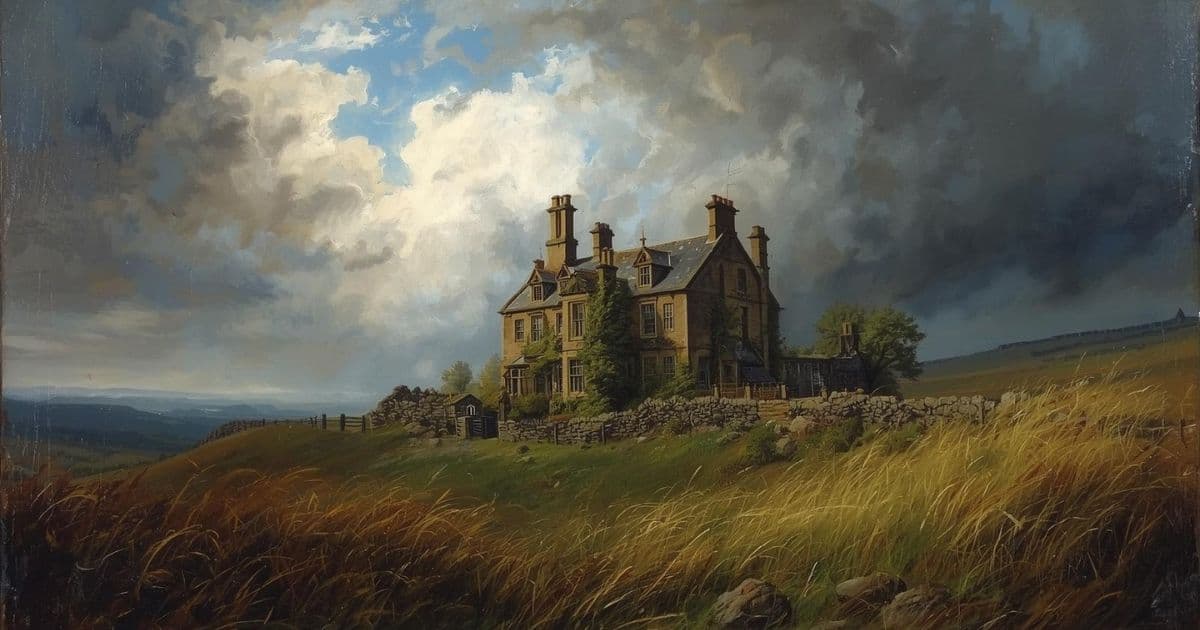
An excerpt from the original text.(complete · 1894 words)
ssenka drove the horses so smartly that they reached the marsh too
early, while it was still hot.
As they drew near this more important marsh, the chief aim of their
expedition, Levin could not help considering how he could get rid of
Vassenka and be free in his movements. Stepan Arkadyevitch evidently
had the same desire, and on his face Levin saw the look of anxiety
always present in a true sportsman when beginning shooting, together
with a certain good-humored slyness peculiar to him.
“How shall we go? It’s a splendid marsh, I see, and there are hawks,”
said Stepan Arkadyevitch, pointing to two great birds hovering over the
reeds. “Where there are hawks, there is sure to be game.”
“Now, gentlemen,” said Levin, pulling up his boots and examining the
lock of his gun with rather a gloomy expression, “do you see those
reeds?” He pointed to an oasis of blackish green in the huge half-mown
wet meadow that stretched along the right bank of the river. “The marsh
begins here, straight in front of us, do you see—where it is greener?
From here it runs to the right where the horses are; there are breeding
places there, and grouse, and all round those reeds as far as that
alder, and right up to the mill. Over there, do you see, where the
pools are? That’s the best place. There I once shot seventeen snipe.
We’ll separate with the dogs and go in different directions, and then
meet over there at the mill.”
“Well, which shall go to left and which to right?” asked Stepan
Arkadyevitch. “It’s wider to the right; you two go that way and I’ll
take the left,” he said with apparent carelessness.
“Capital! we’ll make the bigger bag! Yes, come along, come along!”
Vassenka exclaimed.
Levin could do nothing but agree, and they divided.
As soon as they entered the marsh, the two dogs began hunting about
together and made towards the green, slime-covered pool. Levin knew
Laska’s method, wary and indefinite; he knew the place too and expected
a whole covey of snipe.
“Veslovsky, beside me, walk beside me!” he said in a faint voice to his
companion splashing in the water behind him. Levin could not help
feeling an interest in the direction his gun was pointed, after that
casual shot near the Kolpensky marsh.
“Oh, I won’t get in your way, don’t trouble about me.”
But Levin could not help troubling, and recalled Kitty’s words at
parting: “Mind you don’t shoot one another.” The dogs came nearer and
nearer, passed each other, each pursuing its own scent. The expectation
of snipe was so intense that to Levin the squelching sound of his own
heel, as he drew it up out of the mire, seemed to be the call of a
snipe, and he clutched and pressed the lock of his gun.
“Bang! bang!” sounded almost in his ear. Vassenka had fired at a flock
of ducks which was hovering over the marsh and flying at that moment
towards the sportsmen, far out of range. Before Levin had time to look
round, there was the whir of one snipe, another, a third, and some
eight more rose one after another.
Stepan Arkadyevitch hit one at the very moment when it was beginning
its zigzag movements, and the snipe fell in a heap into the mud.
Oblonsky aimed deliberately at another, still flying low in the reeds,
and together with the report of the shot, that snipe too fell, and it
could be seen fluttering out where the sedge had been cut, its unhurt
wing showing white beneath.
Levin was not so lucky: he aimed at his first bird too low, and missed;
he aimed at it again, just as it was rising, but at that instant
another snipe flew up at his very feet, distracting him so that he
missed again.
While they were loading their guns, another snipe rose, and Veslovsky,
who had had time to load again, sent two charges of small-shot into the
water. Stepan Arkadyevitch picked up his snipe, and with sparkling eyes
looked at Levin.
“Well, now let us separate,” said Stepan Arkadyevitch, and limping on
his left foot, holding his gun in readiness and whistling to his dog,
he walked off in one direction. Levin and Veslovsky walked in the
other.
It always happened with Levin that when his first shots were a failure
he got hot and out of temper, and shot badly the whole day. So it was
that day. The snipe showed themselves in numbers. They kept flying up
from just under the dogs, from under the sportsmen’s legs, and Levin
might have retrieved his ill luck. But the more he shot, the more he
felt disgraced in the eyes of Veslovsky, who kept popping away merrily
and indiscriminately, killing nothing, and not in the slightest abashed
by his ill success. Levin, in feverish haste, could not restrain
himself, got more and more out of temper, and ended by shooting almost
without a hope of hitting. Laska, indeed, seemed to understand this.
She began looking more languidly, and gazed back at the sportsmen, as
it were, with perplexity or reproach in her eyes. Shots followed shots
in rapid succession. The smoke of the powder hung about the sportsmen,
while in the great roomy net of the game bag there were only three
light little snipe. And of these one had been killed by Veslovsky
alone, and one by both of them together. Meanwhile from the other side
of the marsh came the sound of Stepan Arkadyevitch’s shots, not
frequent, but, as Levin fancied, well-directed, for almost after each
they heard “Krak, Krak, apporte!”
This excited Levin still more. The snipe were floating continually in
the air over the reeds. Their whirring wings close to the earth, and
their harsh cries high in the air, could be heard on all sides; the
snipe that had risen first and flown up into the air, settled again
before the sportsmen. Instead of two hawks there were now dozens of
them hovering with shrill cries over the marsh.
After walking through the larger half of the marsh, Levin and Veslovsky
reached the place where the peasants’ mowing-grass was divided into
long strips reaching to the reeds, marked off in one place by the
trampled grass, in another by a path mown through it. Half of these
strips had already been mown.
Though there was not so much hope of finding birds in the uncut part as
the cut part, Levin had promised Stepan Arkadyevitch to meet him, and
so he walked on with his companion through the cut and uncut patches.
“Hi, sportsmen!” shouted one of a group of peasants, sitting on an
unharnessed cart; “come and have some lunch with us! Have a drop of
wine!”
Levin looked round.
“Come along, it’s all right!” shouted a good-humored-looking bearded
peasant with a red face, showing his white teeth in a grin, and holding
up a greenish bottle that flashed in the sunlight.
“Qu’est-ce qu’ils disent?” asked Veslovsky.
“They invite you to have some vodka. Most likely they’ve been dividing
the meadow into lots. I should have some,” said Levin, not without some
guile, hoping Veslovsky would be tempted by the vodka, and would go
away to them.
“Why do they offer it?”
“Oh, they’re merry-making. Really, you should join them. You would be
interested.”
“Allons, c’est curieux.”
“You go, you go, you’ll find the way to the mill!” cried Levin, and
looking round he perceived with satisfaction that Veslovsky, bent and
stumbling with weariness, holding his gun out at arm’s length, was
making his way out of the marsh towards the peasants.
“You come too!” the peasants shouted to Levin. “Never fear! You taste
our cake!”
Levin felt a strong inclination to drink a little vodka and to eat some
bread. He was exhausted, and felt it a great effort to drag his
staggering legs out of the mire, and for a minute he hesitated. But
Laska was setting. And immediately all his weariness vanished, and he
walked lightly through the swamp towards the dog. A snipe flew up at
his feet; he fired and killed it. Laska still pointed.—“Fetch it!”
Another bird flew up close to the dog. Levin fired. But it was an
unlucky day for him; he missed it, and when he went to look for the one
he had shot, he could not find that either. He wandered all about the
reeds, but Laska did not believe he had shot it, and when he sent her
to find it, she pretended to hunt for it, but did not really. And in
the absence of Vassenka, on whom Levin threw the blame of his failure,
things went no better. There were plenty of snipe still, but Levin made
one miss after another.
The slanting rays of the sun were still hot; his clothes, soaked
through with perspiration, stuck to his body; his left boot full of
water weighed heavily on his leg and squeaked at every step; the sweat
ran in drops down his powder-grimed face, his mouth was full of the
bitter taste, his nose of the smell of powder and stagnant water, his
ears were ringing with the incessant whir of the snipe; he could not
touch the stock of his gun, it was so hot; his heart beat with short,
rapid throbs; his hands shook with excitement, and his weary legs
stumbled and staggered over the hillocks and in the swamp, but still he
walked on and still he shot. At last, after a disgraceful miss, he
flung his gun and his hat on the ground.
“No, I must control myself,” he said to himself. Picking up his gun and
his hat, he called Laska, and went out of the swamp. When he got on to
dry ground he sat down, pulled off his boot and emptied it, then walked
to the marsh, drank some stagnant-tasting water, moistened his burning
hot gun, and washed his face and hands. Feeling refreshed, he went back
to the spot where a snipe had settled, firmly resolved to keep cool.
He tried to be calm, but it was the same again. His finger pressed the
cock before he had taken a good aim at the bird. It got worse and
worse.
He had only five birds in his game-bag when he walked out of the marsh
towards the alders where he was to rejoin Stepan Arkadyevitch.
Before he caught sight of Stepan Arkadyevitch he saw his dog. Krak
darted out from behind the twisted root of an alder, black all over
with the stinking mire of the marsh, and with the air of a conqueror
sniffed at Laska. Behind Krak there came into view in the shade of the
alder tree the shapely figure of Stepan Arkadyevitch. He came to meet
him, red and perspiring, with unbuttoned neckband, still limping in the
same way.
“Well? You have been popping away!” he said, smiling good-humoredly.
“How have you got on?” queried Levin. But there was no need to ask, for
he had already seen the full game bag.
“Oh, pretty fair.”
He had fourteen birds.
“A splendid marsh! I’ve no doubt Veslovsky got in your way. It’s
awkward too, shooting with one dog,” said Stepan Arkadyevitch, to
soften his triumph.
Master this chapter. Complete your experience
Purchase the complete book to access all chapters and support classic literature
As an Amazon Associate, we earn a small commission from qualifying purchases at no additional cost to you.
Available in paperback, hardcover, and e-book formats
Let's Analyse the Pattern
Using physical or mental busyness to avoid confronting difficult emotional or existential questions that demand attention.
Why This Matters
Connect literature to life
This chapter teaches how to identify when someone is using activity to avoid emotional processing.
Practice This Today
This week, notice when you or others get suspiciously busy after difficult conversations or bad news—it might signal avoidance rather than productivity.
Now let's explore the literary elements.
Key Quotes & Analysis
"The longer Levin went on mowing, the oftener he experienced those moments of oblivion when his arms no longer seemed to swing the scythe, but the scythe itself his whole body, so conscious and full of life."
Context: Describing Levin's experience during intense physical labor
This shows how physical exhaustion can create a temporary escape from consciousness and painful thoughts. Levin finds brief peace when he's so tired that his thinking mind shuts down and he becomes pure physical action.
In Today's Words:
When you work so hard that you stop thinking and just become the work itself - like being in the zone during intense exercise.
"Death, the inevitable end of all things, for the first time presented itself to him with irresistible force."
Context: Describing what triggered Levin's existential crisis
His brother's death has made mortality real and unavoidable for Levin. This realization has shattered his previous ability to live without thinking about life's ultimate meaninglessness, forcing him into this desperate search for purpose.
In Today's Words:
For the first time, he really understood that everyone dies, including him, and he couldn't stop thinking about it.
"What am I living for? What have I been put into this world for? What am I here for?"
Context: The questions that torment him despite his attempts to escape through work
These are the fundamental existential questions that physical labor can't answer. No amount of exhaustion can make these questions go away permanently - they return every time he stops moving.
In Today's Words:
What's the point of my life? Why am I even here? What's this all for?
Thematic Threads
Spiritual Crisis
In This Chapter
Levin's desperate physical labor to quiet existential questions about life's meaning after his brother's death
Development
Escalating from earlier philosophical doubts into full crisis requiring drastic measures
In Your Life:
You might recognize this when you're working frantically to avoid thinking about a major life change or loss.
Class
In This Chapter
Levin working like a peasant while his workers observe their master's strange behavior with puzzlement
Development
Continuing exploration of how crisis can temporarily dissolve social barriers
In Your Life:
You might see this when stress makes you abandon your usual social roles and expectations.
Avoidance
In This Chapter
Using physical exhaustion as a drug to numb psychological pain and existential dread
Development
New theme showing how people flee from internal confrontation
In Your Life:
You might catch yourself staying busy to avoid dealing with difficult emotions or decisions.
Death's Impact
In This Chapter
His brother's death has shattered Levin's assumptions about life's purpose and meaning
Development
Continuing aftermath of earlier loss, now showing long-term psychological effects
In Your Life:
You might experience this when someone close to you dies and suddenly nothing feels certain anymore.
Desperation
In This Chapter
Levin's frantic, almost manic approach to manual labor reveals how desperate he's become for peace
Development
Introduced here as his search for meaning becomes increasingly urgent
In Your Life:
You might feel this when you're trying anything—even extreme measures—to find relief from emotional pain.
You now have the context. Time to form your own thoughts.
Discussion Questions
- 1
Why does Levin choose to work in the fields with his peasants instead of managing from a distance like other landowners?
analysis • surface - 2
What is Levin really trying to accomplish through this exhausting physical labor, and why isn't it working?
analysis • medium - 3
When have you seen someone (including yourself) throw themselves into work or activities to avoid dealing with difficult emotions or questions?
application • medium - 4
If you were Levin's friend and noticed this pattern, how would you help him face his questions instead of running from them?
application • deep - 5
What does Levin's behavior reveal about how grief and existential crisis can drive us to seek meaning in the wrong places?
reflection • deep
Critical Thinking Exercise
Track Your Own Escape Patterns
Think about the last time you felt overwhelmed by difficult emotions or big life questions. Write down three specific activities you used to stay busy instead of sitting with those feelings. For each activity, identify whether it actually helped solve the problem or just postponed dealing with it. Then design one small way you could face the underlying issue directly.
Consider:
- •Notice the difference between productive action and escape action
- •Consider how your body feels when you're running from emotions versus facing them
- •Think about what you're most afraid would happen if you stopped being busy
Journaling Prompt
Write about a time when you finally stopped running from a difficult question or emotion. What happened when you sat still with it? What did you discover that busyness had been preventing you from seeing?
Coming Up Next...
Chapter 168
Levin's desperate search for meaning takes an unexpected turn when a simple conversation with a peasant opens a door he never saw coming. Sometimes the answers we're frantically seeking are hiding in the most ordinary moments.