An excerpt from the original text.(complete · 2146 words)
t eight o’clock Kutúzov rode to Pratzen at the head of the fourth
column, Milorádovich’s, the one that was to take the place of
Przebyszéwski’s and Langeron’s columns which had already gone down
into the valley. He greeted the men of the foremost regiment and gave
them the order to march, thereby indicating that he intended to lead
that column himself. When he had reached the village of Pratzen he
halted. Prince Andrew was behind, among the immense number forming the
commander in chief’s suite. He was in a state of suppressed excitement
and irritation, though controlledly calm as a man is at the approach of
a long-awaited moment. He was firmly convinced that this was the day of
his Toulon, or his bridge of Arcola. How it would come about he did not
know, but he felt sure it would do so. The locality and the position of
our troops were known to him as far as they could be known to anyone
in our army. His own strategic plan, which obviously could not now
be carried out, was forgotten. Now, entering into Weyrother’s plan,
Prince Andrew considered possible contingencies and formed new projects
such as might call for his rapidity of perception and decision.
To the left down below in the mist, the musketry fire of unseen forces
could be heard. It was there Prince Andrew thought the fight would
concentrate. “There we shall encounter difficulties, and there,”
thought he, “I shall be sent with a brigade or division, and there,
standard in hand, I shall go forward and break whatever is in front of
me.”
He could not look calmly at the standards of the passing battalions.
Seeing them he kept thinking, “That may be the very standard with
which I shall lead the army.”
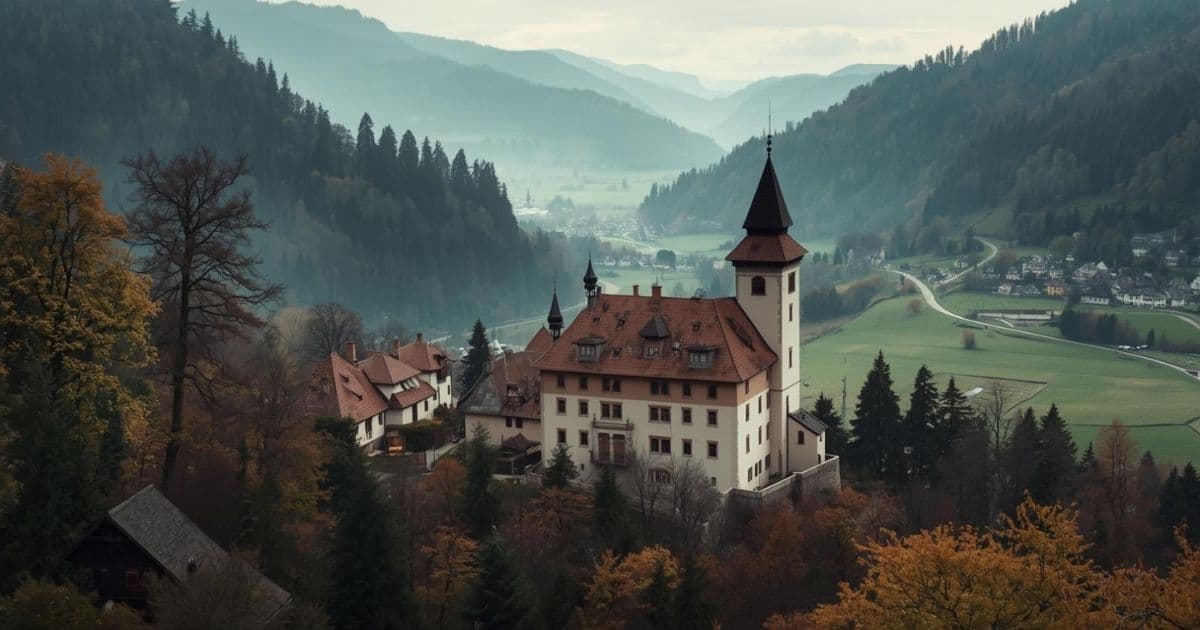
In the morning all that was left of the night mist on the heights was
a hoar frost now turning to dew, but in the valleys it still lay like a
milk-white sea. Nothing was visible in the valley to the left into which
our troops had descended and from whence came the sounds of firing.
Above the heights was the dark clear sky, and to the right the vast orb
of the sun. In front, far off on the farther shore of that sea of mist,
some wooded hills were discernible, and it was there the enemy probably
was, for something could be descried. On the right the Guards were
entering the misty region with a sound of hoofs and wheels and now and
then a gleam of bayonets; to the left beyond the village similar masses
of cavalry came up and disappeared in the sea of mist. In front and
behind moved infantry. The commander in chief was standing at the end of
the village letting the troops pass by him. That morning Kutúzov seemed
worn and irritable. The infantry passing before him came to a halt
without any command being given, apparently obstructed by something in
front.
“Do order them to form into battalion columns and go round the
village!” he said angrily to a general who had ridden up. “Don’t
you understand, your excellency, my dear sir, that you must not
defile through narrow village streets when we are marching against the
enemy?”
“I intended to re-form them beyond the village, your excellency,”
answered the general.
Kutúzov laughed bitterly.
“You’ll make a fine thing of it, deploying in sight of the enemy!
Very fine!”
“The enemy is still far away, your excellency. According to the
dispositions...”
“The dispositions!” exclaimed Kutúzov bitterly. “Who told you
that?... Kindly do as you are ordered.”
“Yes, sir.”
“My dear fellow,” Nesvítski whispered to Prince Andrew, “the old
man is as surly as a dog.”
An Austrian officer in a white uniform with green plumes in his hat
galloped up to Kutúzov and asked in the Emperor’s name had the fourth
column advanced into action.
Kutúzov turned round without answering and his eye happened to fall
upon Prince Andrew, who was beside him. Seeing him, Kutúzov’s
malevolent and caustic expression softened, as if admitting that what
was being done was not his adjutant’s fault, and still not answering
the Austrian adjutant, he addressed Bolkónski.
“Go, my dear fellow, and see whether the third division has passed the
village. Tell it to stop and await my orders.”
Hardly had Prince Andrew started than he stopped him.
“And ask whether sharpshooters have been posted,” he added. “What
are they doing? What are they doing?” he murmured to himself, still
not replying to the Austrian.
Prince Andrew galloped off to execute the order.
Overtaking the battalions that continued to advance, he stopped
the third division and convinced himself that there really were no
sharpshooters in front of our columns. The colonel at the head of the
regiment was much surprised at the commander in chief’s order to throw
out skirmishers. He had felt perfectly sure that there were other troops
in front of him and that the enemy must be at least six miles away.
There was really nothing to be seen in front except a barren descent
hidden by dense mist. Having given orders in the commander in chief’s
name to rectify this omission, Prince Andrew galloped back. Kutúzov
still in the same place, his stout body resting heavily in the saddle
with the lassitude of age, sat yawning wearily with closed eyes. The
troops were no longer moving, but stood with the butts of their muskets
on the ground.
“All right, all right!” he said to Prince Andrew, and turned to a
general who, watch in hand, was saying it was time they started as all
the left-flank columns had already descended.
“Plenty of time, your excellency,” muttered Kutúzov in the midst of
a yawn. “Plenty of time,” he repeated.
Just then at a distance behind Kutúzov was heard the sound of regiments
saluting, and this sound rapidly came nearer along the whole extended
line of the advancing Russian columns. Evidently the person they were
greeting was riding quickly. When the soldiers of the regiment in front
of which Kutúzov was standing began to shout, he rode a little to one
side and looked round with a frown. Along the road from Pratzen galloped
what looked like a squadron of horsemen in various uniforms. Two of them
rode side by side in front, at full gallop. One in a black uniform with
white plumes in his hat rode a bobtailed chestnut horse, the other who
was in a white uniform rode a black one. These were the two Emperors
followed by their suites. Kutúzov, affecting the manners of an old
soldier at the front, gave the command “Attention!” and rode up
to the Emperors with a salute. His whole appearance and manner were
suddenly transformed. He put on the air of a subordinate who obeys
without reasoning. With an affectation of respect which evidently struck
Alexander unpleasantly, he rode up and saluted.
This unpleasant impression merely flitted over the young and happy face
of the Emperor like a cloud of haze across a clear sky and vanished.
After his illness he looked rather thinner that day than on the field
of Olmütz where Bolkónski had seen him for the first time abroad, but
there was still the same bewitching combination of majesty and mildness
in his fine gray eyes, and on his delicate lips the same capacity for
varying expression and the same prevalent appearance of goodhearted
innocent youth.
At the Olmütz review he had seemed more majestic; here he seemed
brighter and more energetic. He was slightly flushed after galloping two
miles, and reining in his horse he sighed restfully and looked round
at the faces of his suite, young and animated as his own. Czartorýski,
Novosíltsev, Prince Volkónsky, Strógonov, and the others, all richly
dressed gay young men on splendid, well-groomed, fresh, only slightly
heated horses, exchanging remarks and smiling, had stopped behind the
Emperor. The Emperor Francis, a rosy, long faced young man, sat very
erect on his handsome black horse, looking about him in a leisurely and
preoccupied manner. He beckoned to one of his white adjutants and asked
some question—“Most likely he is asking at what o’clock they
started,” thought Prince Andrew, watching his old acquaintance with
a smile he could not repress as he recalled his reception at Brünn.
In the Emperors’ suite were the picked young orderly officers of the
Guard and line regiments, Russian and Austrian. Among them were grooms
leading the Tsar’s beautiful relay horses covered with embroidered
cloths.
As when a window is opened a whiff of fresh air from the fields enters
a stuffy room, so a whiff of youthfulness, energy, and confidence of
success reached Kutúzov’s cheerless staff with the galloping advent
of all these brilliant young men.
“Why aren’t you beginning, Michael Ilariónovich?” said the
Emperor Alexander hurriedly to Kutúzov, glancing courteously at the
same time at the Emperor Francis.
“I am waiting, Your Majesty,” answered Kutúzov, bending forward
respectfully.
The Emperor, frowning slightly, bent his ear forward as if he had not
quite heard.
“Waiting, Your Majesty,” repeated Kutúzov. (Prince Andrew noted
that Kutúzov’s upper lip twitched unnaturally as he said the
word “waiting.”) “Not all the columns have formed up yet, Your
Majesty.”
The Tsar heard but obviously did not like the reply; he shrugged his
rather round shoulders and glanced at Novosíltsev who was near him, as
if complaining of Kutúzov.
“You know, Michael Ilariónovich, we are not on the Empress’ Field
where a parade does not begin till all the troops are assembled,” said
the Tsar with another glance at the Emperor Francis, as if inviting
him if not to join in at least to listen to what he was saying. But the
Emperor Francis continued to look about him and did not listen.
“That is just why I do not begin, sire,” said Kutúzov in a
resounding voice, apparently to preclude the possibility of not being
heard, and again something in his face twitched—“That is just why
I do not begin, sire, because we are not on parade and not on the
Empress’ Field,” said he clearly and distinctly.
In the Emperor’s suite all exchanged rapid looks that expressed
dissatisfaction and reproach. “Old though he may be, he should not, he
certainly should not, speak like that,” their glances seemed to say.
The Tsar looked intently and observantly into Kutúzov’s eye
waiting to hear whether he would say anything more. But Kutúzov, with
respectfully bowed head, seemed also to be waiting. The silence lasted
for about a minute.
“However, if you command it, Your Majesty,” said Kutúzov, lifting
his head and again assuming his former tone of a dull, unreasoning, but
submissive general.
He touched his horse and having called Milorádovich, the commander of
the column, gave him the order to advance.
The troops again began to move, and two battalions of the Nóvgorod and
one of the Ápsheron regiment went forward past the Emperor.
As this Ápsheron battalion marched by, the red-faced Milorádovich,
without his greatcoat, with his Orders on his breast and an enormous
tuft of plumes in his cocked hat worn on one side with its corners front
and back, galloped strenuously forward, and with a dashing salute reined
in his horse before the Emperor.
“God be with you, general!” said the Emperor.
“Ma foi, sire, nous ferons ce qui sera dans notre possibilité,
sire,” * he answered gaily, raising nevertheless ironic smiles among
the gentlemen of the Tsar’s suite by his poor French.
* “Indeed, Sire, we shall do everything it is possible to
do, Sire.”
Milorádovich wheeled his horse sharply and stationed himself a little
behind the Emperor. The Ápsheron men, excited by the Tsar’s presence,
passed in step before the Emperors and their suites at a bold, brisk
pace.
“Lads!” shouted Milorádovich in a loud, self-confident, and cheery
voice, obviously so elated by the sound of firing, by the prospect of
battle, and by the sight of the gallant Ápsherons, his comrades in
Suvórov’s time, now passing so gallantly before the Emperors, that he
forgot the sovereigns’ presence. “Lads, it’s not the first village
you’ve had to take,” cried he.
“Glad to do our best!” shouted the soldiers.
The Emperor’s horse started at the sudden cry. This horse that had
carried the sovereign at reviews in Russia bore him also here on the
field of Austerlitz, enduring the heedless blows of his left foot and
pricking its ears at the sound of shots just as it had done on the
Empress’ Field, not understanding the significance of the firing, nor
of the nearness of the Emperor Francis’ black cob, nor of all that was
being said, thought, and felt that day by its rider.
The Emperor turned with a smile to one of his followers and made a
remark to him, pointing to the gallant Ápsherons.
Master this chapter. Complete your experience
Purchase the complete book to access all chapters and support classic literature
As an Amazon Associate, we earn a small commission from qualifying purchases at no additional cost to you.
Available in paperback, hardcover, and e-book formats
Let's Analyse the Pattern
Those in power override those with knowledge, forcing experts to choose between their professional judgment and their job security.
Why This Matters
Connect literature to life
This chapter teaches how to identify when authority and expertise are misaligned, and predict the consequences of that misalignment.
Practice This Today
This week, notice when someone making decisions has never actually done the work they're directing—then watch how responsibility gets assigned when things go wrong.
Now let's explore the literary elements.
Key Quotes & Analysis
"He was firmly convinced that this was the day of his Toulon, or his bridge of Arcola."
Context: Describing Prince Andrew's mindset as he rides into battle
This shows how Prince Andrew has built up this battle in his mind as his moment of destiny. He's comparing himself to Napoleon's famous early victories, revealing both his ambition and his naivety about what real battle is like.
In Today's Words:
He was sure this was going to be his big break, his moment to shine.
"His own strategic plan, which obviously could not now be carried out, was forgotten."
Context: Prince Andrew adapting to the official battle plan instead of his own ideas
This captures a universal experience - having to abandon your own good ideas to work within someone else's system. It shows maturity and pragmatism, but also the frustration of not being in control.
In Today's Words:
He had to forget about his own ideas and just go with the program.
"There we shall encounter difficulties, and there, I shall be sent with a brigade or division."
Context: His thoughts about where the real fighting will happen
Prince Andrew is already imagining himself being given an important command when things get tough. It shows his confidence and ambition, but also how he's still thinking about personal glory rather than the bigger picture.
In Today's Words:
That's where things will get messy, and that's where they'll need me to step up.
Thematic Threads
Authority
In This Chapter
Young emperors override experienced general's military judgment, forcing premature attack
Development
Builds on earlier scenes of imperial privilege, showing how power corrupts decision-making
In Your Life:
You see this when your boss makes decisions about work they don't actually do
Experience
In This Chapter
Kutuzov's hard-won battlefield knowledge is dismissed by those who've never seen real combat
Development
Contrasts with Prince Andrew's romantic notions, showing the gap between theory and practice
In Your Life:
Your years of hands-on experience matter more than someone else's impressive title
Compromise
In This Chapter
Kutuzov must choose between his professional judgment and keeping his position of influence
Development
Shows how institutional pressure forces good people into bad decisions
In Your Life:
You face this when standing up for what's right might cost you your job
Consequences
In This Chapter
Soldiers will die because emperors wanted their moment of glory without proper preparation
Development
Demonstrates how the powerful rarely pay the price for their poor decisions
In Your Life:
The people doing the real work always bear the cost of bad leadership decisions
Illusion
In This Chapter
Prince Andrew still dreams of personal glory while watching institutional dysfunction unfold
Development
His romantic ideals persist despite witnessing the messy reality of power and war
In Your Life:
You might cling to idealistic notions even when reality shows you something different
You now have the context. Time to form your own thoughts.
Discussion Questions
- 1
What specific conflict happens between Kutuzov and the young emperors, and what does each side want?
analysis • surface - 2
Why does Kutuzov comply with orders he knows are wrong, and what does this reveal about workplace power dynamics?
analysis • medium - 3
Where have you seen this pattern of authority overruling expertise in your own workplace, school, or family situations?
application • medium - 4
If you were in Kutuzov's position—knowing your boss's decision will cause problems—how would you handle the situation?
application • deep - 5
What does this chapter suggest about the relationship between power and responsibility, and why those making decisions often don't face the consequences?
reflection • deep
Critical Thinking Exercise
Map Your Workplace Power Dynamic
Think of a recent decision at your workplace that you disagreed with. Draw a simple diagram showing who made the decision, who had to implement it, and who faced the consequences. Then write a brief plan for how you would handle a similar situation in the future, using Kutuzov's dilemma as a guide.
Consider:
- •Consider who actually understands the day-to-day work versus who holds decision-making power
- •Think about the costs of speaking up versus staying silent in your specific workplace culture
- •Identify potential allies who share your expertise and could support your position
Journaling Prompt
Write about a time when you had to choose between following orders you knew were wrong or risking your position by speaking up. What did you learn about navigating authority, and what would you do differently now?
Coming Up Next...
Chapter 65: The Sky Above the Battle
As the Russian columns advance into the misty valley, Prince Andrew will finally get his chance to prove himself in battle. But will the reality of combat match his heroic dreams?