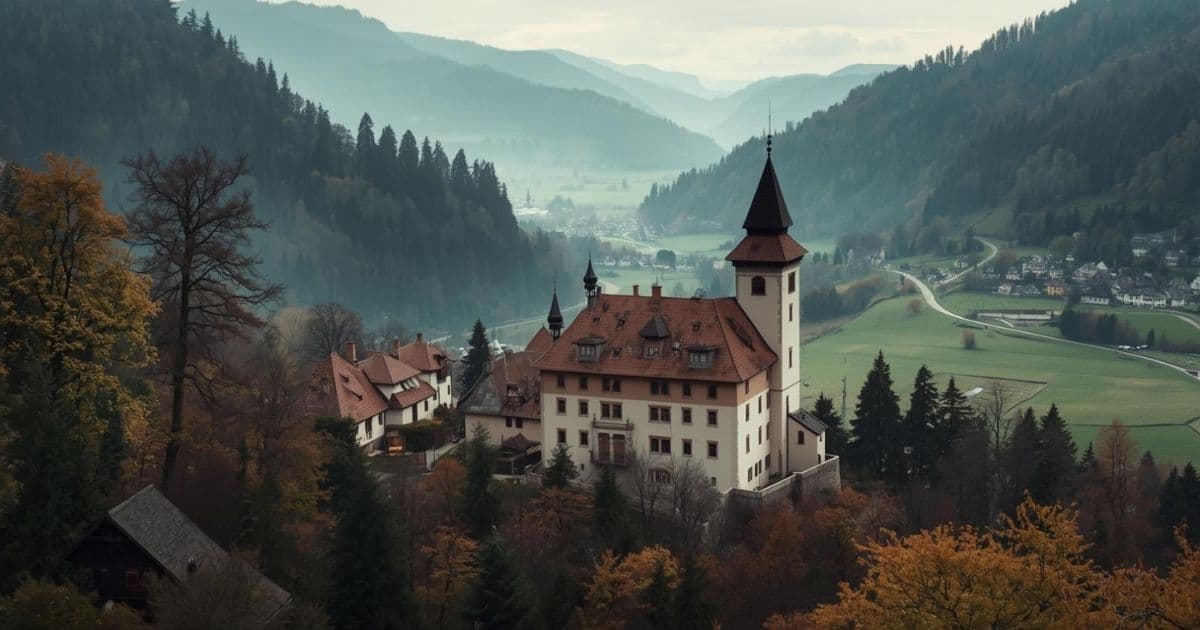
An excerpt from the original text.(complete · 2005 words)
t five in the morning it was still quite dark. The troops of the
center, the reserves, and Bagratión’s right flank had not yet moved,
but on the left flank the columns of infantry, cavalry, and artillery,
which were to be the first to descend the heights to attack the French
right flank and drive it into the Bohemian mountains according to plan,
were already up and astir. The smoke of the campfires, into which they
were throwing everything superfluous, made the eyes smart. It was cold
and dark. The officers were hurriedly drinking tea and breakfasting, the
soldiers, munching biscuit and beating a tattoo with their feet to
warm themselves, gathering round the fires throwing into the flames the
remains of sheds, chairs, tables, wheels, tubs, and everything that they
did not want or could not carry away with them. Austrian column guides
were moving in and out among the Russian troops and served as heralds
of the advance. As soon as an Austrian officer showed himself near
a commanding officer’s quarters, the regiment began to move: the
soldiers ran from the fires, thrust their pipes into their boots, their
bags into the carts, got their muskets ready, and formed rank. The
officers buttoned up their coats, buckled on their swords and pouches,
and moved along the ranks shouting. The train drivers and orderlies
harnessed and packed the wagons and tied on the loads. The adjutants and
battalion and regimental commanders mounted, crossed themselves, gave
final instructions, orders, and commissions to the baggage men
who remained behind, and the monotonous tramp of thousands of feet
resounded. The column moved forward without knowing where and unable,
from the masses around them, the smoke and the increasing fog, to see
either the place they were leaving or that to which they were going.
A soldier on the march is hemmed in and borne along by his regiment as
much as a sailor is by his ship. However far he has walked, whatever
strange, unknown, and dangerous places he reaches, just as a sailor is
always surrounded by the same decks, masts, and rigging of his ship, so
the soldier always has around him the same comrades, the same ranks, the
same sergeant major Iván Mítrich, the same company dog Jack, and the
same commanders. The sailor rarely cares to know the latitude in which
his ship is sailing, but on the day of battle—heaven knows how and
whence—a stern note of which all are conscious sounds in the moral
atmosphere of an army, announcing the approach of something decisive
and solemn, and awakening in the men an unusual curiosity. On the day of
battle the soldiers excitedly try to get beyond the interests of their
regiment, they listen intently, look about, and eagerly ask concerning
what is going on around them.
The fog had grown so dense that though it was growing light they could
not see ten paces ahead. Bushes looked like gigantic trees and level
ground like cliffs and slopes. Anywhere, on any side, one might
encounter an enemy invisible ten paces off. But the columns advanced
for a long time, always in the same fog, descending and ascending hills,
avoiding gardens and enclosures, going over new and unknown ground, and
nowhere encountering the enemy. On the contrary, the soldiers became
aware that in front, behind, and on all sides, other Russian columns
were moving in the same direction. Every soldier felt glad to know that
to the unknown place where he was going, many more of our men were going
too.
“There now, the Kúrskies have also gone past,” was being said in
the ranks.
“It’s wonderful what a lot of our troops have gathered, lads! Last
night I looked at the campfires and there was no end of them. A regular
Moscow!”
Though none of the column commanders rode up to the ranks or talked to
the men (the commanders, as we saw at the council of war, were out of
humor and dissatisfied with the affair, and so did not exert themselves
to cheer the men but merely carried out the orders), yet the troops
marched gaily, as they always do when going into action, especially to
an attack. But when they had marched for about an hour in the dense fog,
the greater part of the men had to halt and an unpleasant consciousness
of some dislocation and blunder spread through the ranks. How such
a consciousness is communicated is very difficult to define, but it
certainly is communicated very surely, and flows rapidly, imperceptibly,
and irrepressibly, as water does in a creek. Had the Russian army been
alone without any allies, it might perhaps have been a long time before
this consciousness of mismanagement became a general conviction, but as
it was, the disorder was readily and naturally attributed to the stupid
Germans, and everyone was convinced that a dangerous muddle had been
occasioned by the sausage eaters.
“Why have we stopped? Is the way blocked? Or have we already come up
against the French?”
“No, one can’t hear them. They’d be firing if we had.”
“They were in a hurry enough to start us, and now here we stand in
the middle of a field without rhyme or reason. It’s all those damned
Germans’ muddling! What stupid devils!”
“Yes, I’d send them on in front, but no fear, they’re crowding up
behind. And now here we stand hungry.”
“I say, shall we soon be clear? They say the cavalry are blocking the
way,” said an officer.
“Ah, those damned Germans! They don’t know their own country!”
said another.
“What division are you?” shouted an adjutant, riding up.
“The Eighteenth.”
“Then why are you here? You should have gone on long ago, now you
won’t get there till evening.”
“What stupid orders! They don’t themselves know what they are
doing!” said the officer and rode off.
Then a general rode past shouting something angrily, not in Russian.
“Tafa-lafa! But what he’s jabbering no one can make out,” said a
soldier, mimicking the general who had ridden away. “I’d shoot them,
the scoundrels!”
“We were ordered to be at the place before nine, but we haven’t got
halfway. Fine orders!” was being repeated on different sides.
And the feeling of energy with which the troops had started began to
turn into vexation and anger at the stupid arrangements and at the
Germans.
The cause of the confusion was that while the Austrian cavalry was
moving toward our left flank, the higher command found that our center
was too far separated from our right flank and the cavalry were all
ordered to turn back to the right. Several thousand cavalry crossed in
front of the infantry, who had to wait.
At the front an altercation occurred between an Austrian guide and a
Russian general. The general shouted a demand that the cavalry should be
halted, the Austrian argued that not he, but the higher command, was to
blame. The troops meanwhile stood growing listless and dispirited. After
an hour’s delay they at last moved on, descending the hill. The fog
that was dispersing on the hill lay still more densely below, where they
were descending. In front in the fog a shot was heard and then another,
at first irregularly at varying intervals—trata...tat—and then more
and more regularly and rapidly, and the action at the Goldbach Stream
began.
Not expecting to come on the enemy down by the stream, and having
stumbled on him in the fog, hearing no encouraging word from their
commanders, and with a consciousness of being too late spreading through
the ranks, and above all being unable to see anything in front or around
them in the thick fog, the Russians exchanged shots with the enemy
lazily and advanced and again halted, receiving no timely orders from
the officers or adjutants who wandered about in the fog in those unknown
surroundings unable to find their own regiments. In this way the action
began for the first, second, and third columns, which had gone down into
the valley. The fourth column, with which Kutúzov was, stood on the
Pratzen Heights.
Below, where the fight was beginning, there was still thick fog; on the
higher ground it was clearing, but nothing could be seen of what was
going on in front. Whether all the enemy forces were, as we supposed,
six miles away, or whether they were near by in that sea of mist, no one
knew till after eight o’clock.
It was nine o’clock in the morning. The fog lay unbroken like a sea
down below, but higher up at the village of Schlappanitz where Napoleon
stood with his marshals around him, it was quite light. Above him was
a clear blue sky, and the sun’s vast orb quivered like a huge hollow,
crimson float on the surface of that milky sea of mist. The whole French
army, and even Napoleon himself with his staff, were not on the far side
of the streams and hollows of Sokolnitz and Schlappanitz beyond which we
intended to take up our position and begin the action, but were on this
side, so close to our own forces that Napoleon with the naked eye could
distinguish a mounted man from one on foot. Napoleon, in the blue cloak
which he had worn on his Italian campaign, sat on his small gray Arab
horse a little in front of his marshals. He gazed silently at the hills
which seemed to rise out of the sea of mist and on which the Russian
troops were moving in the distance, and he listened to the sounds of
firing in the valley. Not a single muscle of his face—which in those
days was still thin—moved. His gleaming eyes were fixed intently on
one spot. His predictions were being justified. Part of the Russian
force had already descended into the valley toward the ponds and lakes
and part were leaving these Pratzen Heights which he intended to attack
and regarded as the key to the position. He saw over the mist that in
a hollow between two hills near the village of Pratzen, the Russian
columns, their bayonets glittering, were moving continuously in one
direction toward the valley and disappearing one after another into
the mist. From information he had received the evening before, from the
sound of wheels and footsteps heard by the outposts during the night,
by the disorderly movement of the Russian columns, and from all
indications, he saw clearly that the allies believed him to be far away
in front of them, and that the columns moving near Pratzen constituted
the center of the Russian army, and that that center was already
sufficiently weakened to be successfully attacked. But still he did not
begin the engagement.
Today was a great day for him—the anniversary of his coronation.
Before dawn he had slept for a few hours, and refreshed, vigorous, and
in good spirits, he mounted his horse and rode out into the field
in that happy mood in which everything seems possible and everything
succeeds. He sat motionless, looking at the heights visible above
the mist, and his cold face wore that special look of confident,
self-complacent happiness that one sees on the face of a boy happily
in love. The marshals stood behind him not venturing to distract his
attention. He looked now at the Pratzen Heights, now at the sun floating
up out of the mist.
When the sun had entirely emerged from the fog, and fields and mist were
aglow with dazzling light—as if he had only awaited this to begin the
action—he drew the glove from his shapely white hand, made a sign
with it to the marshals, and ordered the action to begin. The marshals,
accompanied by adjutants, galloped off in different directions, and
a few minutes later the chief forces of the French army moved rapidly
toward those Pratzen Heights which were being more and more denuded by
Russian troops moving down the valley to their left.
Master this chapter. Complete your experience
Purchase the complete book to access all chapters and support classic literature
As an Amazon Associate, we earn a small commission from qualifying purchases at no additional cost to you.
Available in paperback, hardcover, and e-book formats
Let's Analyse the Pattern
When information doesn't flow clearly, small problems cascade into disasters while those with clarity gain decisive advantage.
Why This Matters
Connect literature to life
This chapter teaches how to spot the early warning signs when organizations are about to implode due to communication failures and leadership disconnect.
Practice This Today
This week, notice when people start blaming 'them' - the other department, the administration, the corporate office - and ask yourself what information gaps might be creating the real problem.
Now let's explore the literary elements.
Key Quotes & Analysis
"The smoke of the campfires, into which they were throwing everything superfluous, made the eyes smart."
Context: Describing the pre-battle scene as troops prepare to march
This detail shows how the Russians are literally creating their own fog and confusion, burning things that might be useful later. It's a metaphor for how they're making their situation worse through hasty decisions.
In Today's Words:
They were so focused on looking ready that they were making it harder to see what they were actually doing.
"It was growing light, the fog was lifting, but the enemy was not visible."
Context: As the Russian troops advance into what they think will be battle
The lifting fog should reveal the enemy and clarify the situation, but instead it shows how wrong their assumptions were. They're marching toward an enemy that isn't where they expected.
In Today's Words:
When the confusion cleared up, they realized they'd been completely wrong about what they were walking into.
"The sun of Austerlitz was shining on him."
Context: Describing Napoleon as he prepares for battle on the anniversary of his coronation
This famous line shows Napoleon in his moment of triumph, with both literal and symbolic light shining on him while his enemies stumble in darkness. The sun represents clarity, power, and divine favor.
In Today's Words:
This was his moment - everything was going exactly according to plan and he knew it.
Thematic Threads
Class
In This Chapter
Russian officers are disconnected from their troops' reality, making decisions from comfort while soldiers suffer in confusion
Development
Continues the pattern of aristocratic leadership being out of touch with ground-level consequences
In Your Life:
You might see this when upper management makes policy changes without understanding how they affect frontline workers
Power
In This Chapter
Napoleon demonstrates that real power comes from information and positioning, not just having more troops
Development
Shows how strategic thinking trumps brute force, building on earlier themes of intelligence over status
In Your Life:
You might recognize this when someone with less authority but better information outmaneuvers someone with a higher title
Communication
In This Chapter
The complete breakdown of communication creates chaos that Napoleon exploits, while clear orders would have prevented disaster
Development
Introduced here as a critical theme about how information flow determines outcomes
In Your Life:
You might experience this during shift changes when important patient information doesn't get passed along properly
Scapegoating
In This Chapter
Russian troops blame Austrian allies ('sausage eaters') for problems created by poor leadership and planning
Development
Shows how people deflect responsibility when systems fail, connecting to earlier themes of accountability
In Your Life:
You might see this when your workplace has problems and everyone blames the newest employee instead of fixing the real issues
Timing
In This Chapter
Napoleon waits patiently for the perfect moment when the fog lifts, understanding that patience and timing matter more than speed
Development
Introduced here as a key element of strategic thinking and emotional control
In Your Life:
You might apply this when dealing with family conflicts by waiting for the right moment to address issues rather than reacting immediately
You now have the context. Time to form your own thoughts.
Discussion Questions
- 1
Why were the Russian troops so confused and frustrated on the morning of the battle, and how did Napoleon take advantage of this?
analysis • surface - 2
What role did the fog play in the battle, both literally and as a symbol for the Russians' lack of understanding?
analysis • medium - 3
Think about a time when poor communication at work, school, or home created chaos. How did people react when they didn't know what was happening?
application • medium - 4
When you're in a confusing situation where nobody seems to know what's going on, what strategies could you use to find clarity instead of getting caught up in the blame game?
application • deep - 5
Why do people immediately start looking for scapegoats when things go wrong, and how does this make problems worse instead of solving them?
reflection • deep
Critical Thinking Exercise
Find Your Hill Above the Fog
Think of a current situation in your life where there's confusion, mixed messages, or unclear expectations - maybe at work, in your family, or in your community. Write down what you can see clearly versus what's still 'foggy' to you. Then identify what questions you need to ask to get the clarity you need to navigate the situation successfully.
Consider:
- •What information are you missing that would help you understand the bigger picture?
- •Who has the authority to make decisions, and are they connected to what's actually happening on the ground?
- •What would happen if you waited for more clarity before taking action, versus jumping in now?
Journaling Prompt
Write about a time when you had to make a decision without having all the information you wanted. What did you do to get clarity, and what would you do differently now?
Coming Up Next...
Chapter 64: When Authority Meets Reality
The sun rises and the fog clears, revealing the true scope of Napoleon's trap. The battle that will reshape Europe is about to begin in earnest.