An excerpt from the original text.(complete · 1379 words)
he rain had stopped, and only the mist was falling and drops from
the trees. Denísov, the esaul, and Pétya rode silently, following the
peasant in the knitted cap who, stepping lightly with outturned toes
and moving noiselessly in his bast shoes over the roots and wet leaves,
silently led them to the edge of the forest.
He ascended an incline, stopped, looked about him, and advanced to where
the screen of trees was less dense. On reaching a large oak tree that
had not yet shed its leaves, he stopped and beckoned mysteriously to
them with his hand.
Denísov and Pétya rode up to him. From the spot where the peasant was
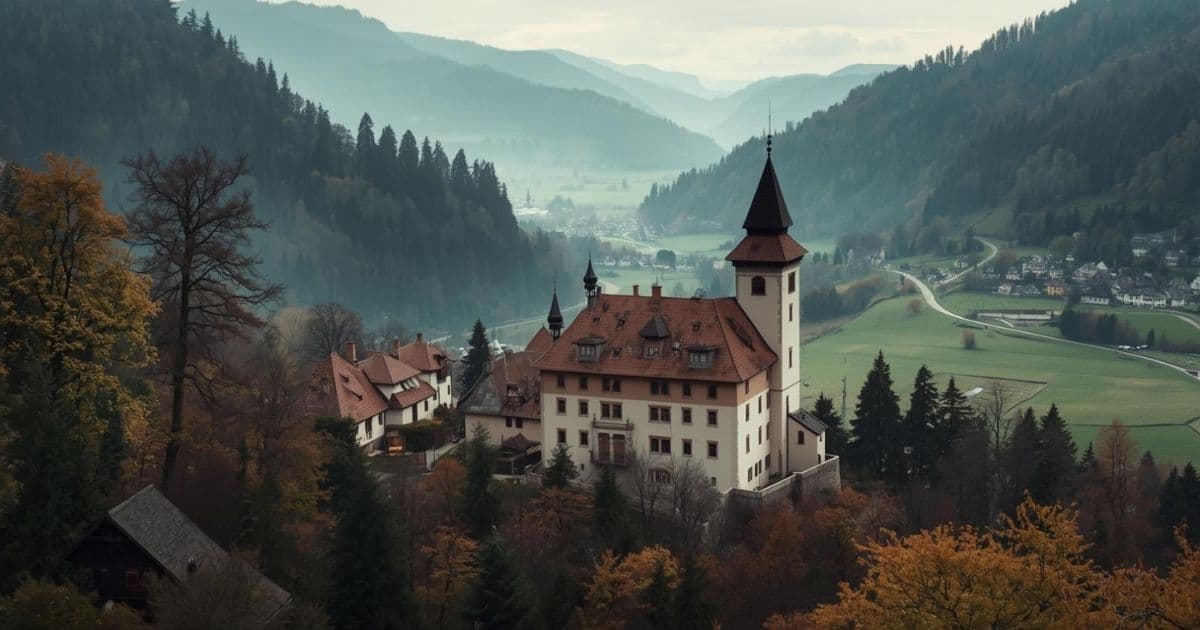
standing they could see the French. Immediately beyond the forest, on a
downward slope, lay a field of spring rye. To the right, beyond a steep
ravine, was a small village and a landowner’s house with a broken roof.
In the village, in the house, in the garden, by the well, by the pond,
over all the rising ground, and all along the road uphill from the
bridge leading to the village, not more than five hundred yards
away, crowds of men could be seen through the shimmering mist. Their
un-Russian shouting at their horses which were straining uphill with the
carts, and their calls to one another, could be clearly heard.
“Bwing the prisoner here,” said Denísov in a low voice, not taking his
eyes off the French.
A Cossack dismounted, lifted the boy down, and took him to Denísov.
Pointing to the French troops, Denísov asked him what these and those
of them were. The boy, thrusting his cold hands into his pockets and
lifting his eyebrows, looked at Denísov in affright, but in spite of
an evident desire to say all he knew gave confused answers, merely
assenting to everything Denísov asked him. Denísov turned away from him
frowning and addressed the esaul, conveying his own conjectures to him.
Pétya, rapidly turning his head, looked now at the drummer boy, now
at Denísov, now at the esaul, and now at the French in the village and
along the road, trying not to miss anything of importance.
“Whether Dólokhov comes or not, we must seize it, eh?” said Denísov with
a merry sparkle in his eyes.
“It is a very suitable spot,” said the esaul.
“We’ll send the infantwy down by the swamps,” Denísov continued.
“They’ll cweep up to the garden; you’ll wide up fwom there with the
Cossacks”—he pointed to a spot in the forest beyond the village—“and I
with my hussars fwom here. And at the signal shot...”
“The hollow is impassable—there’s a swamp there,” said the esaul. “The
horses would sink. We must ride round more to the left....”
While they were talking in undertones the crack of a shot sounded
from the low ground by the pond, a puff of white smoke appeared, then
another, and the sound of hundreds of seemingly merry French voices
shouting together came up from the slope. For a moment Denísov and the
esaul drew back. They were so near that they thought they were the cause
of the firing and shouting. But the firing and shouting did not relate
to them. Down below, a man wearing something red was running through the
marsh. The French were evidently firing and shouting at him.
“Why, that’s our Tíkhon,” said the esaul.
“So it is! It is!”
“The wascal!” said Denísov.
“He’ll get away!” said the esaul, screwing up his eyes.
The man whom they called Tíkhon, having run to the stream, plunged in
so that the water splashed in the air, and, having disappeared for an
instant, scrambled out on all fours, all black with the wet, and ran on.
The French who had been pursuing him stopped.
“Smart, that!” said the esaul.
“What a beast!” said Denísov with his former look of vexation. “What has
he been doing all this time?”
“Who is he?” asked Pétya.
“He’s our plastún. I sent him to capture a ‘tongue.’”
“Oh, yes,” said Pétya, nodding at the first words Denísov uttered as if
he understood it all, though he really did not understand anything of
it.
Tíkhon Shcherbáty was one of the most indispensable men in their band.
He was a peasant from Pokróvsk, near the river Gzhat. When Denísov had
come to Pokróvsk at the beginning of his operations and had as usual
summoned the village elder and asked him what he knew about the French,
the elder, as though shielding himself, had replied, as all village
elders did, that he had neither seen nor heard anything of them. But
when Denísov explained that his purpose was to kill the French, and
asked if no French had strayed that way, the elder replied that some
“more-orderers” had really been at their village, but that Tíkhon
Shcherbáty was the only man who dealt with such matters. Denísov had
Tíkhon called and, having praised him for his activity, said a few words
in the elder’s presence about loyalty to the Tsar and the country and
the hatred of the French that all sons of the fatherland should cherish.
“We don’t do the French any harm,” said Tíkhon, evidently frightened by
Denísov’s words. “We only fooled about with the lads for fun, you know!
We killed a score or so of ‘more-orderers,’ but we did no harm else....”
Next day when Denísov had left Pokróvsk, having quite forgotten about
this peasant, it was reported to him that Tíkhon had attached himself
to their party and asked to be allowed to remain with it. Denísov gave
orders to let him do so.
Tíkhon, who at first did rough work, laying campfires, fetching water,
flaying dead horses, and so on, soon showed a great liking and aptitude
for partisan warfare. At night he would go out for booty and always
brought back French clothing and weapons, and when told to would bring
in French captives also. Denísov then relieved him from drudgery and
began taking him with him when he went out on expeditions and had him
enrolled among the Cossacks.
Tíkhon did not like riding, and always went on foot, never lagging
behind the cavalry. He was armed with a musketoon (which he carried
rather as a joke), a pike and an ax, which latter he used as a wolf uses
its teeth, with equal ease picking fleas out of its fur or crunching
thick bones. Tíkhon with equal accuracy would split logs with blows at
arm’s length, or holding the head of the ax would cut thin little pegs
or carve spoons. In Denísov’s party he held a peculiar and exceptional
position. When anything particularly difficult or nasty had to be
done—to push a cart out of the mud with one’s shoulders, pull a horse
out of a swamp by its tail, skin it, slink in among the French, or walk
more than thirty miles in a day—everybody pointed laughingly at Tíkhon.
“It won’t hurt that devil—he’s as strong as a horse!” they said of him.
Once a Frenchman Tíkhon was trying to capture fired a pistol at him
and shot him in the fleshy part of the back. That wound (which Tíkhon
treated only with internal and external applications of vodka) was the
subject of the liveliest jokes by the whole detachment—jokes in which
Tíkhon readily joined.
“Hallo, mate! Never again? Gave you a twist?” the Cossacks would banter
him. And Tíkhon, purposely writhing and making faces, pretended to be
angry and swore at the French with the funniest curses. The only effect
of this incident on Tíkhon was that after being wounded he seldom
brought in prisoners.
He was the bravest and most useful man in the party. No one found more
opportunities for attacking, no one captured or killed more Frenchmen,
and consequently he was made the buffoon of all the Cossacks and hussars
and willingly accepted that role. Now he had been sent by Denísov
overnight to Shámshevo to capture a “tongue.” But whether because he
had not been content to take only one Frenchman or because he had slept
through the night, he had crept by day into some bushes right among the
French and, as Denísov had witnessed from above, had been detected by
them.
Master this chapter. Complete your experience
Purchase the complete book to access all chapters and support classic literature
As an Amazon Associate, we earn a small commission from qualifying purchases at no additional cost to you.
Available in paperback, hardcover, and e-book formats
Let's Analyse the Pattern
The most valuable contributors often operate outside formal hierarchies, succeeding where others fail because their skills match real-world demands rather than official expectations.
Why This Matters
Connect literature to life
This chapter teaches how to identify the people who actually get things done versus those who just hold official positions.
Practice This Today
This week, notice who people actually turn to when they need real help—it's often not the person with the biggest title or office.
Now let's explore the literary elements.
Key Quotes & Analysis
"Their un-Russian shouting at their horses which were straining uphill with the carts, and their calls to one another, could be clearly heard."
Context: Describing the French soldiers in the village below
This shows how the Russians identify the enemy not just by sight but by sound - foreign voices in their homeland. It emphasizes the invasion aspect and how different the French seem.
In Today's Words:
You could tell they weren't from around here just by listening to them.
"Bring the prisoner here"
Context: Quietly ordering his men while observing the French
Shows Denísov's practical approach to intelligence gathering. He's focused on getting information to plan his attack effectively.
In Today's Words:
Get me someone who can tell us what we need to know.
"stepping lightly with outturned toes and moving noiselessly in his bast shoes over the roots and wet leaves"
Context: Describing how the peasant guide moves through the forest
This shows the peasant's natural skill at moving silently through terrain he knows intimately. His simple shoes and knowledge make him more effective than any trained soldier.
In Today's Words:
He knew exactly how to move without making a sound.
Thematic Threads
Class
In This Chapter
Tíkhon's peasant background gives him skills the aristocratic officers lack—he thrives in brutal, practical warfare while they plan from above
Development
Continuing exploration of how different social classes contribute unique strengths to the war effort
In Your Life:
The person with the 'wrong' background might have exactly the skills your situation requires
Recognition
In This Chapter
Tíkhon's crucial intelligence work goes largely unrecognized despite being essential to the officers' success
Development
Building on earlier themes about whose contributions get valued and remembered
In Your Life:
The most important work in your workplace might be invisible to those making recognition decisions
Specialization
In This Chapter
Tíkhon excels at reconnaissance because he's naturally suited for dangerous, solitary work that others find impossible
Development
Introduced here as exploration of how individuals find roles that match their unique capabilities
In Your Life:
Your unusual strengths might be exactly what's needed in situations others avoid
Hierarchy
In This Chapter
The formal military structure depends on Tíkhon's informal intelligence network to function effectively
Development
Continuing examination of how official power structures rely on unofficial support systems
In Your Life:
The real power in any organization often flows through unofficial channels you need to understand
Survival
In This Chapter
Tíkhon's comfort with violence and danger makes him invaluable in guerrilla warfare where conventional tactics fail
Development
Building on themes about adapting to harsh realities and doing what circumstances require
In Your Life:
Crisis situations reveal who can actually handle pressure and uncertainty when it matters most
You now have the context. Time to form your own thoughts.
Discussion Questions
- 1
What makes Tíkhon so valuable to the partisan group, and how is his role different from the officers'?
analysis • surface - 2
Why does Tolstoy emphasize that Tíkhon is comfortable with violence and danger while the officers plan from a distance?
analysis • medium - 3
Think about your workplace or community - who are the 'Tíkhons' who get things done behind the scenes despite having no official authority?
application • medium - 4
When you need something important accomplished, do you go through official channels or find the person who actually knows how to make it happen?
application • deep - 5
What does this chapter suggest about the difference between formal power and real influence?
reflection • deep
Critical Thinking Exercise
Map Your Organization's Hidden Power Structure
Draw two organizational charts for a workplace, school, or community group you know well. First, draw the official hierarchy with titles and reporting structures. Then draw the real power map - who actually gets consulted on decisions, who people go to when they need something done, who holds the informal influence. Compare the two charts and identify the gaps.
Consider:
- •Look for people who are consulted despite having no formal authority
- •Notice who controls access to resources, information, or key relationships
- •Pay attention to who others turn to during crises or urgent situations
Journaling Prompt
Write about a time when you needed to get something important done and discovered that the person with the official title couldn't help you, but someone else could. What did this teach you about how organizations really work?
Coming Up Next...
Chapter 304: The Scout's Dark Comedy
With Tíkhon safely returned and intelligence gathered, Denísov must decide whether to proceed with the attack. The French position looks vulnerable, but is it worth the risk?