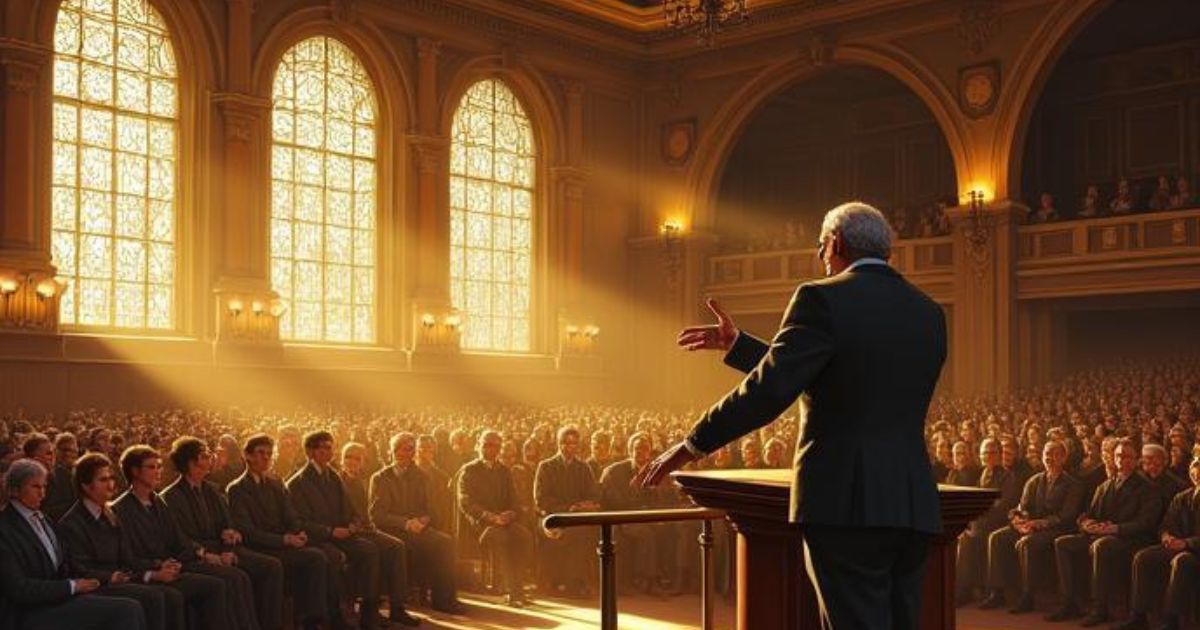
An excerpt from the original text.(complete · 2741 words)
f those systems which make virtue consist in benevolence.
The system which makes virtue consist in benevolence,
though I think not so ancient as all of those
which I have already given an account of, is, however,
of very great antiquity. It seems to have been
the doctrine of the greater part of those philosophers
who, about and after the age of Augustus, called
themselves Eclectics, who pretended to follow chiefly
the opinions of Plato and Pythagoras, and who upon
that account are commonly known by the name of
the later Platonists.
In the divine nature, according to these authors,
benevolence or love was the sole principle of action,
and directed the exertion of all the other attributes.
The wisdom of the Deity was employed in finding
out the means for bringing about those ends which
his goodness suggested, as his infinite power was exerted
to execute them. Benevolence, however, was
still the supreme and governing attribute, to which
the others were subservient, and from which the whole
excellency, or the whole morality, if I may be allowed
such an expression, of the divine operations,
was ultimately derived. The whole perfection and
virtue of the human mind consisted in some resemblance
or participation of the divine perfections, and,
consequently, in being filled with the same principle
322of benevolence and love which influenced all the actions
of the deity. The actions of men which flowed
from this motive were alone truly praise-worthy, or
could claim any merit in the sight of the deity. It
was by actions of charity and love only that we
could imitate, as became us, the conduct of God,
that we could express our humble and devout admiration
of his infinite perfections, that by fostering in
our own minds the same divine principle, we could
bring our own affections to a greater resemblance
with his holy attributes, and thereby become more
proper objects of his love and esteem; till at last we
arrived at that immediate converse and communication
with the deity to which it was the great object of
this philosophy to raise us.
This system, as it was much esteemed by many
ancient fathers of the christian church, so after the
reformation it was adopted by several divines of the
most eminent piety and learning, and of the most
amiable manners; particularly, by Dr. Ralph Cudworth,
by Dr. Henry More, and by Mr. John Smith
of Cambridge. But of all the patrons of this system,
ancient or modern, the late Dr. Hutcheson, was undoubtedly
beyond all comparison, the most acute,
the most distinct, the most philosophical, and what
is of the greatest consequence of all, the soberest and
most judicious.
That virtue consists in benevolence is a notion
supported by many appearances in human nature.
It has been observed already that proper benevolence
is the most graceful and agreeable of all the
affections, that it is recommended to us by a double
sympathy, that as its tendency is necessarily beneficent,
323it is the proper object of gratitude and reward,
and that upon all these accounts it appears to our
natural sentiments to possess a merit superior to any
other. It has been observed too that even the weakness
of benevolence are not very disagreeable to us,
whereas those of every other passion are always extremely
disgusting. Who does not abhor excessive
malice, excessive selfishness, or excessive resentment?
But the most excessive indulgence even of partial
friendship is not so offensive. It is the benevolent
passions only which can exert themselves without
any regard or attention to propriety, and yet retain
something about them which is engaging. There is
something pleasing even in mere instinctive good-will
which goes on to do good offices without once
reflecting whether by this conduct it is the proper
object either of blame or approbation. It is not so
with the other passions. The moment they are deserted,
the moment they are unaccompanied by the
sense of propriety, they cease to be agreeable.
As benevolence bestows upon those actions which
proceed from it, a beauty superior to all others, so
the want of it, and much more the contrary inclination,
communicates a peculiar deformity to whatever
evidences such a disposition. Pernicious actions are
often punishable for no other reason than because they
show a want of sufficient attention to the happiness
of our neighbour.
Besides all this, Dr. Hutcheson[18] observed, that
whenever in any action, supposed to proceed from
benevolent affections, some other motive had been
324discovered, our sense of the merit of this action was
just so far diminished as this motive was believed to
have influenced it. If an action, supposed to proceed,
from gratitude, should be discovered to have arisen from
an expectation of some new favour, or if what was
apprehended to proceed from public spirit, should be
found out to have taken its origin from the hope of
a pecuniary reward, such a discovery would entirely
destroy all notion of merit or praise-worthiness in
either of these actions. Since, therefore, the mixture
of any selfish motive, like that of a base alloy, diminished
or took away altogether the merit which
would otherwise have belonged to any action, it was
evident, he imagined, that virtue must consist in pure
and disinterested benevolence alone.
18. See Inquiry concerning virtue, sect. 1. and 2.
When those actions, on the contrary, which are
commonly supposed to proceed from a selfish motive,
are discovered to have arisen from a benevolent one,
it greatly enhances our sense of their merit. If we
believed of any person that he endeavoured to advance
his fortune from no other view but that of doing
friendly offices, and of making proper returns to
his benefactors, we should only love and esteem him
the more. And this observation seemed still more to
confirm the conclusion, that it was benevolence only
which could stamp upon any action the character of
virtue.
Last of all, what, he imagined, was an evident
proof of the justness of this account of virtue, in all
the disputes of casuists concerning the rectitude of
conduct, the public good, he observed, was the
standard to which they constantly referred; thereby
universally acknowledging that whatever tended to
325promote the happiness of mankind was right and
laudable and virtuous, and the contrary, wrong,
blameable, and vicious. In the late debates about
passive obedience and the right of resistance, the sole
point in controversy among men of sense was, whether
universal submission would probably be attended
with greater evils than temporary insurrections when
privileges were invaded. Whether what, upon the
whole, tended most to the happiness of mankind,
was not also morally good, was never once, he said,
made a question.
Since benevolence, therefore, was the only motive
which could bestow upon any action the character
of virtue, the greater the benevolence which was
evidenced by any action, the greater the praise which
must belong to it.
Those actions which aimed at the happiness of a
great community, as they demonstrated a more enlarged
benevolence than those which aimed only at
that of a smaller system, so were they, likewise, proportionally
the more virtuous. The most virtuous
of all affections, therefore, was that which embraced
as its object the happiness of all intelligent beings.
The lead virtuous, on the contrary, of those to which
the character of virtue could in any respect belong,
was that which aimed no further than at the happiness
of an individual, such as a son, a brother, a
friend.
In directing all our actions to promote the greatest
possible good, in submitting all inferior affections to
the desire of the general happiness of mankind, in
regarding ones self but as one of the many, whose
326prosperity was to be pursued no further than it was
consistent with, or conducive to that of the whole,
consisted the perfection of virtue.
Self-love was a principle which could never be
virtuous in any degree or in any direction. It was
vicious whenever it obstructed the general good.
When it had no other effect than to make the individual
take care of his own happiness, it was merely
innocent, and tho’ it deserved no praise, neither
ought it to incur any blame. Those benevolent
actions which were performed, notwithstanding some
strong motive from self-interest, were the more virtuous
upon that account. They demonstrated the
strength and vigour of the benevolent principle.
Dr. Hutcheson[19] was so far from allowing self-love
to be in any case a motive of virtuous actions,
that even a regard to the pleasure of self-approbation,
to the comfortable applause of our own consciences,
according to him, diminished the merit of a benevolent
action. This was a selfish motive, he thought,
which, so far as it contributed to any action, demonstrated
the weakness of that pure and disinterested
benevolence which could alone stamp upon the conduct
of man the character of virtue. In the common
judgments of mankind, however, this regard
to the approbation of our own minds is so far from
being considered as what can in any respect diminish
the virtue of any action, that it is rather looked upon
as the sole motive which deserves the appellation of
virtuous.
19. Inquiry concerning virtue, sect 2. art. 4. also illustrations
on the moral sense, sect. 5. last paragraph.
327Such is the account given of the nature of virtue
in this amiable system, a system which has a peculiar
tendency to nourish and support in the human heart
the noblest and the most agreeable of all affections,
and not only to check the injustice of self-love, but
in some measure to discourage that principle altogether,
by representing it as what could never reflect
any honour upon those who were influenced by it.
As some of the other systems which I have already
given an account of, do not sufficiently explain from
whence arises the peculiar excellency of the supreme
virtue of beneficence, so this system seems to have
the contrary defect, of not sufficiently explaining
from whence arises our approbation of the inferior
virtues of prudence, vigilance, circumspection, temperance,
constancy, firmness. The view and aim of
our affections, the beneficent and hurtful effects which
they tend to produce, are the only qualities at all attended
to in this system. Their propriety and impropriety,
their suitableness and unsuitableness, to
the cause which excites them, are disregarded altogether.
Regard to our own private happiness and interest
too, appear upon many occasions very laudable principles
of action. The habits of œconomy, industry,
discretion, attention, and application of thought,
are generally supposed to be cultivated from self-interested
motives, and at the same time are apprehended
to be very praise-worthy qualities, which deserve
the esteem and approbation of every body.
The mixture of a selfish motive, it is true, seems
often to sully the beauty of those actions which ought
328to arise from a benevolent affection. The cause of
this, however, is not that self-love can never be
the motive of a virtuous action, but that the benevolent
principle appears in this particular case to
want its due degree of strength, and to be altogether
unsuitable to its object. The character, therefore,
seems evidently imperfect, and upon the whole
to deserve blame rather than praise. The mixture
of a benevolent motive in an action to which self-love
alone ought to be sufficient to prompt us, is
not so apt indeed to diminish our sense of its propriety,
or of the virtue of the person who performs it.
We are not ready to suspect any person of being defective
in selfishness. This is by no means the weak
side of human nature, or the failing of which we
are apt to be suspicious. If we could really believe,
however, of any man, that, was it not from a regard
to his family and friends, he would not take that
proper care of his health, his life, or his fortune, to
which self-preservation alone ought to be sufficient to
prompt him, it would undoubtedly be a failing, tho’
one of those amiable failings, which render a person
rather the object of pity than of contempt or hatred.
It would still, however, somewhat diminish the dignity
and respectableness of his character. Carelessness
and want of œconomy are universally disapproved
of, not, however as proceeding from a want
of benevolence, but from a want of the proper attention
to the objects of self-interest.
Though the standard by which casuists frequently
determine what is right or wrong in human
conduct, be its tendency to the welfare or disorder
of society, it does not follow that a regard to the
329welfare of society should be the sole virtuous motive
of action, but only that, in any competition, it
ought to cast the balance against all other motives.
Benevolence may, perhaps, be the sole principle
of action in the Deity, and there are several, not improbable,
arguments which tend to persuade us that
it is so. It is not easy to conceive what other motive
an independent and all perfect being, who stands in
need of nothing external, and whose happiness is
complete in himself, can act from. But whatever
may be the case with the Deity, so imperfect a creature
as man, the support of whose existence requires
so many things external to him, must often act from
many other motives. The condition of human nature
were peculiarly hard, if those affections, which,
by the very nature of our being, ought frequently to
influence our conduct, could upon no occasion appear
virtuous, or deserve esteem and commendation from
any body.
Those three systems, that which places virtue in
propriety, that which places it in prudence, and
that which makes it consist in benevolence, are the
principal accounts which have been given of the nature
of virtue. To one or other of them, all the
other descriptions of virtue, how different soever they
may appear, are easily reducible.
That system which places virtue in obedience to
the will of the Deity, may be counted either among
those which make it consist in prudence, or among
those which make it consist in propriety. When it is
asked, why we ought to obey the will of the Deity,
this question, which would be impious and absurd
in the highest degree, if asked from any doubt that
330we ought to obey him, can admit but of two different
answers. It must either be said that we ought to
obey the will of the Deity because he is a being of
infinite power, who will reward us eternally if we do
so, and punish us eternally if we do otherwise: Or
it must be said, that independent of any regard to our
own happiness, or to rewards and punishments of
any kind, there is a congruity and fitness that a creature
should obey its creator, that a limited and imperfect
being should submit to one of infinite and incomprehensible
perfections. Besides one or other of
these two it is impossible to conceive that any other
answer can be given to this question. If the first answer
be the proper one, virtue consists in prudence,
or in the proper pursuit of our own final interest and
happiness; since it is upon this account that we are
obliged to obey the will of the Deity. If the second
answer be the proper one, virtue must consist in propriety,
since the ground of our obligation to obedience
is the suitableness or congruity of the sentiments
of humility and submission to the superiority of the
object which excites them.
That system which places virtue in utility coincides
too with that which makes it consist in propriety.
According to this system all those qualities of the
mind which are agreeable or advantageous, either to
the person himself or to others, are approved of as
virtuous, and the contrary disapproved of as vicious.
But the agreeableness or utility of any affection depends
upon the degree which it is allowed to subsist
in. Every affection is useful when it is confined to
a certain degree of moderation, and every affection
is disadvantageous when it exceeds the proper bounds.
According to this system therefore, virtue consists,
331not in any one affection, but in the proper degree of
all the affections, The only difference between it
and that which I have been endeavouring to establish,
is, that it makes utility, and not sympathy, or the
correspondent affection of the spectator, the natural
and original measure of this proper degree.
Master this chapter. Complete your experience
Purchase the complete book to access all chapters and support classic literature
As an Amazon Associate, we earn a small commission from qualifying purchases at no additional cost to you.
Available in paperback, hardcover, and e-book formats
Let's Analyse the Pattern
Setting impossibly pure ideals that shame normal human needs and behaviors, leading to either paralysis or abandonment of the goal entirely.
Why This Matters
Connect literature to life
This chapter teaches how to recognize when admirable ideals get twisted into shame-based purity tests that sabotage the very goals they claim to serve.
Practice This Today
This week, notice when you feel guilty about mixed motives in good actions - like enjoying volunteer work or wanting recognition for helping others, then ask: 'What would sustainable virtue look like here?'
Now let's explore the literary elements.
Key Quotes & Analysis
"Benevolence, however, was still the supreme and governing attribute, to which the others were subservient"
Context: Smith explaining how the Eclectics viewed divine nature
This reveals the core problem Smith sees with the benevolence system - it makes one virtue the boss of all others, creating an unrealistic hierarchy. Real life requires balancing different virtues depending on the situation.
In Today's Words:
They thought being kind to others was the only thing that really mattered, and everything else should serve that goal.
"The whole perfection and virtue of the human mind consisted in some resemblance or participation of the divine perfections"
Context: Describing what the benevolence theorists expected from humans
Smith highlights how this theory sets an impossible standard by expecting humans to act like perfect divine beings. This creates a system where normal human needs and limitations become moral failures.
In Today's Words:
They thought people should try to be as perfect and selfless as God, which is pretty much impossible.
"The actions of men which flowed from this motive were alone truly praise-worthy"
Context: Explaining the benevolence theorists' strict standard for moral worth
This shows the all-or-nothing thinking that Smith critiques. By making pure benevolence the only source of true virtue, this system dismisses other important qualities like self-care and practical wisdom.
In Today's Words:
They believed only actions done from pure love for others deserved any real credit.
Thematic Threads
Social Expectations
In This Chapter
Society's demand for pure, selfless virtue creates impossible moral standards that real humans cannot meet
Development
Builds on earlier themes about how social approval shapes behavior, now showing how unrealistic expectations backfire
In Your Life:
You might recognize this when you feel guilty for having any personal needs while helping others.
Identity
In This Chapter
The struggle between seeing yourself as 'good' (purely selfless) versus accepting your complex human nature
Development
Deepens previous identity themes by exploring how moral perfectionism fragments self-concept
In Your Life:
You might see this when you question whether you're a 'good person' because you have mixed motives.
Human Relationships
In This Chapter
How impossible moral standards damage relationships by creating shame and preventing honest self-care
Development
Extends relationship themes to show how perfectionist ideals sabotage authentic connection
In Your Life:
You might notice this when you resent people you're helping because you can't admit your own needs.
Personal Growth
In This Chapter
Learning that sustainable virtue requires balance between self-care and care for others
Development
Advances growth themes by rejecting all-or-nothing thinking in favor of nuanced wisdom
In Your Life:
You might apply this when learning to set healthy boundaries without feeling selfish.
You now have the context. Time to form your own thoughts.
Discussion Questions
- 1
What's the main problem Smith identifies with saying that only completely selfless actions can be virtuous?
analysis • surface - 2
Why does Smith think this 'pure benevolence only' approach works for a perfect divine being but not for humans?
analysis • medium - 3
Where do you see people today setting impossible standards that make normal human needs feel shameful?
application • medium - 4
Think of someone you know who burned out from trying to be perfectly selfless. What would 'sustainable virtue' have looked like in their situation?
application • deep - 5
What does this chapter suggest about why balance might be more virtuous than purity?
reflection • deep
Critical Thinking Exercise
Spot Your Impossible Standards
Write down three areas where you hold yourself to impossibly high standards - places where you feel guilty for having normal human needs or wants. For each one, identify what the 'perfect' version would look like versus what a sustainable, balanced approach might be. Notice how the impossible standard might actually prevent you from doing good work in that area.
Consider:
- •Look for areas where you use words like 'always' or 'never' about your behavior
- •Notice where you feel guilty for basic self-care or personal needs
- •Consider how your impossible standards might affect others around you
Journaling Prompt
Write about a time when trying to be perfectly selfless actually made you less helpful to others. What would you do differently now, knowing that sustainable virtue requires balance?
Coming Up Next...
Chapter 36: When Philosophy Goes Wrong
Having examined systems that demand too much virtue, Smith next turns to those that demand too little - exploring what happens when moral philosophy swings too far toward permissiveness and self-indulgence.